CryptoSoulz Profile picture
May 27 8 tweets 3 min read Read on X
In this THREAD I will explain “Elliott Wave”

1. Elliott Wave Theory
2. Basic Wave
3. Corrective Wave
4. Elliott Wave Cycle

🧵(1/8) Image
1. Elliot Wave Theory

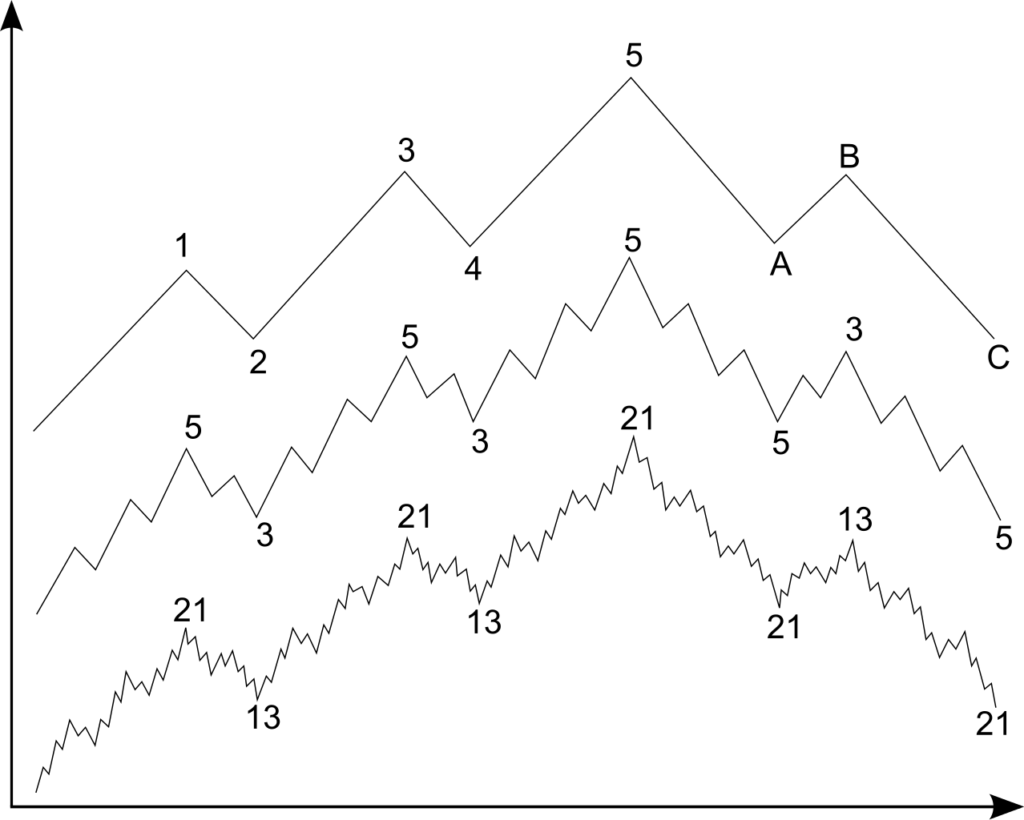
The Elliott Wave Theory suggests that price movements can be reasonably predicted by studying price history as the markets move in wave patterns

Like ocean waves, the movements are repetitive, rhythmic, and timely. Image
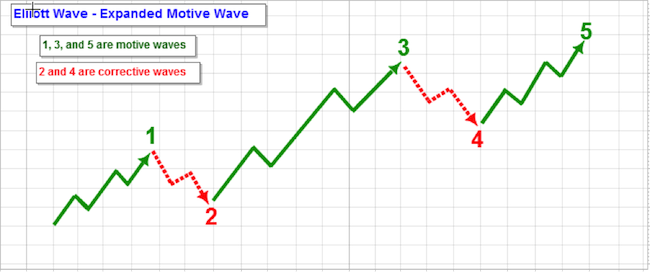
2. Basic Motive Wave

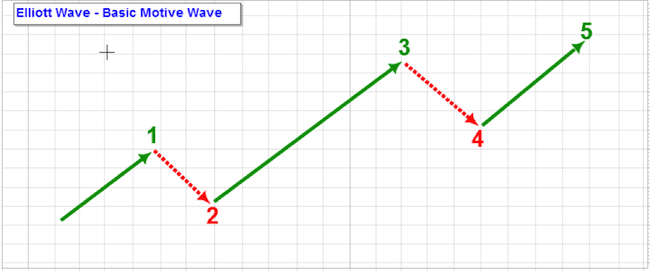
A wave that always advances in the direction of the trend of one larger degree. It's subdivided into five smaller waves.

Waves 1, 3 and 5 in the Motive Wave are called “actionary” sub-waves.

Waves 2 and 4 are called “corrective” sub-waves. Image
2.1 Basic Motive Wave

There are 3 rules for Motive Wave formation:

- Wave 2 always retraces (gives back) less than 100% of Wave 1

- Wave 4 always retraces less than 100% of Wave 3

- Wave 3 always travels beyond the end of Wave 1 and is never the shortest wave Image
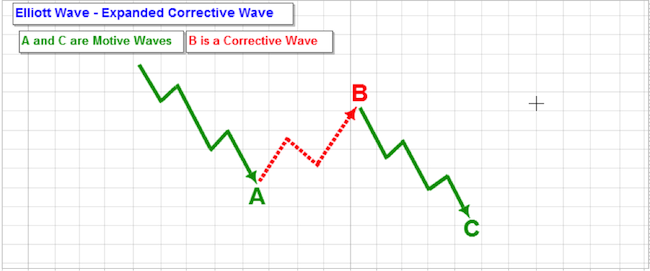
3. Corrective Wave

The three-wave structure has its sub-waves labeled as waves A, B and C.

This can be misleading since not all corrective waves are exactly three-wave structures. Image
3.1 Corrective Wave

Wave A and Wave C are both in the direction of the trend

Wave B is traveling against the direction of the larger correction and will therefore be shown as having three waves Image
4. Elliott Wave Cycle

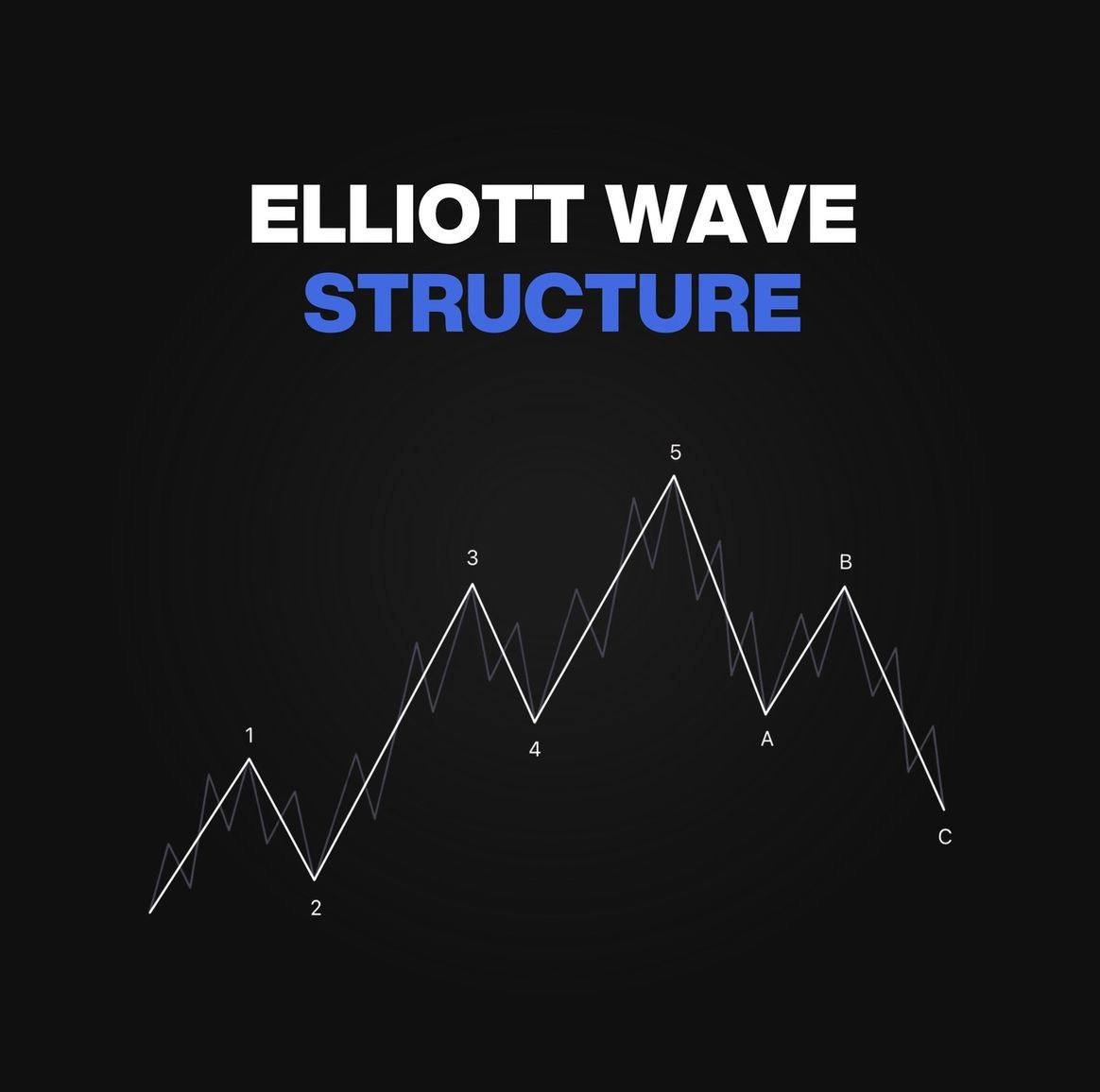
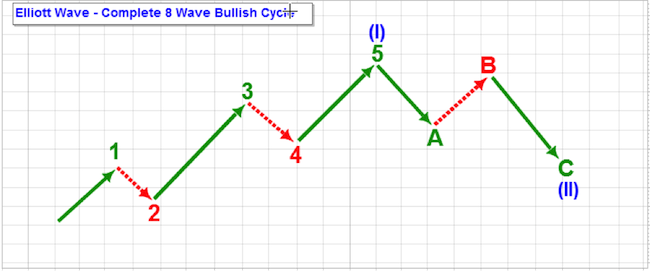
The combination of a motive wave and a corrective wave is the structure of the complete Elliott Wave Cycle

This is illustrated with a total of 8 waves.

There is a 5-wave in the direction of the trend, followed by a 3-wave correction against the trend Image
4.1 Elliott Wave Cycle

The chart above shows this eight-wave structure in a declining market.

If you saw this pattern on a chart, depending on HTF, you might expect another five waves down.

This pattern is known as "Wave Bearish Cycle" Image

• • •

Missing some Tweet in this thread? You can try to force a refresh

 

Keep Current with CryptoSoulz

CryptoSoulz Profile picture

Stay in touch and get notified when new unrolls are available from this author!

Read all threads

This Thread may be Removed Anytime!

PDF

Twitter may remove this content at anytime! Save it as PDF for later use!

Try unrolling a thread yourself!

how to unroll video
  1. Follow @ThreadReaderApp to mention us!

  2. From a Twitter thread mention us with a keyword "unroll"
@threadreaderapp unroll

Practice here first or read more on our help page!

More from @SoulzBTC

May 25
In this THREAD I will explain “Basic Trading Indicators”

1. MACD
2. RSI
3. Bollinger Bands
4. EMA
5. VWAP
6. Volume

🧵(1/10) Image
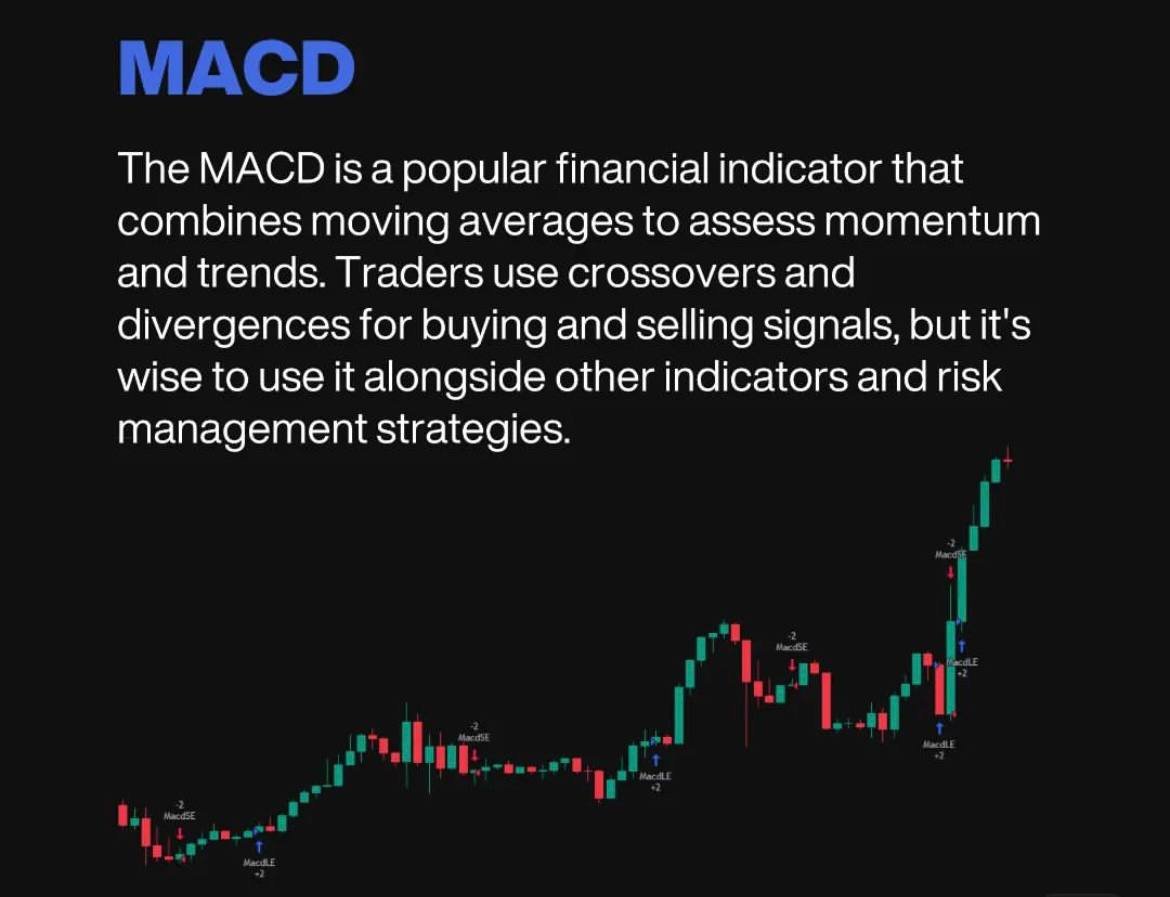
1. MACD

MACD measures the convergence and divergence over time of two moving averages of the price of an asset.

MACD indicates the separation between the value of two moving averages with different calculation periods. Image
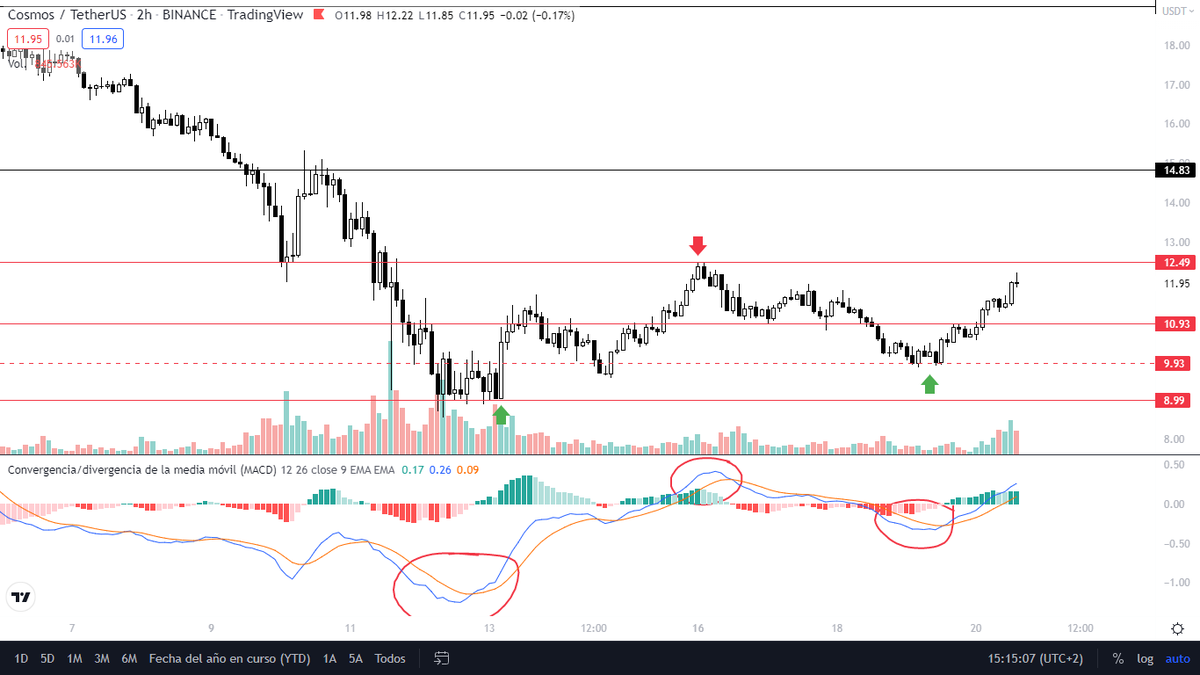
1.1 MACD

When the crossing of the MACD line with the Signal line occurs from the bottom up, the trend will be bullish.

When the crossing of the MACD line with the Signal line occurs from top to bottom, the trend will be bearish. Image
Read 10 tweets
May 20
In this THREAD I will explain “Fibonacci”

1. Fibonacci Retracement
2. Trend identification
3. How to label Fibonacci
4. Fibonacci Levels
5. Fibonacci Expansion
6. $ETH Liquidity Analysis

🧵(1/9) Image
1. Fibonacci Retracement

Fibonacci Retracement Levels are based on ratios used to identify potential reversal points on a price chart.

Retracement levels also are used as Support and Resistance. Image
2. Trend Identification

We MUST identify the TREND of the price before drawing Fibonacci.

How do we Identify a TREND?

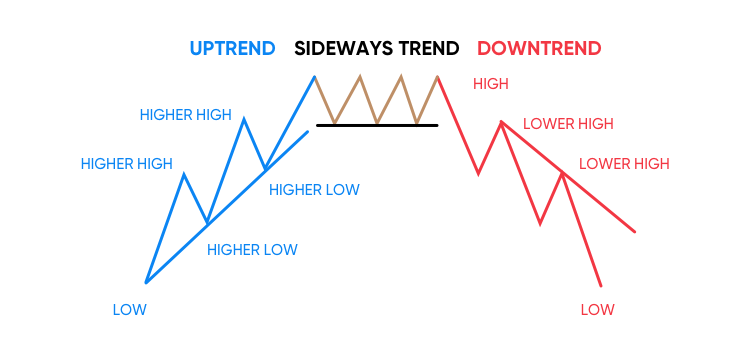
If price is followed by HH and HL, the trend is BULLISH.

If price is followed by a LH and LL, the trend is Bearish. Image
Read 9 tweets
May 18
In this THREAD I will explain “Advanced Market Structure”

1. Price Action in Trends
2. Strong MS vs Weak MS
3. CHOCH
4. Price Divergences
5. Order Flow
6. $BTC Liquidity Analysis

🧵(1/10) Image
1. Price Action in Trends

Strong trends: Are categorized by a impulsive move and a short corrective move, where the price retraces before continuing the next leg higher.

Corrective trends: Are a great area to look for entries, using Support/Resistance Image
2. Strong MS vs Weak MS

Strong High: When price breaks below the most recent HL. A weak high occurs when price fails to break lower than the most recent HL

Strong Low: When price breaks above the most recent LH. This occurs when price fails to break higher than the last LH Image
Read 10 tweets
May 15
In this THREAD I will explain “Trading Liquidity”

1. Buy-side Liquidity
2. Sell-side Liquidity
3. Imbalances
4. MS Shift
5. Internal and External Liquidity
6. $ETH Liquidity Analysis

🧵(1/9) Image
1. Buyside Liquidity

Liquidity generated when Stop Loss are taken out

Areas where Buy-side liquidity rests:

- PWH & PDH
- Equal Highs
- HTF resistance
Image
Image
1.1 How do you spot Buy-side liquidity?

1. Buyside liquidity resides at relative equal highs or swing highs.

2. A swing high is a 3 candle pattern where the middle candle has a lower high on each side of it. Image
Read 9 tweets
May 13
In this THREAD I will explain “Point of Interest”

1. FVG
2. OB
3. Breaker Blocks
4. Mitigation Block
5. Swing High and Swing Low
6. $BTC Liquidity Analysis

🧵(1/8) Image
1. FVG:

Occurs when there are inefficiencies or imbalances in the market.

Fair value gaps can become a magnet for the price before continuing in the same direction.

Identify FVG as Support/Resistance in the price. Image
2. OB

Order block is an area where there has been a large concentration of limit orders waiting to be executed.

OB are identified by observing previous price action and looking for areas where the price experienced significant movement or sudden changes in direction. Image
Read 8 tweets
May 12
In this THREAD I will explain “Premium vs Discount Zones”

1. BSL and SSL
2. Premium and Discount Zones
3. How to trade using Fibonacci
4. Fibonacci Retracement
5. Fibonacci Extension

🧵(1/8) Image
1. BSL and SSL

Discount and Premium zones are based off Range Low to Range High.

To identify them, look where the recent Sellside Liquidity and Buyside Liquidity retests. Image
2. Premium and Discount Zones

Using Fibonacci or Gann box, we can identify the UPPER and LOWER part of the range.

The Upper 50% is called "Premium"
The Lower 50% is called "Discount" Image
Read 8 tweets

Did Thread Reader help you today?

Support us! We are indie developers!


This site is made by just two indie developers on a laptop doing marketing, support and development! Read more about the story.

Become a Premium Member ($3/month or $30/year) and get exclusive features!

Become Premium

Don't want to be a Premium member but still want to support us?

Make a small donation by buying us coffee ($5) or help with server cost ($10)

Donate via Paypal

Or Donate anonymously using crypto!

Ethereum

0xfe58350B80634f60Fa6Dc149a72b4DFbc17D341E copy

Bitcoin

3ATGMxNzCUFzxpMCHL5sWSt4DVtS8UqXpi copy

Thank you for your support!

Follow Us!

:(