Gladiators: Ancient Rome’s Superstars
Imagine stepping into the roaring Colosseum, where the air buzzes with anticipation and the crowd's cheers echo off the ancient stone walls. The gates creak open, and from the shadows emerge the legendary gladiators of Rome—warriors whose valor and skill would define an era.
Each fighter, clad in distinctive armor and armed with unique weapons, transforms the arena into a vivid tableau of martial prowess and survival. The variety of gladiator types in Ancient Rome reflected the empire’s diverse influences and the audience's appetite for varied, thrilling combat. Each gladiator’s distinct gear, style, and appearance made the games a complex and captivating spectacle.
Imagine stepping into the roaring Colosseum, where the air buzzes with anticipation and the crowd's cheers echo off the ancient stone walls. The gates creak open, and from the shadows emerge the legendary gladiators of Rome—warriors whose valor and skill would define an era.
Each fighter, clad in distinctive armor and armed with unique weapons, transforms the arena into a vivid tableau of martial prowess and survival. The variety of gladiator types in Ancient Rome reflected the empire’s diverse influences and the audience's appetite for varied, thrilling combat. Each gladiator’s distinct gear, style, and appearance made the games a complex and captivating spectacle.

Welcome to the world where heroes are forged in the crucible of combat, where every clash of steel and every drop of sweat tells a story of courage, honor, and relentless ambition.
Follow me into the heart of Rome's most exhilarating spectacle—the gladiatorial games!
Follow me into the heart of Rome's most exhilarating spectacle—the gladiatorial games!

Murmillo
The Murmillo was heavily armored, resembling a Roman legionary. They wore a large, plumed helmet with a broad brim, a rectangular shield (scutum), and carried a gladius (short sword). Their style emphasized strong, defensive tactics.
The Murmillo was heavily armored, resembling a Roman legionary. They wore a large, plumed helmet with a broad brim, a rectangular shield (scutum), and carried a gladius (short sword). Their style emphasized strong, defensive tactics.
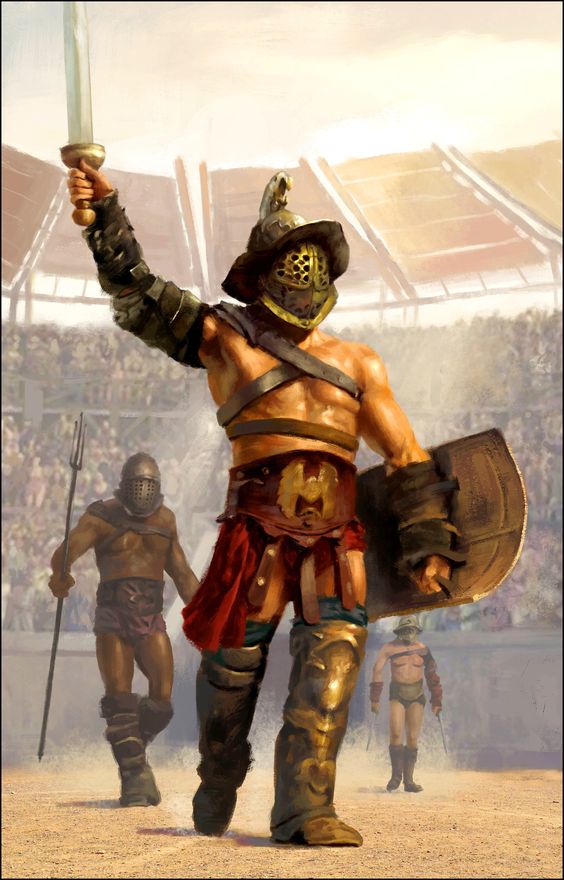
Thraex (Thracian)
The Thraex gladiators wielded a small, curved sword called a sica. They wore a helmet with a griffin crest, manica (arm guard), and high greaves (leg guards). Their shield was small and square, favoring agile, close-combat fighting.
The Thraex gladiators wielded a small, curved sword called a sica. They wore a helmet with a griffin crest, manica (arm guard), and high greaves (leg guards). Their shield was small and square, favoring agile, close-combat fighting.

Retiarius
Unique among gladiators, the Retiarius fought with a trident and a weighted net. They had minimal armor, usually only a manica and a shoulder guard (galerus), allowing for maximum mobility. Their tactic was to entangle opponents with the net and strike with the trident.
Unique among gladiators, the Retiarius fought with a trident and a weighted net. They had minimal armor, usually only a manica and a shoulder guard (galerus), allowing for maximum mobility. Their tactic was to entangle opponents with the net and strike with the trident.

Secutor
Paired often against the Retiarius, the Secutor was heavily armored with a smooth, rounded helmet designed to avoid entanglement in the net. They carried a gladius and a large scutum, focusing on relentless pursuit and close-quarters combat.
Paired often against the Retiarius, the Secutor was heavily armored with a smooth, rounded helmet designed to avoid entanglement in the net. They carried a gladius and a large scutum, focusing on relentless pursuit and close-quarters combat.

Hoplomachus
Inspired by Greek hoplites, the Hoplomachus wielded a spear and a short sword or dagger. They carried a small, round shield and wore a helmet with a visor. Their armor included high greaves and a manica, making them versatile in both offensive and defensive moves.
Inspired by Greek hoplites, the Hoplomachus wielded a spear and a short sword or dagger. They carried a small, round shield and wore a helmet with a visor. Their armor included high greaves and a manica, making them versatile in both offensive and defensive moves.

Provocator
The Provocator, or challenger, wore a helmet without a crest, a chest plate (pectoral), and a manica. They carried a large rectangular shield and a gladius. Their fighting style was straightforward, relying on solid armor and shield techniques.
The Provocator, or challenger, wore a helmet without a crest, a chest plate (pectoral), and a manica. They carried a large rectangular shield and a gladius. Their fighting style was straightforward, relying on solid armor and shield techniques.

Dimachaerus
The Dimachaerus was armed with two swords, one in each hand, eschewing shields altogether. Their armor was light, typically only a loincloth and manica. They relied on agility, speed, and ambidextrous skill to overwhelm opponents.
The Dimachaerus was armed with two swords, one in each hand, eschewing shields altogether. Their armor was light, typically only a loincloth and manica. They relied on agility, speed, and ambidextrous skill to overwhelm opponents.

Equites
Equites were mounted gladiators who began fights on horseback, equipped with a spear and a small shield. They wore a brimmed helmet and a light tunic. After dismounting, they continued combat with a gladius, displaying versatility both mounted and on foot.
Equites were mounted gladiators who began fights on horseback, equipped with a spear and a small shield. They wore a brimmed helmet and a light tunic. After dismounting, they continued combat with a gladius, displaying versatility both mounted and on foot.

Cestus
Cestus fighters were essentially boxers, fighting with their fists wrapped in leather bands or fitted with metal studs. They wore minimal armor, relying on brute strength and hand-to-hand combat techniques, making them a brutal spectacle in the arena.
Cestus fighters were essentially boxers, fighting with their fists wrapped in leather bands or fitted with metal studs. They wore minimal armor, relying on brute strength and hand-to-hand combat techniques, making them a brutal spectacle in the arena.

Scissor
The Scissor gladiator had a unique weapon: a short sword with a semicircular blade or a double-edged knife. They wore a full arm guard and a helmet with a face mask. Their fighting style was aggressive, focusing on quick, slashing attacks.
The Scissor gladiator had a unique weapon: a short sword with a semicircular blade or a double-edged knife. They wore a full arm guard and a helmet with a face mask. Their fighting style was aggressive, focusing on quick, slashing attacks.

Sagittarius
Sagittarius gladiators were archers, unique for their long-range combat abilities. They wore minimal armor for mobility and carried a composite bow. Their role was to demonstrate archery skills, often in mock battles or against beasts.
Sagittarius gladiators were archers, unique for their long-range combat abilities. They wore minimal armor for mobility and carried a composite bow. Their role was to demonstrate archery skills, often in mock battles or against beasts.

Venator
Venatores were specialized in hunting wild beasts in the arena. They used various weapons like spears, bows, and swords, wearing light armor for mobility. Their combat was a thrilling mix of hunting skills and survival tactics.
Venatores were specialized in hunting wild beasts in the arena. They used various weapons like spears, bows, and swords, wearing light armor for mobility. Their combat was a thrilling mix of hunting skills and survival tactics.

Essedarius
Essedarii were chariot fighters, derived from Celtic chariot warfare. They fought with spears and swords while maneuvering chariots. This gladiatorial type showcased tactical driving and combat skills, adding a dynamic element to the games.
Essedarii were chariot fighters, derived from Celtic chariot warfare. They fought with spears and swords while maneuvering chariots. This gladiatorial type showcased tactical driving and combat skills, adding a dynamic element to the games.

As the sun sets over the Colosseum, the echoes of clashing swords and roaring crowds fade into the sands of history. These warriors, each embodying the spirit of bravery and the relentless pursuit of glory, remind us of a time when combat was not just a fight for survival, but a grand spectacle that captivated an empire.
From the heavily armored Murmillo to the agile Retiarius, each gladiator's story is a testament to the enduring legacy of Rome's martial heritage; this often mean a world where every battle was a dance of life and death.
From the heavily armored Murmillo to the agile Retiarius, each gladiator's story is a testament to the enduring legacy of Rome's martial heritage; this often mean a world where every battle was a dance of life and death.

• • •
Missing some Tweet in this thread? You can try to
force a refresh