Daniele 🇺🇦 Profile picture
Jun 18 8 tweets 4 min read Read on X
Long 🧵 on drones 1/n

Since the start of the war in Ukraine in February 2022, drones have slowly taken the front pages. Initially, it was the Bayraktar TB2, which brought a drone directly to the front line for the first time in a large-scale combat operation. Image
2/n

Analysts across the entire spectrum, from professional and academic to open-source intelligence, have observed the rise of small commercial surveillance drones for reconnaissance and, increasingly, for more kinetic operations.

For the first time in history, we have seen the successful use of naval drones in the role of direct strike assets.Image
3/n

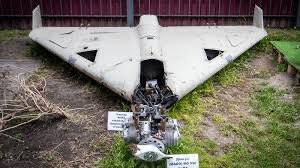
On the other side, the Russians have strained our belief in modern air defense systems by deploying hundreds of fixed-wing kamikaze drones to saturate the airspace and deplete valuable and scarce missile supplies. Image
4/n

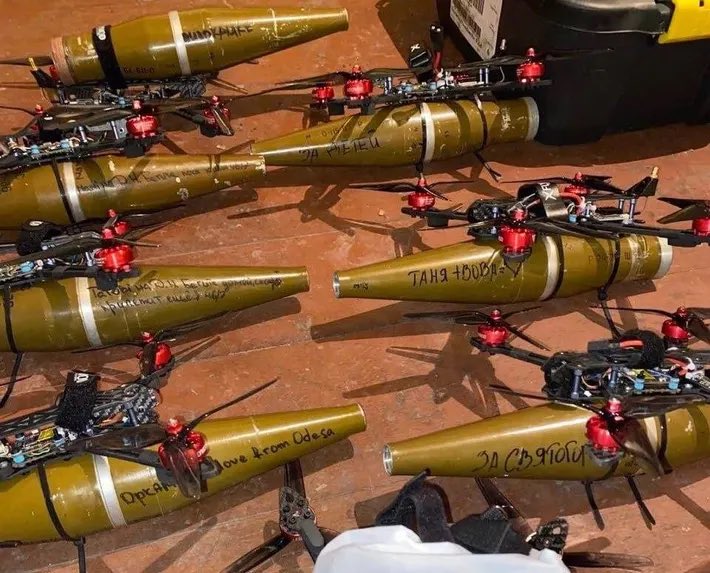
Last but not least is the advent of FPV drones on the battlefield, which has drastically changed the perception of the battlespace, particularly in static defense and the use of armored vehicles.

Overall, as I often repeat, we are witnessing a continuously evolving scenario where both sides keep chasing each other, developing platforms to overcome the challenges posed by the adversary.Image
5/n

What is the response of the entire community on this topic, and why is it so important? It is crucial because policymakers rely on analyses to make decisions, and even large organizations like the US or UK Army need answers to start experimenting and eventually implementing lessons learned.

The community is divided roughly into three macro groups: the hardliner believers in drones, who think that drones have changed everything and will replace every asset on the battlefield; the skeptics, who think that air superiority will always be better than any drone and that drones are primarily for reconnaissance; and a large group that shares aspects of both views.
6/n

Drones have changed everything, but what many fail to understand is that they have performed in a certain way in a specific context, like the war in Ukraine. Consider the Shahed drones and their use to saturate air defense systems. What happened in a few months? The answer is visible at Paris EUROSATORY 2024: the return of SPAAG, the introduction of unmanned 12.7mm machine guns on vehicles, and the wide distribution of new programmable rounds. The same applies to naval drones with an increase in defenses against such threats.Image
7/n

At the same time, drones have removed an important layer of protection in mission planning: being unobserved. Today, when planning missions or troop movements, planners have to minimize their signature: thermal, acoustic, and EM. This was not as important prior to the advent of cheap and dispersed surveillance drones.

Drones have also been pivotal in providing infantry with effective platforms to deter armored assaults, even in the absence of artillery munitions. They can destroy defensive positions with great accuracy and, last but not least, attack groups of infantry during both day and night operations. One aspect that these platforms share is their flexibility in being used in any role, as well as their ease of manufacturing and updating as battlefield conditions change.
8/8

This particular aspect is still not well understood by those who create design criteria to which the industry reacts. Often, I see people mocking companies for presenting drones that are clearly designed for conflicts different from the one we are seeing in Ukraine. This is why these discussions should be taken seriously, always providing information backed by the best data we have.

• • •

Missing some Tweet in this thread? You can try to force a refresh

 

Keep Current with Daniele 🇺🇦

Daniele 🇺🇦 Profile picture

Stay in touch and get notified when new unrolls are available from this author!

Read all threads

This Thread may be Removed Anytime!

PDF

Twitter may remove this content at anytime! Save it as PDF for later use!

Try unrolling a thread yourself!

how to unroll video
  1. Follow @ThreadReaderApp to mention us!

  2. From a Twitter thread mention us with a keyword "unroll"
@threadreaderapp unroll

Practice here first or read more on our help page!

More from @HartreeFock

Apr 22
FPV Drones: Avdiivka's Western Front (31-04-2024)

The fall of Avdiivka on the 17th of February 2024 is one of the more sobering junctures of the Ukrainian-Russian war. This article intends not to investigate the circumstances which led to the fall of Avdiivka but will try to understand the situation the Armed Forces of Ukraine (AFU) faced there.

Full article:
tochnyi.info/2024/04/fpv-dr…
1/n To explore the progression of FPV drone usage and its impact on the conflict, it is important to understand that the data analyzed within this article is based on geolocated and verified attacks recorded by operators, and released in either edited or unedited versions on Telegram channels. The strikes recorded in this database, despite having been verified and geolocated with extreme care, represent only a portion of all total attacks.
2/n Uncertainty regarding data arises from various factors, one of which is the time constraints associated with editing and distributing each strike. However, by analysing the observed data over an extended period, it is possible to identify trends crucial to understanding this new weapon system and its usage.Image
Read 18 tweets
Mar 24
1/7 We can start with the graphs that depict the strikes on infantry and vehicles. The data is based on information gathered by @AndrewPerpetua and @giK1893 . As I write this thread, the current situation is very different from what I had expected. The current level of use of FPV drones from the Russian side has plummeted in all stats. Ukraine performed nearly the same number of strikes on infantry and vehicles in March, a week ahead of the month's end. This growth is swift, considering the initial numbers and the apparent difficulties observed in December. There is still a week of data to collect, and we will see in the weeks to come if Russia has a backlog of information to release, or if there are simply fewer drones in operation. We will deal with this specific topic at the end.Image
Image
2/7 The latest data shows that Ukrainian forces have achieved remarkable results when it comes to striking enemy positions, managing to score more hits in less than a month. On the other hand, Russian forces seem to be struggling to keep up. Trenches remain the most hazardous place to be, as they account for a staggering 70.2% of all the strikes conducted so far.Image
Image
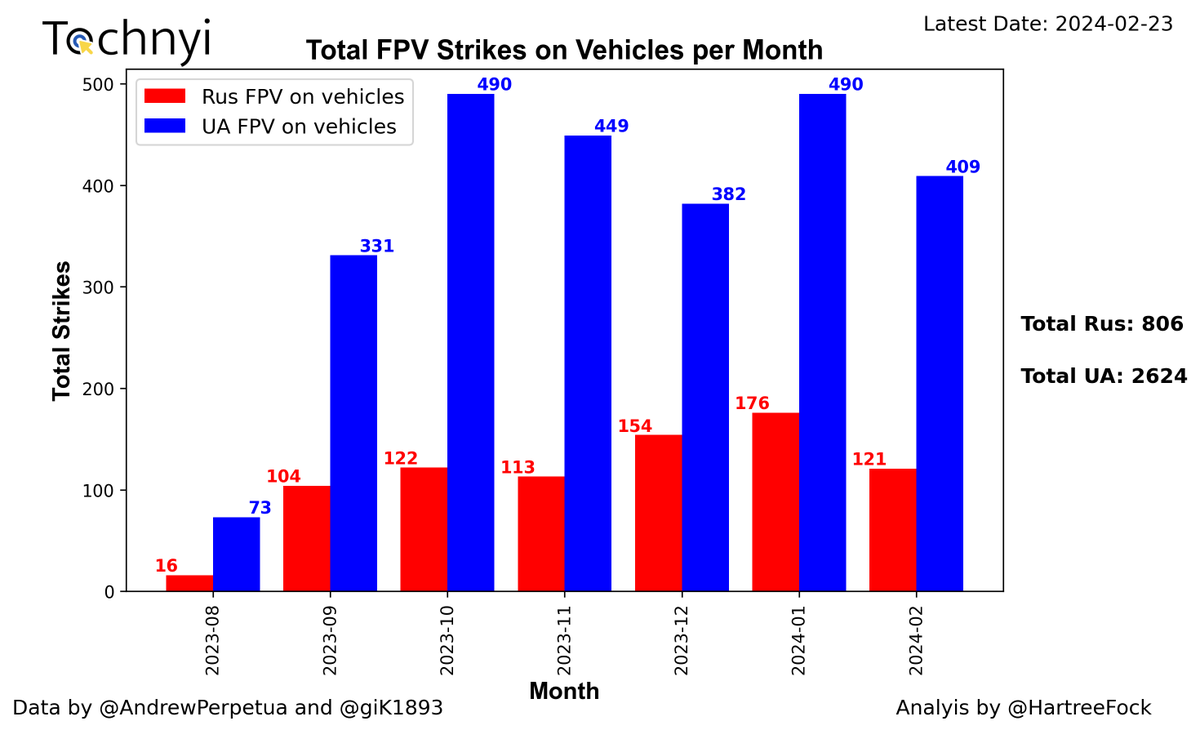
3/7 It Is important to look at the graph below to understand the significance of the data collected. The bar chart displays a month-by-month comparison between Ukrainian and Russian FPV strikes. After a decline in December, which suggested a potential advantage for the Russian forces, a steady growth in Ukrainian strikes is visible. In March, there were 423 more Ukrainian strikes than Russian strikes. This indicates that the Ukrainians are committed to using drones, particularly FPV, to deter the Russian military.Image
Read 7 tweets
Mar 17
FPV usage update 17-03-2024

Data from @AndrewPerpetua and @giK1893, and the support of @tochnyi members.

1/6

In this latest update on FPV drone usage, I have decided to enhance our understanding of the situation by introducing a couple of graphs. These visual aids will shed light on the monthly performance of each side and their efforts in targeting logistical assets.

As we are currently in the middle of the month, it’s noteworthy that Ukrainian forces have shown remarkable performance compared to the Russians. Surprisingly, the Russians are lagging behind in both metrics, particularly in strikes on infantry and vehicles.

This unexpected turn of events is particularly striking in the infantry category, where a significant parity has typically been observed between the two sides, barring exceptions like that of February 2024. If the current trend persists, it will become increasingly apparent that these discrepancies are likely attributed to Russian challenges in deploying an adequate number of drones.Image
Image
2/6

Data on positions also shows a change, currently in favor of the Ukrainian forces. Looking back, it’s incredible to see such a shift, especially considering their relatively defensive posture. While the data is partial and subject to potential drastic changes, examining previous statistics reveals that this aligns with the overall trend. Trenches are the most frequently targeted positions, accounting for a staggering 70% of total strikes.Image
3/6

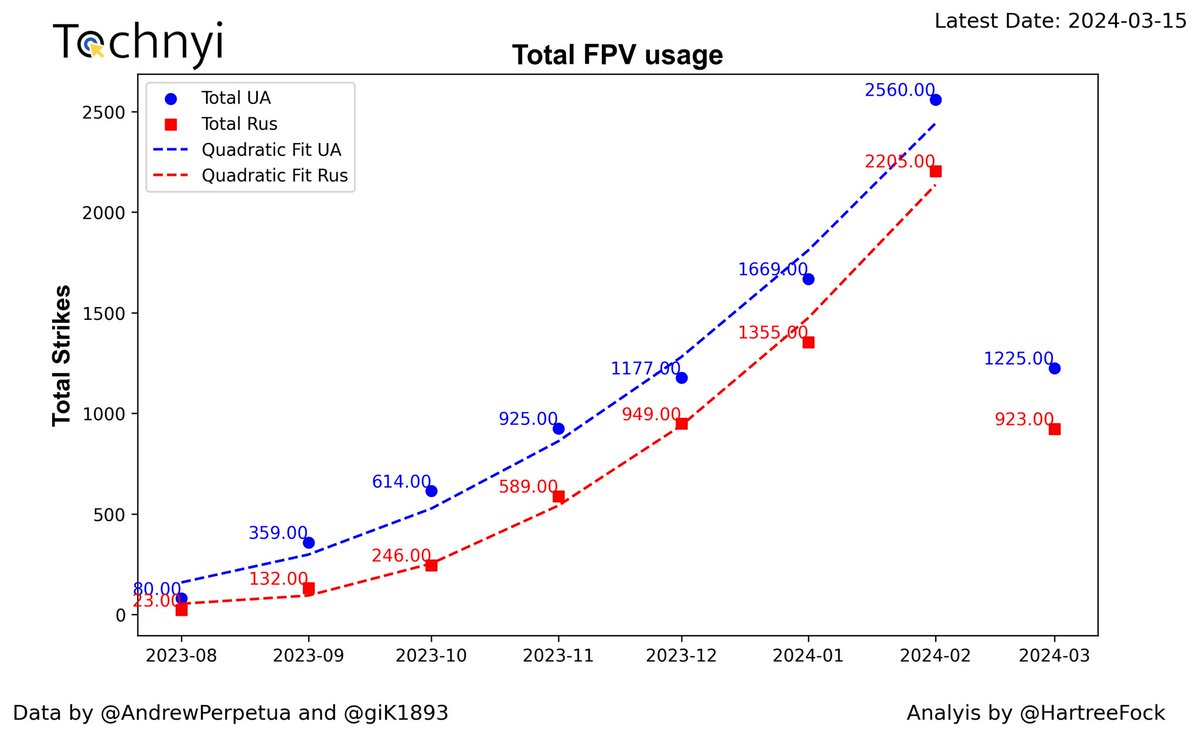
The total number of FPV drones deployed by Ukrainian forces stands at 9155, while Russia has deployed 6422 drones. This growing gap between the two sides indicates a clear shortage of drones, regardless of the underlying reasons. Efforts to validate the data as quadratic have yielded no signs of deviation. Additionally, partial results not factored into defeat are already consistent with past months, affirming the ongoing high level of drone utilization.Image
Image
Read 6 tweets
Mar 9
1/4 I believe it's a good time to give a quick update on FPV drone usage. Let's start with the progression and total numbers. As we know from my last update, February was one of the most intense months for FPV drone usage, and it's now confirmed that the growth is at least quadratic and shows no signs of stopping. As of March 9th, Ukrainians have already used 721 drones, and at this rate of growth, they will reach January's results in just a week.

In terms of overall usage, Russia is falling behind. There are different possibilities for why this is happening - lack of drones, lack of pilots, lack of dedicated ammunition - but I think a combination of the first two factors is the most likely. Overall, Russia doesn't have the staggering numbers claimed by its propaganda.Image
Image
2/4 Ukraine currently holds a significant advantage in both infantry and vehicle categories. This is a result of recent failed attacks by Russian forces. Ukrainian troops have been effectively utilizing FPV drones as a defensive tool, which could potentially initiate a new era of mobile defence doctrine. I recently discussed the concept of area defence and its limitations in an article, which can be found at . It is encouraging to see the new leadership utilising more mobility in their defence strategy. However, only time will tell if this move proves to be successful.tochnyi.info/2024/03/trench…Image
Image
3/4 The data presented in the graphs regarding attacks on defensive positions further confirms the previous analysis. It appears that trenches are the preferred target for attackers using FPV drones. Although there seems to be a marginal gain by the Ukrainian forces in this area, the current situation can change due to ground evolution of South Robotyne.Image
Image
Read 4 tweets
Feb 23
I know is not completely related but I think is time to give an update on the work done by several FPV manufacturer including @wilendhornets to which I cast my best wish with their fundraiser.

It is not new news that Ukrainian drone operators have been targeting mechanised infantry and vehicles, particularly those used for logistics. Over the past few weeks, there has been a significant increase in strikes on logistical vehicles. Overall, the trend is consistent, and it is apparent that the Russians are losing more assets than the Ukrainians. 1/5Image
@wilendhornets 2/5 In terms of strikes against positions we see as always an advantage of the Russians, but differently from the past months now, the gap is smaller. This is due to changes in tactics and adaptation, but also our improved tracking methods. Image
3/5 The attack on the infantry has been the real outlier. The results of the latest strikes that took place in the last week exceeded all expectations when compared to those of February 16, 2024. The increase in the number of successful strikes has been impressive. This can be attributed to the battle of Avdiivka, where the use of FPV drones has played a crucial role in delaying and containing the Russian advance.Image
Image
Read 5 tweets
Jan 27
Finally a long work has been published on drone warfare thanks to the data of @AndrewPerpetua and the help of @eDrotning , @wendy_dyers and the rest of our @tochnyi family. If you would like to read it in full ... lets start

As my previous article [1] and thread on X [2] highlighted, assessing the evolving impact of FPV drones is crucial to understanding their role in the dynamics of this war. A data-based approach allows us to both estimate the future evolution of this technology and establish a more accurate picture of the capabilities of the opposing forces. To obtain the most reliable data currently available, I have utilized a database created by @AndrewPerpetua. This database contains not only information on FPV drone strikes, but also on a range of other types of attacks as well as a variety of other data on the continuing Russian invasion of Ukraine. Andrew and his team spend a considerable amount of time verifying and geolocating each strike. Andrew also updates his losses chart with data from satellite imagery, consistently providing an unbiased and as precise a database as possible, underscoring his reputation within this field.

While it is true that the available data has likely not recorded every single strike that has taken place, this analysis will show that it certainly covers a significant portion of them. This data and the approach taken to its analysis aims to provide clarity from ambiguity, particularly from that generated by misinformation and disinformation. This enables us to establish a clearer understanding of the current situation and its continuing developments.

To illustrate the impact of the data collected by Andrew and the efforts made by myself to understand it, I provide an overview of the density contour map for drone usage by both sides. The red peaks in the ‘hot zones’ overlay the January 2023 frontline and serve as a testament to the value of the work done by Andrew and @Tochnyi.tochnyi.info/2024/01/update…Image
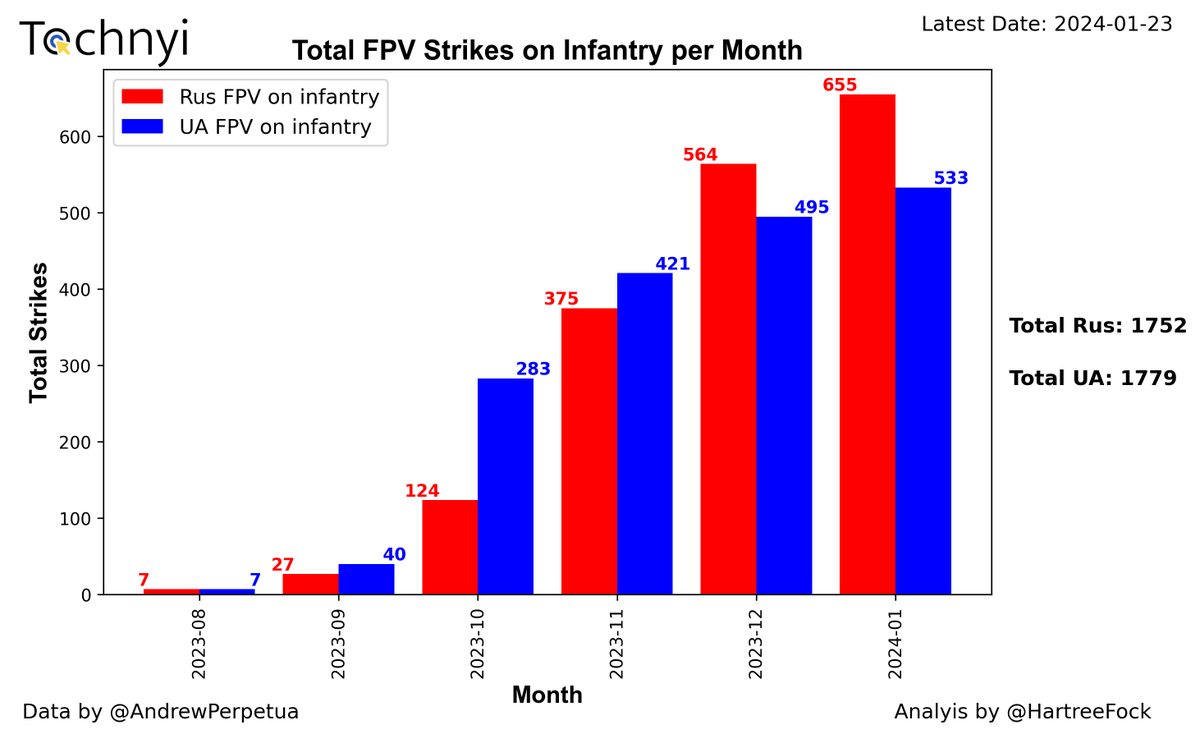
2/n We will begin by examining recent trends in FPV strikes on infantry, as illustrated in the first chart. Since my initial analysis, this situation has continued to evolve. Currently, the Russians lead in this area, having recently outpaced the Ukrainians in terms of numbers of strikes. From November 2023, the number of Russian strikes overtook Ukraine’s, at 564 to 495 respectively.  As of January 2024, with 8 days left in the month, they have thus far registered 655 strikes, 91 more than they did in December 2023 and more than Ukraine’s 533 strikes. This growing trend is alarming, indicative of an effective strategy to weaken the Ukrainian military by targeting its infantry at a time when Ukraine has reported a shortfall of manpower. As of today, the total count of FPV drone strikes stands at 1752 from Russia and 1779 from Ukraine, giving the Russians a lead of 47 strikes to date.Image
3/n In the previous article [1], I was not able to include an important chart about FPV strikes registered against defensive positions. Andrew has previously noted the concerning increase in FPV drone strikes by Russians against Ukrainian defensive positions; such as concrete bunkers, houses, treelines or trenches. As the chart below illustrates, the Russians are currently outperforming in this domain. Visual sources have recorded Russia’s use of FPV drones as demolition charges to destroy structures, causing the subsequent retreat of the defending force.Image
Read 7 tweets

Did Thread Reader help you today?

Support us! We are indie developers!


This site is made by just two indie developers on a laptop doing marketing, support and development! Read more about the story.

Become a Premium Member ($3/month or $30/year) and get exclusive features!

Become Premium

Don't want to be a Premium member but still want to support us?

Make a small donation by buying us coffee ($5) or help with server cost ($10)

Donate via Paypal

Or Donate anonymously using crypto!

Ethereum

0xfe58350B80634f60Fa6Dc149a72b4DFbc17D341E copy

Bitcoin

3ATGMxNzCUFzxpMCHL5sWSt4DVtS8UqXpi copy

Thank you for your support!

Follow Us!

:(