In 2014, David Graeber wrote an article for the Guardian in which he argued "Working-class people... care more about their friends, families, and communities. In aggregate... they're just fundamentally nicer."
The Economist put up a similar article at the time.
Were they right?
The Economist put up a similar article at the time.
Were they right?
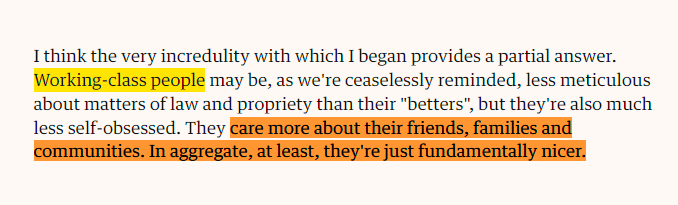
To make his case, Graeber wove a nice little narrative together about how the rich don't need to care, so they don't, and thus they're bad at empathy and they do things like hiring out the sons and daughters of the poor to do the job when empathy is needed.

The meat of Graeber's case was a set of two social psychological papers.
The first was a set of three studies in which the poor appeared to outclass the rich at tasks like the Mind in the Eyes, or figuring out the emotions of people they're talking to.
The first was a set of three studies in which the poor appeared to outclass the rich at tasks like the Mind in the Eyes, or figuring out the emotions of people they're talking to.
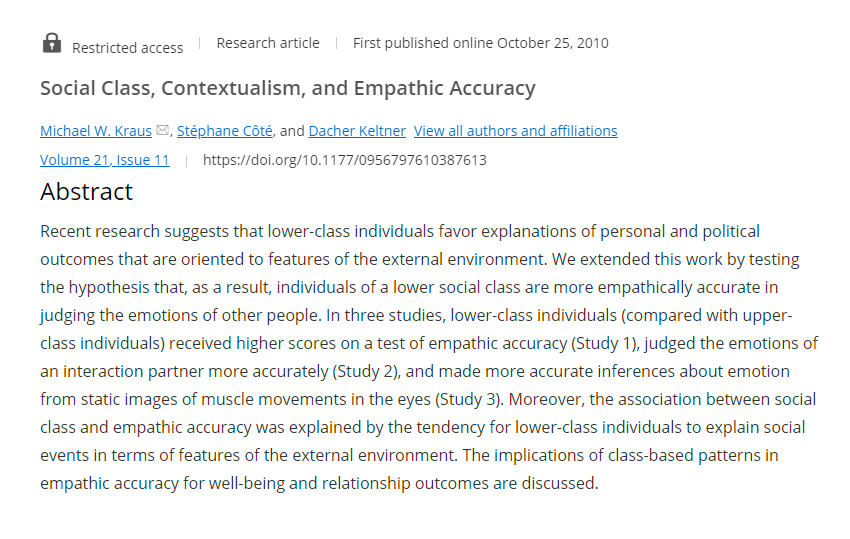
The main effects from these studies had p-values of 0.02, 0.02, 0.04, 0.01, 0.04, 0.03, and 0.04.
This first article was severely p-hacked. To make matters worse, one of the studies featured priming and two of them used "subjective" measures of social class.
This first article was severely p-hacked. To make matters worse, one of the studies featured priming and two of them used "subjective" measures of social class.
The second article was a series of seven studies that were, at times, just bizarre.
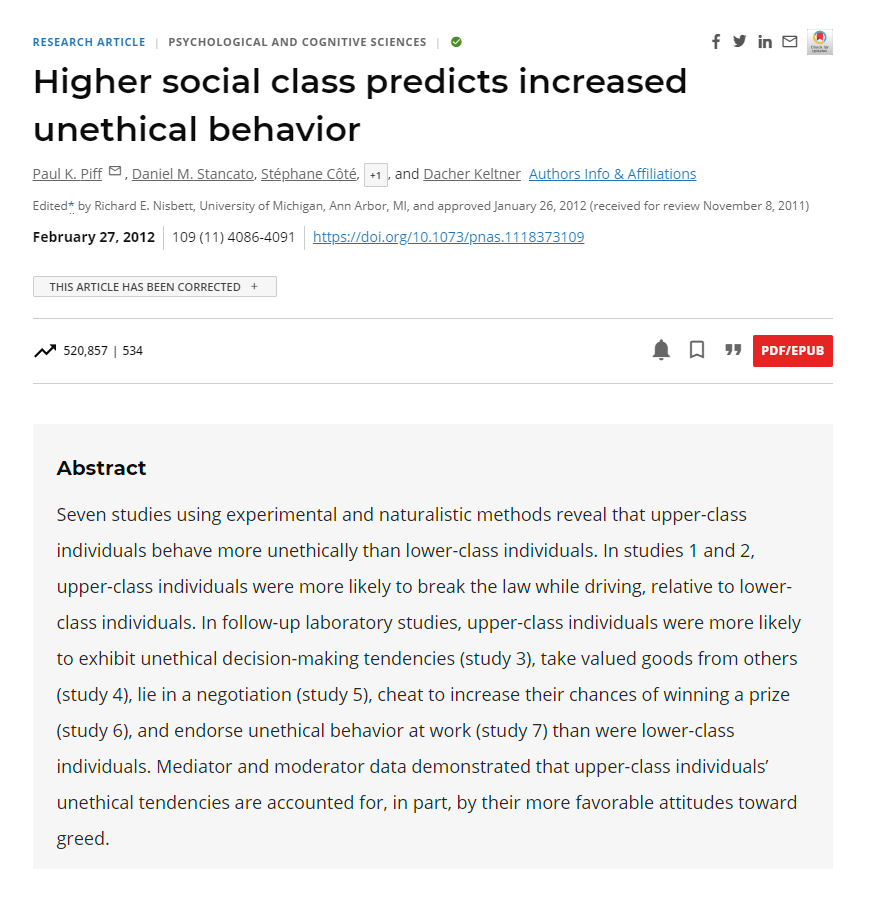
In the first two studies, students watched cars at a four-way intersection and tallied up how often the "upper-class" and "lower-class" cars cut off other vehicles and pedestrians.
What's an upper-class car? Beats me. It was based on student judgment.
p's = 0.046 and 0.040.
What's an upper-class car? Beats me. It was based on student judgment.
p's = 0.046 and 0.040.
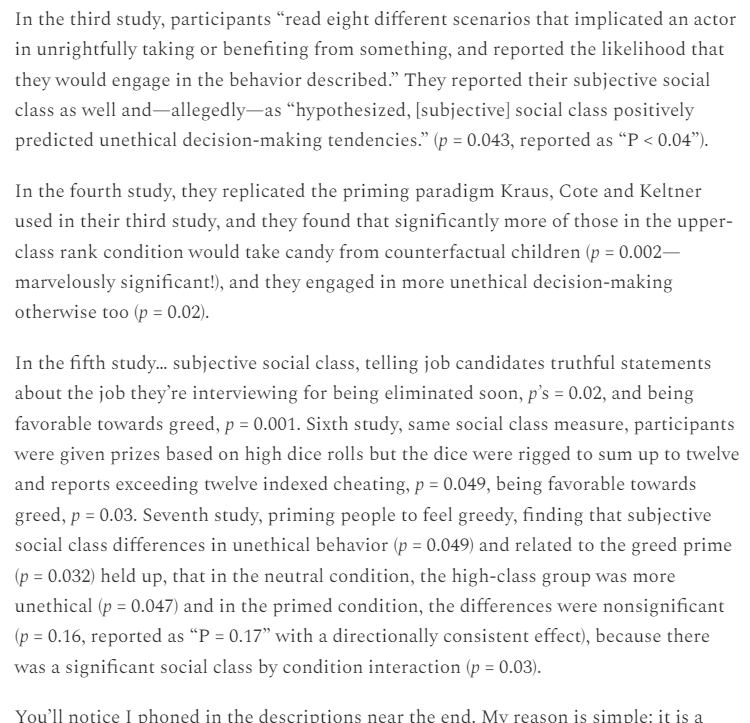
In the rest of the studies, things were similarly dodgy: almost all of the p-values were barely less than 0.05, the hypotheses were unbelievable, priming was featured, low power was abused, and liberties were taken in sampling and in defining key variables
So what happens next?
Some researchers looked at these studies and the media coverage saying that the rich were bad at being empathetic, were selfish, etc. and thought
Wait, why does every field but social psychology say the opposite?
Some researchers looked at these studies and the media coverage saying that the rich were bad at being empathetic, were selfish, etc. and thought
Wait, why does every field but social psychology say the opposite?
Social psychology, alongside nutrition, is a paragon of the replication crisis. Not in a good way, mind you, in the sense that remarkably many of its studies failed to replicate
Studies from outside social psychology got less coverage, but indicated the rich were more prosocial.
Studies from outside social psychology got less coverage, but indicated the rich were more prosocial.
The researchers decided to use large, population-representative samples with objective measures of social class to figure out if the rich were more prosocial or antisocial than the poor
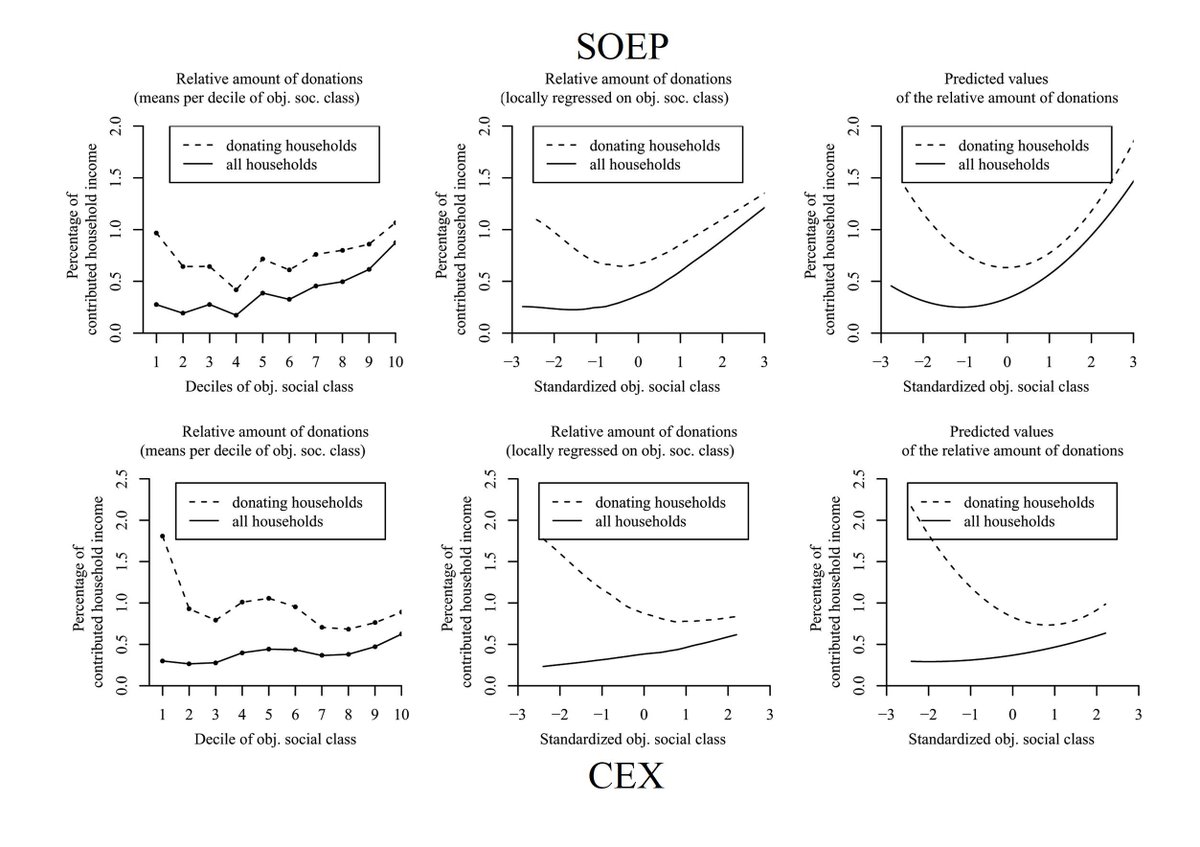
To start, in these two studies from Germany (SOEP) and the U.S. (CEX) they donated more often
To start, in these two studies from Germany (SOEP) and the U.S. (CEX) they donated more often
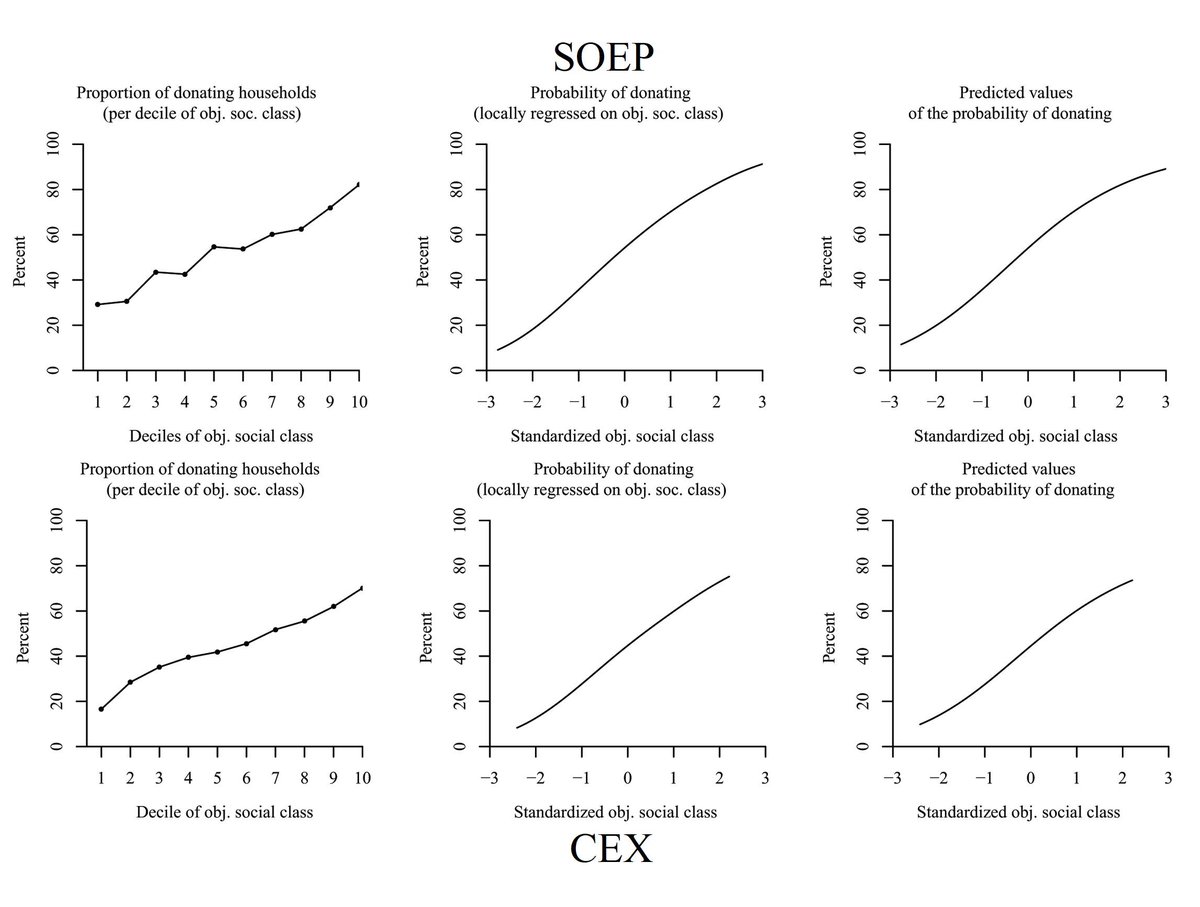
This is key. The reason is, some studies had indicated that the poor donate relatively larger portions of their incomes.
But, those studies all looked at donations among those who donated. In other words, they didn't account for differences in the likelihood of donating at all.
But, those studies all looked at donations among those who donated. In other words, they didn't account for differences in the likelihood of donating at all.
Account for that difference, and a proposed curvilinear relationship between relative amounts of donations and poverty disappears. Now, the rich just donate more absolutely and relatively!
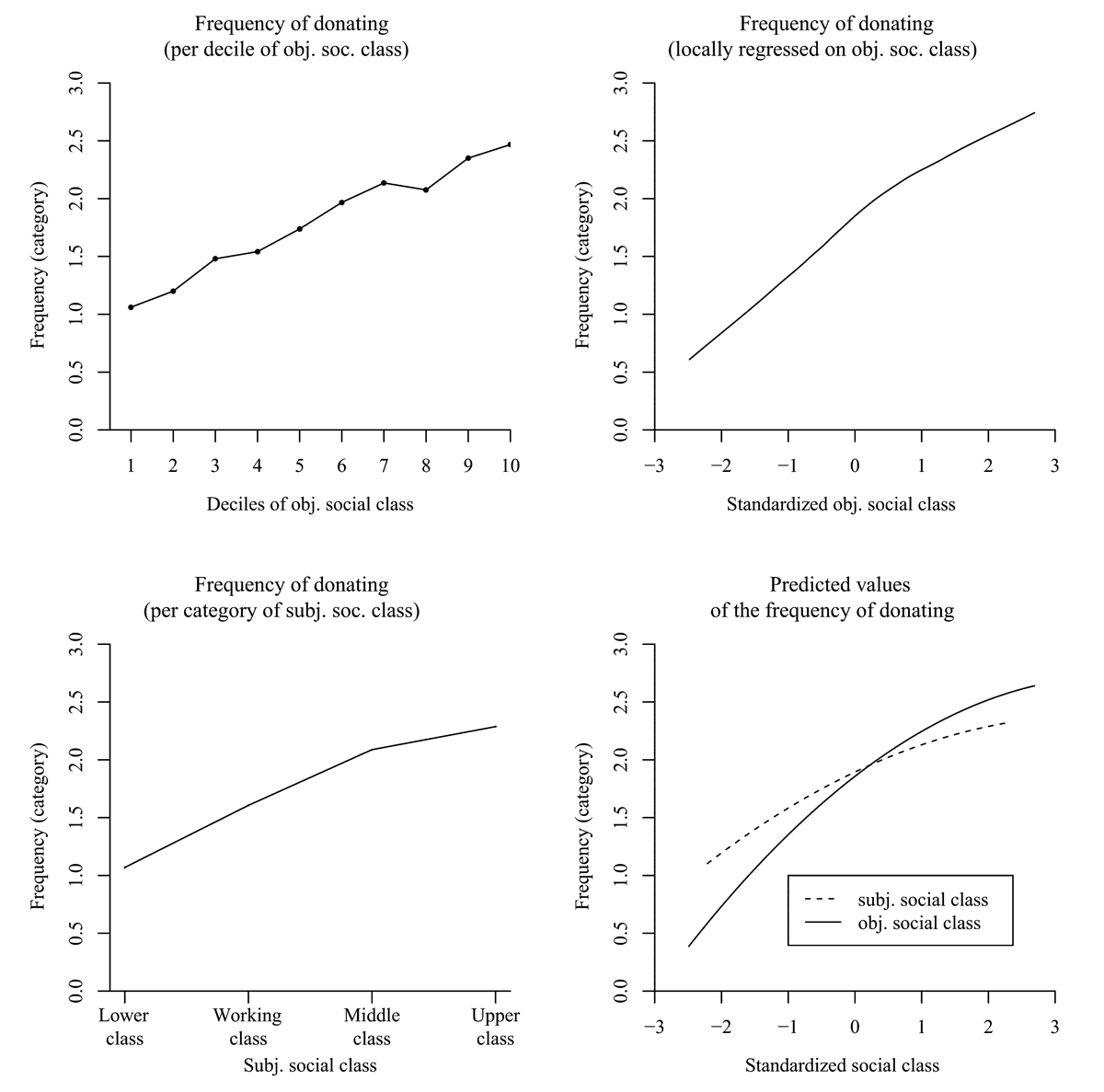
In the GSS, measures of both objective and subjective social class were available, so they could be discriminated and... it appears subjective social class might be weaker than objective social class as a predictor of at least this prosocial behavior:
You could argue donations aren't a great metric.
Fine.
So look at volunteering, which the rich in the SOEP were more likely to do (and do more frequently—not shown here).
Fine.
So look at volunteering, which the rich in the SOEP were more likely to do (and do more frequently—not shown here).
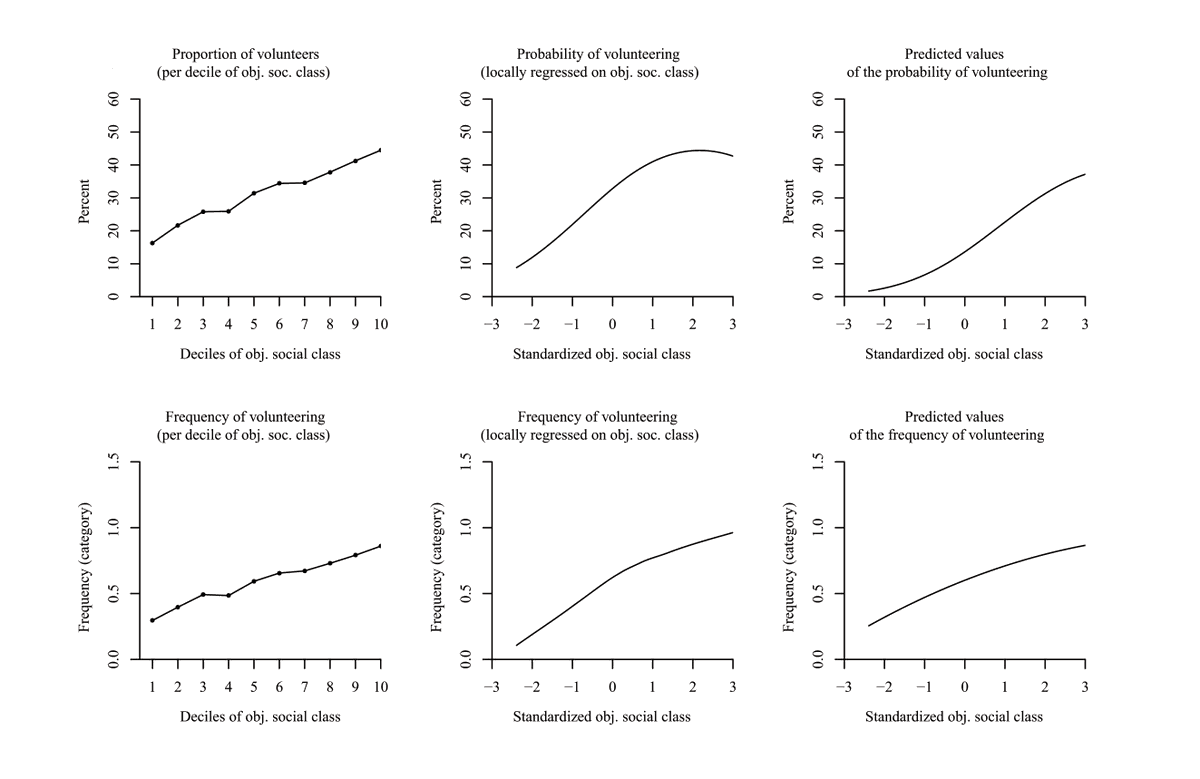
In the GSS, the same result emerged: the objectively and subjectively rich volunteered more usually (and frequently—again, not shown here).
This happens despite the poor having more free time and the rich spending more time each week gainfully employed on average.
This happens despite the poor having more free time and the rich spending more time each week gainfully employed on average.

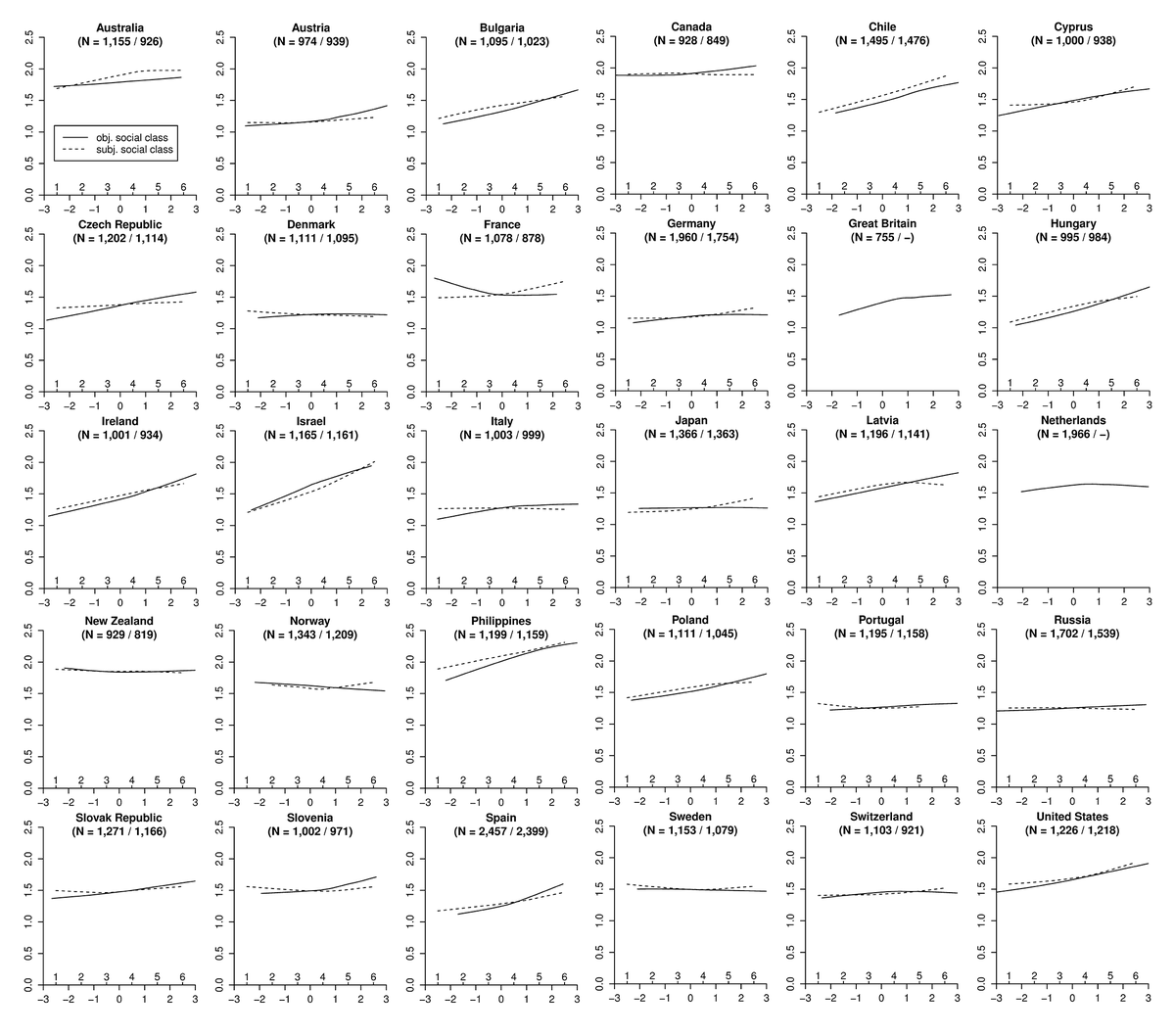
If you look in the ISSP—a large international survey covering more than 30 countries—the rich are more likely to volunteer at all in aggregate, and they volunteer more frequently, although there is some heterogeneity across countries in the frequency of volunteering relationship:
You could argue that the poor are more selfish because they're poor. And, OK! But even in the setting of the well-known trust game, the rich were more trusting and more trustworthy:
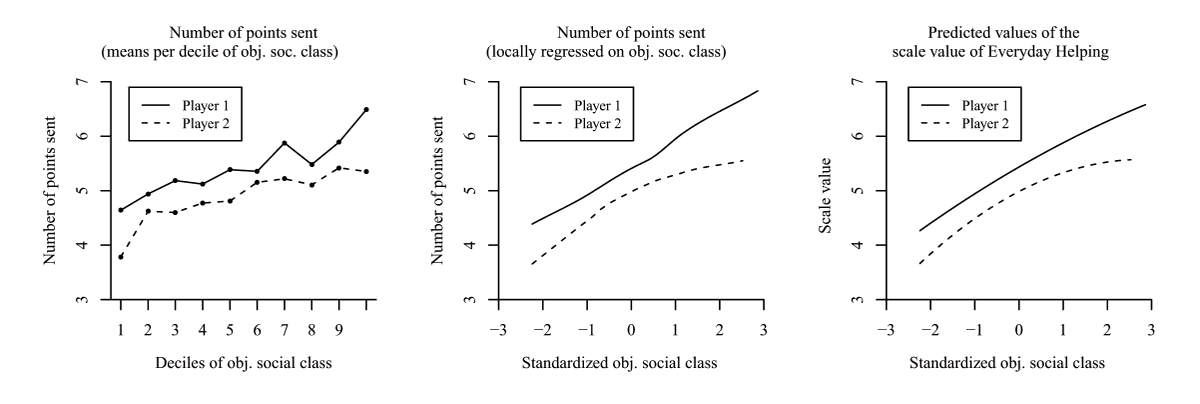
Since the poor commit more crime, are more likely to act indecent and loud, show less trusting and trustworthy behavior, and so on, we really have no reason to believe Graeber's article and so many others like it.
They were, at best, a relic of the replication crisis.
They were, at best, a relic of the replication crisis.
At worst—and this is likely what they really were—they were political wishcasting.
So let's not denigrate the rich, because it's not true that they deserve it.
So let's not denigrate the rich, because it's not true that they deserve it.
To read more, check out my latest article: cremieux.xyz/p/are-the-rich…
• • •
Missing some Tweet in this thread? You can try to
force a refresh