🧵How have our Seven Segments voting intention changed since 2019 & during the campaign? Starting with Progressive Activists, the only group where Labour now polls a lower than in 2019. Though this group will still overwhelmingly vote Labour the greens have made the most gains.
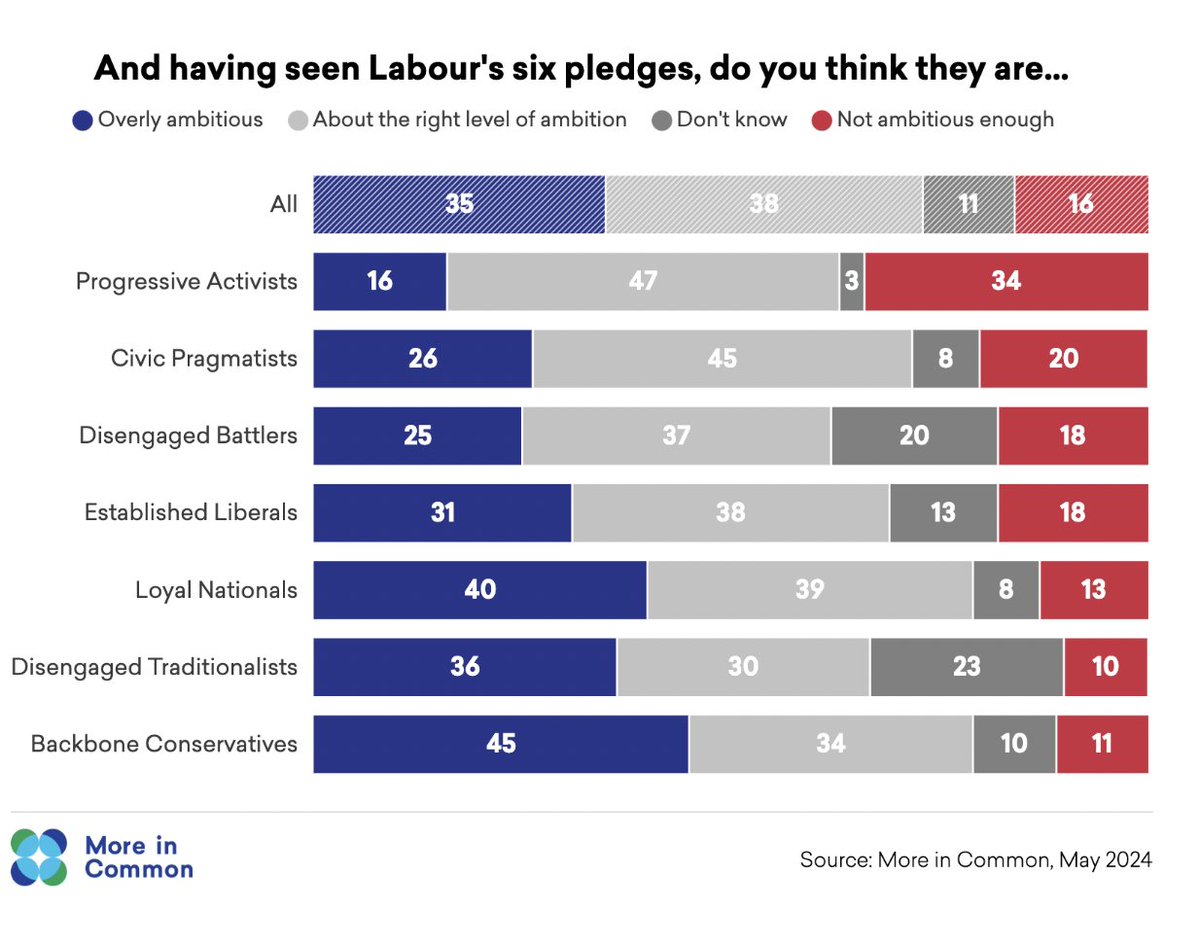
When people talk about left wing discontent they're referring to this group who tended to like Jeremy Corbyn - they're also the only group who are more likely to say Labour's pledges are under not overly ambitious. But it's important not to overstate it...
The drop is 10 points in a segment that makes up about 10% of population - something for Labour to think about, but not unduly worry them given many progressive activists are in seats where they can afford to shed some votes... & they've made much bigger gains with other groups.
Next up Civic Pragmatists. Labours vote is up with this more soft left group by about 8 points since 2019, though it has maybe dipped during the campaign. The Conservatives vote has halved since 2019 and Reform has little appeal to this group.
And this group are by far the biggest fans of Keir Starmer he has a +34 net positive view score with this group, higher than any other group and speaking to the fact Keir Starmer has moved Labour's coalition centre-left since 2019.
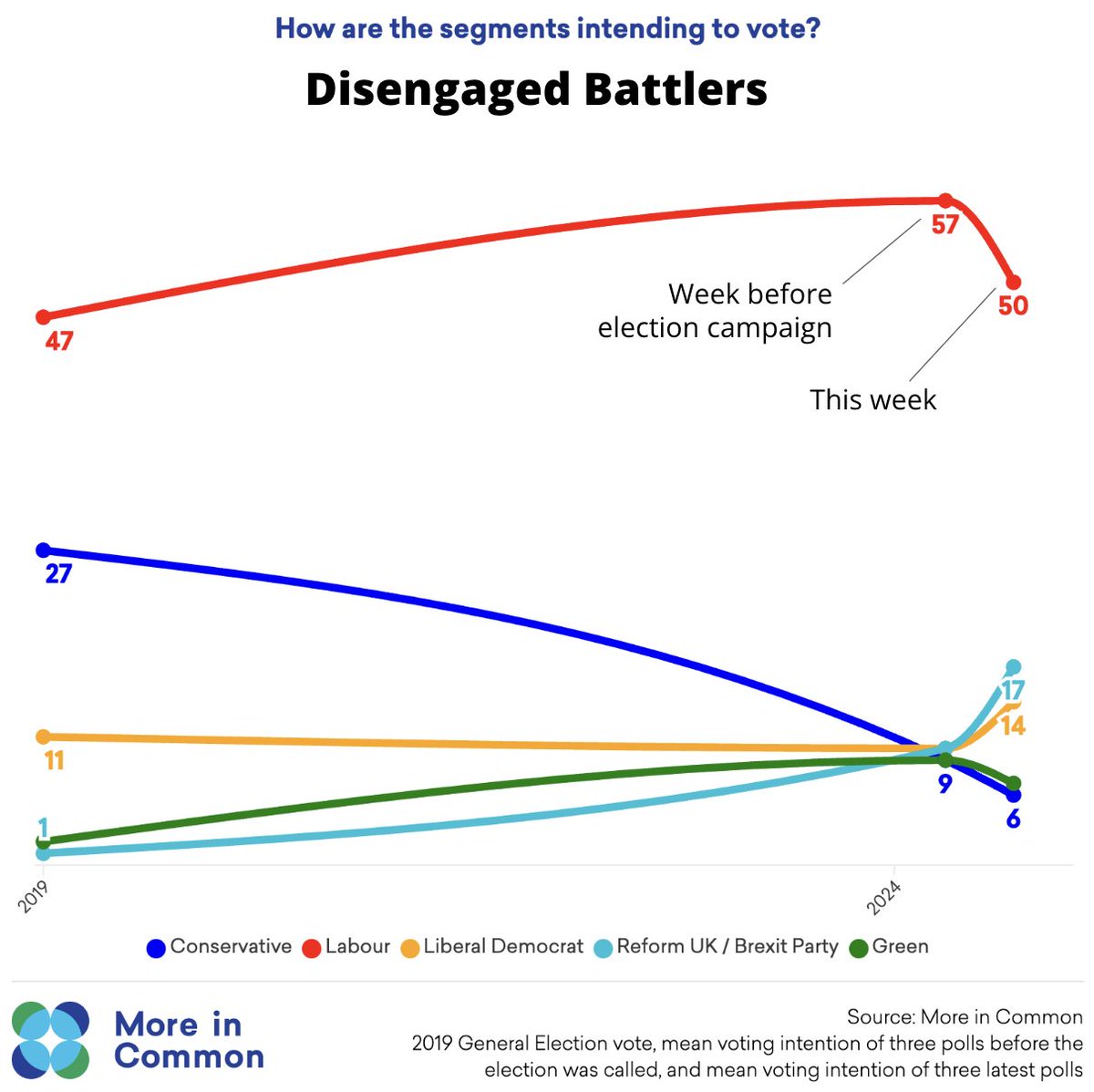
Disengaged Battlers are the most economically insecure group, most urban & most likely to be from minority ethnic communities. Labour's vote is up a little here, the Tory vote is now almost non existent & Reform has made gains off the back of their 'broken system' pitch
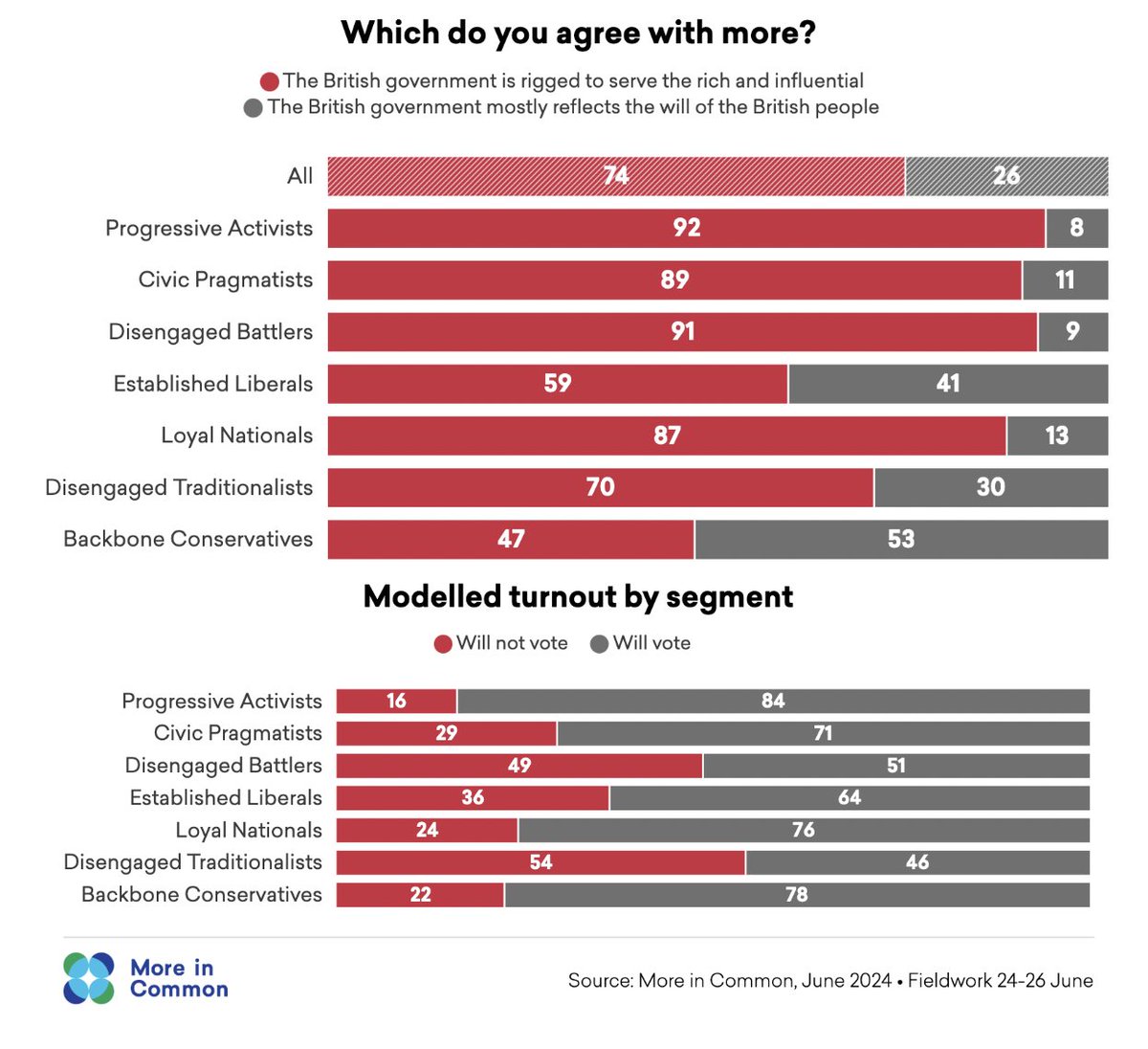
You can see here the extent of Disengaged Battlers distrust and apathy, they are second most likely to say the Government is rigged, and are projected to have the second lowest turnout of the seven segments.
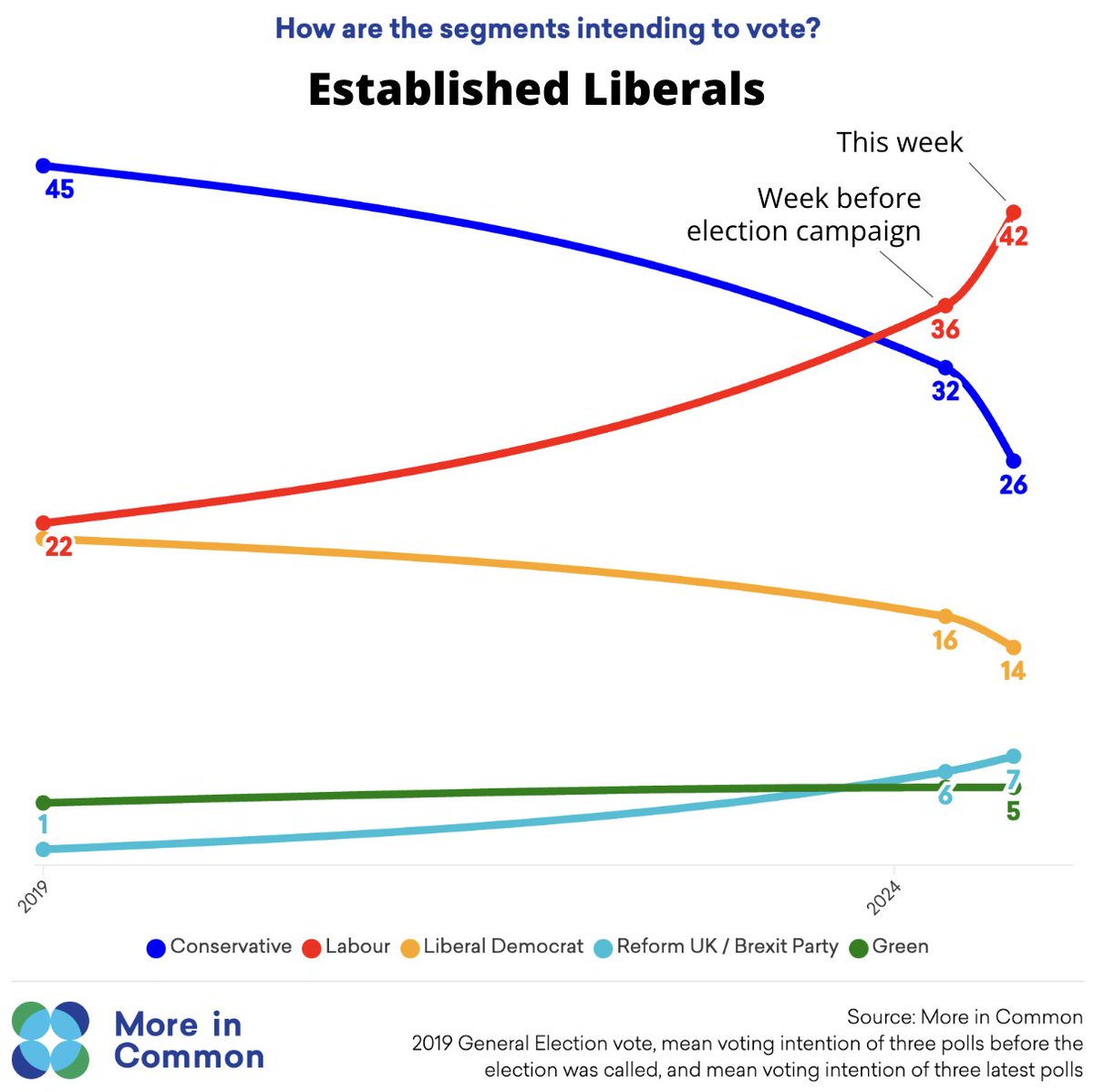
Here arguably is the biggie. Established Liberals, the more blue wall/Cameronite group. The only group where Labour's vote has grown both over the Parliament but also even more during the campaign. The Tory vote is down nearly 20 points with a former base group.
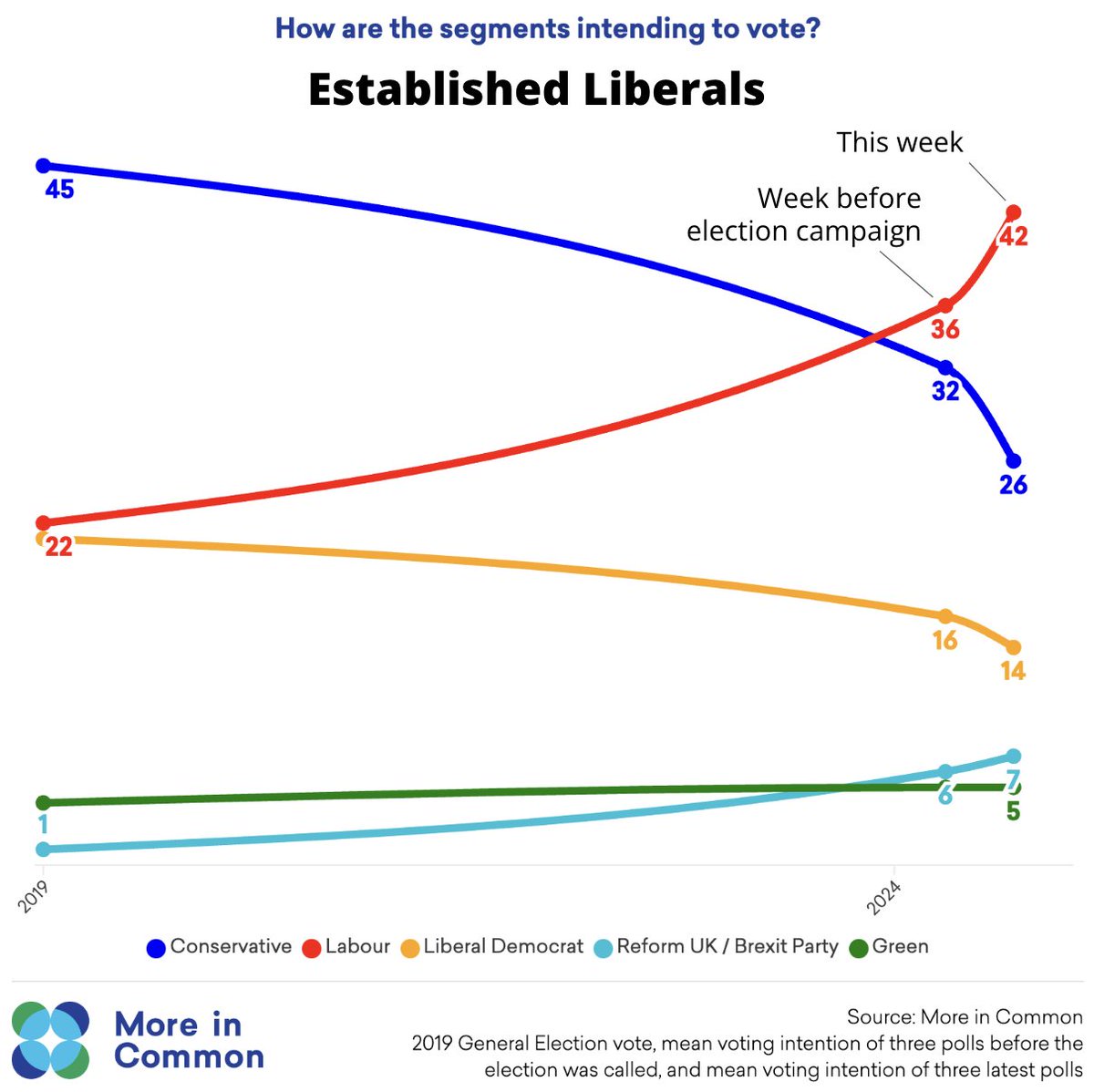
Reform has little support with this more economically right/socially liberal group. But striking just how well Labour are doing with them & it speaks to why they are close to running the board, biggest campaign gains with core Tory voters of the 2010s.
What about the other edge of the 2019 Coalition, Loyal Nationals: more socially Conservative/economically left voters who helped deliver Boris's victories in the Red Wall. Two stories here, sustained Tory decline, and gains for Labour, but also for Reform UK who move into second
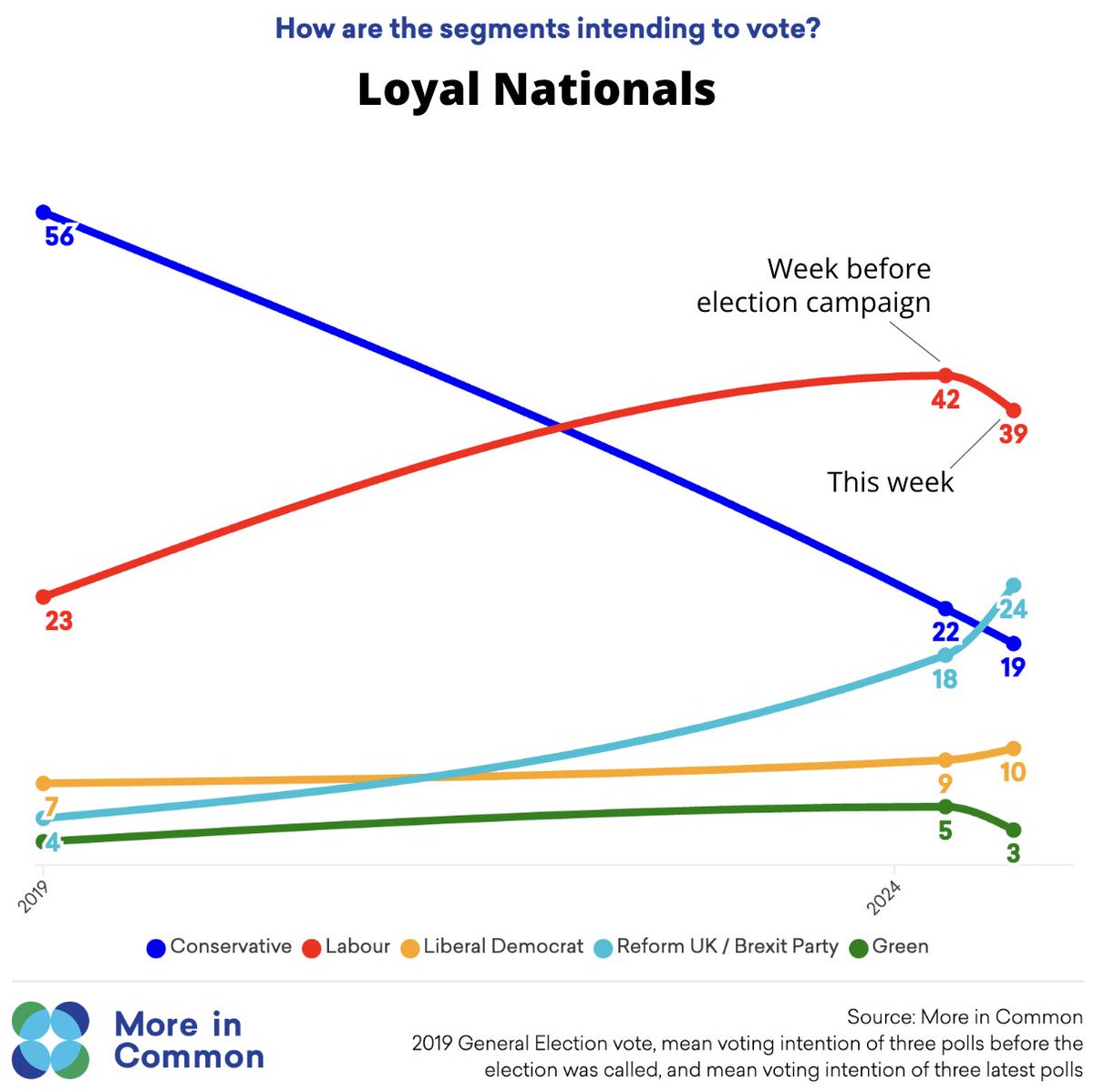
This group have by far the most positive view of Nigel Farage of any of the groups in- fact it's the only group with whom he is clearly in positive territory. In focus groups they tend to like his plain speaking and focus on immigration which is a top concern for Loyal Nationals
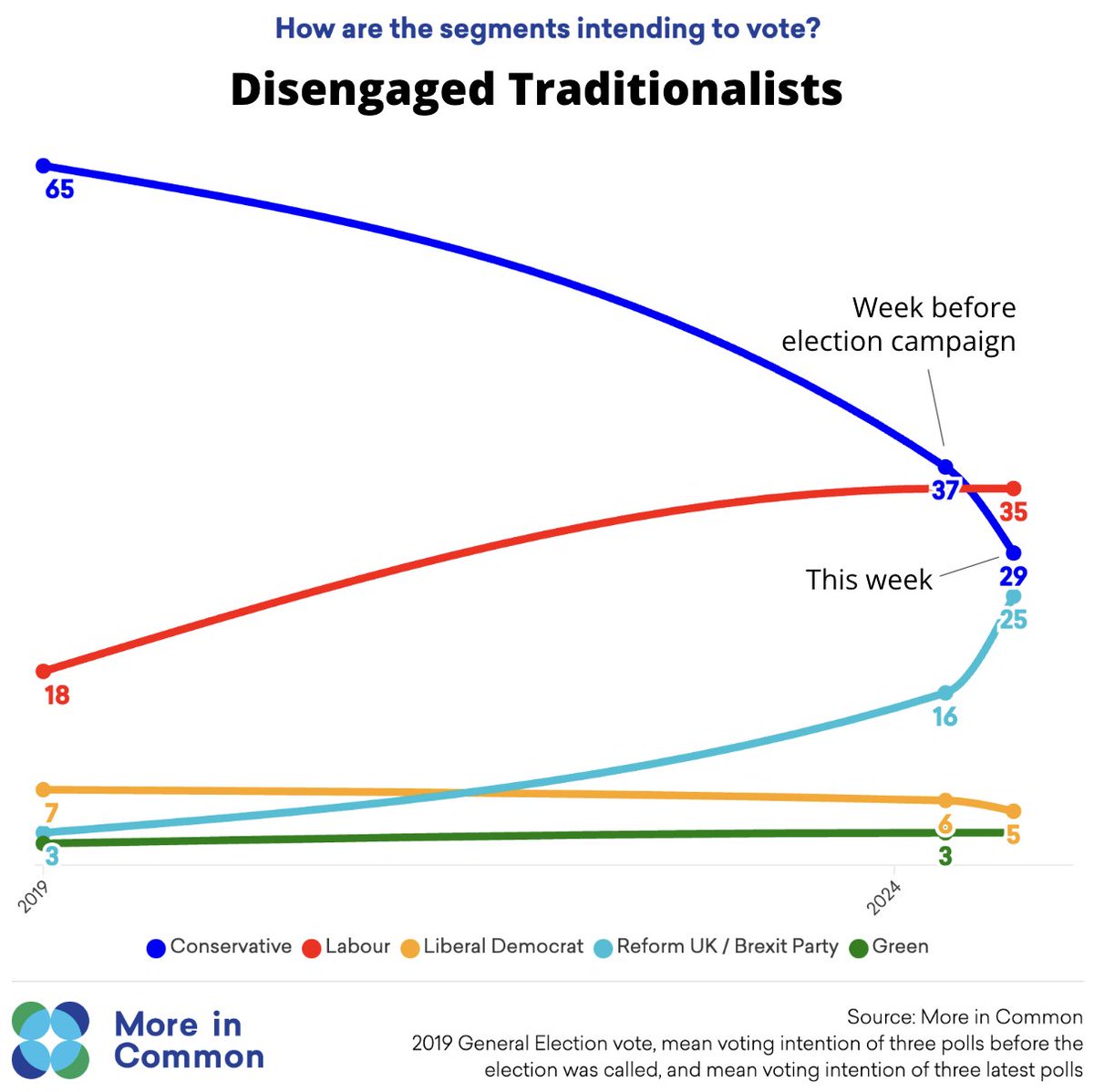
Disengaged Traditionalists are another story of Tory decline, the highest Reform UK share of any group and Labour moving ahead with the group best captured by 'Essex Man' or white van person - individualist, strong belief in rules/order and self reliance.
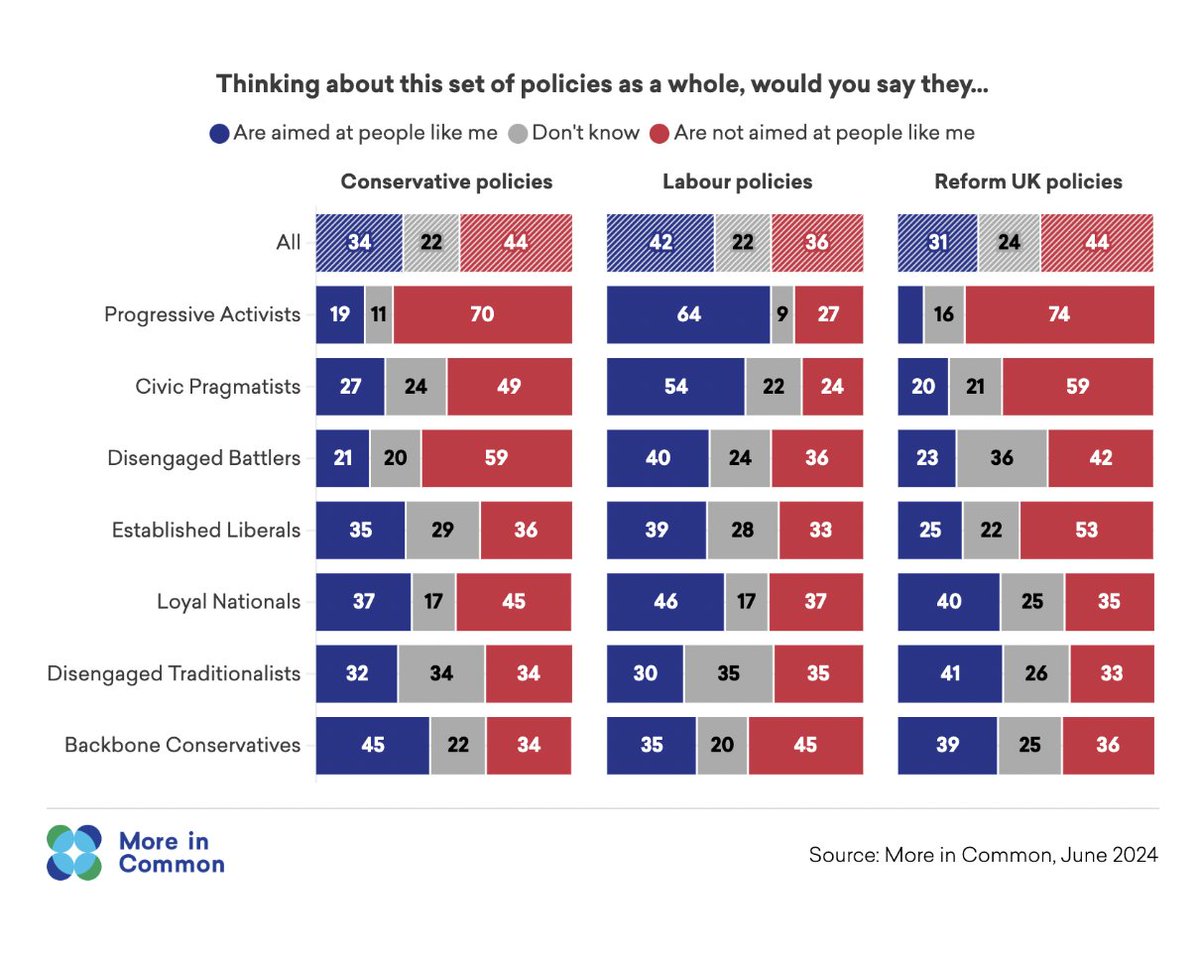
Unlike Loyal Nationals who are attracted to Reform because of Farage particularly, Disengaged Traditionalists are the most likely to see Reform policies as aimed at them. The other difference with Loyal Nationals is that LNs think Labour policies are aimed at them but DTs do not
Finally Backbone Conservatives, the only group with the Conservatives still on top. Labour and Reform have made gains, though Reform's gains are lower than with other right leaning groups, in part the age profile of this group tending beyond the peak Reform age.
🧵Think a Tory message of 'we don't want centrists' is a real risk and a imo a misanalysis of choices. The evidence shows parties rarely succeed when they've told certain groups of voters they don't want them and the danger is the Tories are now doing that in both directions.
The Tories since the election are only being kept at 20% by voters that they have won back from the Liberal Democrats and Labour, it is a high risk strategy to tell these voters you're not interested in them.
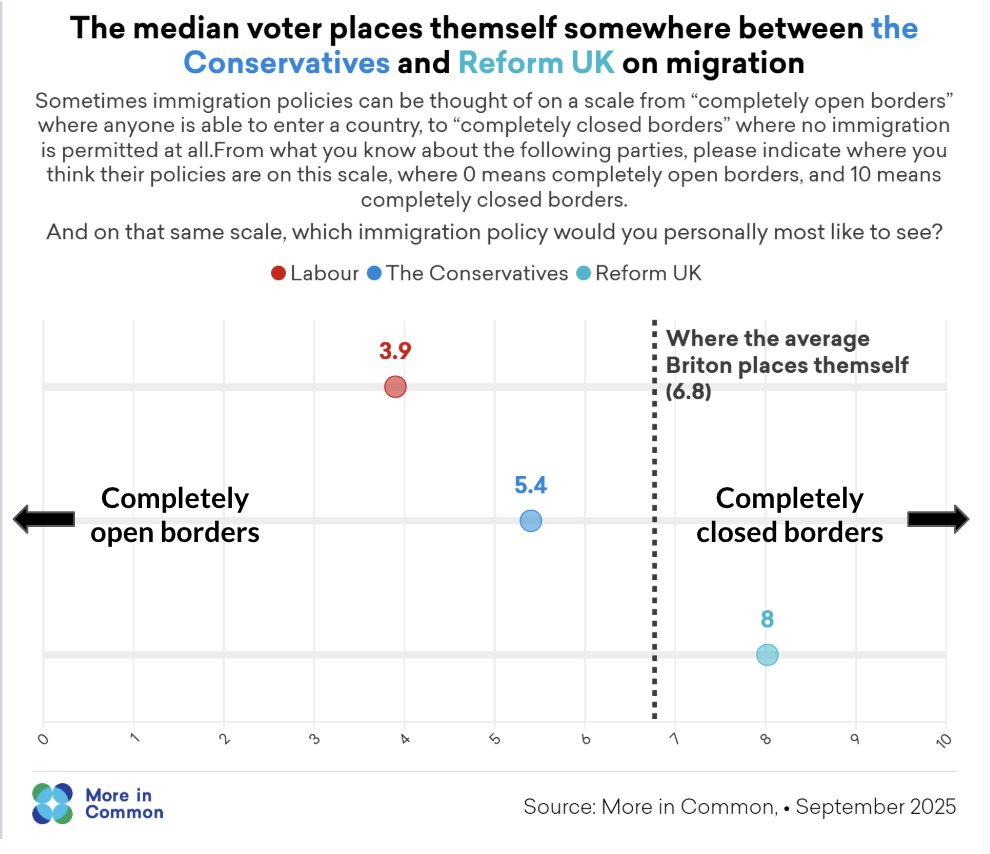
But here is where I think misanalysis is - the debate assumes party lurching one way or the other on immigration. But median voter puts themselves between Reform & Tories on borders: suggesting there little path for a centre-right party without control first immigration message
🧵Combination of what's happened to polls in Denmark and Canada (again), along with our UK polling and focus groups over the past few weeks has made me revise upward what I think likelihood and impact of a Trump effect on UK electoral politics could be.
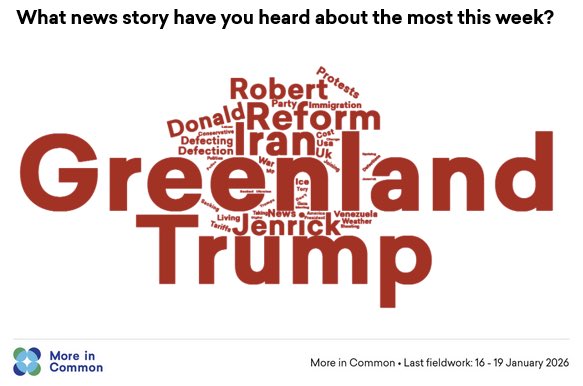
Firstly fair to say Trump has been close to the top of every focus group we've run in the New Year "“I feel he’s pushing us towards world war three" or [asked what the biggest threat to the UK was] "“I think Trump, full stop.”. People are genuinely worried/discombobulated/scared
We also know Trump is unpopular in the UK -40 net approval rating and don't like his domestic or foreign policy, but more than that it's the sense he as countless people have said versions. of in groups "makes me worried for the world my kids will grow up in"
More i think about it, more I think treating a potential break of the pledge not to raise income tax/NI/VAT as 'just another unpopular decision' is a big mistake. The (then) 2 main parties fought a whole election framed by their promises not to do it & implication for political trust of breaking it maybe deep.
This isn't a sin of omission, the promise was explicit. You can argue the promise was misguided (and imo there was always room for Labour to pledge to reverse the Hunt NI cuts and still won with a hefty majority and more room for manoeuvre.) But it was the promise.
The only way to break it without a severe trust penalty is to convince people the situation has changed so dramatically it has to - the Sunak NI rise of 2022 was swallowed because of Covid.
Scale of Plaid win in Caerphilly is significant, not least because of what it says about the potential for progressive tactical voting in (relatively) high turnout elections to block Reform. Voters in this race knew it was a Plaid-Reform contest and voted accordingly.
So will this be the case in more seats and more importantly whereas Labour were the party that was squeezed here, in contests where they are the main contender against Reform can they, even as incumbents, get disillusioned progressives to come back and back them tactically.
For Reform this places a greater premium on growing their support pool and reaching more “soft Reform voters, turning out a highly motivated base clearly works in fragmented local council elections but isn’t alone enough in the face of tactical voting.
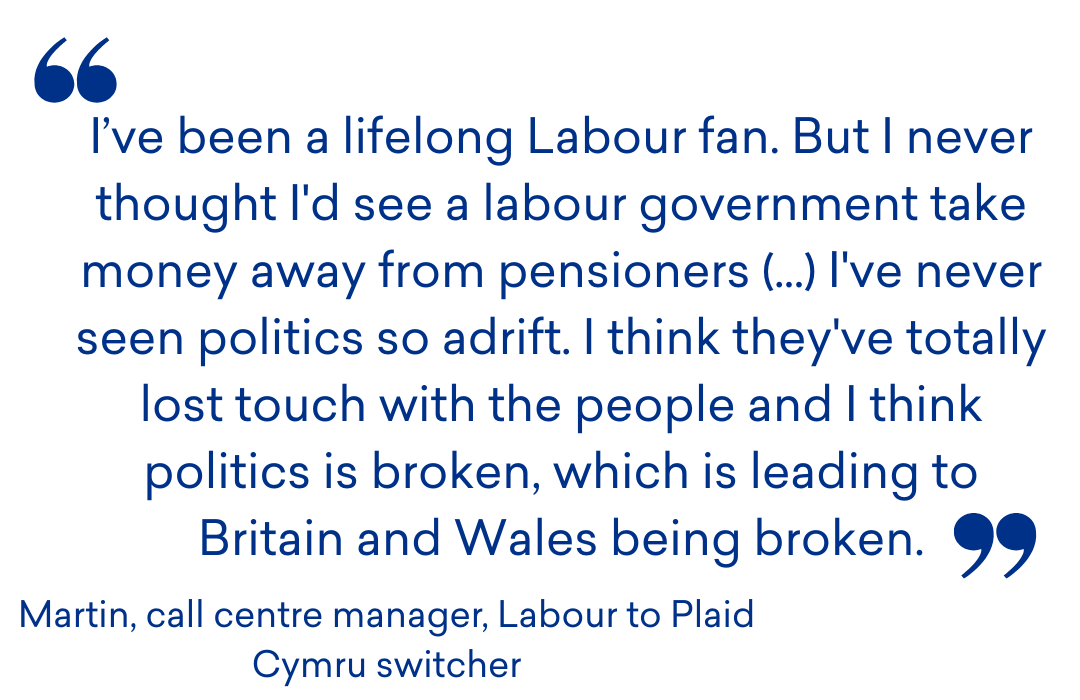
With Labour's struggling in Caerphilly, we conducted a focus group to try and understand why voters were moving away from Labour in a traditionally rock solid seat. By far the biggest driver, typified by the winter fuel allowance decision was a sense the party had lost its way.
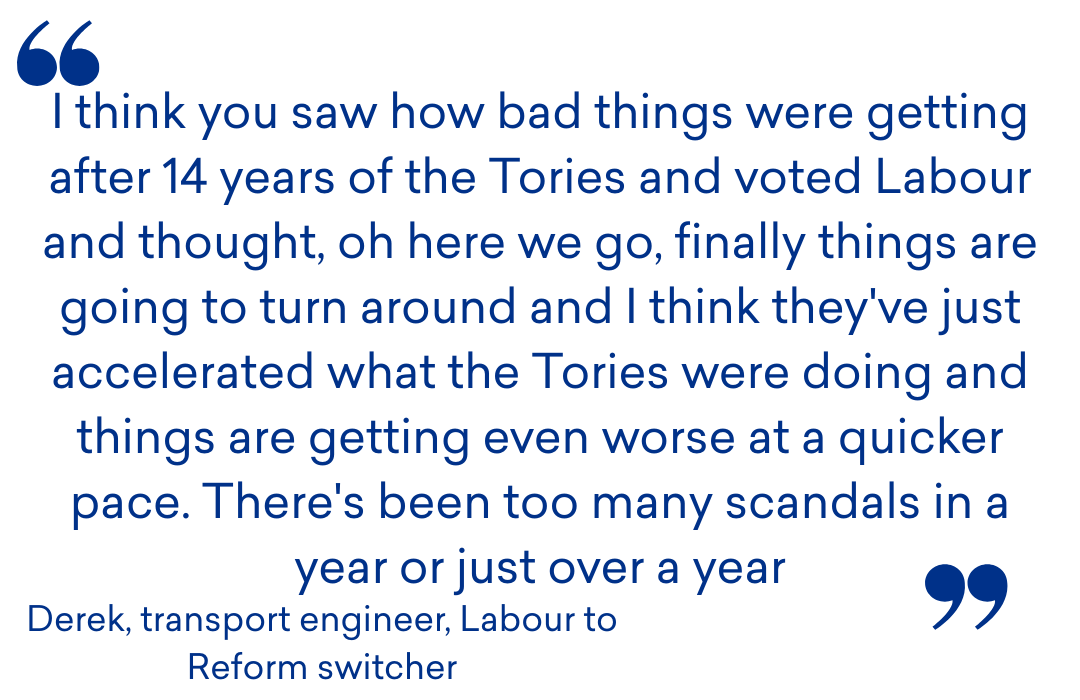
To these voters the first year seemed little different to what had come before with the Tories - both in terms of policy and scandal. There was a sense of disappointment that the change people thought they were voting for last July hadn't materialised.
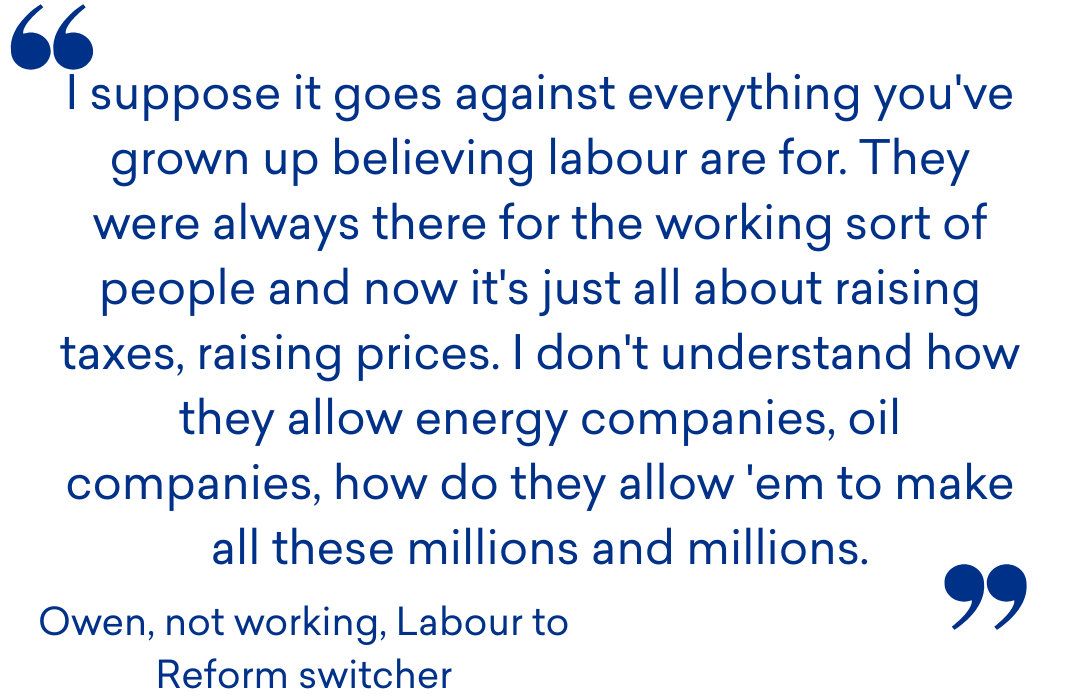
Again that sense that Labour were somehow not for 'working people' anymore and were making the cost of living crisis worse was a driver of frustration for the group - and the sense that the wealthiest were benefiting from it.
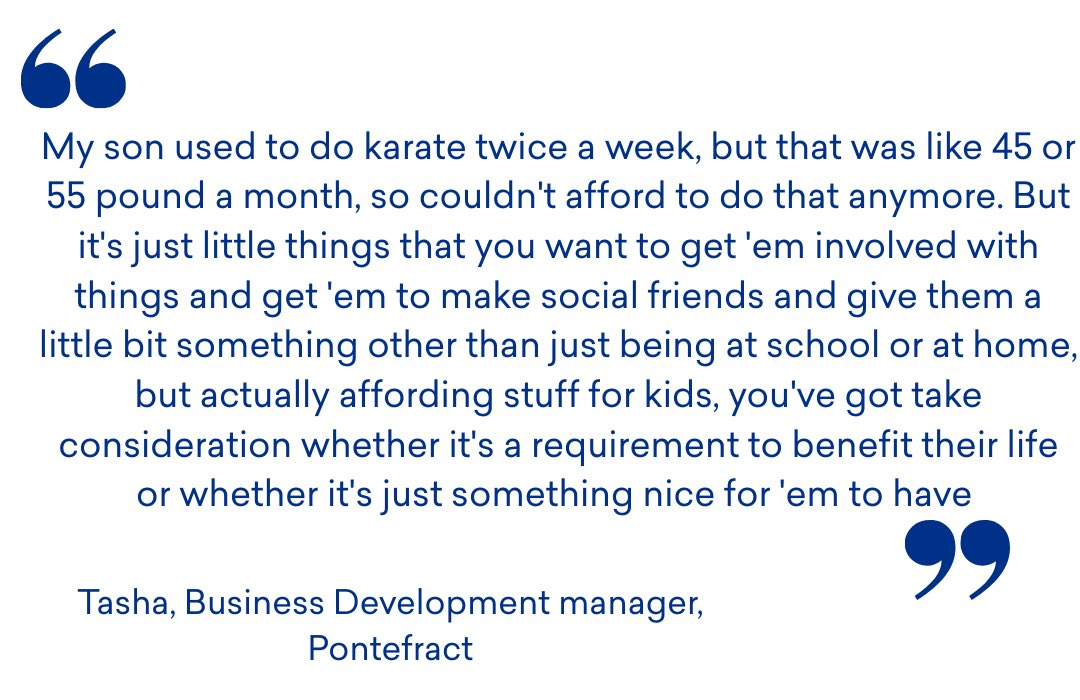
A focus group of women in Pontefract last week depressingly captured how the cost of living was driving the mood of miserable Britain. I’ve talked before how it saps the joy out of life, but it’s more than that having to pull your kid out of karate classes is genuinely miserable
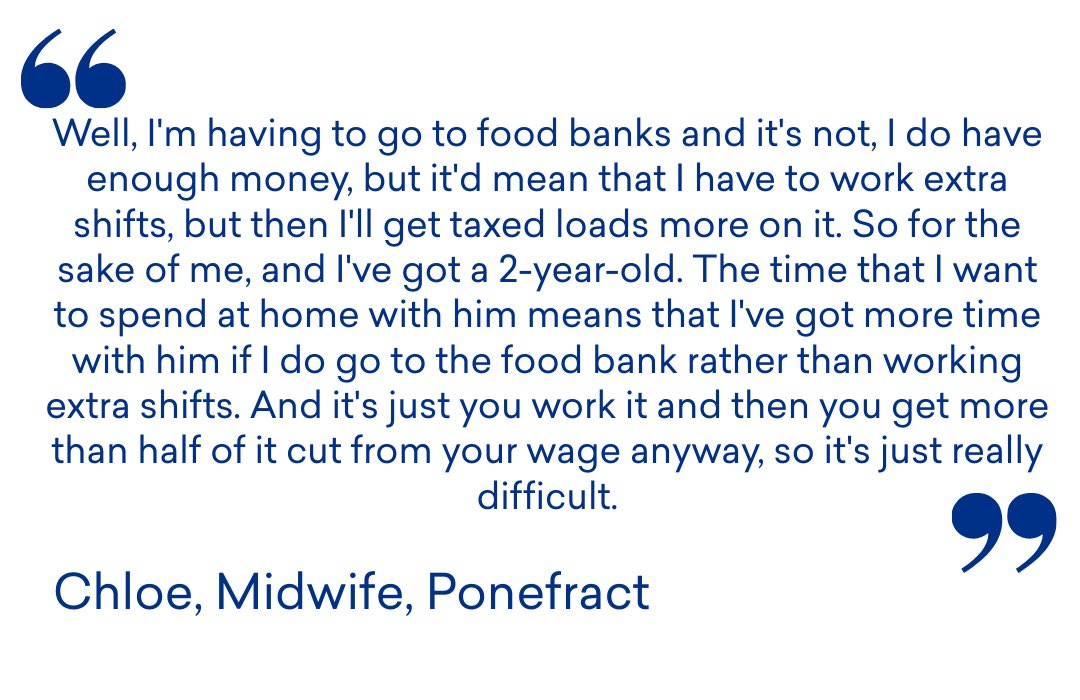
I think what people miss is the extent to which is creates anxiety everywhere, no one on moderate incomes feels safe, one bad bill can tip people used to being about fine if not comfortable into a situation where they’re using a food bank.
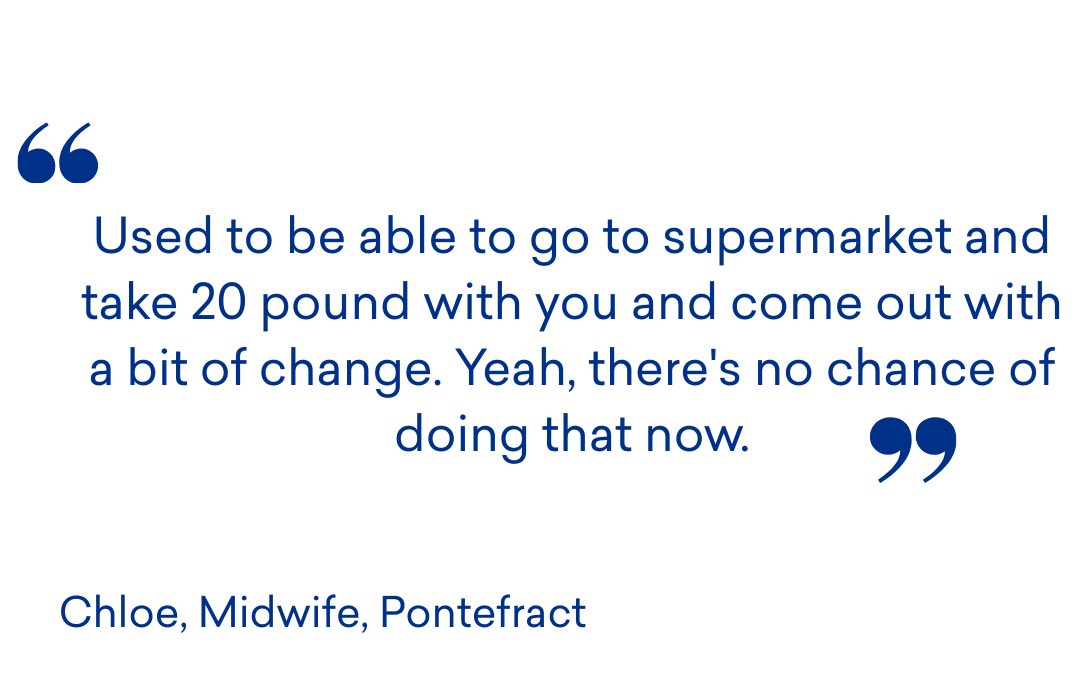
And while cost of living is treated like a 2022-2024 political issue the reality is most people are still going into supermarkets and being shocked by how much things cost.