DEI 4 White Guys Profile picture
Jun 27, 2024 9 tweets 4 min read Read on X
A how-to guide on making your company’s DEI department self destruct 🧵

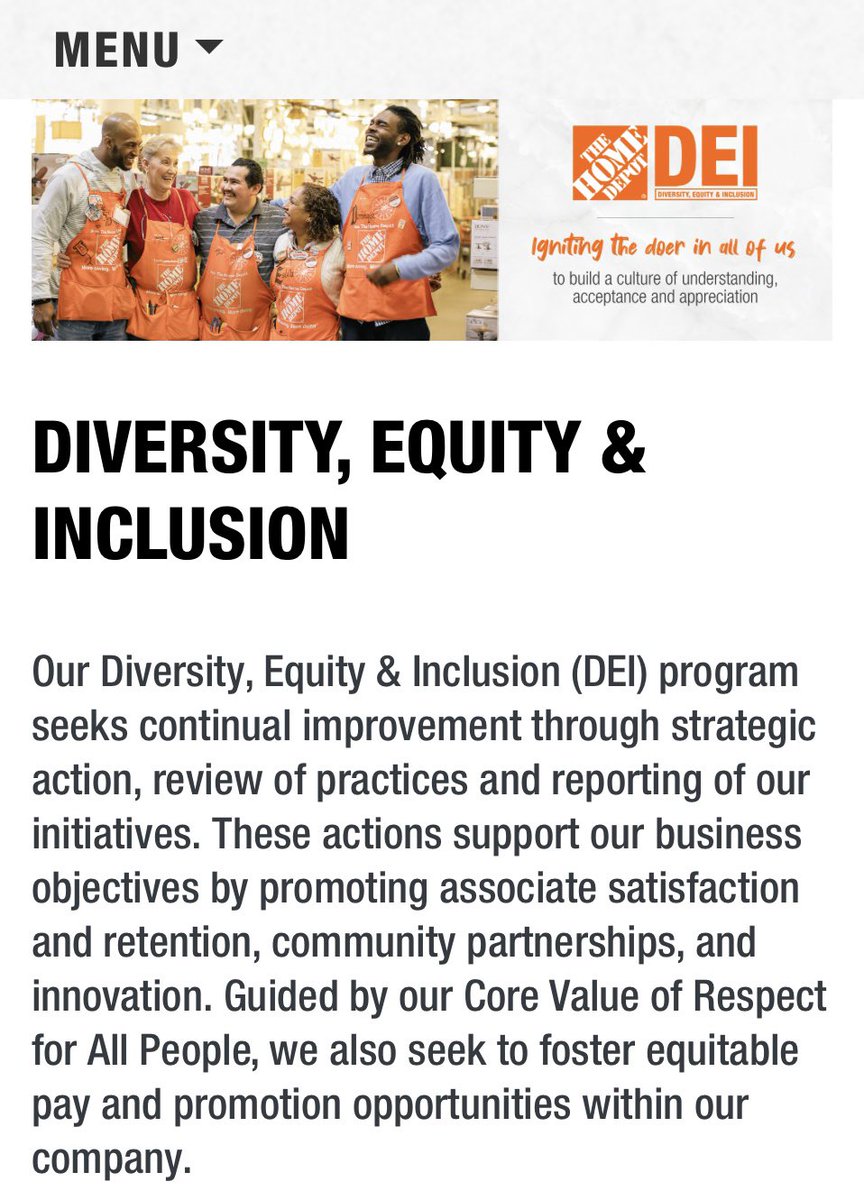
1. Search your company’s name and the word “diversity”. In this example, we’ll use Home Depot. Image
2. Scroll through their DEI page and find their employee network groups. They’ll likely have one for Black, Asian, Latino, Indigenous, LGBT, Disabled, Women, Seniors, and Veterans.

Home Depot calls them Associate Resource Groups.
corporate.homedepot.com/page/associate…
Image
3. Find out who your company’s chief diversity or people officer is, and get their email. You can find it in your company’s directory or LinkedIn.

Derek Bottoms is the Chief Diversity Officer of Home Depot
Image
Image
4. Using their own DEI language, email your chief diversity officer from your company email and ask if there is an approved process, standard, or procedure to create an employee network group, and that you’d like to create one for people of European descent or who identify as White.Image
Image
5. Here’s an example to Derek Bottoms, Home Depot’s Chief Diversity Officer:

Mr. Bottoms,

I recently learned that Home Depot has Associate Resource Groups (ARGs) which promote our culture of inclusion, support diversity, and help drive employee engagement through fostering professional development, raising cultural awareness, celebrating diversity, and offering community outreach opportunities.

As far as heritage ARGs are concerned, I saw that we have an ARG for African American, Hispanic, Native American, and Asian American associates.

I would like to contribute and help increase the diversity of the ARG program, and promote Home Depot’s culture of inclusion by creating an ARG that includes, represents, celebrates, fosters professional development, raises cultural awareness, and offers community outreach opportunities for my heritage: Americans of European descent and/or who identify as White.

Is there an approved process, standard, or procedure for creating a new ARG?

Thank you for your time.
6. This template can be used for virtually every major corporation in America. They’re all set up the same way in compliance with ESG scoring.
7. The purpose of this is three fold:

1 - Getting representation for White people that’s afforded to every other group on the basis of race.

2 - Having them tell you no or retaliating against you for requesting the same thing they offer to every other group based on race, which gives you standing to sue.

3 - They cut off their nose to spite their face and end their DEI programs, because they would rather do away with it all than afford the same privileges to White people as a collective.
8. If they allow you to try to create one (believing you can’t on your own), we at @DEI4WhiteGuys can help you through the process of complying with their standards and procedures.

If they deny you or retaliate against you, we can help connect you with pro bono lawyers who are in the anti-DEI space.
9. We are not a law firm, we don’t give legal advice, we won’t ask for your info or for your employer’s info unless you want to share it, but we will also not ask you to do something we haven’t already done ourselves (and are still employed).

DEI departments are expecting individual White people to complain about DEI policies, but they never envisioned we’d collectivize and ask for equal treatment.

This is the safest way to fight for White advocacy and protect yourself in the process.

• • •

Missing some Tweet in this thread? You can try to force a refresh

 

Keep Current with DEI 4 White Guys

DEI 4 White Guys Profile picture

Stay in touch and get notified when new unrolls are available from this author!

Read all threads

This Thread may be Removed Anytime!

PDF

Twitter may remove this content at anytime! Save it as PDF for later use!

Try unrolling a thread yourself!

how to unroll video
  1. Follow @ThreadReaderApp to mention us!

  2. From a Twitter thread mention us with a keyword "unroll"
@threadreaderapp unroll

Practice here first or read more on our help page!

More from @DEI4WhiteGuys

Feb 24
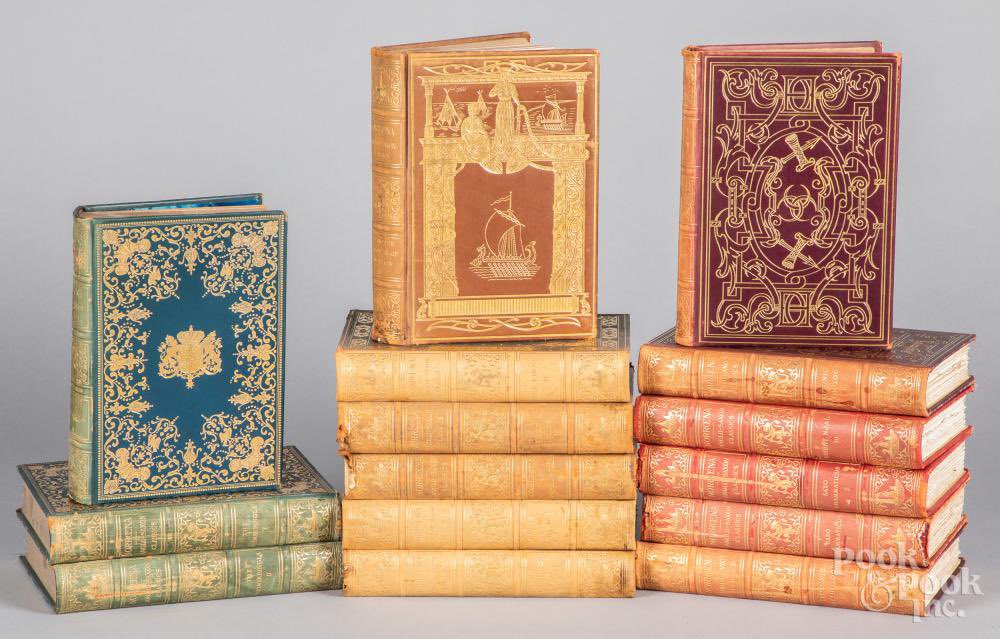
🧵 Norroena: Anglo-Saxon Classics is a landmark 15 volume collection subtitled “Embracing the History and Romance of Northern Europe”. These volumes gather English translations of key medieval texts from the Norse, Icelandic, Danish, and broader Germanic/Teutonic traditions.

It was published by the Norroena Society in limited editions between 1905-1911 under the editorship of Rasmus B. Anderson, a pioneering American scholar of Scandinavian studies, former U.S. Ambassador to Denmark and advocate for Northern European heritage.

Anderson viewed the project as a way to preserve and popularize the shared cultural roots of Northern European peoples (including Anglo-Saxon, Scandinavian, Teutonic, and Celtic strands), presenting them as foundational "Anglo-Saxon classics" in a broad sense - texts that illuminate pre-Christian mythology, heroic sagas, royal histories, and epic poetry that influenced much of European literature and identity.

The books are renowned not just for their scholarly content but for their lavish production: ornate bindings (often leather or cloth with gilt tooling), marbled endpapers, color frontispieces, and illustrations. They include major works like:

- The Danish History of Saxo Grammaticus (2 volumes)
- Teutonic Mythology: Gods and Goddesses of the North (3 volumes)
- The Volsung Saga
- Heimskringla (Snorri Sturluson's lives of the Norse kings, 3 volumes)
- The Story of Burnt Njal (Njáls saga)
- The Elder and Younger Eddas
- And other sagas, romances, and mythological compilations

This collection stands as one of the most ambitious English-language efforts to compile Northern European medieval literature for a general (yet culturally invested) audience. It's a treasure trove for anyone interested in Viking Age history, Germanic paganism, epic storytelling, or the deep literary heritage connecting Scandinavia, Iceland, and Anglo-Saxon England.Image
🧵 The first two books in the Norroena: Anglo-Saxon Classics collection, Saxo Grammaticus takes center stage with The Nine Books of the Danish History (from his full Gesta Danorum, or "Deeds of the Danes"). This is the English translation by Oliver Elton, with a detailed scholarly introduction and notes by Frederick York Powell, plus a general preface by editor Rasmus B. Anderson tying it into the broader Northern European heritage.

Written in Latin around 1200 AD by Saxo ("the Grammarian" or "the Learned"), a Danish cleric and historian, Gesta Danorum is one of the most important surviving chronicles of early Danish (and broader Scandinavian) history. Commissioned by Archbishop Absalon, it spans from legendary prehistoric times to the late 12th century in 16 books total, but the Norroena edition focuses on the first nine, which are the richest in myth, legend, and pre-Christian lore.

These opening books form a sweeping epic tapestry:
- Mythical origins of the Danish people, with gods, giants, and heroic founders blending euhemerized Norse deities (Odin, Thor, and others appear as ancient kings or wanderers) into "historical" narrative.
- Legendary kings and warriors, including shield-maidens, epic battles, cunning kings like Frode the Peaceful, and tales of vengeance, voyages, and supernatural feats.
- Famous stories that echo or parallel Norse sagas and Eddic material, most notably the prototype of Shakespeare's Hamlet (Amleth's tale of revenge, feigned madness, and triumph).
- Vivid depictions of Northern warrior culture: hall-feasts, duels, seafaring raids, funeral rites, magic, proverbs, and the clash between pagan ways and emerging Christianity.

Saxo writes with a patriotic zeal to glorify Denmark's past, drawing on oral traditions, Icelandic sources, classical models (he imitates Latin historians like Livy and Virgil), and folk-beliefs. The result is a bridge between pure mythology (as in the Eddas) and "real" medieval history. Packed with folklore, supernatural beings, and the raw spirit of the Viking Age and earlier Germanic tribes.

These volumes preserve one of the grandest attempts to record the Northern European ancestral legacy. For readers tracing Anglo-Saxon, Teutonic, or Scandinavian roots, Saxo's work reveals shared heroic ideals, pagan worldview, and the deep cultural threads connecting Denmark to the broader Northern world. It's essential reading for anyone fascinated by where history meets myth. Raw, bloody, poetic, and unapologetically proud of its heritage.Image
Image
🧵 In the Norroena Anglo-Saxon Classics collection, Teutonic Mythology appears as Gods and Goddesses of the Northland, presented in three substantial volumes. This work is by Viktor Rydberg, the noted Swedish scholar, poet, and member of the Swedish Academy, translated into English by Rasmus B. Anderson, the editor of the series. These volumes form a comprehensive and ambitious reconstruction of ancient Teutonic (Germanic and Norse) pagan beliefs, cosmology, and religious traditions, drawing heavily on the Eddas, sagas, folk legends, linguistics, and comparative mythology.

Volume one lays the foundational groundwork. It begins with an introduction to the ancient Aryans and their migrations, then explores early Teutonic origins and medieval migration sagas. Rydberg examines how beliefs about Troy as an ancestral homeland arose and discusses faint echoes of Asian immigration in northern traditions. The core focuses on the gods and their roles, including detailed analyses of major deities, their attributes, myths of creation, and the structure of the world tree Yggdrasil with its roots and wells.

Volume two delves deeper into the mythology of the lower world and related realms. Key sections cover myths concerning the lower world, Mimer's grove, the regeneration of the world after Ragnarok, and critiques of cosmography in sources like Gylfaginning from the Prose Edda. Rydberg compares textual descriptions of Yggdrasil's roots and the three realms, linguistic uses of terms like Hel, and explores themes of the afterlife, hidden realms, and eschatological renewal, weaving in parallels from various northern sources.

Volume three completes the exploration with discussions of additional divine figures, lesser beings, and broader cultural elements. It addresses elves, wights, and other supernatural entities, along with surviving traces of pagan worship in folklore, customs, and language. Rydberg ties together threads from earlier volumes, emphasizing the coherence of Teutonic paganism as a unified system that influenced later European thought and identity.

Across the three volumes, Rydberg's approach is scholarly yet interpretive, aiming to revive and systematize the worldview of Northern Europe. He connects Scandinavian, Germanic, and even broader Indo-European elements to present a vivid picture of gods, giants, heroes, and cosmic order. In the Norroena series, these books serve as a cornerstone for understanding the shared mythological heritage of Anglo-Saxon, Teutonic, and Norse peoples, preserved in ornate editions that highlight their cultural significance.Image
Image
Read 12 tweets
Feb 23
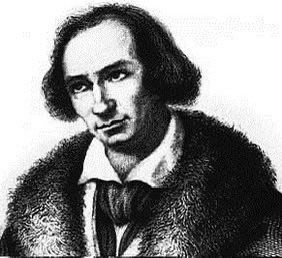
🧵 For those who don’t know, Johann Andreas Eisenmenger (1654-1704) was a distinguished Orientalist from the Electorate of the Palatinate and later professor of Oriental languages at the University of Heidelberg, ranking among the most erudite scholars of rabbinic literature in early modern Europe. Born in Mannheim to an official in the service of the Elector, Eisenmenger demonstrated exceptional zeal for Hebrew studies and Semitic languages during his time at the Collegium Sapientiae in Heidelberg. This early promise led the Elector to support his further education abroad, sending him to England and Holland to deepen his linguistic mastery. He ultimately acquired proficiency in Hebrew, Aramaic, Arabic, and related tongues.

Eisenmenger's immersion in rabbinic Judaism intensified during an extended stay in Amsterdam around 1680-1681, where encounters with Jewish scholars and converts from Christianity to Judaism stirred his indignation and prompted a systematic investigation. For nearly nineteen years, he pursued rigorous study of post-biblical Jewish texts, often assisted by Jewish tutors in Heidelberg and later in Frankfurt am Main. To gain access to these sources and build trust, he presented himself as a sincere seeker interested in conversion to Judaism. This pretense enabled him to engage directly with an astonishing range of materials: some 193 Hebrew, Aramaic, and Yiddish works, encompassing Talmudic tractates, midrashim, Kabbalistic treatises, philosophical and ethical writings, and polemical literature. His approach relied on primary sources rather than secondary accounts, accompanied by precise German translations and detailed explications.Image
🧵The fruit of this labor, Entdecktes Judenthum (Judaism Exposed), was completed and printed in Frankfurt in 1700 in an edition of approximately 2,000 copies. The work's appearance in German, rather than Latin, alarmed segments of the Jewish community, who feared it could exacerbate anti-Jewish sentiments amid recent unrest in regions like Franconia and Bamberg. Influential court Jews, including Samuel Oppenheimer and Samson Wertheimer, petitioned Emperor Leopold I, who ordered the entire stock confiscated and suppressed to prevent potential disturbances.

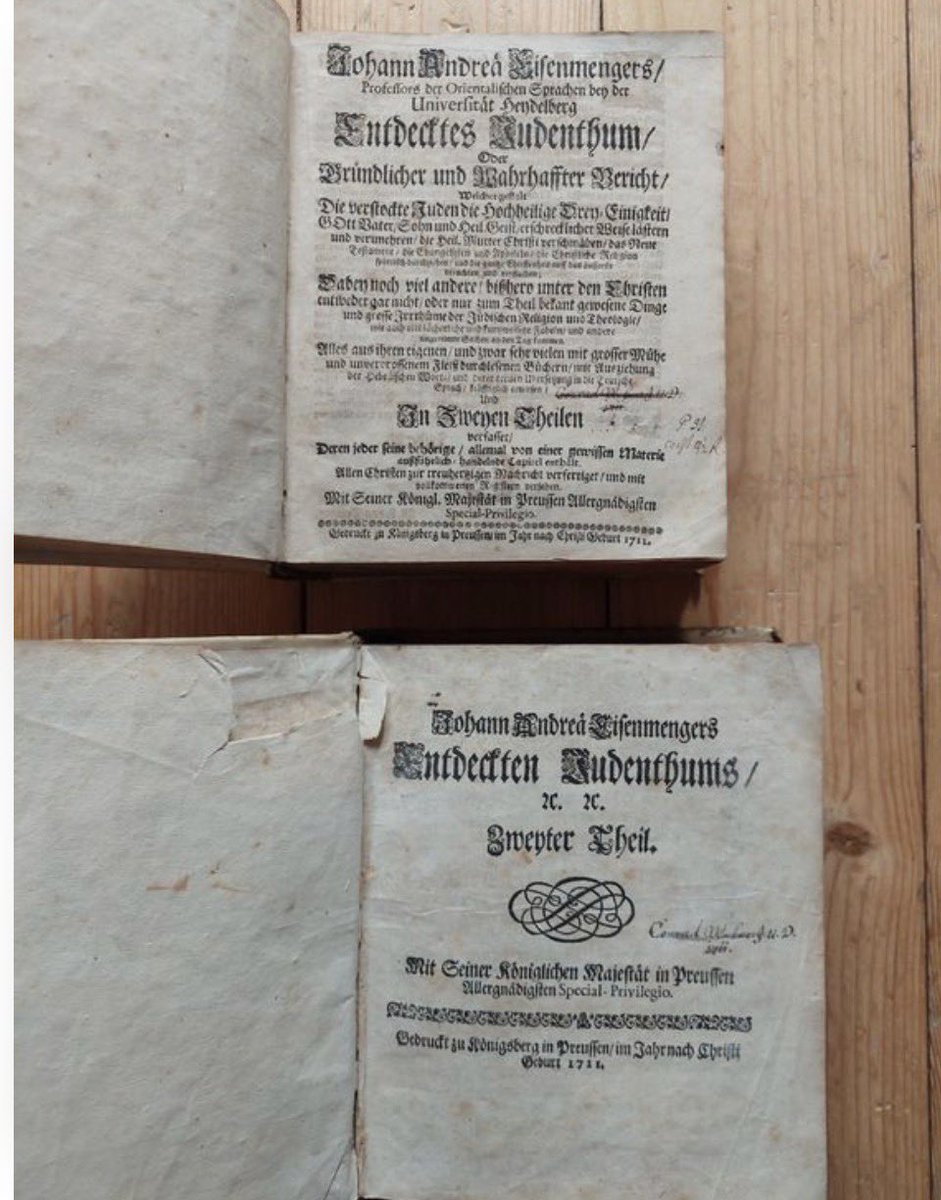
Eisenmenger, appointed professor of Oriental languages at Heidelberg around this time due to the Elector's interest in his scholarship, died in 1704 without seeing his work widely disseminated. His heirs sought to revive it, appealing to the King of Prussia, Friedrich Wilhelm I. Although efforts to lift the imperial ban failed, the king sponsored a new edition of 3,000 copies, printed in Berlin in 1711 at royal expense. To circumvent the prohibition within the German Empire, the title page falsely bore "Königsberg" as the place of publication, as that city lay beyond imperial jurisdiction. This second edition, the basis for the present translation, largely preserved the original content while incorporating minor corrections, refinements, and possibly additional indices or apparatus for greater usability. It appeared in two large quarto volumes, retaining the comprehensive structure of citations, translations, and thematic organization that characterized the 1700 printing.Image
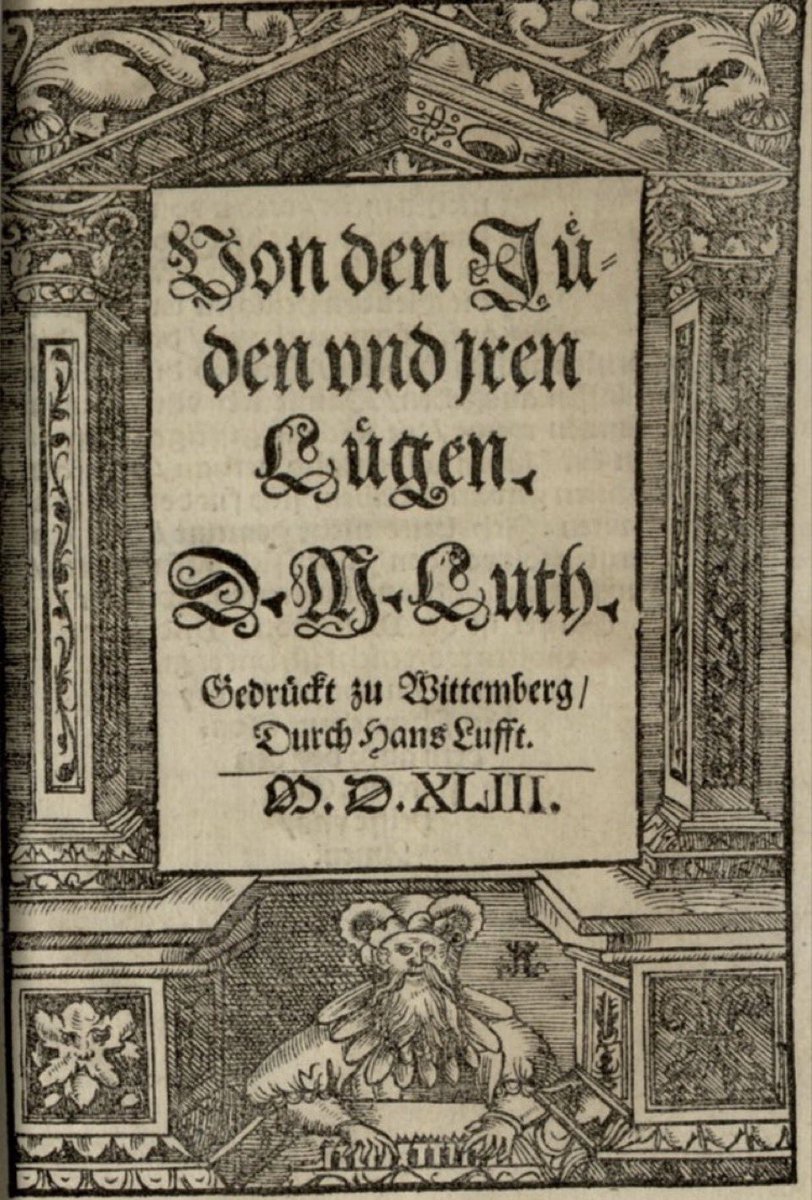
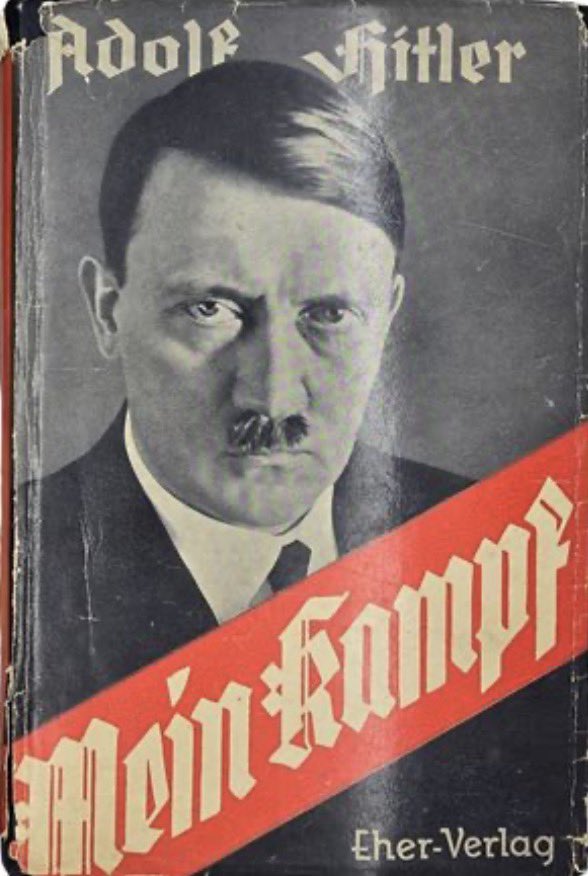
🧵In the context of flourishing Christian Hebraism and confessional debates, Eisenmenger's work advanced the comparative study of religions through its philological rigor and direct reliance on Jewish authorities. By assembling and explicating passages often obscure to Christian readers, he illuminated the theological, interpretive, and cultural dimensions of rabbinic Judaism, even as his conclusions reflected the apologetic priorities of his era. The breadth of his erudition and the documentary precision he employed have made Entdecktes Judenthum an enduring reference for scholars of rabbinic sources, notwithstanding subsequent contextual critiques. His contemporary detractors consider this to be the most important “antisemitic” work of the early modern era, whose significance must be ranked with The Protocols of the Learned Elders of Zion, Martin Luther’s On The Jews and Their Lies, Henry Ford’s The International Jew, Aleksandr Solzhenitsyn’s Two Hundred Years Together, and Adolf Hitler’s Mein Kampf.Image
Image
Read 8 tweets
Feb 19
🧵 UPDATE! PDF in thread!

Well, let’s just say I’ve been humbled regarding translating Entdecktes Judenthum (Judaism Unmasked) into English - by the outpouring of support, by all the information that’s been shared, by those willing to help in this process, and by realizing my own limitations and pitfalls.

In just this short period of time, there have been some major developments.Image
Image
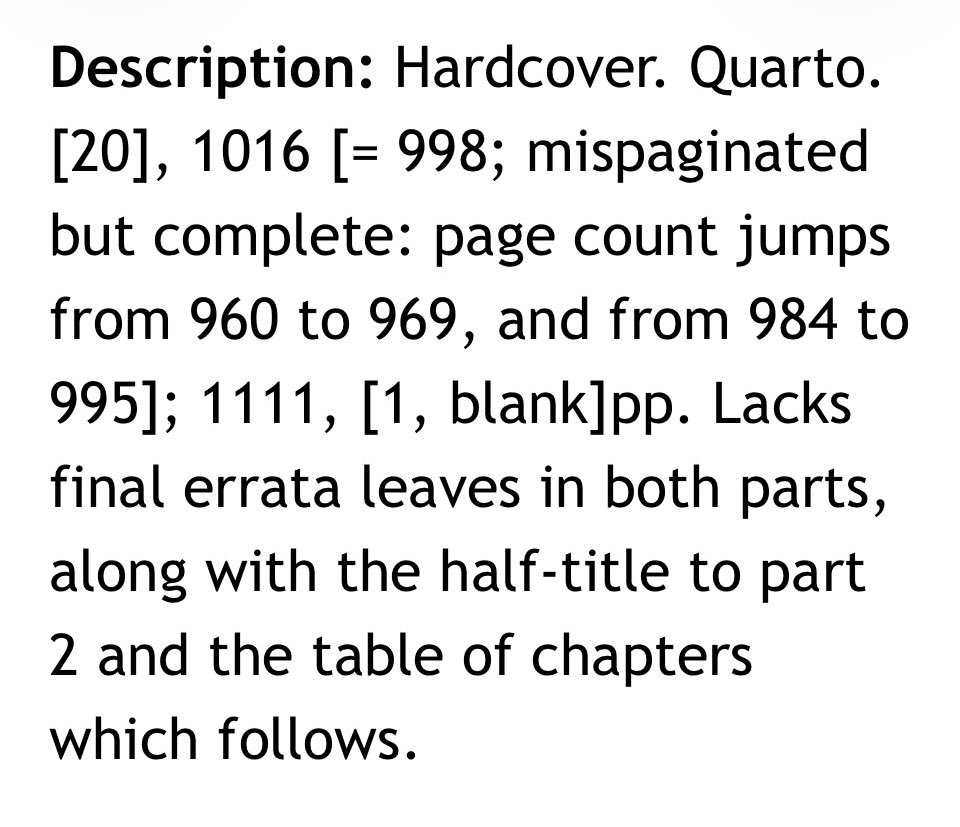
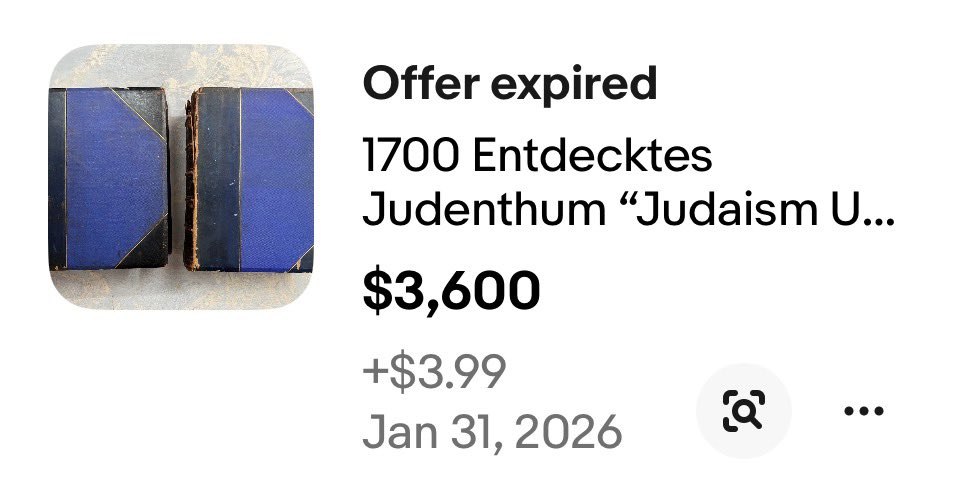
🧵 Entdecktes Judenthum was published in two parts/volumes, and was often rebound as one thick 2000-page volume. I was under the impression that the tome I acquired was one of these 2-in-1, as the description stated the title page and chapter pages for part 2 were missing.

But this was not the case. I only have part 1, which contains 19 chapters and has 1111 pages.Image
🧵 At the time, there was a 1700 first edition available which contained both parts, but I passed on it for what I thought was the complete 1711 second edition for considerably less (but still not unsubstantial) cost.

Had I known the 1711 was only part 1, I would have opted for the 1700 edition with both parts at the much higher price.

Still, I’m glad the one that I have is in my/our hands, as these typically end up in the hands of those opposed to and have suppressed Eisenmenger’s work.Image
Read 7 tweets
Feb 17
🧵 This will be a master thread, a page by page translation of Entdeckten Judenthum (Judaism Exposed) by Johann Andreae Eisenmenger. Image
Image
🧵

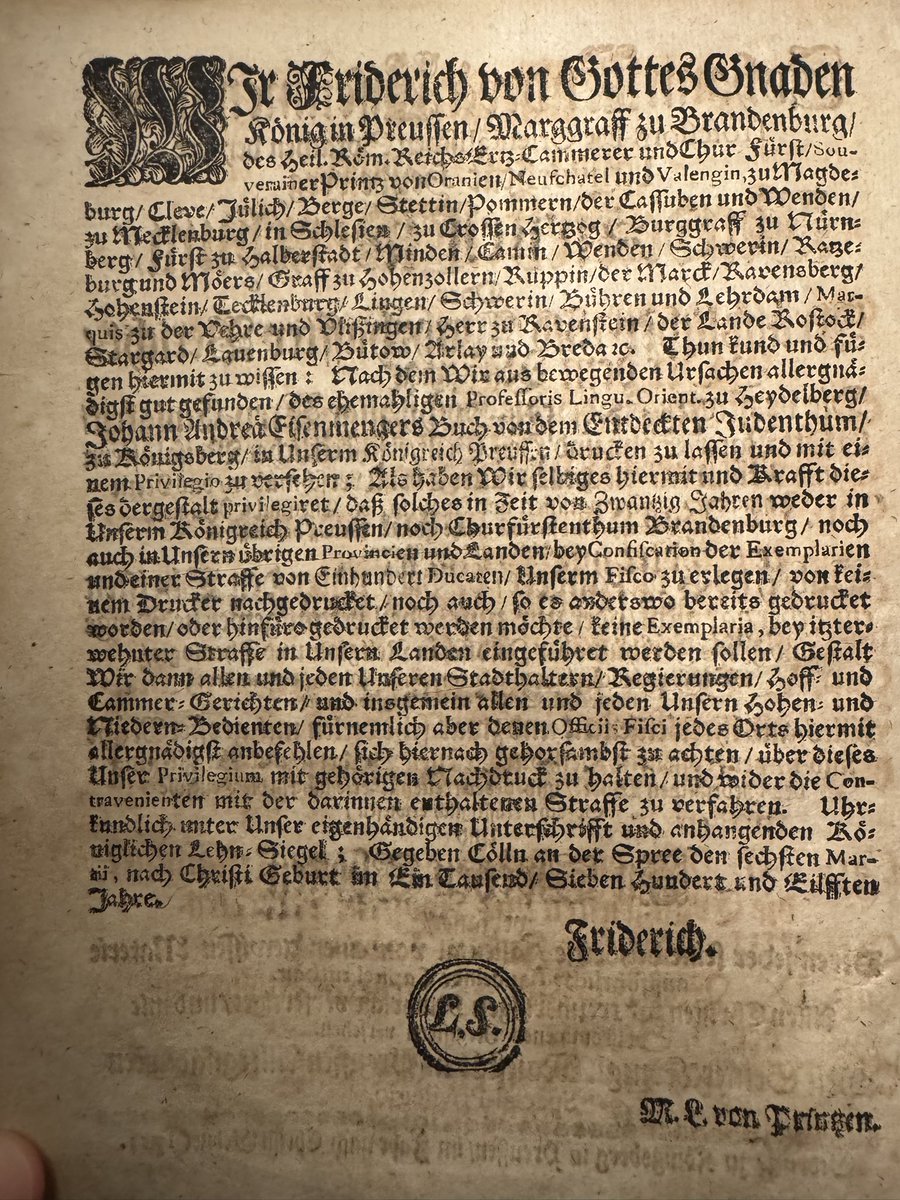
We, Friedrich, by the Grace of God

King in Prussia, Margrave of Brandenburg, Arch-Chamberlain of the Holy Roman Empire and Elector, Sovereign Prince of Orange, Neuchâtel and Valangin, Duke of Magdeburg, Cleves, Jülich, Berg, Stettin, Pomerania, of the Kashubians and Wends, of Mecklenburg, in Silesia, of Crossen, Burgrave of Nuremberg, Prince of Halberstadt, Minden, Cammin, Wenden, Schwerin, Ratzeburg and Moers, Count of Hohenzollern, Ruppin, the March, Ravensberg, Hohenstein, Tecklenburg, Lingen, Schwerin, Büren and Leerdam, Marquis of Veere and Vlissingen, Lord of Ravenstein, of the lands of Rostock, Stargard, Lauenburg, Bütow, Arlay and Breda, etc.

We hereby make known and proclaim:

Whereas We, for weighty and compelling reasons, have most graciously deemed it good and proper to permit the printing in Königsberg, within Our Kingdom of Prussia, of the book entitled Entdecktes Judenthum (“Judaism Unmasked”) by Johann Andrea Eisenmenger, formerly Professor of Oriental Languages at Heidelberg, and to grant it a privilege;

Therefore We have, by these presents and by virtue hereof, so privileged the said book that for a period of twenty years it shall not be reprinted by any printer in Our Kingdom of Prussia, nor in Our Electorate of Brandenburg, nor in any of Our other provinces and territories, under penalty of confiscation of all copies and a fine of one hundred ducats to be paid into Our treasury.

Nor shall any copies, whether already printed elsewhere or that may hereafter be printed elsewhere, be introduced into Our lands under the same penalty aforesaid.

And to that end We most graciously command all and every one of Our governors of cities, governments, court and chamber courts, and in general all and every one of Our high and low officials, and especially the fiscal officers of every place, to observe this Our command most obediently, to uphold this Our privilege with due strictness and enforcement, and to proceed against all violators with the penalties therein contained.

In witness whereof, under Our own hand and the affixed Royal Seal.

Given at Cölln on the Spree, the sixth day of March, in the year of Our Lord one thousand seven hundred and eleven.

Friedrich

M. L. von PrintzenImage
🧵

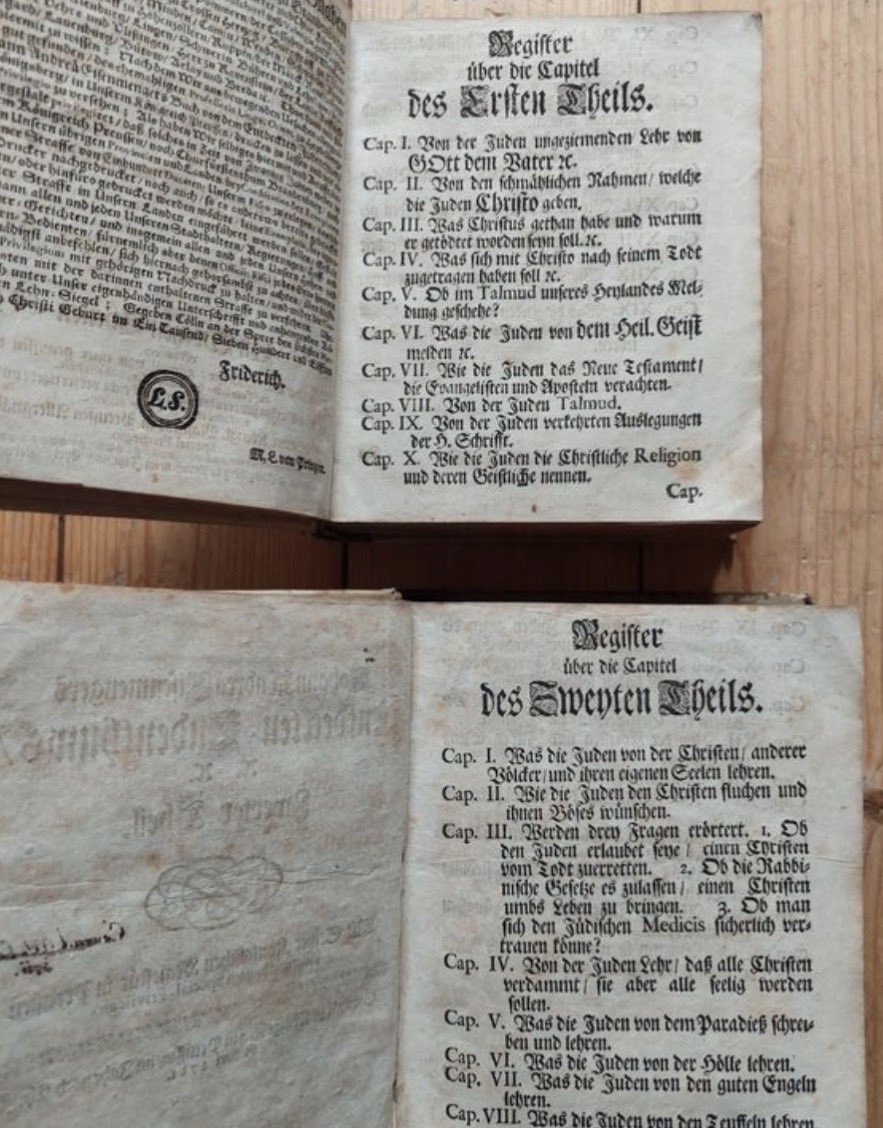
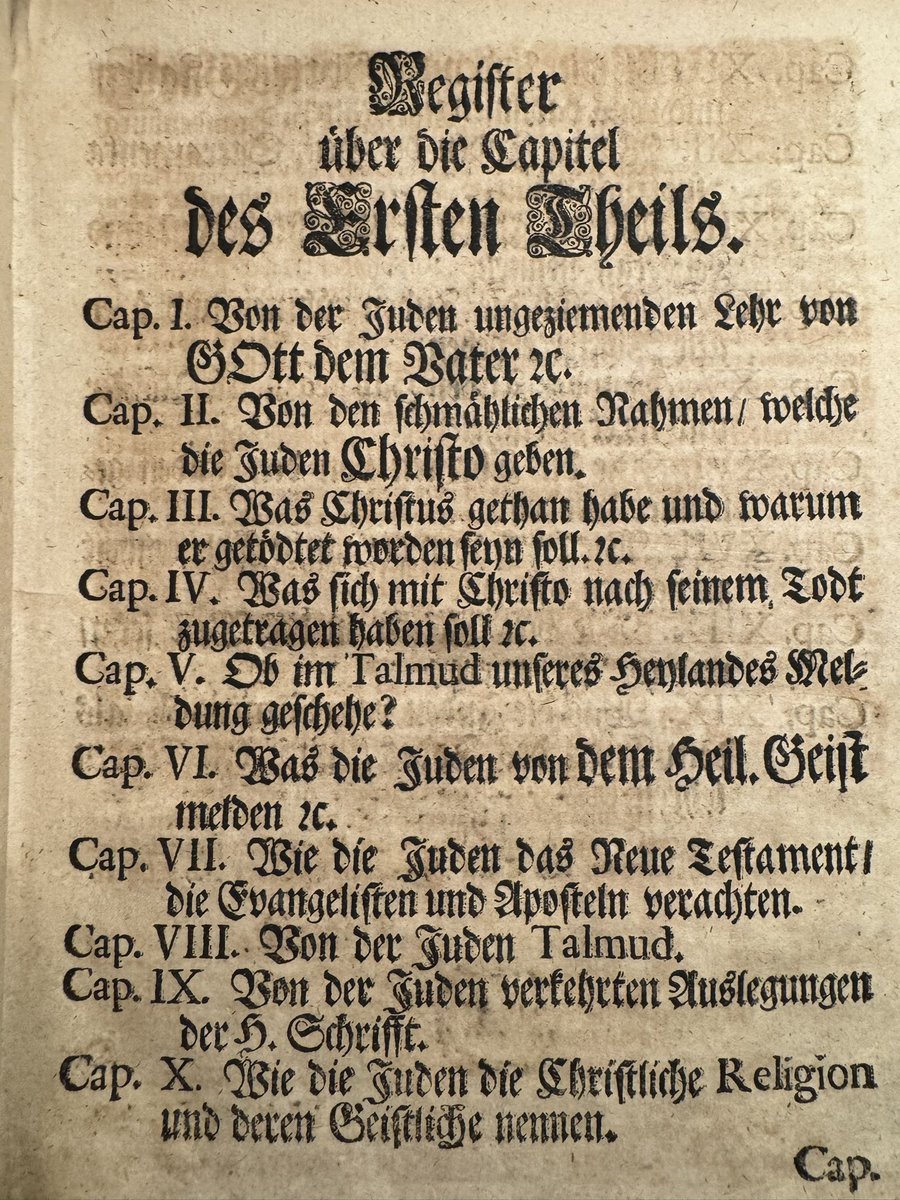
Index
of the Chapters
of the First Part

Chapter I. Concerning the Jews’ unseemly doctrine about God the Father, etc.

Chapter II. Concerning the shameful names which the Jews give to Christ.

Chapter III. What Christ is said to have done and why he is supposed to have been killed, etc.

Chapter IV. What is supposed to have happened to Christ after his death, etc.

Chapter V. Whether any mention is made in the Talmud of our Saviour?

Chapter VI. What the Jews say about the Holy Spirit, etc.

Chapter VII. How the Jews despise the New Testament,
the Evangelists, and the Apostles.

Chapter VIII. Concerning the Jews’ Talmud.

Chapter IX. Concerning the Jews’ perverted interpretations
of Holy Scripture.

Chapter X. How the Jews refer to the Christian religion and its clergy.Image
Read 10 tweets
Feb 17
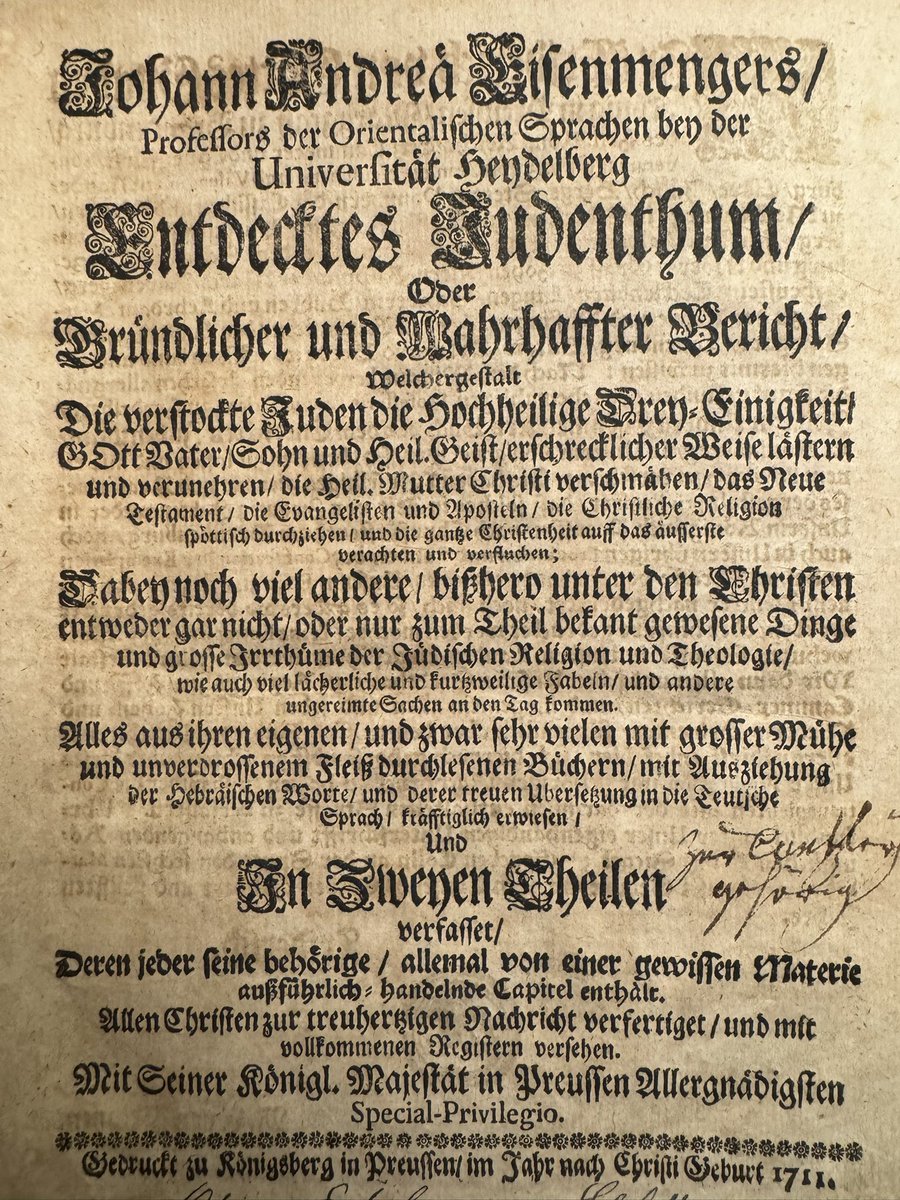
🧵 When I heard Entdecktes Judenthum (aka Judaism Unmasked) had never been translated into English in its 2000-page entirety, I felt compelled to do it myself. I was able to procure one of the 3000 copies ever produced of the second edition printed in 1711. Image
Image
🧵 This won’t be an easy endeavor, not only due to the breadth of the work but also due to it being in Early New High German and fraktur.

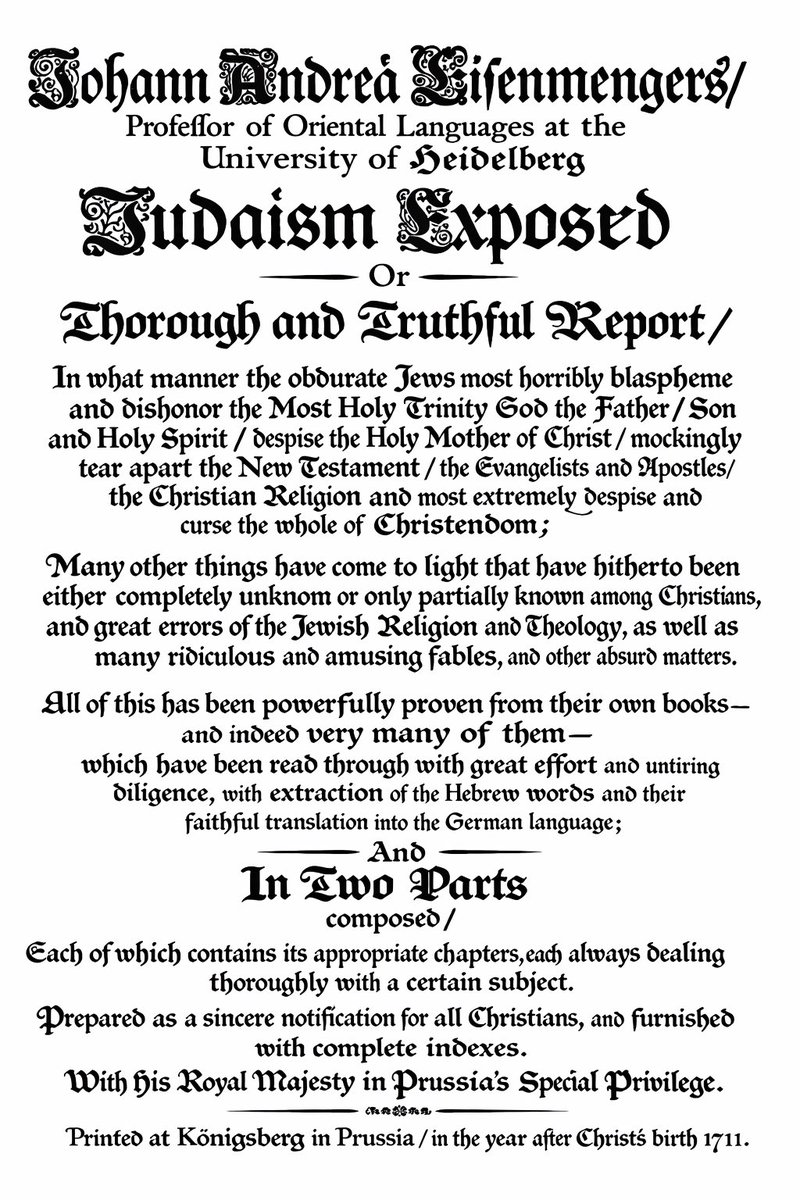
And in general, translating anything requires a certain feeling of words you’re trying to express. Even the title itself directly translates to “Discovered Judaism”, but what Eisenmenger is trying to convey is that he is uncovering it, revealing it, bringing it into the light of day, unmasking it, or better - exposing it. To separate this work from others that may follow, I’ll be calling it “Entdecktes Judenthum - Judaism Exposed”.Image
Image
🧵 Tentatively, I’ll be using Transkribus to extract the text as it’s specialized in historical documents and trained on old German fraktur, or any other OCR that gets me good results, then @Gab__AI to translate into modern English as its features can allow me to run the text through multiple open source models, though I’m open to other ideas and methods as well. If you’re a German-English speaker, your insight would be much appreciated.Image
Read 9 tweets
Sep 19, 2025
🧵 In all the prophecies about “Israel and Judah coming back together under one King and a New Covenant in the land of their fathers” after Assyrian captivity…

Do they do so in apostasy and rebellion, or is it in spiritual restoration as believers in Christ - the word made flesh (John 1:14), the fulfillment of the law (Matthew 5:17)?

Below is a list of prophecies that connect the return of Israel (the 10 northern tribes) and Judah (the 3 southern tribes) to the land with their spiritual restoration as believers in Christ, indicating they return in a state of faithfulness rather than apostasy.

Each passage emphasizes both the return to the land and their transformed, believing state in Christ.Image
🧵 Ezekiel 36:24-28

Context: God promises to gather the scattered Israelites, bring them back to their land, and spiritually renew them.

“For I will take you from among the heathen, and gather you out of all countries, and will bring you into your own land. Then will I sprinkle clean water upon you, and ye shall be clean: from all your filthiness, and from all your idols, will I cleanse you. A new heart also will I give you, and a new spirit will I put within you: and I will take away the stony heart out of your flesh, and I will give you an heart of flesh. And I will put my spirit within you, and cause you to walk in my statutes, and ye shall keep my judgments, and do them. And ye shall dwell in the land that I gave to your fathers; and ye shall be my people, and I will be your God.”

Relevance: The return to the land is explicitly linked to cleansing from idolatry, a new heart, and obedience through God’s Spirit, indicating they return as believers in Christ.Image
🧵 Ezekiel 37:21-24

Context: The vision of the two sticks (Israel and Judah) united under one king, with a covenant of peace.

“And say unto them, Thus saith the Lord God; Behold, I will take the children of Israel from among the heathen, whither they be gone, and will gather them on every side, and bring them into their own land: And I will make them one nation in the land upon the mountains of Israel; and one king shall be king to them all: and they shall be no more two nations, neither shall they be divided into two kingdoms any more at all. Neither shall they defile themselves any more with their idols, nor with their detestable things, nor with any of their transgressions: but I will save them out of all their dwellingplaces, wherein they have sinned, and will cleanse them: so shall they be my people, and I will be their God. And David my servant shall be king over them; and they all shall have one shepherd: they shall also walk in my judgments, and observe my statutes, and do them.”

Relevance: The return and reunification are accompanied by purification from sin and adherence to God’s statutes, signifying a believing state in Christ.Image
Read 17 tweets

Did Thread Reader help you today?

Support us! We are indie developers!


This site is made by just two indie developers on a laptop doing marketing, support and development! Read more about the story.

Become a Premium Member ($3/month or $30/year) and get exclusive features!

Become Premium

Don't want to be a Premium member but still want to support us?

Make a small donation by buying us coffee ($5) or help with server cost ($10)

Donate via Paypal

Or Donate anonymously using crypto!

Ethereum

0xfe58350B80634f60Fa6Dc149a72b4DFbc17D341E copy

Bitcoin

3ATGMxNzCUFzxpMCHL5sWSt4DVtS8UqXpi copy

Thank you for your support!

Follow Us!

:(