Why so many Ukrainians speak russian? Let me explain.
But first, let me ask you a question: Why do Irish and Scotts speak English, Catalans and Basques speak Spanish, Bretons speak French, etc. You probably know the answer. You probably know the short answer.
1/n
But first, let me ask you a question: Why do Irish and Scotts speak English, Catalans and Basques speak Spanish, Bretons speak French, etc. You probably know the answer. You probably know the short answer.
1/n

2/ But let me put a longer one. Ukrainian language was banned by russia 134 times! Here are most notable events:
1720: A decree by Tsar Peter I banned the printing of books in Ukraine.
1753: A decree by Catherine II prohibited teaching in the Ukrainian language.
...
1720: A decree by Tsar Peter I banned the printing of books in Ukraine.
1753: A decree by Catherine II prohibited teaching in the Ukrainian language.
...
3/ 1768: A decree from the Synod of the russian Orthodox Church called for the confiscation of Ukrainian primers from the population.
1775: Closure of Ukrainian schools after russian troops destroyed the Zaporizhian Sich.
...
1775: Closure of Ukrainian schools after russian troops destroyed the Zaporizhian Sich.
...
4/ 1830-1840s: russification of Ukraine intensified. Even the very name "Ukraine" was prohibited to be used.
1889: At an archaeological congress in Kyiv, it was permitted to read papers "in all languages except Ukrainian."
1895: A ban on Ukrainian children's literature.
...
1889: At an archaeological congress in Kyiv, it was permitted to read papers "in all languages except Ukrainian."
1895: A ban on Ukrainian children's literature.
...
5/ 1914: A ban on the Ukrainian press.
1938: Mandatory study of the russian language was introduced throughout Ukraine. At the same time, there was a mass closure of national schools, and the prestige of the Ukrainian language declined.
...
1938: Mandatory study of the russian language was introduced throughout Ukraine. At the same time, there was a mass closure of national schools, and the prestige of the Ukrainian language declined.
...
6/ 1926-1939: Physical deportations of Ukrainian activists accused of nationalism. Four family members on my mother’s side were deported.
1929: Newly printed dictionary of Ukrainian was prohibited.
1960s:Extermination of the young generation of Ukrainian intelligentsia.
1929: Newly printed dictionary of Ukrainian was prohibited.
1960s:Extermination of the young generation of Ukrainian intelligentsia.
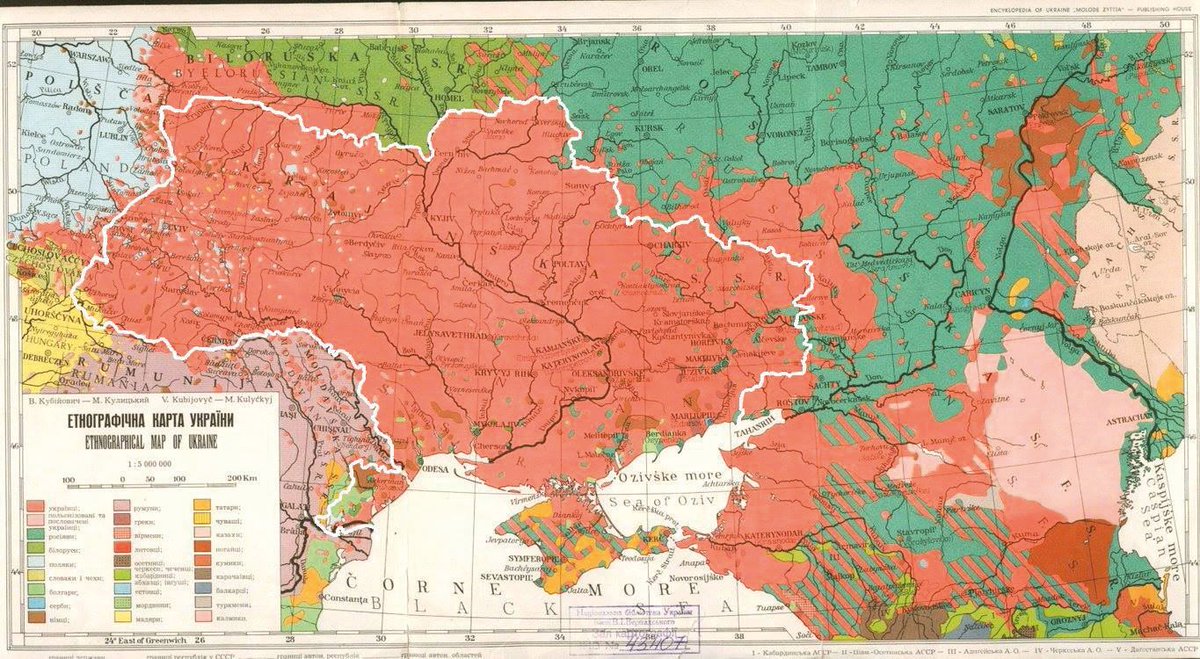
7/ 130 years ago, Ukrainian-speaking area was not limited by Ukraine, but also some parts of russia and Belarus spoke it (see the red area, that's the result of russian Empire census in 1897, when people identified themselves by the language).
8/ So, when someone says that some region of Ukraine is “russian speaking”, read the above list again. It’s a miracle that Ukrainian language even survived, and many people sacrificed their lives for it.
• • •
Missing some Tweet in this thread? You can try to
force a refresh