The appointment of Kaja Kallas (@kajakallas) as the EU foreign affairs chief has caused great anger among Russians. This is not only in Russia, but also among many who live in Europe, primarily in Estonia. The number of messages in social networks and the media aimed at
1/11
discrediting Kallas has skyrocketed. It is obvious that Russia has launched an information attack at full power. And the Estonian media are falling into this pit as well. Every day, the Estonian media publish articles that in one way or another denigrate the work of Kallas
2/11
and her cabinet. The main discontent is the increase in taxes and inflation, which is higher than in other countries. However, when discussing this, the media always misses several key facts. It cannot be said that Kaja and her government do not make mistakes, this is not
3/11
true at all, but the main reason for the increase in expenses is the war unleashed by Russia in Ukraine and the fact that we are now forced to spend huge amounts of money on defense. The media are also silent about the fact that Estonia had close ties with Russia under the
4/11
Centre Party. The Centre Party even had a friendship agreement with United Russia, Putin's party. Business in Estonia was closely tied to Russia, and the loss of Russian investment hit the Estonian economy hard. Despite everything, Estonia remains the country with the
5/11
smallest gross government debt among the EU countries. Estonian media also wrote much less about the scandals of the Tallinn mayor from the Centre Party related to corruption, and about corruption in this party in general, about their mistakes in power. But Kaja Kallas
6/11
and her party are attacked literally on a daily basis. The media should remain neutral, but there is no trace of this. Estonian media should explain daily that the increase in spending is related to aid to Ukraine, defense spending, and the severance of trade relations
7/11
with Russia, but the bullying of Kaja Kallas is simply massive and is present in almost every Estonian news agency. Manipulation of information, quotes from Russian sources or commentators, as well as comments from the Estonian media themselves on any topics related to the
8/11
ruling party occupy a huge part of the Estonian information field. Against this background, support for conservative far-right parties is growing, as in Europe as a whole. And this is what Russia usually achieves. The question arises - are our media so independent?
9/11
There is no ideal government and there can't be. Kaya and her party also make mistakes, but the behavior of the media now raises a lot of questions about their neutrality and professionalism. Also, these information attacks show that Russia is really afraid of her
10/11
appointment, because she has a very tough position regarding Russia. There will be more sanctions and more support for Ukraine and Russia does not like this.
11/11
• • •
Missing some Tweet in this thread? You can try to
force a refresh

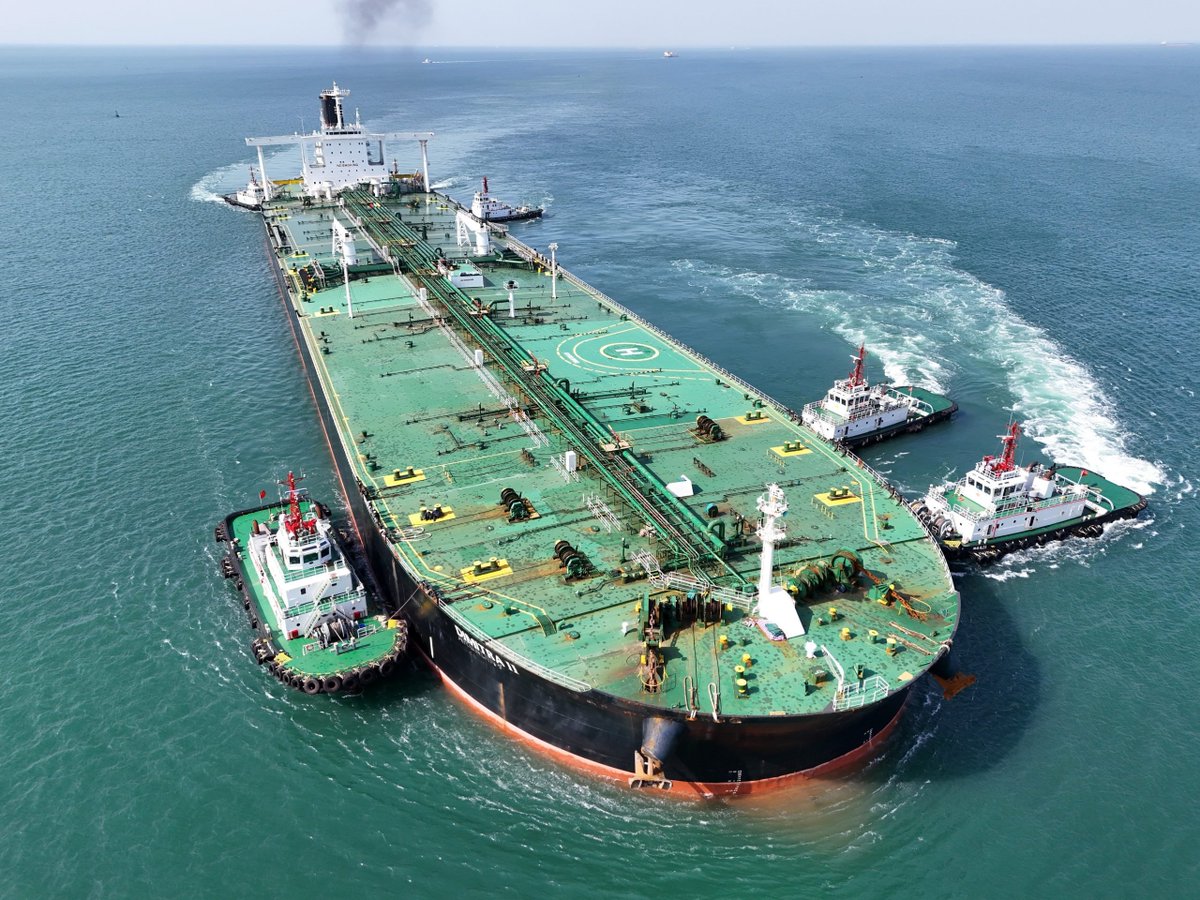
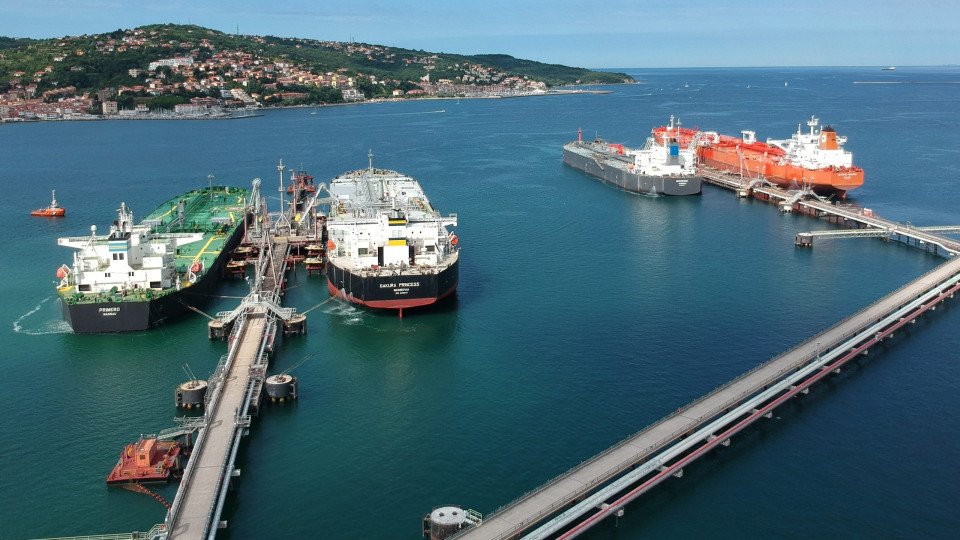
Seven German journalism students tracked Russian-crewed freighters lurking off the Dutch and German coast and connected them to drone swarms over military bases. Using public tracking tools, their own drones and even driving 2500 kilometers while following a ship, they produced🧵
a far more coherent picture of the Germany and Netherlands drone mystery than months of official hand-wringing and coordinated stonewalling. “Our trail leads to Russia,” the team concludes. “Not beyond doubt, but it’s currently the most probable explanation. We systematically
laid both things side by side: the secret reports about drone incidents and the routes of the ships. You can at least recognize a pattern.” They did not find a drone on any ship and they cannot prove causation, but they established the following: ships with Russian crews showed
Brussels has found a way to make decisions on blocking Russian assets without the consent of all EU member states, the Financial Times reports. This would allow the assets to be frozen indefinitely rather than having the blockade renewed every six months as is currently 1/9
the case. According to the publication, this is made possible by one of the EU treaty provisions stating that unanimous approval is not required in situations of economic shocks, which Brussels considers the war in Ukraine to be. Until now, when extending the freeze, there 2/9
was a risk that one EU country, for example Hungary, could oppose it, and without unanimous agreement the assets would be unfrozen. In early December, the European Commission approved two options for financing Ukraine for 2026 and 2027. The first plan involves providing 3/9
Russia is laying the groundwork to make the 1990s look like a walk in the park. Everyone says Russia is returning to the nineties, but what does that mean? The collapse of the Soviet Union was driven by many factors. Economic problems had already begun in the 1970s. The USSR
1/16
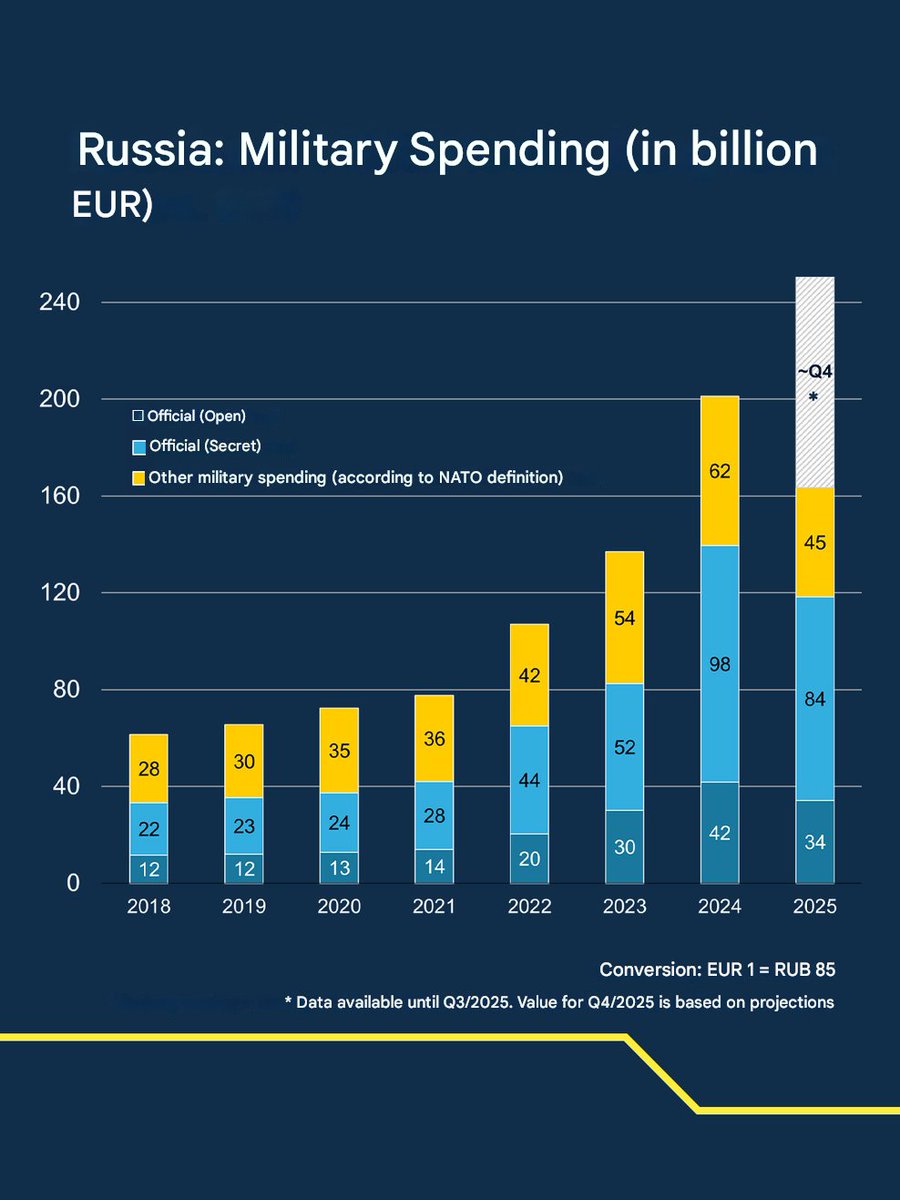
economy was built on the export of energy resources (oil and gas), metals, timber and grain. Most of the revenue went into the arms race of the Cold War. This is very similar to Russia today, whose military budget has reached record levels. The 1973 oil crisis initially
2/16
worked in the USSR's favor by increasing export revenues, but soon an event occurred that had a greater impact on the crisis of the 1990s than anything else - the war in Afghanistan. Although the Soviet Union spent about $20 billion on the war, this was negligible compared
3/16
US-Russia negotiations will not lead to peace. Diplomacy with Russia does not work and this truth is something the Trump administration refuses to see. The more we learn about the details of the US-Russia deal on Ukraine, the clearer it becomes that this administration 1/9
is pursuing only personal gain, both in the form of stakes in Russian business and in the form of a share of the frozen Russian assets whose unfreezing after a peace deal the US administration insists on. Russia is not striving for any peace and has never done so - this is 2/9
obvious to anyone who truly understands the issue. Russia uses the same old Soviet negotiation tactics that Kaja Kallas described when she quoted Andrei Gromyko. Three things: first demand the maximum. Do not ask but demand something that has never been yours. Secondly, 3/9
In mid-October, Putin introduced a moratorium on the cancellation of the fuel damper. This mechanism provides that if the export price of gasoline and diesel fuel is higher than the conditional domestic one, the state compensates companies for part of this difference. 1/8
It is intended to curb fuel prices, but prices continue to rise and have reached record highs not seen in the last 30 years. In September alone, oil companies received more than 30 billion rubles in compensation despite failing to keep their promises not to raise prices. 2/8
The reason is that Putin himself is also a beneficiary of oil companies through various schemes. These companies are the main source of his personal wealth and the financial backbone of Russia’s war machine, and he will keep them afloat at any cost. These payments are an 3/8
The new talks between Trump, Putin, and Zelensky are likely to end in yet another deadlock. This time, Putin has softened his illegal demands and is now “ready to give up” the Zaporizhzhia region in exchange for a ceasefire and control over the rest of Donetsk region. These
1/16
“concessions” have probably signaled to Trump that Putin is ready for negotiations, and that maybe, finally, he can strike a peace deal and get his long-coveted Nobel Prize - since it didn’t work out with Israel, where Hamas opened fire again. The White House rhetoric has
2/16
once again shifted sharply, from “Tomahawks are already on their way to Kyiv” to “Donbas should be Russian.” It’s the same old Kremlin ploy - when things go badly, start pushing for negotiations. All this commotion began after Putin’s call with Trump and has now turned into
3/16