NEW: Russian Ministry of Internal Affairs Head Vladimir Kolokoltsev boasted that Russian authorities have increased detentions and prosecutions related to illegal migration into Russia while calling for intensified Russian government crackdowns against illegal migration. (1/5)
2/ Russia assumed its one-month-long rotating presidency of the United Nations Security Council (UNSC) on July 1 for the first time since April 2023 and will likely use this position as a power projection base within the international system as it historically has.
3/ South Korea's Ministry of Unification announced on July 1 that North Korean state TV channel Korean Central TV switched to transmitting broadcasts via Russian satellites instead of Chinese satellites, reportedly affecting South Korea's ability to monitor North Korean state TV.
4/ Hungary assumed the six-month rotating presidency of the European Union (EU) Council on July 1.
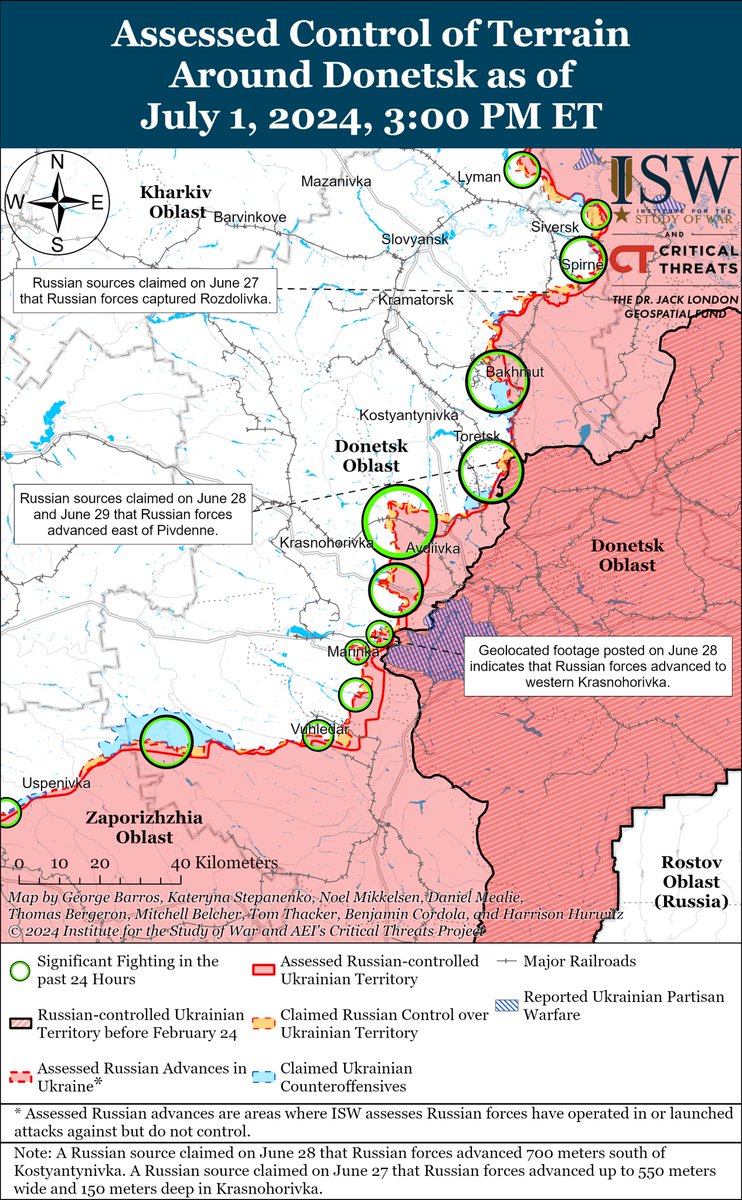
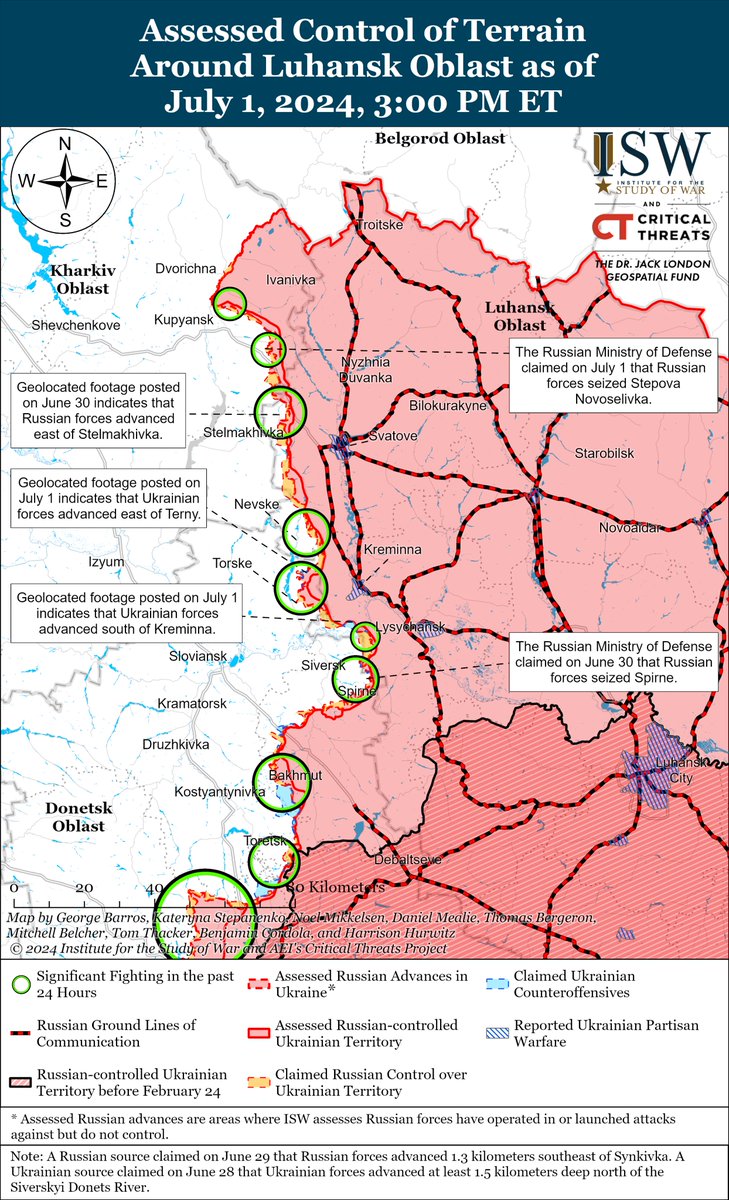
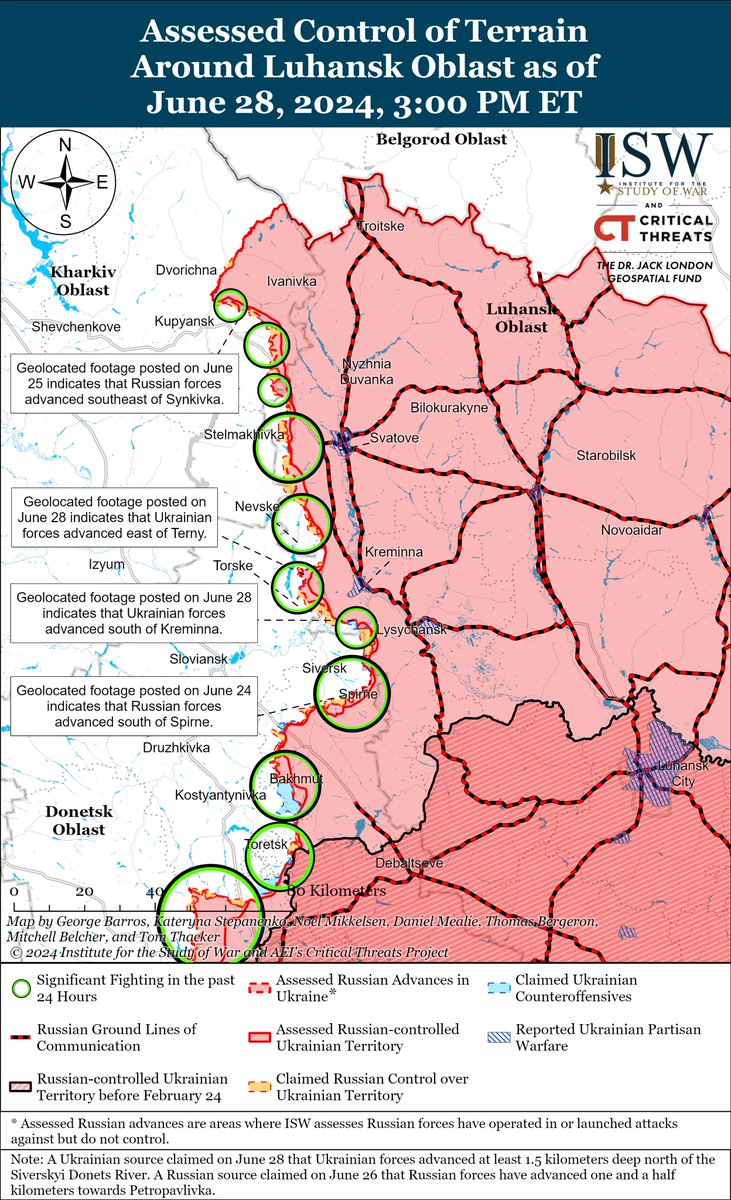
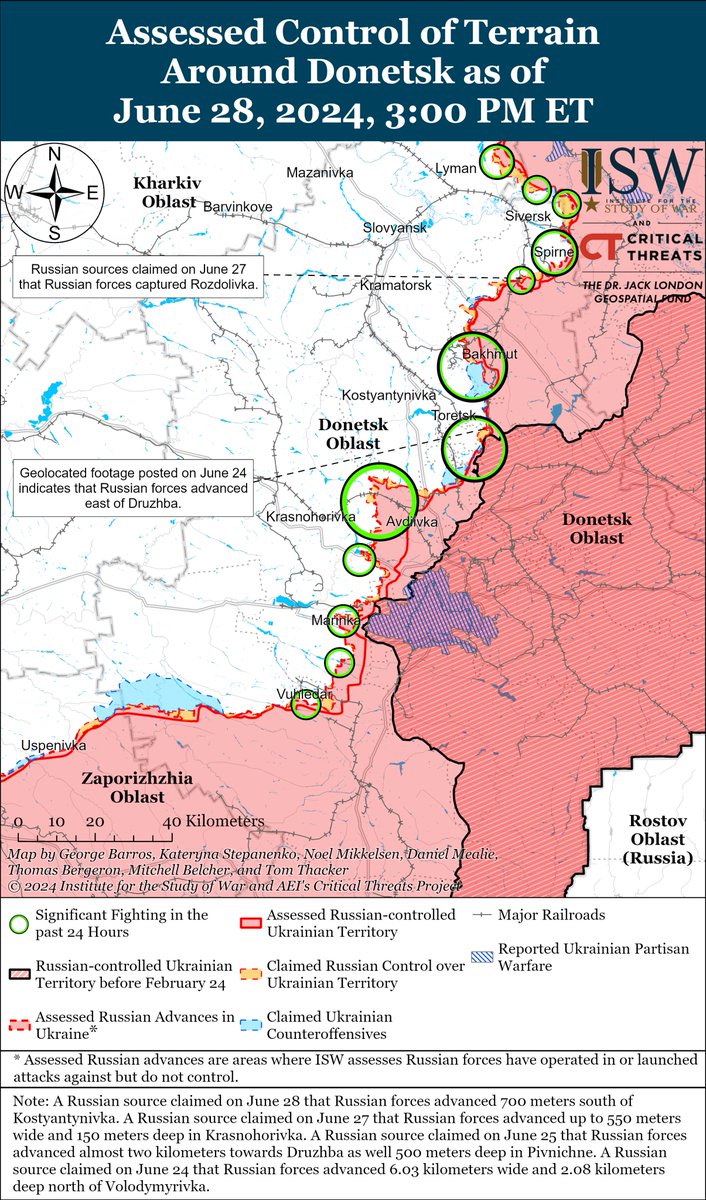
5/ Ukrainian forces recently advanced near Kreminna, and Russian forces recently advanced near Avdiivka.
The Russian information space continues to discuss the mistreatment of wounded and disabled Russian servicemembers in Ukraine.
Russian command may have chosen to escalate offensive operations near Toretsk in mid-June exactly because this area offers Russian forces a flexible point of departure from which they can either attack north towards Chasiv Yar or west/southwest in the Avdiivka direction, depending on whatever route of attack the Russian command deems the most immediately promising. (1/4)
2/ The apparent decision to attack near Toretsk emphasizes that the Russian command may be planning operations with more foresight and understanding of the operational situation than previously, when the Russian command pushed for incoherent offensive operations on unrelated parts of the front.
3/ The ability of the Russian command to actually bring these operational plans to bear, however, is contingent on the tactical-level performance of the troops in the Toretsk area and their ability to exploit tactical successes into operationally-significant breakthroughs.
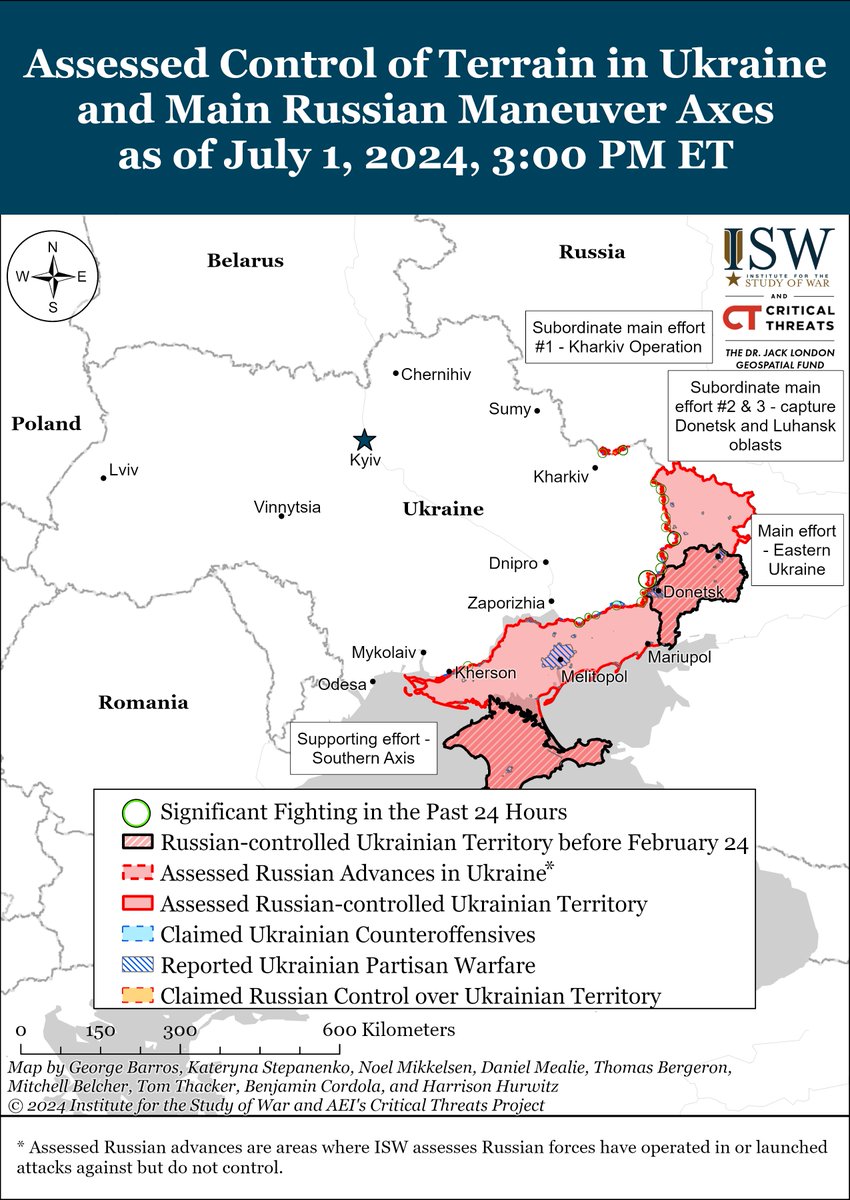
A protracted war will likely incentivize Putin to explicitly set new territorial objectives as long as he assesses that Ukrainian forces can neither stop his advances nor conduct meaningful counteroffensives. 🧵(1/7)
2/ Putin has articulated a theory of victory that assumes that Russian forces will be able to continue gradual creeping advances indefinitely, prevent Ukraine from conducting successful operationally significant counteroffensive operations, and win a war of attrition against Ukrainian forces.
3/ The Russian military command is currently prioritizing consistent offensive operations that achieve gradual tactical gains over conducting a large-scale discrete offensive operation that aims to make operationally significant gains through rapid maneuver.
NEW: Two prominent Russian officials appear to be spearheading divergent paths for addressing religious extremism in Russia as ethnic and religious tension in Russia continues to rise.
More key takeaways ⬇️(1/5)
2/ Russian ultranationalists continue to express growing doubt in Russian authorities' ability to prevent another terrorist attack and to address ethnic and religious tensions within Russia following the June 23 terrorist attacks in the Republic of Dagestan.
3/ Ten Ukrainian civilians whom Russian and Belarusian authorities arrested and held in captivity or prison, including individuals detained before Russia's full-scale invasion of Ukraine, returned to Ukraine.
NEW: Putin directed the production and deployment of nuclear-capable short- and intermediate-range missiles, likely as part of the Kremlin's ongoing reflexive control campaign to influence Western decision making in Russia's favor. (🧵1/5)
2/ Putin attended a Russian Security Council meeting in which he claimed that Russia had vowed to uphold the INF's provisions against producing or deploying intermediate-range ground-based missiles until the United States violated these provisions and that Russia must now also produce and deploy such systems.
3/ The United States withdrew from the INF treaty in 2019 due to Russian violations of the treaty with its development, testing, and deployment of intermediate-range 9M729 (SSC-8) missiles, and Russia suspended its participation in the INF in response.
NEW: Iranian Supreme Leader Ali Khamenei expressed foreign and nuclear policy views on June 25 that closely align with ultraconservative hardline presidential candidate Saeed Jalili’s views, possibly indicating that Khamenei endorses Jalili in the upcoming election. Khamenei’s views also signal the supreme leader’s opposition to reformist candidate Masoud Pezeshkian. 🧵(1/6)
2/ Gaza Strip: Israel assesses that it will complete the intense phase of ground operation in the Gaza Strip within a few days. Hamas will very likely exploit the Israeli raid system to reconstitute its combat units and reassert its governing authority across the Gaza Strip.
3/ Hamas is disrupting Israeli efforts to create nascent governing authorities that exclude Hamas’ political wing. Hamas reportedly killed two clan leaders in the central and southern Gaza Strip as part of this effort.
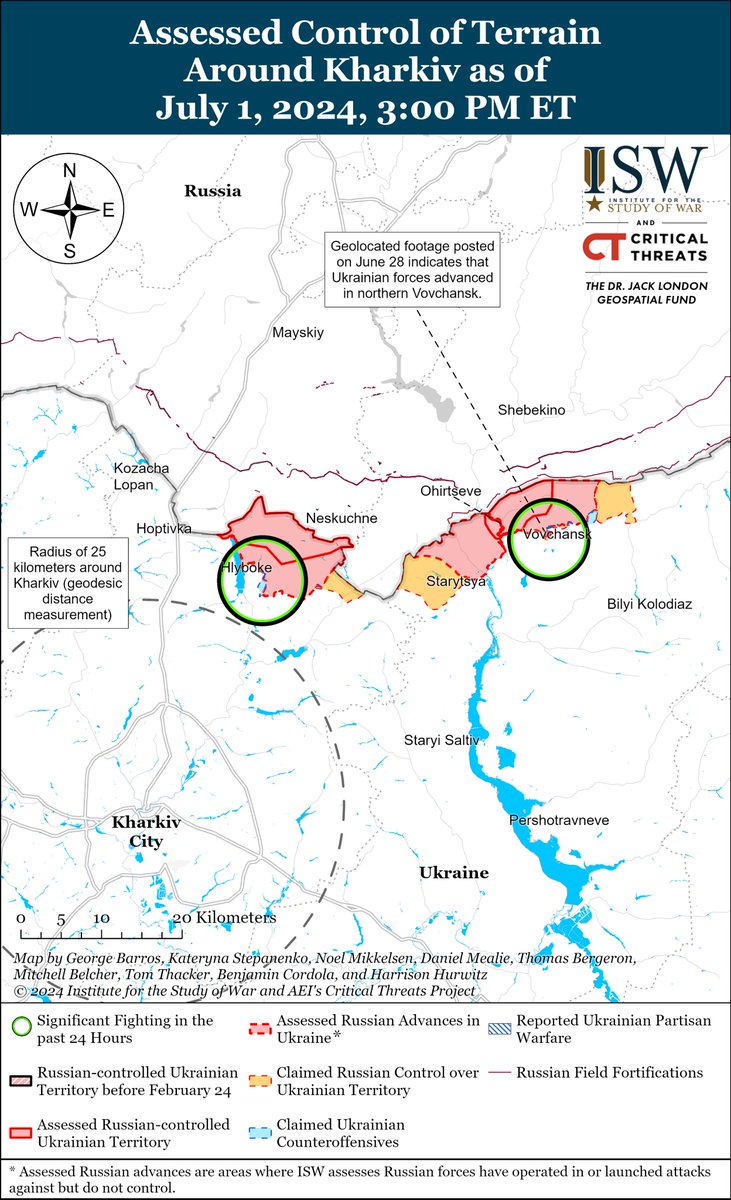
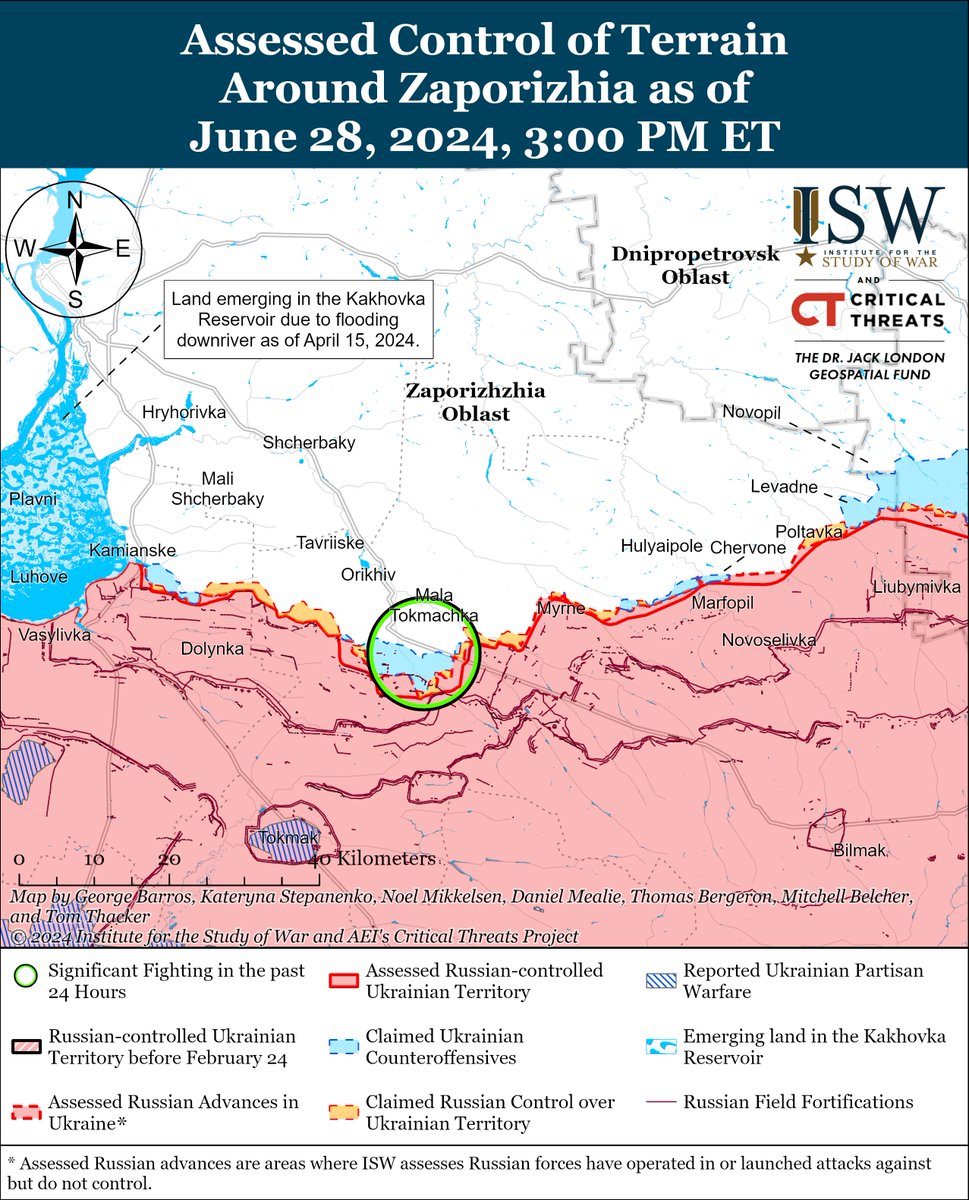
NEW: Ukrainian forces recently regained lost positions in Vovchansk in northern Kharkiv Oblast, and Russian forces recently advanced near Siversk and Avdiivka in Donetsk Oblast.
Two major international bodies—the International Criminal Court (ICC) and the European Court of Human Rights (ECHR) — announced decisions on June 25 confirming Russia's long-term perpetration of war crimes and human rights violations in Ukraine.
More Key Takeaways ⬇️🧵(1/7)
2/ Russia and Venezuela signed a memorandum of understanding (MOU) aimed at countering "coercive measures," likely to demonstrate to the West that the Kremlin holds influence in the Western hemisphere.
3/ Ukrainian forces conducted a drone strike on a Russian ammunition depot in Voronezh Oblast on June 25 and recently conducted strikes on Pantsir-S1 air defense systems in Belgorod Oblast with unspecified weapons.