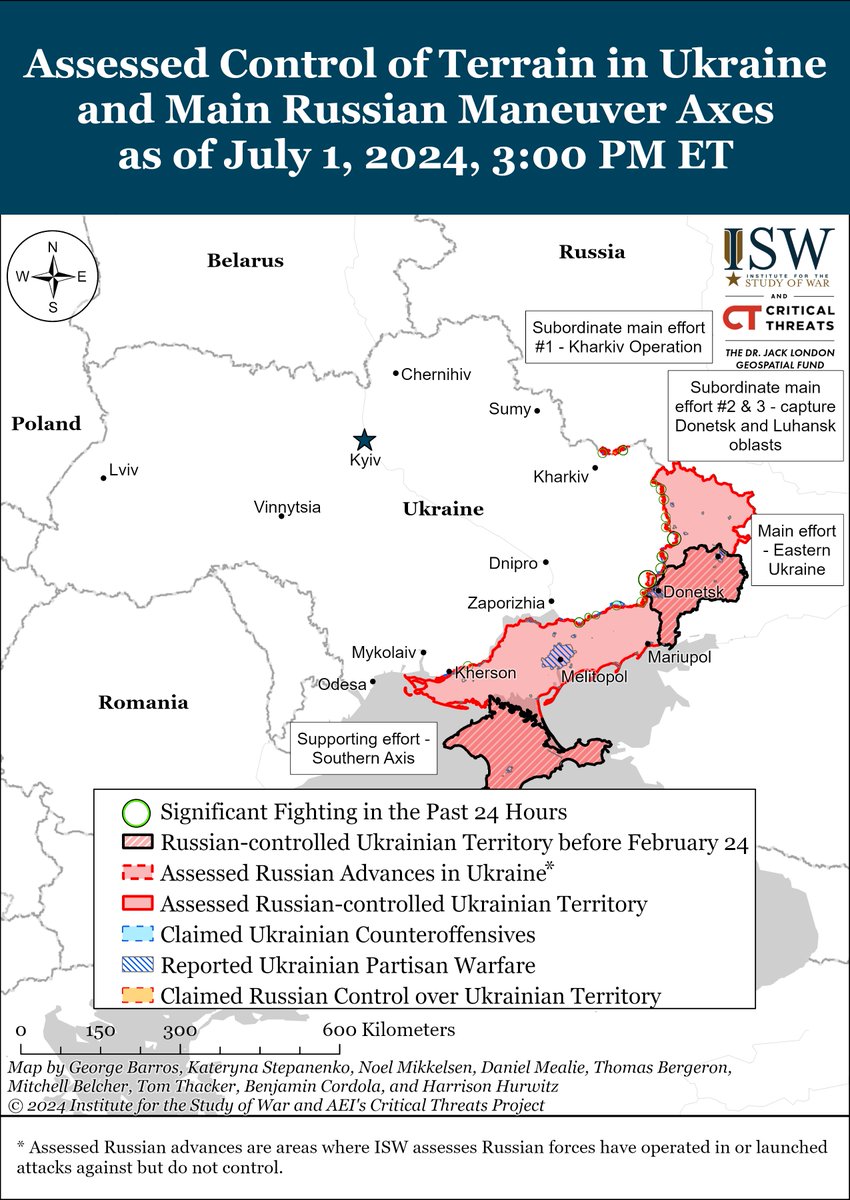
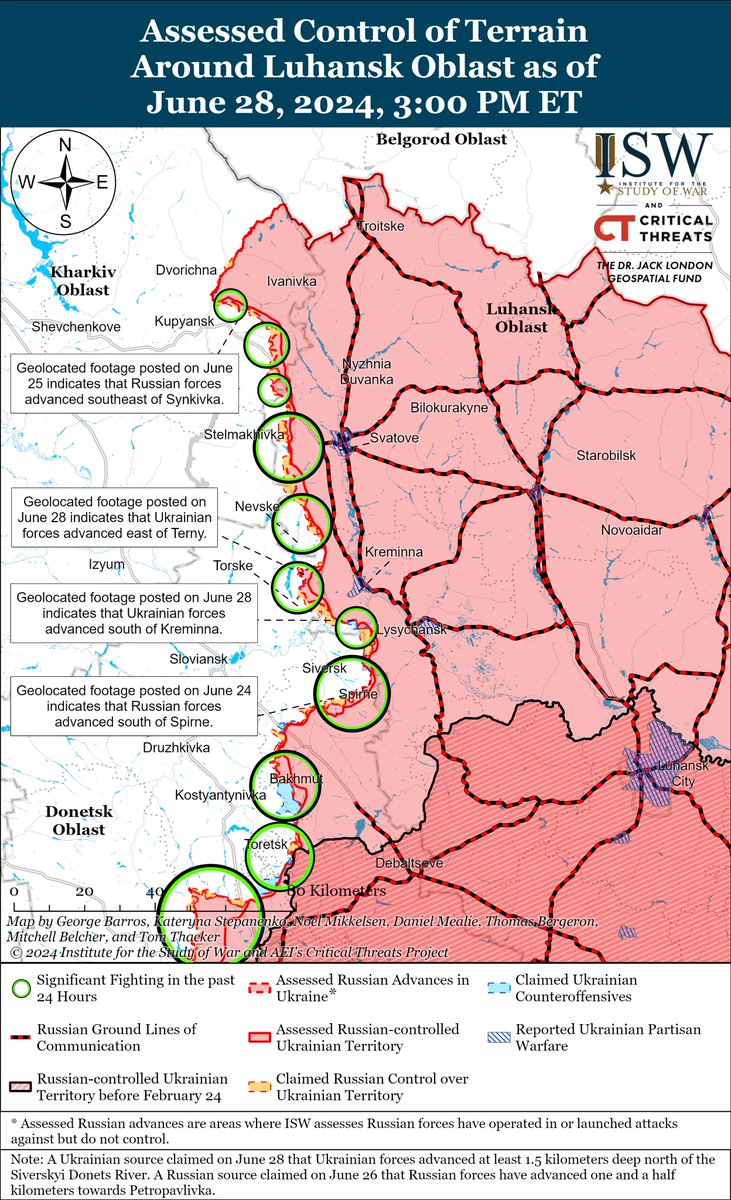
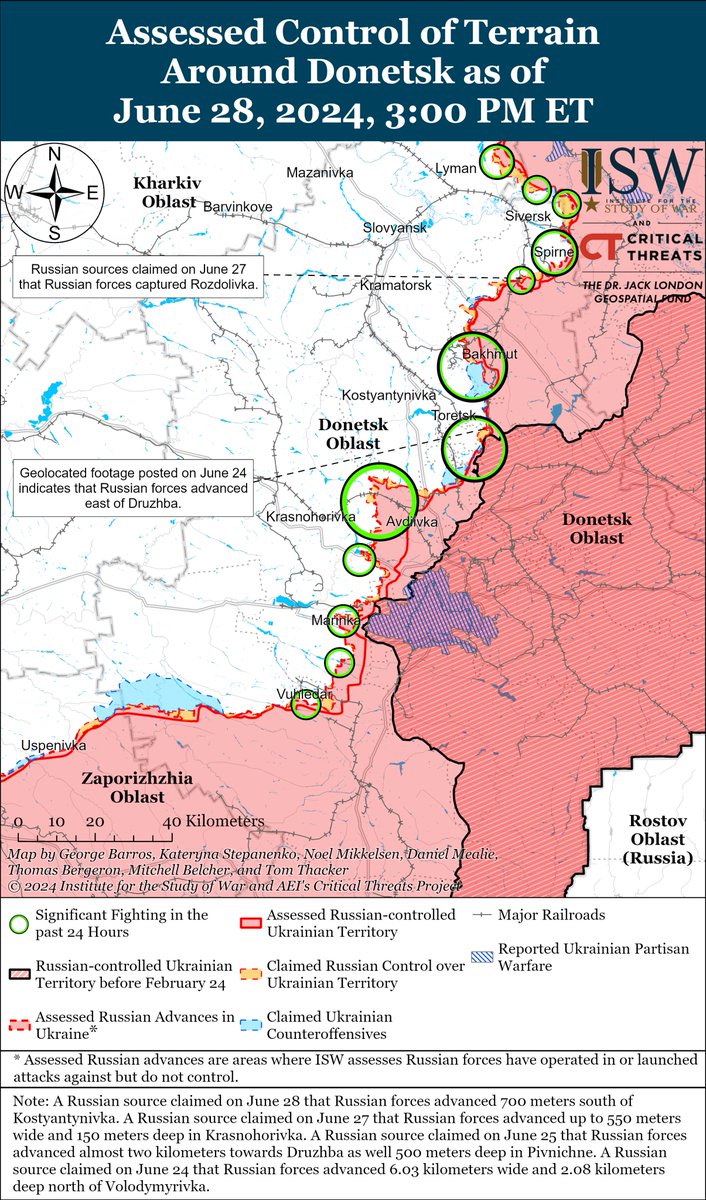
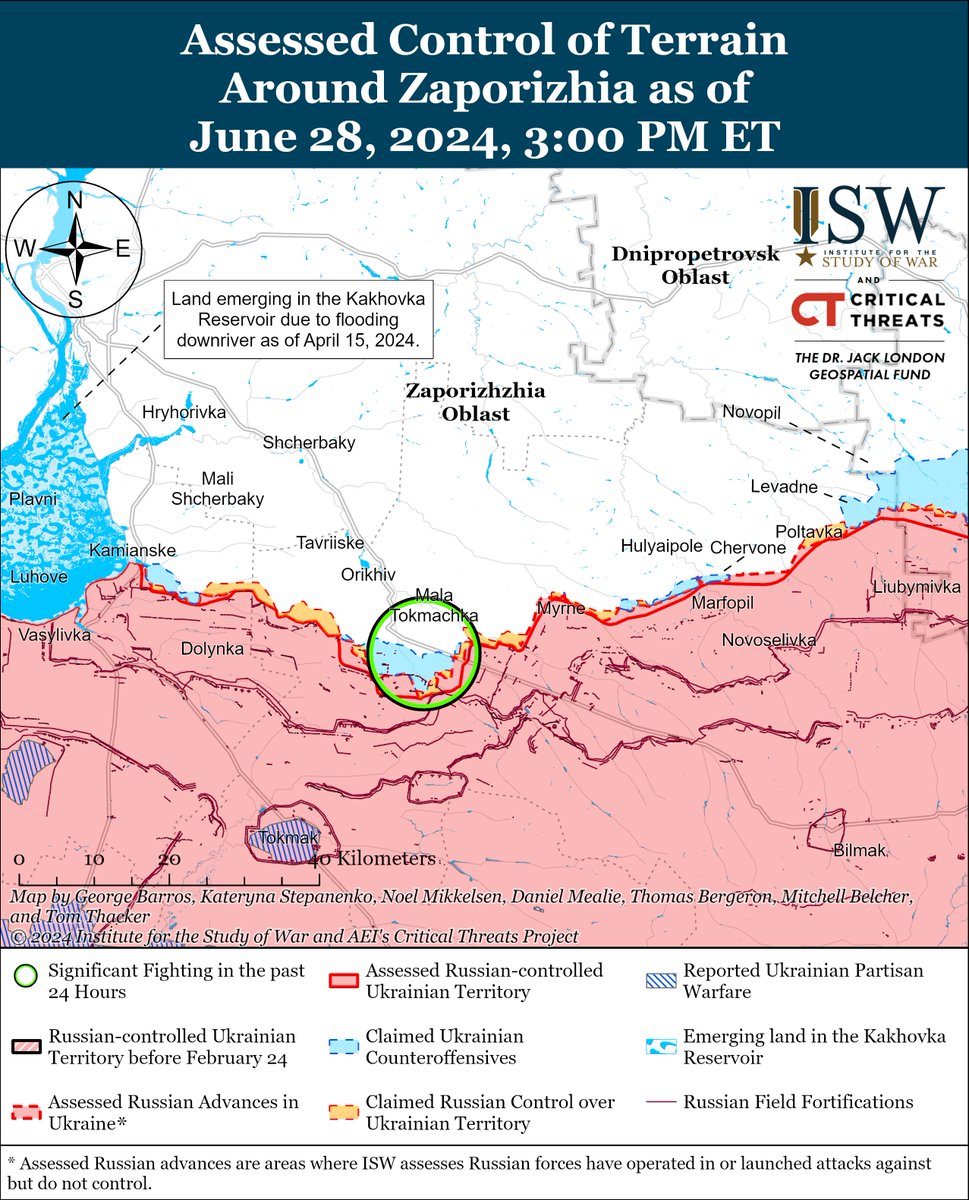
Map Updates🧵(1/6)
Russian forces recently advanced within easternmost Chasiv Yar, in the Toretsk direction, and near Avdiivka, and Ukrainian forces recently advanced within Vovchansk, near Kreminna, and southeast of Chasiv Yar.

Russian forces recently advanced within easternmost Chasiv Yar, in the Toretsk direction, and near Avdiivka, and Ukrainian forces recently advanced within Vovchansk, near Kreminna, and southeast of Chasiv Yar.
https://twitter.com/TheStudyofWar/status/1808657626965680555


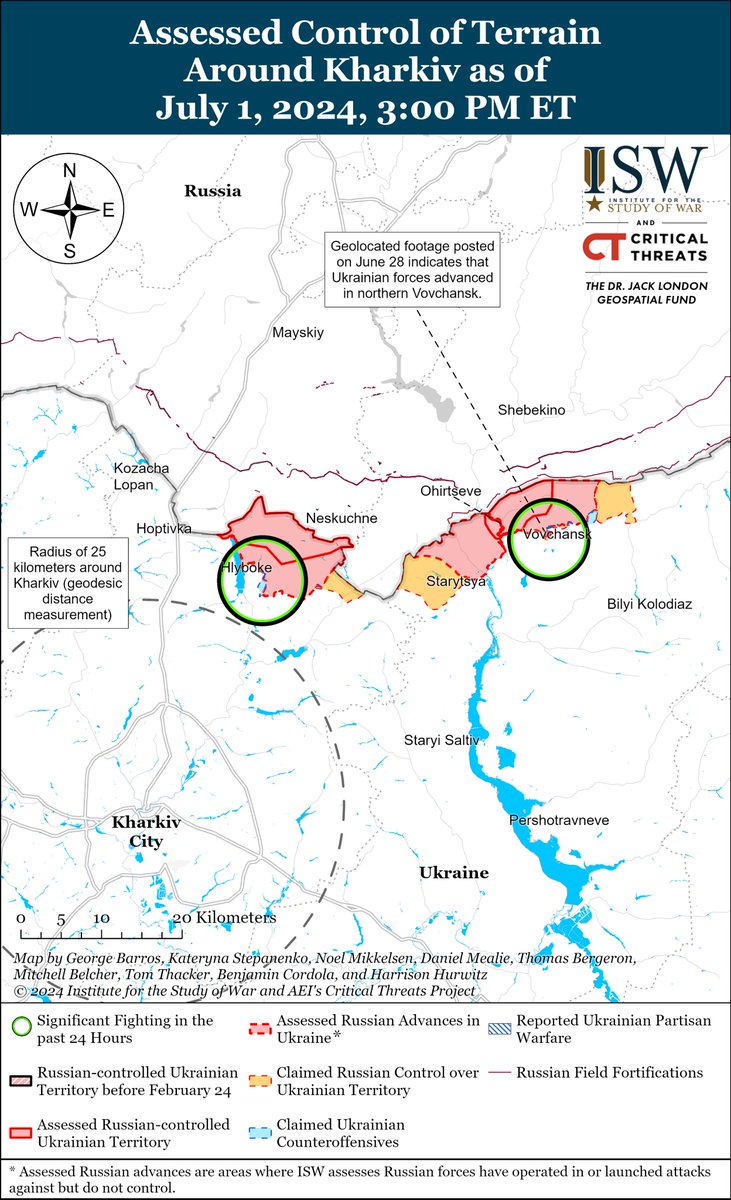
2/ Ukrainian forces recently made marginal gains within Vovchansk (northeast of Kharkiv City) amid continued fighting in northern Kharkiv Oblast on July 3. Geolocated footage published on July 3 indicates that Ukrainian forces recently advanced along Soborna Street in central Vovchansk.


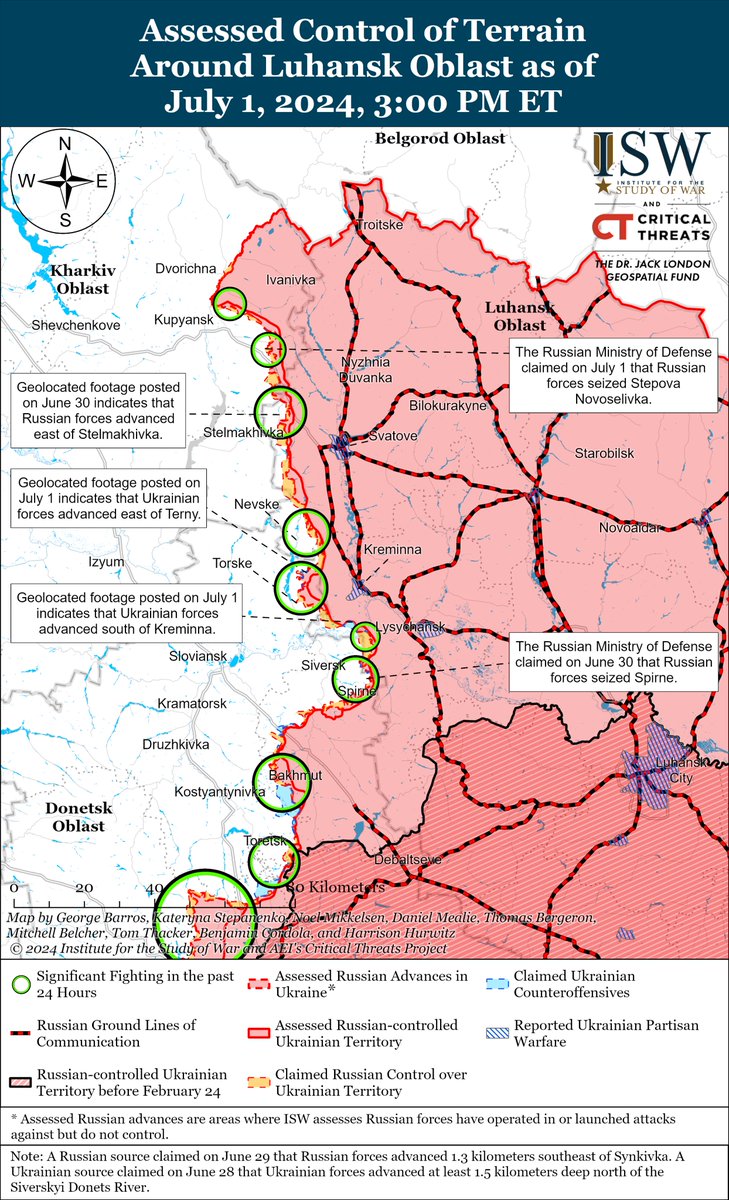
3/ Ukrainian forces recently marginally advanced northwest of Kreminna amid continued Russian ground attacks along the Kupyansk-Svatove-Kreminna line on July 3. Geolocated footage published on July 2 shows that Ukrainian forces recently marginally advanced southeast of Novoyehorivka (northwest of Kreminna). Russian milbloggers claimed that Russian forces marginally advanced into Makiivka (northwest of Kreminna) and that Ukrainian forces conducted two unsuccessful counterattacks in the area. However, ISW has not observed visual confirmation of these claims.


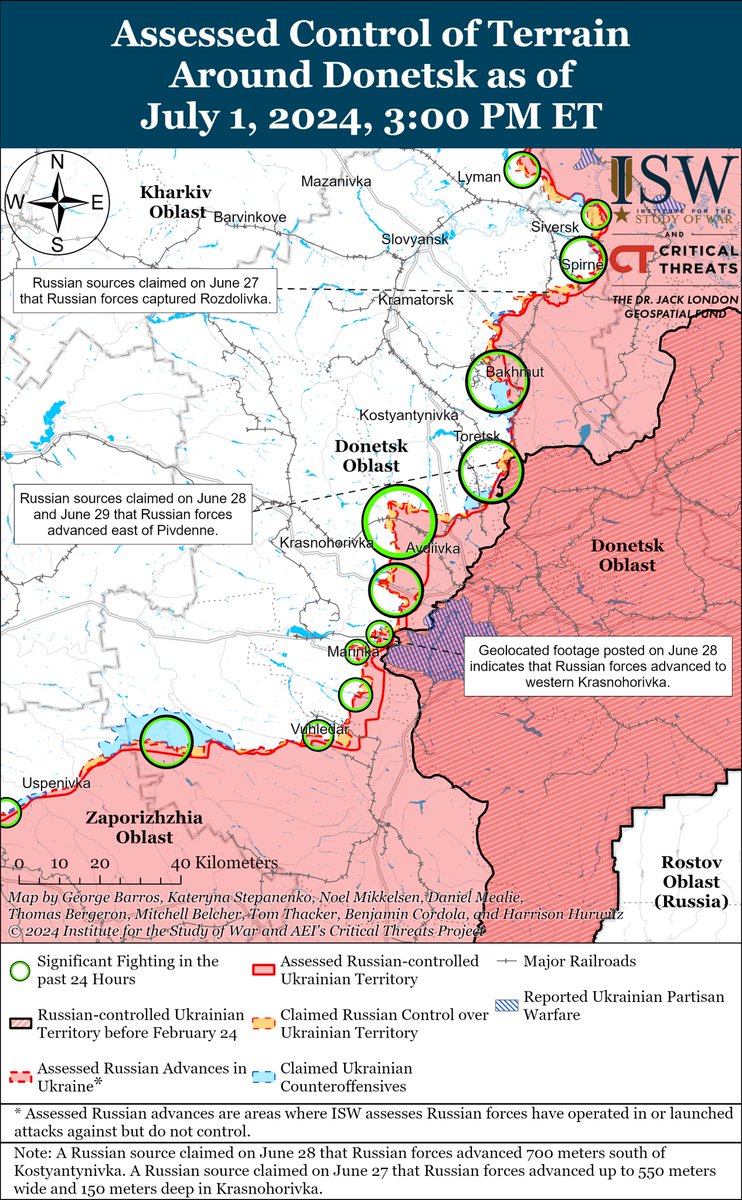
4/ Russian forces recently advanced within easternmost Chasiv Yar. A Ukrainian battalion commander operating in the Kanal Microraion reported in a now-deleted Telegram post that Russian forces have entirely seized the Kanal Microraion as of July 2 and warned of further advances towards Chasiv Yar.
Ukrainian forces recently regained lost positions southeast of Chasiv Yar. Geolocated footage published on July 3 shows Ukrainian forces assaulting Russian positions along a windbreak south of Klishchiivka (southeast of Chasiv Yar).
Ukrainian forces recently regained lost positions southeast of Chasiv Yar. Geolocated footage published on July 3 shows Ukrainian forces assaulting Russian positions along a windbreak south of Klishchiivka (southeast of Chasiv Yar).


5/ Russian forces recently made significant tactical gains in the Toretsk direction and continued offensive operations on July 3. Geolocated footage published on July 3 confirms that Russian forces have advanced over one kilometer from the previously confirmed Russian front line towards the eastern outskirts of Druzhba (east of Toretsk) and gained new positions along Sadova Street. Additional geolocated footage published on July 2 and July 3 shows that Russian forces advanced about 1.8 kilometers west along Kalynova Street towards the eastern outskirts of the Pivnichne-Druzhba area (also east of Toretsk) and into southeastern Pivnichne.
These relatively large gains likely did not occur over the last 24-hour period as Russian sources claimed many previously unconfirmed smaller gains near Toretsk over the past several days. ISW has only recently observed geolocated footage to adjust the frontline.
These relatively large gains likely did not occur over the last 24-hour period as Russian sources claimed many previously unconfirmed smaller gains near Toretsk over the past several days. ISW has only recently observed geolocated footage to adjust the frontline.


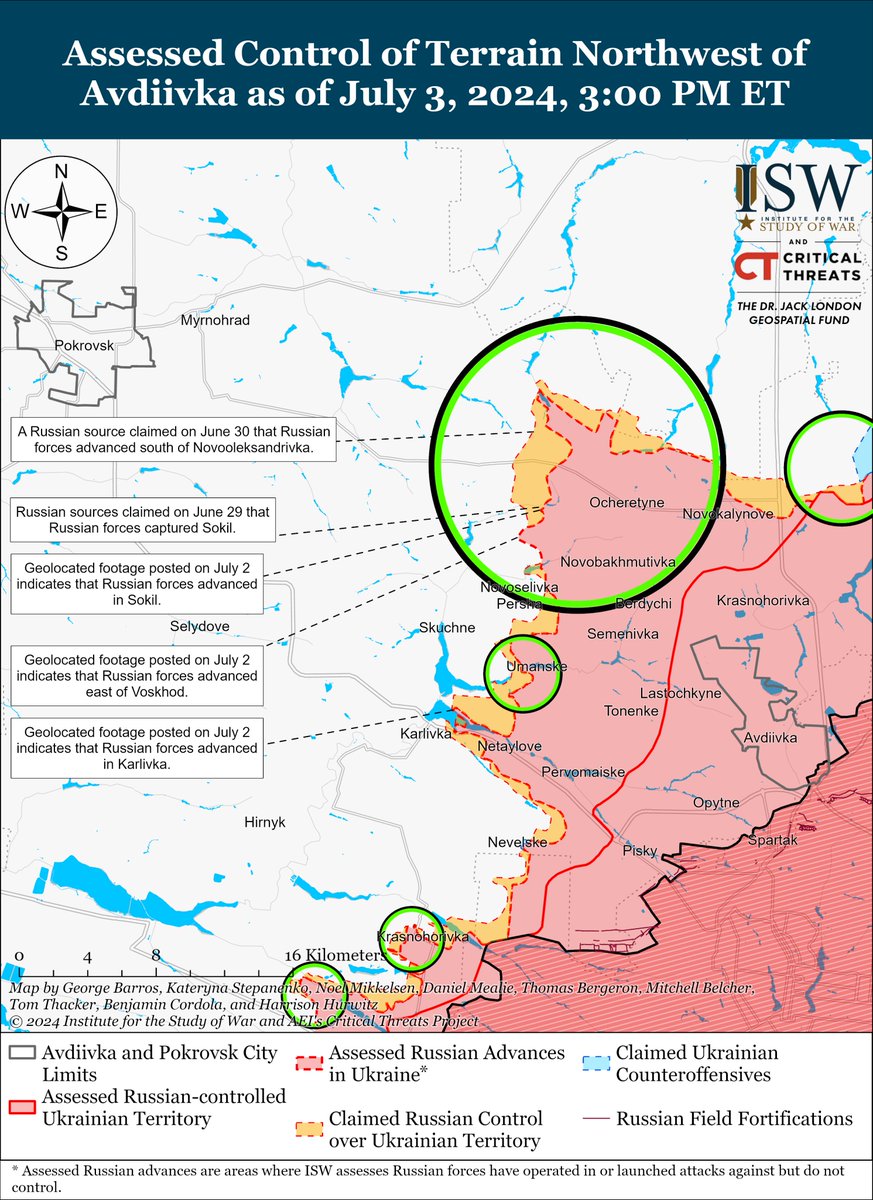
6/ Russian forces reportedly advanced northwest and west of Avdiivka on July 3, but there were no confirmed changes to the frontline.
Russian forces recently made confirmed advances west of Donetsk City and continued offensive operations west and southwest of Donetsk City on July 3. Geolocated footage published on July 3 shows that Russian forces advanced northwest along Akademik Korolev Street in central Krasnohorivka (west of Donetsk City).
Russian forces recently made confirmed advances west of Donetsk City and continued offensive operations west and southwest of Donetsk City on July 3. Geolocated footage published on July 3 shows that Russian forces advanced northwest along Akademik Korolev Street in central Krasnohorivka (west of Donetsk City).

• • •
Missing some Tweet in this thread? You can try to
force a refresh