Thread 🧵
𝙉𝙀𝙐𝙏𝙍𝙊𝙉 𝙎𝙏𝘼𝙍:
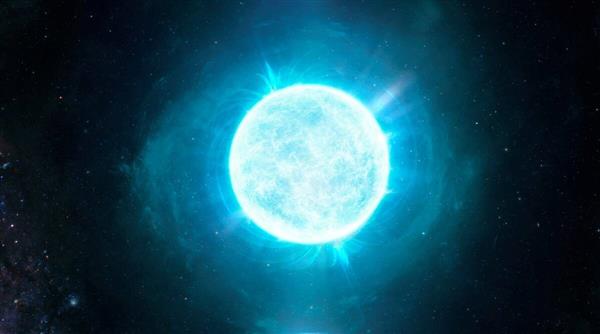
A Neutron Star is the smallest and densest star ever known, composed mainly of neutrons. Its size ranges from 10 km to 20 km. It was theorized in 1934, just two years after the discovery of the neutron particle, and discovered in 1967.
𝙉𝙀𝙐𝙏𝙍𝙊𝙉 𝙎𝙏𝘼𝙍:
A Neutron Star is the smallest and densest star ever known, composed mainly of neutrons. Its size ranges from 10 km to 20 km. It was theorized in 1934, just two years after the discovery of the neutron particle, and discovered in 1967.

𝙁𝙊𝙍𝙈𝘼𝙏𝙄𝙊𝙉:
A neutron star forms when a massive star with a mass of 8 to 20 solar masses runs out of fuel. When a star exhaust its fuel and can no longer generate energy through nuclear fusion, its core fails to produce enough pressure to counteract gravitational forces.
A neutron star forms when a massive star with a mass of 8 to 20 solar masses runs out of fuel. When a star exhaust its fuel and can no longer generate energy through nuclear fusion, its core fails to produce enough pressure to counteract gravitational forces.

The star begins to contract under its own gravity. For massive stars, it is intense enough to fuse electrons and protons together, resulting in the formation of neutrons. This process leaves behind a dense star composed almost entirely of neutrons, which we call a "Neutron Star."

𝙎𝙐𝙋𝙀𝙍𝙉𝙊𝙑𝘼:
A supernova is an explosion occurs when a massive star undergoes a rapid collapse. During this explosion the star loses a fraction of its mass by emitting matter. Furthermore the conversion of electrons and protons into neutrons produces a flood of neutrinos.
A supernova is an explosion occurs when a massive star undergoes a rapid collapse. During this explosion the star loses a fraction of its mass by emitting matter. Furthermore the conversion of electrons and protons into neutrons produces a flood of neutrinos.

ℙℝ𝕆ℙ𝔼ℝ𝕋𝕀𝔼𝕊 𝕆𝔽 ℕ𝔼𝕌𝕋ℝ𝕆ℕ 𝕊𝕋𝔸ℝ𝕊:
𝙎𝙄𝙕𝙀 𝘼𝙉𝘿 𝘿𝙀𝙉𝙎𝙄𝙏𝙔:
When a massive contracts due to its own gravity, becomes so small and dense that it has a diameter of just 10-20 km. Just a teaspoon of neutron star matter weighs more than 500 billion kgs.
𝙎𝙄𝙕𝙀 𝘼𝙉𝘿 𝘿𝙀𝙉𝙎𝙄𝙏𝙔:
When a massive contracts due to its own gravity, becomes so small and dense that it has a diameter of just 10-20 km. Just a teaspoon of neutron star matter weighs more than 500 billion kgs.

𝙈𝘼𝙎𝙎:
A star with a mass of 8 to 20 solar masses turns into a neutron star. During supernova, most of its mass is expelled into space, reducing its mass to between 1.4 to 3 solar masses. Stars that die below this limit become white dwarfs while those above become black hole.
A star with a mass of 8 to 20 solar masses turns into a neutron star. During supernova, most of its mass is expelled into space, reducing its mass to between 1.4 to 3 solar masses. Stars that die below this limit become white dwarfs while those above become black hole.
𝙍𝙊𝙏𝘼𝙏𝙄𝙊𝙉:
When a massive star becomes a neutron star, most of its angular momentum is conserved. As the star's radius shrinks dramatically, its rotation speed increases due to the law of conservation of angular momentum.
When a massive star becomes a neutron star, most of its angular momentum is conserved. As the star's radius shrinks dramatically, its rotation speed increases due to the law of conservation of angular momentum.

A newly formed neutron star may have a rotational speed of several hundred rotations per second. The fastest-spinning neutron star known rotates at 716 rotations per second, equivalent to 0.24c (a quarter of the speed of light).

ℙ𝕌𝕃𝕊𝔸ℝ𝕊 𝔸ℕ𝔻 𝕄𝔸𝔾ℕ𝔼𝕋𝔸ℝ𝕊:
𝙋𝙐𝙇𝙎𝘼𝙍𝙎:
If the remnant of a massive star retains sufficient angular momentum, it becomes a pulsar, a type of neutron star that emits beams of electromagnetic radiation from its magnetic poles. Pulsars are also known as the
𝙋𝙐𝙇𝙎𝘼𝙍𝙎:
If the remnant of a massive star retains sufficient angular momentum, it becomes a pulsar, a type of neutron star that emits beams of electromagnetic radiation from its magnetic poles. Pulsars are also known as the

“lighthouses of the cosmos” and “cosmic clocks” due to their highly precise pulsations. The first neutron star discovered in 1967 was a pulsar and the fastest-known star is also a pulsar. Because the neutron star that don't emit radiation or gravitational waves are hard to detect

𝙈𝘼𝙂𝙉𝙀𝙏𝘼𝙍𝙎:
Magnetars are another special type of neutron star, among the rarest and most mysterious objects in the universe. They possess the strongest gravitational fields of all known objects. They emit X-rays because their intense gravitational fields cause their
Magnetars are another special type of neutron star, among the rarest and most mysterious objects in the universe. They possess the strongest gravitational fields of all known objects. They emit X-rays because their intense gravitational fields cause their

surface temperatures to rise to millions of Kelvin. The gravitational field of a magnetar is so strong that if one were located between Earth and Moon, its gravitational effects would be strong enough to erase the data on all credit cards on Earth and disrupt electronic devices.
The magnetic field of a magnetar is so powerful that it can permanently alter the shape of atoms in its surrounding.
𝔹𝕀ℕ𝔸ℝ𝕐 𝕊𝕐𝕊𝕋𝔼𝕄𝕊:
Almost 5% of neutron stars exist in binary systems, meaning they are paired with another star and orbit each other.
𝔹𝕀ℕ𝔸ℝ𝕐 𝕊𝕐𝕊𝕋𝔼𝕄𝕊:
Almost 5% of neutron stars exist in binary systems, meaning they are paired with another star and orbit each other.
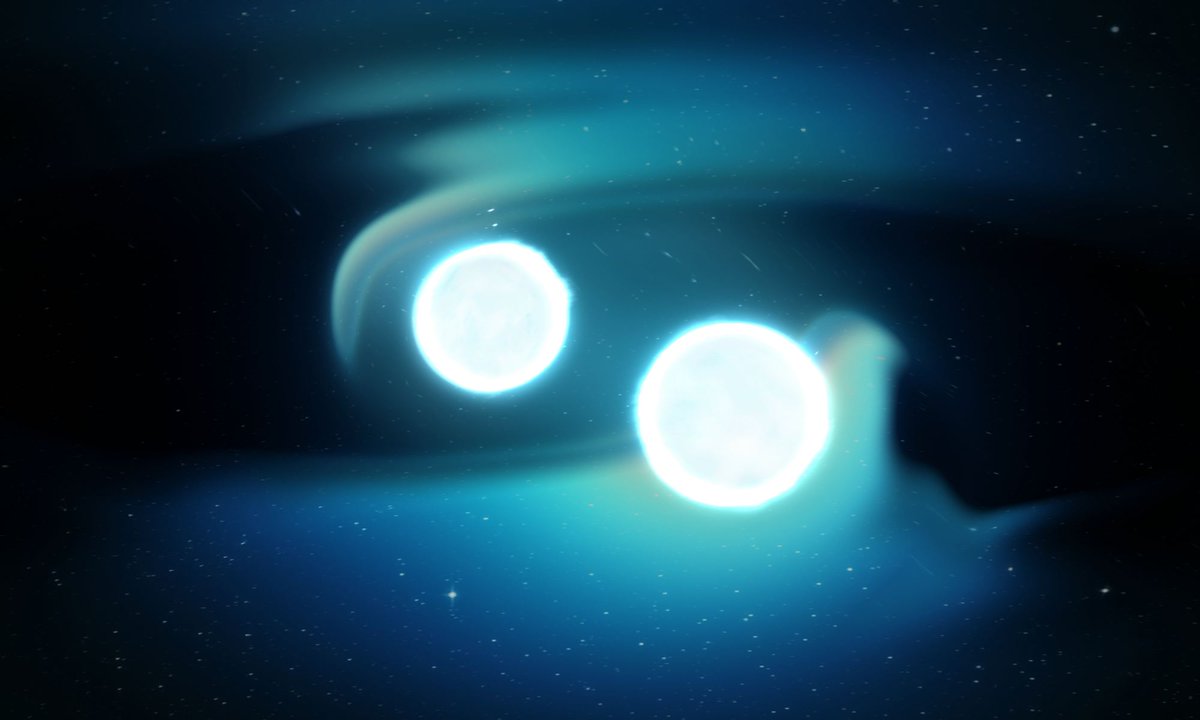
Neutron stars have been observed in binaries with main-sequence stars, red giants, white dwarfs, or other neutron stars. Neutron stars in binary systems emit gravitational waves as they rotate at very high speeds, causing distortions in spacetime.

The emission of gravitational waves causes them to lose energy and eventually leads to the merger of the two bodies. Mass transfer also occurs in binary systems, where the neutron star pulls matter from its companion star.
End!
End!

• • •
Missing some Tweet in this thread? You can try to
force a refresh