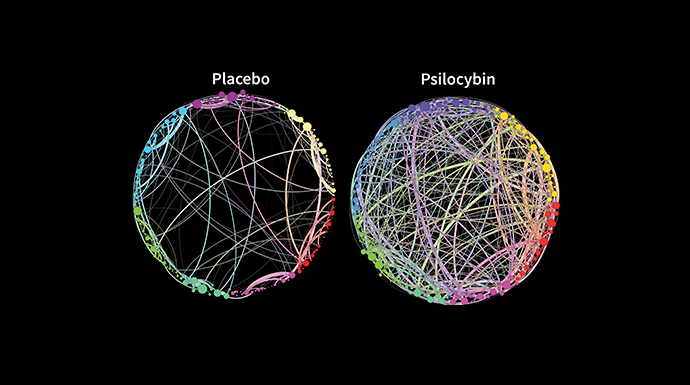
Psilocybin leads to a profound shift in brain connectivity patterns.
🧵1/10
These findings are from a study in @RSocPublishing which analyzed the characteristics of functional brain networks using fMRI after an intravenous infusion of psilocybin. 2/10 royalsocietypublishing.org/doi/10.1098/rs…
Networks, as efficient representations of complex systems, have appealed to scientists for a long time and now permeate many areas of science, including neuroimaging. 3/10
Traditionally, the structure of complex networks have been studied through their statistical properties and metrics concerned with node and link properties. 4/10
In this study, the characteristics of functional brain networks were analyzed at the mesoscopic level from a novel perspective that highlighted the role of inhomogeneities in the fabric of functional connections. 5/10
To do this, healthy volunteers were given intravenous infusions of psilocybin (the main psychoactive component in magic mushrooms) or placebo (saline) and underwent fMRI brain imaging. 6/10
The psilocybin group had a profound shift in brain connectivity patterns, dissolving fixed networks and creating new communication pathways. 7/10
This fluid and flexible state may help patients and therapists work together to break down rigid thinking styles associated with conditions such as depression, addiction, and PTSD. 8/10
This mechanism could explain the clinical effectiveness seen for psilocybin in randomized controlled trials. 9/10nejm.org/doi/full/10.10…
Overall, these results suggest that the psychedelic state is associated with a less constrained and more intercommunicative mode of brain function, which may be a key mechanism in the effectiveness of psychedelic assisted psychotherapy. 10/10
@JD_Rosenblat @IshratHusain_
• • •
Missing some Tweet in this thread? You can try to
force a refresh

This is how someone with prosopometamorphopsia views faces.
🧵1/10
These findings are from a case report in @TheLancet which highlighted a 58-year-old man with a 31-month history of seeing peoples’ faces as distorted and, in his words, appearing “demonic”. 2/10 thelancet.com/journals/lance…
Prosopometamorphopsia (sometimes known as "demon-face syndrome") is a visual disorder characterized by altered perceptions of faces; facial features are distorted in a variety of ways including drooping, swelling, discoloration, and shifts of position. 3/10
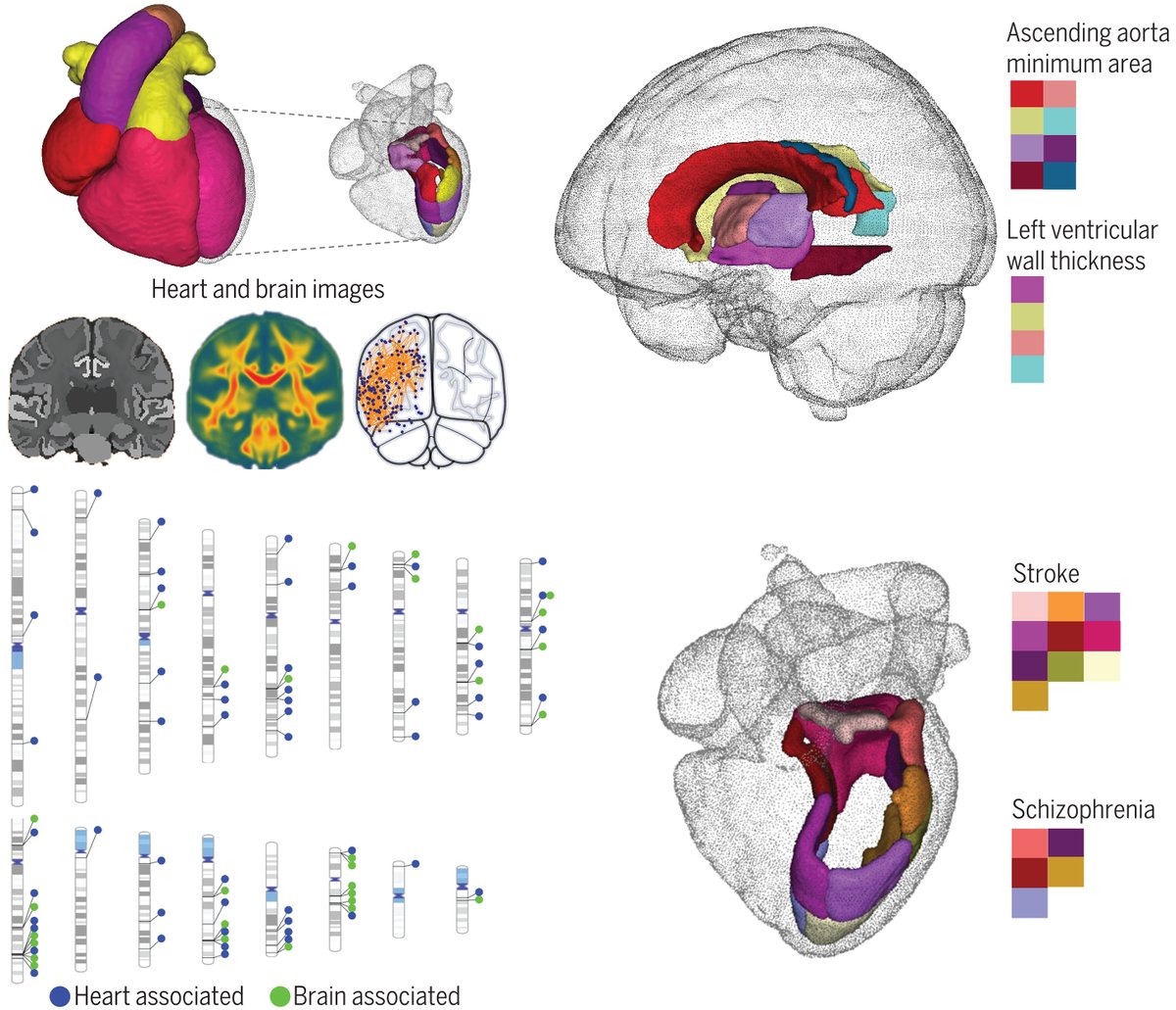
These findings are from a study in @ScienceMagazine which used multiorgan MRI and genetic data from >40,000 subjects to quantify interorgan connections between the heart and brain. 2/11 science.org/doi/10.1126/sc…
Cardiovascular health interacts with cognitive and mental health in complex ways, yet little is known about the phenotypic and genetic links of heart-brain systems. 3/11
Life satisfaction is highly consistent with your personality.
🧵1/10
These findings are from a study in @APA_Journals which used data from three samples in different languages to examine the extent to which life satisfaction reflects personality traits. 2/10 psycnet.apa.org/record/2024-93…
General life satisfaction - an evaluative assessment of the overall degree of being satisfied with one’s life - is among the most desirable psychological outcomes and often an end unto itself, at least in the Western world. 3/10
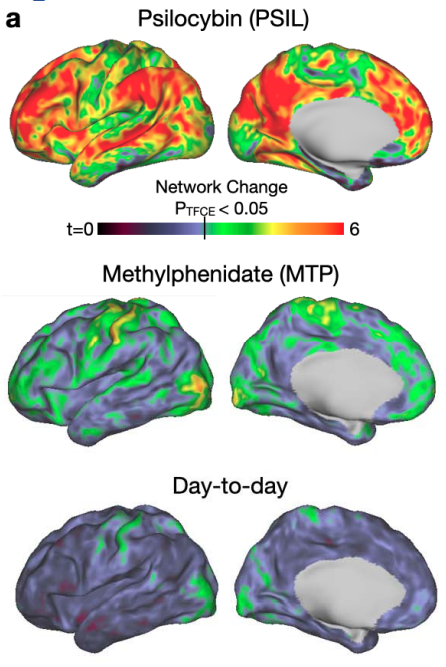
These findings are from a study in @medrxivpreprint which tracked brain changes in healthy adults before, during, and for up to 3 weeks after oral psilocybin and methylphenidate and again 6+ months later. 2/10 medrxiv.org/content/10.110…
It was found that psilocybin disrupted connectivity across cortical networks and subcortical structures, producing more than 3-fold greater acute changes in functional networks than methylphenidate. 3/10
These findings are from a study in @FrontiersIn which used functional connectivity approaches to study resting-state fMRI data in a group of habitual coffee drinkers. 2/11 frontiersin.org/articles/10.33…
There is a common expectation that coffee increases alertness and psychomotor functioning; for these reasons, many individuals keep drinking coffee to counteract fatigue, stay alert, increase cognitive performance, and increase work efficiency. 3/11
Pharmacogenomic-guided treatment for depression may save the health care system $956 million.
🧵1/9
These findings are from a study in @CMAJ which developed a microsimulation model of care pathways for depression to evaluate the effectiveness and cost-effectiveness of pharmacogenomic testing from the public payer’s perspective over 20 years. 2/9 cmaj.ca/content/195/44…
Pharmacogenomics is the study of how an individual's genetic inheritance affects the body's response to drugs. 3/9