@RuralLeftie98 Obama constantly ginned up race-hate against random white people and generally governed as the first black president rather than an American president. The last president to express his level of racial identitarianism in public was probably Woodrow Wilson.
• • •
Missing some Tweet in this thread? You can try to
force a refresh

Excerpts from TR Fehrenbach's "Fire and Blood: A History of Mexico" (1973). The Porfiriato gave Mexico a generation of stability and development for the first time since independence. This left Mexico overdue for another civil war: the Mexican Revolution.
One problem was that the Porfirian school system had created a large, literate middle structure (not class). These educated mestizos became dissatisfied due to lack of opportunity; growth was rapid but not rapid enough to absorb them all.
The Revolution kicked off in 1910, when Diaz announced he'd won reelection with 99% of the vote. This kicked off an insurgency in Chihuahua, in the mestizo, frontier north.
Thread with excerpts from the 'Porfiriato' section of TR Fehrenbach's "Fire and Blood: A History of Mexico" (1973). This was the first era of stability and economic growth in post-independence Mexico, summed up with the slogan "Order and Progress."
Independent Mexico's problem was that Mexicans were incapable of setting aside personalisms for truly national institutions; congress, for example, was a joke.
Benito Juarez greatly expanded secular education; but this turned out to be more of a curse than a boon, because the vast majority of people with schooling insisted on government or legal jobs; very few became doctors or engineers or technicians.
Thread with excerpts from TR Fehrenbach's "Fire and Blood: A History of Mexico" (1973), late 19th century. Like before the war, Mexico after the Mex/Am War was a mess, with many regions sinking into barbarism. Yucatan was the worst, with half the population dying in a race war.
Every Mexican president was a Freemason, but Catholicism was still universal and the position of the Church, which retained its royal privileges even in republican Mexico, was a flashpoint.
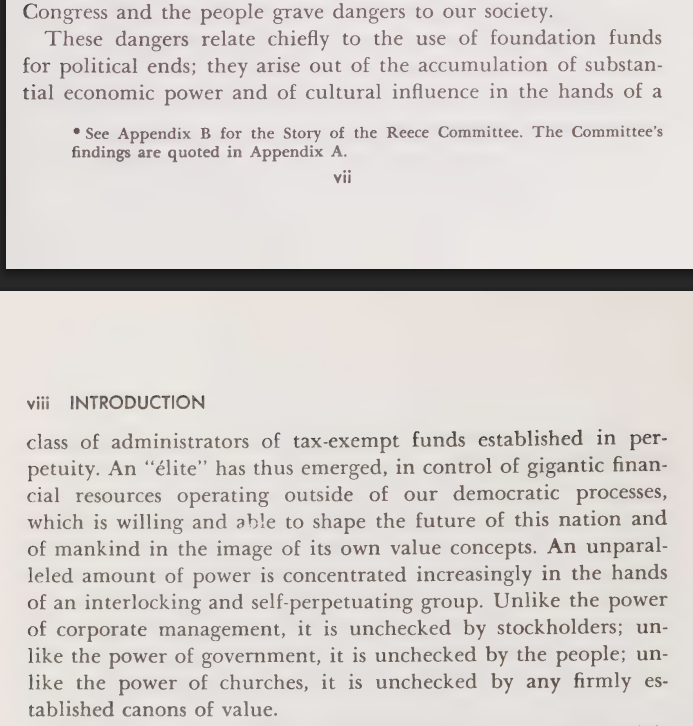
The Mexican Church was immensely wealthy thanks to its tax-advantaged status, and the clergy retained legal privileges. It also collected extremely high fees; one effect of this was to ~abolish marriage among the lower classes.
Thread with excerpts from the Mexican-American War section of TR Fehrenbach's "Fire and Blood: A History of Mexico" (1973). Since independence, Mexico had seemingly gone backwards in all respects; in 1840 Mexico was less civilized than it had been.
An incident where French warships blockaded Veracruz over nonpayment of debts from unstable and perpetually-bankrupt Mexican governments. The Mexican response: show "Death to the Anglo-Saxons and Jews" and bring back Santa Anna.
After the secession of Texas, Mexico appeared to be disintegrating, with the Pacific areas effectively independent, much of the North run by bandits chiefs, and Yucatan seceding.
Thread with excerpts from the 'Pretorians' section of TR Fehrenbach's "Fire and Blood: A History of Mexico" (1973). In 1821, postcolonial nation-building seemed easy; the only example was the USA. But the US was homogenous, well-led, free, and already had an identity.
Mexico was the reverse, with no history of self-rule, the criollo/casta/indio split, and no great leadership. The two major factions were the 'continuistas' (conservatives) and the 'reformistas' (liberals).
Excerpts from TR Fehrenbach's "Fire and Blood: A History of Mexico" (1973) on the Mexican War of Independence. The Mexican criollos were far less impressive than their South American counterparts, and produced no leaders equal to Bolivar or San Martin.
Where the South American criollos quickly declared independence upon the French conquest of Spain, the Mexican ones dithered. Acting quickly, the local peninsulares coup'd the government and the criollos accepted it.
With the criollos basically accepting Spanish domination, leadership of the independence struggle passed to men like Miguel Hidalgo, who turned it from a (hopefully) bloodless coup to a social and race war.