Sir Humphrey Profile picture
Jul 7, 2024 12 tweets 5 min read Read on X
There is a lot of media coverage of the new Prime Minister and the need to write 'letters of last resort' for UK nuclear forces.

The Pinstriped blog on the role of the PM in nuclear retaliation is here -

A thread on the subject follows! tinyurl.com/3759t6r2
Image
During the Cold War there was a lot of thought given in government to working out how to ensure that if attacked, the UK could strike back.

This led to much soul searching on scenarios, circumstances and likely outcomes by the Cabinet Secretary, Sir Norman Brook. /2

Image
Image
Image
It was clear that the PM and the President needed to speak to each other about nuclear retaliation, but doing so would be challenging - the sheer complexity of 1960s comms arrangements made it very complex to do properly. This map shows the Trans-Atlantic links. /3 Image
This paper shows the conversations that would occur between the PM and President as part of the decision by both of them to authorise nuclear retaliation in the event of war. This assumed there was time to do it and the comms would work as planned... /4 Image
The UK settled on ensuring that during the 1960s it would try to use the PM in London, then Deputies and finally CINC Bomber Command to authorise retaliation if required. This led to a formal 'last resort' order allowing the CINC to authorise a nuclear attack. /5 Image
There were concerns that letting Bomber Command do this could lead to serious consequences - one entirely serious concern seemed to mirror the plot of 'On The Beach' in seeing the RAF start WW3 by accident... /6 Image
To ensure a message got through, alternatives were considered - including the 'Nuclear Deputies' who would take on the role of nuclear release if authorised. This is where misleading suggestions about the PM's car and AA phones comes from. /7 Image
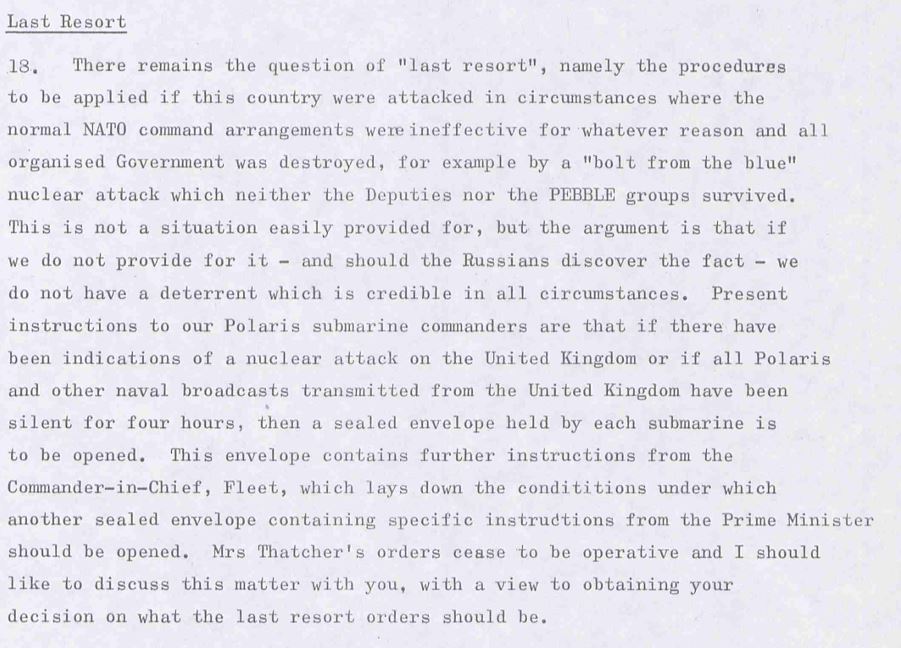
The introduction of the SSBN force changed all this and meant new 'last resort' procedures were required. To start with the continuity of government plans called for the so-called PYTHON / PEBBLE groups to be able to have C2 facilities to exercise control over Polaris/ /8 Image
But it wasn't certain they would survive, so the UK introduced 'letters of last resort' to be held on SSBN's to pass on wishes in the event of a complete 'bolt from the blue' scenario. That said, this was seen as the least likely scenario of all for a variety of reasons. Image
Ultimately Letters of Last Resort are about ensuring that deterrence works - there is always a plan in place to cope with any scenario, no matter how outlandish it may seem to be. That meant that the UK put in place arrangements, which continue to this day. /10 Image
Deterrence is about ensuring that an aggressor knows the UK will be able to respond regardless of the size of the surprise attack. That is why it is so important that these letters remain in place and valid. It must ensure that 'the Bomber will always get through'. /11 Image
Thread may be of interest to @aaronbateman22 @coldwaruk @JulieAMcDowall @UKDefJournal @NavyLookout @adastral_trader @RoryCormac @CovertShores @IBallantyn among others!

• • •

Missing some Tweet in this thread? You can try to force a refresh

 

Keep Current with Sir Humphrey

Sir Humphrey Profile picture

Stay in touch and get notified when new unrolls are available from this author!

Read all threads

This Thread may be Removed Anytime!

PDF

Twitter may remove this content at anytime! Save it as PDF for later use!

Try unrolling a thread yourself!

how to unroll video
  1. Follow @ThreadReaderApp to mention us!

  2. From a Twitter thread mention us with a keyword "unroll"
@threadreaderapp unroll

Practice here first or read more on our help page!

More from @pinstripedline

Jun 27
In the 1980s the Royal Navy wanted to scrap its Wessex Helicopter force. Secret files reveal the staff battle in Whitehall by the RAF to prevent the Army taking over support helicopter forces . Read on for a Pinstripedline thread on interservice rivalry at its worst! Image
The RN and RAF operated different variants of the Wessex - the RN version having a single engine. Used by the Fleet Air Arm, it carried out troop lifts, vertical replenishment and many other duties around the world. Over 100 were built and used from 1962 onwards. Image
In the 1982 costings, the RN proposed scrapping the force of 59 front line & 24 reserve aircraft to save money. As they had 15 years life left, the SofS directed that the RAF and Army should consider whether to take the airframes on instead to support BAOR in Germany. Image
Read 19 tweets
May 25
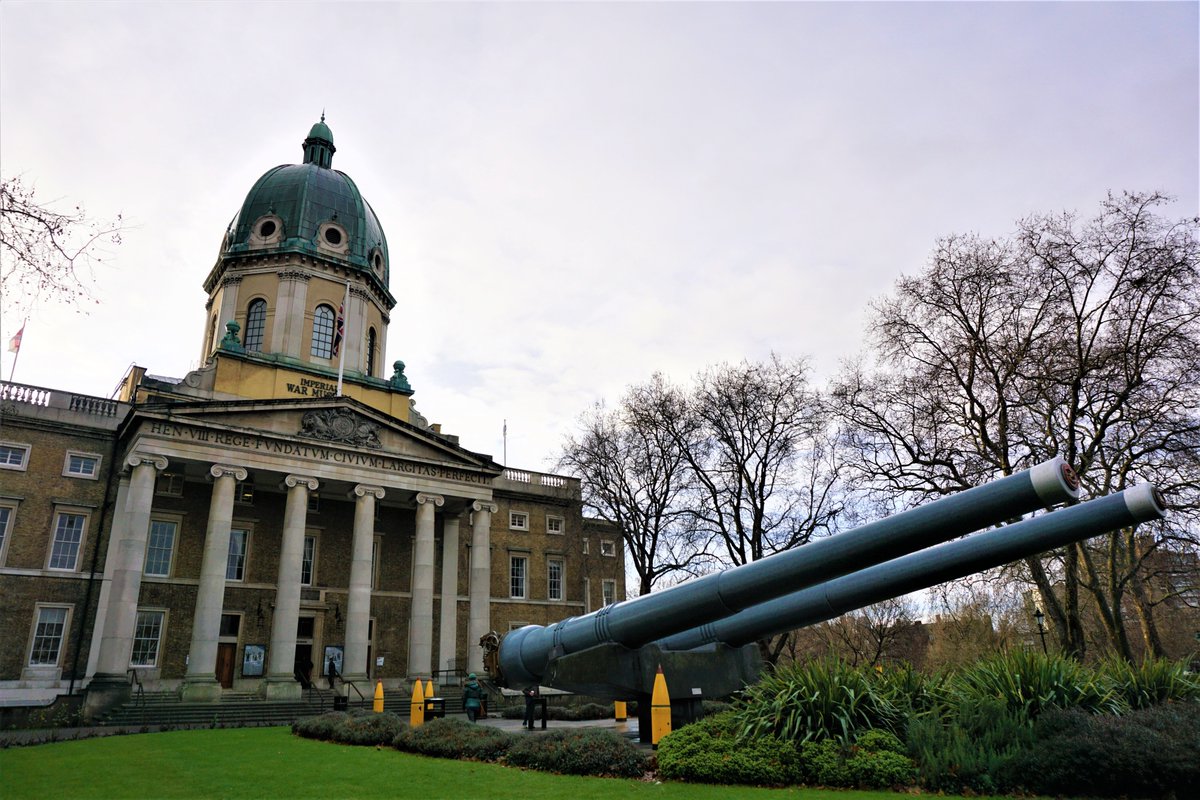
The 15" guns outside of the Imperial War Museum in London are one of its most prized exhibits. They are a memorial to the 'big gun' ship. Yet the story of how they came to be there is little known but involves atomic weapons, the space race and lots of financial paperwork… Image
In 1960 the Royal Navy scrapped HMS VANGUARD, the last 'dreadnought'. Made obsolete by the H-Bomb and changing nature of war, she was scrapped, not preserved - a sad but economically understandable decision. Image
In 1965 the RN scrapped HMS ROBERTS, the last vessel to mount the 15" gun in Royal Navy service. This ship, a monitor used for shore bombardment was sold to Wards for scrapping, and demolition promptly began. Thus ended the 15" gun in Royal Navy service after approx 50 years. Image
Read 24 tweets
May 6
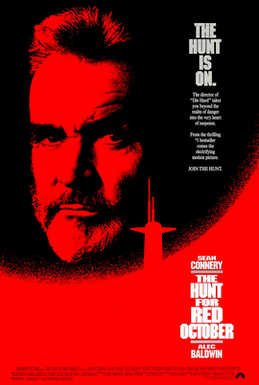
"I present you the Soviet Ballistic Missile Submarine Red October" - A line from a superb movie. In reality the CIA knew far more about the Soviet TYPHOON class from the mid 1970s than Clancy could have guessed.

Thread on the CIA, Typhoons and spying on the Soviets...Image
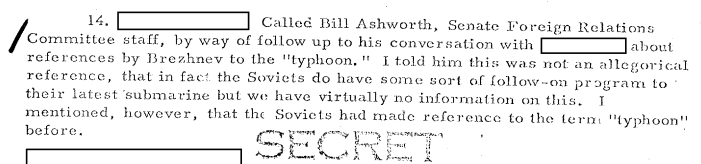
In 1975 whispers were emerging of a new Soviet class of SSBN, known as the TYPHOON. While Brezhnev hinted at its existence, the West knew little.

In briefings to US Senators, the CIA admitted "we have virtually no information on this"... Image
Tracking the TYPHOON construction became one of the highest US intelligence priorities. A significant amount of overhead (e.g. Space / SR71) effort was put into tracking the construction, not just of the hull, but her reactors, missiles and shoreside infrastructure. Image
Read 23 tweets
Apr 26
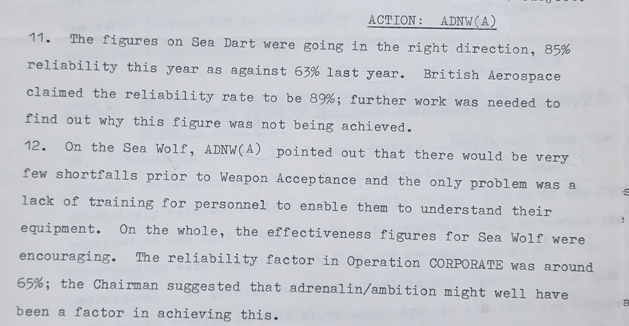
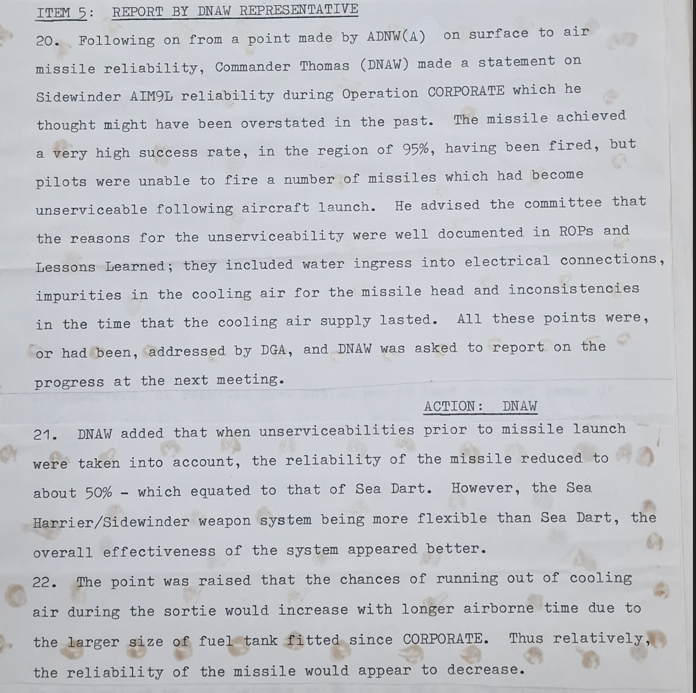
In 1983 the Royal Navy conducted a SECRET set of meetings to assess the performance of weapon systems across the Fleet. This is a short thread on internal RN analysis of just how (un)reliable its weapons really were in the aftermath of the Falklands War... Image
Headline reading indicated that in 1982, Sea Dart had achieved 63% reliability, and Sea Wolf 65% in Op CORPORATE - the hope was that this would be improved for Sea Dart to 85% during 1983. Image
It was noted that although the AIM9L sidewinder had achieved 95% reliability of missiles fired, when the 'technical failures' were added in, in reality the weapons serviceability rate was closer to 50% - "which equated to that of Sea Dart". Image
Read 19 tweets
Apr 19
This is the Canberra bomber, made famous through over 50 years of operations. What is less well known is that in the 1950s TOP SECRET plans were made to use RAF Canberra's to carry out an audacious attack on Soviet shipping canals using Tall Boy bombs in the event of WW3... Image
A key NATO concern on the outbreak of war was how to prevent Soviet Baltic Fleet ships and amphibious vessels launching attacks in Denmark and Northern Germany to deny the Baltic to NATO.

One way to do this was destroying the canals that would move these ships into place. Image
The most complex canal was the Baltic-White Sea Canal in the Soviet Union. This was a major strategic artery and needed to be destroyed. The UK realised taking out No10&11 Locks at Nadvoitsy would deny the canal.

Photo is 10 Lock (taken from Wikipedia) Image
Read 10 tweets
Apr 15
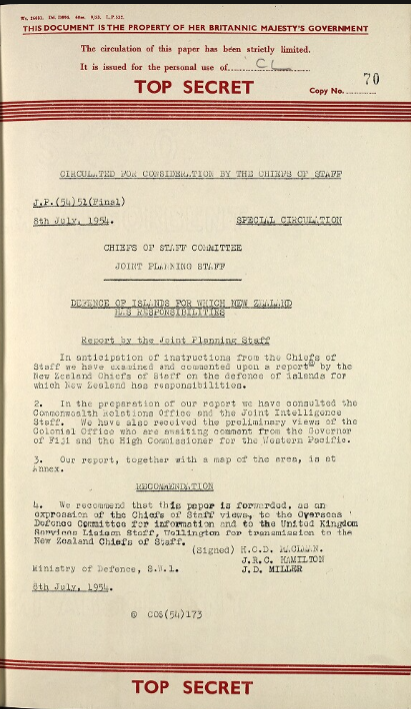
This TOP SECRET map from 1954 shows how the UK MOD planned for New Zealand to assume defence responsibility for UK and allied islands in the South Pacific in the event of WW3.

Short thread on how even in the 1950s, the UK saw NZ as a key partner in the event of global war. Image
In the 1950s the UK still had a significant colonial footprint across this region, with a range of island colonial possessions and commonwealth responsibilities. It was assumed that if global war came, NZ would be asked to lead the defence of the region. Image
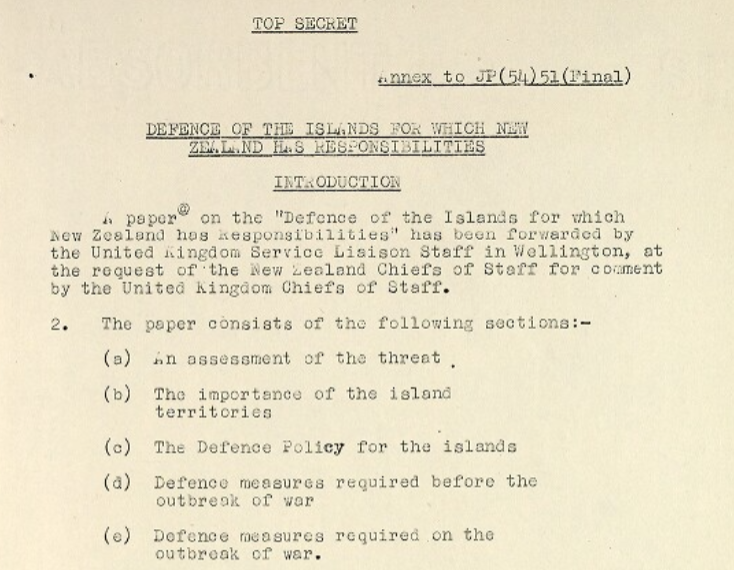
In 1954 the New Zealand Service Chiefs asked their British counterparts for their opinion on the defence obligations. The UK analysed it and drew on intelligence reporting to assess what the likely requirements would be in wartime. Image
Read 14 tweets

Did Thread Reader help you today?

Support us! We are indie developers!


This site is made by just two indie developers on a laptop doing marketing, support and development! Read more about the story.

Become a Premium Member ($3/month or $30/year) and get exclusive features!

Become Premium

Don't want to be a Premium member but still want to support us?

Make a small donation by buying us coffee ($5) or help with server cost ($10)

Donate via Paypal

Or Donate anonymously using crypto!

Ethereum

0xfe58350B80634f60Fa6Dc149a72b4DFbc17D341E copy

Bitcoin

3ATGMxNzCUFzxpMCHL5sWSt4DVtS8UqXpi copy

Thank you for your support!

Follow Us!

:(