In July 1980 the National Photographic Interpretation Centre (NPIC) issued its latest 6 monthly review of Soviet nuclear assets and whether they were complying with arms agreements. This summarised satellite cover of the USSR by overhead assets.
 The RN and RAF operated different variants of the Wessex - the RN version having a single engine. Used by the Fleet Air Arm, it carried out troop lifts, vertical replenishment and many other duties around the world. Over 100 were built and used from 1962 onwards.
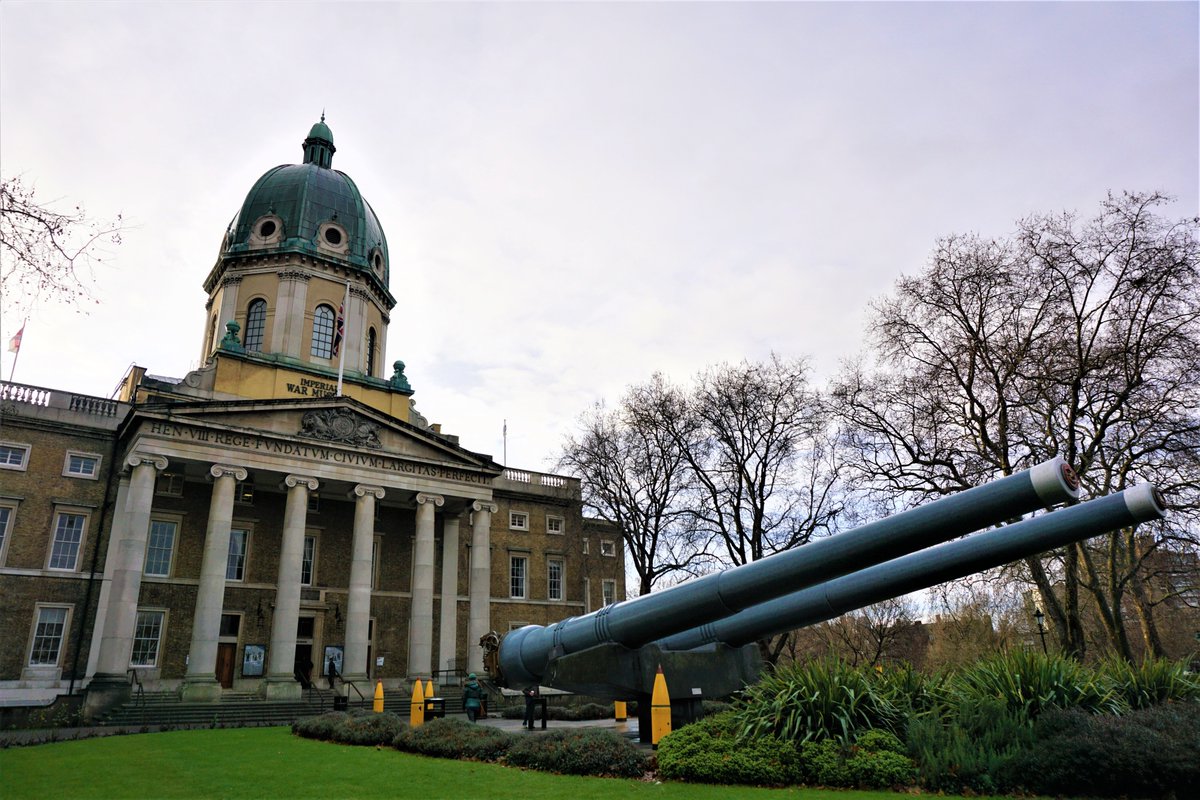 In 1960 the Royal Navy scrapped HMS VANGUARD, the last 'dreadnought'. Made obsolete by the H-Bomb and changing nature of war, she was scrapped, not preserved - a sad but economically understandable decision.
 In 1975 whispers were emerging of a new Soviet class of SSBN, known as the TYPHOON. While Brezhnev hinted at its existence, the West knew little.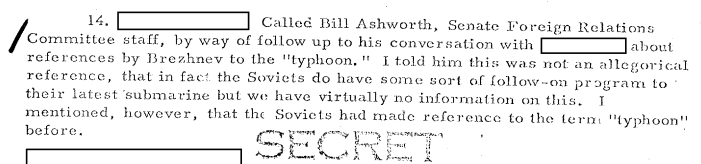
 Headline reading indicated that in 1982, Sea Dart had achieved 63% reliability, and Sea Wolf 65% in Op CORPORATE - the hope was that this would be improved for Sea Dart to 85% during 1983.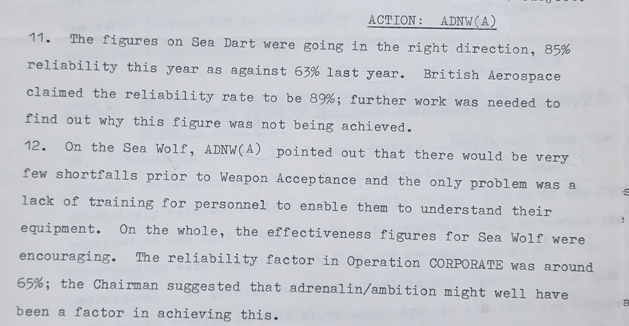
 A key NATO concern on the outbreak of war was how to prevent Soviet Baltic Fleet ships and amphibious vessels launching attacks in Denmark and Northern Germany to deny the Baltic to NATO.
 In the 1950s the UK still had a significant colonial footprint across this region, with a range of island colonial possessions and commonwealth responsibilities. It was assumed that if global war came, NZ would be asked to lead the defence of the region.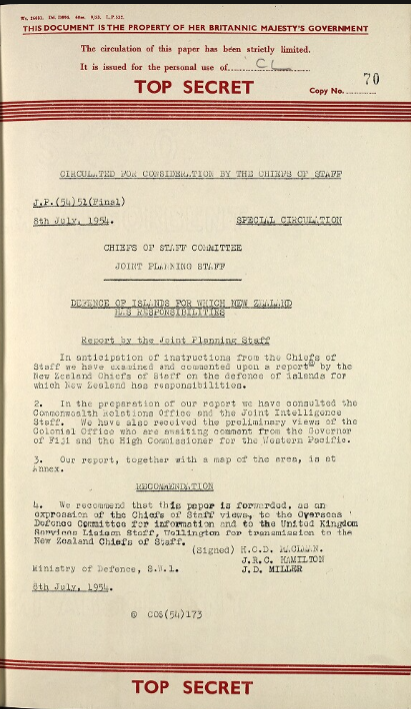
 The DIS was the MOD core intelligence organisation, covering 'all source' analysis, overhead imagery and a range of military collection capabilities. Throughout the Cold War it enjoyed a very deep relationship with their US and Canadian counterparts.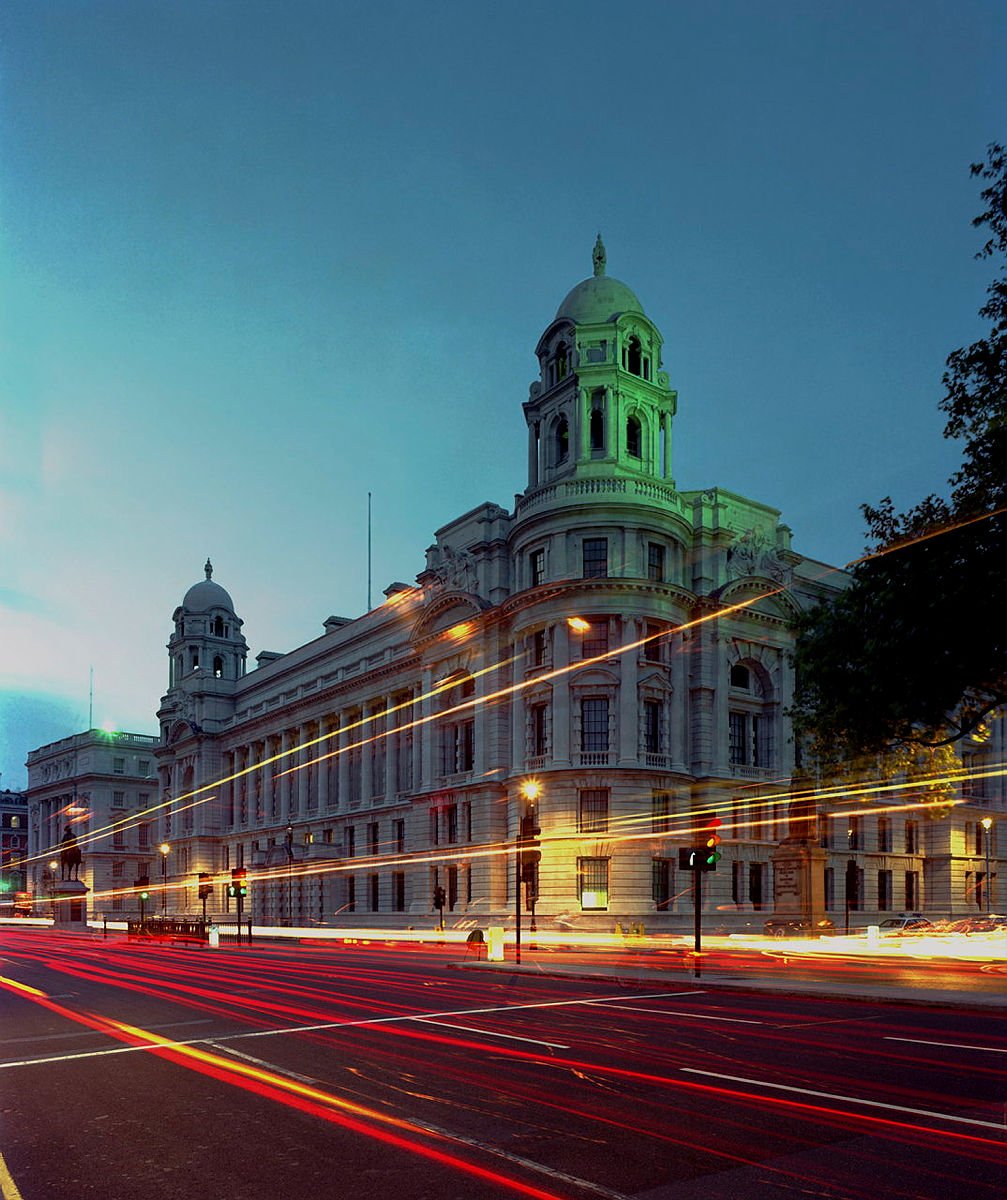
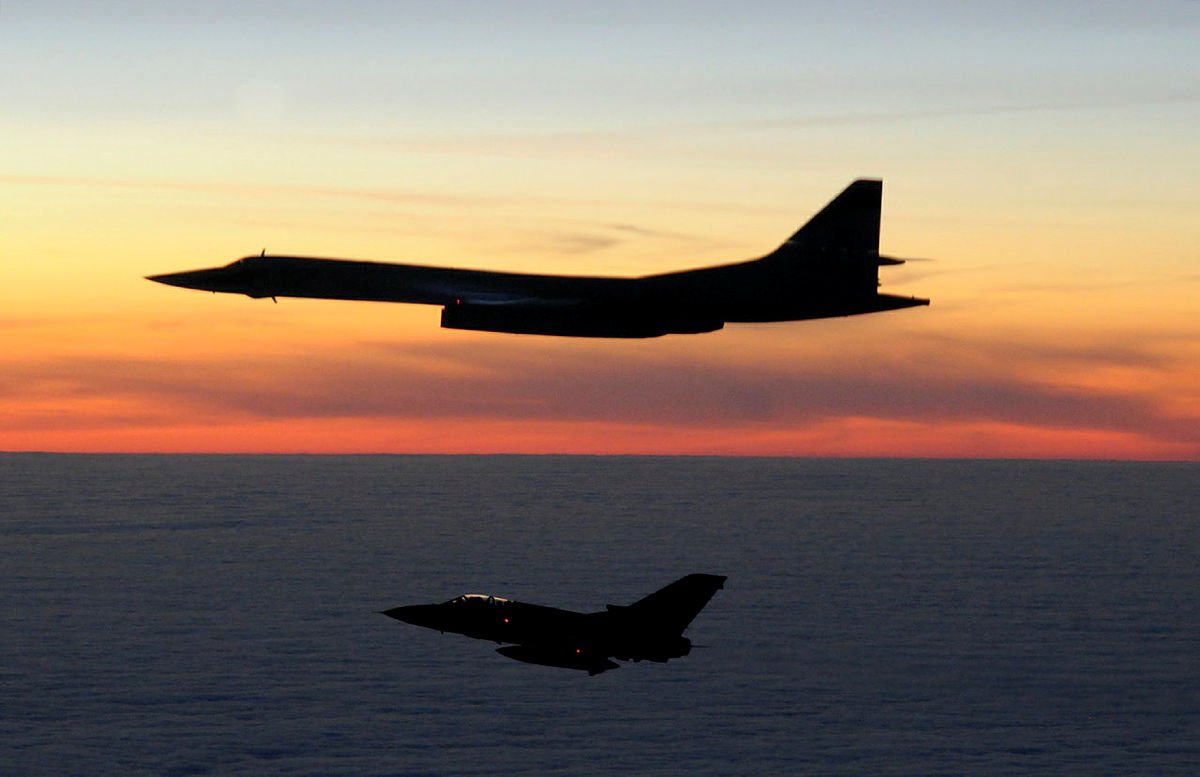 The Tornado F3 entered service in the 1980s, intended to provide long range air defence. It was well designed for its task - namely to be a missile carrier to shoot down incoming Soviet bombers / MPA over the Atlantic, and not as a dogfighter in Germany.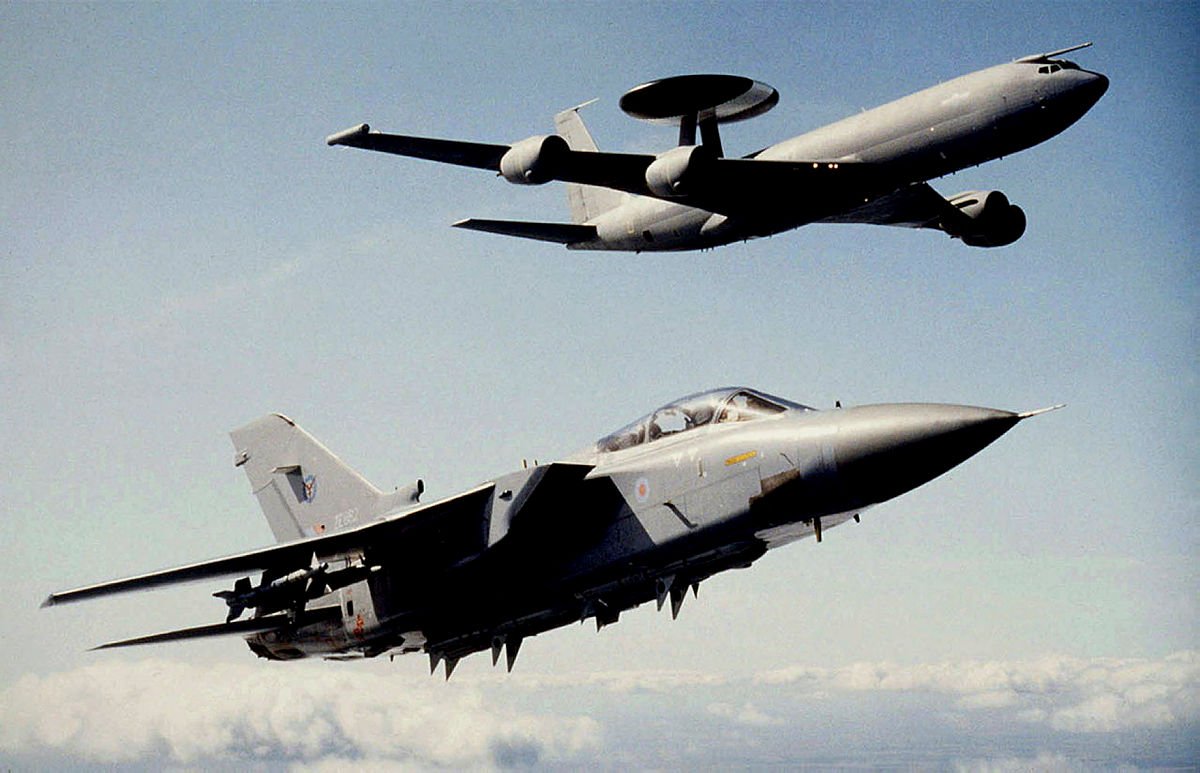
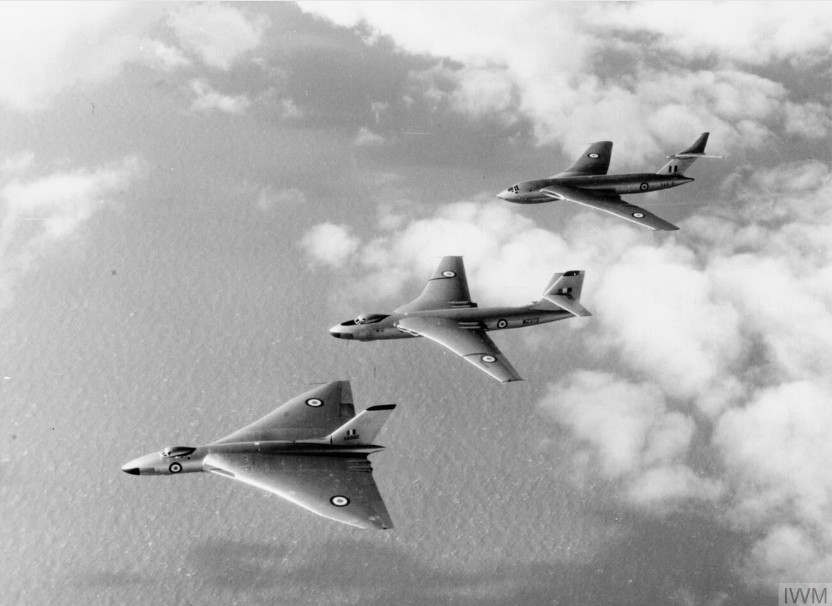 In 1948 the British atomic weapons programme was underway. To understand how many weapons would be needed, and why, the Chiefs of Staff directed the MOD to come up with an analysis of how best to use nuclear weapons on the Soviet Union as part of an UK/US bomber offensive.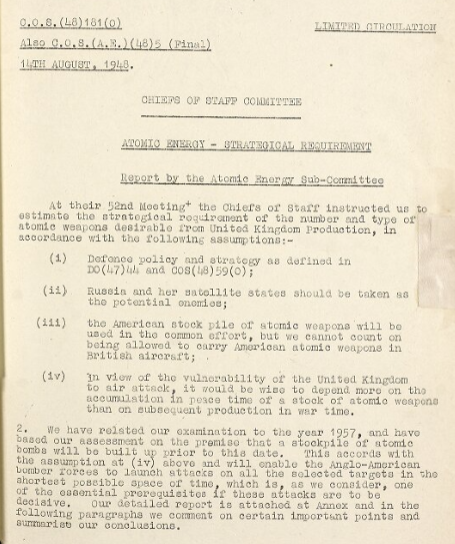
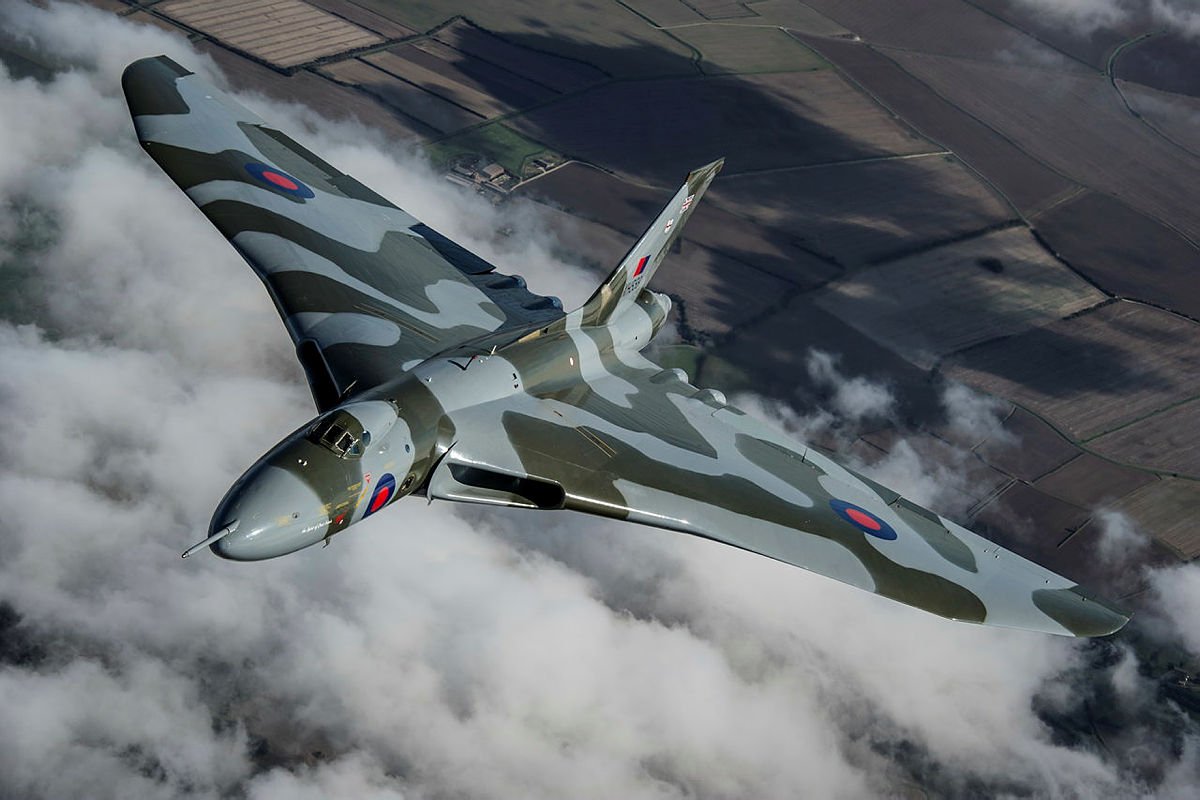 The goal of the paper was to set out the wartime stockpile needs for all 3 services. It began by defining what was meant by conflict - a simple question but far more complex to define. For example - the UK used 'upper, midddle and lower' thresholds.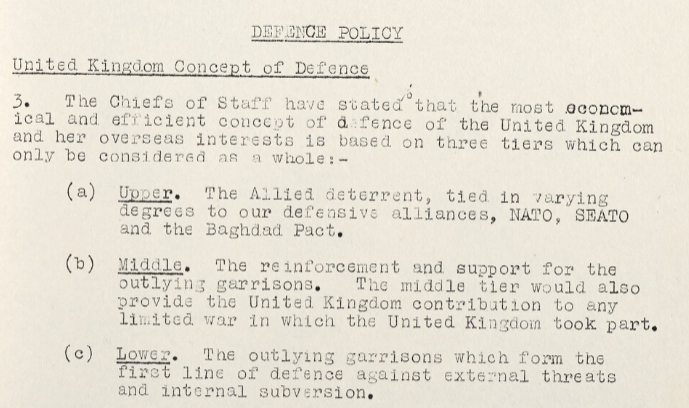
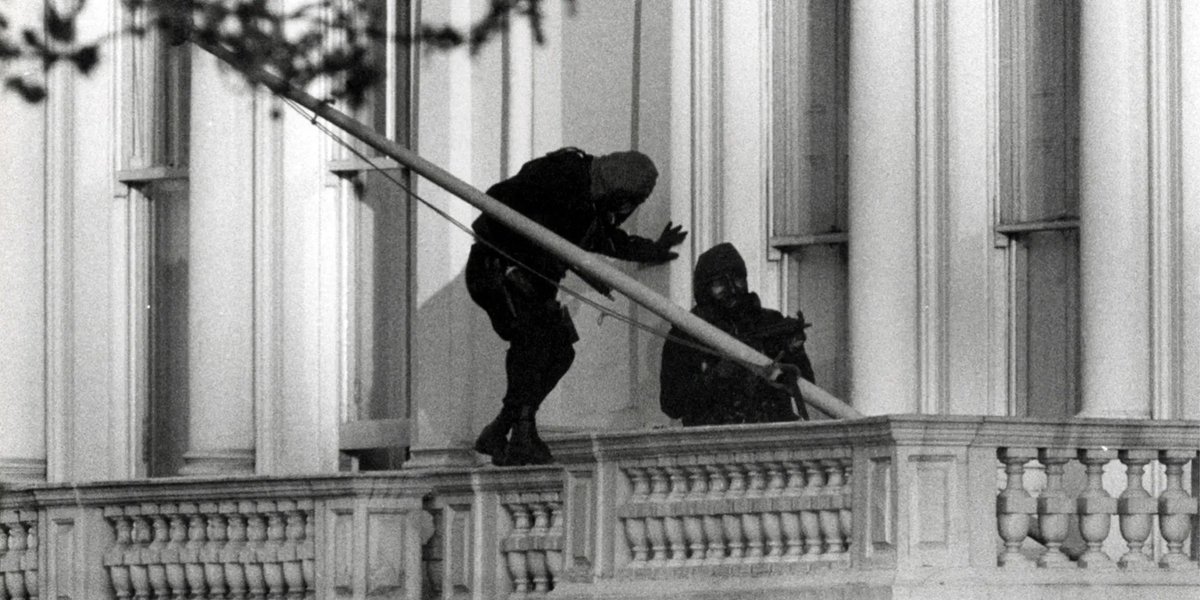 In the aftermath of the operation, the FCO received over 20 different requests for support from different countries, keen to learn about the SAS role in the rescue, get training and assistance and learn how to conduct hostage rescue.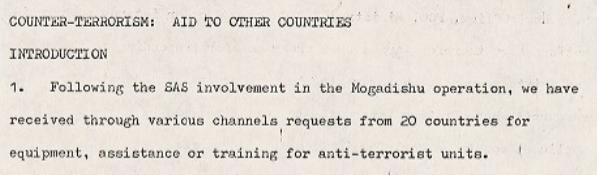
 The Joint Intelligence Committee is the hub of British intelligence analysis, fusing reporting together to produce coherent assessment that informs policy making at the highest levels of the British Government. Any issue considered here is of major national importance.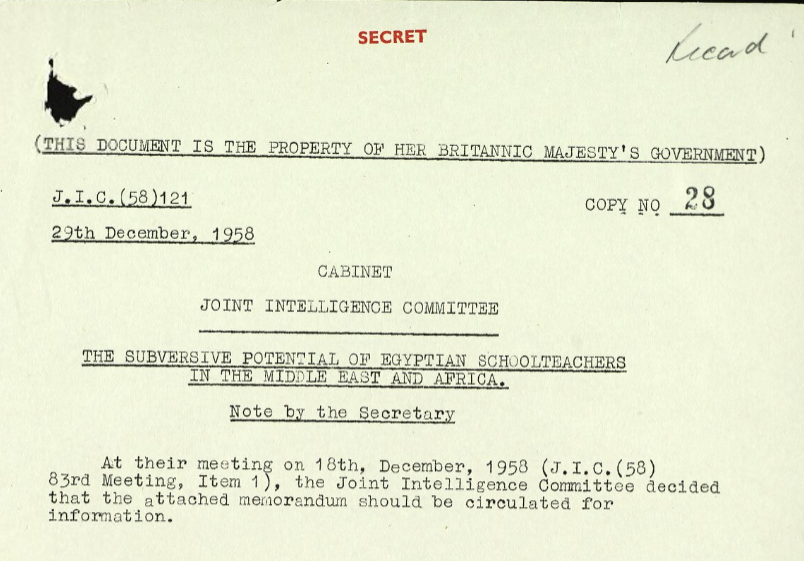
 Ministers were told that there was a permanent SAS team ready to conduct CT Operations in the UK. On the mainland this was known as OP MINSTREL, while in NI, it was OP GASTRIC.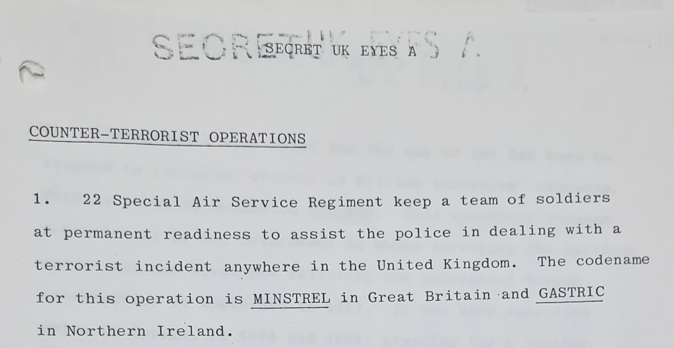
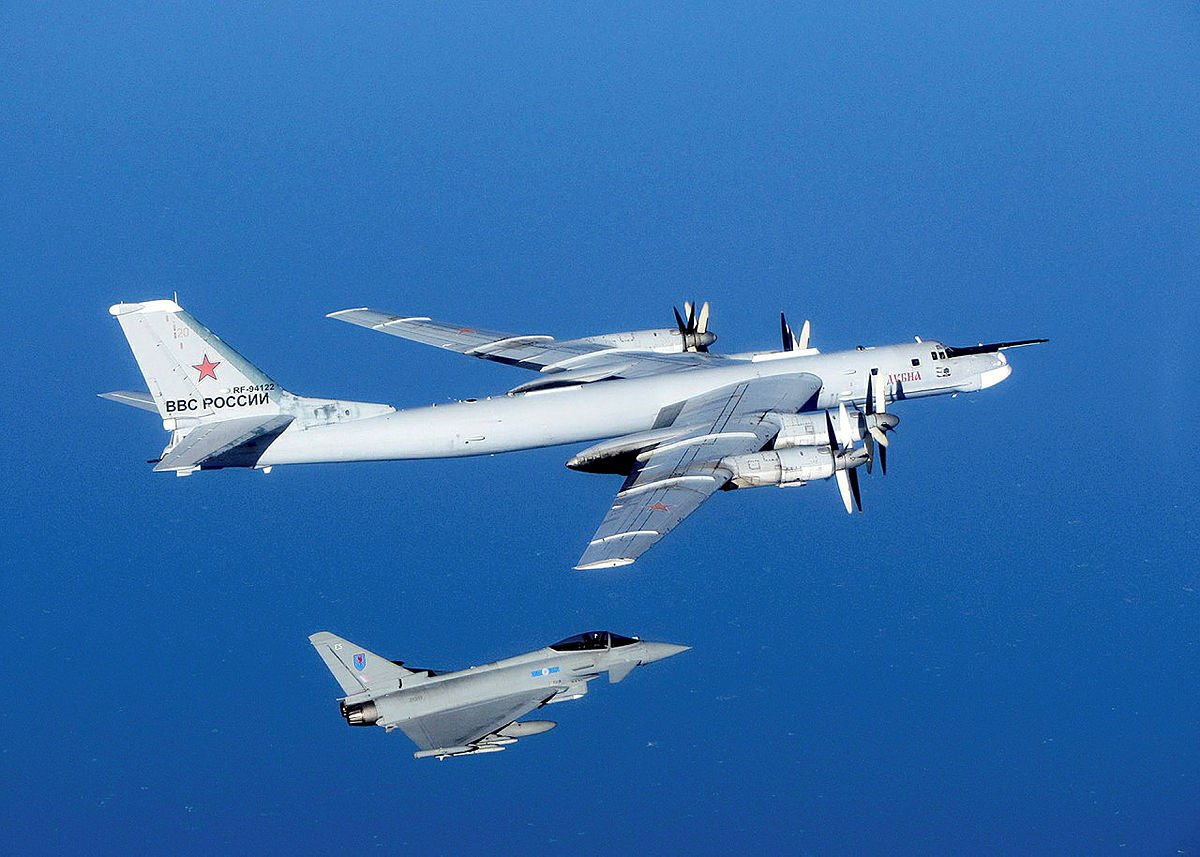
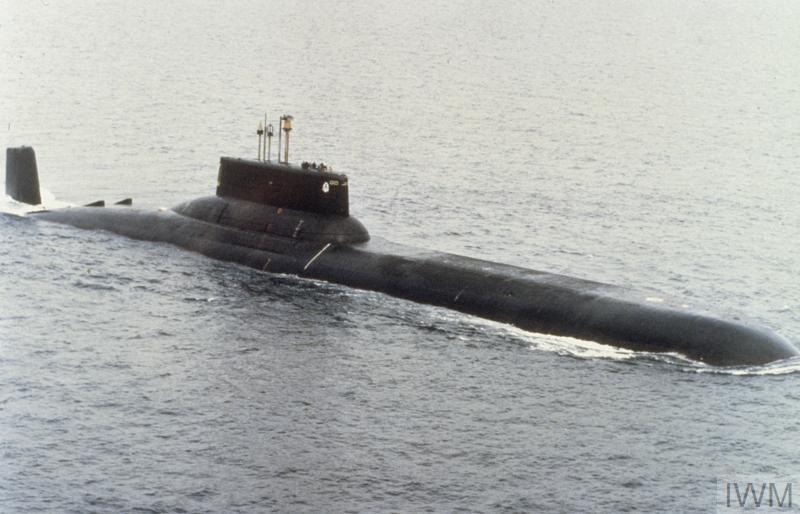 By the late 1980s the Royal & Soviet navies had annual meetings to review incidents and attempt to define the 'rules of the game' for Incidents at Sea (INCSEA) to reduce tensions and the likelihood of a mistake.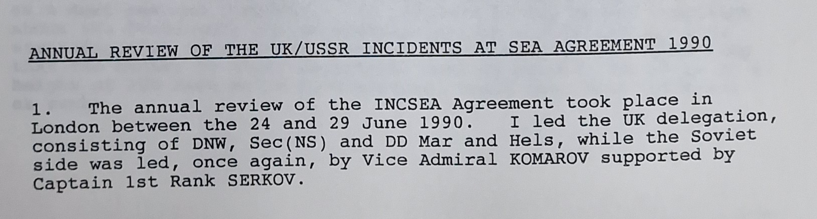
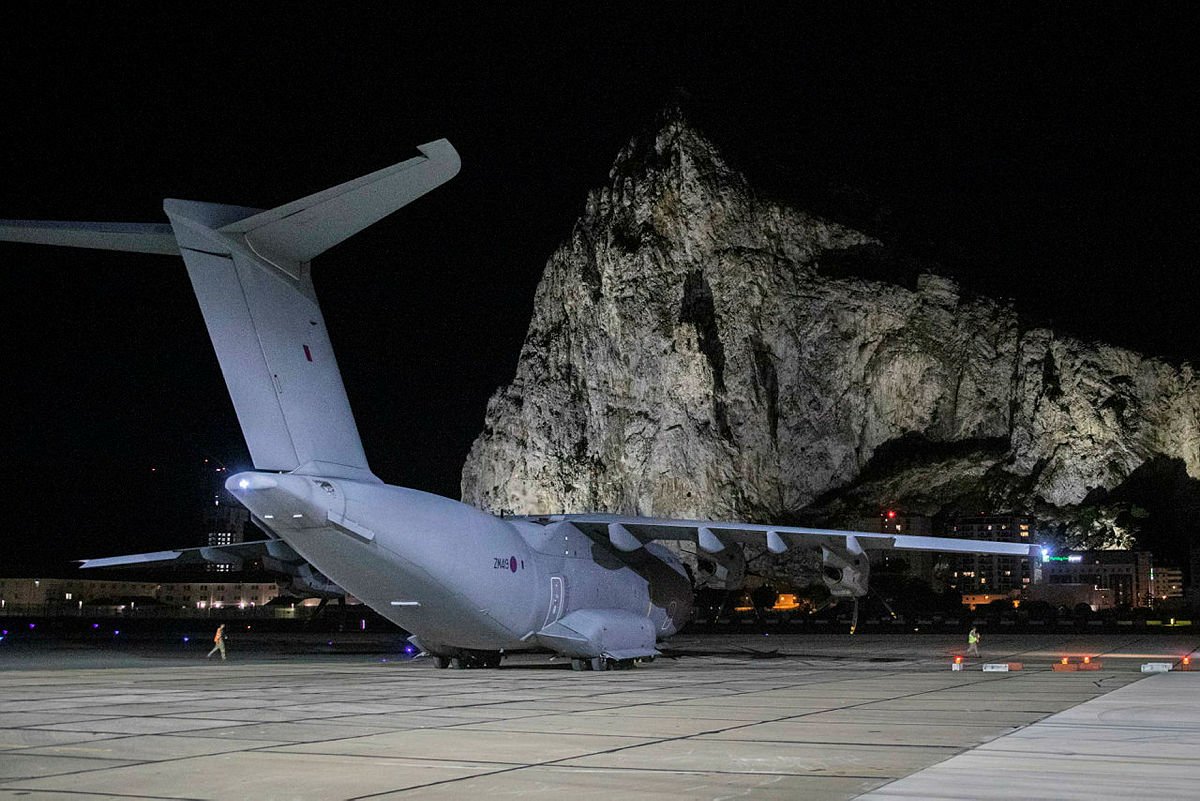 In the immediate aftermath of the invasion of the Falkland Islands, Gibraltar played a vital role supporting the UK task force. The airfield, naval base and stores were essential to support the Task Force. This piece of UK sovereign territory had to be protected at all costs.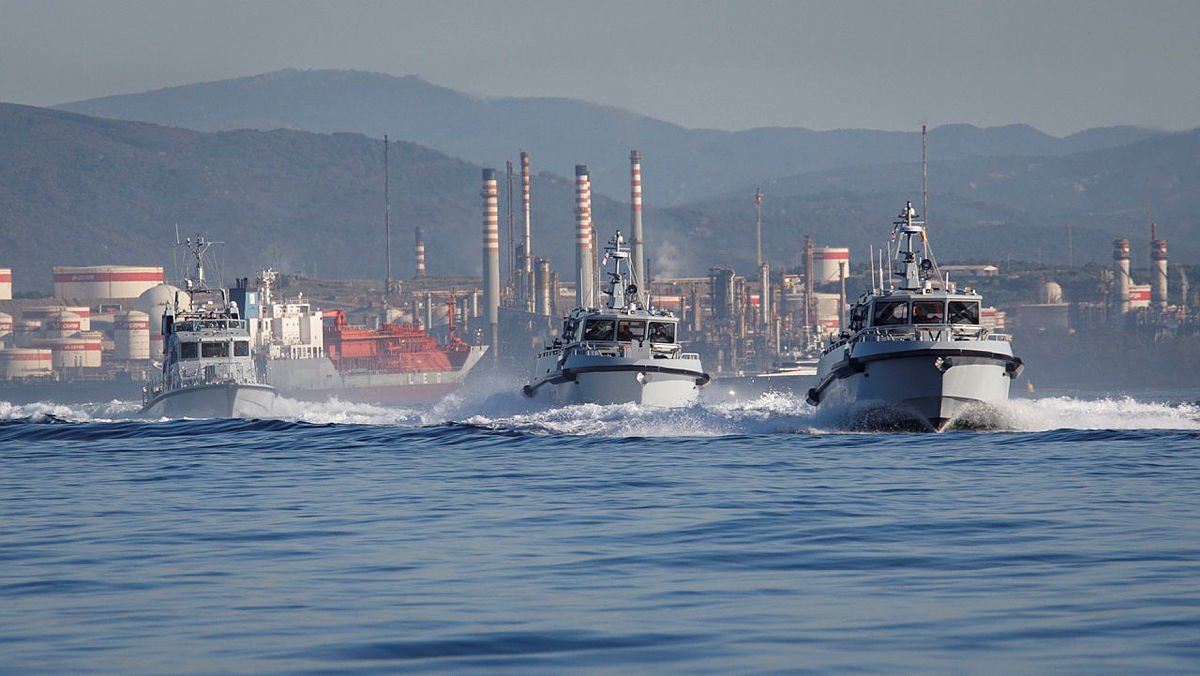
 The CAM had its roots in 1941 where merchant ships carried a single 'one time only' Hurricane, launched by rocket catapult to provide air defence for a convoy to shoot down FW200 recce aircraft tracking convoys for German U Boats.
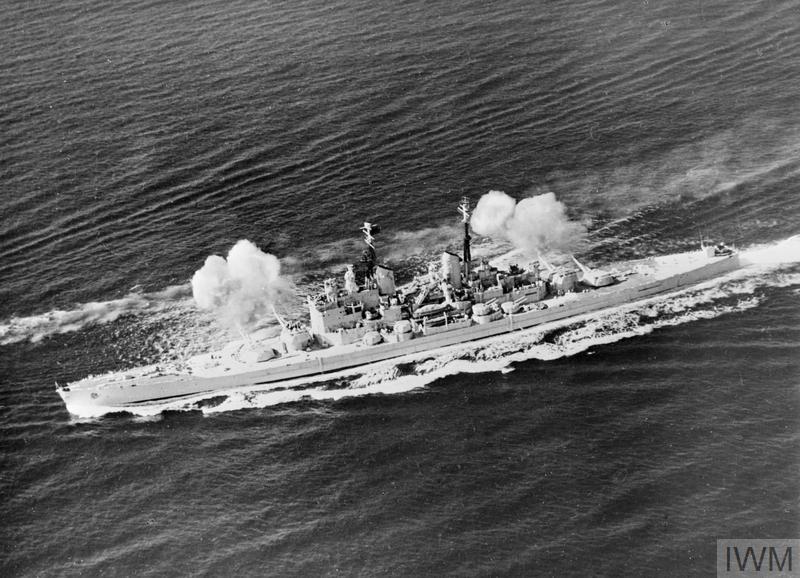 VANGUARD was launched by HRH Princess Elizabeth in 1944, and commissioned too late for WW2. In 1947 she was converted for service as a Royal Yacht to take the King to South Africa for the first visit by the Monarch. This was a high profile visit amid austerity of post war UK.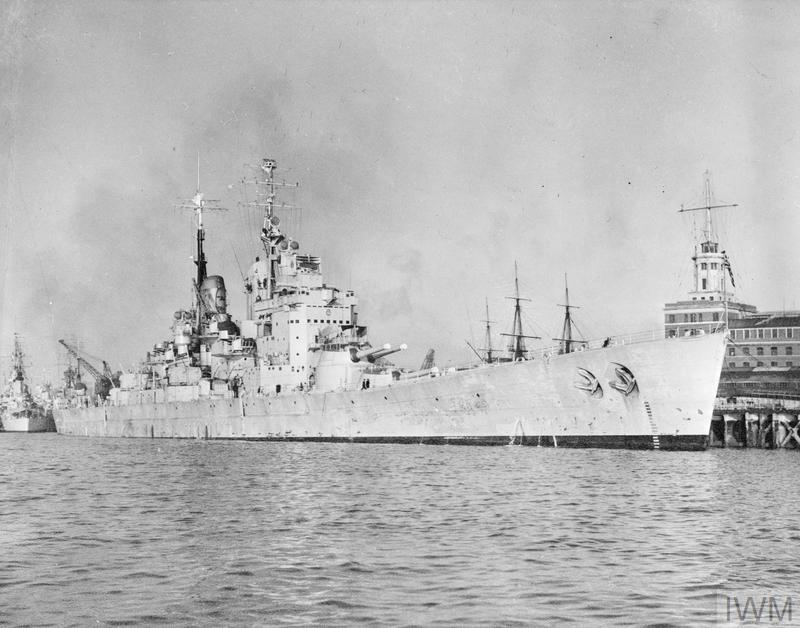
 The visit was arranged initially to allow the Soviets to display in the UK, but became a solo effort. The hope to display over Moscow was cancelled for "technical reasons", so the itinerary was Leningrad and Kyiv, with a stop in Budapest on the way back.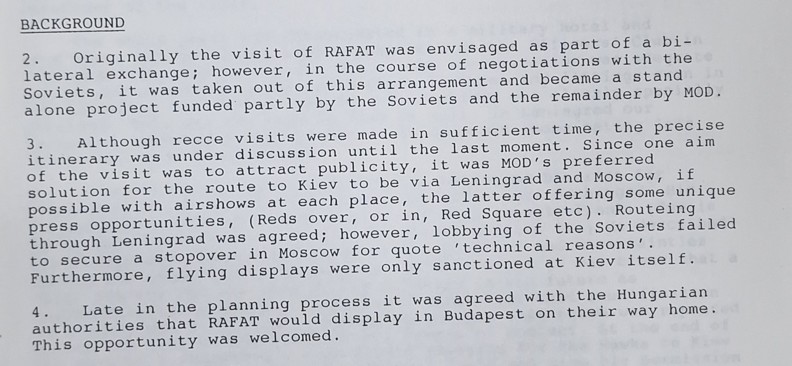
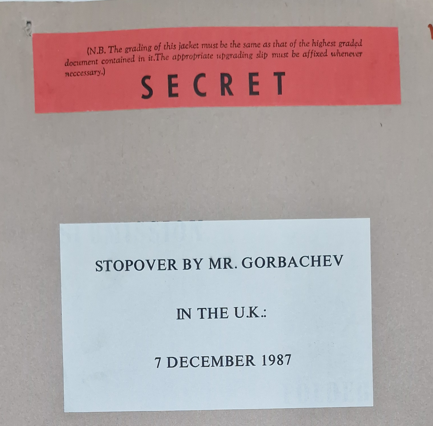 During 1987 the UK/Soviet relationship was tentatively improving, despite Cold War issues. Both leaders had a desire to improve their working relationship, so when the opportunity came, with Gorbachev flying to DC, the UK invited him to call in for a bilateral and lunch.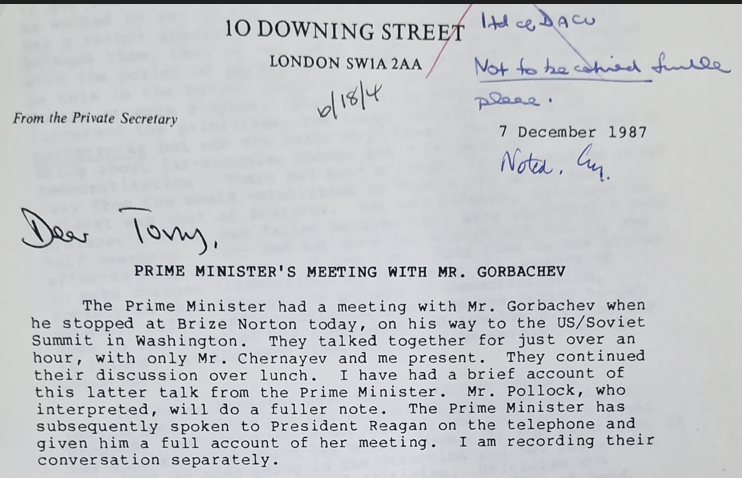
 The visit was intended to build confidence and links between senior military figures. It was seen overall as a success, marking openness in engagement, and with questions, often on military issues, answered. This was notable for being so unusual!