There is a lot of media coverage of the new Prime Minister and the need to write 'letters of last resort' for UK nuclear forces.
The Pinstriped blog on the role of the PM in nuclear retaliation is here -
A thread on the subject follows! tinyurl.com/3759t6r2

The Pinstriped blog on the role of the PM in nuclear retaliation is here -
A thread on the subject follows! tinyurl.com/3759t6r2

During the Cold War there was a lot of thought given in government to working out how to ensure that if attacked, the UK could strike back.
This led to much soul searching on scenarios, circumstances and likely outcomes by the Cabinet Secretary, Sir Norman Brook. /2
This led to much soul searching on scenarios, circumstances and likely outcomes by the Cabinet Secretary, Sir Norman Brook. /2


It was clear that the PM and the President needed to speak to each other about nuclear retaliation, but doing so would be challenging - the sheer complexity of 1960s comms arrangements made it very complex to do properly. This map shows the Trans-Atlantic links. /3

This paper shows the conversations that would occur between the PM and President as part of the decision by both of them to authorise nuclear retaliation in the event of war. This assumed there was time to do it and the comms would work as planned... /4

The UK settled on ensuring that during the 1960s it would try to use the PM in London, then Deputies and finally CINC Bomber Command to authorise retaliation if required. This led to a formal 'last resort' order allowing the CINC to authorise a nuclear attack. /5

There were concerns that letting Bomber Command do this could lead to serious consequences - one entirely serious concern seemed to mirror the plot of 'On The Beach' in seeing the RAF start WW3 by accident... /6

To ensure a message got through, alternatives were considered - including the 'Nuclear Deputies' who would take on the role of nuclear release if authorised. This is where misleading suggestions about the PM's car and AA phones comes from. /7

The introduction of the SSBN force changed all this and meant new 'last resort' procedures were required. To start with the continuity of government plans called for the so-called PYTHON / PEBBLE groups to be able to have C2 facilities to exercise control over Polaris/ /8

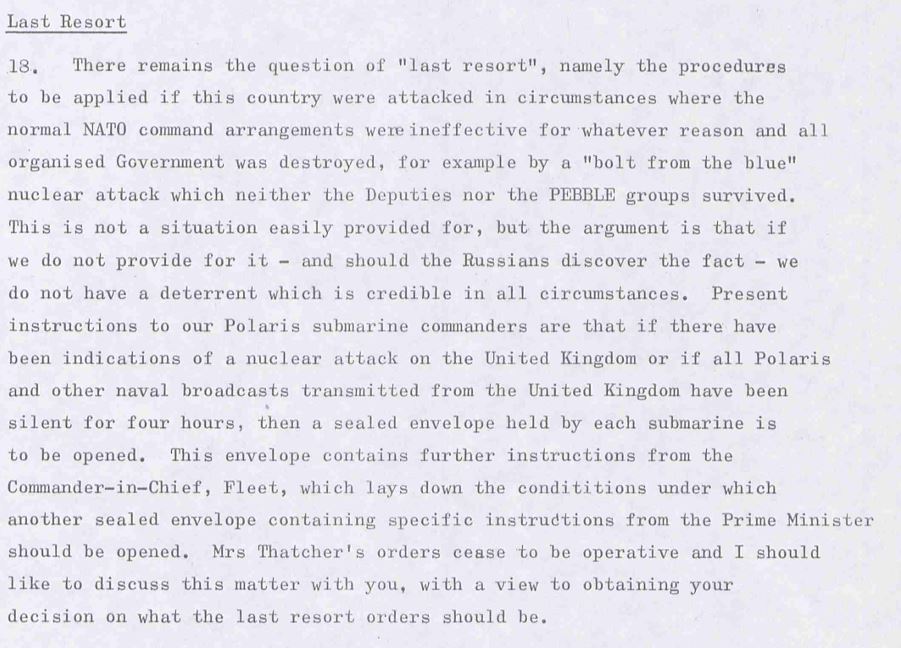
But it wasn't certain they would survive, so the UK introduced 'letters of last resort' to be held on SSBN's to pass on wishes in the event of a complete 'bolt from the blue' scenario. That said, this was seen as the least likely scenario of all for a variety of reasons.

Ultimately Letters of Last Resort are about ensuring that deterrence works - there is always a plan in place to cope with any scenario, no matter how outlandish it may seem to be. That meant that the UK put in place arrangements, which continue to this day. /10
Deterrence is about ensuring that an aggressor knows the UK will be able to respond regardless of the size of the surprise attack. That is why it is so important that these letters remain in place and valid. It must ensure that 'the Bomber will always get through'. /11

Thread may be of interest to @aaronbateman22 @coldwaruk @JulieAMcDowall @UKDefJournal @NavyLookout @adastral_trader @RoryCormac @CovertShores @IBallantyn among others!
• • •
Missing some Tweet in this thread? You can try to
force a refresh