A lot of Medieval and Renaissance architecture was inspired by one man.
Artists like Michelangelo, Brunelleschi, and Da Vinci learned much of what they knew from an obscure Roman engineer who lived more than 1000 years prior…🧵
Artists like Michelangelo, Brunelleschi, and Da Vinci learned much of what they knew from an obscure Roman engineer who lived more than 1000 years prior…🧵

The 16th-century architect Palladio called Roman architect Vitruvius his “master and guide,” but little is known of the figure.
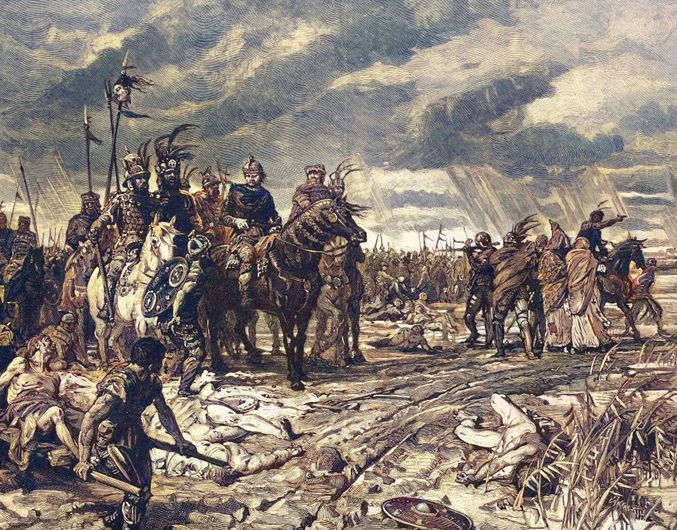
We do know he was a military engineer who served under Julius Caesar in the 1st century BC, specializing in the construction of ballista siege engines
We do know he was a military engineer who served under Julius Caesar in the 1st century BC, specializing in the construction of ballista siege engines

He likely campaigned in North Africa, Gaul, Hispania, and Pontus near the Black Sea.
But his dynamic military career would be overshadowed by his more creative accomplishments, namely his writings on architecture.
But his dynamic military career would be overshadowed by his more creative accomplishments, namely his writings on architecture.

Vitruvius was an architect in the way ancient Romans understood the term.
Different from the narrow definition we have today, architecture included chemical, civil, and mechanical engineering, construction management, building design, and urban planning.
Different from the narrow definition we have today, architecture included chemical, civil, and mechanical engineering, construction management, building design, and urban planning.
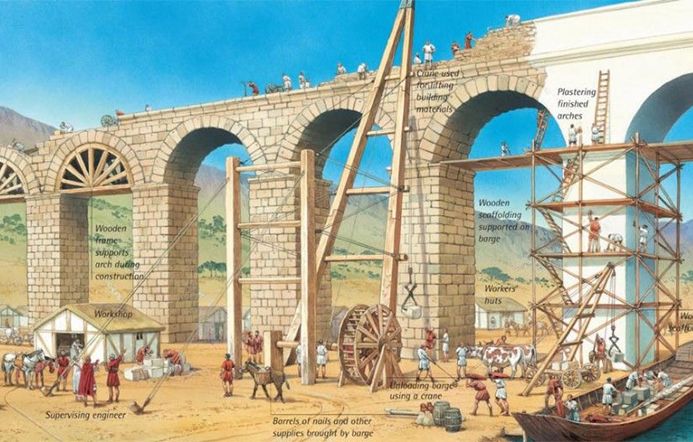
His broad expertise made him a valuable asset while in the legion, but after retirement he attempted to consolidate his knowledge into a manual for future architects, penning his masterpiece De Architectura—“On Architecture.”
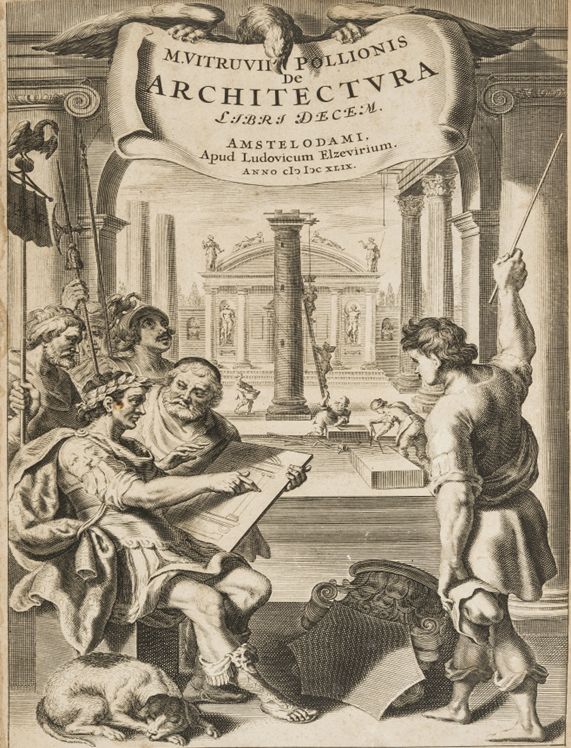
De Architectura is simply a guidebook for building projects.
It's the only treatise on architecture to survive from antiquity and is often regarded as the first book on architectural theory. The next major work on architecture, Alberti's “Ten Books,” wasn't written until 1452.
It's the only treatise on architecture to survive from antiquity and is often regarded as the first book on architectural theory. The next major work on architecture, Alberti's “Ten Books,” wasn't written until 1452.
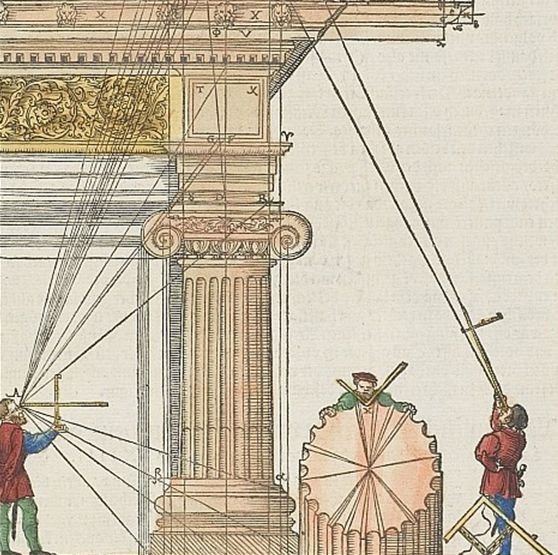
Likely commissioned by Emperor Augustus, it contains information about Greek and Roman construction methods, design of military camps, and structures—aqueducts, mills, baths, harbors, etc.

De Architectura also discusses various machines used for building these structures like hoists, cranes, and pulleys, as well as war machines such as catapults, ballistae, and siege engines.

Innovative domestic inventions are explored like the force pump, dewatering machine, and even central heating, or “hypocaust”—a method of heating that channeled hot air from a fire under floors and inside walls of public baths and villas.
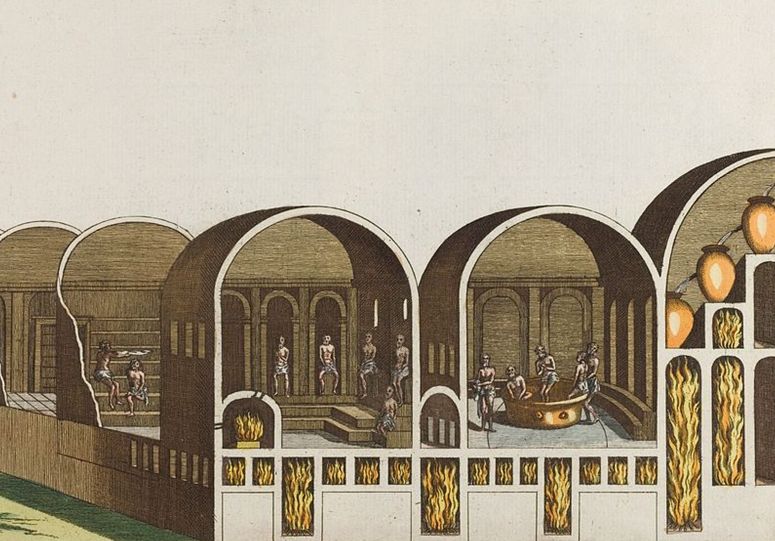
Vitruvius’s work established architecture as a field of study.
From earlier Greek texts he created a set of rules for classical design, and later architects like Sebastiano Serlio used them to “canonize” the five classical orders: Tuscan, Doric, Ionic, Corinthian, and Composite
From earlier Greek texts he created a set of rules for classical design, and later architects like Sebastiano Serlio used them to “canonize” the five classical orders: Tuscan, Doric, Ionic, Corinthian, and Composite
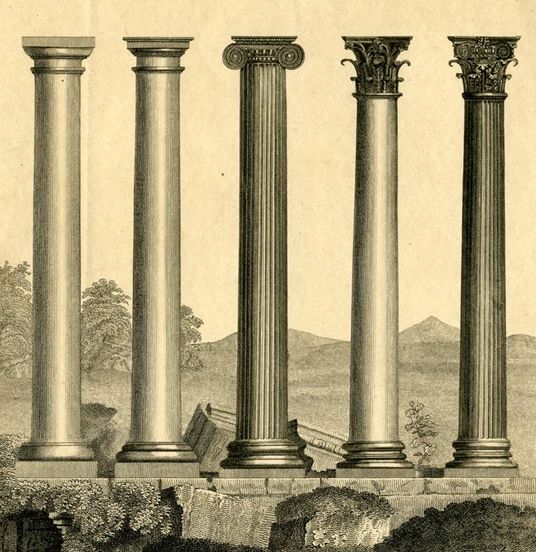
On a broader level, Vitruvius established best practices for all aspiring architects.
He claimed that all buildings should have three attributes: firmitas, utilitas, and venustas ("strength", "utility", and "beauty"), principles that were reflected in Roman architecture.
He claimed that all buildings should have three attributes: firmitas, utilitas, and venustas ("strength", "utility", and "beauty"), principles that were reflected in Roman architecture.
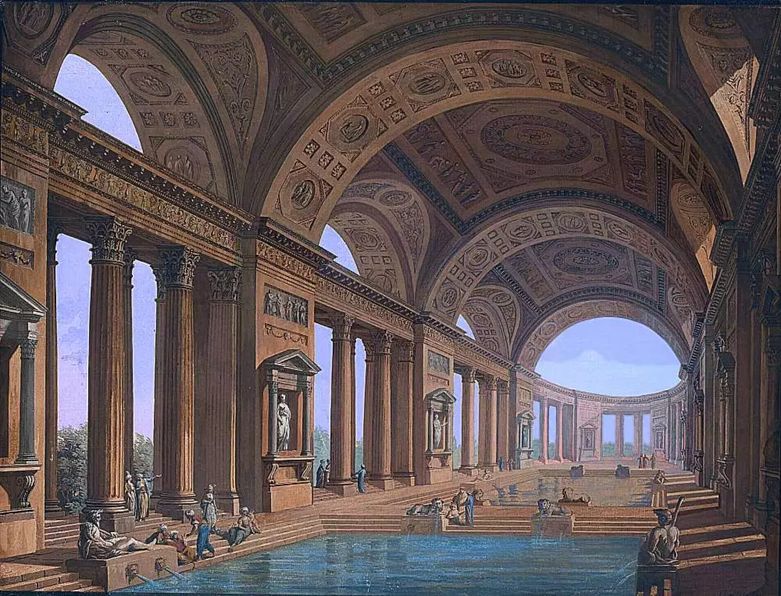
Vitruvius believed architecture couldn’t be mastered in isolation—it was best realized when it harmonized the diversity of human knowledge and experience with tangible reality.
Thus he encouraged architects to study a range of subjects: mathematics, astronomy, biology, etc.
Thus he encouraged architects to study a range of subjects: mathematics, astronomy, biology, etc.

It’s unknown how influential Vitruvius was during his own life since contemporary references to him are scarce.
In the 9th century, though, he was often mentioned by Charlemagne's scholars; and later figures like Albert Magnus, Petrarch, and Aquinas all read his work.
In the 9th century, though, he was often mentioned by Charlemagne's scholars; and later figures like Albert Magnus, Petrarch, and Aquinas all read his work.

In 1416 De Architectura was republished by Florentine scholar Poggio Bracciolini.
The work soon prompted a rebirth of classical architecture as Renaissance artists appreciated its attempt to raise architectural study to a scientific discipline.
The work soon prompted a rebirth of classical architecture as Renaissance artists appreciated its attempt to raise architectural study to a scientific discipline.
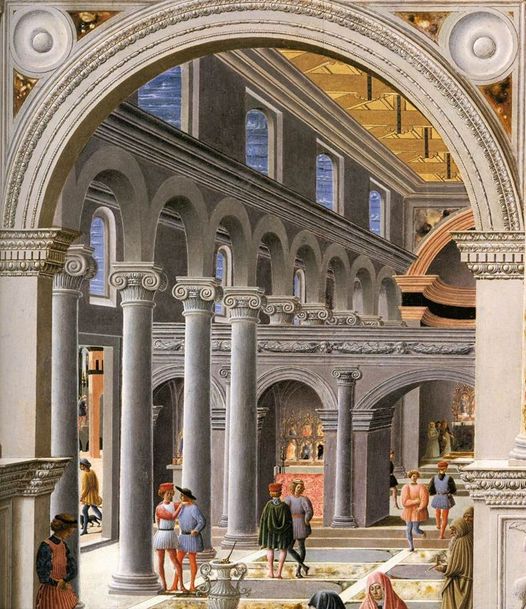
Artists were not only influenced by Vitruvius’s instruction in architecture, but also by his engineering notes. Brunelleschi, for example, was inspired to invent a new type of hoist to lift large stones for the dome of the cathedral in Florence.

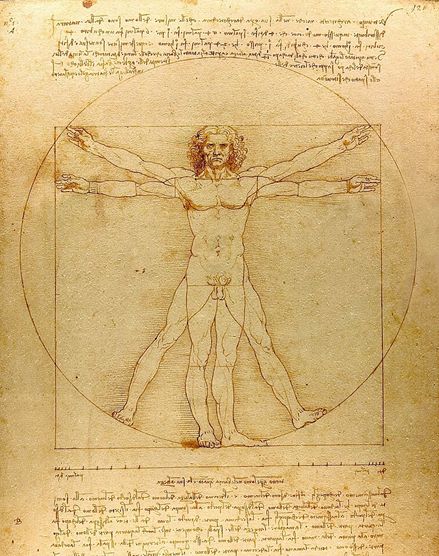
Da Vinci dedicated one of his most famous works to Vitruvius. His drawing, aptly titled “the Vitruvian Man,” is based on the principles of body proportions developed by Vitruvius in Book III, “On Symmetry: In Temples And In The Human Body,” of De Architectura.
Author Petri Liukkonen writes that Vetruvius’s text "influenced deeply from the Early Renaissance onwards artists, thinkers, and architects, among them Leon Battista Alberti, Leonardo da Vinci, and Michelangelo."
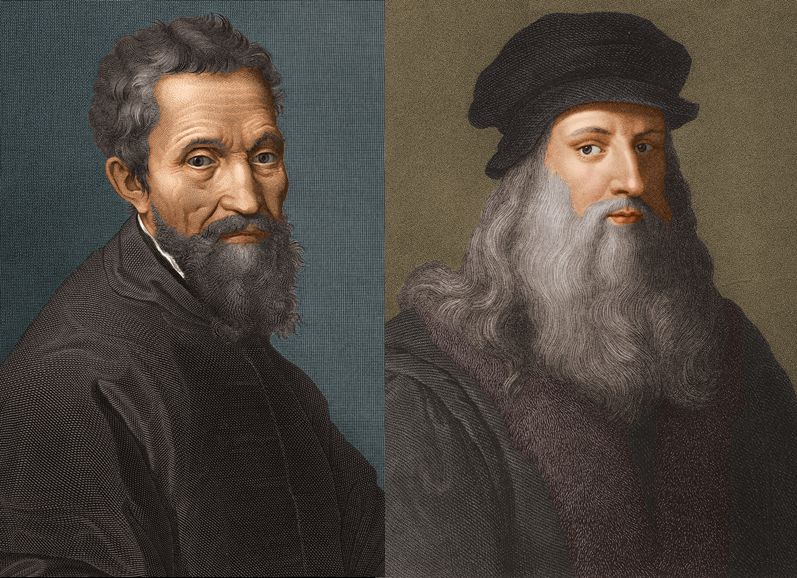
Renaissance, Baroque, and Neoclassical styles all have roots in Vitruvius’s work.
His insistence that strength, utility, and beauty were essential to architecture created a template for the greatest building designers to emulate.
His insistence that strength, utility, and beauty were essential to architecture created a template for the greatest building designers to emulate.

If you enjoyed this thread and would like to join the mission of promoting western tradition, kindly repost the first post (linked below) and consider following: @thinkingwest
https://twitter.com/thinkingwest/status/1811037170888556814
• • •
Missing some Tweet in this thread? You can try to
force a refresh