A little background. The earlier version of this mission was the Resource Prospector Mission. When Jim Bridenstine was appointed NASA Administrator, NASA cancelled it without his permission just hours before he was sworn in. I can’t confirm this, but rumors say he was livid! /1
https://twitter.com/drphiltill/status/1813678866709528855
2/ Mr. Bridenstine was appointed by Pres. Trump, and the Trump Transition Team had people assigned to plan space policy. They were calling people for input. I got one such call and the person told me they not only WEREN’T going to cancel Resource Prospector, but instead…
3/ …they were thinking about having MANY Resource Prospector missions. We talked about what would be the scientific, engineering, and economic value of building multiple copies of the mission. There was strong interest in the lunar ice to support building a sustainable program.
4/ Lunar ice and sustainable space exploration were major interests for Jim Bridenstine. When he was a Congressman from Oklahoma he had a blog where he talked about NASA supporting the development of the Cislunar Water Economy and how it was crucial for NASA’s future.
5/ I don’t recall the exact timeline now, so I don’t recall when I got that call from the Transition Team compared to when Mr. Bridenstine was sworn in, but from what I heard Jim was super pissed that they cancelled it without waiting just a few hours for him to take office.
6/ Surely he wouldn’t have approved its cancellation. You have to believe that the person in NASA who made that decision, whoever it was, *surely* knew they were playing dirty hardball politics, cancelling a program the incoming Admin loved just hours before he could stop them 😣
7/ But we were all promised, don’t worry, all the instruments that NASA built for the Resource Prospector Mission will be put onto future missions to the Moon.
Then later the VIPER mission was approved with the same Resource Prospector drill and instruments. YES! It was alive!
Then later the VIPER mission was approved with the same Resource Prospector drill and instruments. YES! It was alive!
8/ Meanwhile, the lunar community held many studies and workshops on the lunar ice. Everybody agrees that a serious prospecting campaign is crucial, and VIPER is the best start. There is also geopolitical concern about nations competing over lunar resources. We believe it is…
9/ crucial for nations that support the international rules-based order to be leading in lunar exploration to influence and help establish fair and just policy. So it is vital for democratic nations to operate missions like VIPER as quickly as possible. Another couple years delay
10/ could be disproportionately harmful to the world’s future in space.
Lunar ice prospecting will also produce some of the most important science in *any* branch of science, bar none. Why?
We don’t know the story of how ice got on the Moon…
Lunar ice prospecting will also produce some of the most important science in *any* branch of science, bar none. Why?
We don’t know the story of how ice got on the Moon…

11/ but we think it might be related to a disruption of the Solar System that occurred some 3.8 billion years ago. The giant planets were slowed by gravitational friction of the Kuiper Belt, until Jupiter & Saturn got into resonance….
12/ This kicked Saturn outward, which kicked Neptune, possibly switching places with Uranus, so Neptune plunged into the Kuiper Belt, scattering small, icy bodies. Most scattered out, giving the modern Kuiper Belt its weird structural features, but a small fraction scattered in!
13/ These small bodies pummeled planets including the Moon in the inner Solar System. This is one of the possible sources of ice that we now see on the Moon. But over the billions of years, the ice has been reworked by impacts on the Moon so the record is doubtless confusing. 21stcentech.com/lunar-south-po…
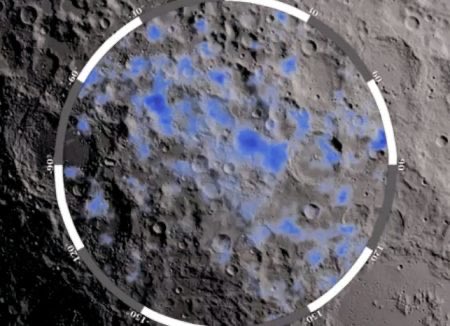
14/ When we finally sort out the history of that ice, we will gain deep insights into the history of our Solar System including how water and carbon were delivered to the Earth, making it a life-supporting planet, and how often that happens elsewhere in the cosmos.

15/ So VIPER was going to be an important step towards answering the question “are we alone in the cosmos?” Not a trivial contribution to science!
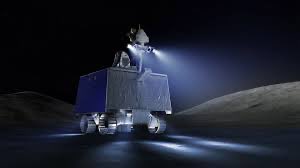
16/ So now, if it is cancelled again, we will get several more years of delay or longer. This will be harmful to sustainability in space exploration, to geopolitical challenges in space, and to the most important science.
Congress needs to find the money to continue VIPER.
Congress needs to find the money to continue VIPER.
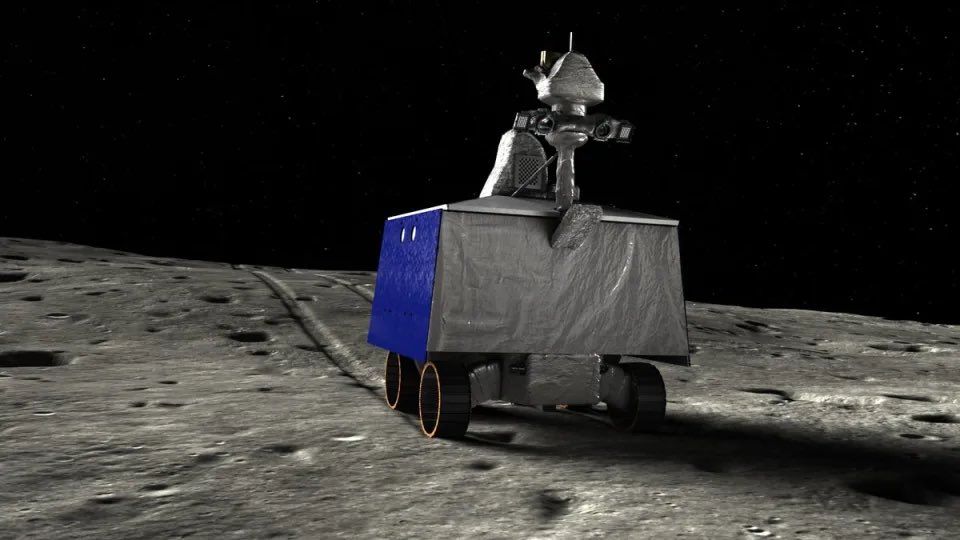
17/ I understand that projects get punished for going over budget by having the project cancelled. Consequences are important. But IMO, VIPER is too important and too urgent to be using its cancellation as a punishment.
• • •
Missing some Tweet in this thread? You can try to
force a refresh