The UK Covid Public Inquiry has published its first Report, on Resilience and Preparedness. It is the most urgent report, as we are still ill-prepared for the next pandemic.
🧵
🧵
This is the first of many reports, each reviewing a specific area, including healthcare systems; test, trace, and isolate; and the economic response to the pandemic.
The Module 1 Report sets out nine significant flaws from the Covid-19 pandemic:
The Module 1 Report sets out nine significant flaws from the Covid-19 pandemic:

The Report suggests 10 recommendations:

It is clear from Lady Hallett’s report that all these recommendations need to be implemented, as the response needs to be systematic rather than component-based. This system-level response is welcome.
As Lady Hallett summed up, ‘Unless the lessons are learned and fundamental change is implemented, the human and financial cost and sacrifice of the Covid-19 pandemic will have been in vain.’
The UK resilience framework, and the Resilience Approach, was adopted in the early 2000s. The risk is that we now new, improved, resilience framework, but this will then lead to an efficiency drive that leaves such resilence poorly exposed.
The Covid-19 Inquiry was announced in Parliament in May 2021, instigated in June 2022 and it has taken us over two years from then to get to this point. In terms of formal planning for a pandemic, the Influenza Pandemic plan still dates back to pre-Covid times.
‘Key learnings’ from previous simulations are published, but have not been implemented.
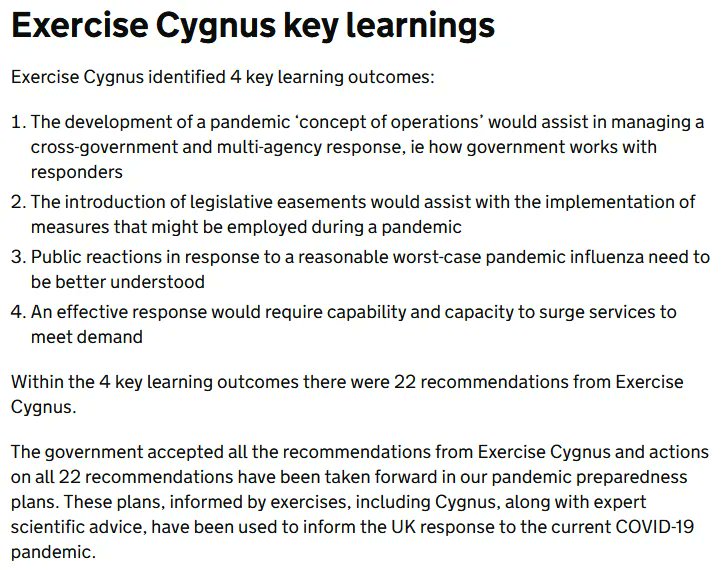
The risk is that the recommendations from the Covid Inquiry also become ‘key learnings’. It is imperative that the new Government takes the Covid Inquiry report seriously, and implements it.
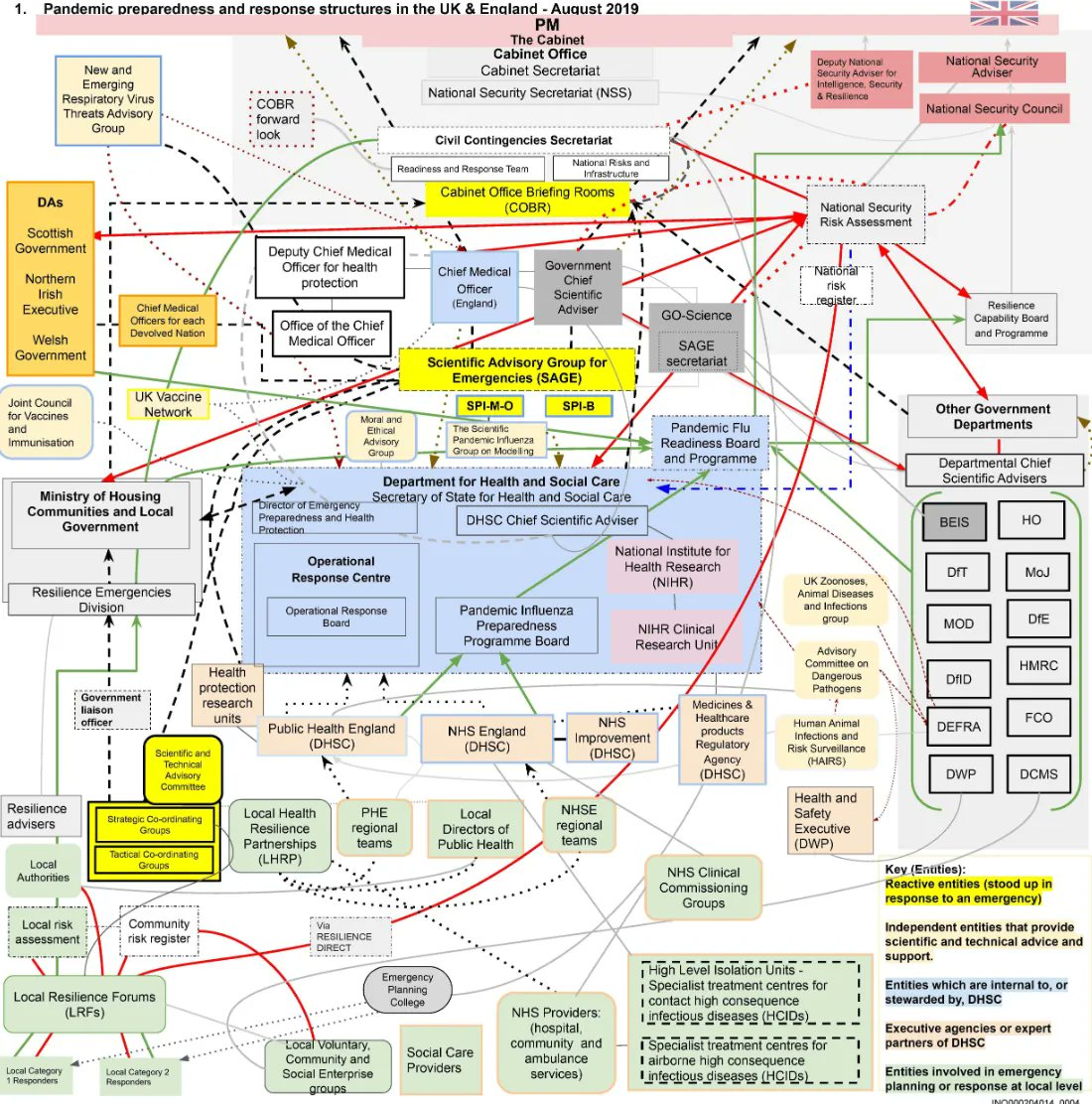
The pandemic response structure in the UK was a mess in the run-up to Covid, and, although changes have been made, the civil preparedness and resilience structure remains unclear, hence the recommendation for reform.
The next pandemic is coming, it’s just that we don’t know what it will be. We now have H5 Avian flu in humans following exposure to dairy cows. The passing of animal diseases to humans, so called zoonoses, could adapt and potentially lead to a next pandemic.
We are not prepared.
We are not prepared.
• • •
Missing some Tweet in this thread? You can try to
force a refresh