What are these wood things inside these shoes? And why are they hinged?
Let's do a thread on shoe trees. 🧵

Let's do a thread on shoe trees. 🧵
https://twitter.com/Liberal_Isms/status/1815097427415716257

Let's start by quickly reviewing how shoes are made.
All shoes are made on a last, which is a wooden or plastic form over which the uppers are pulled. This determines the shape of the shoe (and how well they fit your particular feet).
All shoes are made on a last, which is a wooden or plastic form over which the uppers are pulled. This determines the shape of the shoe (and how well they fit your particular feet).

These lasts stay at the factory. So when you buy a pair of shoes, you just get the shoes themselves. If you wear them for a while, you may notice that the soles will start to curl and the uppers will get very wrinkly. This doesn't look very good.

So, the point of shoe trees is to help the shoes retain their original shape. A Reddit user once conducted an experiment: he wore the same pair of boots every day, but only inserted a tree into one boot at the end of each day.
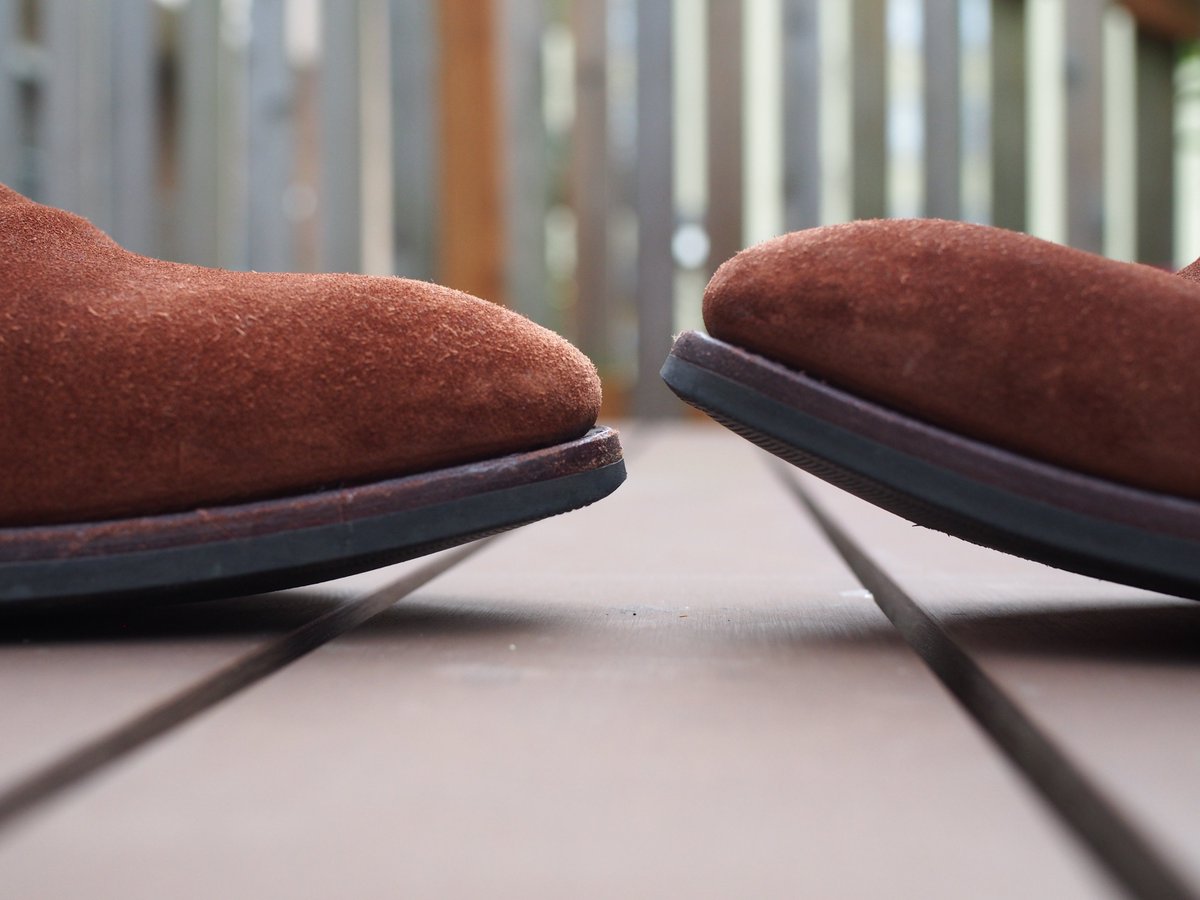
After a few months, you can see how one is more curled. The more curling, the more wrinkles in the uppers. So the point of shoe trees is to both minimize curling and wrinkling.

The best shoe trees are lasted, which means they come in the same shape as the original last on which your shoes were made. This is common in bespoke and a small number of high-end shoe brands (you would buy the trees from the shoe company or maker)

In bespoke shoemaking, some companies rely on Hervé Brunelle, a French firm that turns bespoke lasts into customized shoe trees. Here's a 5 min French program on the company, if you're so inclined to watch the process (and can understand French)
Lasted shoe trees are nice because they won't distort the uppers. Here are two shoes, each stored unworn for ten years. The brown shoe had a lasted tree; the black one didn't. You can see the distortion.

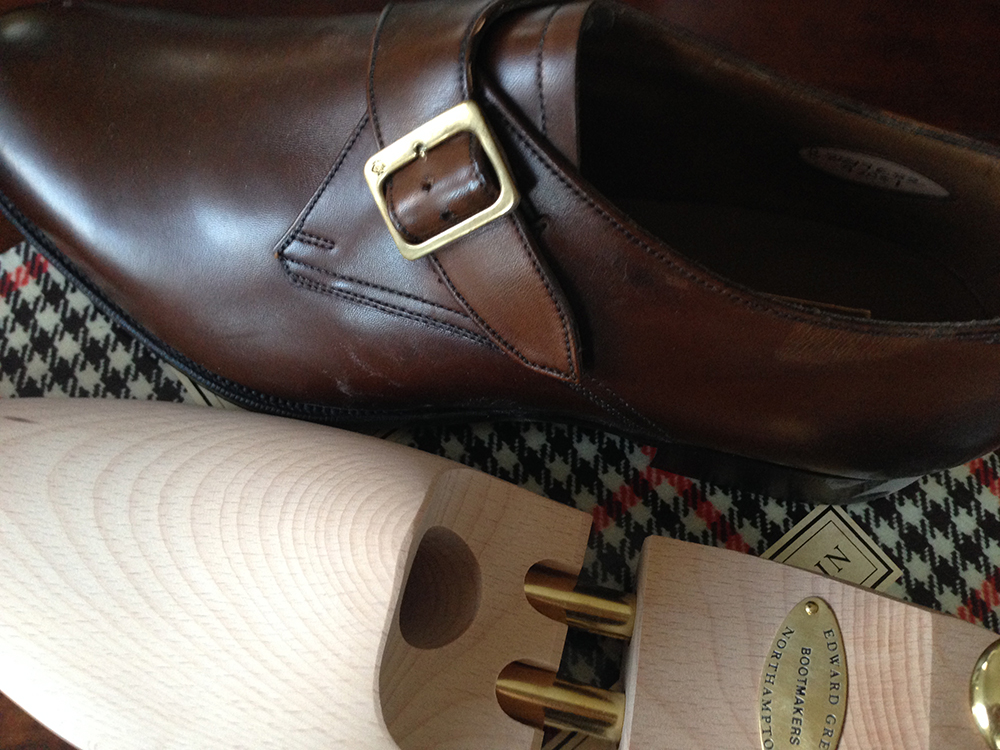
Unfortunately, most ready-to-wear companies nowadays don't offer lasted shoe trees. The few that do only offer lasted trees for a small number of lasts in their range. So most of us have to rely on generic shoe trees from companies like Woodlore. They look like this:
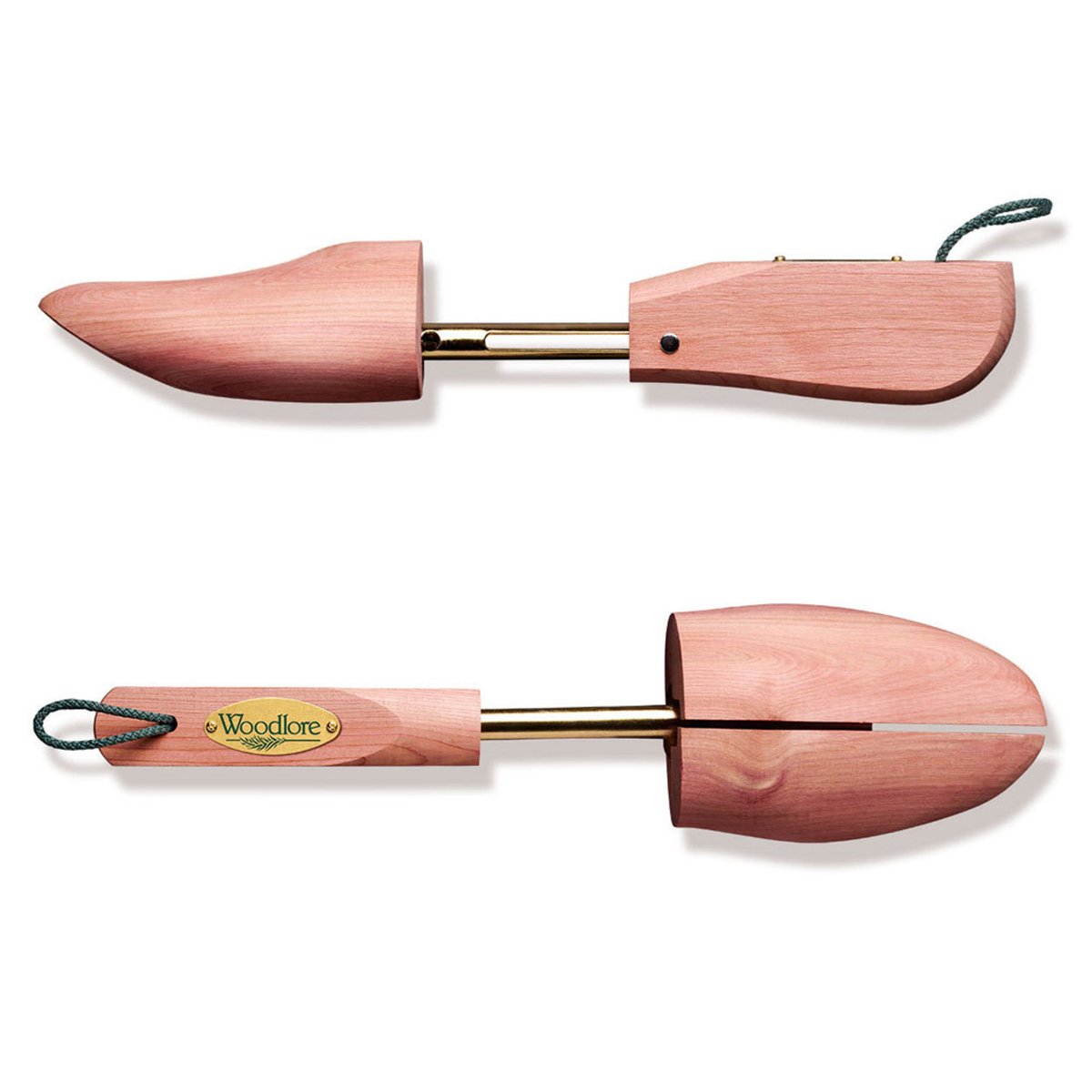
These trees typically come in a range of sizes (small, medium, and large) to fit various shoe sizes (7-8, 9-10, 11-12, etc). But since they are not made for any particular pair of shoes, they are typically spring loaded to fill up any empty space.
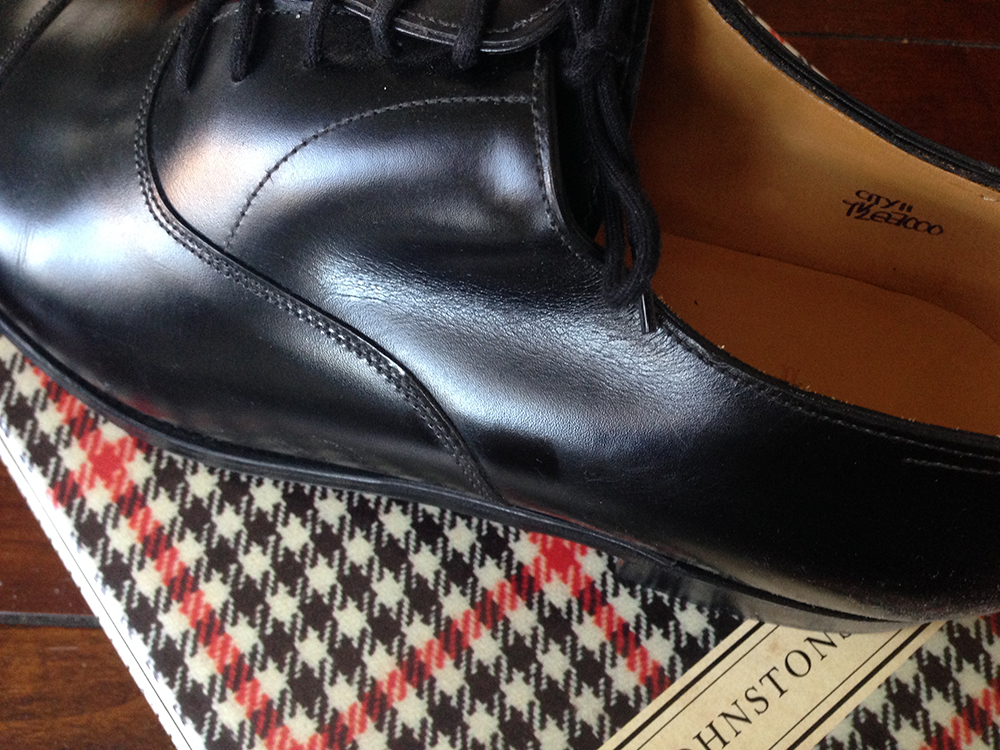
This is how you can sometimes get this sort of distortion. No real way around this since lasted trees are uncommon, particularly in ready-to-wear shoes. Good news is that most shoes are not museum objects and this will not affect the shoe's performance.
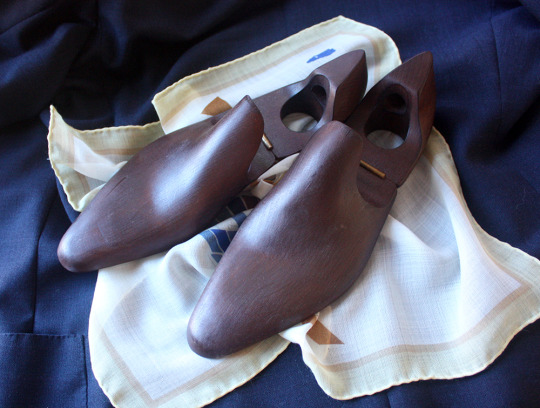
But this is to say that, if lasted trees are available and money is not a concern for you, sometimes it can be wise to buy lasted trees, which are made with a hinge. These will fill up the empty space in your shoes and not exert any unnecessary pressure.

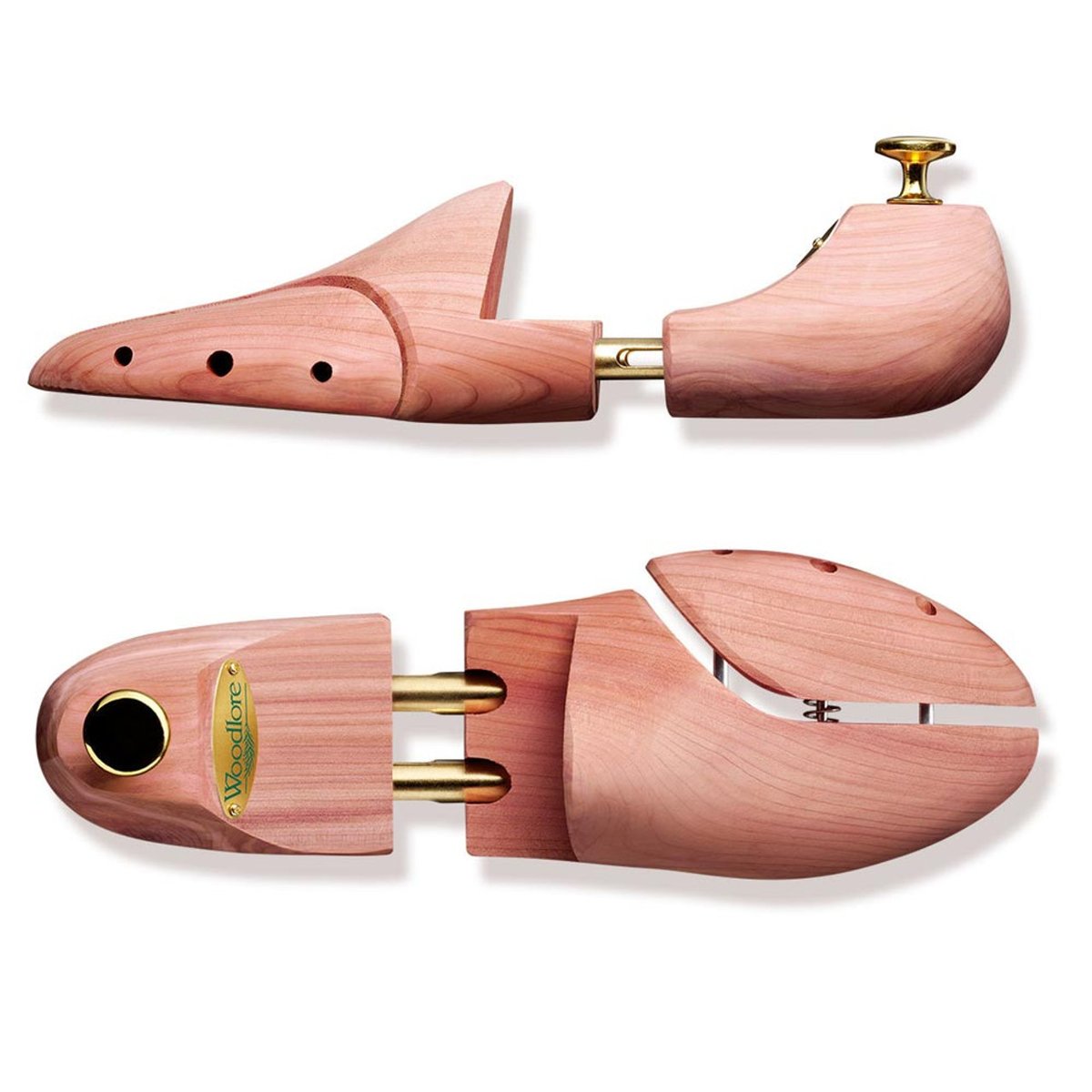
There's a theory online that cedar shoe trees are good for sucking up moisture in your shoes. Personally, I don't believe this is true. But cedar shoe trees do look nicer to me than plastic ones.
As a general matter, you can get more wear out of your shoes if you rotate between them (sweat from the previous day can prematurely break down the material). And insert a pair of shoe trees into your shoes when they're not in use. This helps them look better.

Finally, a quick look at some novelty shoe trees. Some makers, such as Saint Crispin's, provide hollowed out shoe trees, like the ones you see below. These are considerably lighter in weight, making them good for travel.

There are also three piece shoe trees, which are more common for bespoke boots. Here, you insert the front, then the back, and then slide the center piece so everything is secure.
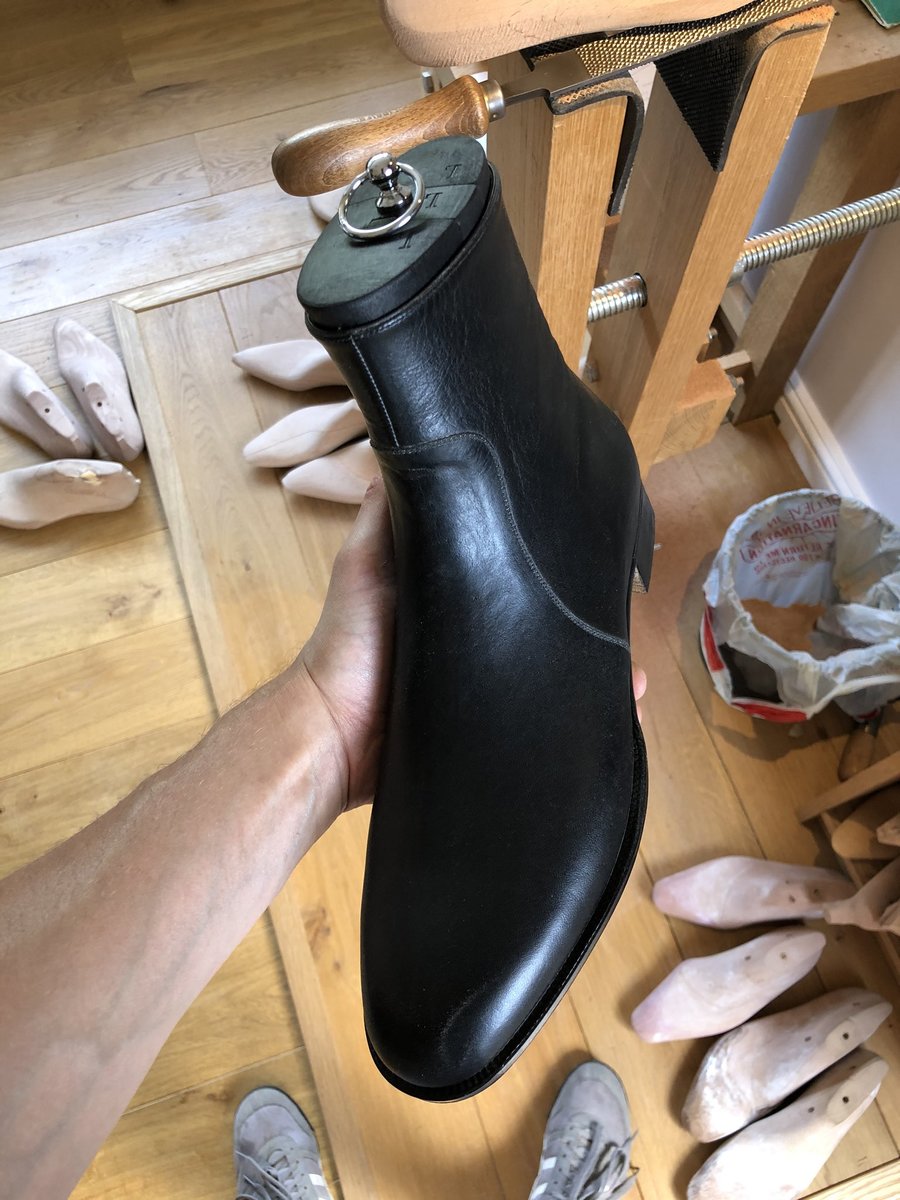
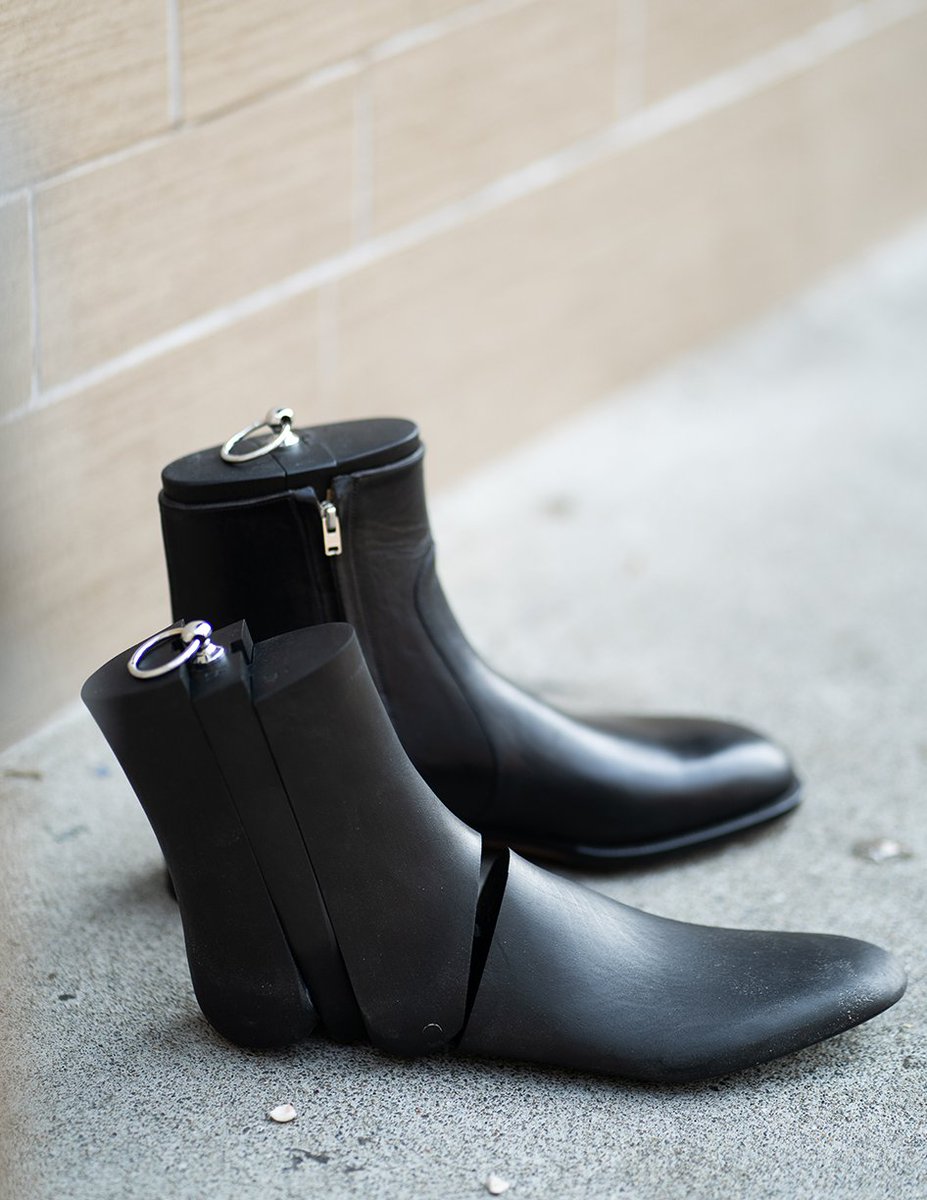
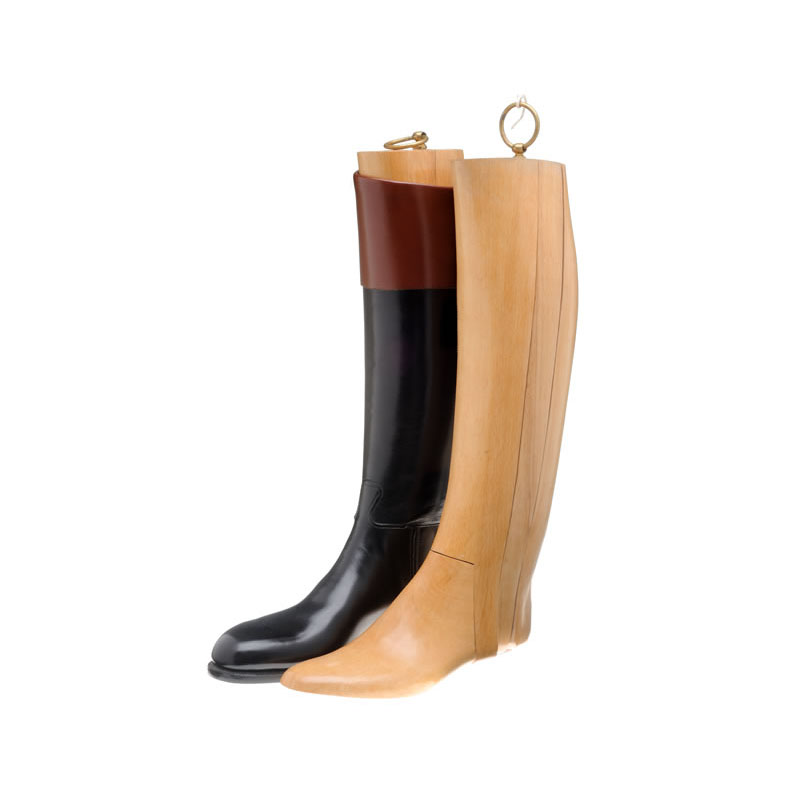
Sometimes you'll see these in riding boots. Tall boots often need specialized trees because regular shoe trees won't fill up the empty space in the vamp (the area of the shoe that covers the top of your ankle)

Lastly, this sort of thing is only really necessary for leather shoes. You don't really need them for sneakers because rubber soles and canvas don't behave in the same way as leather.
And that's about all your need to know regarding shoe trees. 👞
And that's about all your need to know regarding shoe trees. 👞

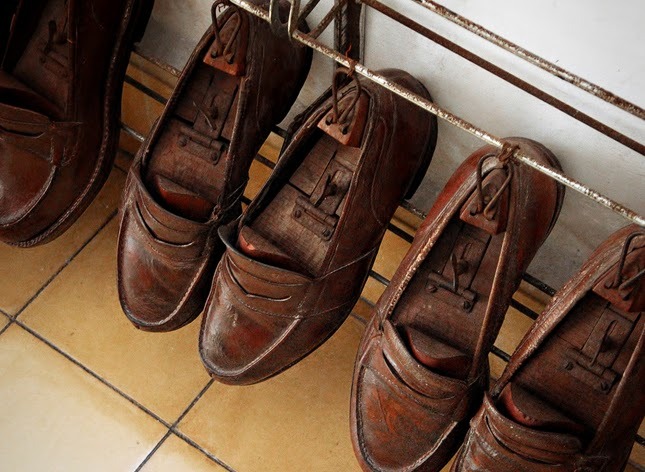
Addendum: Sorry, I should be more explicit. By "rotate between your shoes," I mean give your leather shoes a day of rest before wearing them again. This will allow them to dry properly. Sweat from your feet can otherwise prematurely break down the material (think of what happens when you flex wet cardboard back and forth). Don't try to speed up the drying process by putting your shoes next to a heat source, like a furnace. This will dry out the oils in the leather and potentially crack your uppers, which is not something you can fix.
• • •
Missing some Tweet in this thread? You can try to
force a refresh