Unfortunately for economists, we don't send people to prison randomly, so it's hard to infer what the impacts of incarceration are on long-term socioeconomic outcomes.
How can we?
Through judges and lawmakers being weird!🧵
How can we?
Through judges and lawmakers being weird!🧵

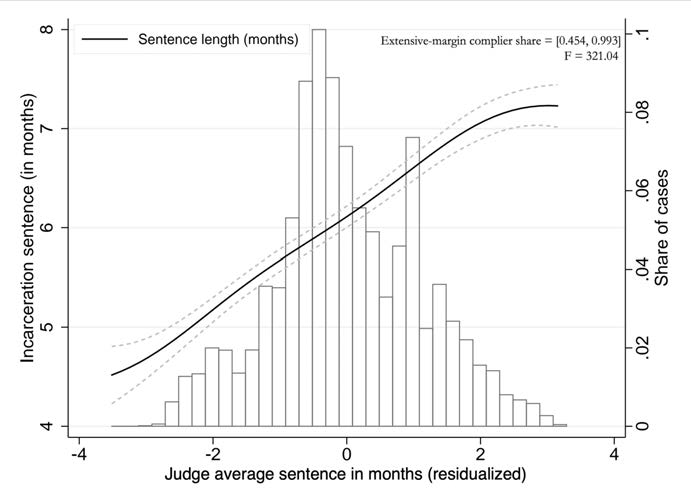
Data from Ohio was used to estimate the impact of incarceration by using variation in judges' propensities to assign harsher or more lenient sentences.
Since cases were randomly assigned to different judges, we get to clearly see the impact of their conviction habits.
Since cases were randomly assigned to different judges, we get to clearly see the impact of their conviction habits.
Data from North Carolina was used to estimate the impact of incarceration by leveraging how lawmakers have set up sentencing grids.
These work such that a given crime automatically earns someone a much higher or lower sentence depending on a variety of case characteristics.
These work such that a given crime automatically earns someone a much higher or lower sentence depending on a variety of case characteristics.
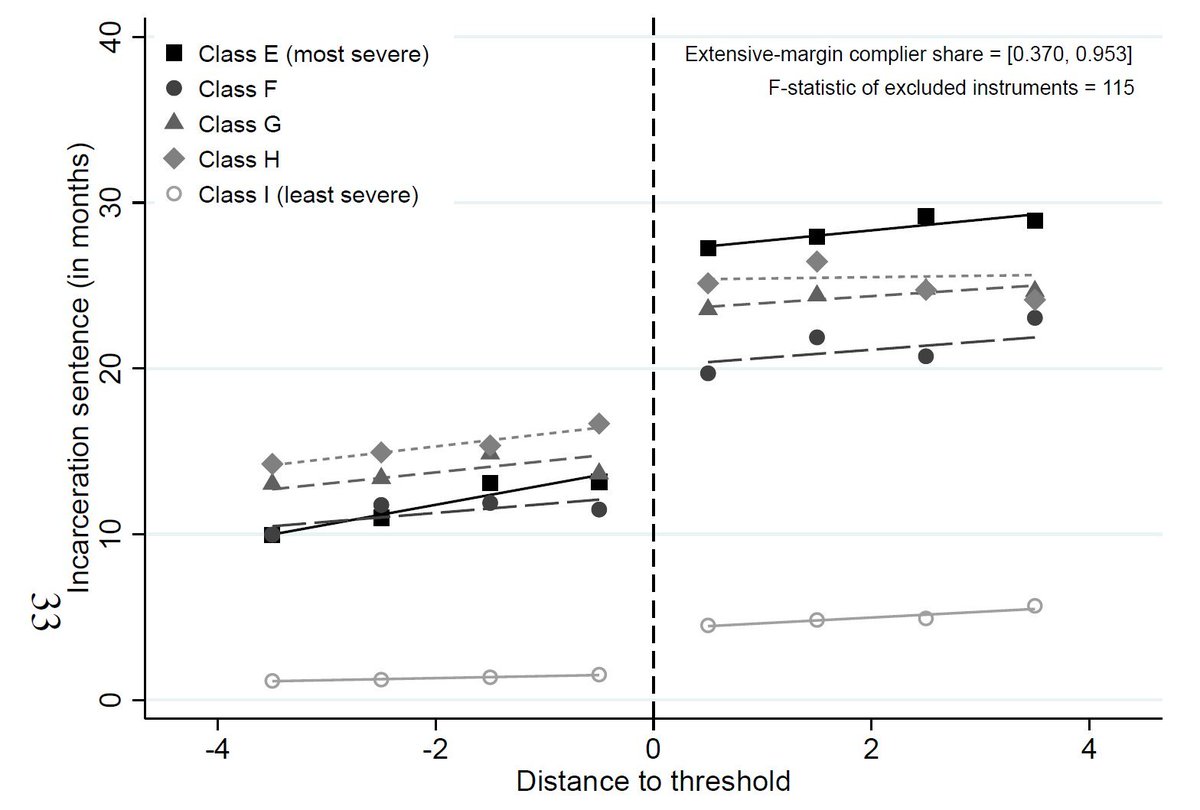
These different routes to identification affect different parts of the typical felony processing sequence, arriving earlier (Ohio) and later (North Carolina) in the process.

These methods work, since they provide plausibly exogenous variation in incarceration.
The most obvious impact of that plausibly exogenous incarceration is that individuals experience more time incarcerated, on average, after being incarcerated.
Repetitious, as it should be.
The most obvious impact of that plausibly exogenous incarceration is that individuals experience more time incarcerated, on average, after being incarcerated.
Repetitious, as it should be.
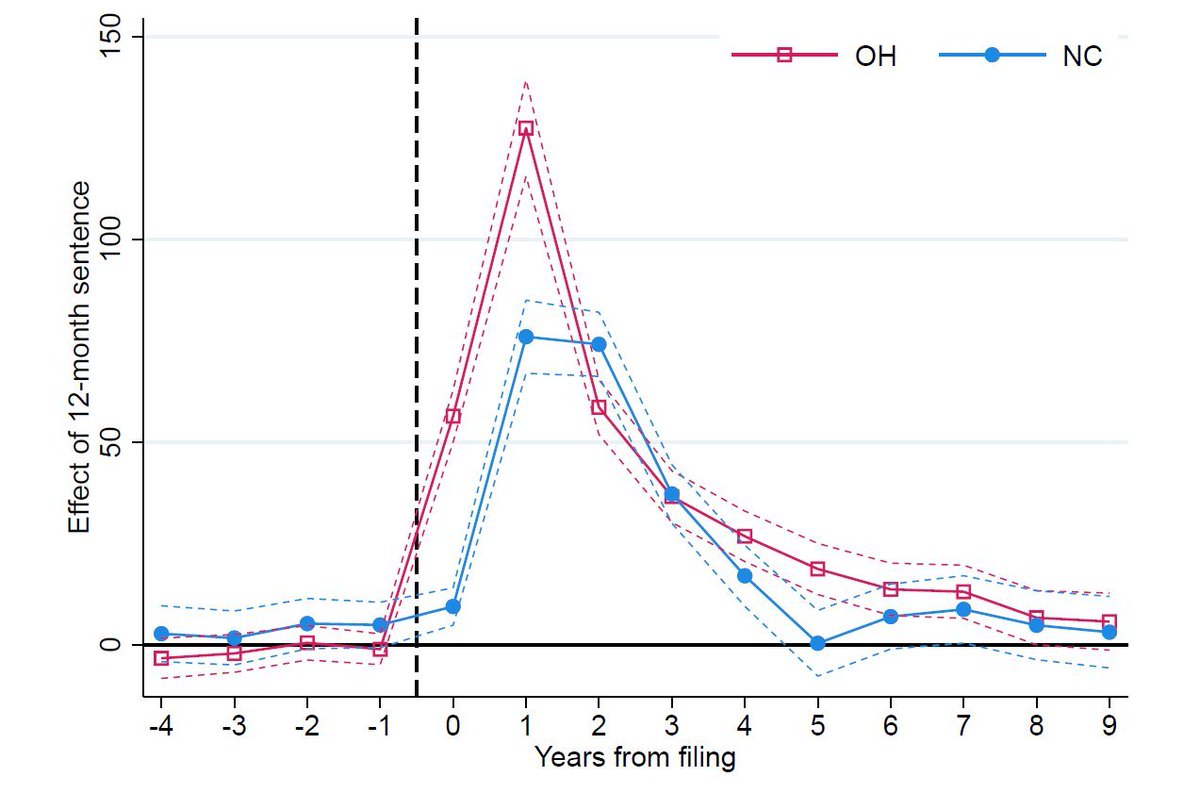
The previous graph might not seem interesting, but it should help to understand this one:
After people are sentenced, they're less likely to have any W2 employment. But after the number of days incarcerated falls enough, they're back to where they were very quickly.
After people are sentenced, they're less likely to have any W2 employment. But after the number of days incarcerated falls enough, they're back to where they were very quickly.

Given that a felony is a black mark on someone's record and employers tend to not like those marks, that should be shocking.
What's more shocking is that the impact on earnings also fades out several years after sentencing.
What's more shocking is that the impact on earnings also fades out several years after sentencing.

To put that in another way: The effect of incarceration on employment and earnings is... bupkes?
At least in the long run, that appears to be the case: people seemingly suffer no long-term harms from being locked up, aside from initially foregone employment and earnings.
At least in the long run, that appears to be the case: people seemingly suffer no long-term harms from being locked up, aside from initially foregone employment and earnings.
But, we know that criminals tend to earn very little and have very poor labor market attachment.
So what's going on?
Well, apparently issues predate incarceration. Consider employment and earnings for those sentenced to zero months in prison due to luck:
So what's going on?
Well, apparently issues predate incarceration. Consider employment and earnings for those sentenced to zero months in prison due to luck:
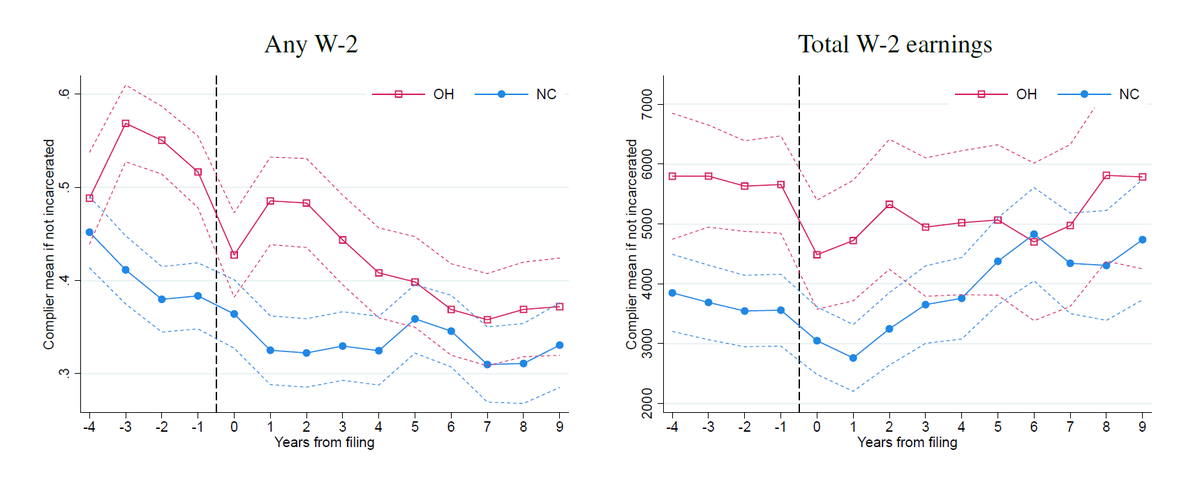
That group constitutes people who would have been incarcerated like all the rest, but weren't due to some quirk of sentencing or conviction—a suitable comparison group!
If you're surprised by how low the numbers are, rest assured, you aren't misreading them:
Criminals have extremely low employment and earnings before and after incarceration, not due to incarceration.
Those spared it randomly are really only earning about $5,000 per year!
Criminals have extremely low employment and earnings before and after incarceration, not due to incarceration.
Those spared it randomly are really only earning about $5,000 per year!
These are an unfortunate lot. Unfortunately for economists, the poverty of these samples makes the designs that exploit judges' idiosyncratic conviction tendencies and sentencing grid quirks all the more difficult to understand, because they're applied to very non-random people.
So, what is the impact of incarceration on... earnings? Employment? Recidivism?
For the criminally inclined? Seemingly not much. For the rest of us? Maybe we'll know when we start randomly assigning incarceration.
For the criminally inclined? Seemingly not much. For the rest of us? Maybe we'll know when we start randomly assigning incarceration.
This all comes from a cool new preprint. Go check it out here: nber.org/papers/w32747
• • •
Missing some Tweet in this thread? You can try to
force a refresh