1/ I still think this could be a serious mistake given the situation in the Donbas. However, the situation can quickly change, proving me wrong. The stakes are very high, and there is significant potential here. The outcome is unclear
2/ Russian troops on the border, including FSB border troops and conscripts, were enough to stop small incursions but clearly not enough to stop the advance of the combined force that Ukraine assembled for this assault.
3/ The large number of POWs is a big humanitarian win for Ukraine. This is a good chance to exchange Ukrainian prisoners and a huge win for the families of Ukrainian soldiers who have been waiting for their loved ones for over a year. Incredible job by the Ukrainian Forces.
4/ When it comes to response forces, Russia is likely to use its internal reserves located in Kursk, Moscow, Belgorod, Voronezh, and Rostov oblasts. We might also see units from the "North" grouping. The absence of a swift reaction shows that they were not informed or assembled
5/ So far, there is no evidence of Russian forces slowing down their offensive operations in Donetsk Oblast, nor is there evidence that Russia is moving any reserves or units from the "Center" grouping of forces. This can change, but not at the moment, hence my skepticism.
6/ It's hard to gauge the moral blow to Russian society. Social media posts and influencers show they are unpleasantly shocked and clearly upset. However, it's uncertain how long this will last, as they quickly moved on from the losses of Kherson and the retreat from Kyiv Oblast
7/ Russia failed to identify this assault, showing a significant improvement in Ukrainian counterintelligence measures. Despite advanced ISR capabilities, Russian forces failed to interpret the concentration of Ukrainian forces as an offensive maneuver.
8/ I currently have serious reservations about the logistical capabilities needed to sustain deep advancements into Russian territory, as well as the ability to continuously support these forces with AD and EW. However, I will refrain from drawing conclusions at this moment.
9/ Maintaining such intensity of assault and advancement would require a continuous infusion of resources, where Ukraine has constraints. As a result, we might see an eventual slowdown, potentially leading to a pullback or an effort to seize and fortify current positions.
10/ The lack of timely assembled reaction forces on the RU side gives AFU crucial time to organize their defense. As time goes on, it might become more difficult for Russia to retake territories, similar to how Ukrainian forces are still struggling to regain control in Kharkiv
11/ Overall, it's unlikely that we are nearing the end of the operation, so these conclusions are early and preliminary. My hope is for a total victory by the AFU forces, allowing me to write a follow-up apology thread acknowledging how wrong my initial assessment was.
• • •
Missing some Tweet in this thread? You can try to
force a refresh

Russia’s war in Ukraine has increasingly become a war of drones, but artillery still plays a key role on the battlefield. Newly obtained documents from 2014 to 2025 show that Russia continues to modernize its artillery production using industrial machinery from Europe. 🧵Thread:
2/ In a joint analysis, Frontelligence Insight and the @dallasparkua company reviewed hundreds of internal documents from Russian defense contractor Zenit-Investprom and found that Plant No. 9, a maker of artillery barrels and tank guns, went through major upgrades in 2025
3/ Six facilities within the Uralmash industrial zone were found to be undergoing modernization, including planned delivery of industrial machinery from several European countries. Several workshops were dedicated to work on the Armata project and the Koalitsiya SPG.
As we approach a point marking the beginning of the war’s 5th year, it is time to discuss how we assess the war’s overall dynamics, strictly from a military standpoint. One method many analysts use is the pace of territory capture. However, this methodology has a serious issue🧵:
2/ Generally, this is not a bad method of analyzing battlefield dynamics, as the history of wars shows far more cases of states advancing along frontlines or into enemy territory before a war ends in their favor than the opposite. The devil, however, lies in the details
3/ Putting aside other domains of war, such as economics and socio-politics, battlefield dynamics are often judged by metrics like casualty rates and square kilometers of controlled territory. This can produce a distorted picture, a problem I informally term the “Sahara Fallacy”
The catastrophic situation of Russian forces trapped in Kupyansk, who continue to lose ground, together with a second consecutive year of failure to fully seize Pokrovsk, represents one of the more optimistic scenarios for 2025.
Thread:
2/ As war fatigue increasingly affects Russia, the prospect of enforcing a rapid, unfavorable capitulation of Ukraine through Washington, DC now appears even more remote, not not entirely excluded
3/ While Russia has used the negotiation process primarily to delay new sanctions and slow support for Kyiv, its economic situation continues to deteriorate, and tactical gains have failed to translate into strategic breakthroughs.
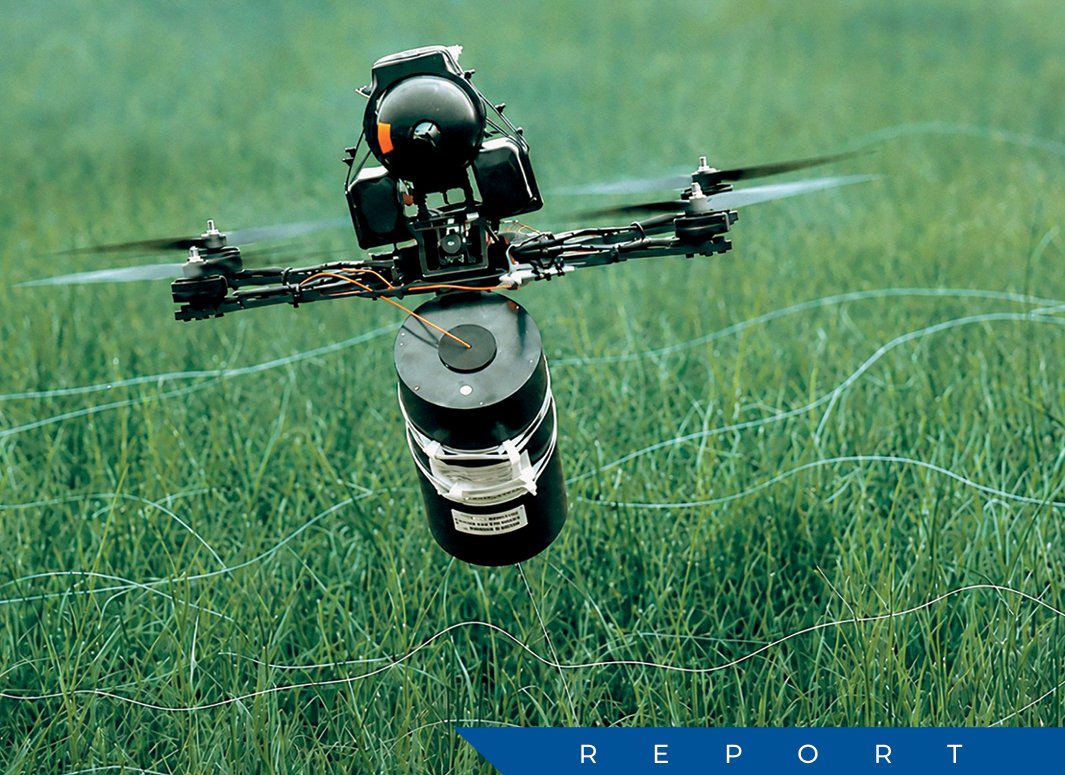
Information about a new modification of Russia’s Geran-2 drone has been published by Ukraine’s Defense Intelligence, including a detailed technical breakdown. According to the analysis, the Geran drone has been fitted with an R-60 air-to-air missile mounted on its fuselage:
2/ The missile, fitted with an APU-60-1MD (P-62-1MD) aircraft launcher, is mounted on a special bracket located on the upper front section of the Geran’s fuselage.
3/ The most likely employment of rocket involves transmitting images from the drone’s cameras to an operator via the modem. If a Ukrainian aircraft or helicopter enters the engagement zone, the operator sends a launch command to the missile’s control unit.
Analysis: New Data Suggests Russia Is Sustaining Mi-8 Output Despite Wartime Losses
According to non-public Russian procurement documents obtained and analyzed by the Frontelligence Insight team, current Mi-8 production appears sufficient to offset wartime losses. 🧵Thread:
2/ Since the Soviet era, more than 12,000 Mi-8 helicopters of all types have been produced. It’s a versatile military transport platform that can move troops, cargo, serve as a flying hospital or EW asset, and conduct attack missions with unguided rockets and 100–500 kg bombs.
3/ Correspondence between Aviafarm and ZOMZ the Defense Ministry and ZOMZ show a request for 40 IS-264A thermometers: 20 for Kazan and 20 for Ulan-Ude, where Mi-8s are produced.
Most know Kirill Dmitriev as the Russian president’s envoy. But to more than 200 investors in Ukraine, he is known for taking part in a Kyiv real estate project that ended in a fraud and criminal case. Using articles from 2011, I was able to find more details. 🧵Thread:
2/ The story begins in 2000s, when N. Lahuna and A. Dmitriev (Kirill Dmitriev’s father) planned the elite suburban “Olympic Park.” Construction was to be carried out by Traverz-Bud, a subsidiary of "Evropa", in which, according to "Argument," Kirill Dmitriev held a majority stake
3/ Based on court documents cited in the media, in 2011 (links at the end), a prosecutor’s audit found that construction of the properties, which under agreements with the developers of the “Olympic Park” was due to be completed by the end of 2008, has not been carried out