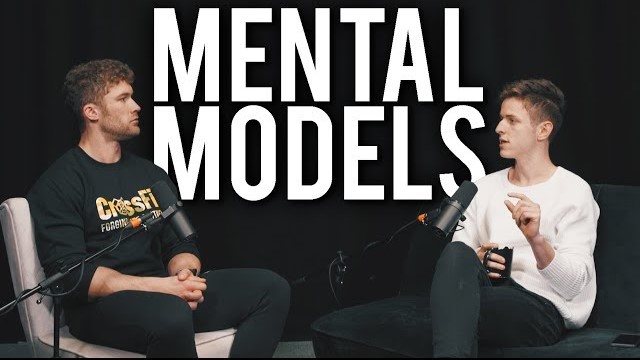
Bezos banned PowerPoint at Amazon.
Memos only.
He said, "There is no way to write a six-page narratively structured memo without clear thinking."
This is the Bezos Writing Framework (that you can steal):
Memos only.
He said, "There is no way to write a six-page narratively structured memo without clear thinking."
This is the Bezos Writing Framework (that you can steal):
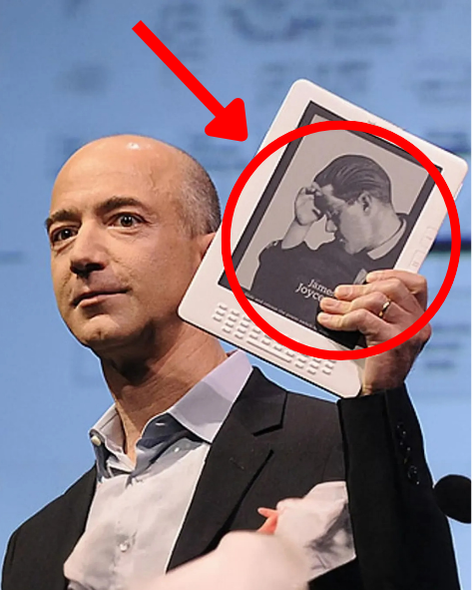
Amazon's 6-page memos, called "narratives," follow this structure:
• Introduction
• Goals
• Tenets
• Current state
• Lessons learned
• Strategy
Meeting attendees get 20 minutes to read the memo in silence before discussion.
Bezos explains:
• Introduction
• Goals
• Tenets
• Current state
• Lessons learned
• Strategy
Meeting attendees get 20 minutes to read the memo in silence before discussion.
Bezos explains:
Here are Bezos' 6 rules for great memos:
• <30 words per sentence
• Replace adjectives with data
• Use the "So What?" test
• No "weasel words" i.e. "nearly" or "significantly"
• Use subject-verb-object sentences
• Avoid jargon and acronyms and clutter words.
Simple rules but there's a catch:
• <30 words per sentence
• Replace adjectives with data
• Use the "So What?" test
• No "weasel words" i.e. "nearly" or "significantly"
• Use subject-verb-object sentences
• Avoid jargon and acronyms and clutter words.
Simple rules but there's a catch:
Following them means your memo will take days to write.
Here's why:
Here's why:
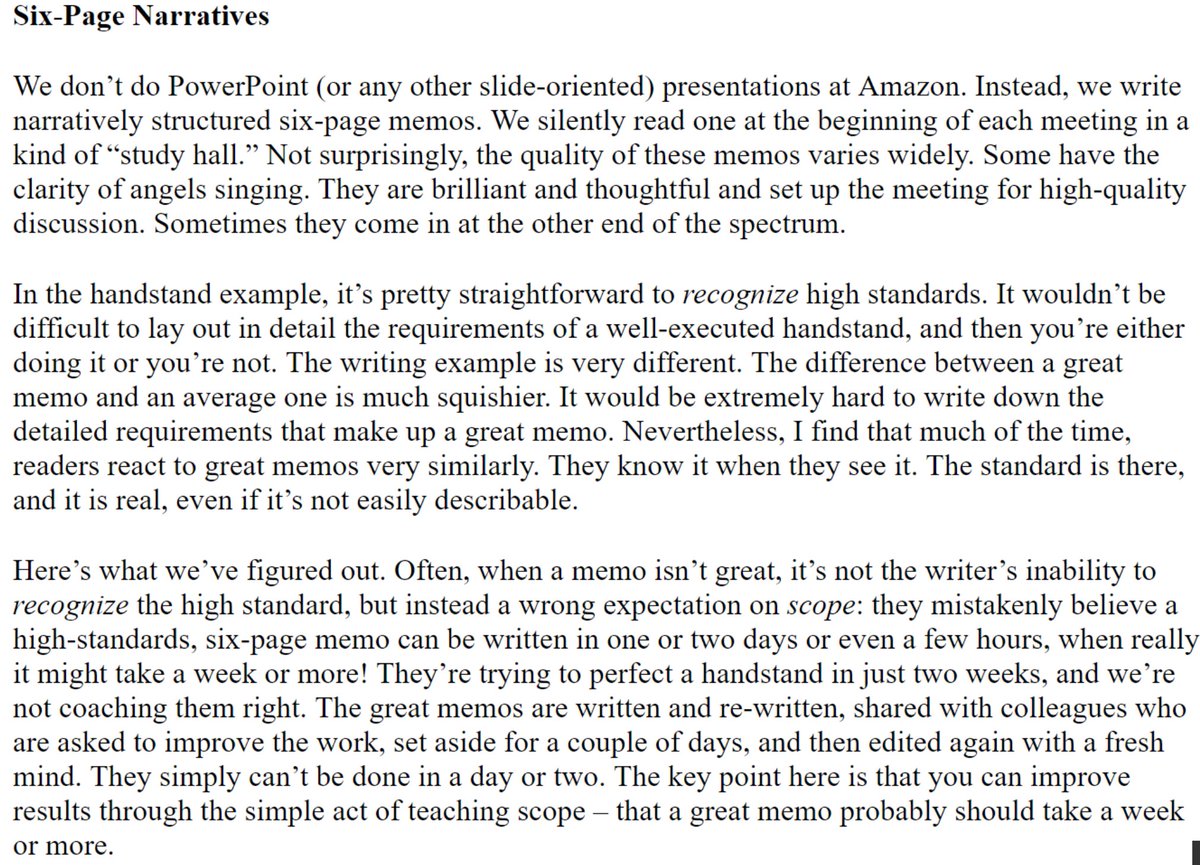
Now, some examples of Bezos' writing rules in action:
• Replace "in order to" say "to"
• Spell out acronyms like "ROI" on first use
• Instead of "Customers love Prime," say "Prime members spend 2x more than non-members"
This letter to his shareholders is a work of art:
• Replace "in order to" say "to"
• Spell out acronyms like "ROI" on first use
• Instead of "Customers love Prime," say "Prime members spend 2x more than non-members"
This letter to his shareholders is a work of art:
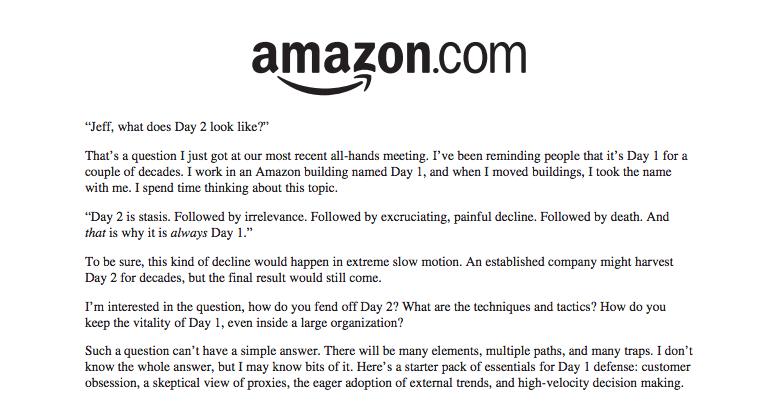
As Bezos says:
"The great memos are written and re-written, shared with colleagues who are asked to improve the work, set aside for a couple of days, and then edited again with a fresh mind."
Why does this matter?
"The great memos are written and re-written, shared with colleagues who are asked to improve the work, set aside for a couple of days, and then edited again with a fresh mind."
Why does this matter?
Because Bezos wants a world-class writing culture at Amazon:
• Focus on clear thinking
• Avoid unnecessary meetings
• Frictionless knowledge transfer across teams
Here's how an Amazon employee describes it:
• Focus on clear thinking
• Avoid unnecessary meetings
• Frictionless knowledge transfer across teams
Here's how an Amazon employee describes it:
So, how do I apply the Bezos Writing Framework?
1. Choose 1-2 rules to practice
2. Set aside daily writing time
3. Start with a low-stakes setting (e.g. Slack messages)
4. Get feedback and repeat
But you can't do this without building a daily writing habit:
1. Choose 1-2 rules to practice
2. Set aside daily writing time
3. Start with a low-stakes setting (e.g. Slack messages)
4. Get feedback and repeat
But you can't do this without building a daily writing habit:
If you're looking for a (proven) way to build a daily writing habit, read this:
https://x.com/dickiebush/status/1793257168117879097
Highly recommend using the Bezos 6-pager memo for your next meeting.
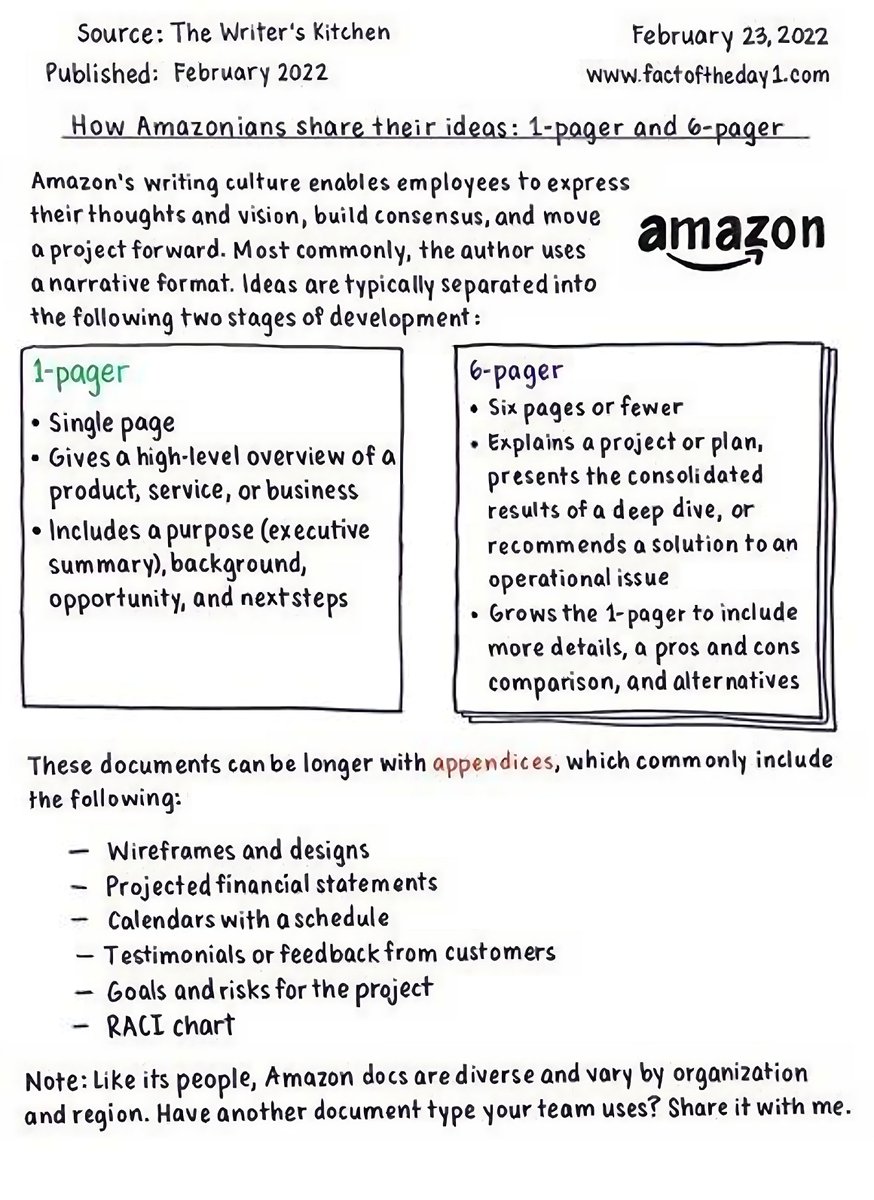
Credit: The Writer's Kitchen.
Credit: The Writer's Kitchen.
That's it!
The Bezos Writing Framework:
• <30 words per sentence
• Replace adjectives with data
• Use the "So What?" test
• No "weasel words" i.e. "nearly" or "significantly"
• Use subject-verb-object sentences
• Avoid jargon and acronyms and clutter words.
The Bezos Writing Framework:
• <30 words per sentence
• Replace adjectives with data
• Use the "So What?" test
• No "weasel words" i.e. "nearly" or "significantly"
• Use subject-verb-object sentences
• Avoid jargon and acronyms and clutter words.
Now you have the framework, it's time to put it into practice.
How?
By writing online.
Here's a free 13,000-word Ultimate Guide with everything you need to get started.
Join over 150,000 people who finally started writing after reading it:
x.startwritingonline.com/?utm_source=di…
How?
By writing online.
Here's a free 13,000-word Ultimate Guide with everything you need to get started.
Join over 150,000 people who finally started writing after reading it:
x.startwritingonline.com/?utm_source=di…
Thanks for reading!
If you enjoyed this, then follow me @dickiebush for more posts on digital writing and digital businesses.
Then, I'd appreciate it if you jumped back to the top and reposted the first post to share it with others:
If you enjoyed this, then follow me @dickiebush for more posts on digital writing and digital businesses.
Then, I'd appreciate it if you jumped back to the top and reposted the first post to share it with others:
https://x.com/dickiebush/status/1821524666344779952
• • •
Missing some Tweet in this thread? You can try to
force a refresh