What are the top 10 ranks from IITJEE, the hardest exam in India, 1987 doing today?
1M compete for 10k slots in engineering at IIT. People believe a top rank is a made life. Is it, 37 years on?
4 Profs, 2 founders, 2 financiers, 2 tech and 4 in India and 1 big on X!
🧵
1/13
1M compete for 10k slots in engineering at IIT. People believe a top rank is a made life. Is it, 37 years on?
4 Profs, 2 founders, 2 financiers, 2 tech and 4 in India and 1 big on X!
🧵
1/13

Rank 1 — Rajesh Gopakumar
One of the best string theorists.
— From Calcutta, did Physics at IITK, not CS
— Princeton PhD, research at Harvard
— Moved back to India to be a Prof at TIFR in Bangalore
— Fun fact: ICTS was funded in large part by Jim Simons of RenTech
2/13
One of the best string theorists.
— From Calcutta, did Physics at IITK, not CS
— Princeton PhD, research at Harvard
— Moved back to India to be a Prof at TIFR in Bangalore
— Fun fact: ICTS was funded in large part by Jim Simons of RenTech
2/13

Rank 2 — Alok Sharma
Hedge fund guy.
— Went to IIT and then IIM Ahmedabad
— Spent 19yrs and became an MD at Bank of America
— Got an MBA at Booth in the meanwhile
— Was an MD at Millenium for 10yrs
— 5yrs at a $12B AUM hedge fund in NYC
3/13
Hedge fund guy.
— Went to IIT and then IIM Ahmedabad
— Spent 19yrs and became an MD at Bank of America
— Got an MBA at Booth in the meanwhile
— Was an MD at Millenium for 10yrs
— 5yrs at a $12B AUM hedge fund in NYC
3/13

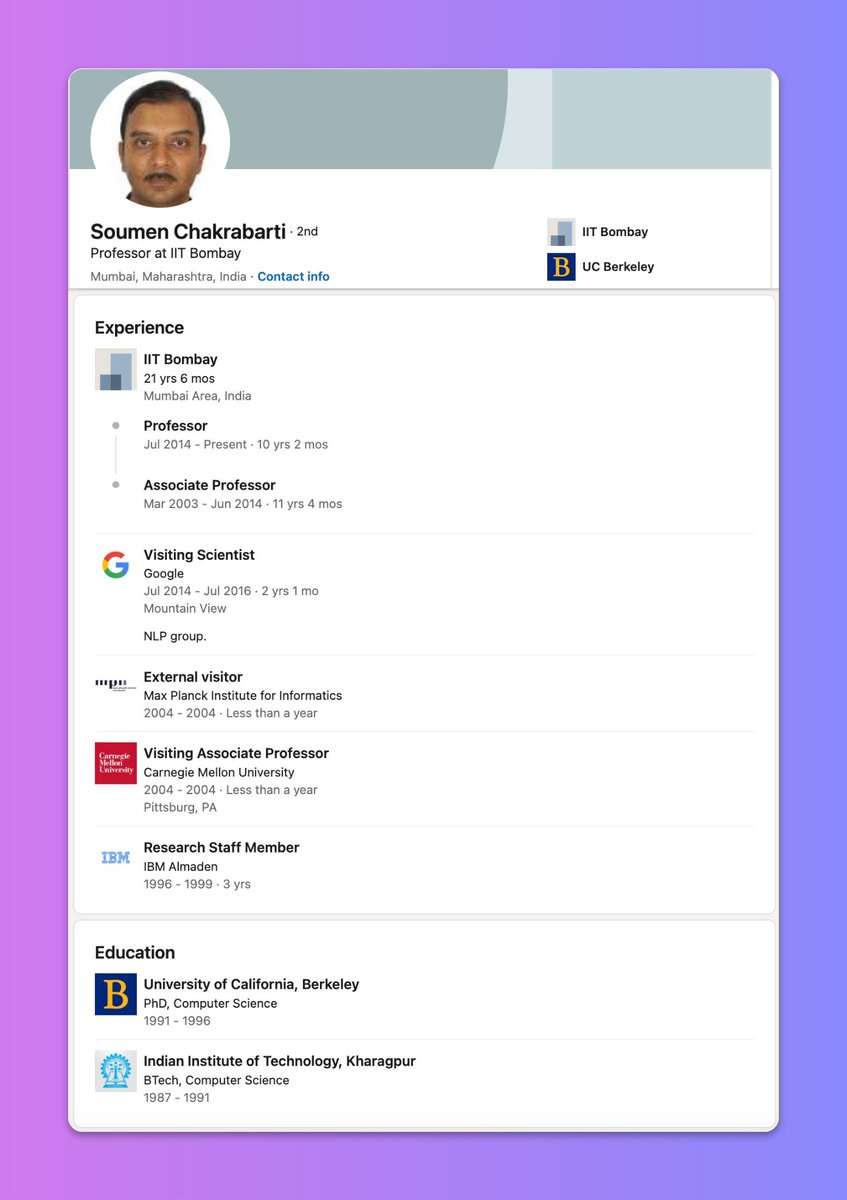
Rank 3 — Soumen Chakrabarti
The Professor.
— Also from Calcutta, did CS at IIT Kharagpur and a PhD from Berkeley
— Spent some time at IBM Research
— Returned to India to be a Professor of CS at IIT Bombay
— Wife is rank 16 Sunita Sarawagi who is also a Prof at IITB
4/13
The Professor.
— Also from Calcutta, did CS at IIT Kharagpur and a PhD from Berkeley
— Spent some time at IBM Research
— Returned to India to be a Professor of CS at IIT Bombay
— Wife is rank 16 Sunita Sarawagi who is also a Prof at IITB
4/13
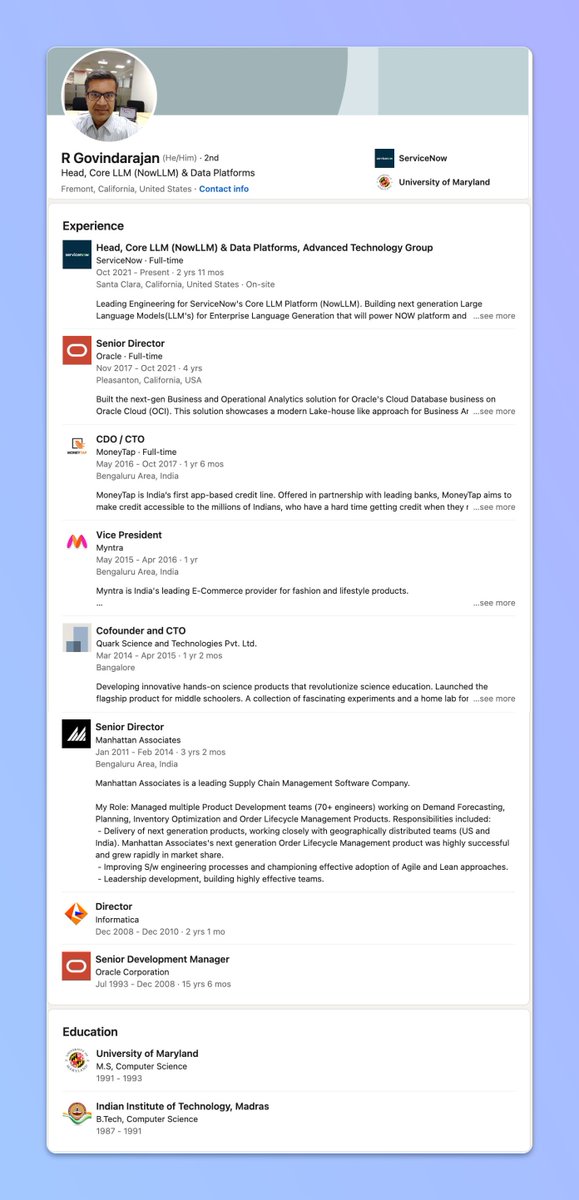
Rank 4 — R Govindarajan
The tech careerist
— IIT Madras and then MS from UMaryland
— 15yrs ar Oracle
— Went to India for 10yrs at various firms most notably Myntra and was a startup CTO
— Came back to be Sr Director at Oracle before being head of LLM at ServiceNow
5/13
The tech careerist
— IIT Madras and then MS from UMaryland
— 15yrs ar Oracle
— Went to India for 10yrs at various firms most notably Myntra and was a startup CTO
— Came back to be Sr Director at Oracle before being head of LLM at ServiceNow
5/13
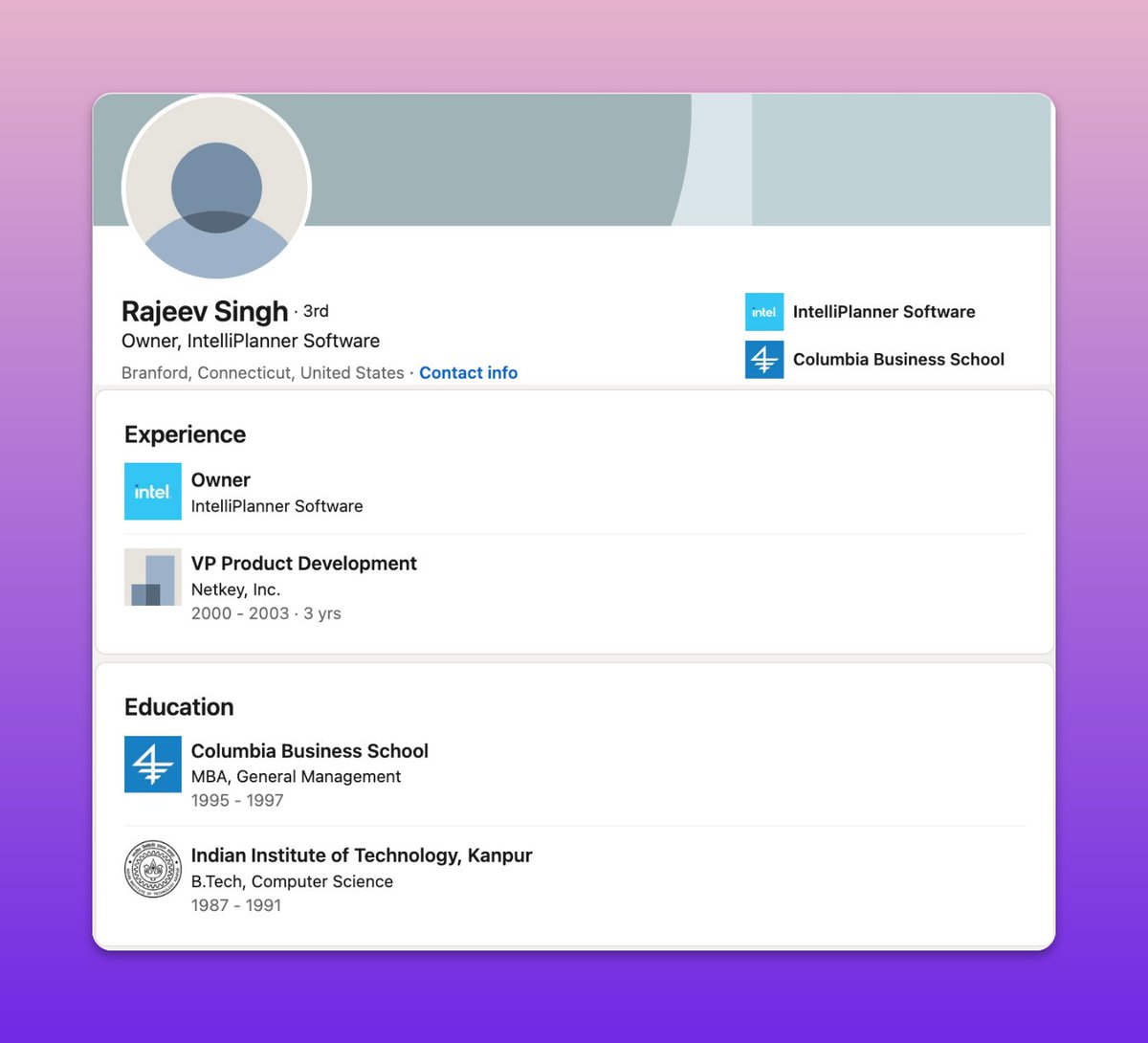
Rank 5 — Rajeev Singh
The bootstrapped entrepreneur.
— Went to IIT Kanpur for CS and later did an MBA at Columbia
— Was a PM at a tech firm before starting a supply chain automation business in Delhi, IntelliPlanner.
6/13
The bootstrapped entrepreneur.
— Went to IIT Kanpur for CS and later did an MBA at Columbia
— Was a PM at a tech firm before starting a supply chain automation business in Delhi, IntelliPlanner.
6/13
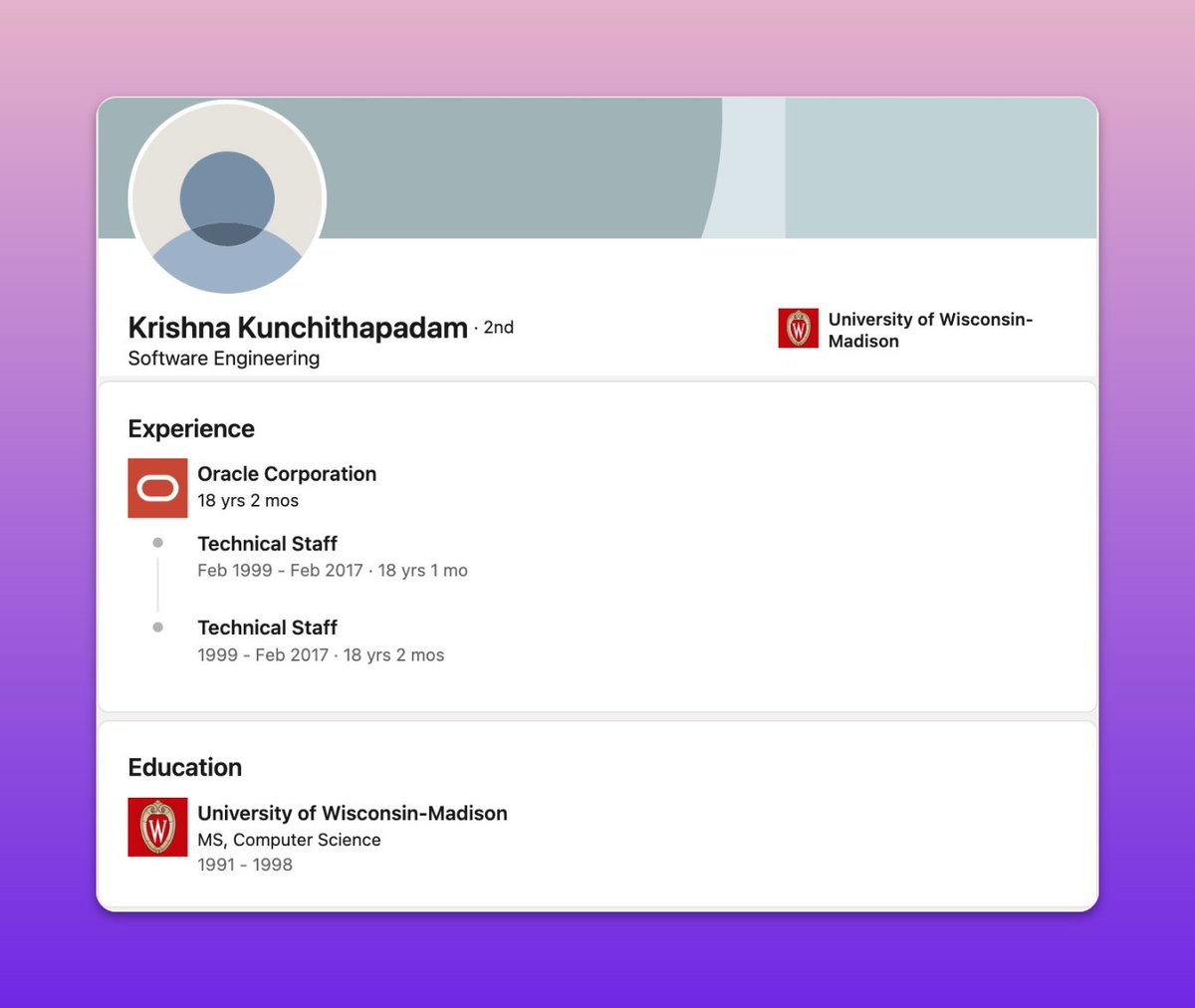
Rank 6 — Krishna Kunchithapadam
Mystery man.
— Went to IIT and then seems to have done an MS at UWisconsin for 7yrs
— Spend 18yrs at Oracle
7/13
Mystery man.
— Went to IIT and then seems to have done an MS at UWisconsin for 7yrs
— Spend 18yrs at Oracle
7/13
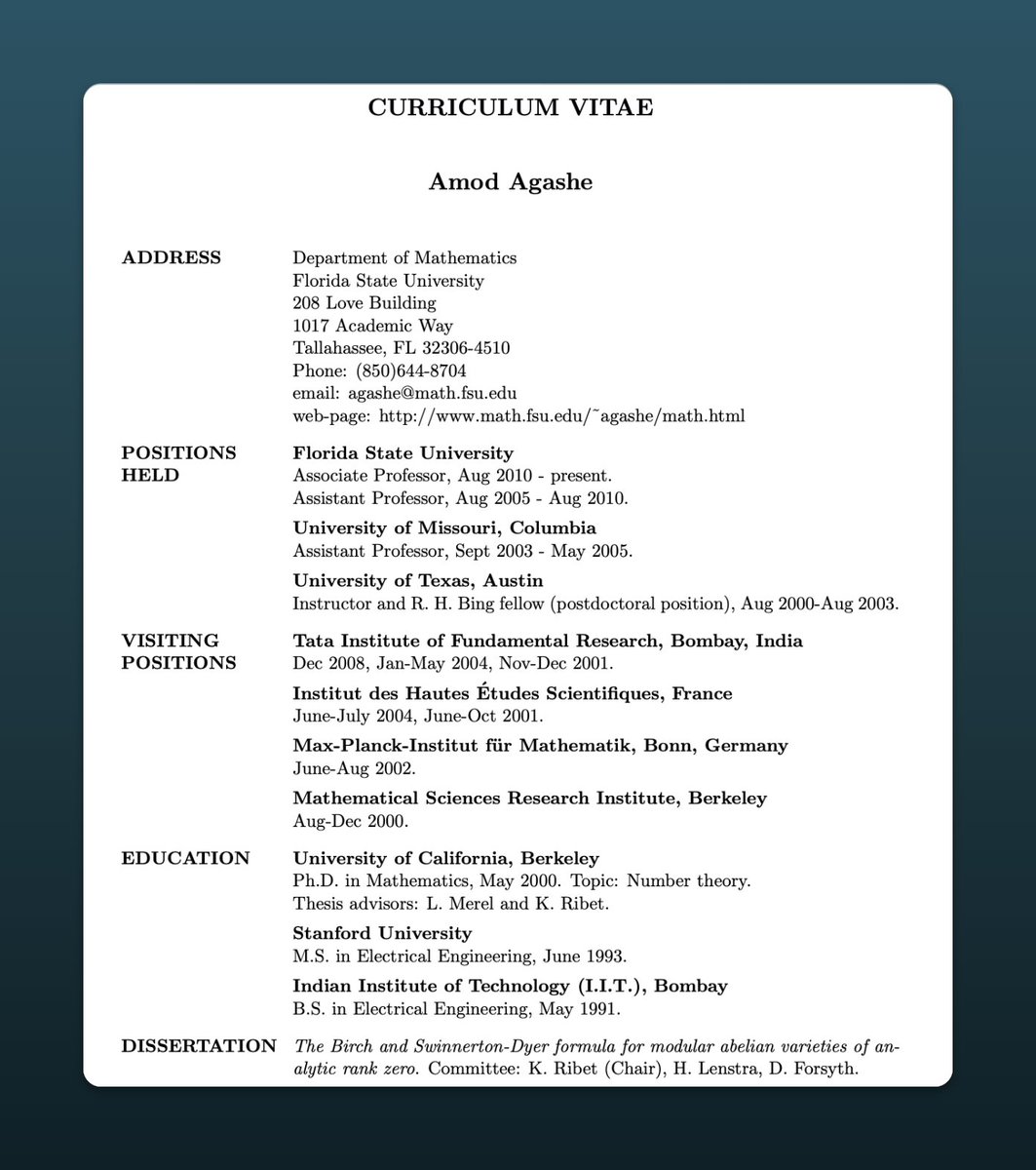
Rank 7 — Amod Agashe
The Mathematician.
— IIT Bombay, Stanford MS electrical before Berkeley PhD in math
— Hopped around Europe and India to do research
— Professor at various places, eventually FSU!
8/13
The Mathematician.
— IIT Bombay, Stanford MS electrical before Berkeley PhD in math
— Hopped around Europe and India to do research
— Professor at various places, eventually FSU!
8/13
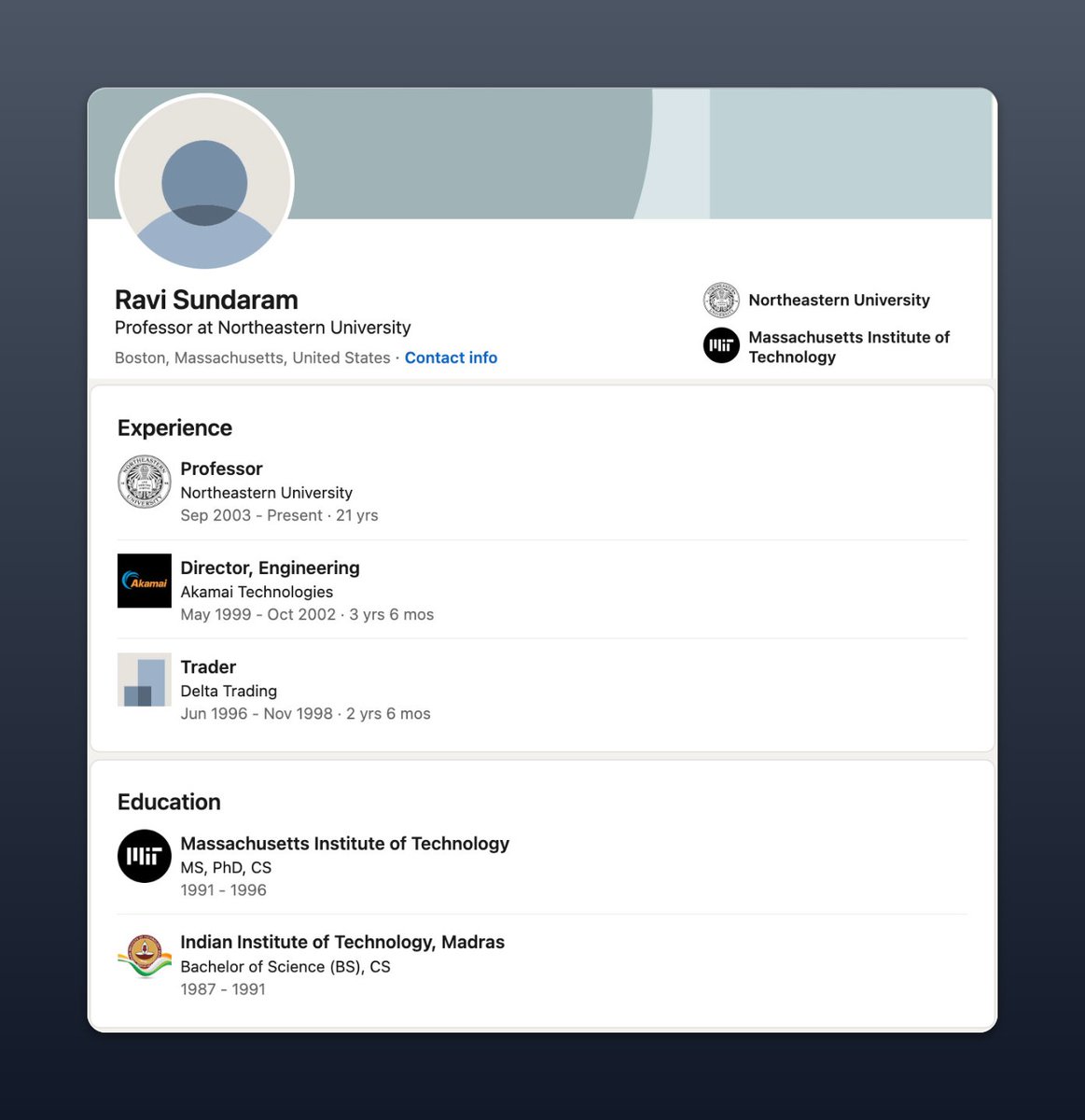
Rank 8 — Ravi Sundaram
Tried the industry, back to academia.
— IIT Madras CS and then a PhD from MIT
— Worked at a trading firm before being Director of Engg at Akamai
— Went back to being a Professor at Northeastern
9/13
Tried the industry, back to academia.
— IIT Madras CS and then a PhD from MIT
— Worked at a trading firm before being Director of Engg at Akamai
— Went back to being a Professor at Northeastern
9/13
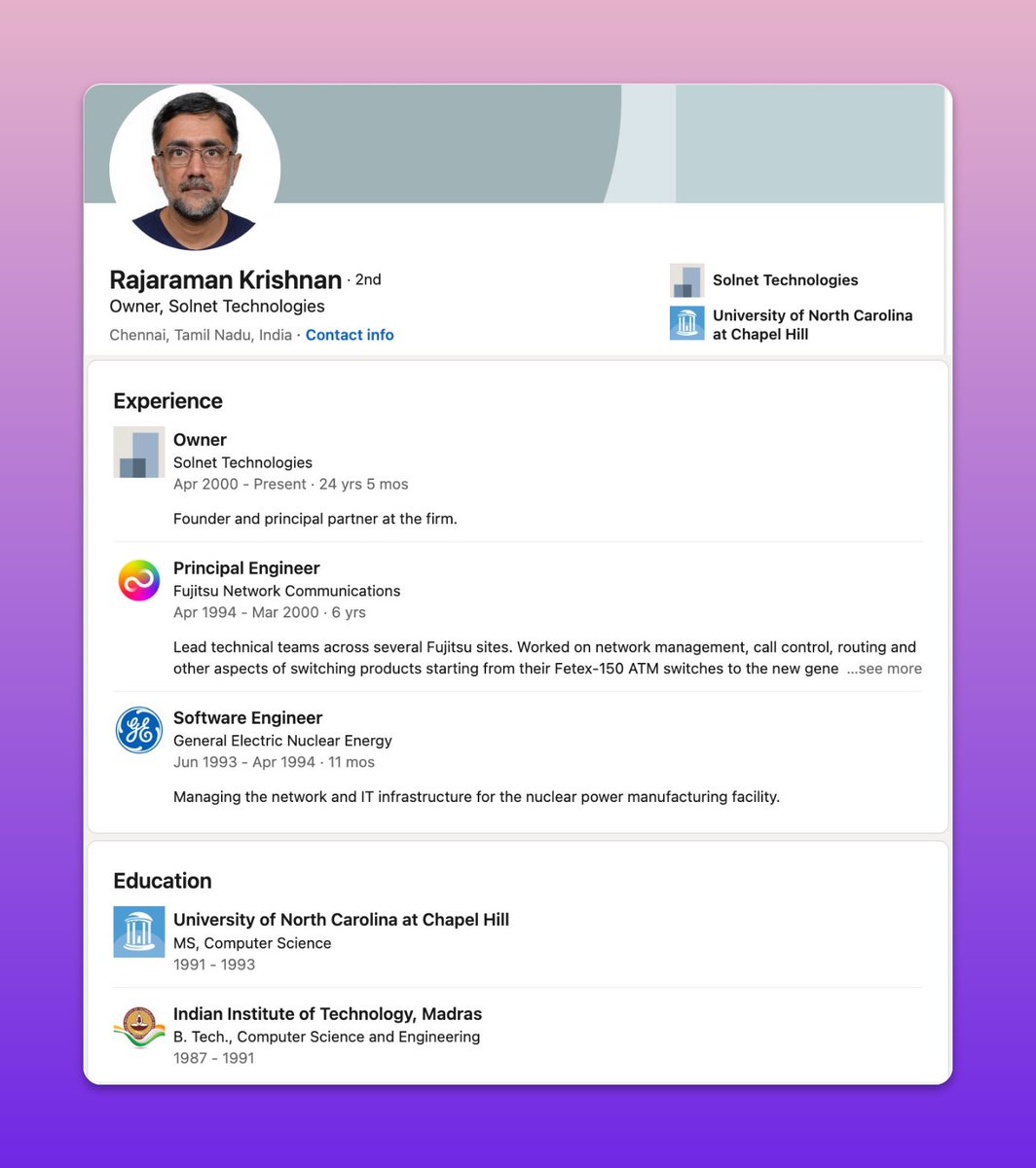
Rank 9 — Rajaraman Krishnan
The bootstrapped entrepreneur.
— IIT Madras CS and then MS at UNC
— Worked at GE and Fujitsu
— Started and ran Solnet for 25yrs before it seems to have been acquired by Accenture
10/13
The bootstrapped entrepreneur.
— IIT Madras CS and then MS at UNC
— Worked at GE and Fujitsu
— Started and ran Solnet for 25yrs before it seems to have been acquired by Accenture
10/13
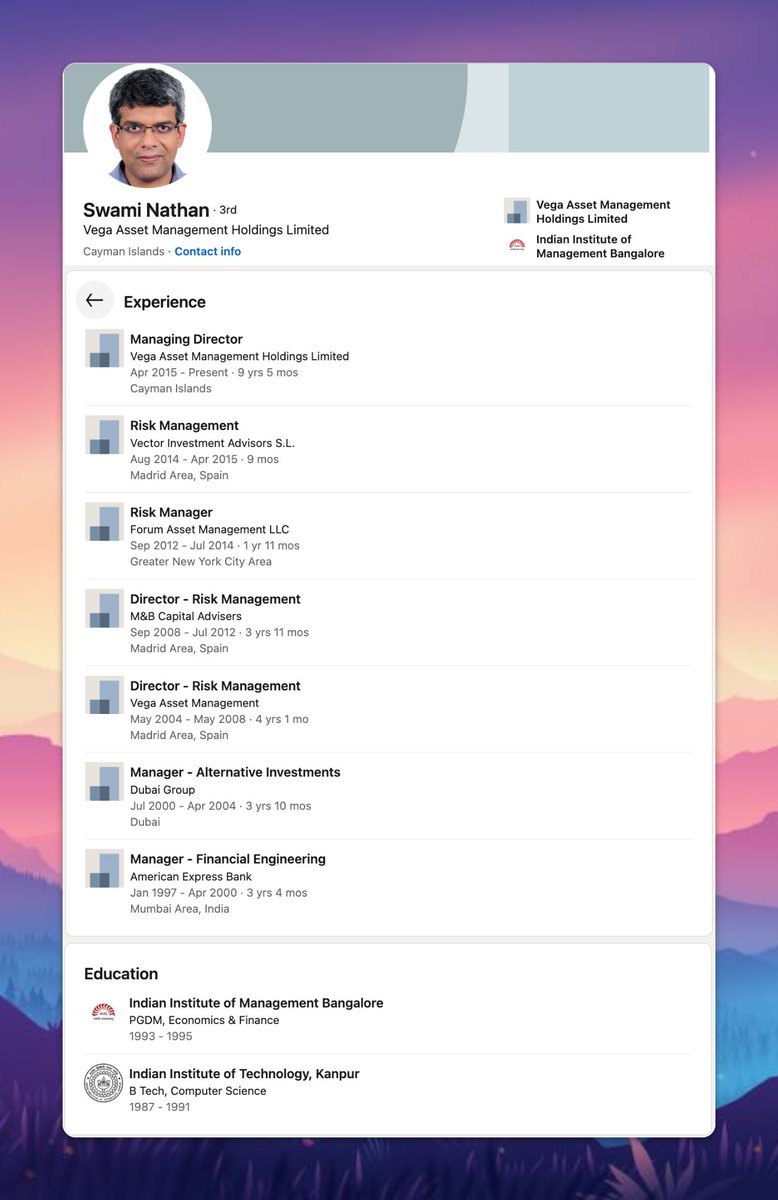
Rank 10 — Swami Nathan @avataram
The financier (who loves watches).
— IIT Kanpur CS and an MBA for IIM Bangalore
— Worked at various financial institutions across Mumbai, Dubai, Spain and NYC
— Now an MD at Vega, a hedge fund in the Cayman Islands
11/13
The financier (who loves watches).
— IIT Kanpur CS and an MBA for IIM Bangalore
— Worked at various financial institutions across Mumbai, Dubai, Spain and NYC
— Now an MD at Vega, a hedge fund in the Cayman Islands
11/13
In this year, of the 10 people:
— 4 Profs, 2 founders, 2 financiers, 2 tech
— 4 India, 4 in US, 1 Singapore, 1 Cayman
— All Profs aren't equal. Gopakumar is a legend.
This isn't meant to be a success test, but a peek into how life plays out for those once at the very top!
12/13
— 4 Profs, 2 founders, 2 financiers, 2 tech
— 4 India, 4 in US, 1 Singapore, 1 Cayman
— All Profs aren't equal. Gopakumar is a legend.
This isn't meant to be a success test, but a peek into how life plays out for those once at the very top!
12/13
Source: I'm using a proprietary dataset from 1985 - 2000. Clearly IIT is a sore topic given the few upset comments "why you posting you didn't even go"
Nonetheless, I've covered '86, '87, '98, '92, '09 and will be posting more in the coming months. Follow if interested!
13/13
Nonetheless, I've covered '86, '87, '98, '92, '09 and will be posting more in the coming months. Follow if interested!
13/13
• • •
Missing some Tweet in this thread? You can try to
force a refresh