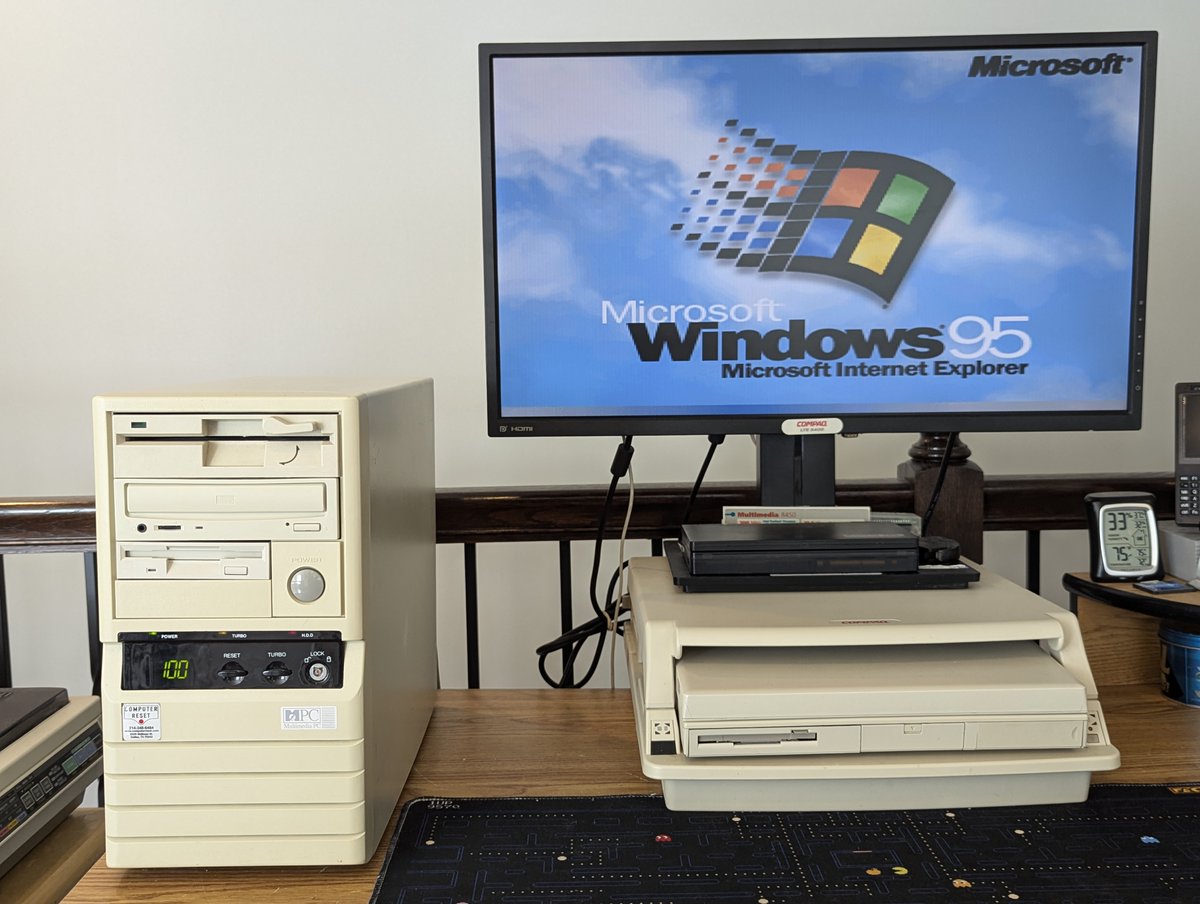
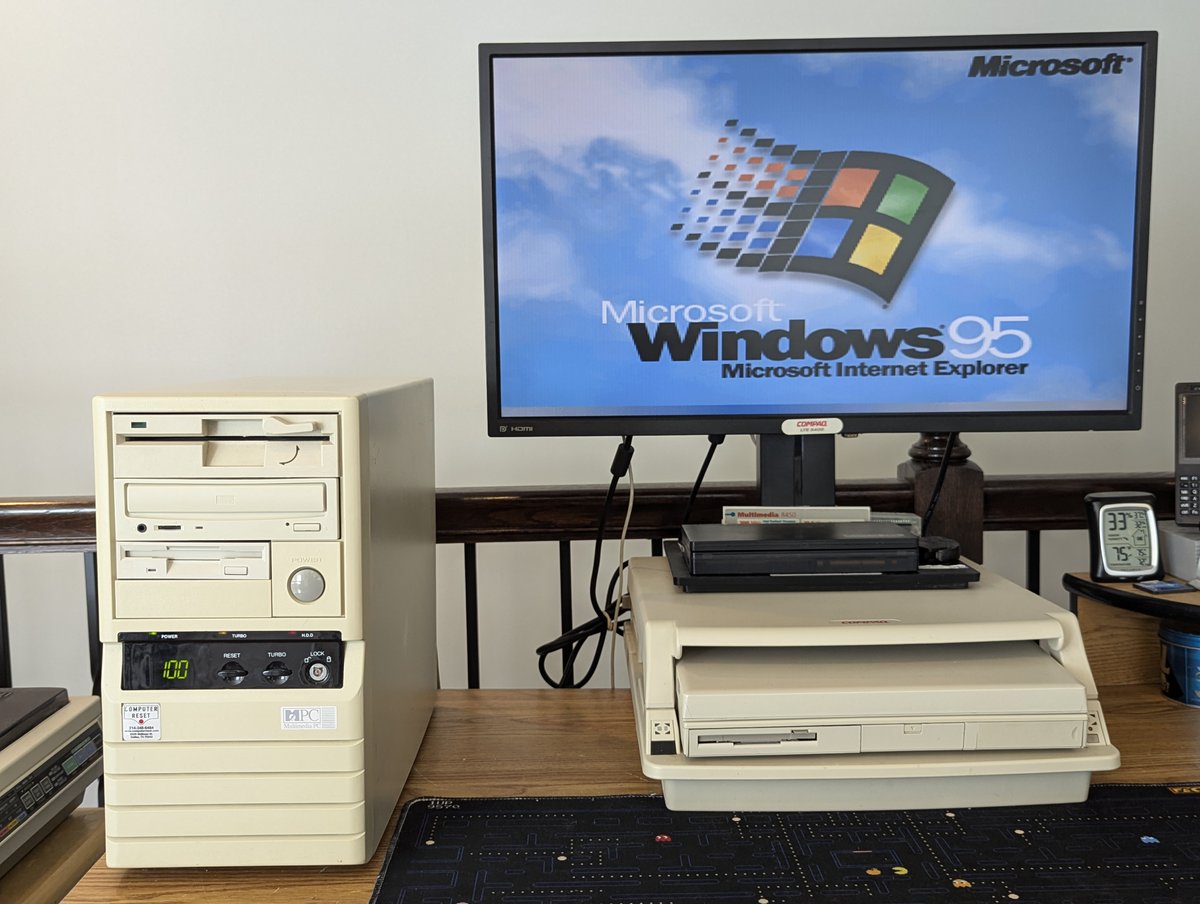
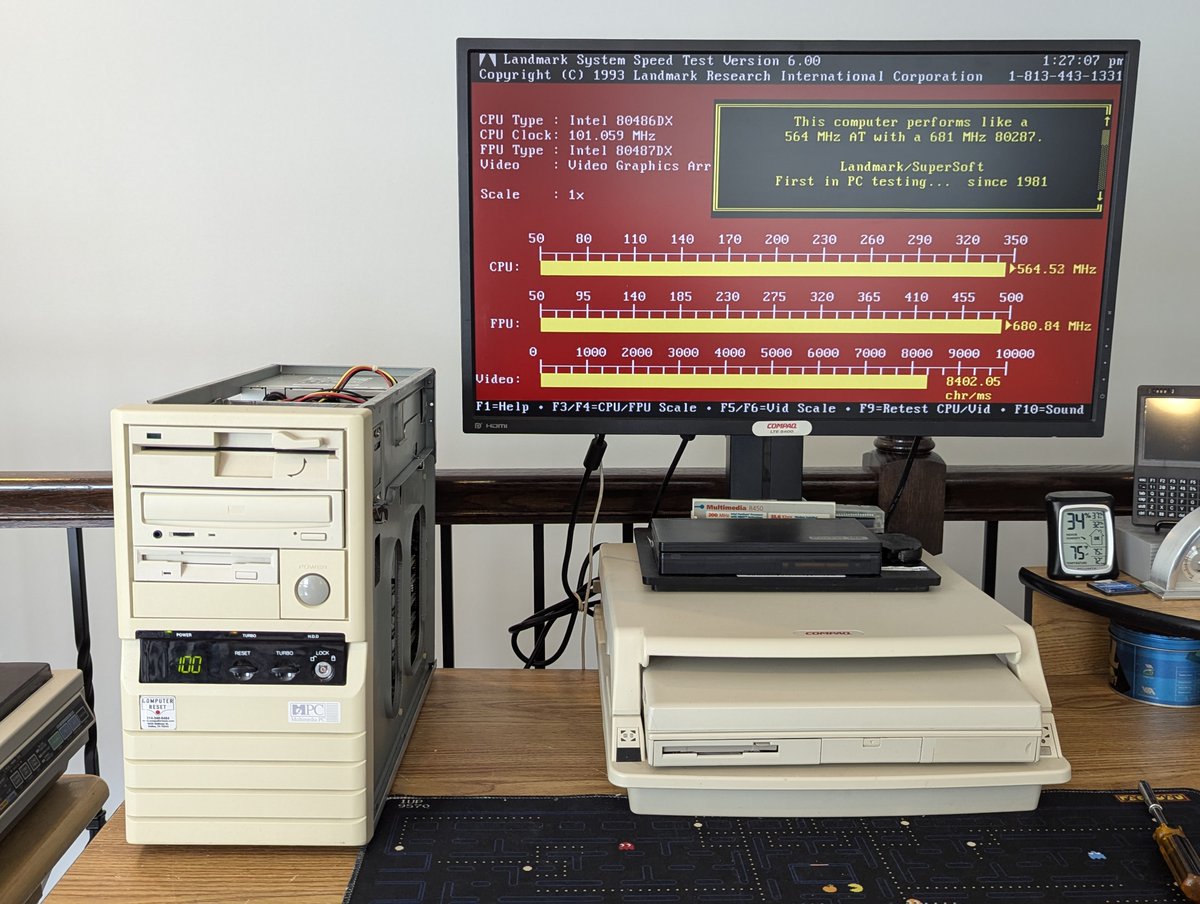
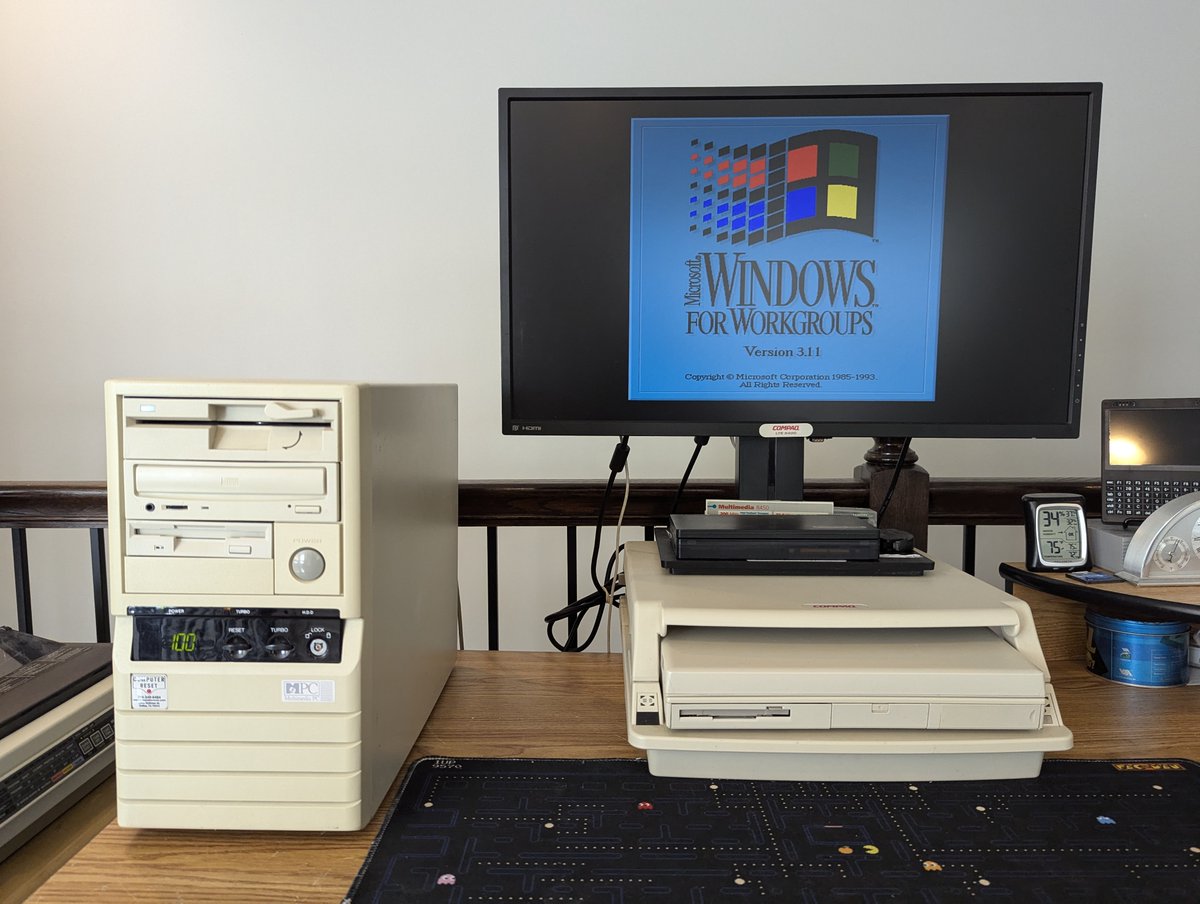
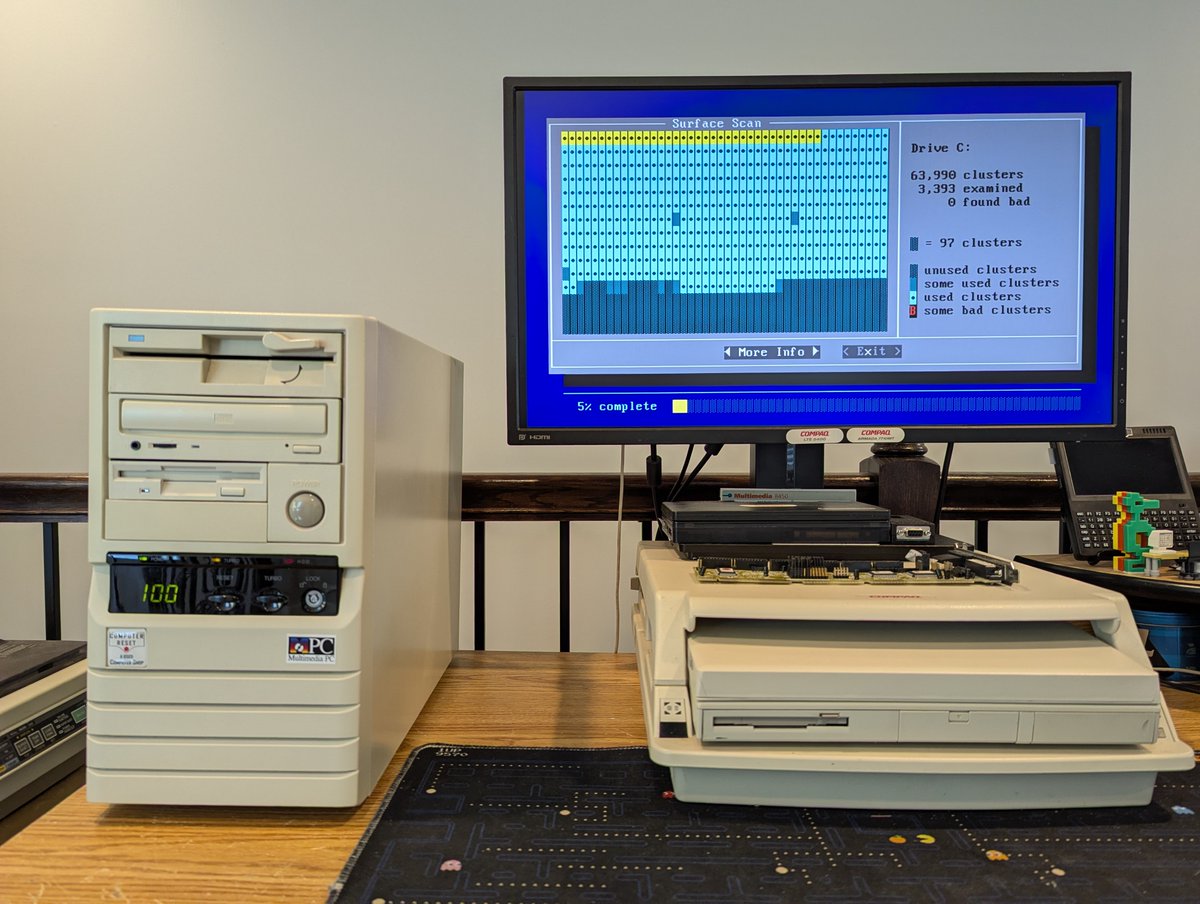
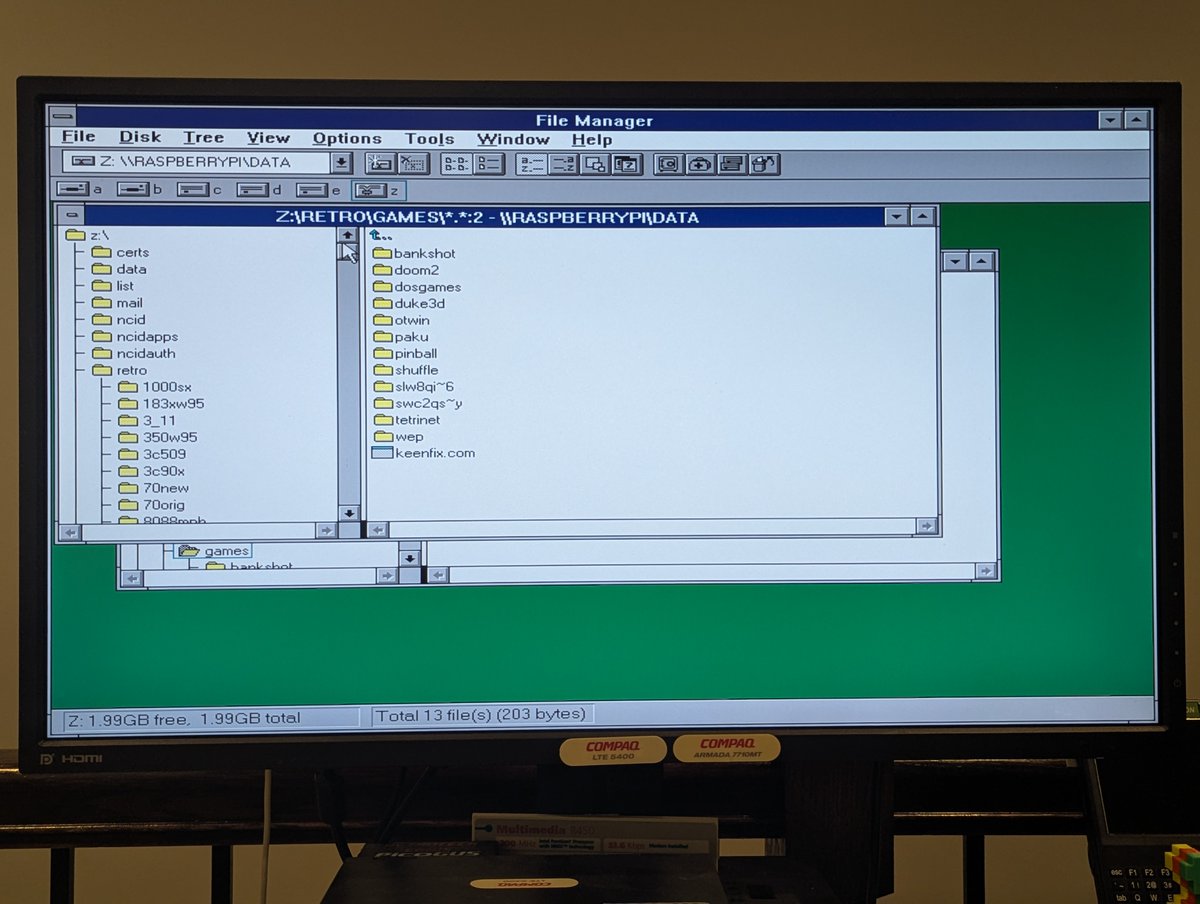
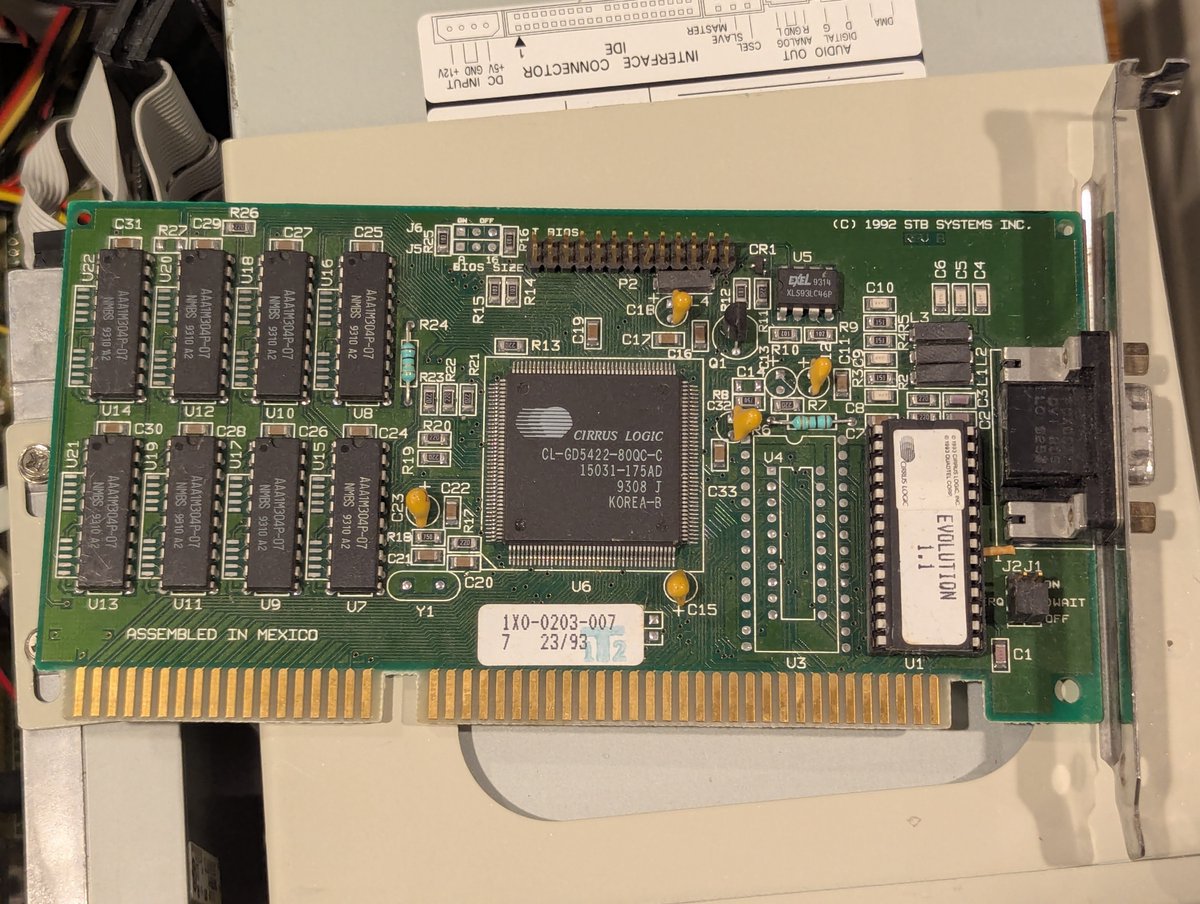
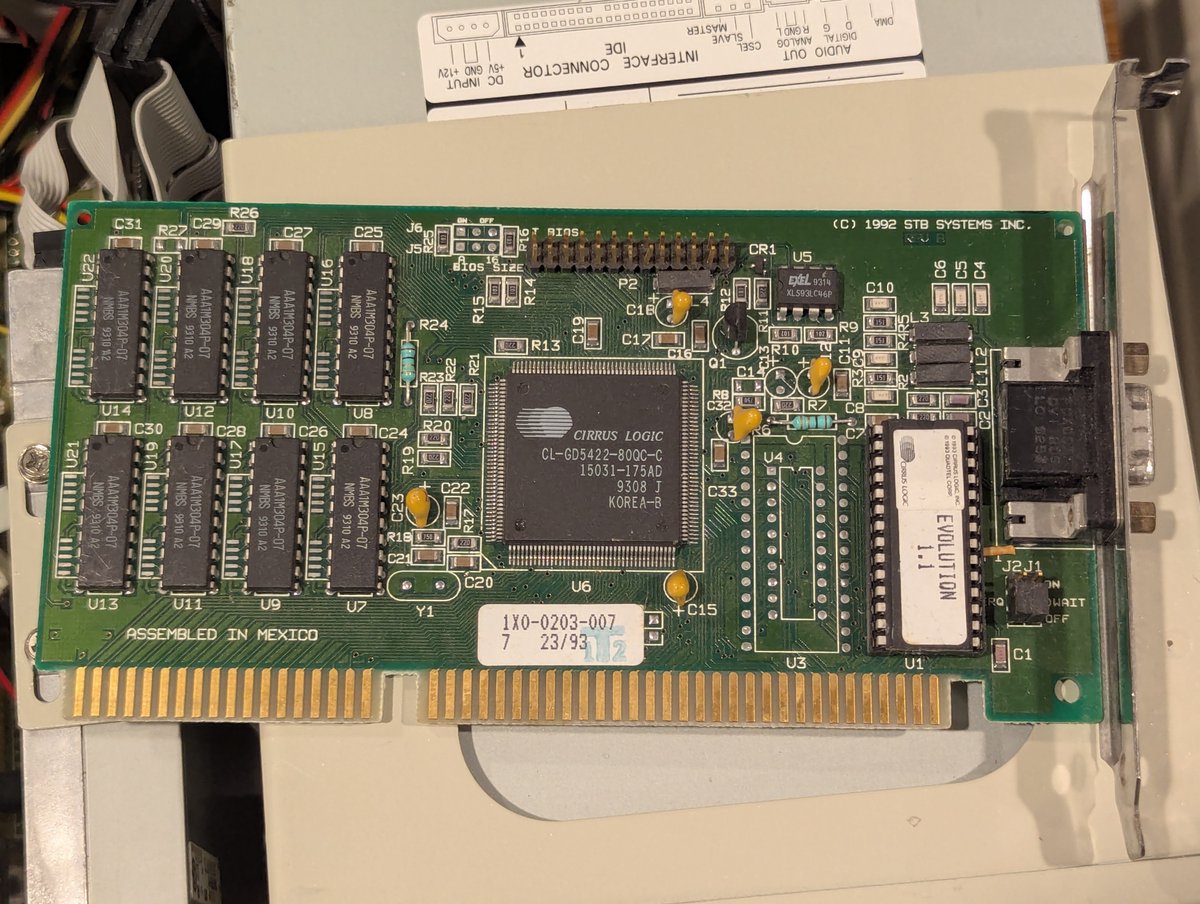
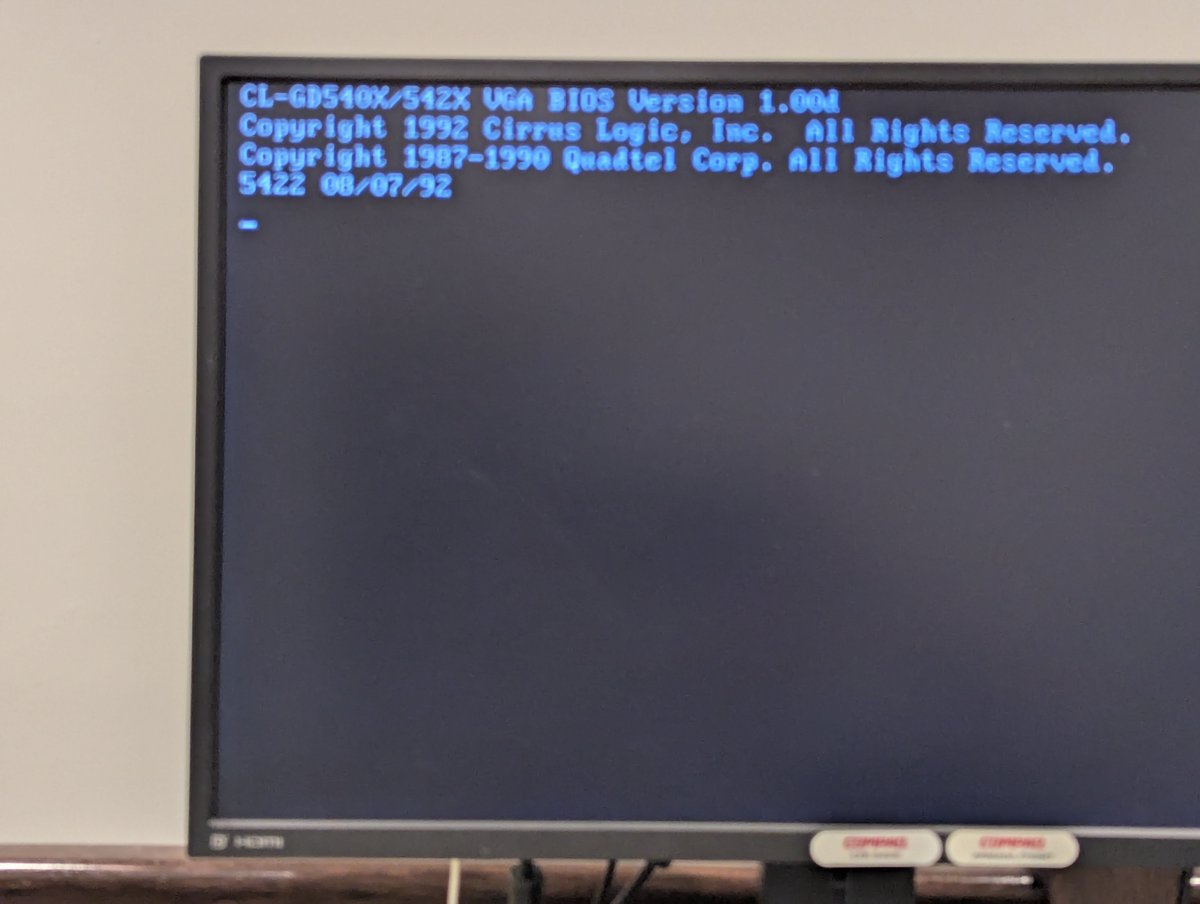
It's been a little while since I've had this 486 DX4/100 system on the desk. I wanted to open it up and explore a bit to answer a question I had. Let's explore this system together in a 🧵 here!
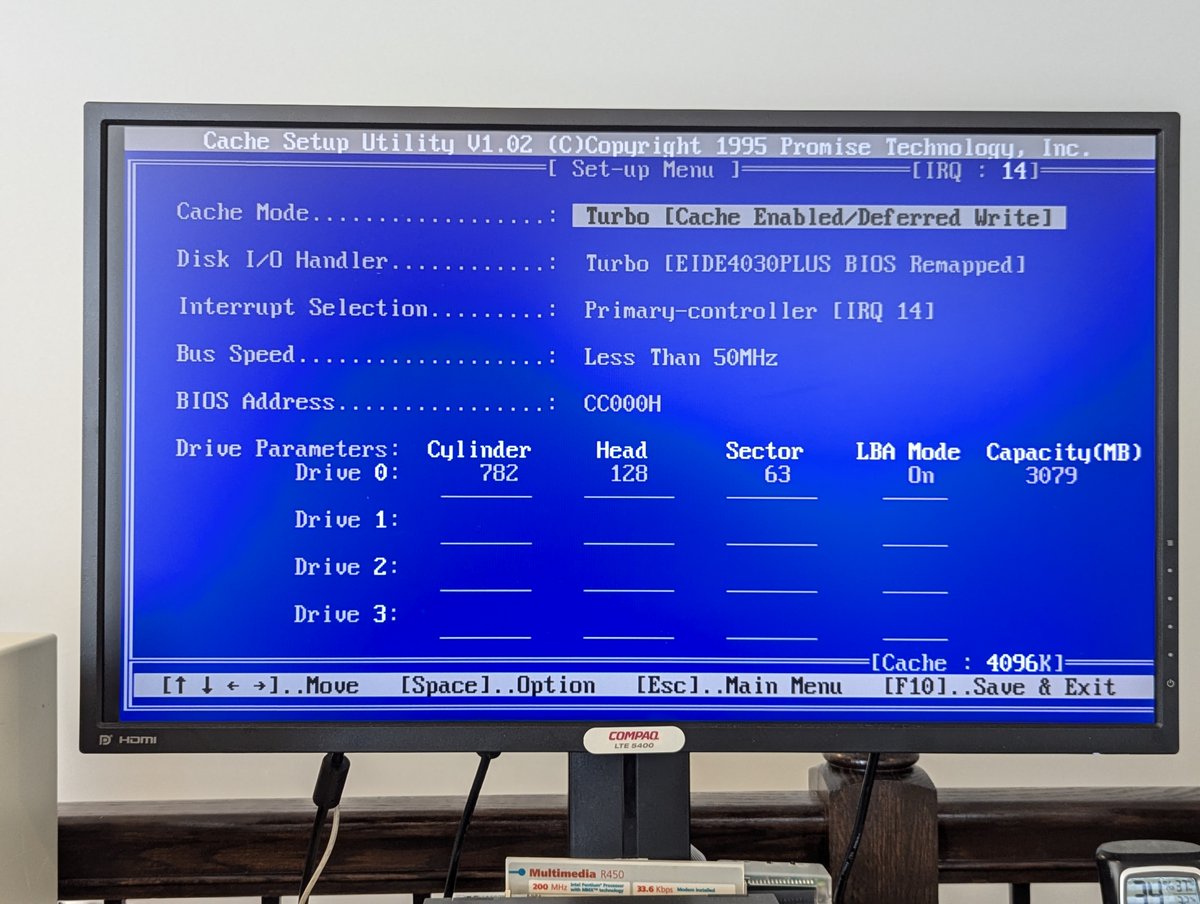
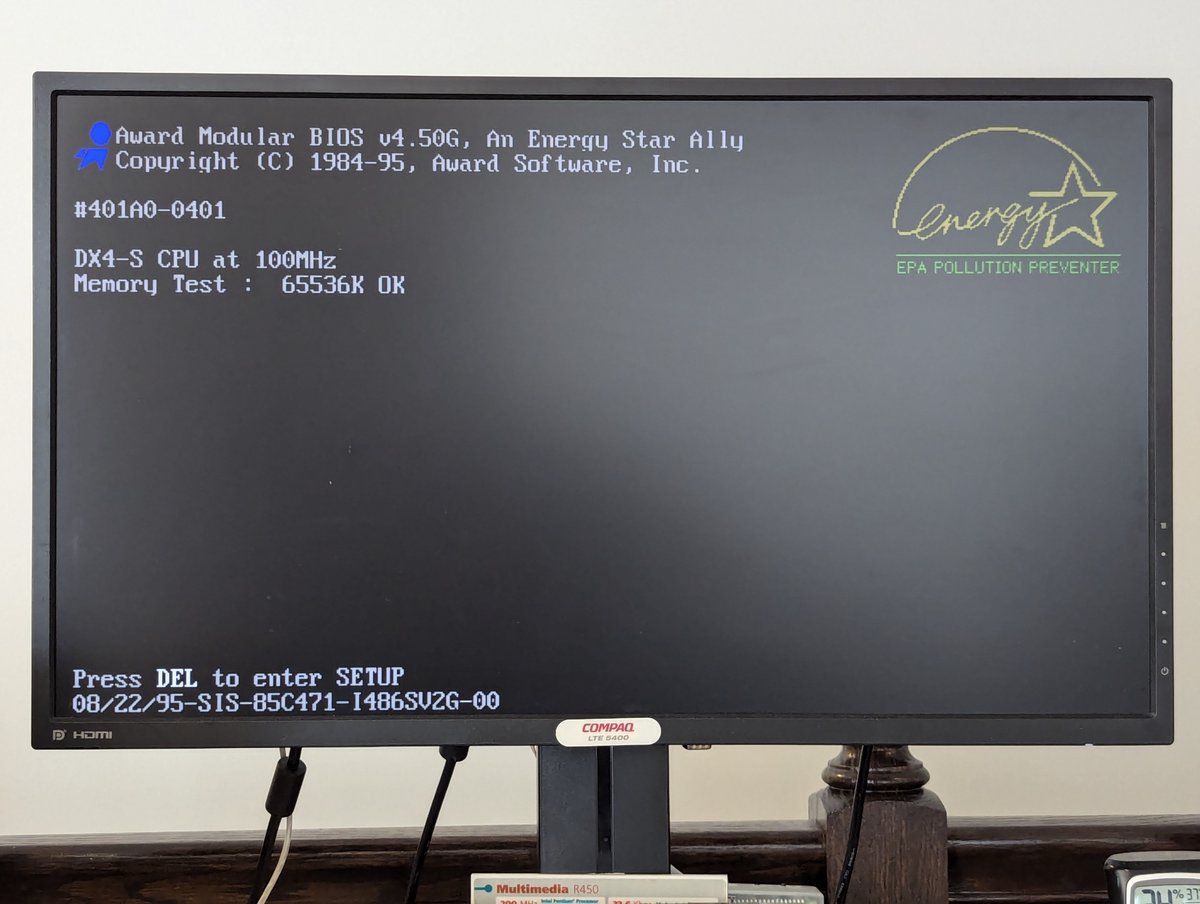
On bootup, we see that we have 64MB of memory, which would have been a pretty beefy amount for the time period. I also have a Promise EIDE 4030 Plus VLB caching controller in this system with 4MB of cache! I entered its setup program just for fun!
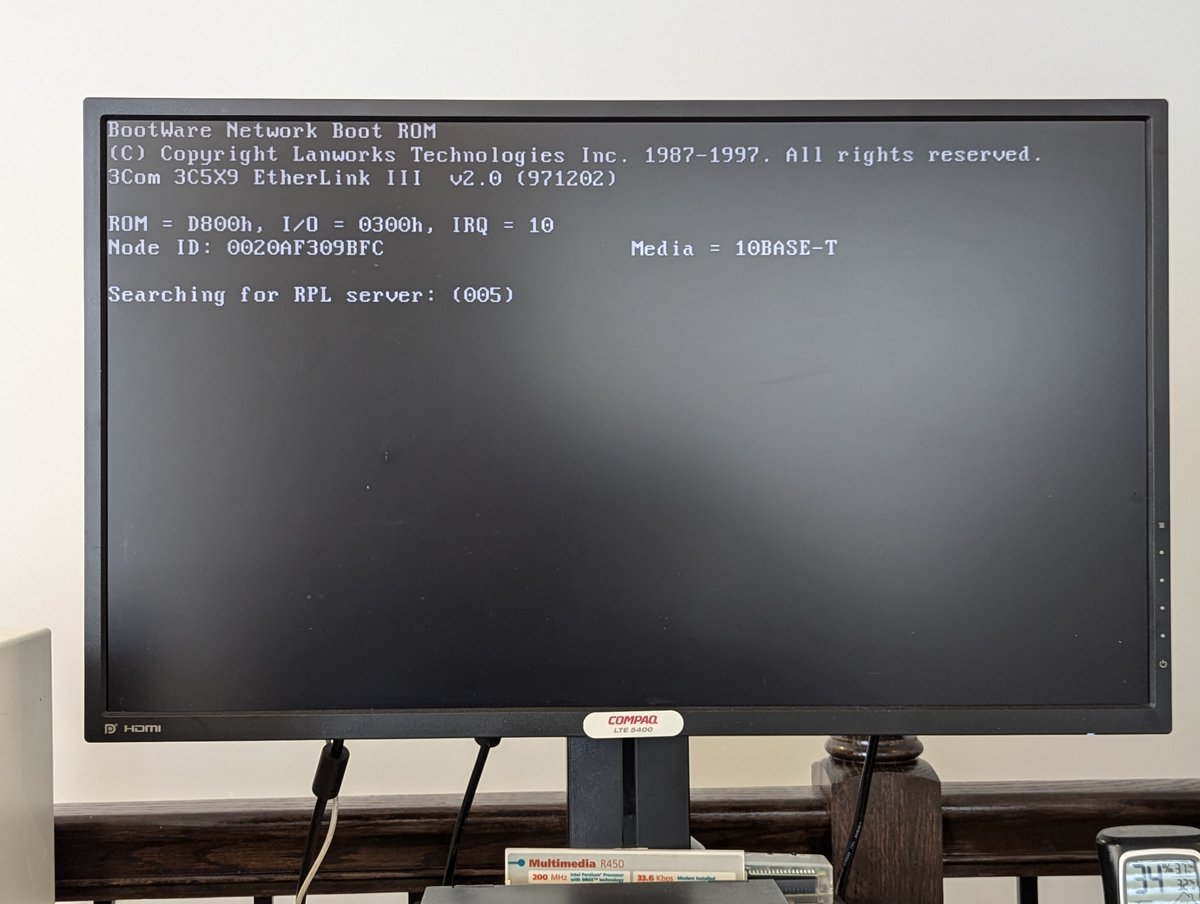
I also have a 3COM Etherlink III in the system, with a boot ROM. We won't be booting off the network today, but if we were, we'd see a screen similar to this.
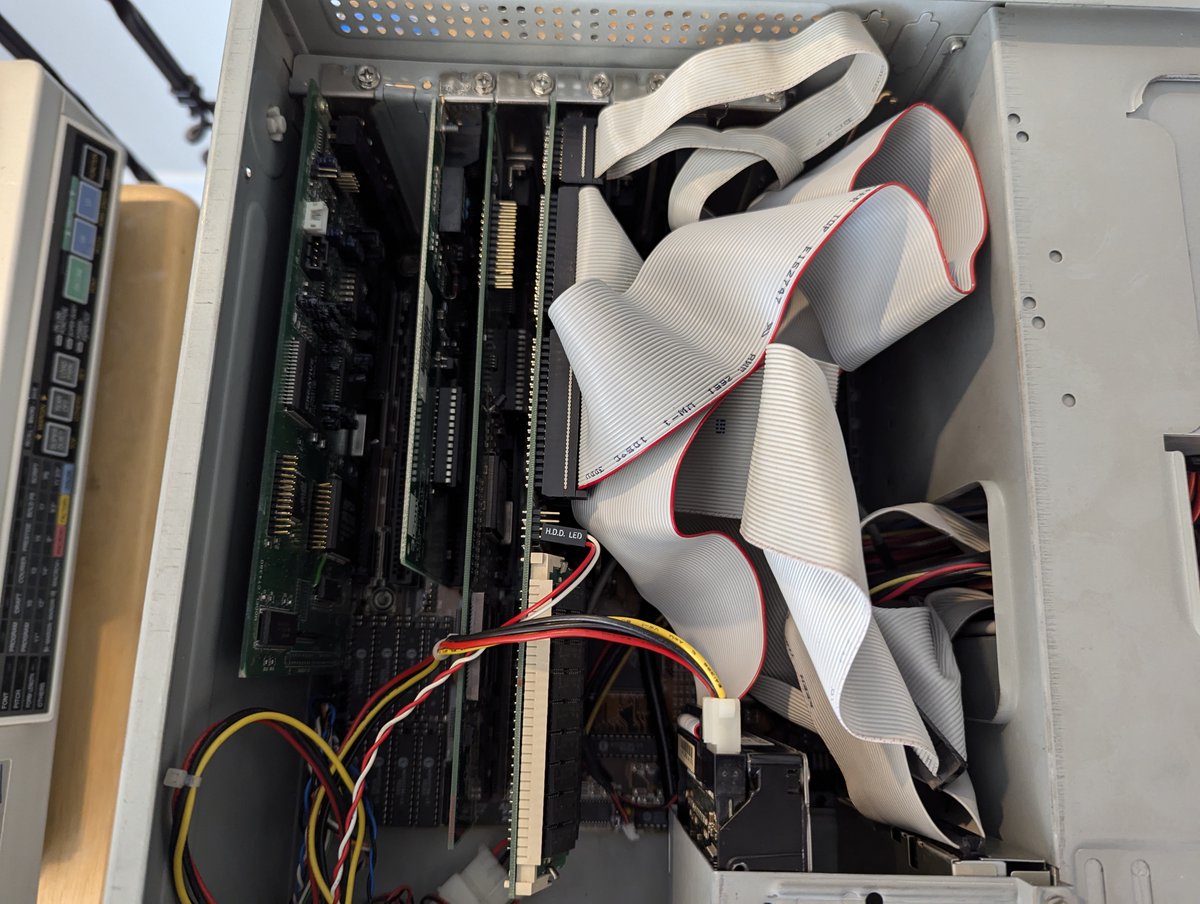
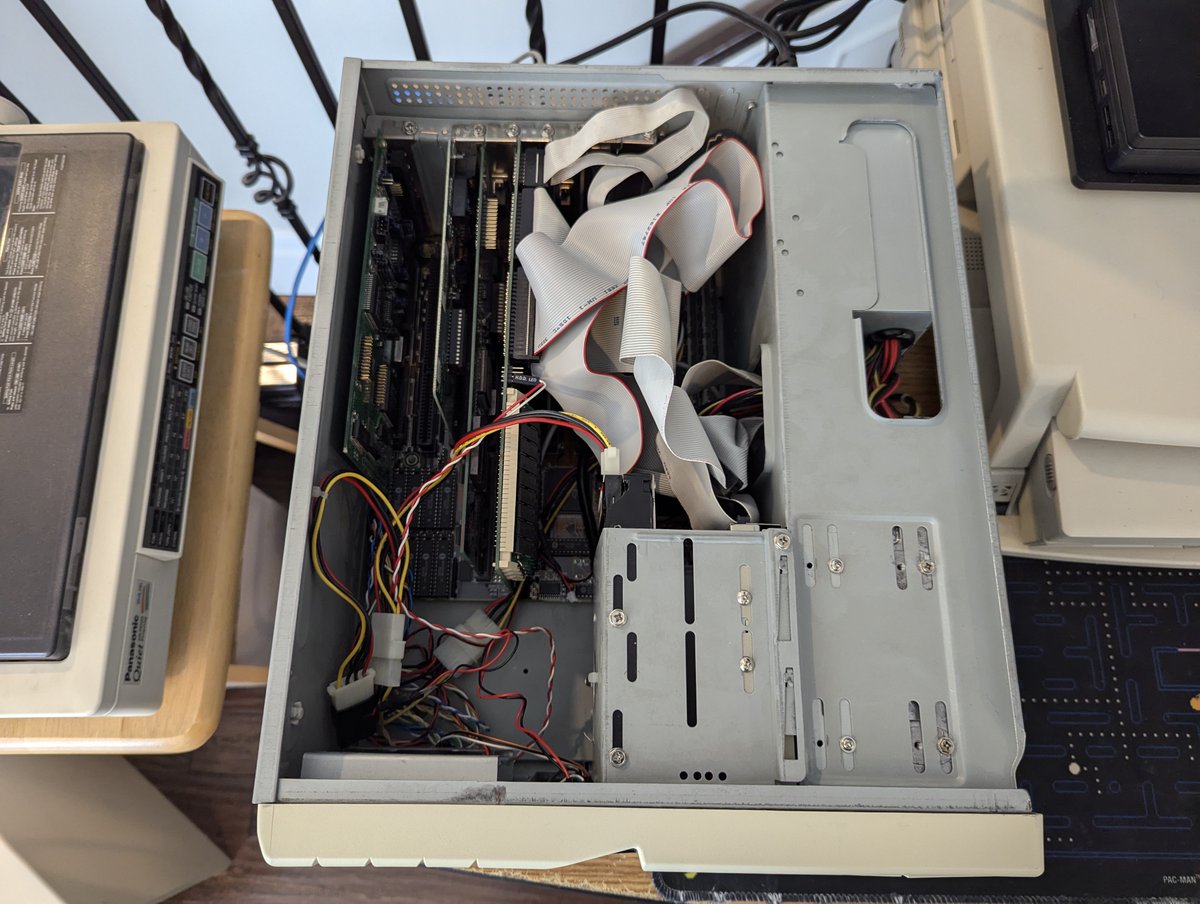
Let's open up the case. Yea, my cable management could use some work 😅
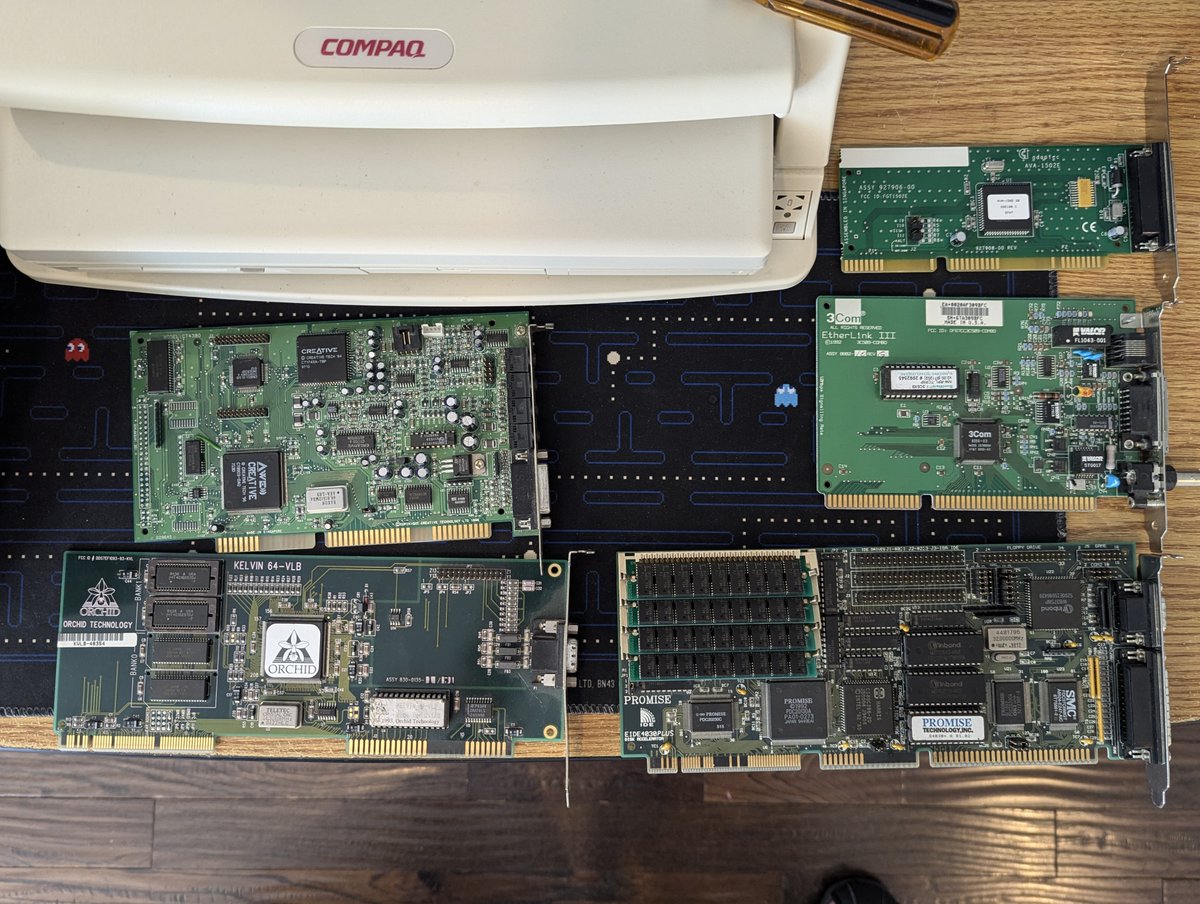
Here's all of our cards! A poor man's Creative AWE64, Orchid Kelvin 64-VLB, Adaptec AVA-1502E (for a SCSI Zip drive), 3Com Etherlink III, and the Promise EIDE 4030 Plus VLB.
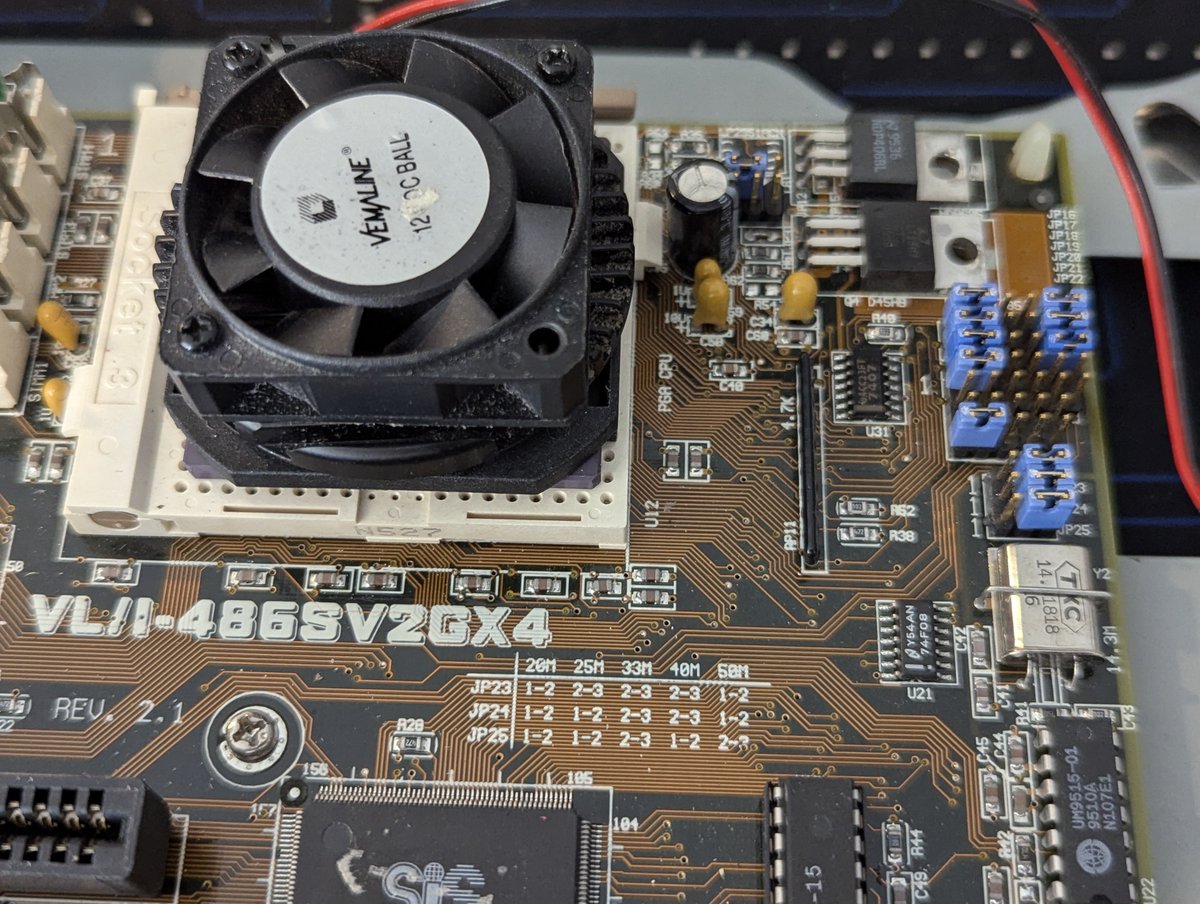
Here's the motherboard! It's an Asus VL/I-486SV2G (GX4). Great board! I've 16MB 72MB SIMMS installed and 256KB Cache.
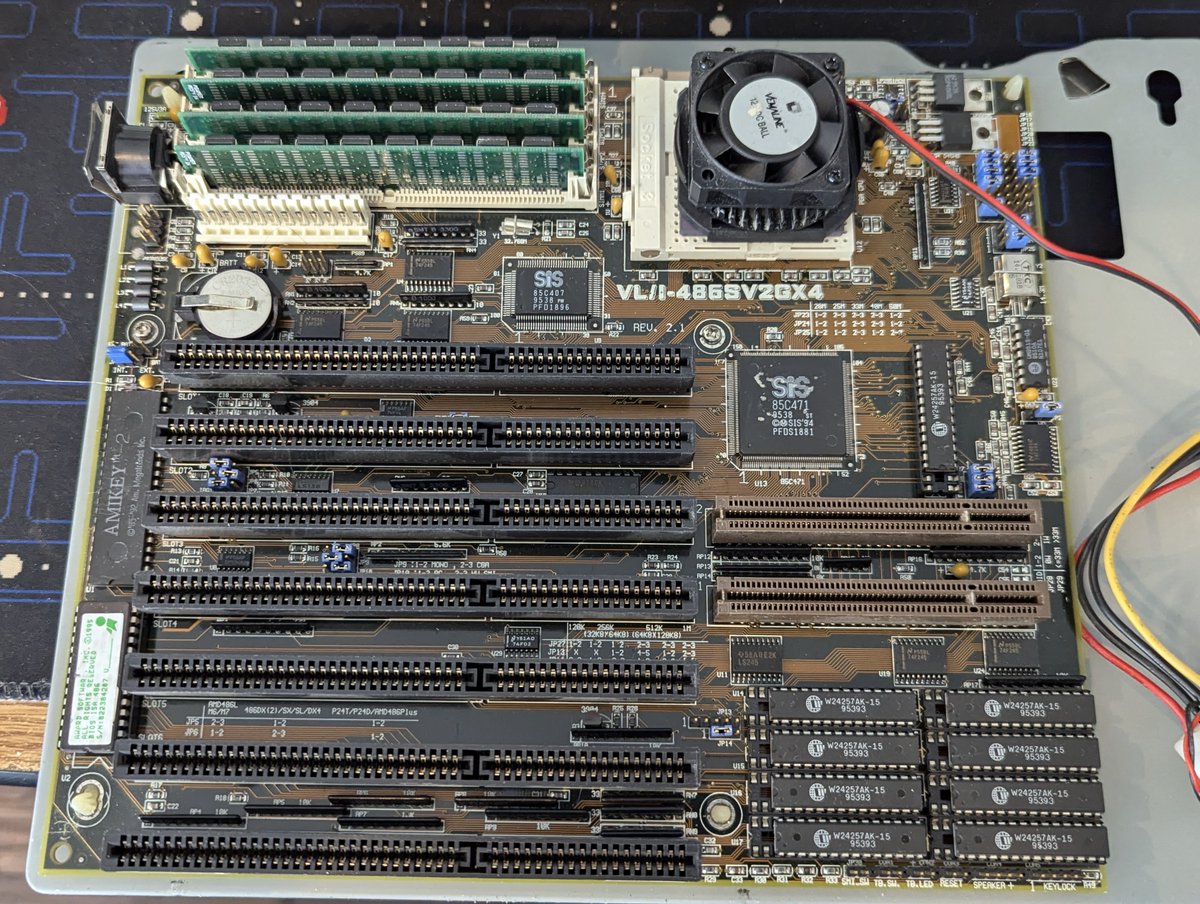
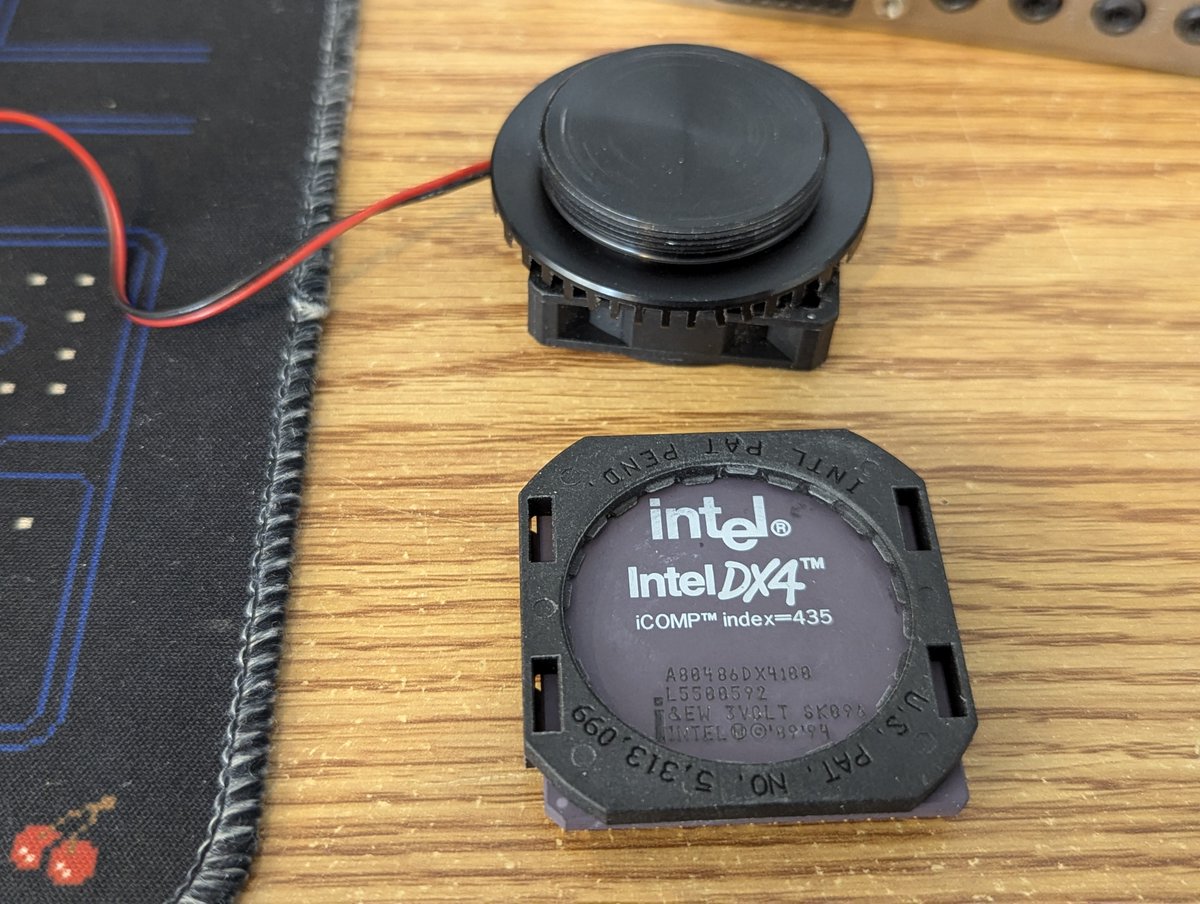
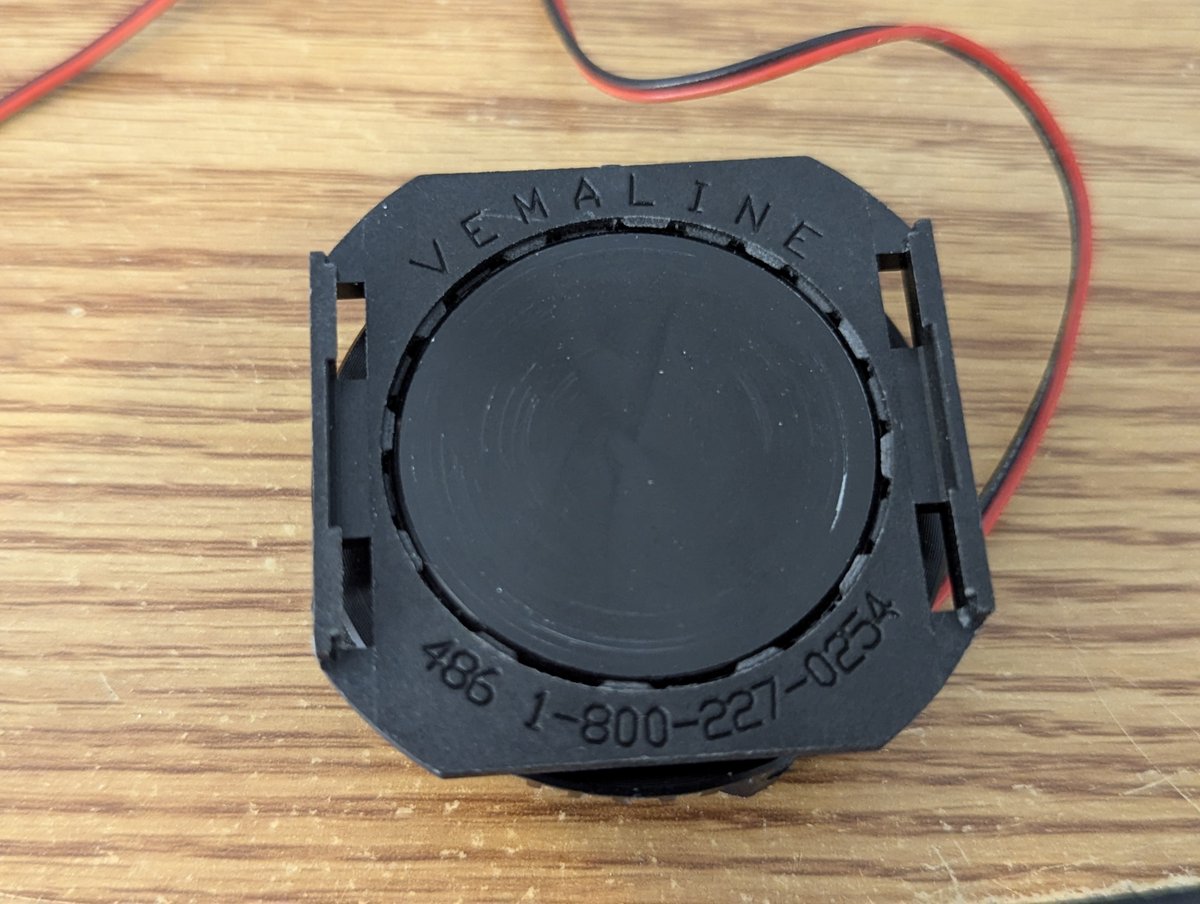
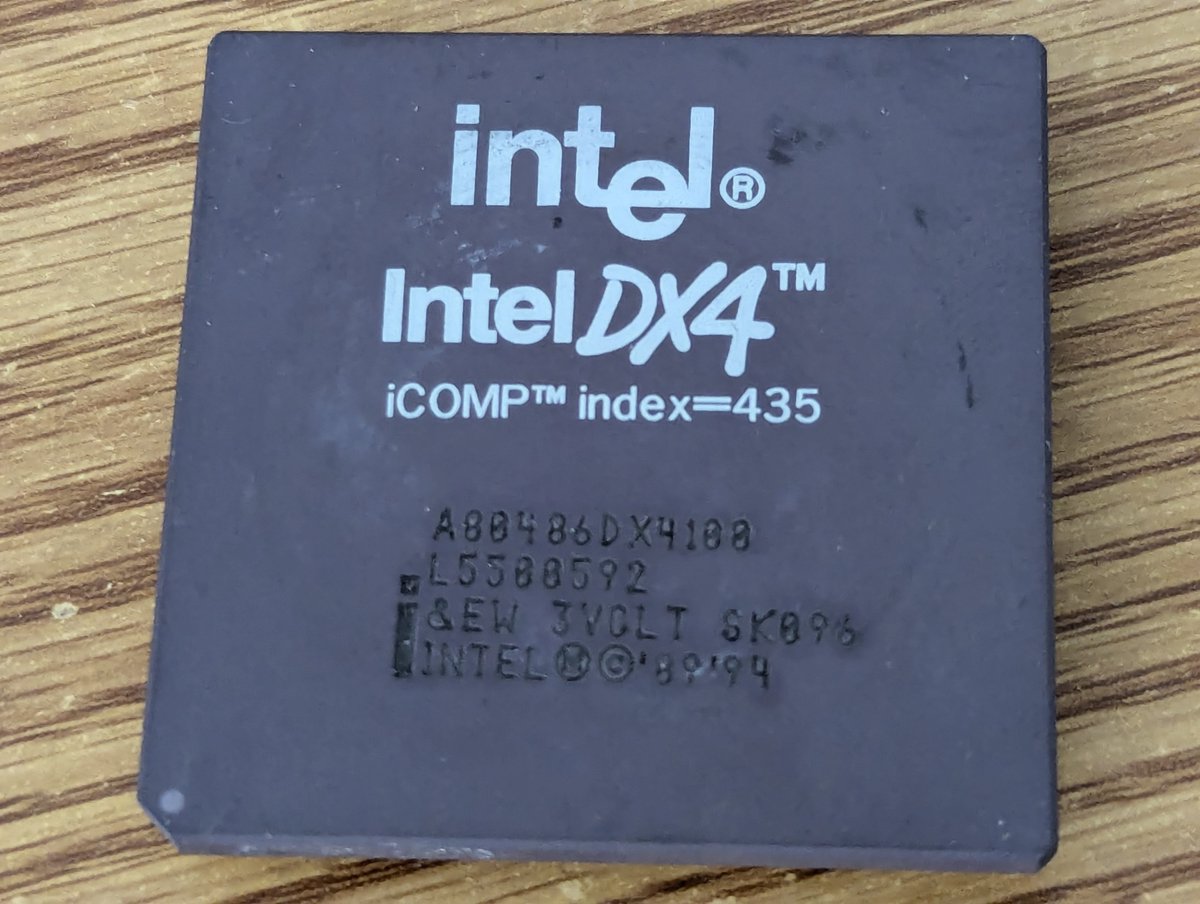
And the processor? An Intel 486DX4/100. The CPU cooler/fan is super cool: it twists on! I love it!
Here are the external drives! A Teac 1.2MB FDD, a Sony CDU311 8X CD-ROM, and some sort of 1.44MB FDD. As for internal, we have a Quantum Fireball 3GB drive (not pictured)
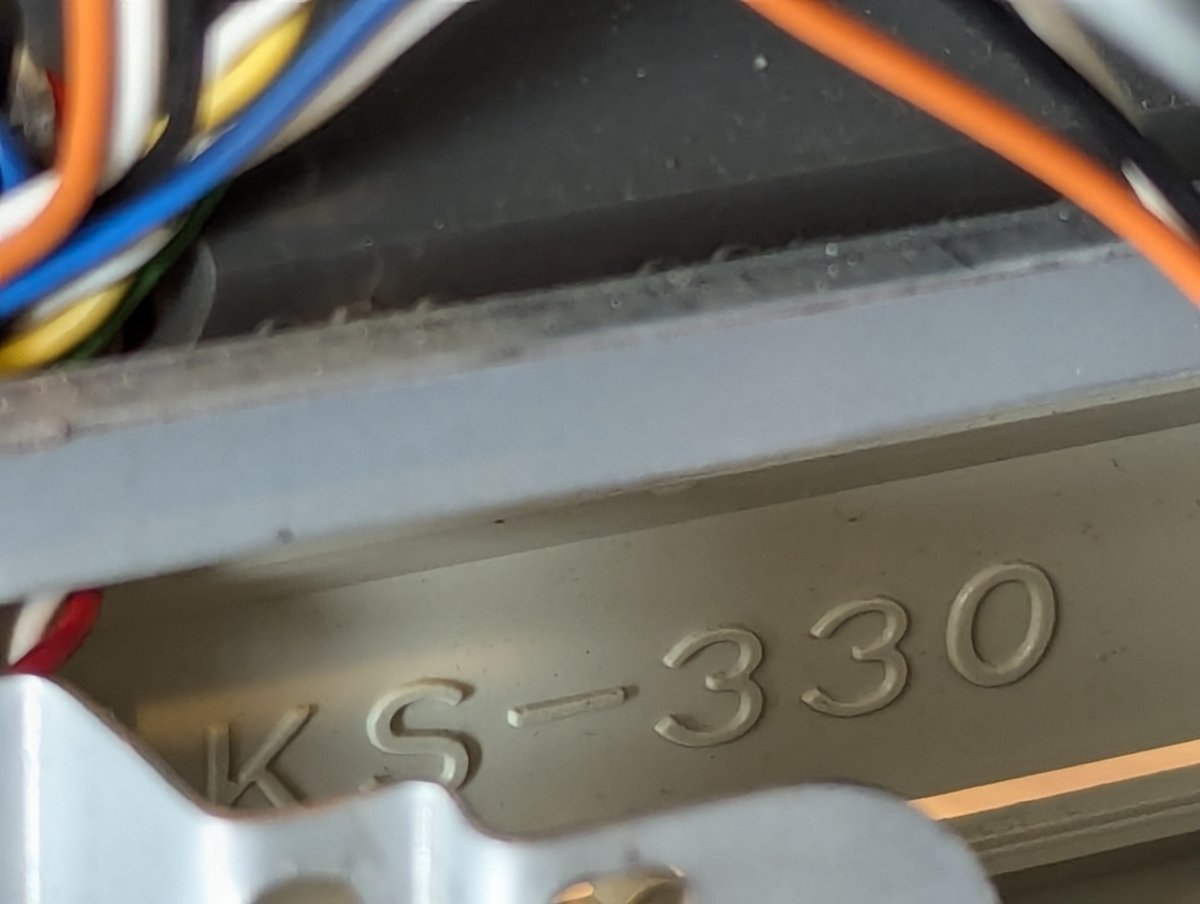
As for the case itself, it's a Macase KS-330. These cases were pretty loved back in the day. Someone even made a 3D printable mini version in modern times for your Raspberry Pi or other device:
So, that's the nickel tour! When I put things back together, I did put the cards in a slightly different order. You do have to juggle a bit given how small this case is: no big ISA cards in the first couple of slots, and putting the NIC in the bottom slot makes the clip tight.
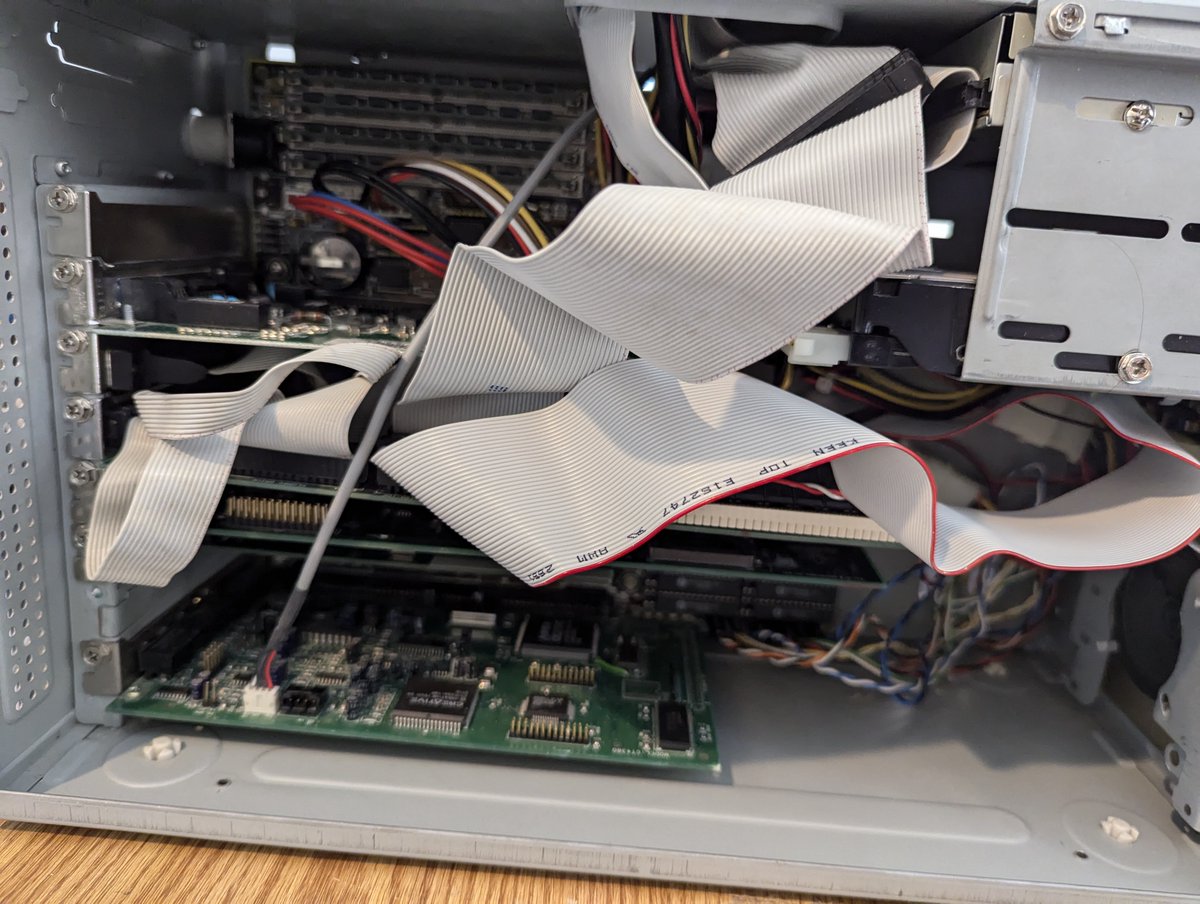
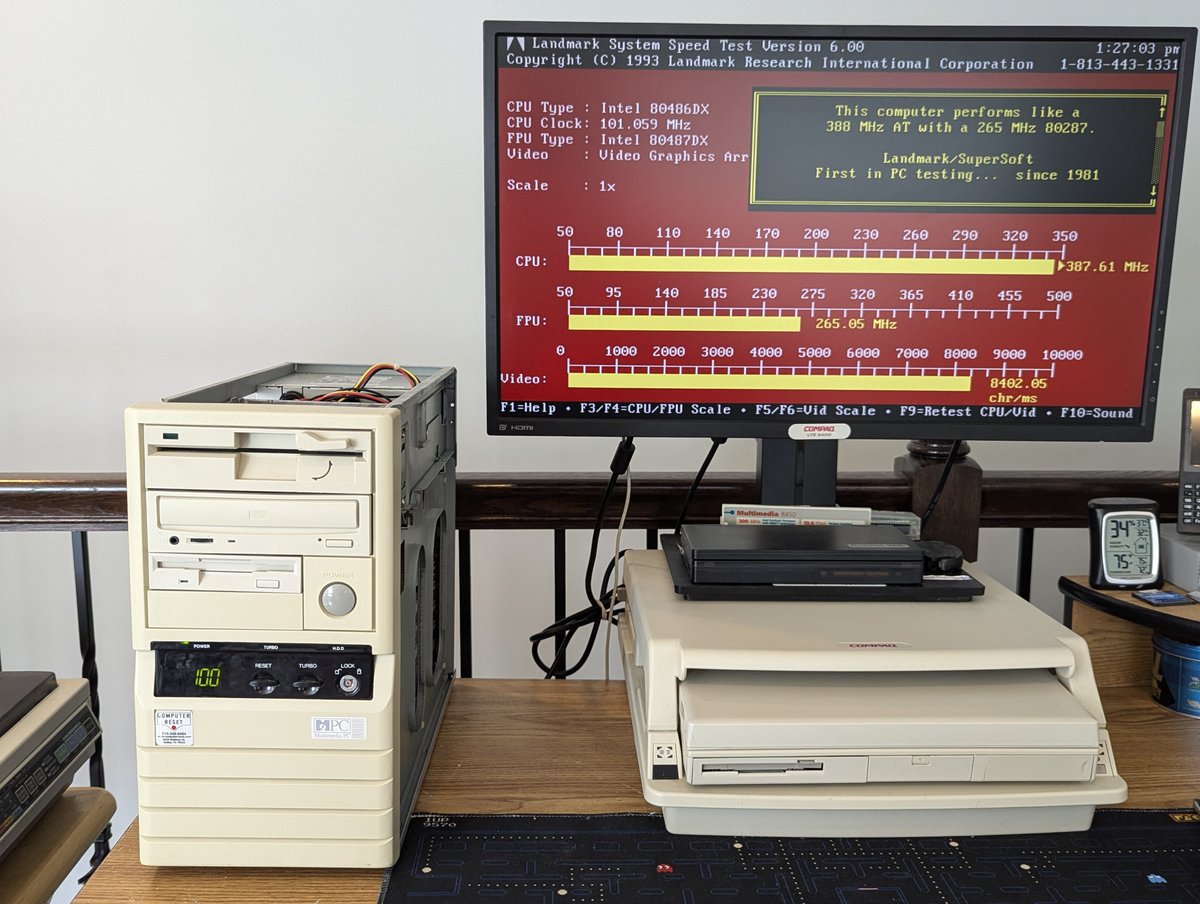
I did take a picture of cable configurations, but wanted to make sure I got the turbo button right, so we ran a quick speed test!
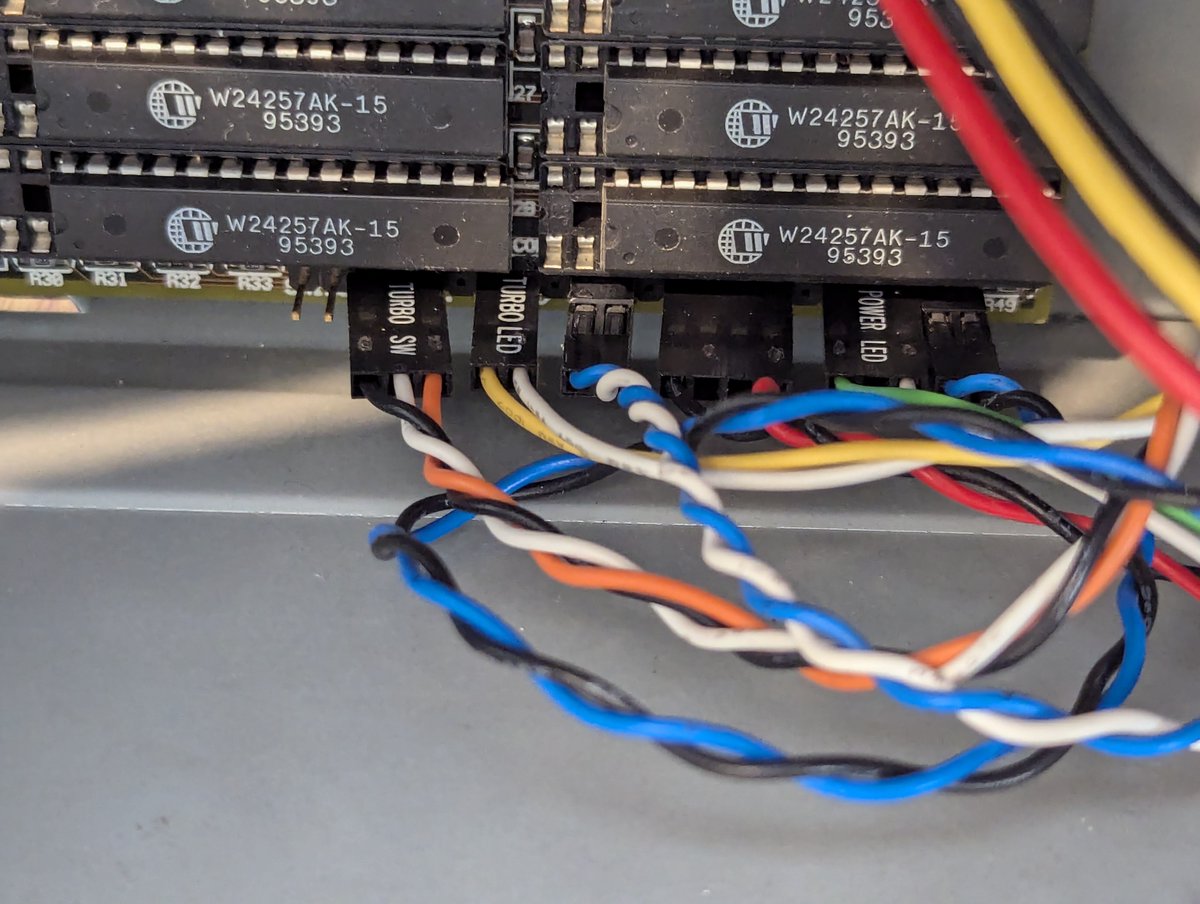
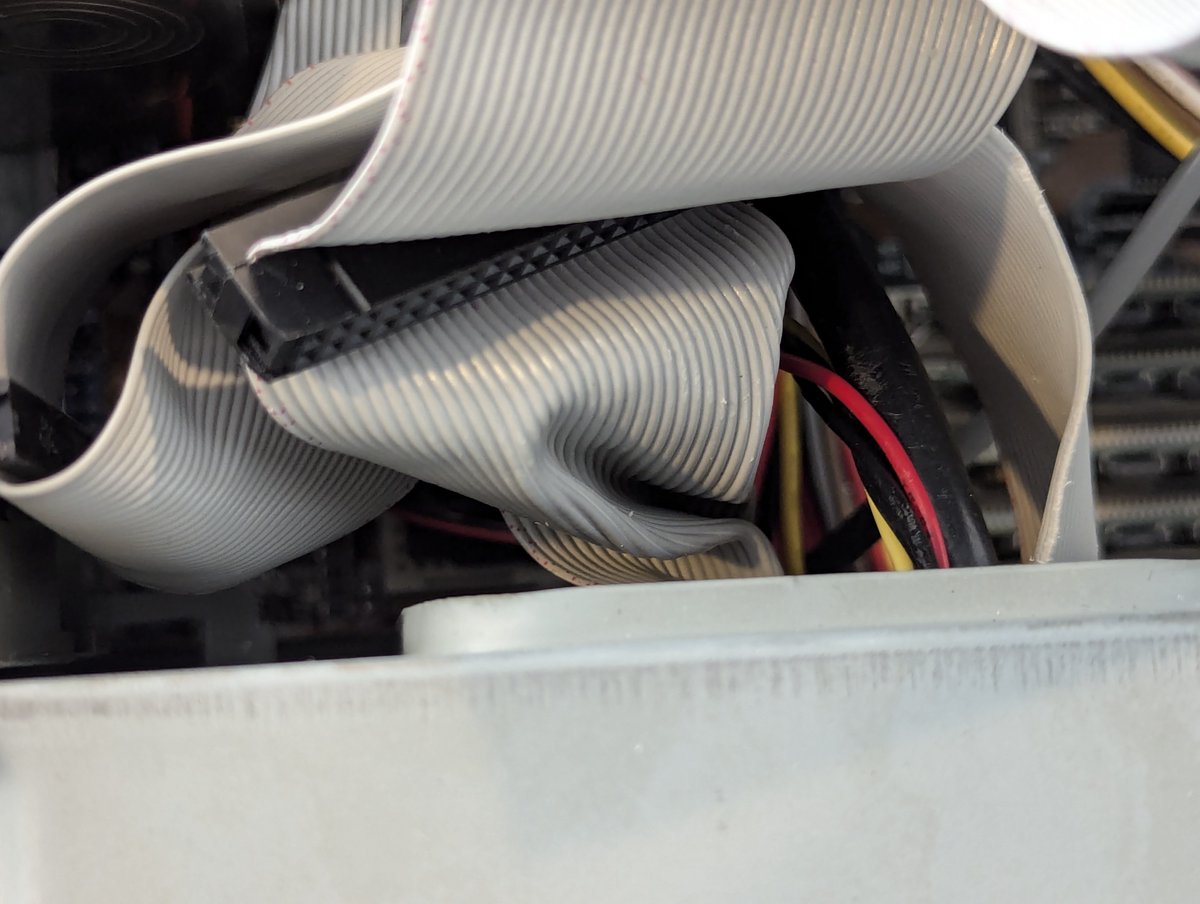
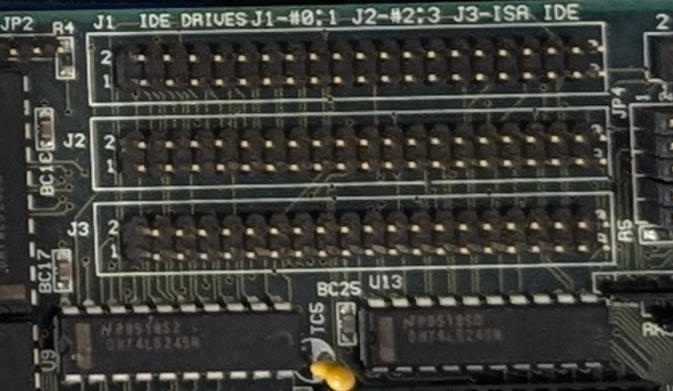
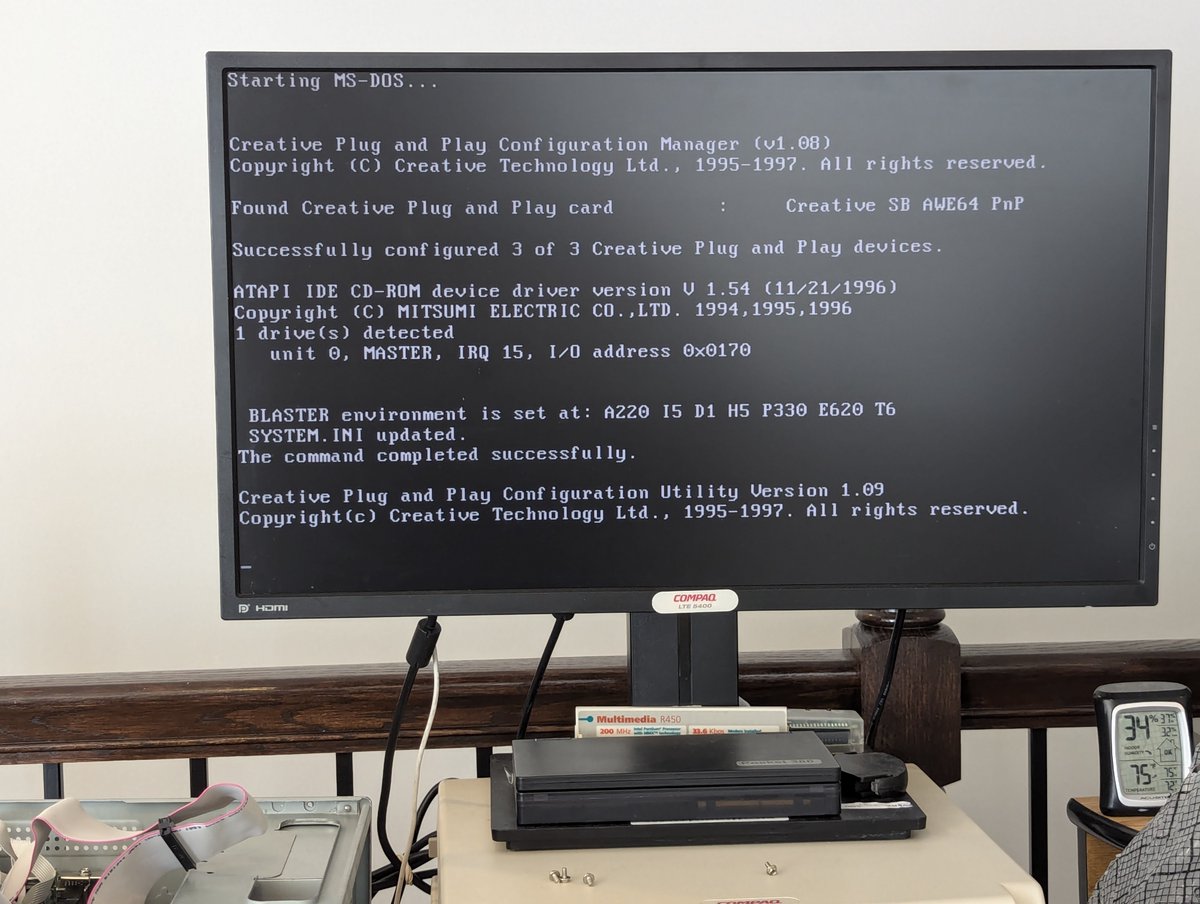
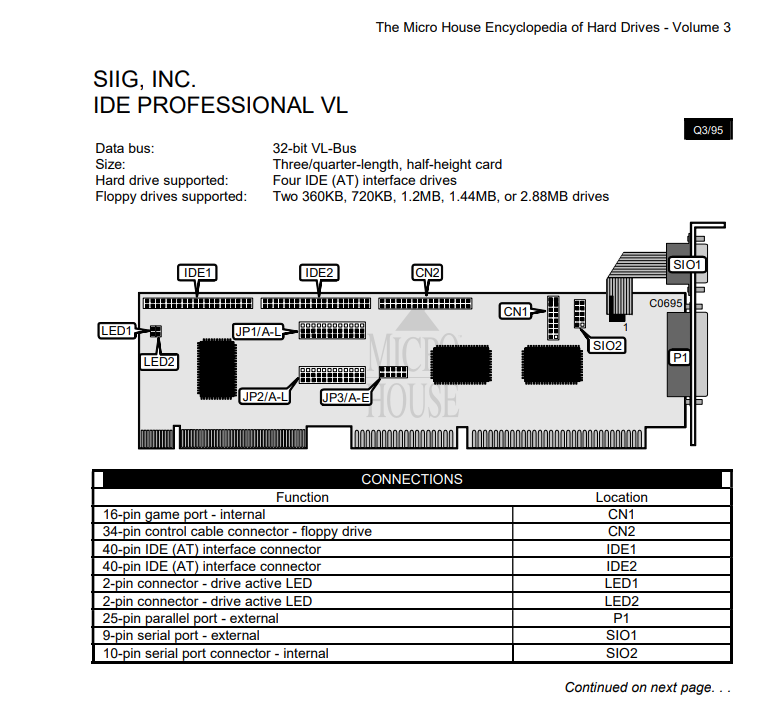
On reassembly, I fought the CD-ROM a bit. At first, I thought it might have been a cable issue since that cable is pretty pinched! I did forget that the CD-ROM needs to be plugged into the "ISA IDE" connector on the Promise card which is the bottom connector here.
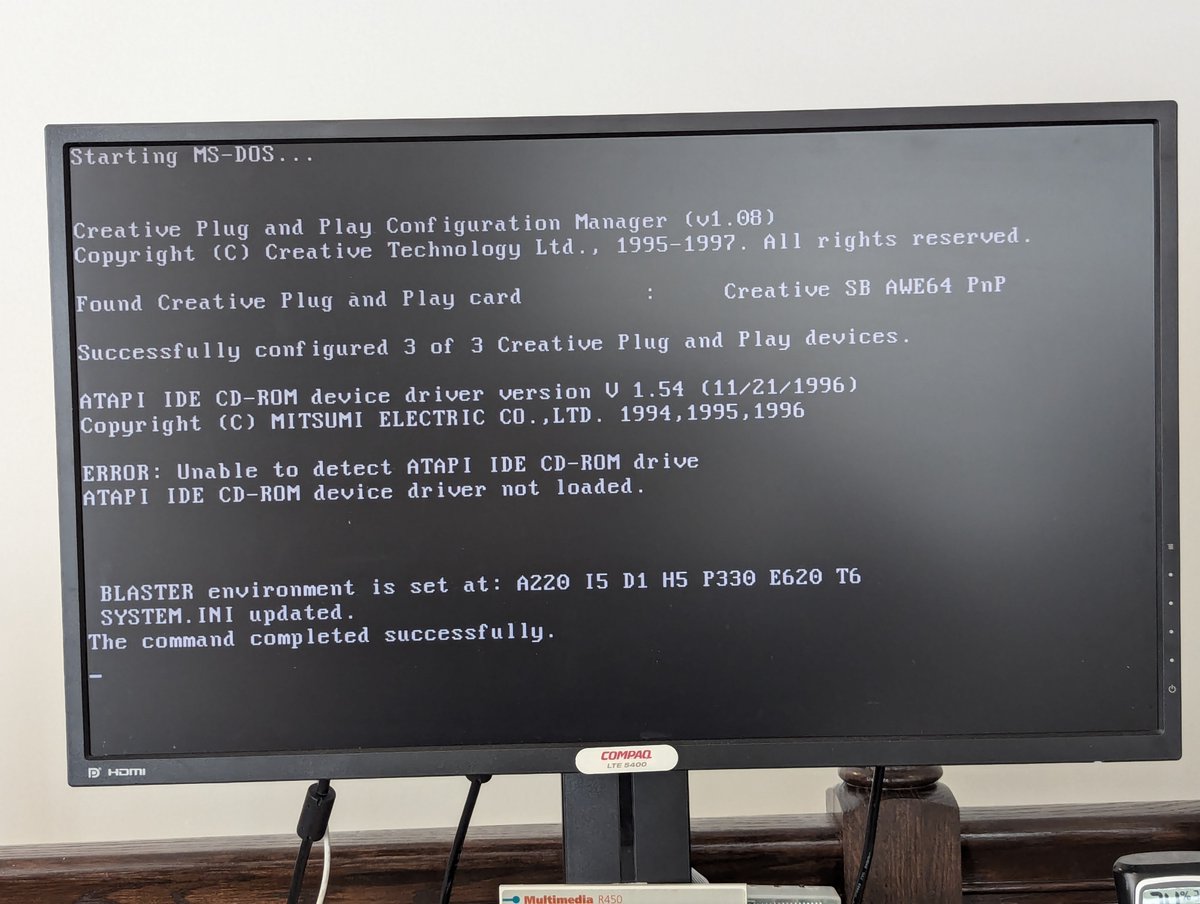
Anyway, the system is now all back together and everything is detected and working great!
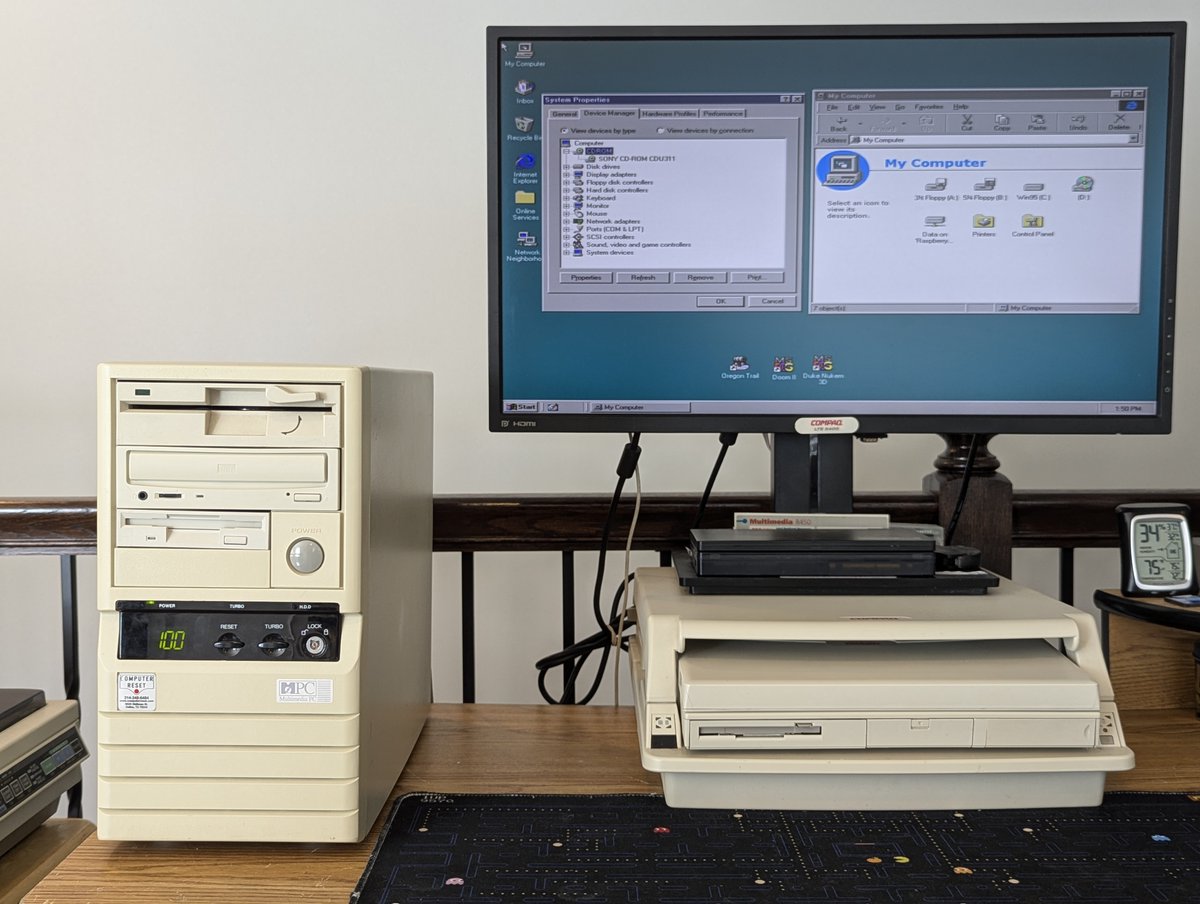
So, the questions I wanted to answered were: what is the voltage on the processor, and what is the type of case (since I had forgotten both, ha!) I believe all 486 DX4/100 CPUs are 3.3V, I could have just looked that up! But this way was more fun 😂
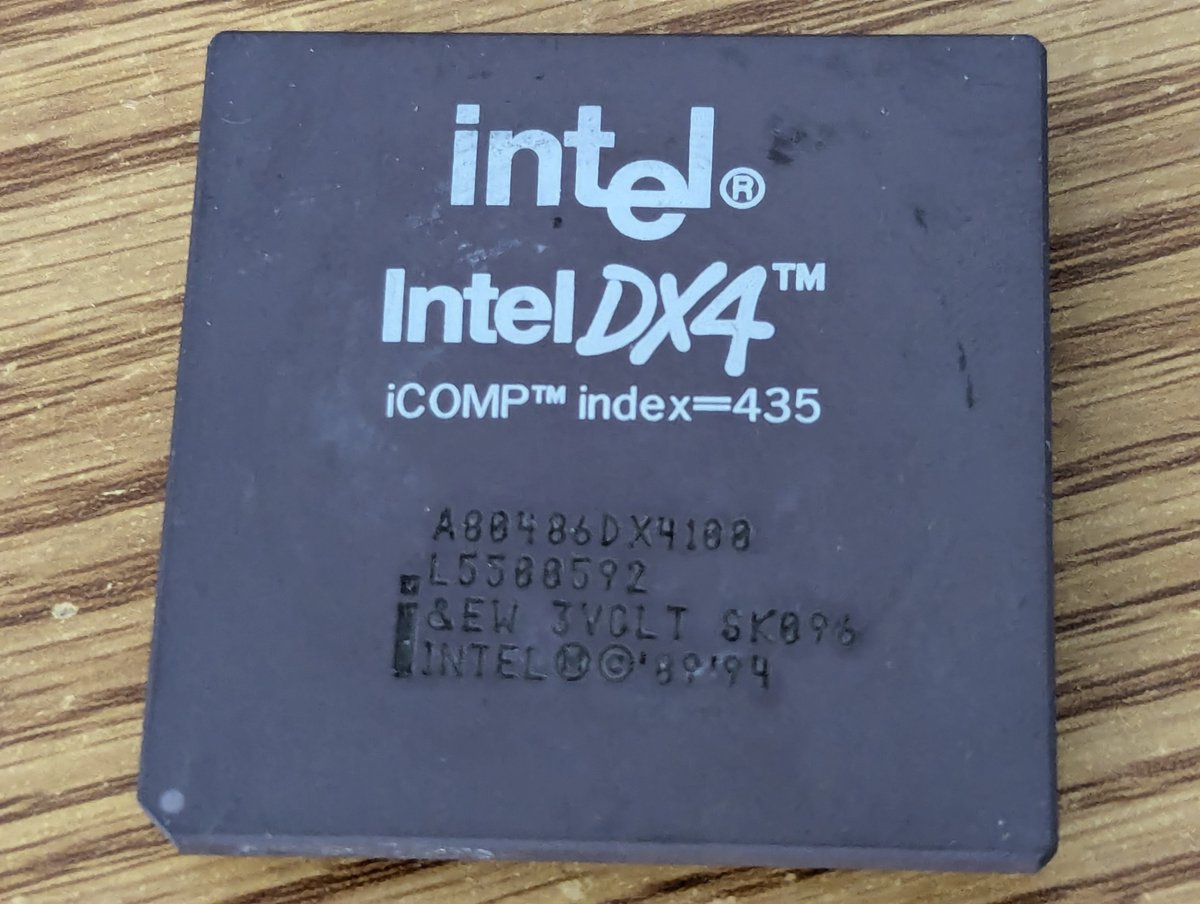
Anyway, that's all for now. Thanks as always for following along!
@threadreaderapp unroll
• • •
Missing some Tweet in this thread? You can try to
force a refresh

Let's talk about my newest PC acquisition, which might be the most budget build ever 🤣. But there was a reason for buying it. I'll cover that... along with a Windows 95 installation, in a 🧵. Let's go!
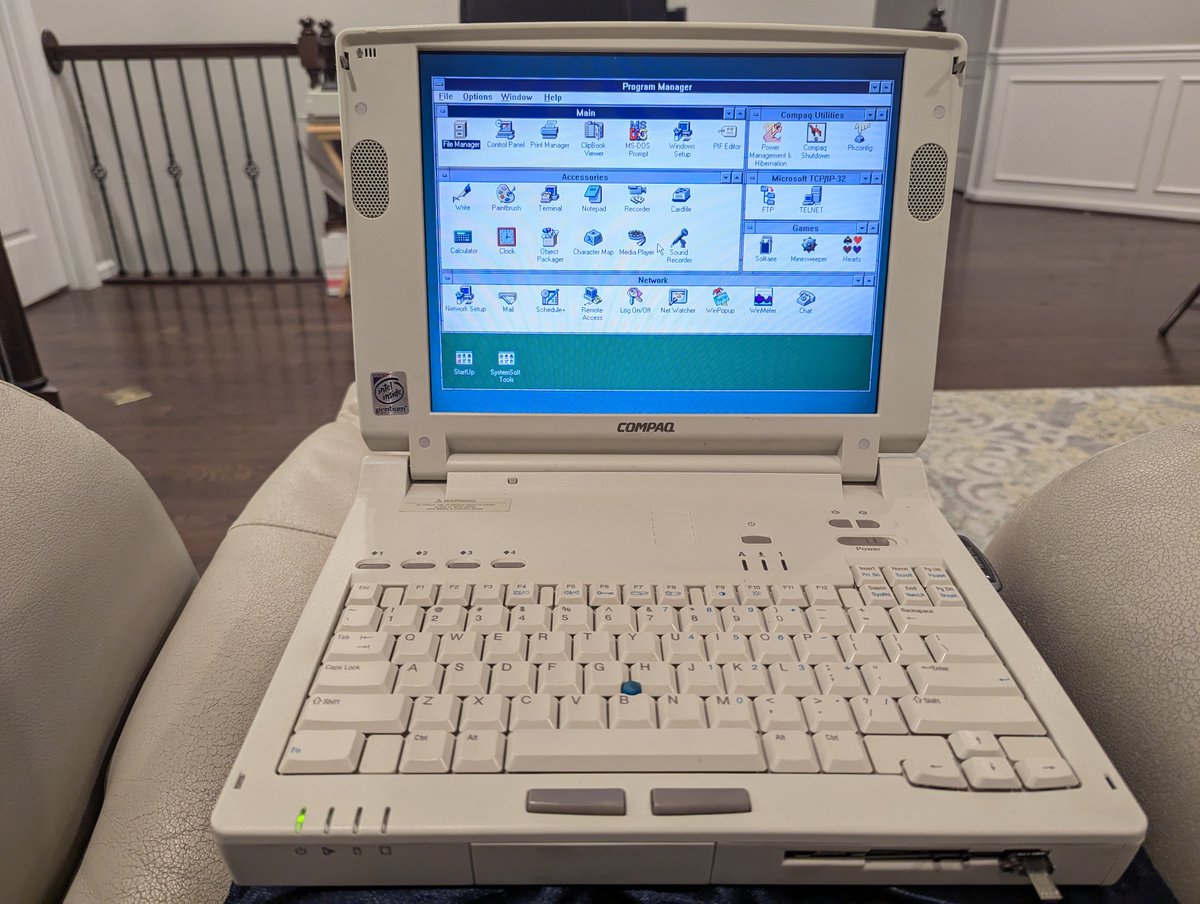
First, why did I buy this? Well, the plan was to do a case swap with another system I had, which had some strange "fit" issues. However, that planned got smashed... literally. So, I thought we might as well explore what's left of this PC!
This system has a PC Chips M748MR motherboard, an Intel Celeron 400 MHz processor, and 16MB of RAM. Yikes! And of course the case is nothing fancy, but is nostalgic for me. But yea, this is the most budget build ever, for sure!
I just watched a video where YouTuber Action Retro set up a web server on a floppy disk using ELKS (the Embeddable Linux Kernel Subset). I thought, I have to try this for myself! Let's talk about it briefly in a 🧵
So, first of all, what is ELKS? It's the Embeddable Linux Kernel Subset, and it will run on a wide range of hardware, including 8088 systems. Pretty wild for a modern product! If you want to read more or try it out, GitHub repo is here: github.com/ghaerr/elks
Alright, let's go. I need to choose a system that will support the networking for ELKS. Turning to the Wiki, as of right now, the network cards supported are NE1000, NE2000, Western Digital 8003, Western Digital 8013, and 3com Ethernet III (3c509). My 486 DX4 has a 3Com 3c509!
I got a new DOS file transfer toy! Now, these have been around since the dawn of time, but let's talk about it: a MicroSD to LPT Printer Port Adapter. We'll give it a test on my Compaq LTE 5400. Time for a 🧵
First, if you are interested in reading about these, there is a thread on Vogons! Included in that thread is where I found the DOS drivers for it, you can go here for that, and to read about this device! vogons.org/viewtopic.php?…
Also, here's a few more perspective shots of it, captured from different angles.
And speaking of the past, here's what I had before today: four cards. These Xircom RealPort Ethernet 10/100 cards are great for getting a laptop without Internet connected to a wired network!
My holiday break is quickly coming to an end. So, I think it's time to power on the retro PCs that I have yet to power on recently. I am sure this will go flawlessly 😂. Let's do most of this, in real time, in a 🧵 here!
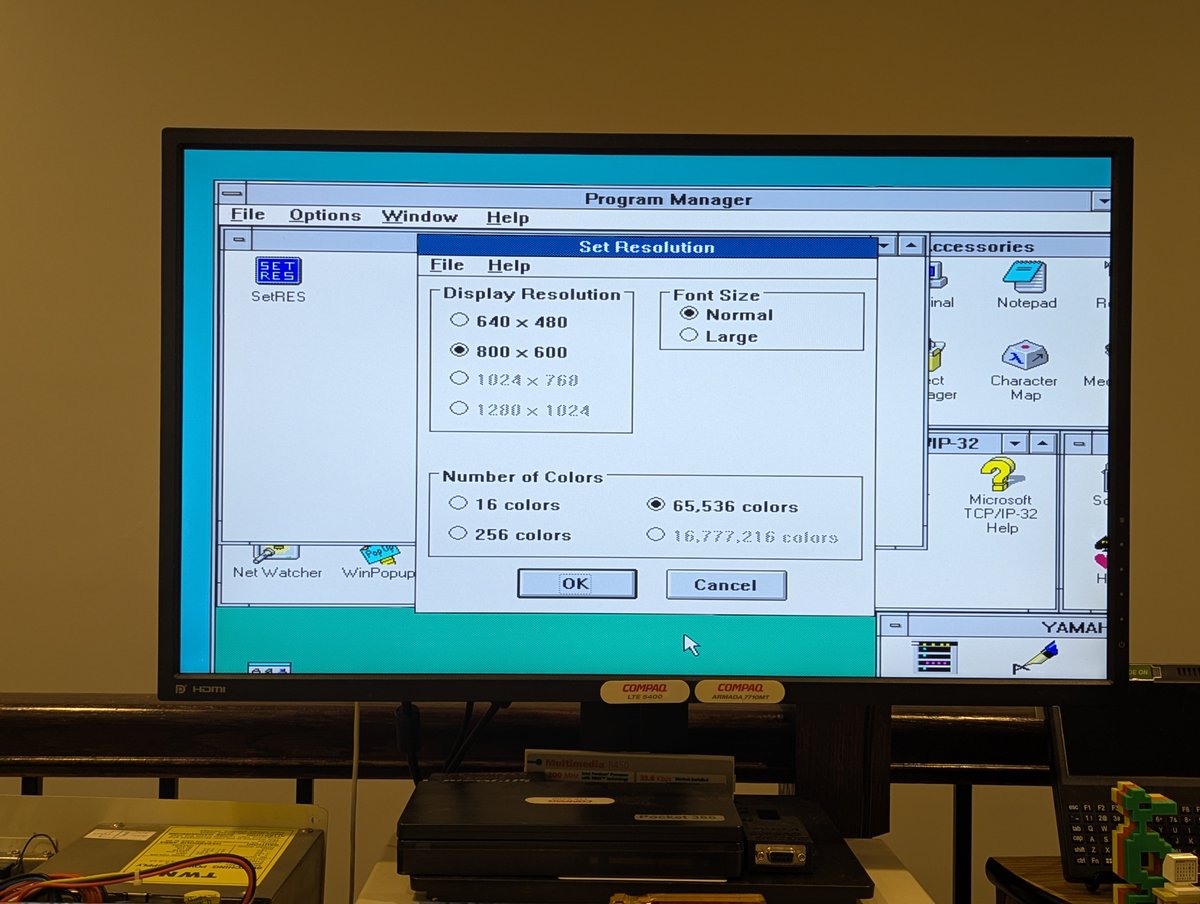
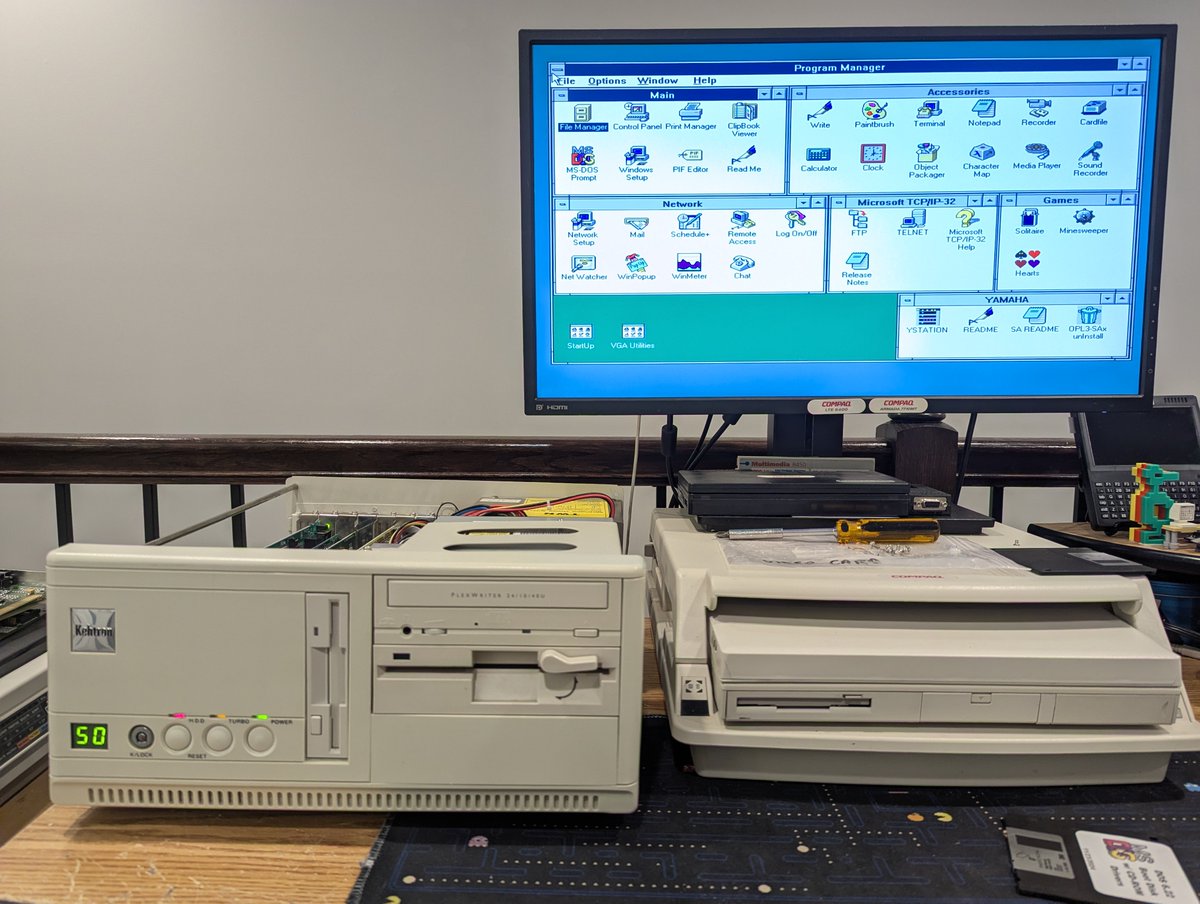
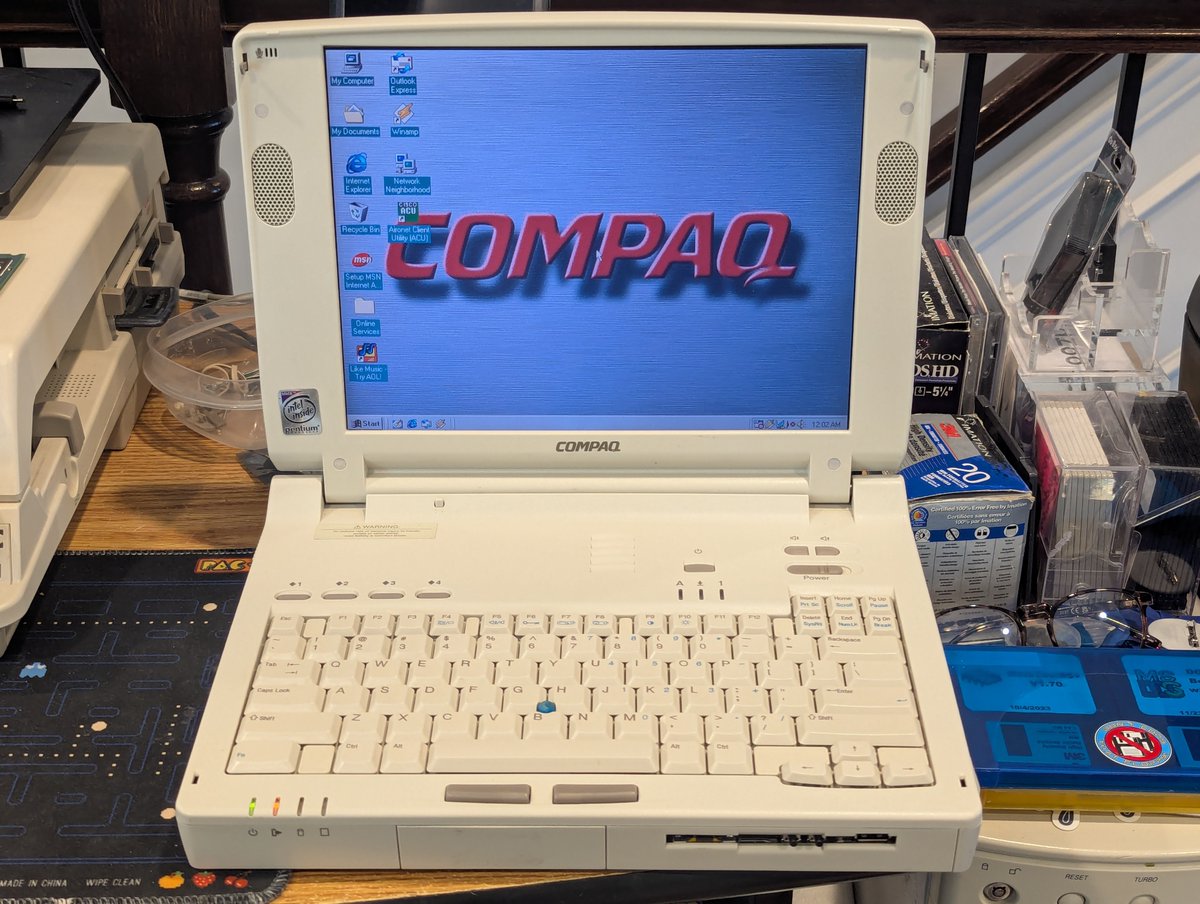
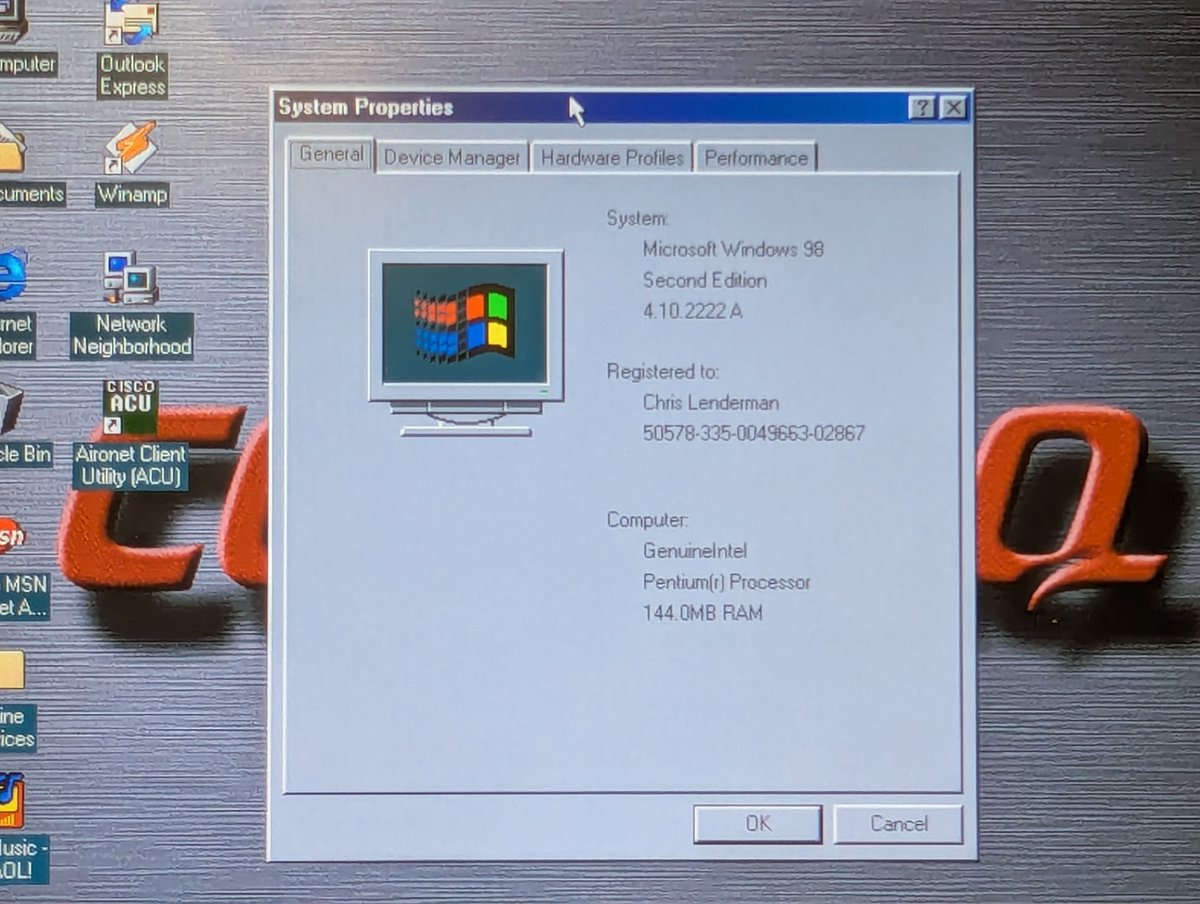
Alright, you've already seen the first three. My trusty, original 486DX4/100 powered right up, as did the Packard Bell Multimedia 601 Pentium 233 MMX
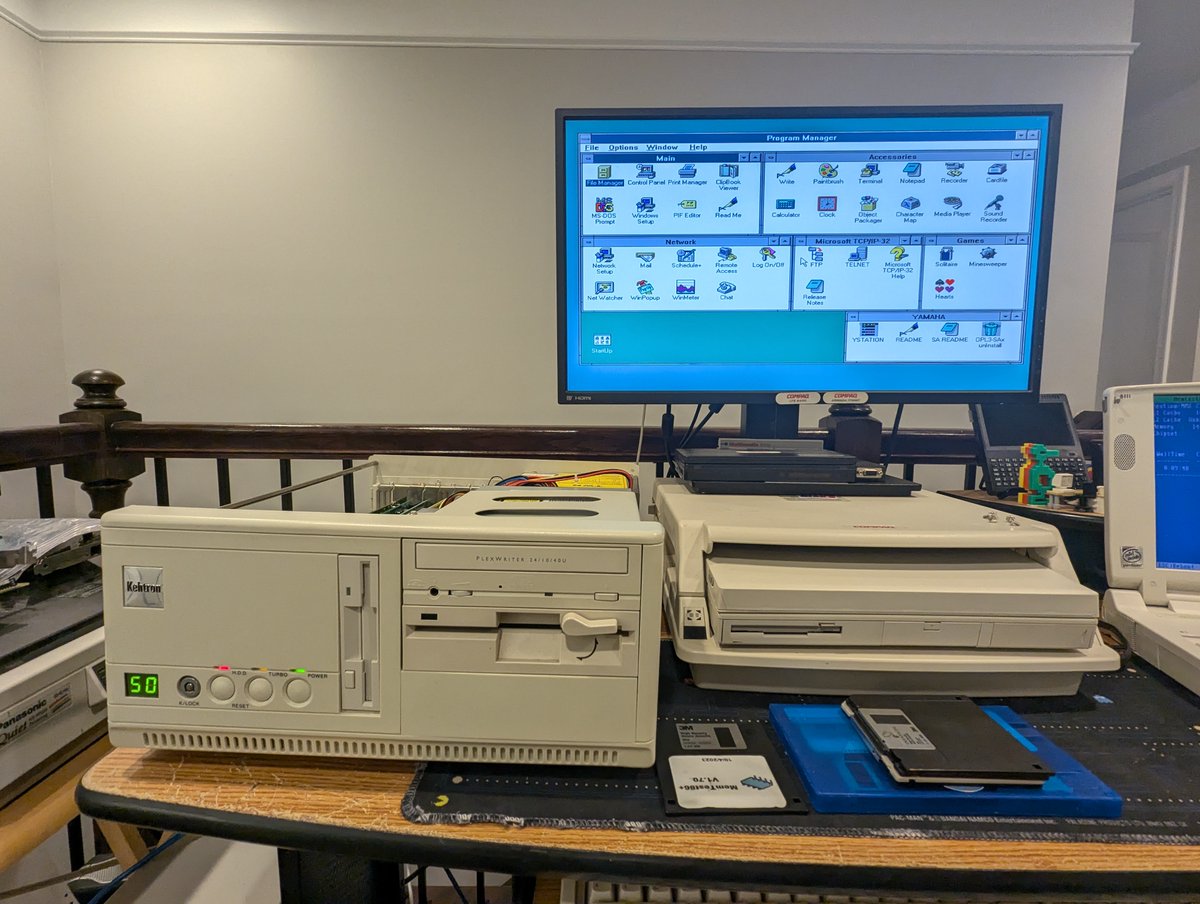
How about the Kehtron 486 DX/50? Weeelll.. the front seven segment display needed reconnected (I really should fix this permanently), and the sound card was being a pain, but I moved it over one slot and it is now working!
The challenges and solutions in retro computing never cease to amaze me, and today's project is no different. Today's goal was getting working storage in this AST Premium Exec 386 laptop. And fortunately, somewhat against the odds, I found one! Let's talk about it in a 🧵 here!
So, anyway, the issue I had with this laptop is that the original 20MB 3.5" IDE hard drive had died. I thought "no problem, I'll pop on eBay and get one." Except they are scarce and expensive. I picked up two 120MB drives and one 40MB drive. None of them worked.
In the past, I had also tried a CF card. I could get the CF cards to a point where they were accessible, but when I go to boot, I get a blinking cursor.. and sometimes a "non system disk or disk error" a few minutes later. Tried multiple CF cards, same result.