At 1,300 KIA/MIA a day, the Russians lose all the ground combat elements of a Russian division a week.
The drop in Russian artillery losses from 70 to 10 a day reflects either fewer tubes being used or an unwillingness to expose tubes w/o heavy drone jamming covering them.
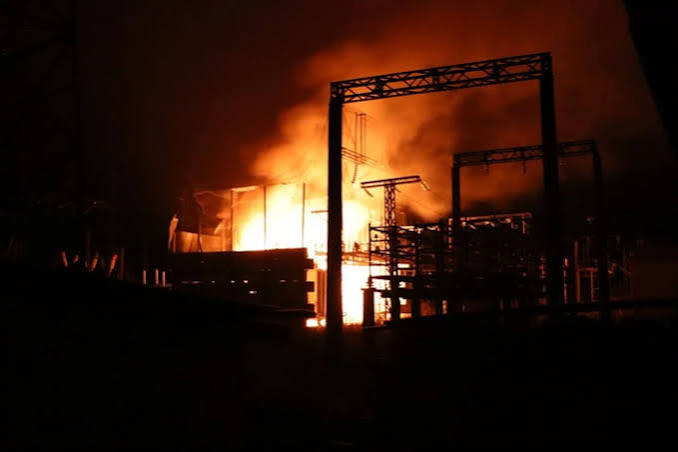
When I've talked about the legacy of Soviet industrial gigantism (one big factory) making Putin era Russia far more vulnerable to a drone strategic bombing campaign.
I've talked about this vulnerability in a couple of previous threads. Here is a shorter one:
Putin's decades long "Russian exceptionalism" propaganda campaign, that says WW2 was won on the Eastern Front, has made Russians incapable of seeing this.
There is so much to object to here that I'm going to restate some basic design observations on the FP-5 to clarify how the Russian reflexive control data fed AI slop that is polluting public discussions of the FP-5.
1. The FP-5 Flamingo is about four times the launch weight of a BGM-109 Tomahawk (i.e. ~13,200 lb), and 2-3 times the range (i.e. ~1,620 nmi) while carrying twice the warhead mass (i.e. ~2,000 lb).
2/
2. The FP-5 design concept is modelled on the USAF MGM-13 Mace GLCM as Fire Point told Ukrainian military analysts - but designed with modern technology to be extremely cheap to make (claimed 1/6 the cost of a Tomahawk - likely not counting the engine cost).
The first thing that needs to be pointed out is that in 2026 Ukraine has not only replicated, but likely exceeded, the 2018 capabilities of the USAF's Stand-off Munitions Activity Center (SMAC) at at Barksdale AFB.
Electronic warfare is always a "saving throw" with an expiration date for the defense.
Plus no one in the world, since 1989, has invested in enough mobile guns for robust AA-combined arms to screw up the simple arithmetic of a saturation drone/missile attacks.
2/
Russia burned out Ukraine's considerable stocks of 5V55 SAMs (~3,300 rounds), 9M83 SAMs (~1,000) and 9M38 SAMs (~800) by repeat saturation attacks.
Ukraine returns the favor. This is not that difficult to grasp.
Saturation attacks were central to legacy Soviet doctrine.
3/
We have just seen over Moscow today - with Ukrainian drones - the Russo-Ukrainian War's version of the RAF’s first 1,000-bomber raid of World War II, codenamed Operation Millennium, which took place on the night of May 30–31, 1942.
Operation Millennium, marked the first tactical deployment of the RAF "bomber stream".
That is, the tactic of flying a dense, tightly timed formation along a narrow corridor to overwhelm German radar networks and anti-aircraft defenses of the Kammhuber line. 2/3
When I look at the design of the air defense rings around Moscow.🧐⬇️
I can't help but think Ukraine used a 2026 "Drone Stream' to saturate one sector of these ring defenses like the RAF did to the Kammhuber line.
The Soviets built their industrial plants to minimize transportation impact on its railway system, and later, it's trucking.
This 2013 time stamped Jon Parshall presentation on WW2 US vs German Vs Soviet tank industries underlines this Soviet reality
2/
In the 1950's and 1960's the CIA and Strategic Air Command (SAC) Single Integrated Operational Plan (SIOP) targeting planners discovered this quirk of the Soviet centralized economy.