arctotherium Profile picture
Sep 2, 2024 8 tweets 3 min read Read on X
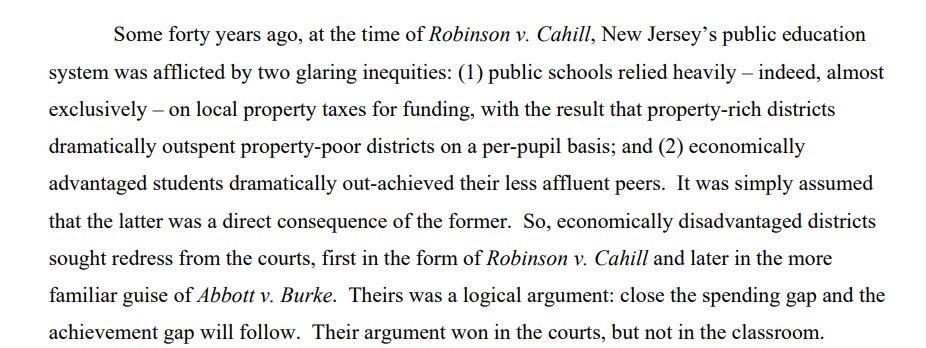
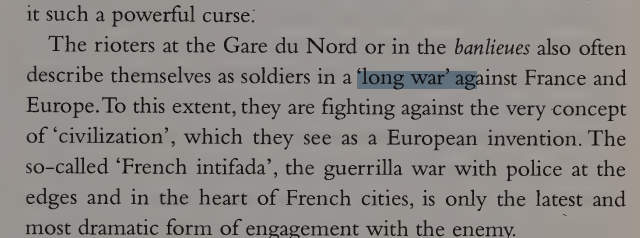
In 1985, the Supreme Court of New Jersey issued Abbot v Burke, which determined that existing methods of school funding, relying on local property taxes, were unconstitutional and deprived underprivileged (read: black) students of their right to an equal education (1/7).Image
In 2010, the so-called Abbot districts, which benefited from the decision, received $18,850/student, $3100 more than the state average, overwhelmingly paid for by taxpayers located outside of these districts. Local tax intakes actually dropped (1973-2010) in real terms! (2/7) Image
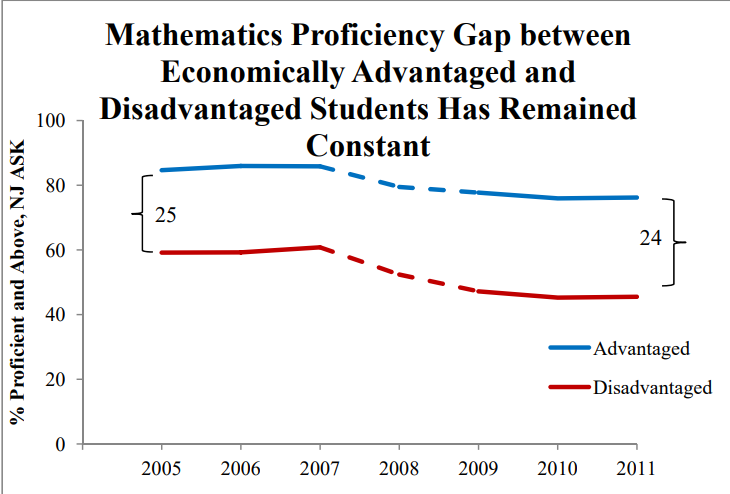
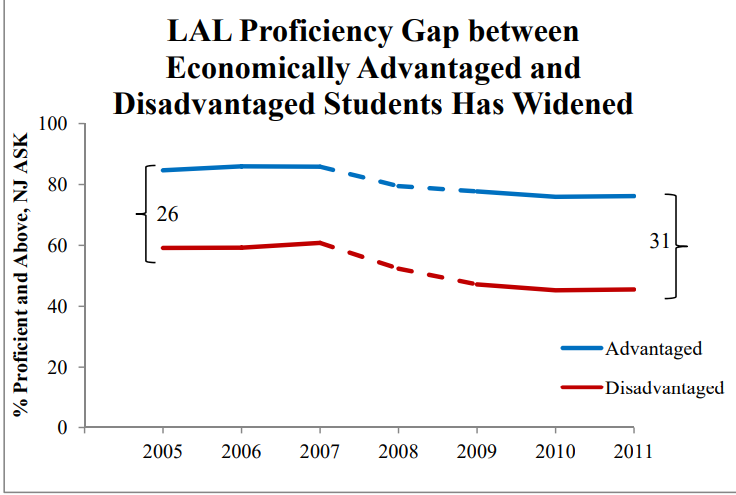
Needless to say, this judicially-mandated colossal increase in funding for these districts (spending nearly tripled in real terms, from $7000 to $18,850/student in 2010 dollars 1973-2010), paid for by other NJ taxpayers, did not close the achievement gap in the slightest (3/7). Image
Image
Image
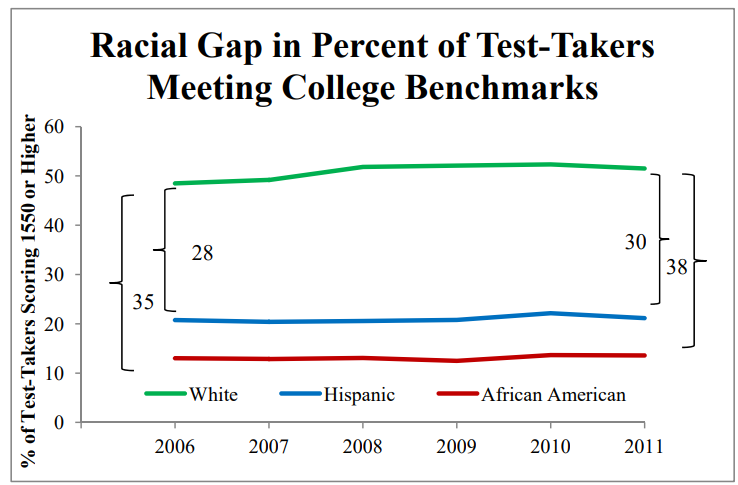
The most egregious example is Asbury Park, which in 2010 spent $23940/student ($34500 in 2024 dollars), without a single SAT taker reaching college readiness. This is because the race gap between whites/Asians and blacks/Hispanics is particularly large in New Jersey (4/7).Image
Abbot and its consequences are a great showcase of the following:
1) The big "Civil Rights" victories of the 70s/80s were mostly judicially mandated, not legislated, and based on totally false premises (in this case, that school achievement is mostly a function of money). (5/7) Image
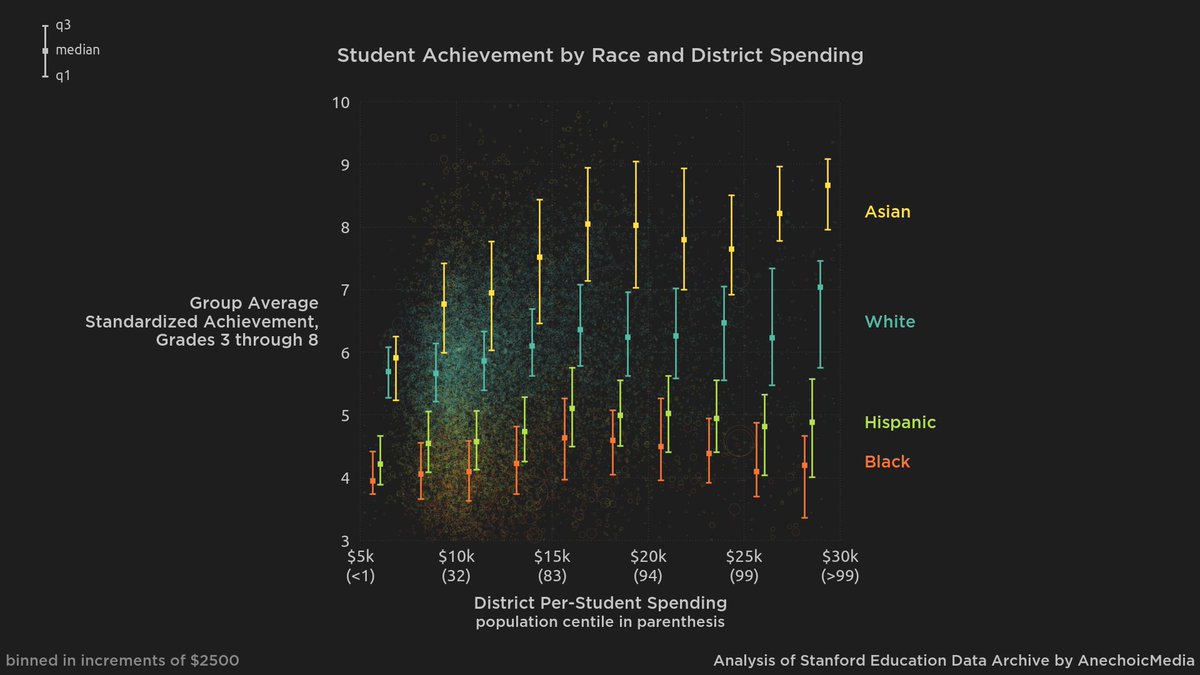
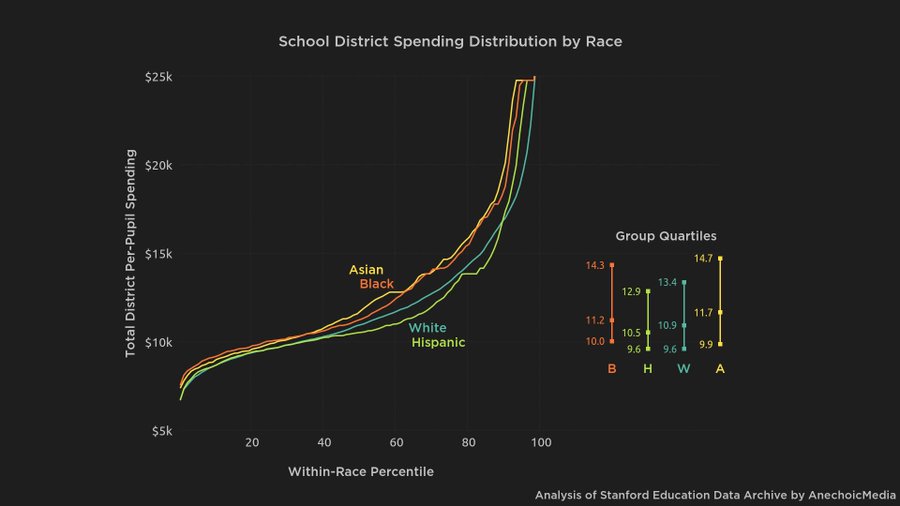
2) Black school districts are not "underfunded". Both in New Jersey and in the country, they have more money than their wealthier and whiter peers, not less, paid for by enormous transfers from wealthier, whiter taxpayers. Chart from @AnechoicMedia_. (6/7) Image
3) It's yet another impressive demonstration of the fact that, in the 20th/21st century United States, educational outcomes have very little to do with money. We should stop trying to spend our way to intelligence - or do so in a way that might work, like embryo selection. (7/7)
Source: . Written in 2012, and there's some humorous-with-the-benefit-of-hindsight optimism about "education reform" closing the gap where spending did not. The Wikipedia article on Abbot districts is also good.nj.gov/education/stat…

• • •

Missing some Tweet in this thread? You can try to force a refresh

 

Keep Current with arctotherium

arctotherium Profile picture

Stay in touch and get notified when new unrolls are available from this author!

Read all threads

This Thread may be Removed Anytime!

PDF

Twitter may remove this content at anytime! Save it as PDF for later use!

Try unrolling a thread yourself!

how to unroll video
  1. Follow @ThreadReaderApp to mention us!

  2. From a Twitter thread mention us with a keyword "unroll"
@threadreaderapp unroll

Practice here first or read more on our help page!

More from @arctotherium42

Jun 25
Employers hiring people and then training them in the specific skills they require has declined as a hiring model for decades, in favor of a hiring market where employers look for people who already have those skills. Image
Image
In the training/internal labor markets model, a company struggling to find specific skills will train promising entry-level employees. In the hiring market model, they can raise wages or otherwise improve conditions. In both, they can also substitute technology for labor. Image
Neither a hiring market nor training model for matching jobs to seekers is compatible with "skill shortages" as a concept, which implicitly assumes skills are fixed and once people with those skills run out employers can do nothing (except through immigration or schooling). Image
Read 4 tweets
Jun 24
"Fire and Blood: A History of Mexico" (TR Fehrenbach, 1973/1995) thread of threads. Mesoamerican civilization was horrifying and very backwards by Old World standards, but unique.
Read 13 tweets
Jun 24
Excerpts from TR Fehrenbach's "Fire and Blood: A History of Mexico" (1995). The PRI had massively expanded higher education. These universities were entirely 'free'/self-governing and became locuses of left-wing organizing. Image
Image
In 1968, security forces fired upon a massive student demonstration/riot against the Olympic Games. Image
By 1970 Mexico had made enormous progress; the national income increased sixfold while the death rate dropped by half. But Mexico was still struggling with foreign-exchange; the govt pursued import-substitution to improve balance-of-payments. Image
Image
Image
Read 13 tweets
Jun 24
Thread with excerpts from the Partido Nacional Revolucionario (PNR) section of TR Fehrenbach's "Fire and Blood: A History of Mexico" (1995). Calles created the PNR in 1929 to institutionalize the govt and Revolution, creating a Mexican party-state. Image
The Calles/Obregon governments were corrupt, but never succumbed to paranoia; there was no equivalent to the Soviet or Chinese liquidations of class enemies, the press was free, and the average Mexican had nothing to fear from the govt (Red Terror against the Church aside). Image
Roughly 19M acres were redistributed through 1933; most land remained with latifundios. But the new latifundios were not like the old ones, they were commercial enterprises rather than social systems. The clerics, army, and latifundistas were all tamed by Calles/Obregon. Image
Read 25 tweets
Jun 24
Thread with excerpts from TR Fehrenbach's "Fire and Blood: A History of Mexico" (1995), on post-Revolutionary Mexico. To justify land reform, the revolutionaries revived the principle that expropriation was justifiable if the national interests demanded it. Image
Image
The Constitutionalists defeated the Villistas in battle and assassinated the leader of the last revolutionary faction, Zapata, by treachery. Image
Carranza, the erstwhile leader of the victorious Constitutionalists, dug his own grave by trying to promote someone other than Obregon to the presidency after him; he was forced to flee the capital, run down, and murdered. Image
Image
Read 15 tweets
Jun 22
Excerpts from TR Fehrenbach's "Fire and Blood: A History of Mexico" (1973). The Porfiriato gave Mexico a generation of stability and development for the first time since independence. This left Mexico overdue for another civil war: the Mexican Revolution.
One problem was that the Porfirian school system had created a large, literate middle structure (not class). These educated mestizos became dissatisfied due to lack of opportunity; growth was rapid but not rapid enough to absorb them all. Image
The Revolution kicked off in 1910, when Diaz announced he'd won reelection with 99% of the vote. This kicked off an insurgency in Chihuahua, in the mestizo, frontier north. Image
Image
Read 26 tweets

Did Thread Reader help you today?

Support us! We are indie developers!


This site is made by just two indie developers on a laptop doing marketing, support and development! Read more about the story.

Become a Premium Member ($3/month or $30/year) and get exclusive features!

Become Premium

Don't want to be a Premium member but still want to support us?

Make a small donation by buying us coffee ($5) or help with server cost ($10)

Donate via Paypal

Or Donate anonymously using crypto!

Ethereum

0xfe58350B80634f60Fa6Dc149a72b4DFbc17D341E copy

Bitcoin

3ATGMxNzCUFzxpMCHL5sWSt4DVtS8UqXpi copy

Thank you for your support!

Follow Us!

:(