PMC COVID-19 Forecasting Model, Sep 23, 2024
🧵 1/8
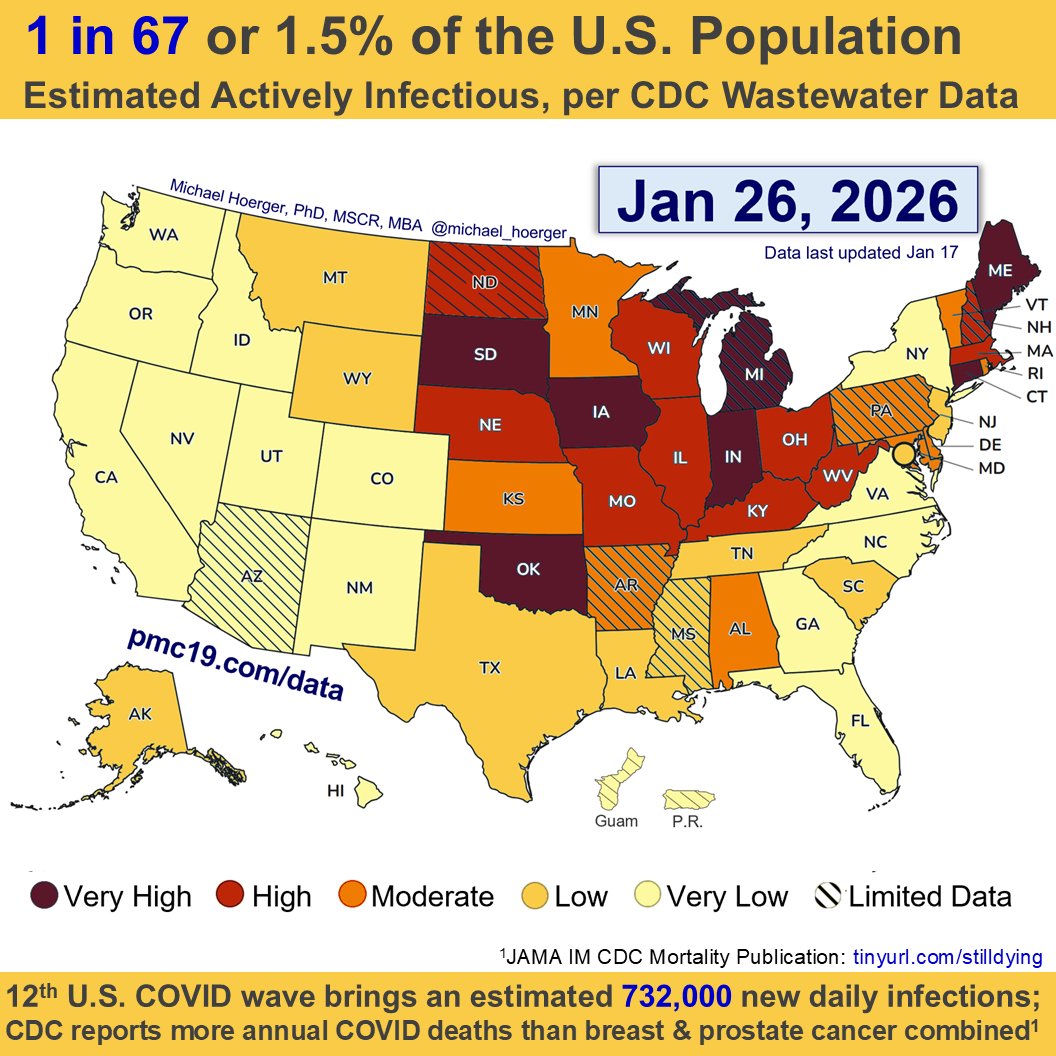
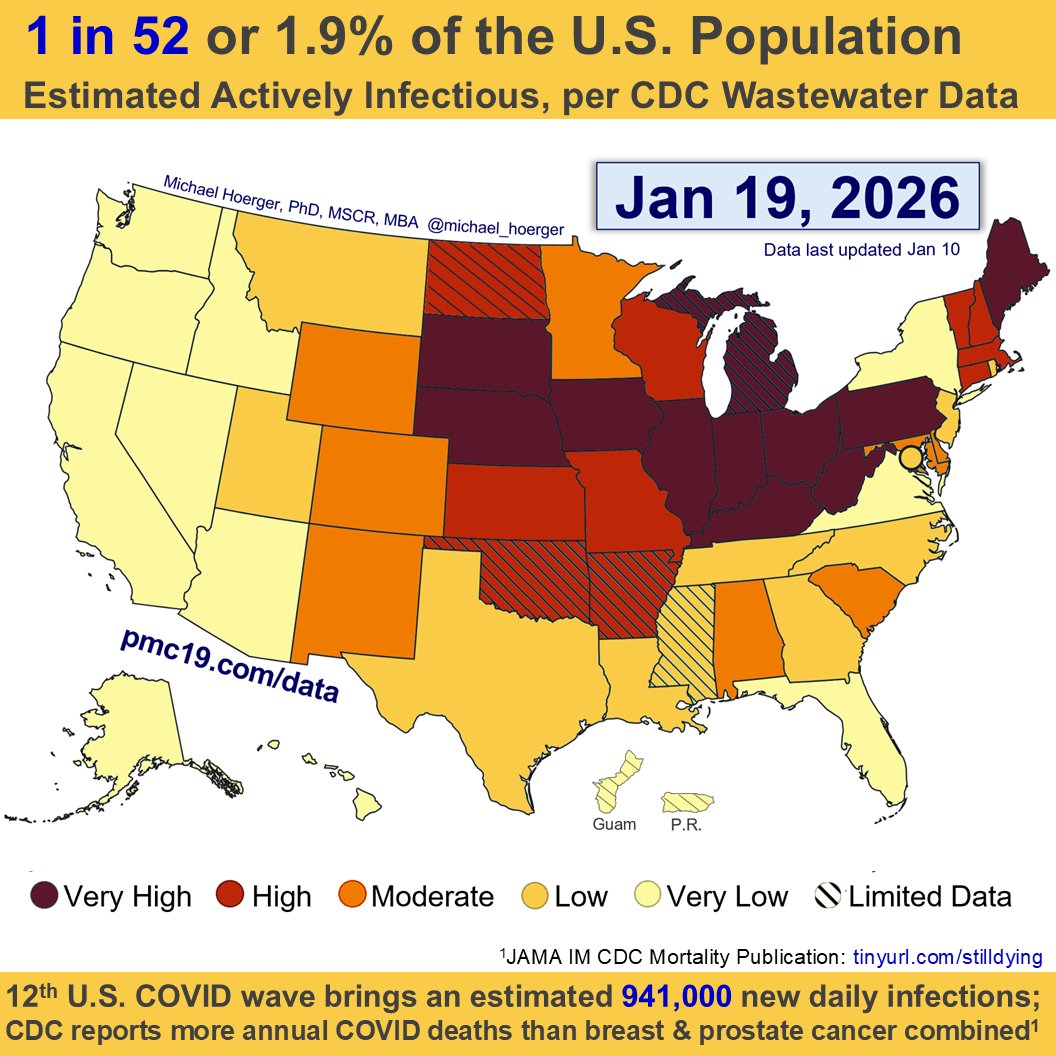
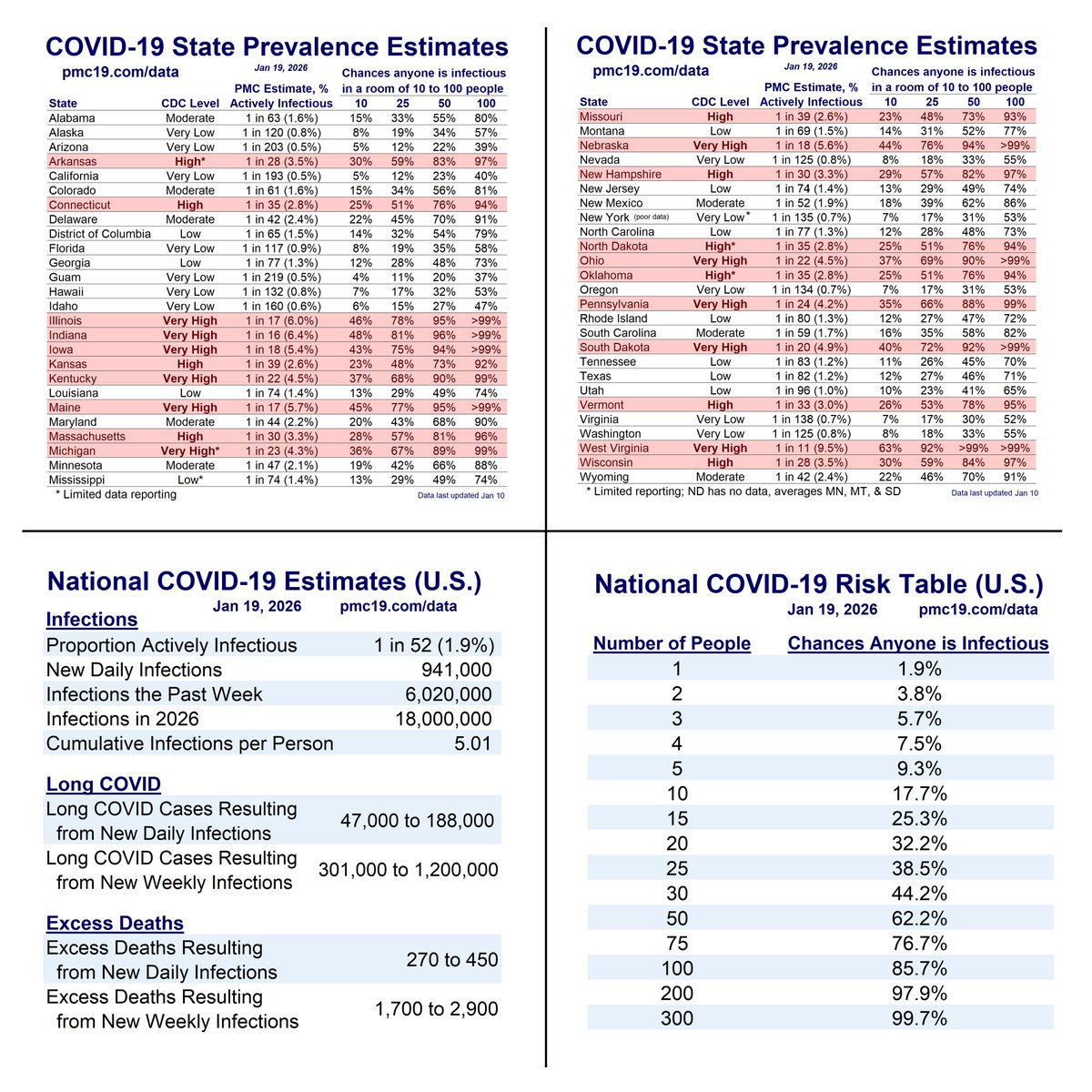
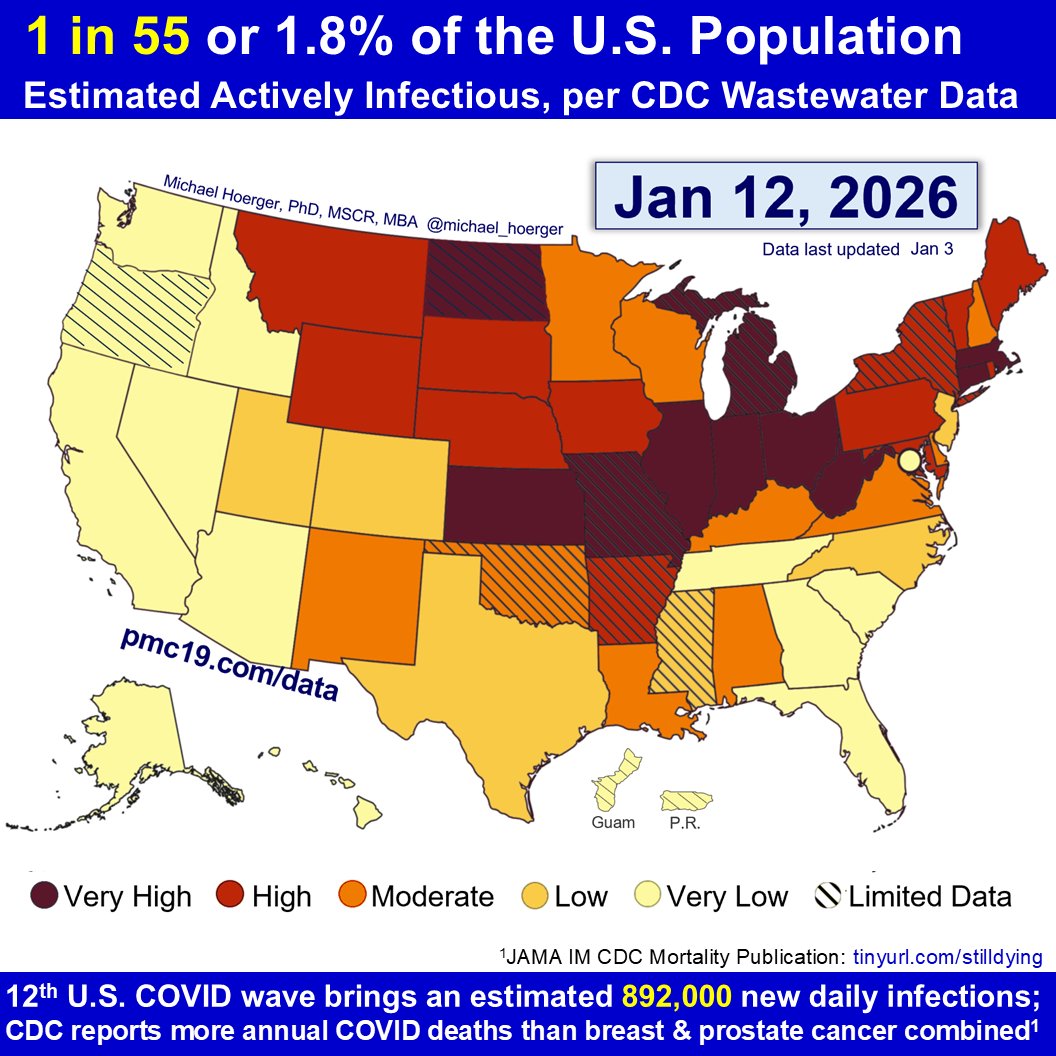
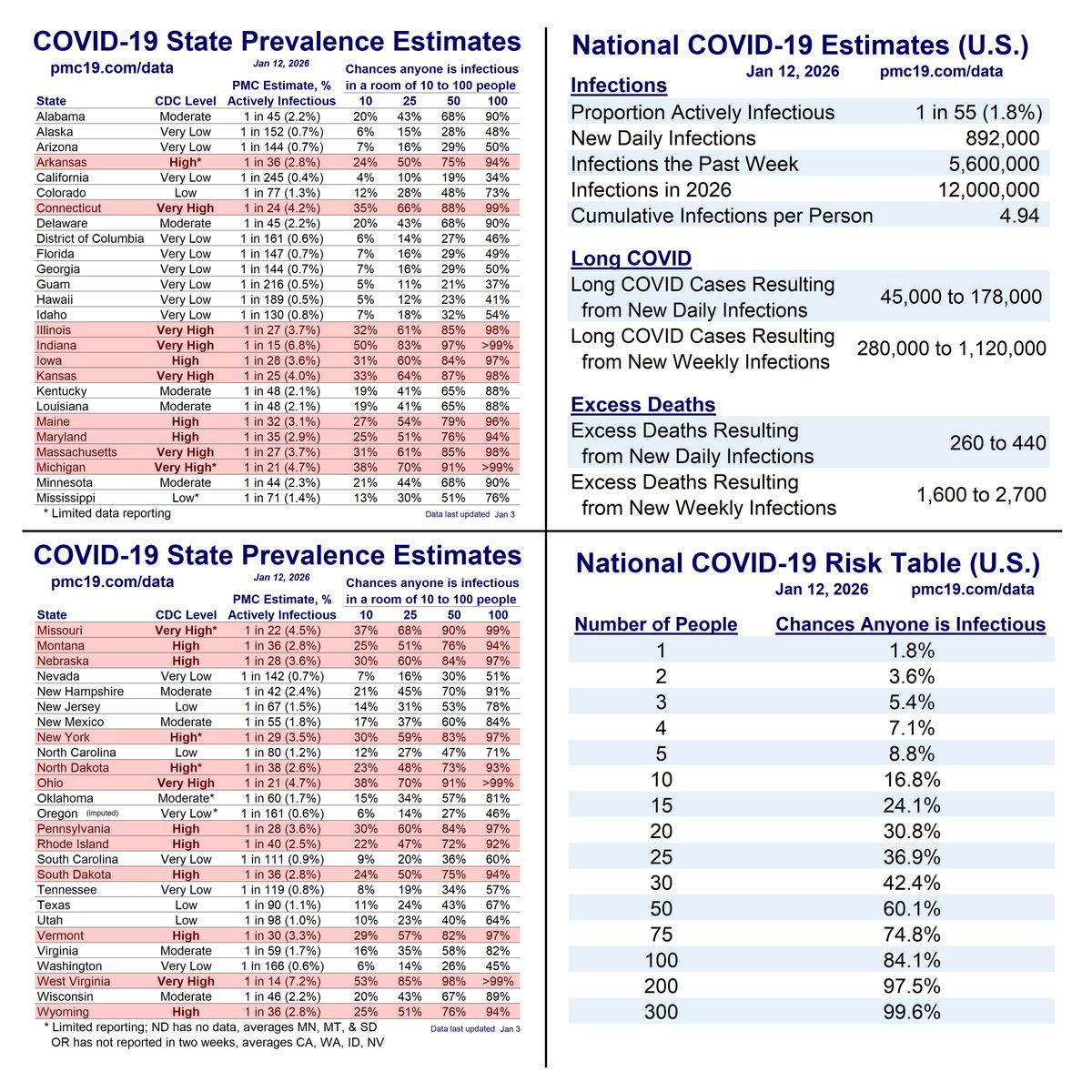
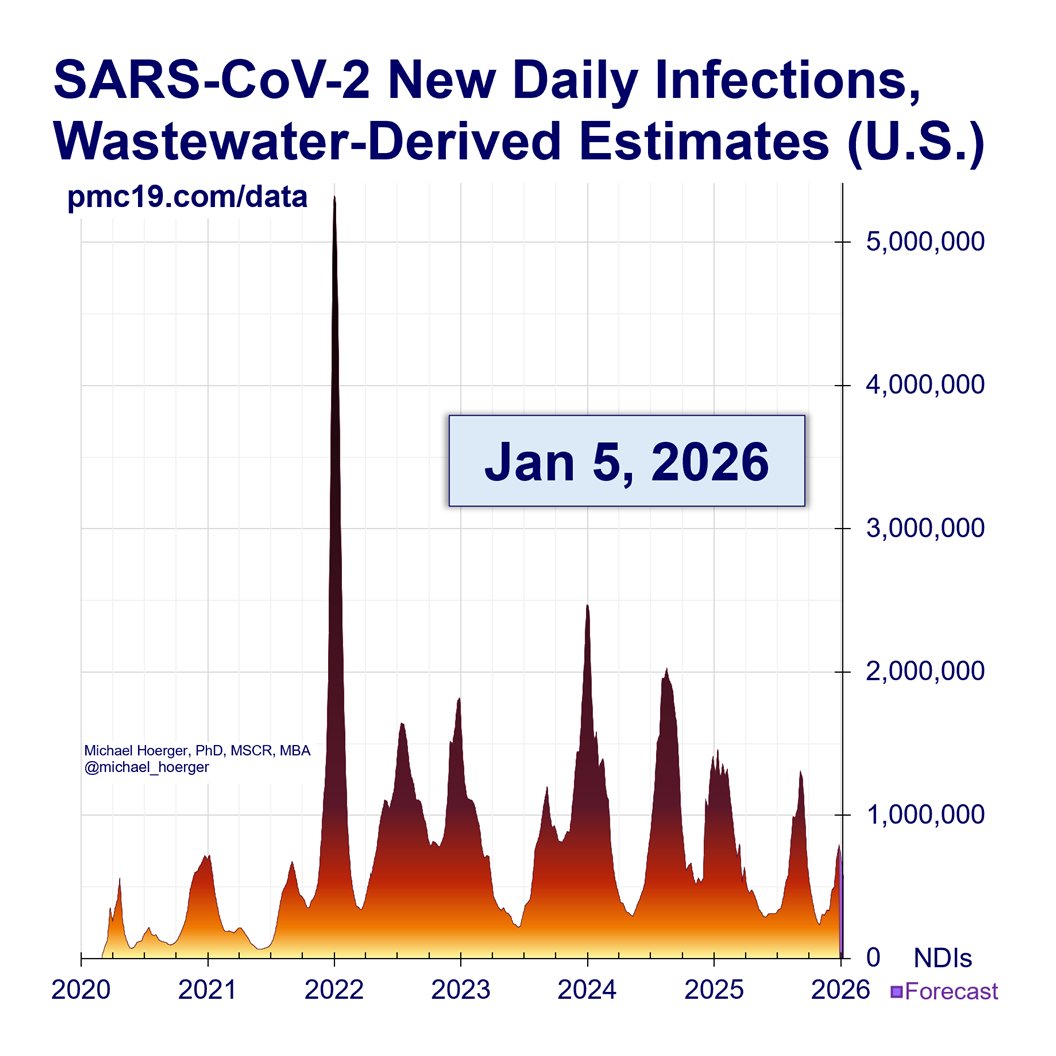
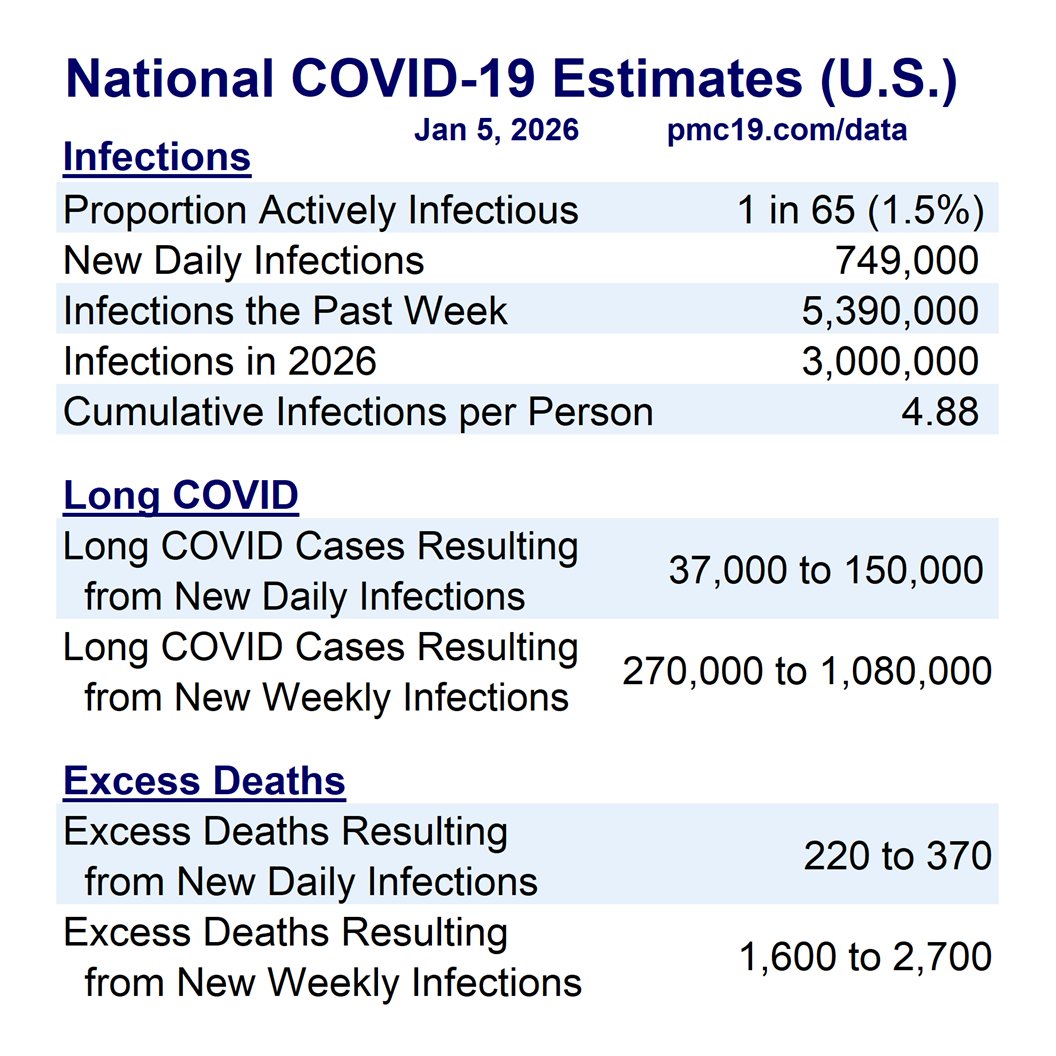
The U.S. continues to see an estimated 1.1 million daily COVID infections with 2.2% of the population actively infectious as we descend from the peak of a 9th Covid wave.
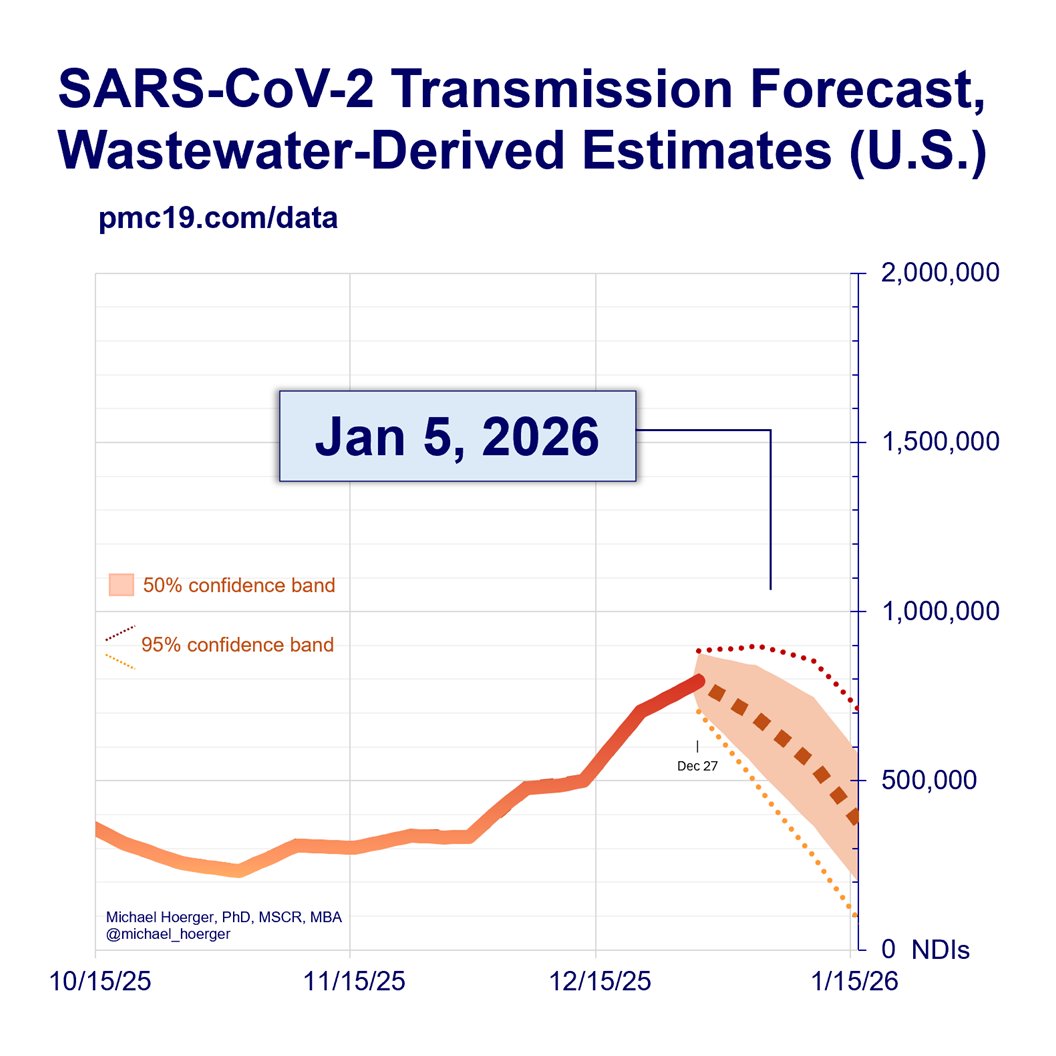
Transmission will remain very high the rest of 2024.
🧵 1/8
The U.S. continues to see an estimated 1.1 million daily COVID infections with 2.2% of the population actively infectious as we descend from the peak of a 9th Covid wave.
Transmission will remain very high the rest of 2024.

PMC COVID-19 Forecasting Model, Sep 23, 2024
🧵 2/8
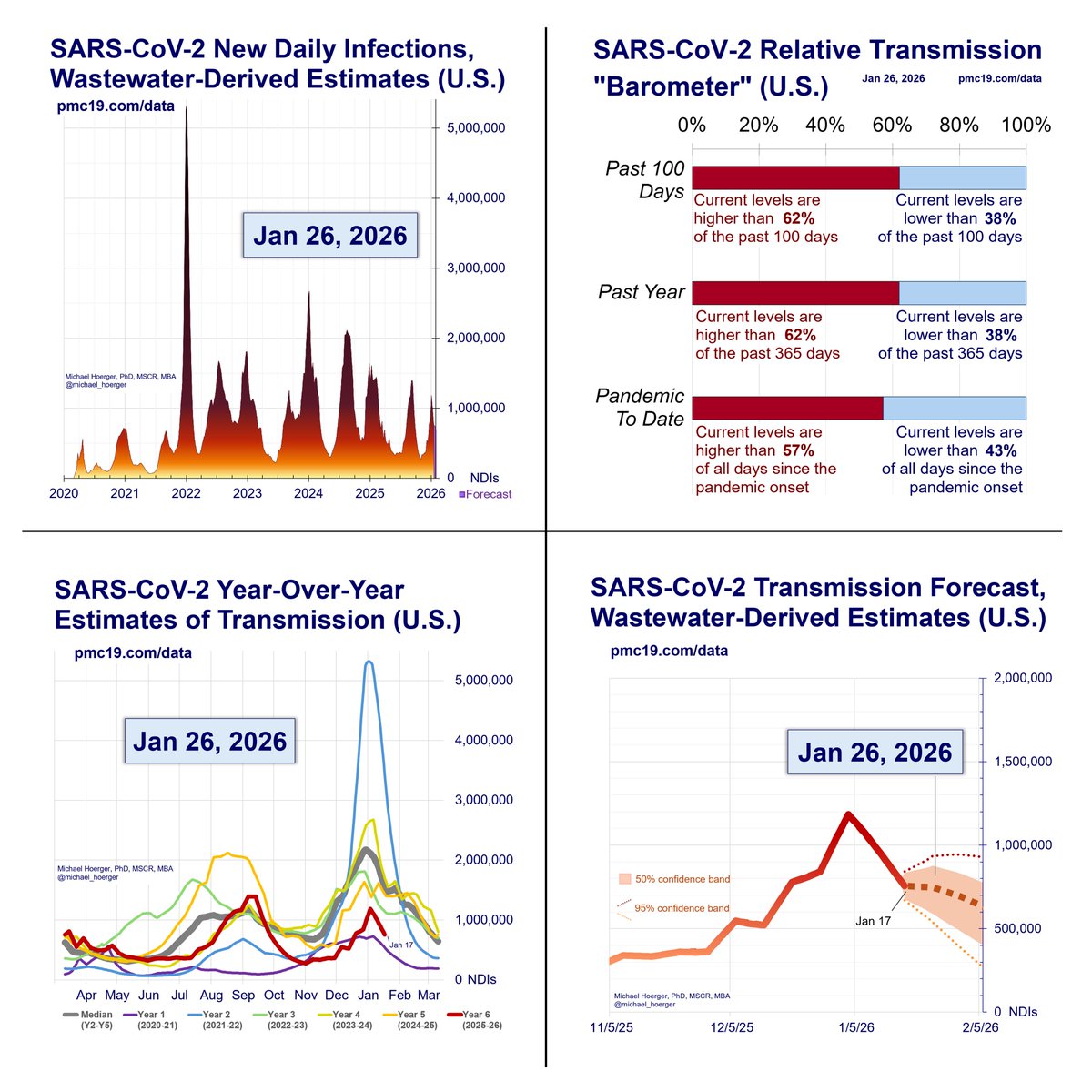
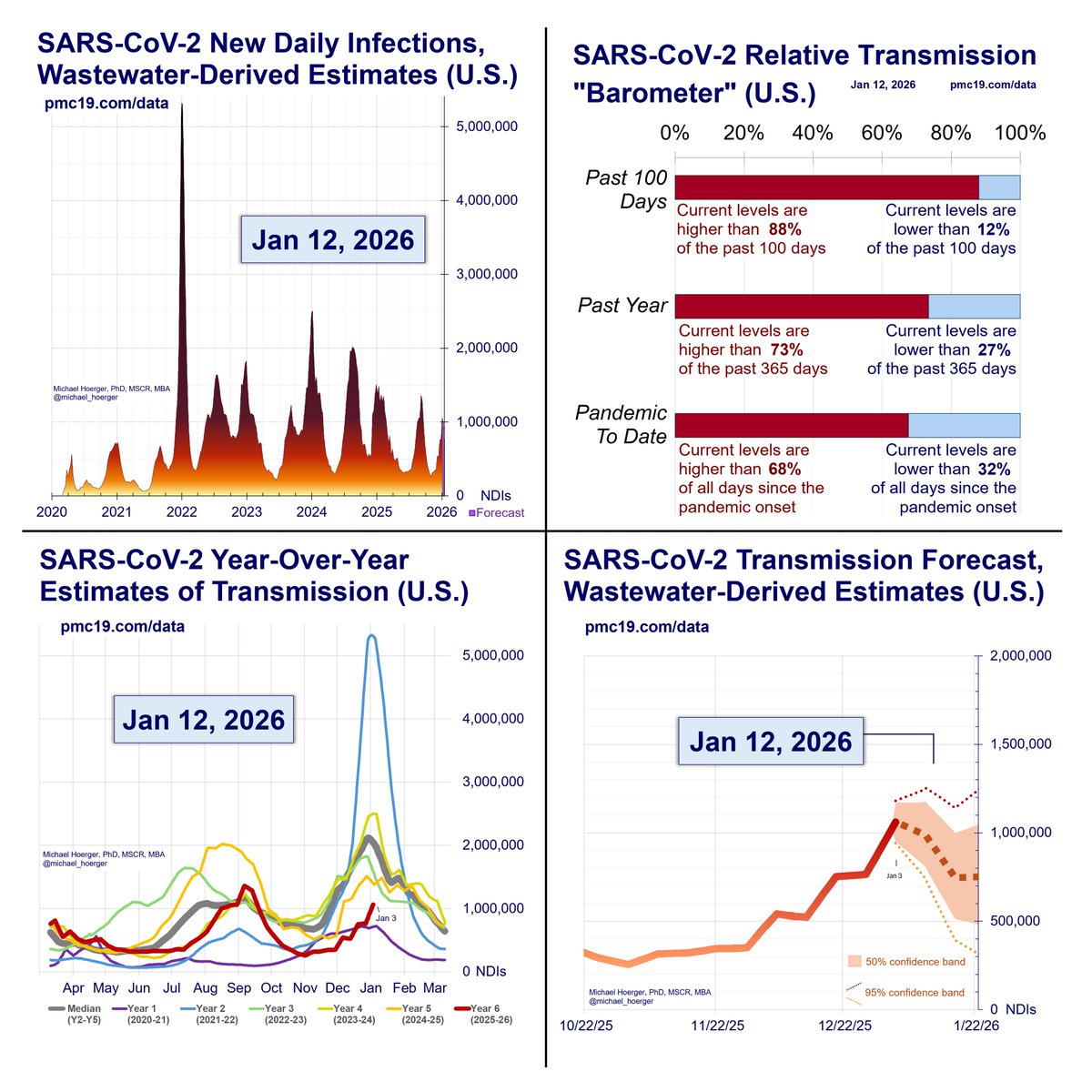
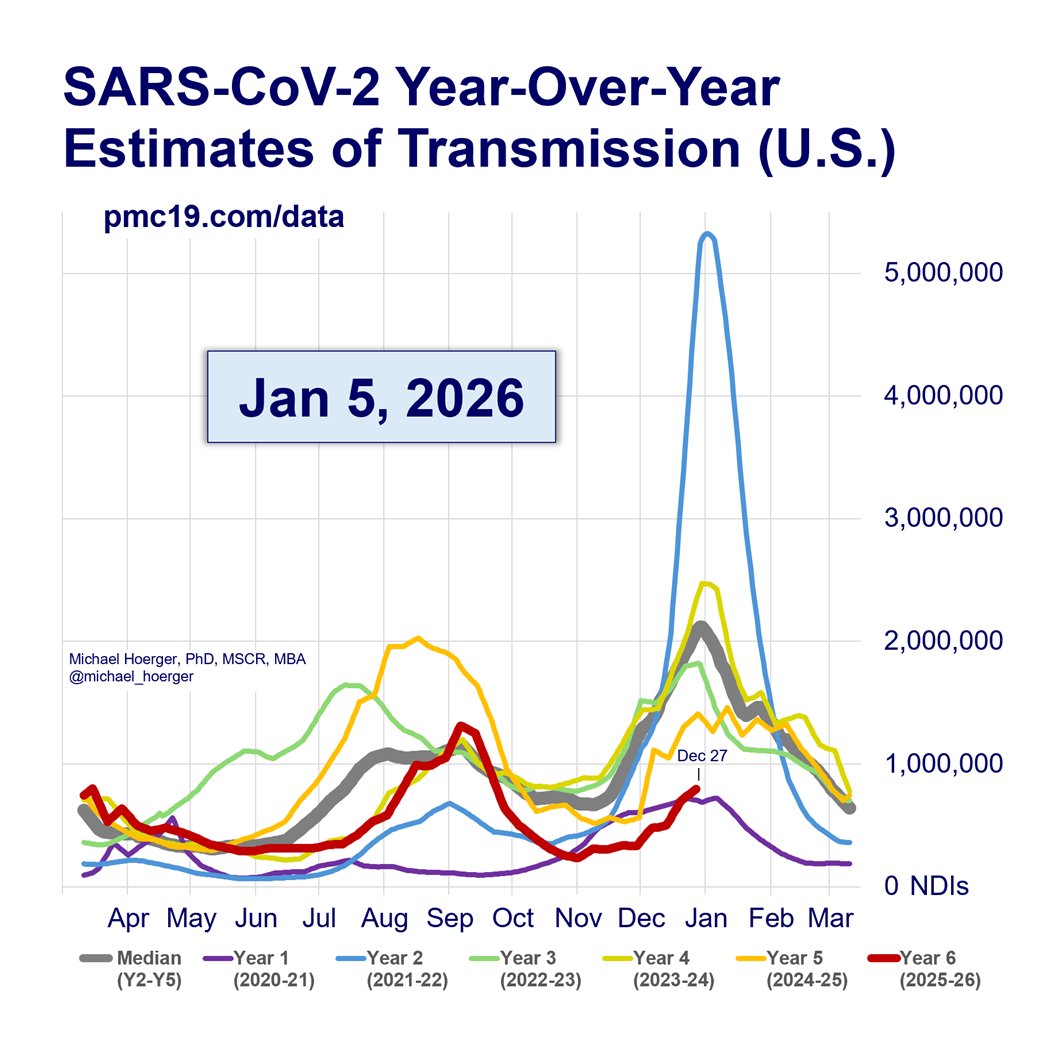
Looking at the year-over-year graph, note that we're in uncharted territory for this point in the fall. Expect a very high "lull" in early November before the winter surge sets in.
As we have noted previously, our current estimates are likely slight underestimates given elevated school-based transmission and the CDC data standardization process.
Kids: They are smaller, and make smaller "contributions" to wastewater. Basically, it takes more sick kids to produce the average amount of wastewater virus to equate to an average infection (mostly in adults). This issue evens out over time, but it means the model may underestimate during back-to-school periods.
CDC: They describe the details of their process for standardizing data over time. It's very strong, much better than what most localized wastewater orgs or WWS do. It's a bit Dunning-Kruger to question basic wastewater scientists in doing the most fundamental components of their jobs, and the data continue to correlate >.90 with other metrics like Biobot. In comparing with other data, I take their estimates as spot on, but could also see arguments that they may underestimate transmission by 0-5%. It's something we always keep an eye on. Trust, but verify.
Transmission is magnitudes higher than much of the public realizes, so we focus on the big-picture view rather than quibbling over such issues that tend to balance out over time.
I hear @jlerollblues is considering weighting a model based on estimates of the proportion of infections in children. That's actually tougher to estimate than it sounds at first glance. You should key an eye on his models too and the work he and others are doing with the WHN.
🧵 2/8
Looking at the year-over-year graph, note that we're in uncharted territory for this point in the fall. Expect a very high "lull" in early November before the winter surge sets in.
As we have noted previously, our current estimates are likely slight underestimates given elevated school-based transmission and the CDC data standardization process.
Kids: They are smaller, and make smaller "contributions" to wastewater. Basically, it takes more sick kids to produce the average amount of wastewater virus to equate to an average infection (mostly in adults). This issue evens out over time, but it means the model may underestimate during back-to-school periods.
CDC: They describe the details of their process for standardizing data over time. It's very strong, much better than what most localized wastewater orgs or WWS do. It's a bit Dunning-Kruger to question basic wastewater scientists in doing the most fundamental components of their jobs, and the data continue to correlate >.90 with other metrics like Biobot. In comparing with other data, I take their estimates as spot on, but could also see arguments that they may underestimate transmission by 0-5%. It's something we always keep an eye on. Trust, but verify.
Transmission is magnitudes higher than much of the public realizes, so we focus on the big-picture view rather than quibbling over such issues that tend to balance out over time.
I hear @jlerollblues is considering weighting a model based on estimates of the proportion of infections in children. That's actually tougher to estimate than it sounds at first glance. You should key an eye on his models too and the work he and others are doing with the WHN.

PMC COVID-19 Forecasting Model, Sep 23, 2024
🧵 3/8
Zooming in from the big picture, here's the past year of the pandemic.
🔹1.1 million daily infections
🔹Bimodal peak (Aug 10 & 24) of 1.3 million daily infections
🔹50-60% of transmission happens on the back end of waves
Continue to educate family, friends, and co-workers. Look at how the wave descends much more gradually than is arose. Many infections to come, and to try to prevent! Also, most people are not monitoring wastewater. They keep track of the cumulative "anecdata" of people they know sick or diagnosed with Covid recently. In their mind, the peak will feel like late October, when the cumulative count has really built up. You may find people more open to listening during the next month.
🧵 3/8
Zooming in from the big picture, here's the past year of the pandemic.
🔹1.1 million daily infections
🔹Bimodal peak (Aug 10 & 24) of 1.3 million daily infections
🔹50-60% of transmission happens on the back end of waves
Continue to educate family, friends, and co-workers. Look at how the wave descends much more gradually than is arose. Many infections to come, and to try to prevent! Also, most people are not monitoring wastewater. They keep track of the cumulative "anecdata" of people they know sick or diagnosed with Covid recently. In their mind, the peak will feel like late October, when the cumulative count has really built up. You may find people more open to listening during the next month.

PMC COVID-19 Forecasting Model, Sep 23, 2024
🧵 4/8
These statistics document the ongoing toll of the pandemic.
🔥Expect about 29 million infections in the U.S. over the next month if the model holds.
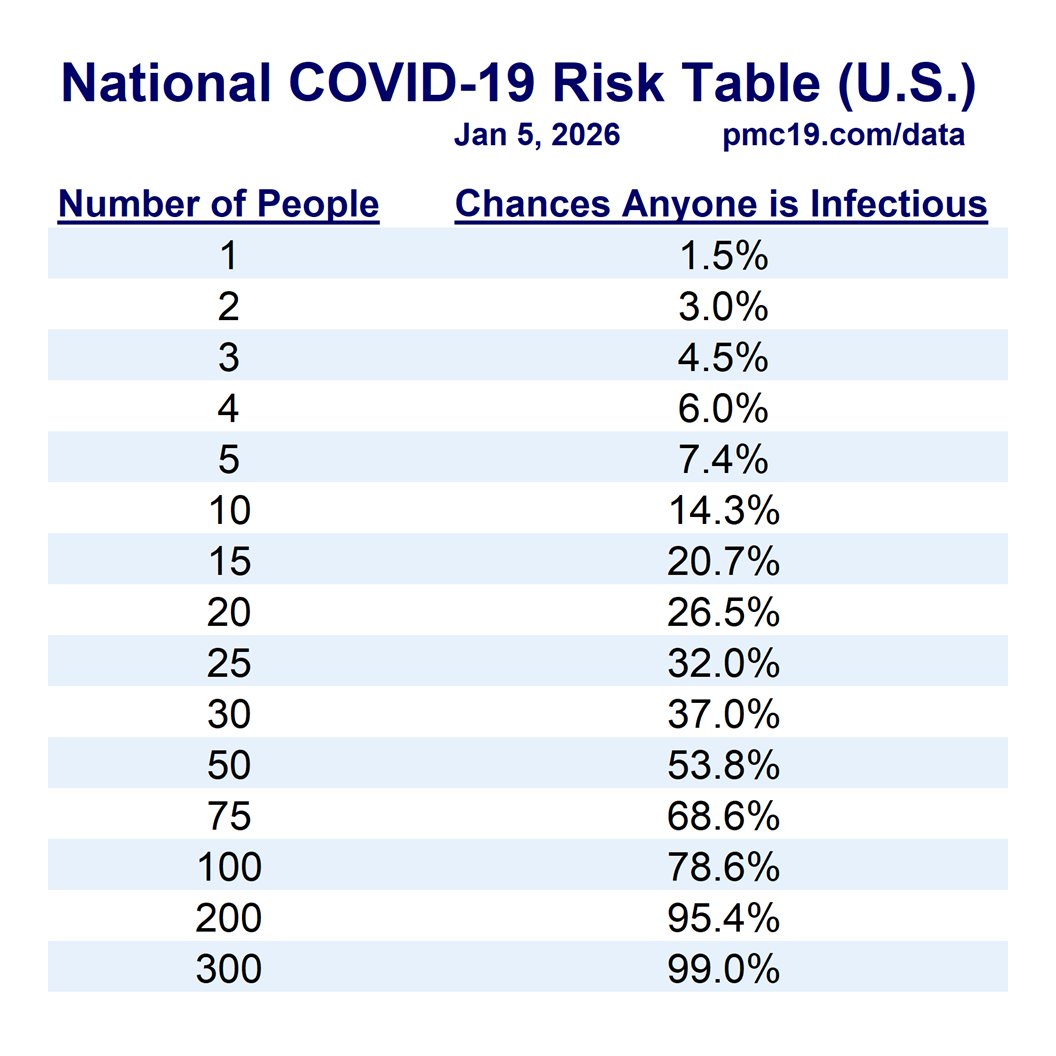
🔥In a classroom of 30-35 people, there's about a 50% chance at least one person is infectious if weak/no isolation policies.
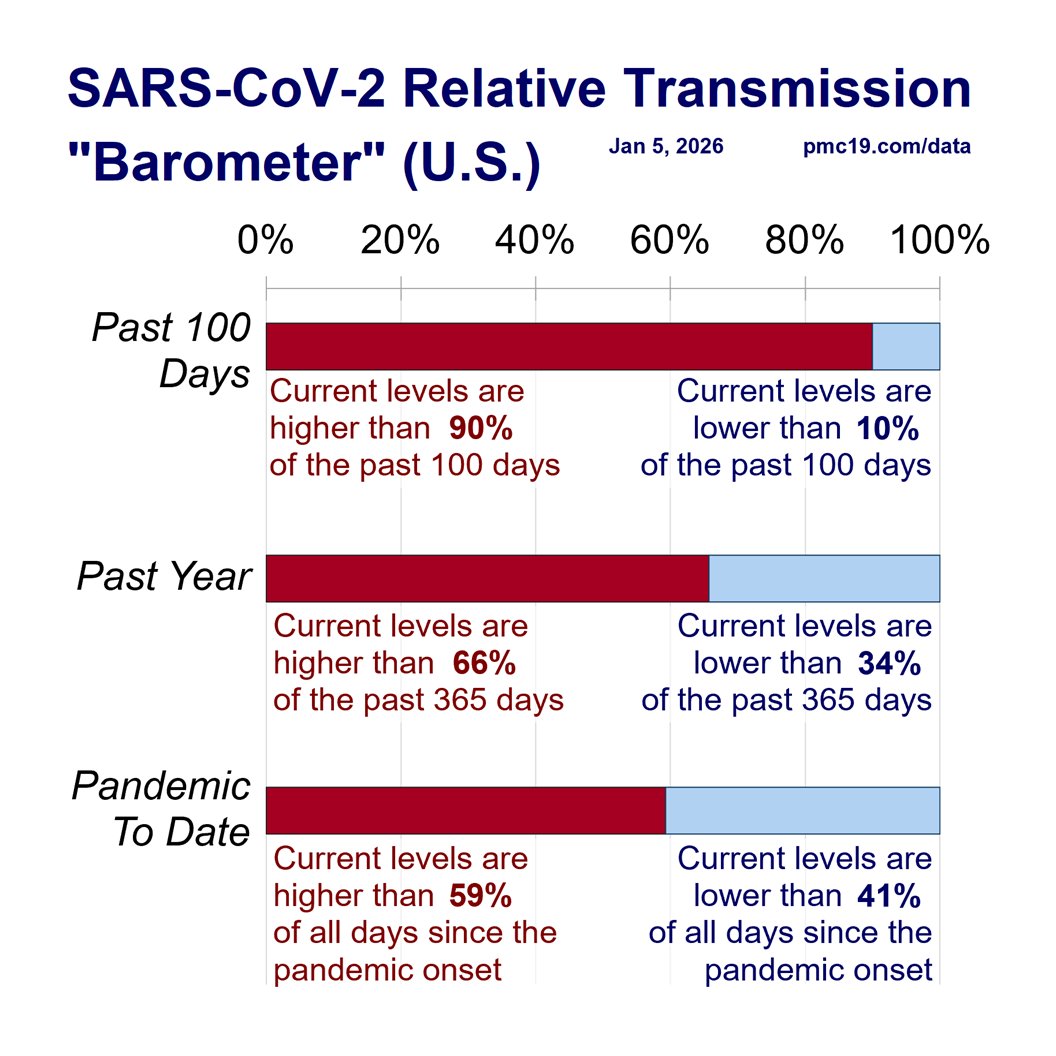
🔥Transmission is higher than during 80% of the pandemic.
🧵 4/8
These statistics document the ongoing toll of the pandemic.
🔥Expect about 29 million infections in the U.S. over the next month if the model holds.
🔥In a classroom of 30-35 people, there's about a 50% chance at least one person is infectious if weak/no isolation policies.
🔥Transmission is higher than during 80% of the pandemic.

PMC COVID-19 Forecasting Model, Sep 23, 2024
🧵 5/8
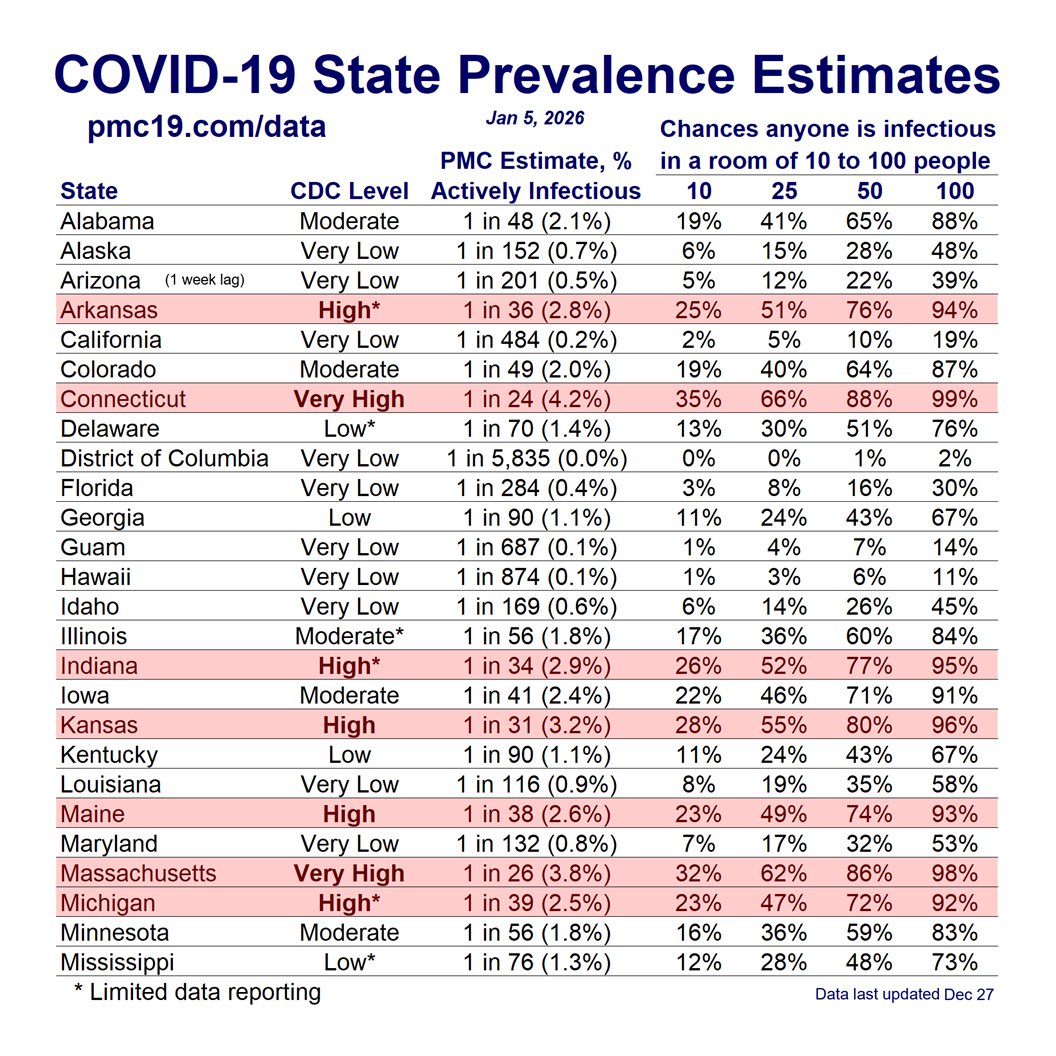
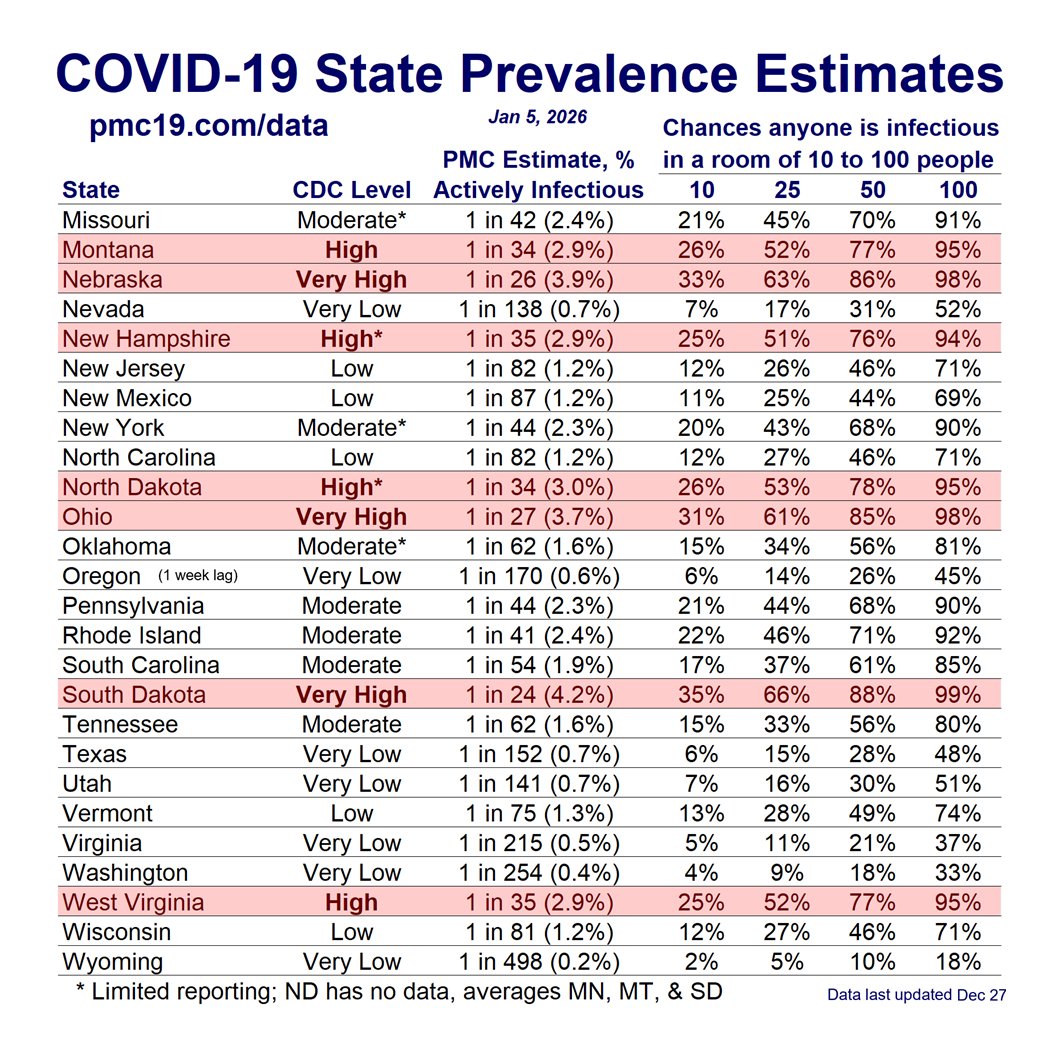
Three states stand out.
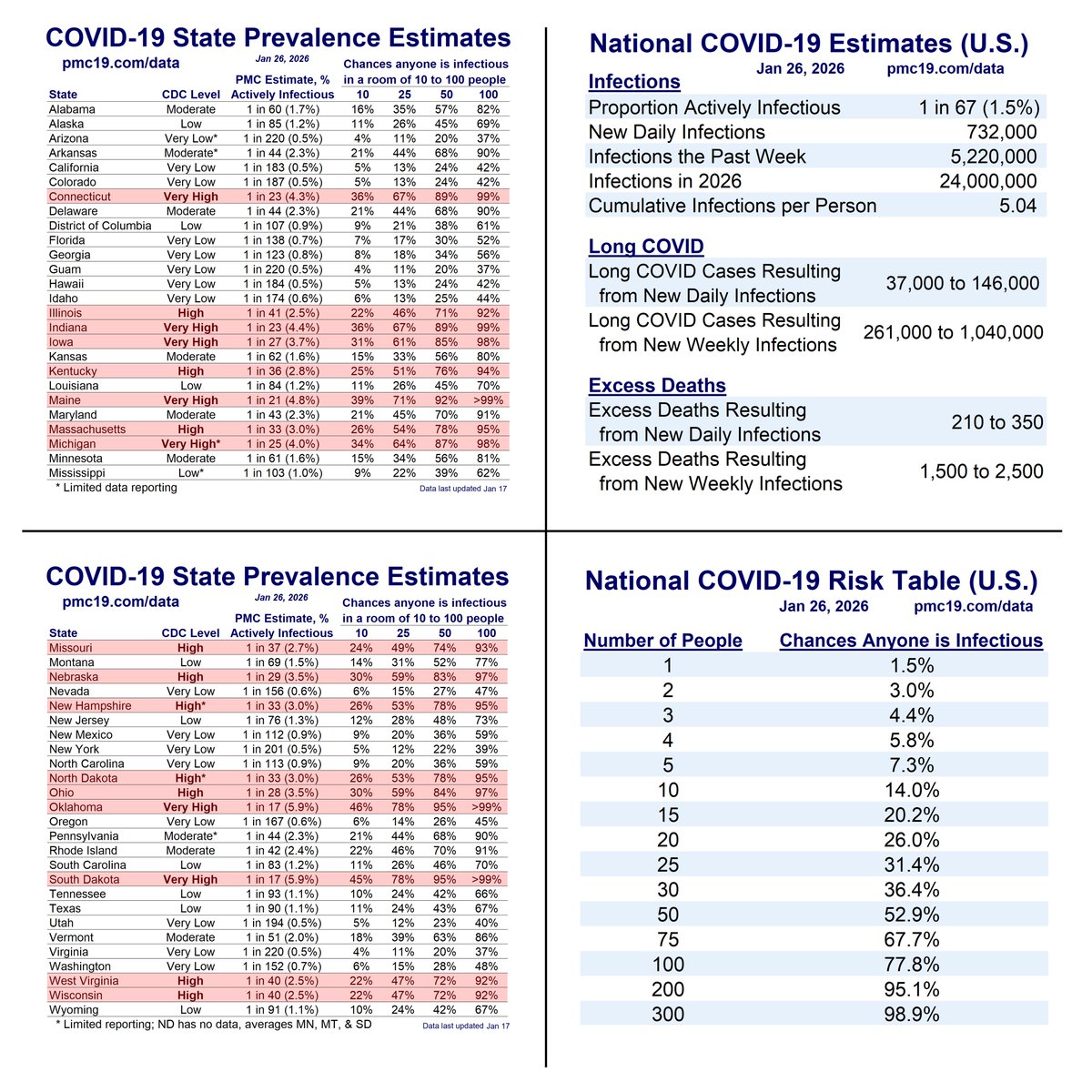
Estimated percentage of populations actively infectious:
Oklahoma: 8.9%
Oregon: 5.3%
New Hampshire: 5.3%
Note, estimates get less precise when focusing on smaller geographic units, and sometimes high estimates are revised in hindsight.
Also, while these figures may seem high, keep in mind that as one focuses on narrower units, the peak is more targeted, so local peaks see higher percentages than state peaks, which are higher than regional peaks, which are higher than national peaks. Smaller units have more leptokurtic transmission.
🧵 5/8
Three states stand out.
Estimated percentage of populations actively infectious:
Oklahoma: 8.9%
Oregon: 5.3%
New Hampshire: 5.3%
Note, estimates get less precise when focusing on smaller geographic units, and sometimes high estimates are revised in hindsight.
Also, while these figures may seem high, keep in mind that as one focuses on narrower units, the peak is more targeted, so local peaks see higher percentages than state peaks, which are higher than regional peaks, which are higher than national peaks. Smaller units have more leptokurtic transmission.

PMC COVID-19 Forecasting Model, Sep 23, 2024
🧵 6/8
These are the present regional estimates in the U.S.
The West is coming down from a second peak this wave but still with approximately 2.8% of the region actively infectious.
The Northeast region saw atypically low transmission this wave, relative to other regions. That area may see a different pattern of transmission than the rest of the U.S. the next several months. For example, within the northeast region, the winter peak could be larger than other areas. However, expect to also see more localized units where instead of 2 big waves (late summer and winter), there is 1 big wave in late Nov / early December, or a bumpy wave in the months ahead, like the west just saw. Last winter, we often posted examples of the "weird" transmission patterns in some areas.
I'd keep a closer eye on local data if in the Northeast region.
🧵 6/8
These are the present regional estimates in the U.S.
The West is coming down from a second peak this wave but still with approximately 2.8% of the region actively infectious.
The Northeast region saw atypically low transmission this wave, relative to other regions. That area may see a different pattern of transmission than the rest of the U.S. the next several months. For example, within the northeast region, the winter peak could be larger than other areas. However, expect to also see more localized units where instead of 2 big waves (late summer and winter), there is 1 big wave in late Nov / early December, or a bumpy wave in the months ahead, like the west just saw. Last winter, we often posted examples of the "weird" transmission patterns in some areas.
I'd keep a closer eye on local data if in the Northeast region.

PMC COVID-19 Forecasting Model, Sep 23, 2024
🧵 7/8
Come join our team! I am accepting applicants for the Health Psychology PhD program at Tulane! 🎉
I'd love to work with someone passionate about research, cancer, & Covid safety. Should have a psych/similar background. 😷🧠
🧵 7/8
Come join our team! I am accepting applicants for the Health Psychology PhD program at Tulane! 🎉
I'd love to work with someone passionate about research, cancer, & Covid safety. Should have a psych/similar background. 😷🧠

PMC COVID-19 Forecasting Model, Sep 23, 2024
🧵 8/8
Current state of the COVID-19 pandemic in the U.S.
🔹1.1 million daily COVID infections
🔹1 in 45 actively infectious
🔹High "lull" coming early November
🔹Winter surge to follow
Full dashboard: pmc19.com/data
🧵 8/8
Current state of the COVID-19 pandemic in the U.S.
🔹1.1 million daily COVID infections
🔹1 in 45 actively infectious
🔹High "lull" coming early November
🔹Winter surge to follow
Full dashboard: pmc19.com/data

• • •
Missing some Tweet in this thread? You can try to
force a refresh