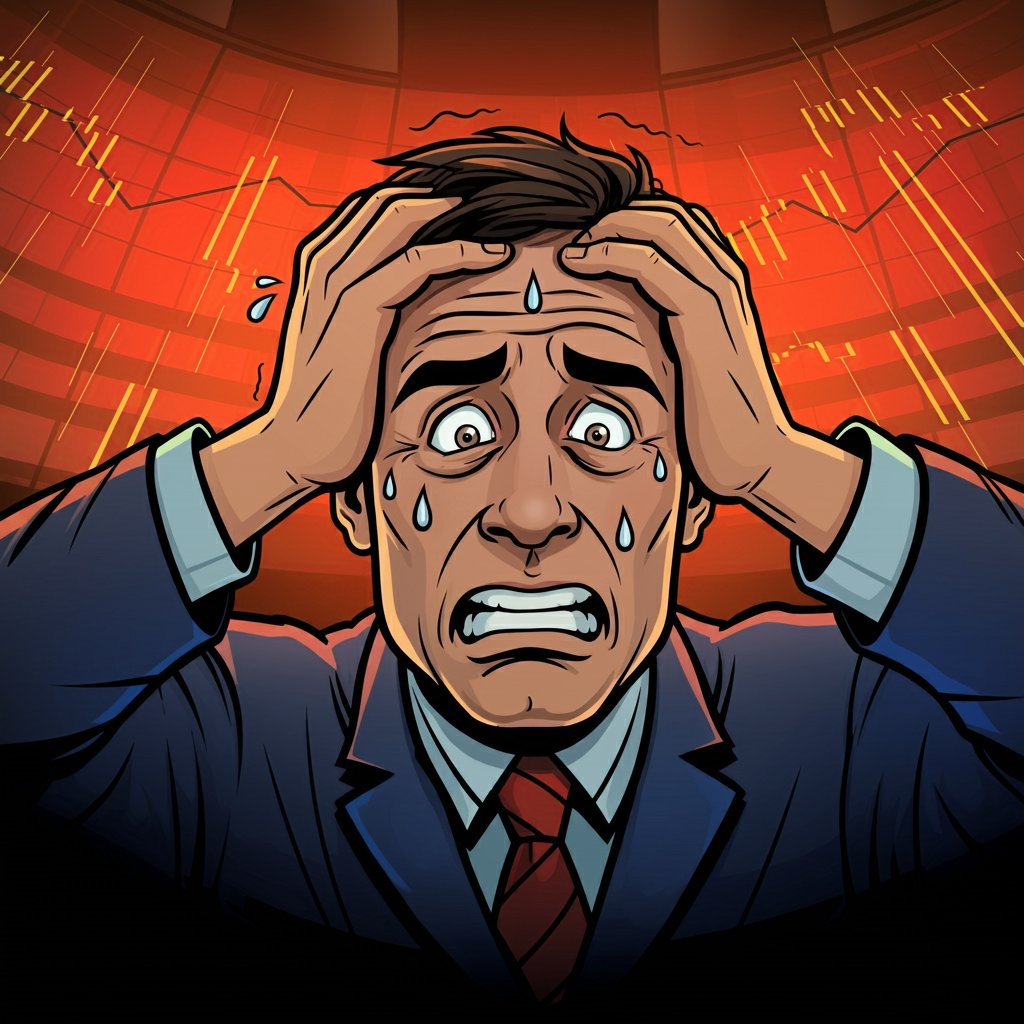
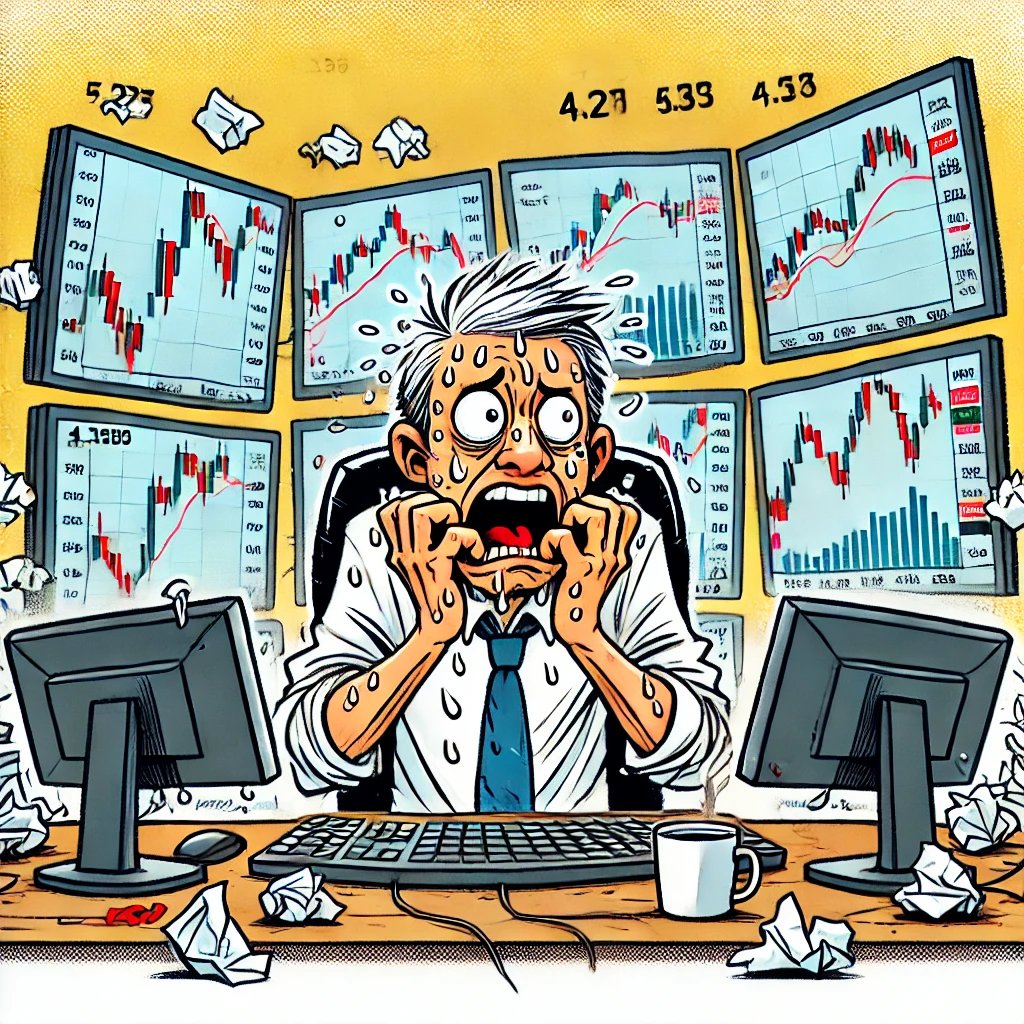
To never break the rules again🧵
The job and responsibility of a trader are not about winning or losing, but about strictly following the rules.
Here is a thread to help you ensure that you never break the rules again.↓ Thread 1/7
The job and responsibility of a trader are not about winning or losing, but about strictly following the rules.
Here is a thread to help you ensure that you never break the rules again.↓ Thread 1/7

2/7
Winning and losing are not your responsibility.
Any results that arise from following the system are just part of the system.
Your job is to strictly follow the system's instructions, and your responsibility is to continue adhering to the rules.
By consistently following the rules and executing every signal the system provides, you accumulate a large number of results.
This sample size then invokes the law of large numbers, bringing out the system’s edge.
Both the wins and losses that occur from following the signals are essential.
Understand this perfectly.
Winning and losing are not your responsibility.
Any results that arise from following the system are just part of the system.
Your job is to strictly follow the system's instructions, and your responsibility is to continue adhering to the rules.
By consistently following the rules and executing every signal the system provides, you accumulate a large number of results.
This sample size then invokes the law of large numbers, bringing out the system’s edge.
Both the wins and losses that occur from following the signals are essential.
Understand this perfectly.
3/7
If you can’t follow the rules, it's because you don’t truly understand that continuing to follow the rules leads to your success.
You place importance on the wins and losses right in front of you, believing that they lead to success.
That’s why you prioritize the immediate outcome and can’t follow the pre-determined rules.
Your understanding creates your emotions.
Emotions in trading always stem from your "understanding."
Just as a baby doesn't get angry or happy by looking at a chart, the emotions you feel here are different from the fear of thunder or darkness.
In other words, no matter how much you claim to understand the importance of following the rules, deep down, you actually believe that wins and losses are more important.
Your emotions prove it.
If you can’t follow the rules, it's because you don’t truly understand that continuing to follow the rules leads to your success.
You place importance on the wins and losses right in front of you, believing that they lead to success.
That’s why you prioritize the immediate outcome and can’t follow the pre-determined rules.
Your understanding creates your emotions.
Emotions in trading always stem from your "understanding."
Just as a baby doesn't get angry or happy by looking at a chart, the emotions you feel here are different from the fear of thunder or darkness.
In other words, no matter how much you claim to understand the importance of following the rules, deep down, you actually believe that wins and losses are more important.
Your emotions prove it.
4/7
Many people think that if their emotions are causing them to break the rules, they should deal with those emotions.
However, emotions in trading are triggered by "understanding," so you need a different approach than dealing with ordinary, primary emotions.
That’s why I always say not to look at the emotions themselves, but rather the thought processes behind them.
And deep understanding is not just knowledge.
Deep understanding comes from experience.
Nothing will convince you more than experience.
You need to repeatedly experience that continuing to follow the rules truly leads to profits.
This is not understanding through knowledge, but "deep understanding."
When you truly stop caring about the immediate wins and losses, and you deeply understand through experience that continuing to follow the rules brings you profits and leads to success, you will begin to feel a strong aversion to breaking the rules.
Your "understanding" will have changed the emotions you experience.
Many people think that if their emotions are causing them to break the rules, they should deal with those emotions.
However, emotions in trading are triggered by "understanding," so you need a different approach than dealing with ordinary, primary emotions.
That’s why I always say not to look at the emotions themselves, but rather the thought processes behind them.
And deep understanding is not just knowledge.
Deep understanding comes from experience.
Nothing will convince you more than experience.
You need to repeatedly experience that continuing to follow the rules truly leads to profits.
This is not understanding through knowledge, but "deep understanding."
When you truly stop caring about the immediate wins and losses, and you deeply understand through experience that continuing to follow the rules brings you profits and leads to success, you will begin to feel a strong aversion to breaking the rules.
Your "understanding" will have changed the emotions you experience.
5/7
Many people think that consistency will naturally follow as long as they have a system with an edge, but that’s wrong.
In an earlier thread, I showed a simulation where even an excellent system with a 70% win rate and a risk-reward ratio of 2 can still fail to increase capital over a three-month period due to short-term randomness.
If you only have data knowledge, at that point, you will begin to doubt the system, worry that the market has changed, lose consistency, and abandon the system before seeing your capital grow.
This is why I say that just knowing the data is meaningless.
Without deep understanding through experience, your emotions around immediate wins and losses won’t change, and you will continue to use wins and losses as feedback, constantly worrying and unable to maintain consistency.
Many people think that consistency will naturally follow as long as they have a system with an edge, but that’s wrong.
In an earlier thread, I showed a simulation where even an excellent system with a 70% win rate and a risk-reward ratio of 2 can still fail to increase capital over a three-month period due to short-term randomness.
If you only have data knowledge, at that point, you will begin to doubt the system, worry that the market has changed, lose consistency, and abandon the system before seeing your capital grow.
This is why I say that just knowing the data is meaningless.
Without deep understanding through experience, your emotions around immediate wins and losses won’t change, and you will continue to use wins and losses as feedback, constantly worrying and unable to maintain consistency.
6/7
Knowing the data is not enough.
Buying a successful system from someone else won’t suffice either.
Nor is it enough to simply run an automatic backtest.
Practice is something you must do yourself, and it’s something that cannot be skipped.
The reason I recommend a lot of practice with manual backtesting is that it is essential for forming conviction through experience.
Data is not something to know; it is something to "experience."
By developing deep understanding through experience, you’ll truly grasp the necessity of following the rules and make consistent actions easier.
Knowing the data is not enough.
Buying a successful system from someone else won’t suffice either.
Nor is it enough to simply run an automatic backtest.
Practice is something you must do yourself, and it’s something that cannot be skipped.
The reason I recommend a lot of practice with manual backtesting is that it is essential for forming conviction through experience.
Data is not something to know; it is something to "experience."
By developing deep understanding through experience, you’ll truly grasp the necessity of following the rules and make consistent actions easier.
7/7
If you find yourself restless during trading hours and wanting to do something, practice with a backtesting tool.
If you have free time this weekend, make sure to practice thoroughly.
Practice is crucial in any field, whether it’s sports, playing musical instruments, or anything else.
Think of it not as data, but as practice.
There is no improvement without practice.
Practice never ends.
Consider it something you repeat every day for years.
Many people say with satisfaction, "I’ve done 100 backtests," but please consider that it’s nowhere near enough.
I’ve been doing it every day since my student days more than 15 years ago, so I’ve done an overwhelming number of tests.
By now, the feeling of “making profits using a large sample size” is second nature.
That’s what practice is all about.
There is no world where you become a pro after just 100 practice sessions.
Keep it up.
I’m cheering for you.
When you deeply understand through experience that consistently following the rules leads to success, and it turns into conviction, you will no longer want to break the rules.
If you enjoyed this thread, please support by giving it a repost 🔁
I explain these concepts in detail in my book, so if you haven't read it yet, please do.
Link to my book ↓
Your support is what motivates me to post every day.
Thank you😊a.co/d/3i4MC0H
If you find yourself restless during trading hours and wanting to do something, practice with a backtesting tool.
If you have free time this weekend, make sure to practice thoroughly.
Practice is crucial in any field, whether it’s sports, playing musical instruments, or anything else.
Think of it not as data, but as practice.
There is no improvement without practice.
Practice never ends.
Consider it something you repeat every day for years.
Many people say with satisfaction, "I’ve done 100 backtests," but please consider that it’s nowhere near enough.
I’ve been doing it every day since my student days more than 15 years ago, so I’ve done an overwhelming number of tests.
By now, the feeling of “making profits using a large sample size” is second nature.
That’s what practice is all about.
There is no world where you become a pro after just 100 practice sessions.
Keep it up.
I’m cheering for you.
When you deeply understand through experience that consistently following the rules leads to success, and it turns into conviction, you will no longer want to break the rules.
If you enjoyed this thread, please support by giving it a repost 🔁
I explain these concepts in detail in my book, so if you haven't read it yet, please do.
Link to my book ↓
Your support is what motivates me to post every day.
Thank you😊a.co/d/3i4MC0H
• • •
Missing some Tweet in this thread? You can try to
force a refresh