1/15 What the beginning of the end of a failed regime looks like: russia is allocating 41% of its public expenditure and 8% of its GDP toward defense and security while its economy is overheating. Will a further increase in the Central Bank's key interest rate be necessary? 

2/15 russia plans to boost defense spending by a quarter in 2025. This increase marks a new post-Soviet record for the nation as it persists in its unsuccessful invasion of Ukraine.

3/15 In last year's draft, the government intended to cut defense spending by 21 percent in 2025. This reversal highlights once again that things are not proceeding as planned; the invasion has failed, and russia is all in.
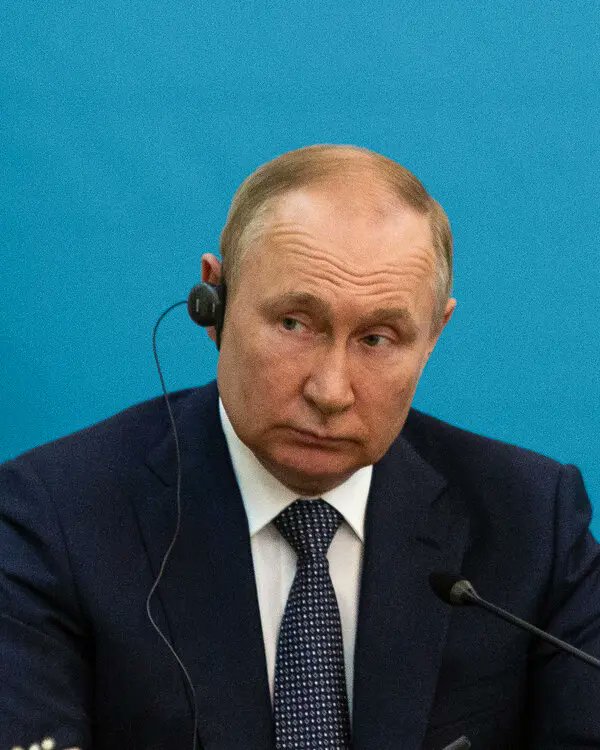
4/15 russia's defense spending has reached its highest level since the Cold War. Overall expenditures on defense and security will account for 8% of russia's GDP.

5/15 The russian government intends to allocate $183 billion to national security and defense in 2025, which represents approximately 41% of its annual budget. This is significant, especially given that a substantial portion of the russian population lives in poverty.

6/15 Defense spending will be more than double the amount designated for social needs, which encompasses pensions, social compensations, and subsidies, projected to be at $70 billion in 2025.

7/15 The government plans to allocate $17 billion, which is 0.7% of GDP, for education, and $20 billion, accounting for 0.87% of GDP, for healthcare in 2025.

8/15 All these figures highlight Putin's lack of concern for the russian people and suggest that russia is fully invested in this war economically. He is resolute in continuing the invasion to evade recognition of its failure and to safeguard his regime.

9/15 The proportion of GDP being spent is similar to the estimated military spending share during the late Soviet era, when the Soviet Union was engaged in the war in Afghanistan, while also managing a significantly larger nuclear arsenal to confront its Cold War opponents.

10/15 russian oil and gas revenues for the state budget are projected to decrease between 2025 and 2027 due to declining commodity prices and tax adjustments, as the country's largest gas producer, Gazprom, is anticipated to experience a reduction in its tax obligations.

11/15 With russia's future appearing bleak at best, its dire demographics, coupled with the war, have resulted in a severe labor shortage. This, along with rising public expenditure and sanctions, has contributed to elevated inflation rates.

12/15 In order to combat inflation, russia has increased its central bank's key interest rate to 19%, a significant rise from the 7.5% rate recorded in June 2023.

13/15 Will they need to raise it further? Although a higher interest rate could help curb inflation, it would also stifle any potential for growth.

14/15 russia is expected to raise its key interest rate once more in the coming months. The economic burden of the war will continue to grow over time, increasingly impacting the lives of russians.

15/15 Sources:
aljazeera.com/news/2024/9/30…
understandingwar.org/backgrounder/r…
reuters.com/world/europe/r…
aljazeera.com/news/2024/9/30…
understandingwar.org/backgrounder/r…
reuters.com/world/europe/r…
• • •
Missing some Tweet in this thread? You can try to
force a refresh