🧵Harvard asked its students, faculty, and teaching staff about their comfort discussing controversial issues on campus.
The results show that faculty/staff are more fearful than students.
68% of faculty/staff said they would be reluctant to speak up outside the classroom.
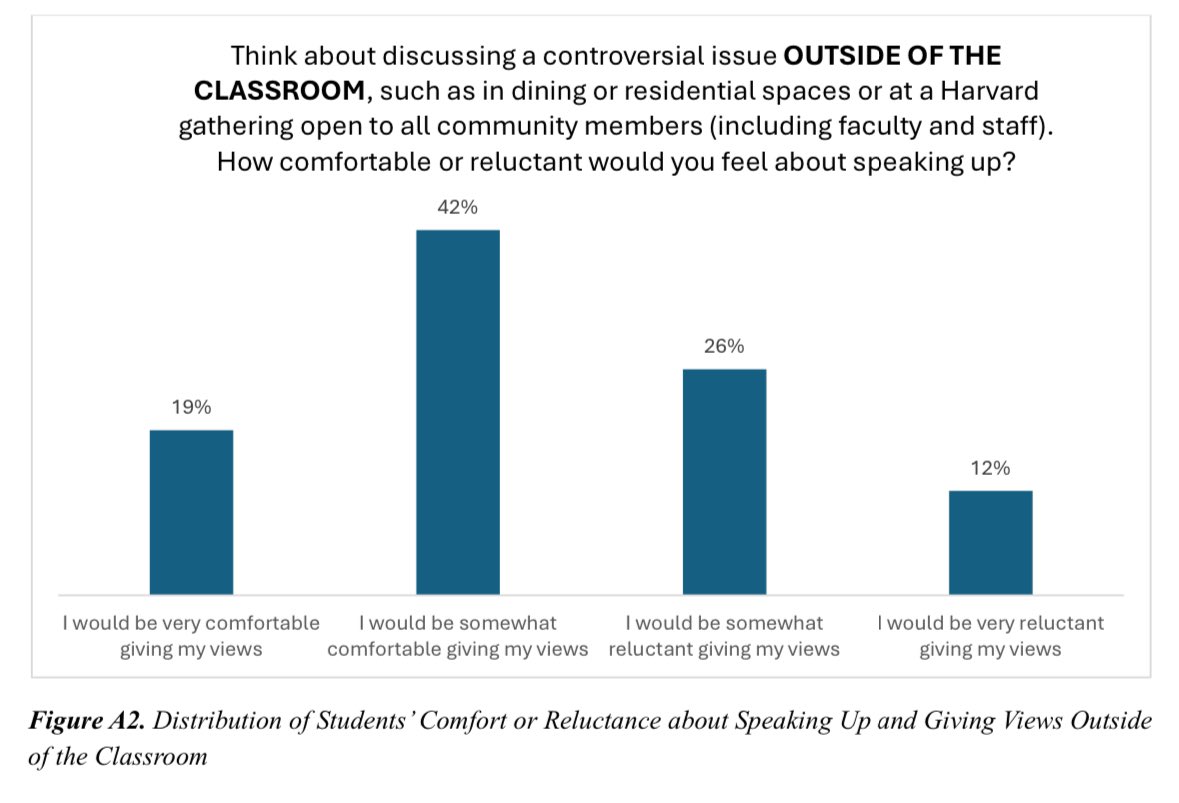
Only 38% of students said the same — that they would be reluctant to speak up during a discussion of a controversial issue outside the classroom.
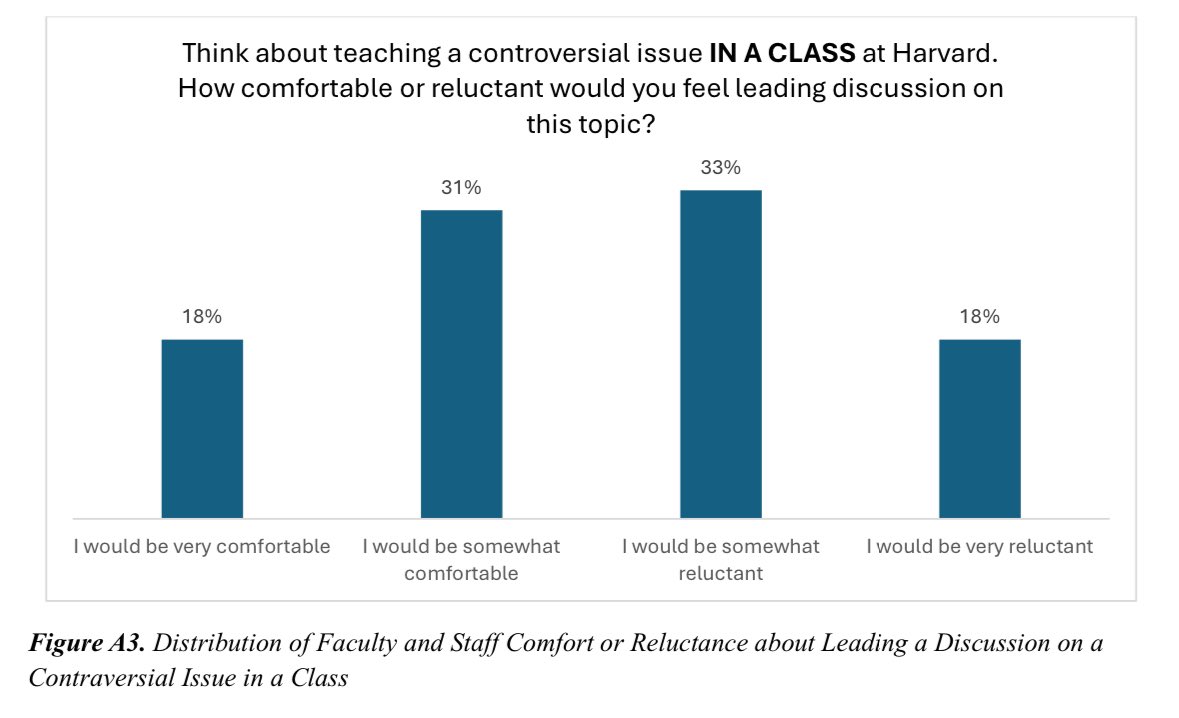
Alarmingly, just over half (51%) of Harvard faculty and teaching staff said they would be reluctant to lead a class discussion on a controversial topic.
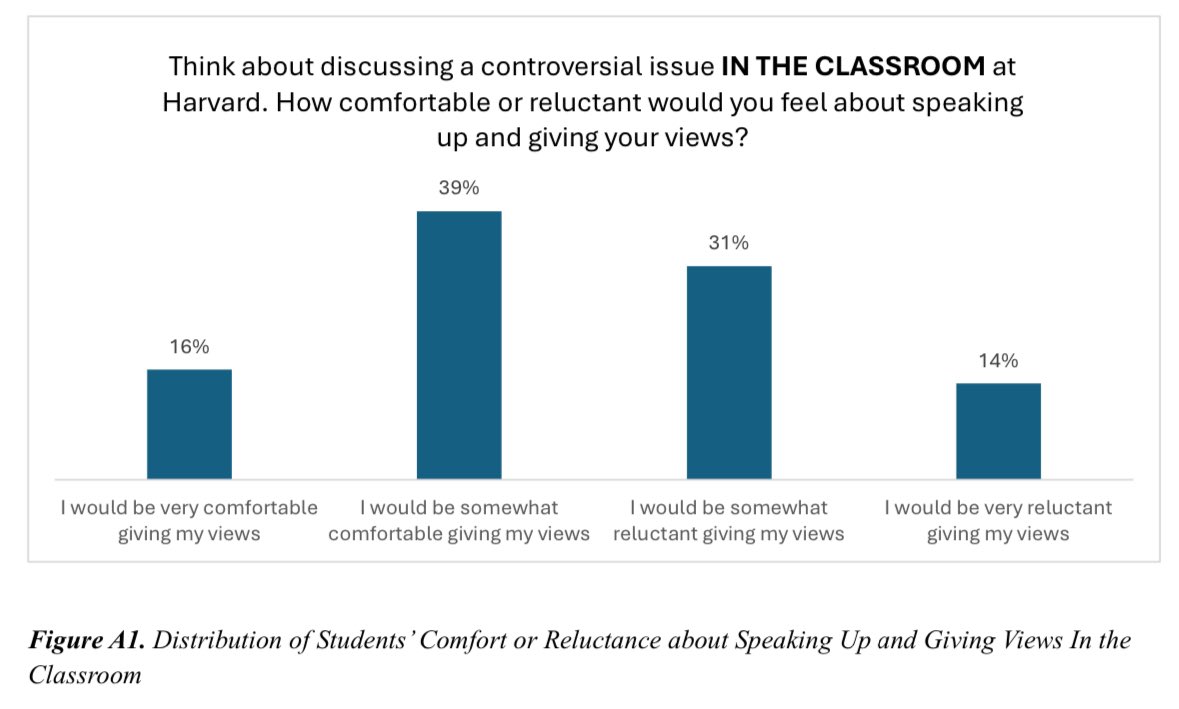
Meanwhile, 45% of students said they would be reluctant to speak up during a classroom discussion on a controversial topic.
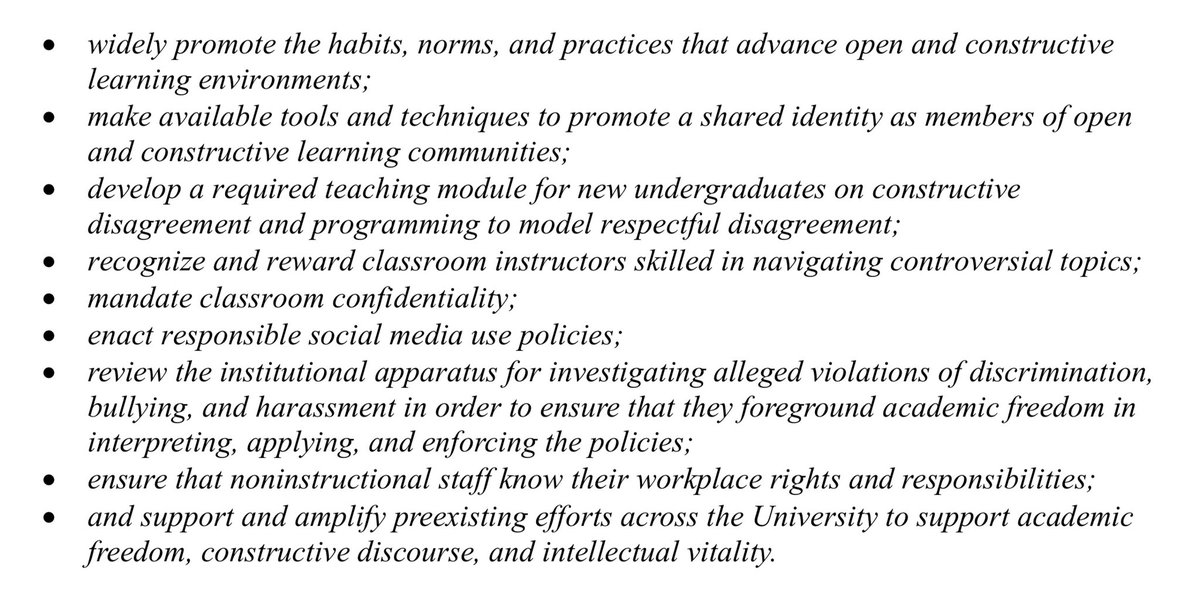
Recognizing that these conditions are not conducive to education, the committee recommends several actions:
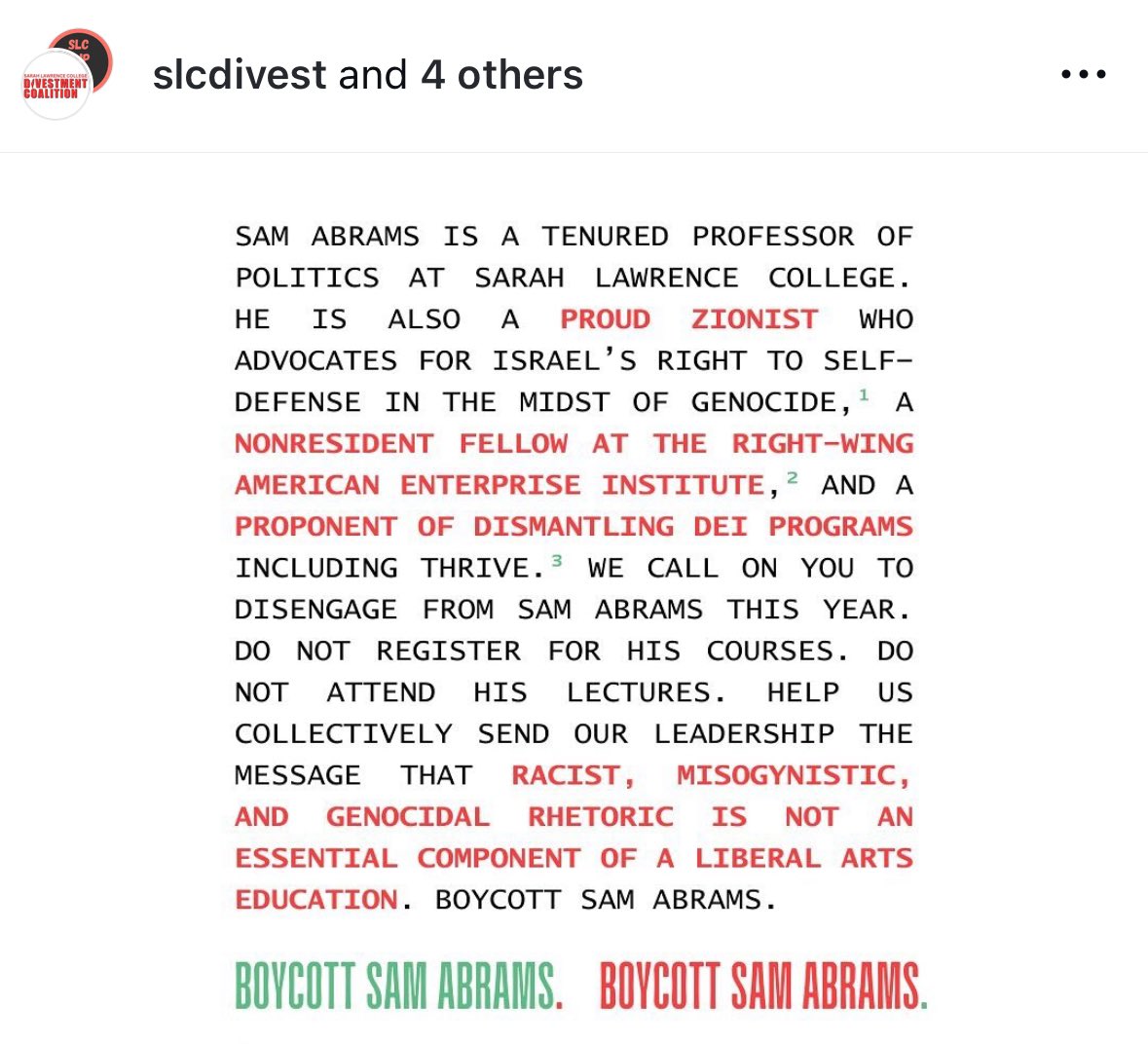
NEW: Students at @SarahLawrence are boycotting my friend, @SamuelAbramsAEI, because he’s a “proud Zionist and advocates for Israel’s right to self-defense.”
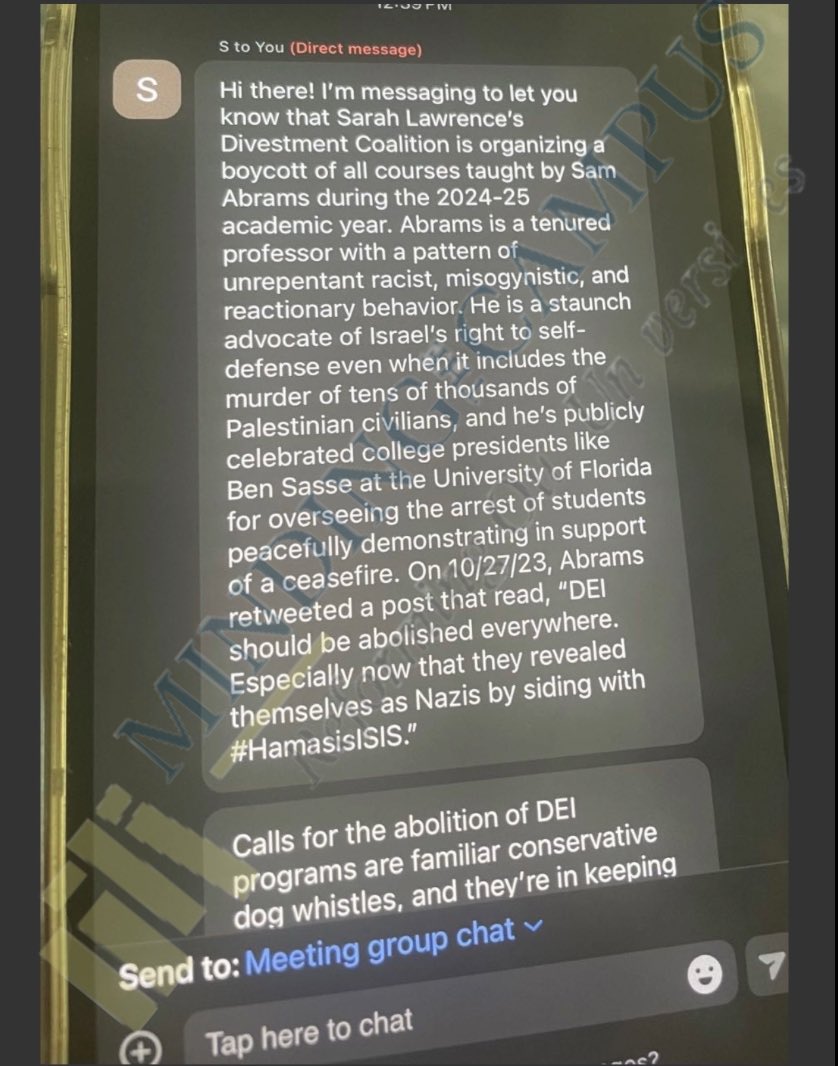
As he shows in the piece below, they were private messaging prospective students and telling them to boycott him.
🧵
As Sam writes in @MindingCampus, “this tactic of directly messaging students is a chilling evolution of cancel culture that threatens speech, expression, learning, and open inquiry.” mindingthecampus.org/2024/08/27/the…
Here’s an example of one of the messages from the article:
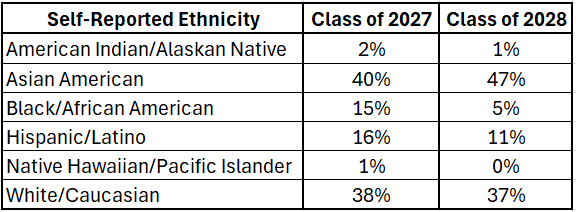
BREAKING: MIT has published the profile of its incoming class, the first admitted in the wake of the SCOTUS decision again affirmative action.
Here is a chart comparing the ethnic profile of last year's class to this one:
MIT’s director of admissions says, “As a baseline, in recent years around 25% of our enrolling undergraduate students have identified as Black, Hispanic, and/or Native American and Pacific Islander. For the incoming Class of 2028, that number is about 16%.”
BREAKING: Johns Hopkins University has adopted a “posture of restraint” on public statements.
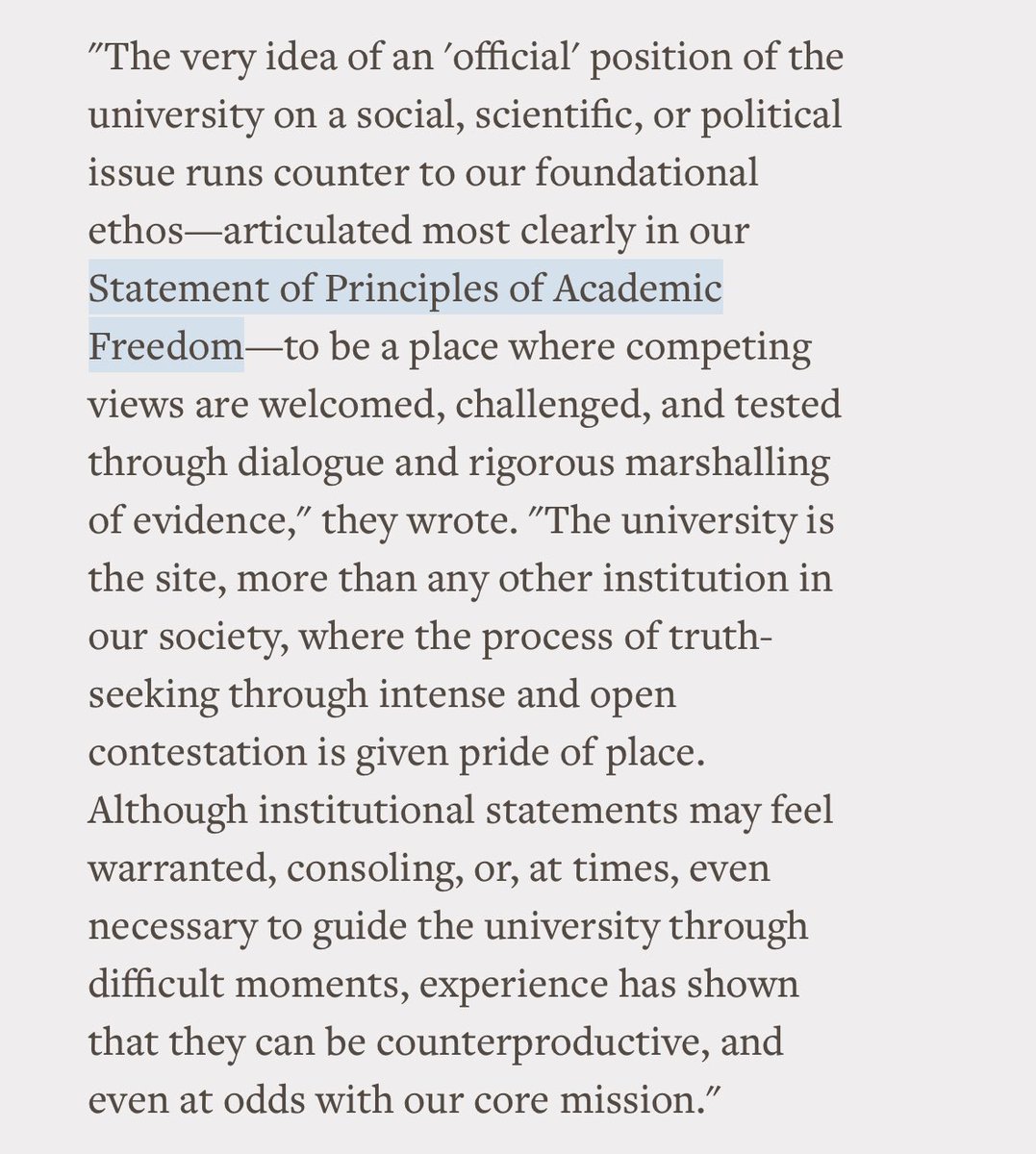
Such statements should be made “only in the limited circumstances where an issue is clearly related to a direct, concrete, and demonstrable interest or function of the university.”
The university’s leaders say, “the very idea of an ‘official’ position of the university on a social, scientific, or political issue runs counter to our foundational ethos.”
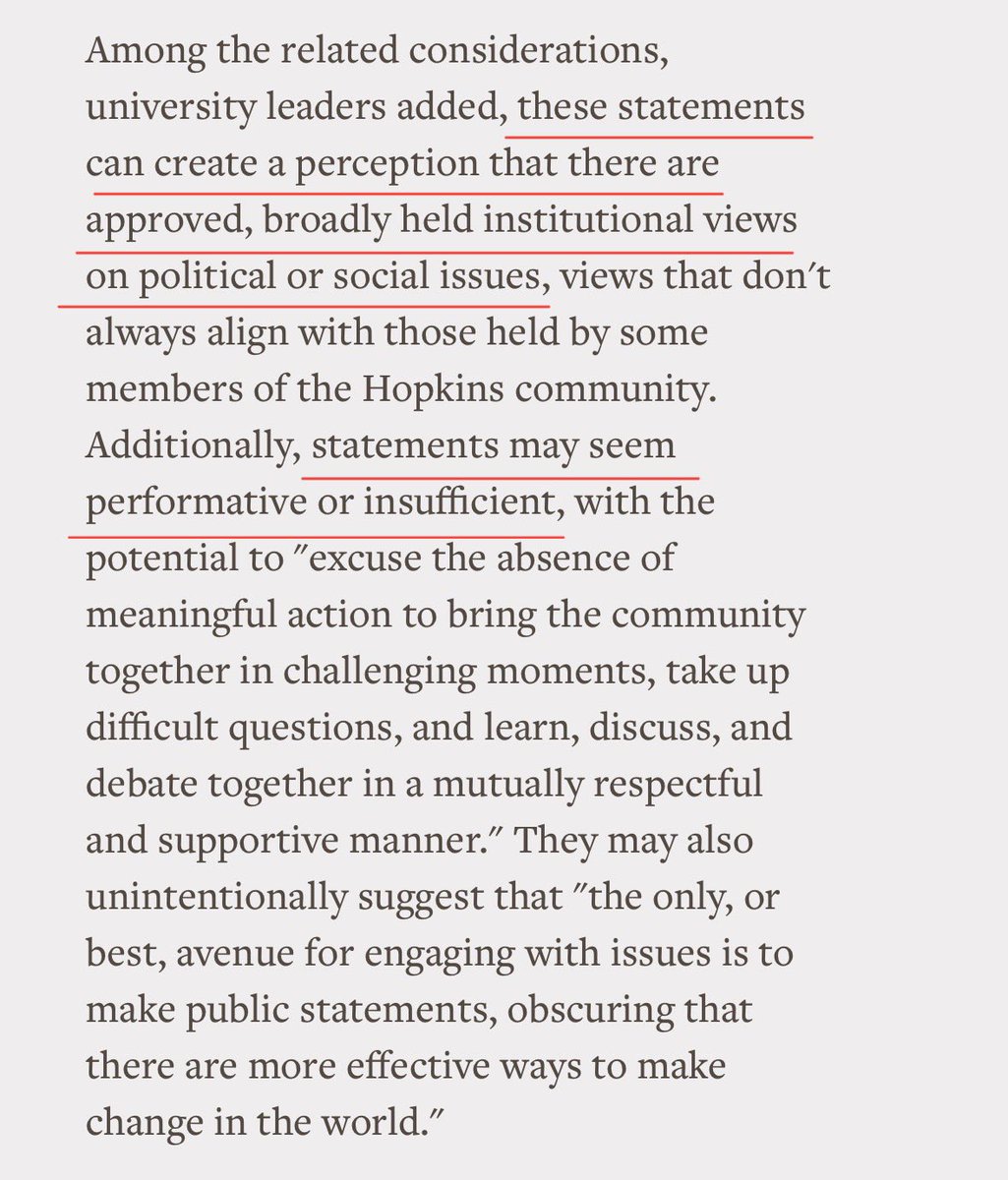
They say that institutional statements can create an illusion of consensus and also point to the performative nature of such statements:
An embarrassing window into both Ivy League disdain for common Americans and potential research bias:
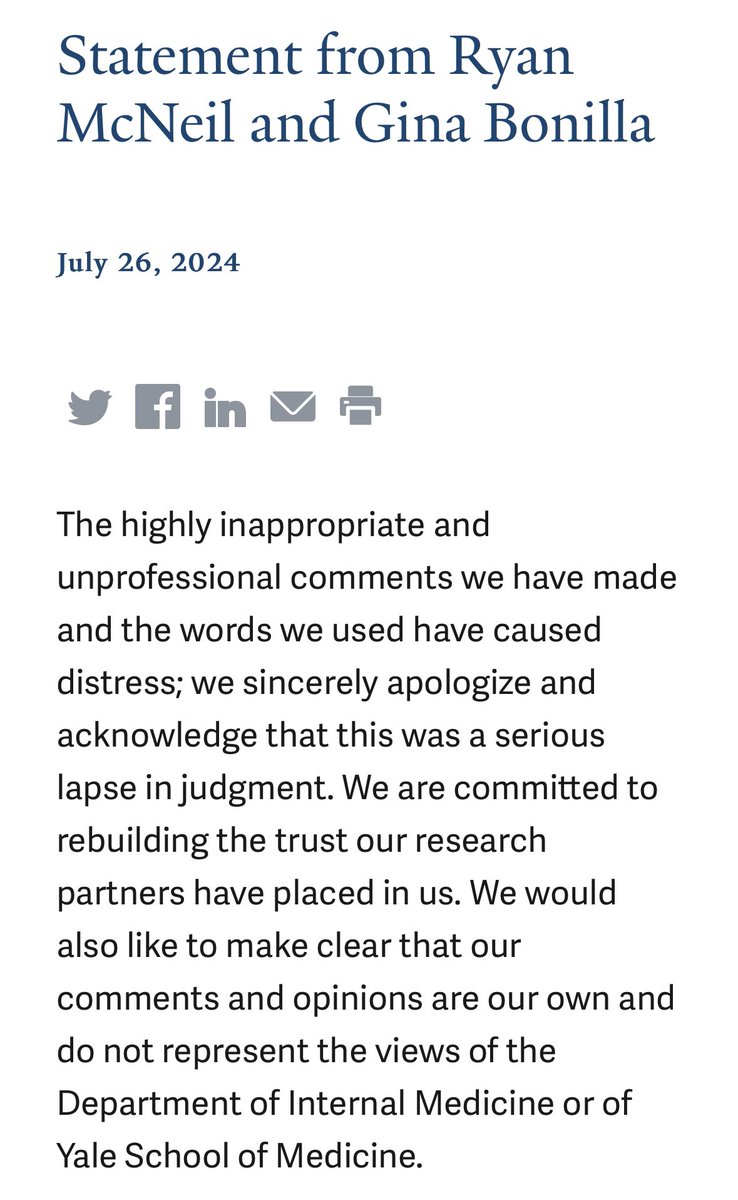
Yale researcher Ryan McNeil and a colleague were caught on a hot mic insulting a Harlem activist after interviewing him as part of their NIH-funded research project on addiction and homelessness.
The interviewee had expressed concerns about the impact of safe injection sites on the community.
But McNeil is obviously a huge advocate for such sites.
“That dude suuuuuuucked,” he said.
He then dismissed the man’s concerns:
“His primary concerns were basically around, frankly, white discomfort.”
“And there’s the whole…liberal white…the business are closing bullsh*t.”
At one point, McNeil seems to mock concern about kids witnessing drug use, etc.
Finally, raising concerns of research bias, McNeil said he “was hoping he was going to be, honestly, a bit more of an outwardly prick.”
“Let’s try to get some more interviews of people who suck,” McNeil said, adding, “I want to find someone who we can give enough rope to hang themselves with.”