🚨🧵
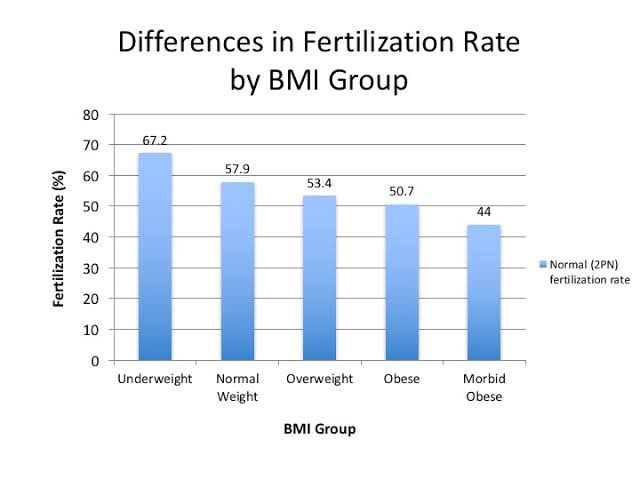
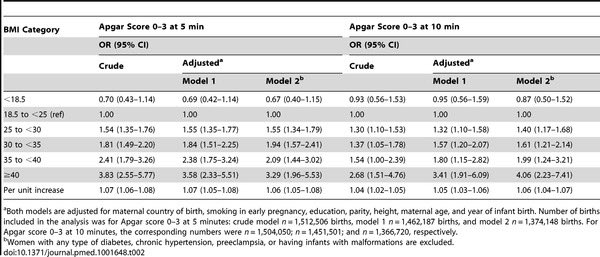
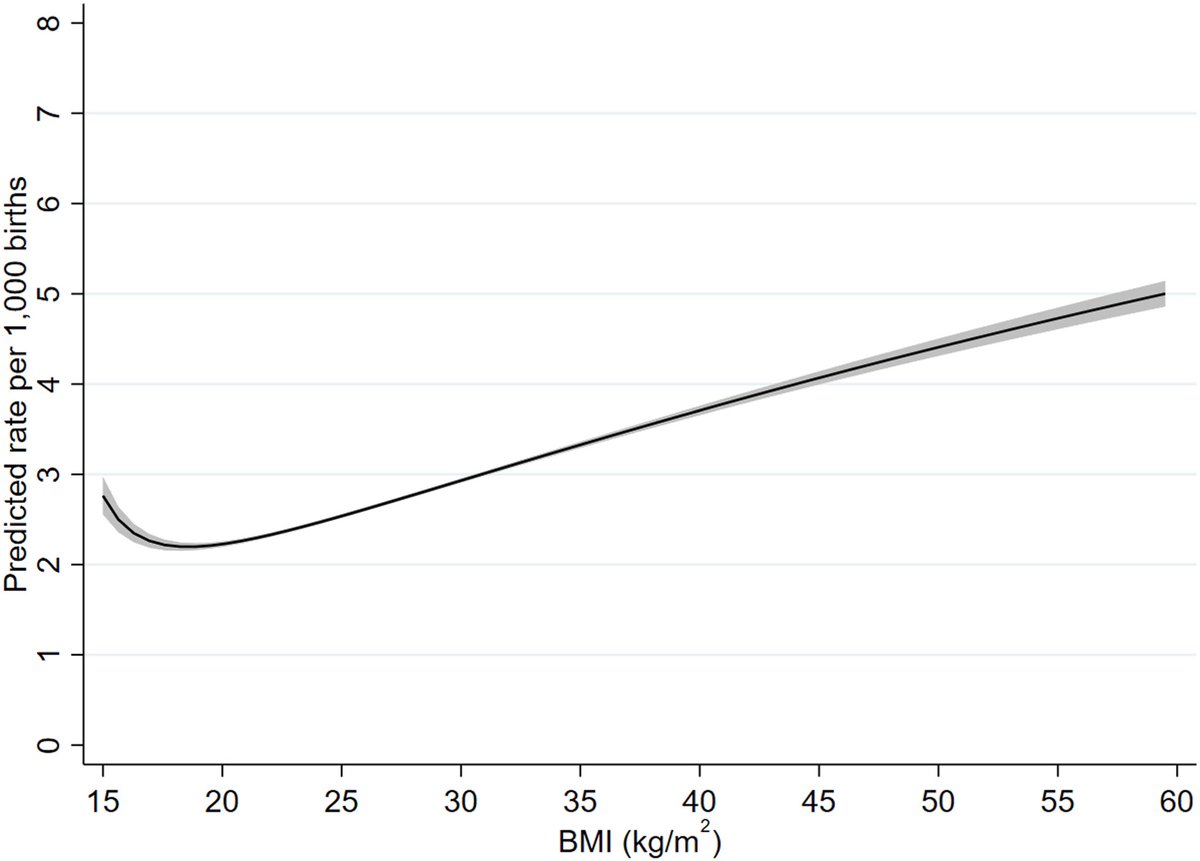
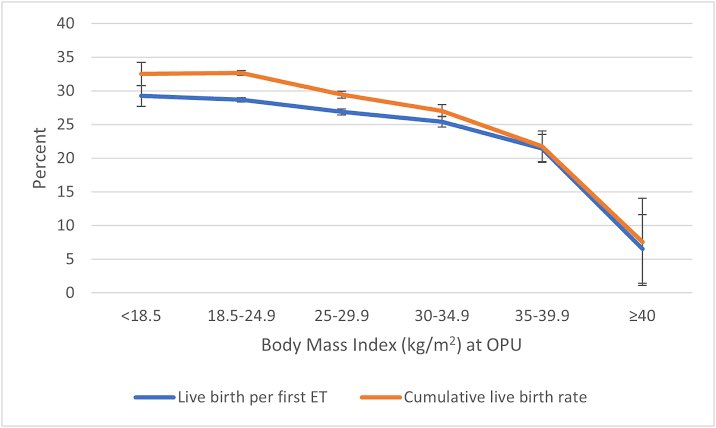
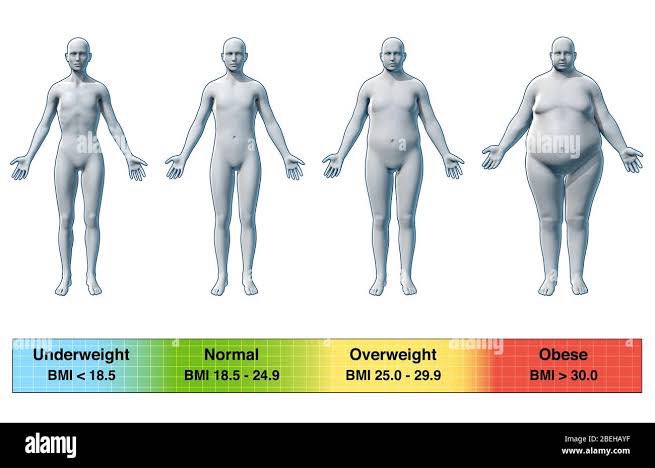
DO NOT let modernity gaslight you on the LQ (lard question). the claim lower bmis being more attractive is because of unattainable, ‘cultural’ beauty standards is environmentalist cope.
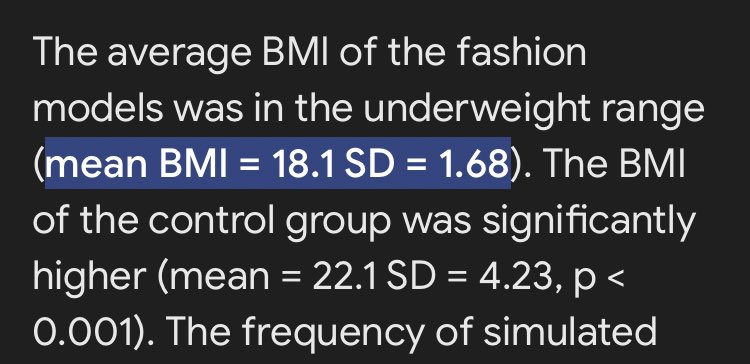
the default hypothesis: lower bmi signals fertility + genetic fitness.
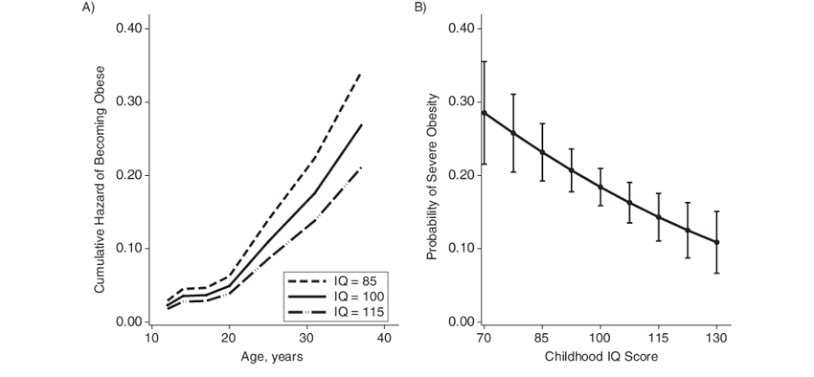
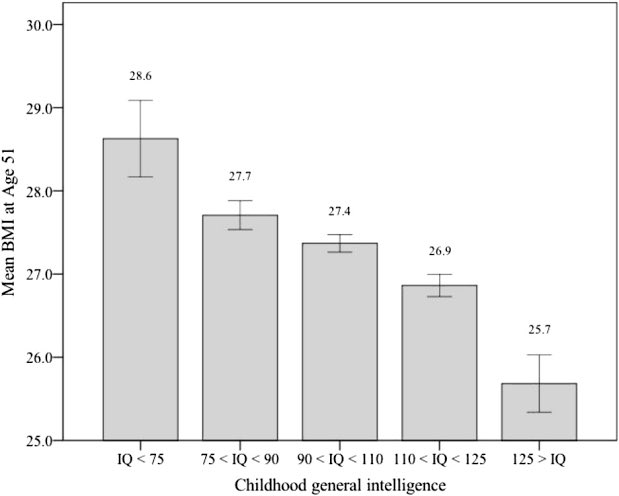
so what’s classed as ‘underweight’ (<18.5) isn’t associated with lower fertility or higher infant mortality. in fact, quite the opposite seems true. what about signs of fitness? intelligence is inversely associated with bmi:
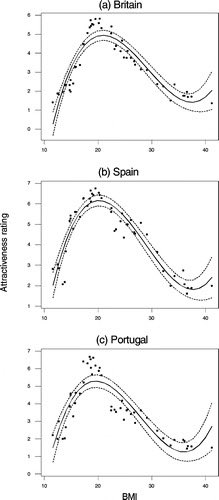
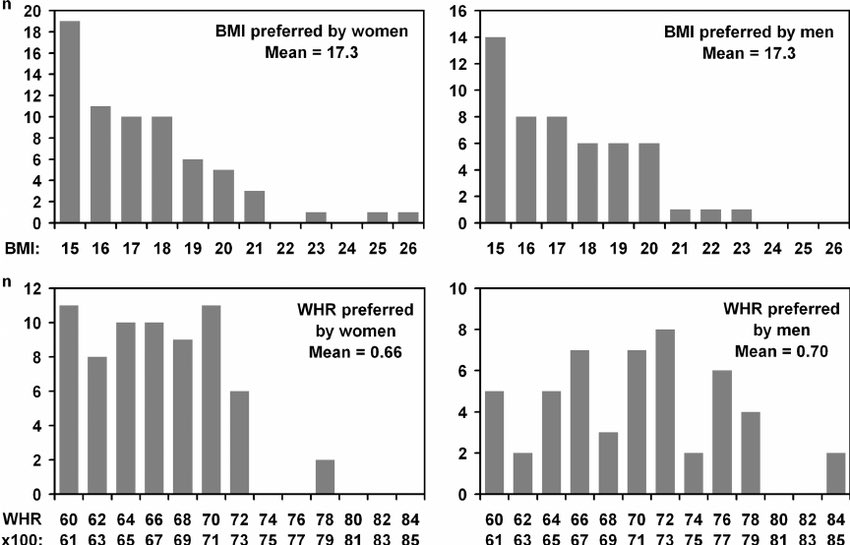
so, what is the ideal bmi in terms of attractiveness? silhouette studies seem to suggest lower numbers than those asking people to rate actual people and looking for a relationship. idk what the better proxy is.
either way, 16-20 seems a safe range.
#normalisecallingmorepeoplefat
• • •
Missing some Tweet in this thread? You can try to
force a refresh

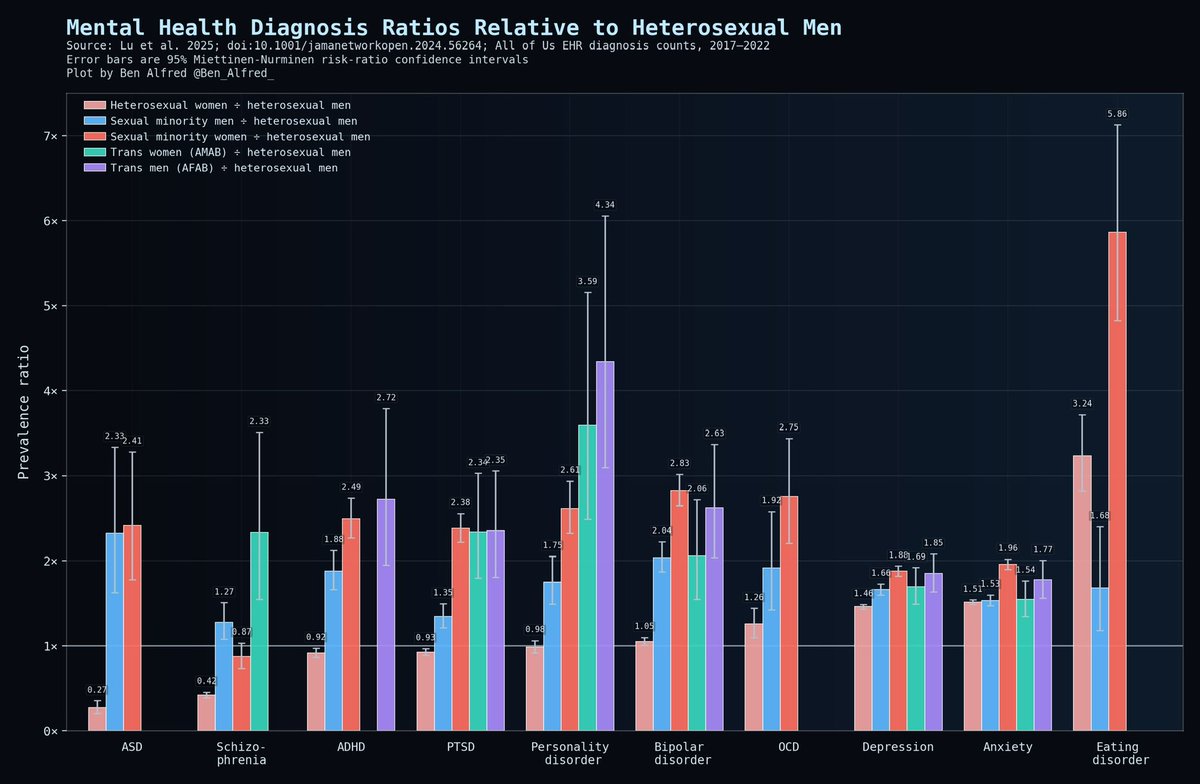
Aberrant sexual orientation/gender identity groups have far higher rates of mental illness. This gap is present across all categories, to varying degrees, and is uniform in direction. Non-heterosexual women and transexuals have especially elevated rates:
Interestingly, the mental illness gaps between non-heterosexual and heterosexual women tend to be larger than those between non-heterosexual and heterosexual men. Within-sex rate differences:
Why this is the case is unclear, as both behavioural patterns seem equally unadaptive. Nonetheless, the trend is present on the genetic level as well; perhaps this is due to the psychopathology factor threshold for women to deviate from normalcy being higher?
Do lesbians exist?
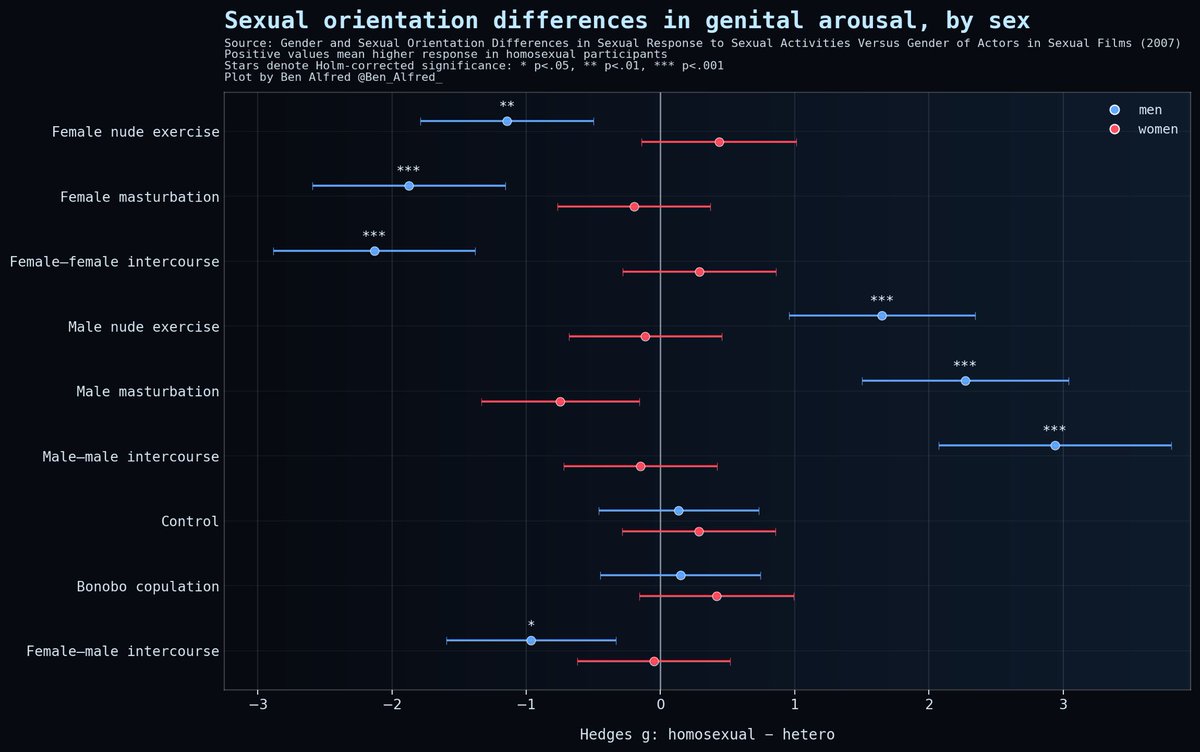
In one study, arousal to different sexual stimuli was close to identical between self-identified heterosexual and homosexual women, but pronouncedly differed between gay and straight men in the direction you’d expect. My guess is it is mostly LARP.
The largest recent physiological study I could find seems to replicate this. All orientation groups in the sample showed arousal to stimuli depicting both male and female models to similar degrees. The nominally significant findings do not survive basic statistical hygiene.
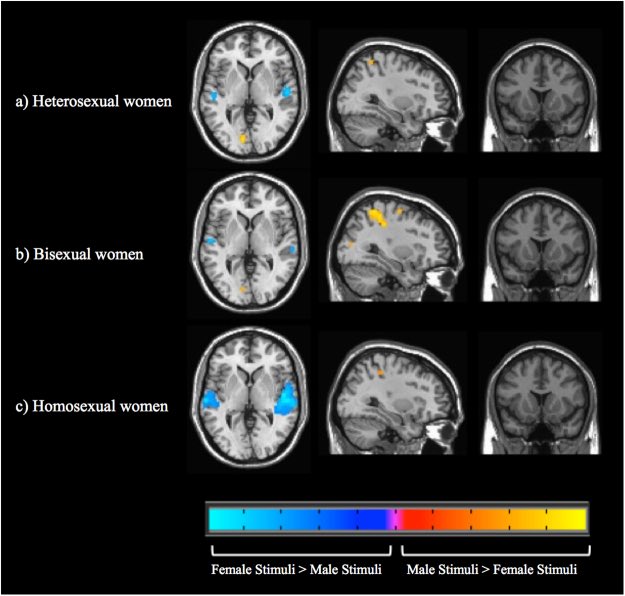
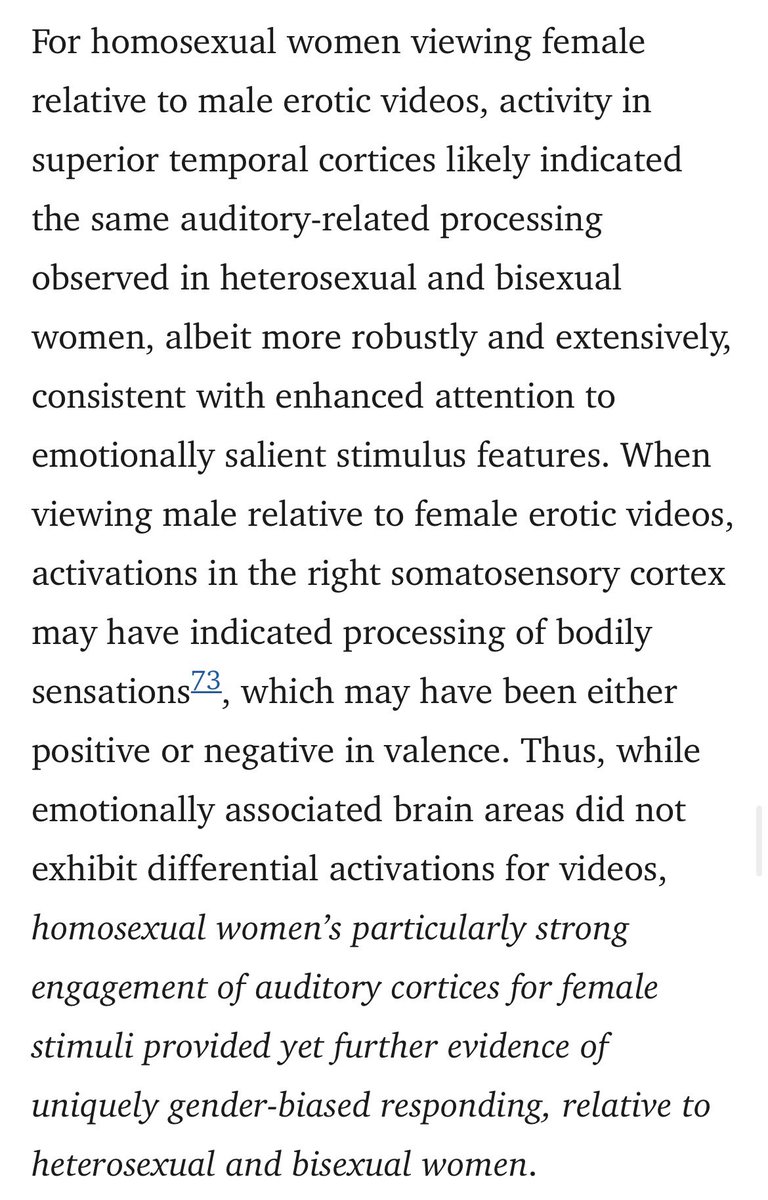
What about neurological evidence? In one study, sound processing regions lit up more in all women to female stimuli (though there was confounding due to the loud moaning in the female video) and especially so in lesbians. Somatosensory regions lit up more in all orientation groups when watching male over female stimuli.
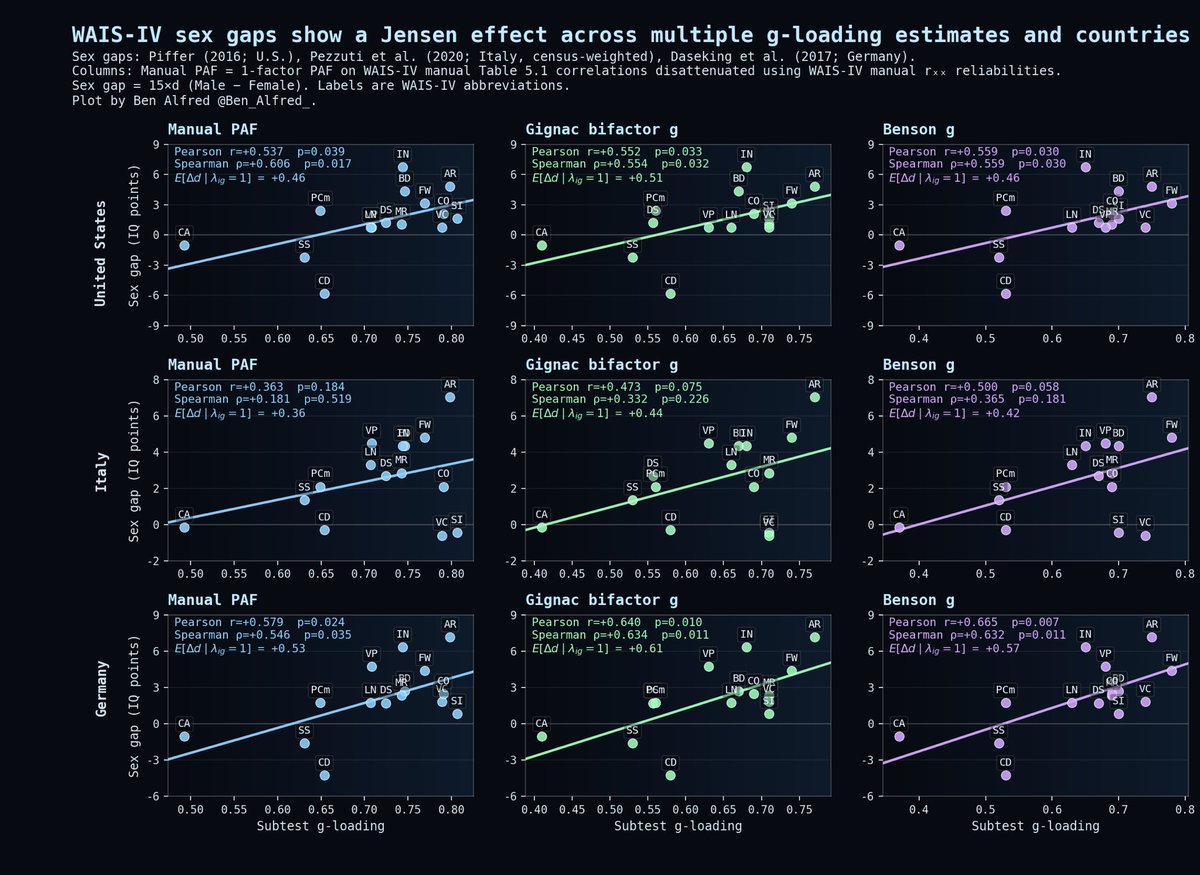
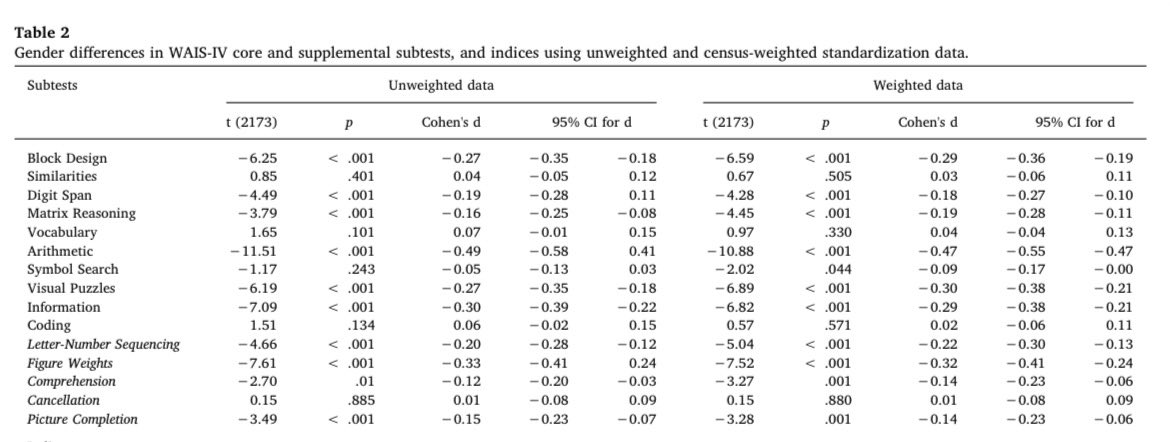
Italians were an exception, as the gender ability profiles in their sample appear to be less differentiated. Strangely, Italian males even outperformed Italian females on some processing speed tasks.
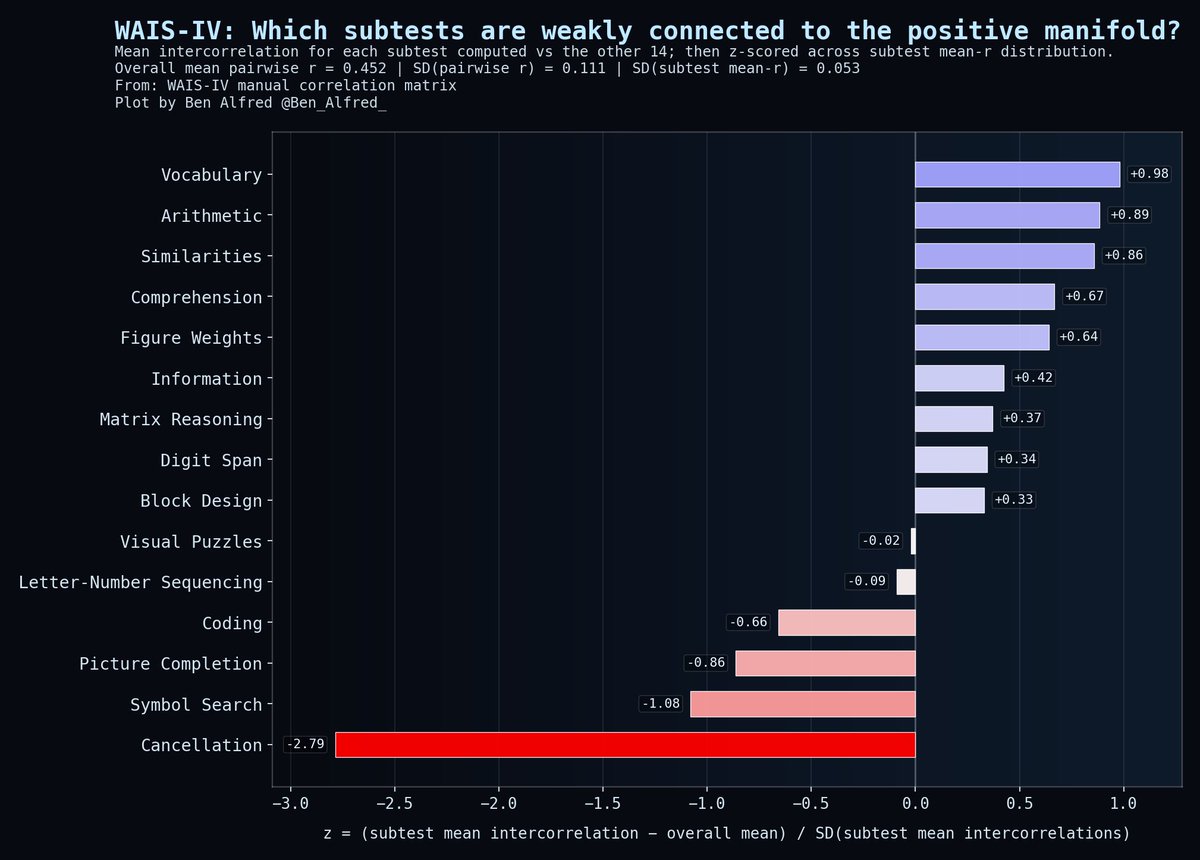
Moving on, it’s immediately obvious that the cancellation subtest is a uniquely poor g proxy, and there is an intuitive way to demonstrate this: it is 2.79 standard deviations below the subtest mean correlation average.
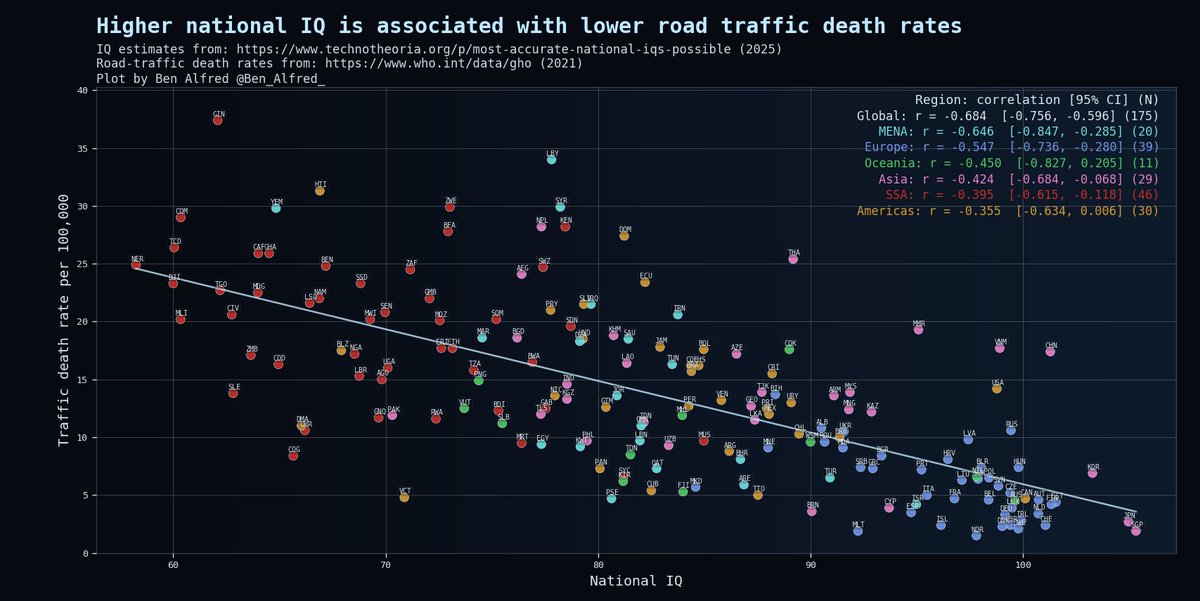
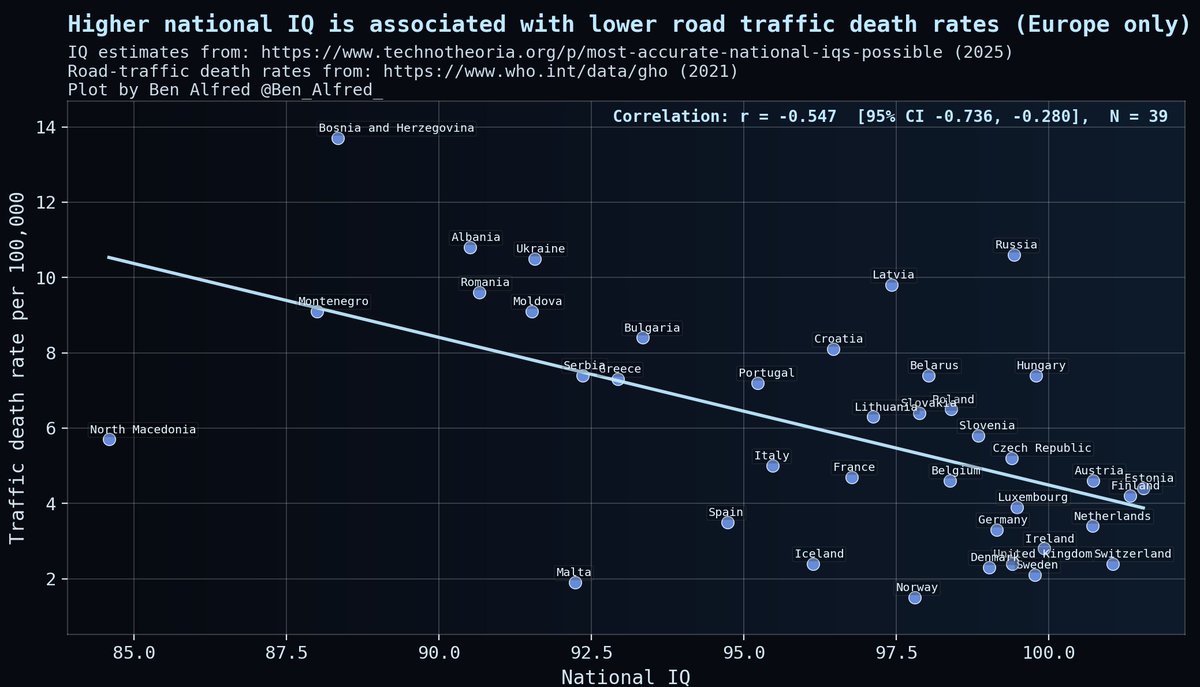
On the individual level, higher intelligence has a protective effect against fatal car accidents, but does the same hold true when comparing populations?
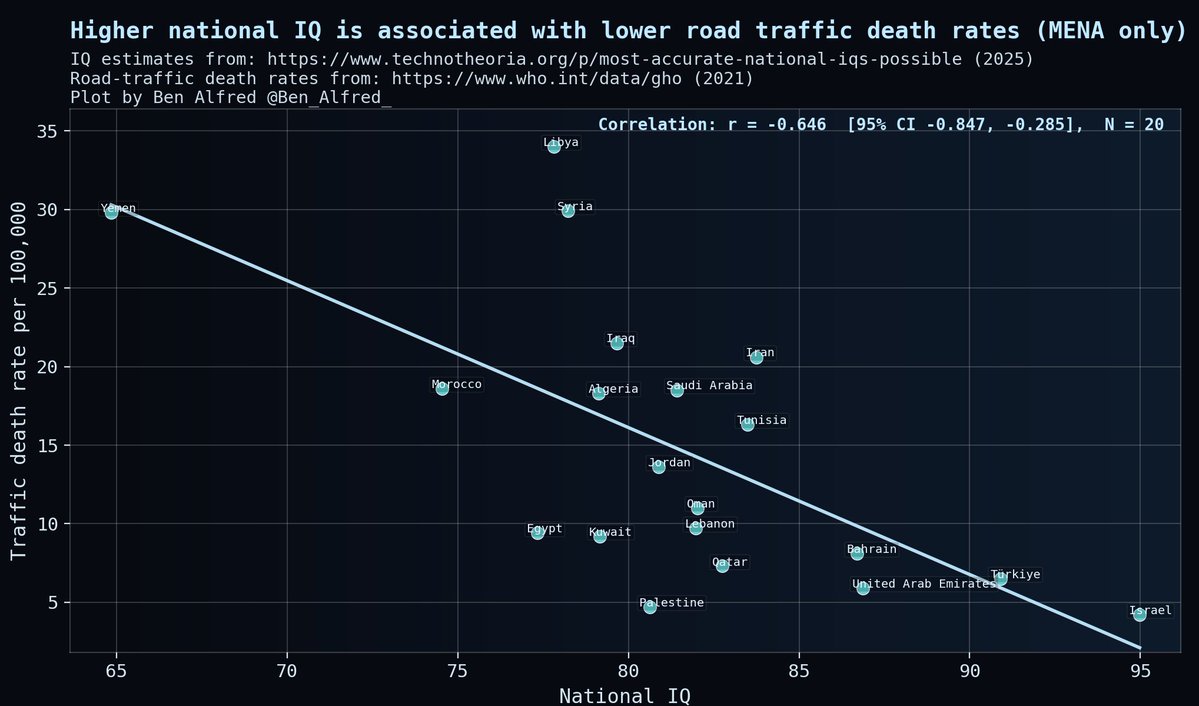
It appears yes: national IQ correlates at r = -0.7 with country-level road-traffic death rates.
Is 'mansplaining' actually necessary?
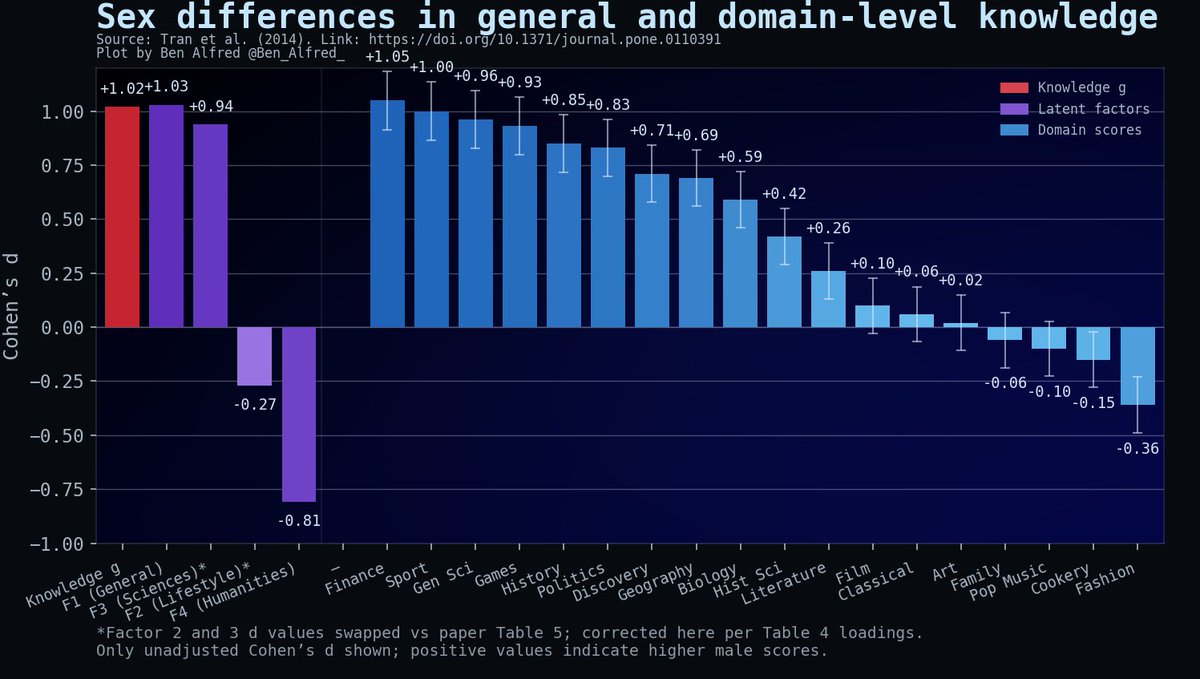
It may well be, as women know much less than men in almost every domain. This is especially true for finance, the general factor of knowing about things, and science-related knowledge.
Evidently, men are not mansplaining enough:
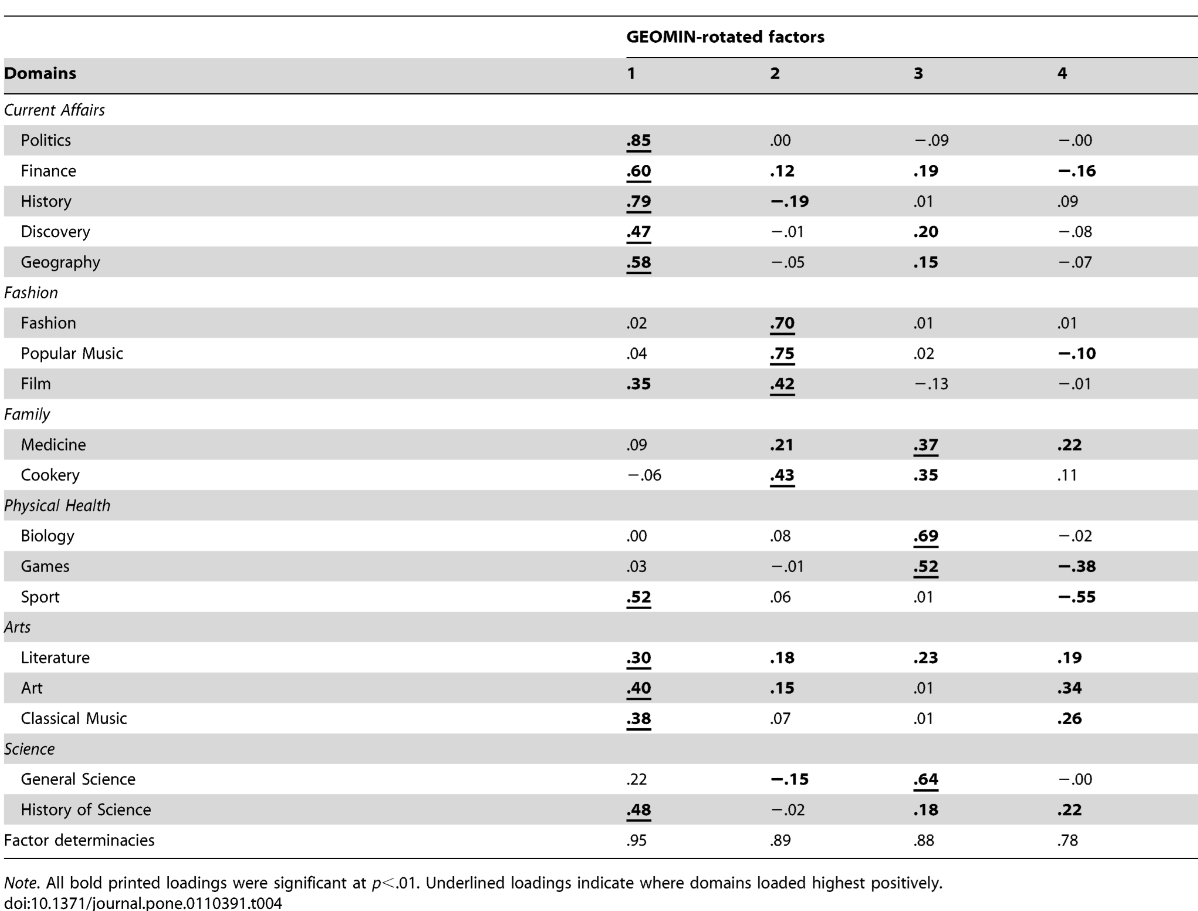
You may be wondering "what's going on with factor 4?", and so did I. However, it ceases to be mysterious once you realize that factor 4 does not load at all on the second order general factor, and was also uncorrelated with factors 1 through 3. And look at the subtest loadings!
Despite being labeled 'humanities,' it is primarily defined by moderate negative loadings on Sport and Games, effectively indexing the absence of male-coded knowledge rather than humanities expertise. The former test is also the only one whose largest absolute loading was on F4.