This map shows how Iranian air defense systems could be layered to protect its nuclear and ballistic missile sites and oil fields. Each circle marks the “kill zone” of an Iranian air defense system.
Can Israel penetrate Iran’s defense? 1/10🧵
Iran’s air defense consists of four S300 battalions complemented by dozens of Russian SA-22 and Iranian-made “Som-Khordad” and “Bavar 373” air defense systems, among the most advanced in the world. 2/10🧵
Each Iranian S300 battalion can shoot down fighter jets over 100 miles away, launching a dozen missiles at as many as six targets at a time. Israeli fighter jets would have difficulty outmaneuvering S300 missiles, which travel at over 5 times the speed of sound.
3/10🧵
If Israel knows the precise location of Iran’s S300s, Its fighter jets could avoid entering their “kill zone,” conducting attacks beyond the S300's reach. But even if Israel avoids the S300s, it will have a difficult time avoiding Iran’s SA22 and "Khordad" systems.
4/10🧵
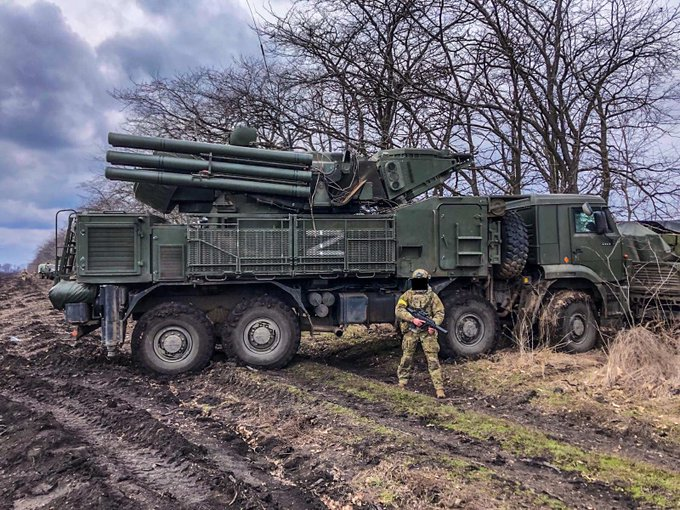
Iran’s 15 short-range SA22 air defense systems are highly mobile. Carried by truck and quickly deployed, they can ambush fighter jets almost anywhere in Iran. Each system can fire a dozen missiles at jets as high as 40,000 feet. 5/10🧵
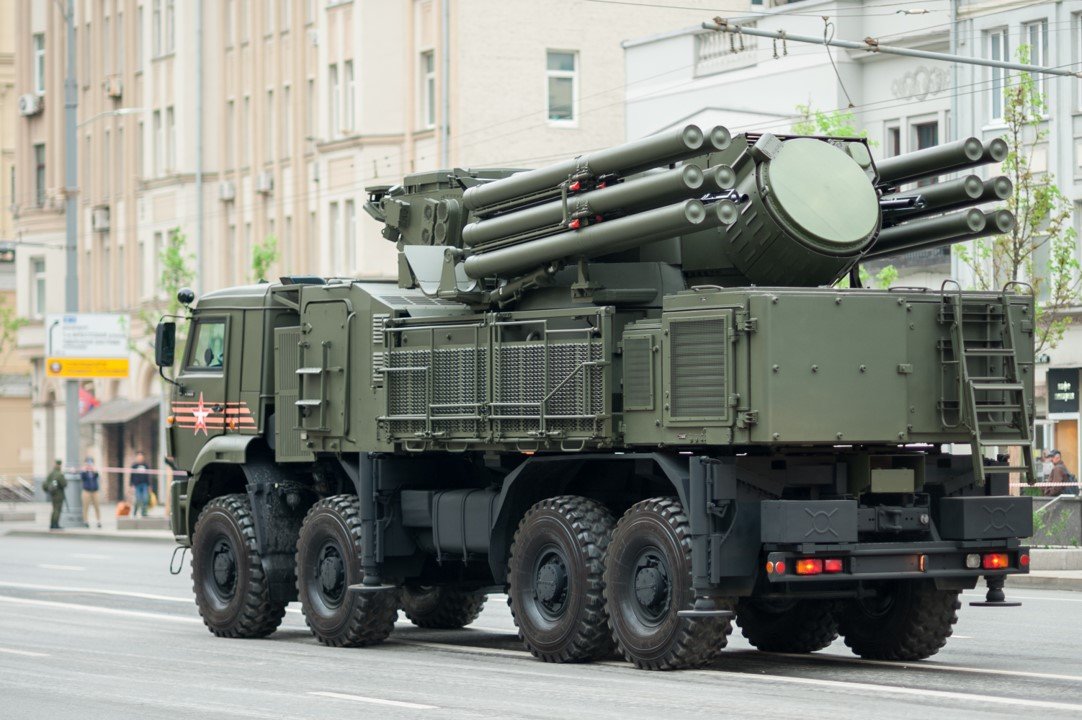
Iran’s defenses are further bolstered by several “Bavar 373,” Iran’s version of the S300. Iran also upgraded dozens of medium-range Soviet-era SA6 air defense systems, creating the deadly “Khordad”. All told, Iran’s air space is one of the best protected in the region. 6/10🧵
Even Israel’s F35 stealth fighters, mostly undetectable by Iran's systems, would struggle to inflict crippling damage to Iranian assets. A stealth fighter carrying too many bombs changes its geometrical shape, exposing its location to radars. 7/10🧵
But Air defense systems themselves are highly vulnerable. They rely on radar, which broadcasts waves into airspace in search of incoming jets. The moment a defense system turns on its radar, it exposes its location. Fighter jets can destroy it from a great distance. 8/10🧵
Iran lacks the most crucial component for air defense: Fighter jets.
Many of its jets are over 40 years old. Acquired in an age when Iran was friendly with both the US and Israel, they are no match for Israel’s jets. Iran's defense systems are defenseless. 9/10🧵
In April, Israel reportedly destroyed an S300 "Tombstone" radar in Isfahan, Iran, in response to Iran's ballistic missile attack. By destroying one of Iran's most advanced air defense systems Israel sent a clear message: Your air space is vulnerable. 10/10🧵
• • •
Missing some Tweet in this thread? You can try to
force a refresh

Satellite imagery shows something curious: While the United States and Israel dropped over 7,000 bombs on Iran over the past week, not a single munition struck the underground complex of Iran’s nuclear site in Isfahan.
Why?
1/9🧵
Last June, Iran’s nuclear sites in Natanz and Fordow were attacked with massive GBU-57 bombs. The Isfahan site was attacked with Tomahawk missiles. While Iran’s nuclear infrastructure was destroyed, its stockpile of enriched uranium survived.
2/9
Iran could be storing its stockpile of 60% enriched uranium in Isfahan, enough for potentially 10 nuclear weapons. It took Iran over a decade to enrich this uranium. If the U.S. bombs Isfahan, it may end up merely burying the enriched uranium. Iran could recover it later.
3/9
At least six U.S. B-2 bombers are now stationed at Diego Garcia air base in the Indian Ocean. This is important because the B-2 is the only aircraft that can deliver the massive GBU-57, one of the only bombs that can destroy Iran’s nuclear sites at Natanz and Fordow.
🧵 1/6
Diego Garcia air base is over 2,000 miles from Iran, making it an ideal location — far enough to give the U.S. Navy time and space to defend its strategic B-2 bombers from Iranian missiles and drones, yet close enough for the B-2 to strike targets deep within Iran. 2/6
Carrying two GBU-57 bombs that weigh over 13 tons each, the B-2 has a range of over 4,500 miles. The nine KC-135 air refueling tankers also stationed at Diego Garcia give these stealth bombers the range to conduct bombing raids on Iran from any direction. 3/6
Last night, the Alawite minority in Syria revolted against Jolani's regime (HTS). Alawite generals organized a surprise assault, briefly taking the strategic port cities of Tartus and Latakia.
Jolani's regime is fighting to regain control.
🧵1/5
The Alawite territory is surrounded by mountains, accessible only through a few roads. Thousands of Jolani's fighters drove in to quell the rebellion, only to be ambushed by Alawite insurgents.
The Alawites killed dozens and captured 37 of Jolani's men. 2/5
By dawn, Jolani's regime (HTS) managed to regain control of these two cities, taking revenge against Alawite families associated with the revolt.
Alawite forces are still holding some of the territory. 3/5
Israel is now enforcing a siege on the Gaza Strip following Hamas' refusal to release the hostages. While existing food supplies could last for months, Israel can destroy Gaza's fuel depots.
Without fuel, Gaza will plunge into darkness.
Here's how this could unfold: 🧵1/4
To make matters worse for Gaza, the US has fast-tracked a $2 billion sale of 35,529 MK-84 bombs to Israel. One MK-84 bomb can destroy a building; 35,529 can level entire cities in the Gaza Strip. 2/4
An additional $295M shipment of D9 bulldozers has also been released. Israel uses these bulldozers to demolish buildings in Gaza that were rigged with explosives by Hamas. By bulldozing these structures, Israeli soldiers avoid walking into Hamas traps. 3/4
Israeli forces are preparing to advance toward Damascus, Syria, to defend the Druze suburb of Jaramana, currently under attack by the Syrian regime (HTS).
Druze reinforcements have arrived in Jaramana with support from the Israeli Air Force.
Here's how this could unfold: 1/4
Yesterday, clashes erupted between the Syrian regime, led by HTS, and Druze forces in Damascus. The Druze are a religious minority that has faced persecution in the past by HTS.
Israel has vowed to protect them.
2/4
Last week, Israel announced it will attack any HTS-affiliated forces that move south of Damascus. 3/4
Iran is now weeks away from enriching enough 90% Uranium-235 to build a nuclear weapon. It is developing warheads at the Parchin complex. If not stopped, Iran could conduct its first nuclear test in 2025.
Where are Iran’s nuclear facilities, and can Israel destroy them? 1/11
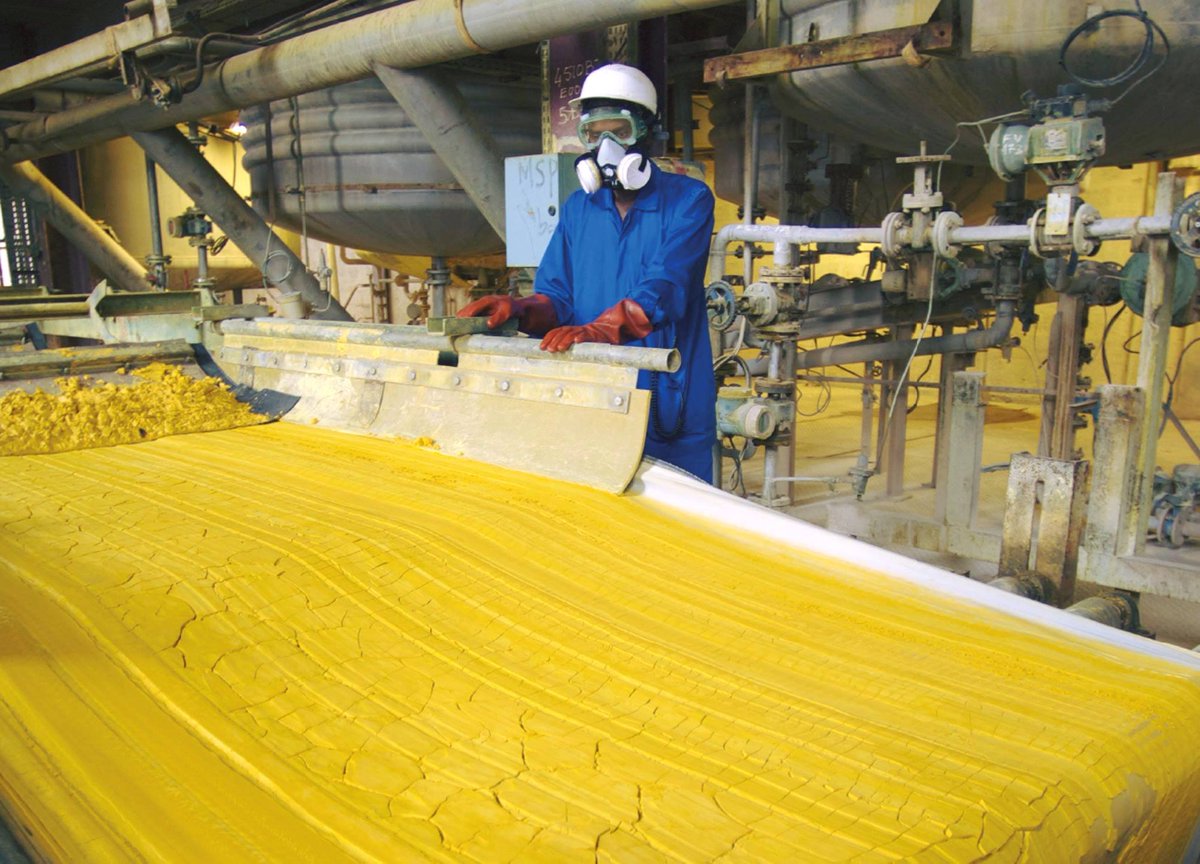
Iran sources uranium ore from the Saghand and Gchine mines. It then mills it into “yellowcake” powder — 99% Uranium-238 and ~1% Uranium-235. Only U-235 can sustain the chain reaction that causes a nuclear explosion. The uranium must be enriched. 2/11
Enrichment starts at the Isfahan facility, where uranium is converted into a gaseous form. From there, it is sent to Natanz and Fordow, where thousands of centrifuges spin at supersonic speeds, separating U-235 from U-238. With each rotation, Iran inches closer to the bomb. 3/11