Combination K Profile picture
Oct 15, 2024 15 tweets 15 min read Read on X
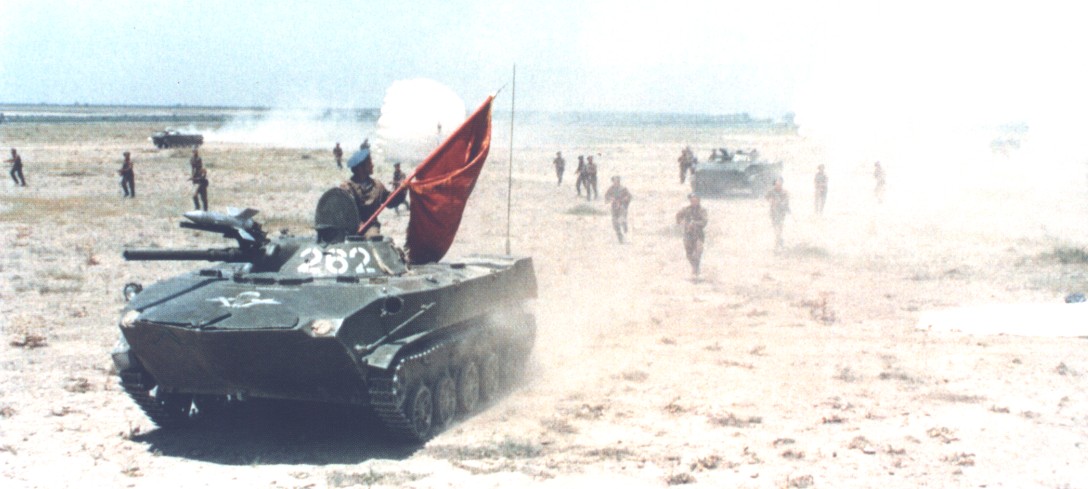
A thread discussing the history and technical characteristics of the BMD-1/2 airborne fighting vehicles: Image
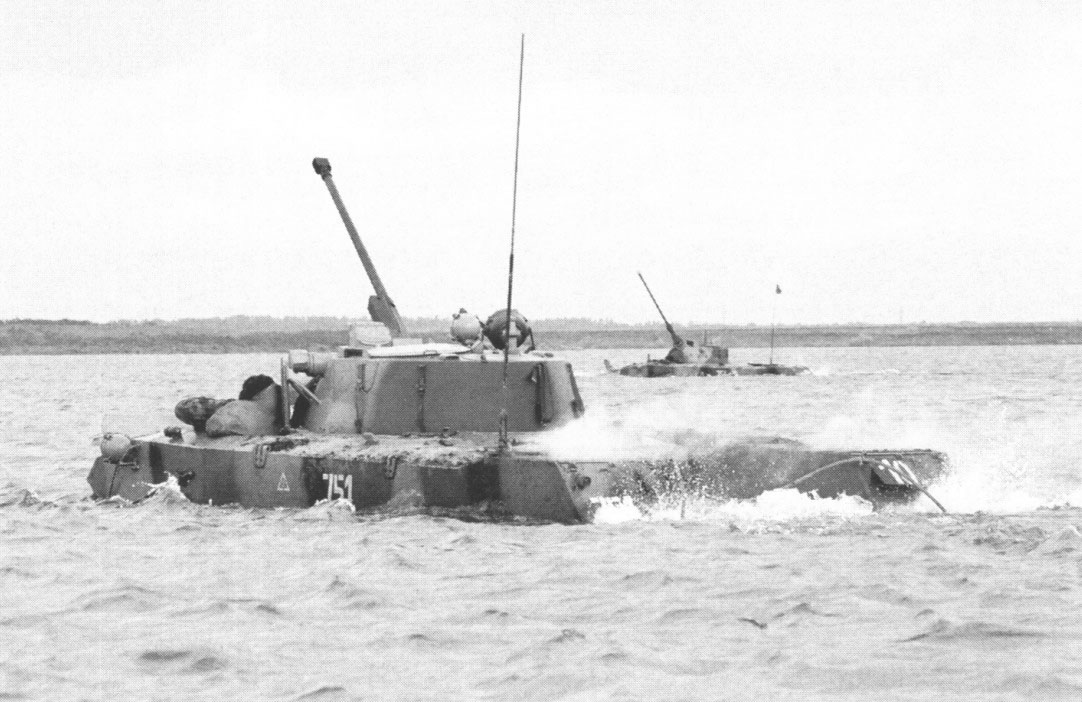
The BMD-1 was first conceptualized due to the lack of an amphibious vehicle which could be supplied to airborne troops. Volgograd Tractor Plant was chosen to design and produce the system, this is due to their experience in the production of light armored vehicles. Astrov Design Bureau wished to usurp the contract, seeing as they had spearheaded the previous generation of ASU-57 and ASU-85. At this time Volgograd was in the process of updating the aging PT-76, and found that the strict requirements which were demanded by both programs shared many facets, and therefore, BMDs distant ancestry is tied closer to PT-76 than BMP-1. The BMDs unique requirements were that it had to be light enough for AN-12 to carry two of them, be capable of employing the P-7 + MKS-760 multiple parachute system, and to share its armament with BMP-1, (which was a contract Volgograd competed for years prior).Image
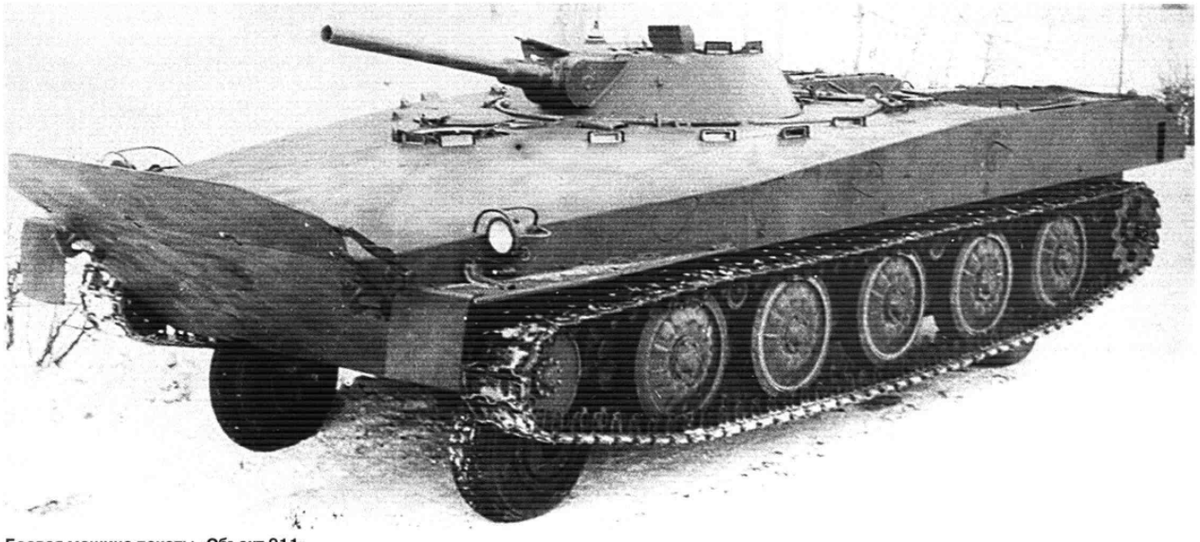
The BMD was to have a crew of 2, and transport 5 paratroopers internally, there were also to be firing ports along the hull to allow for defense from any direction the system may be engaged from. It was to share similarities to the BMP-1s power plant, and operate a water jet propulsion system. The first prototype to see similarities to the BMD was Object 911, which saw propositions for a rear engine and transmission configuration, and the ability to carry six dismounts. The vehicle was to feature a two man turret, alongside a bow-shaped front which would improve its amphibious capabilities. Similarly to the BMD, Object 911 would concentrate the dismount compartment towards the front of the vehicle, six sitting behind the turret, alongside firing ports along the sides and rear. The system would feature a unique hatch design, forcing the crew to dismount over the engine, being wide enough for two to exit simultaneously. Object 911 would operate a mechanical transmission with a two disc main friction clutch and a gearbox containing two clutches and two coaxial planetary gears, alongside two hydrojets, being almost identical to those found on PT-76. The vehicle would also employ a tracked suspension with a rear drive sprocket and front idler, and 5 road wheels, which were identical to those found on PT-76. Like the BMD, pneumatic suspension was used which allowed the vehicle to raise and lower its height from 426 millimeters to just 96. The armament would be identical to that of BMP-1 as per program requirements, the vehicle would functionally depart in its more niche characteristics.Image
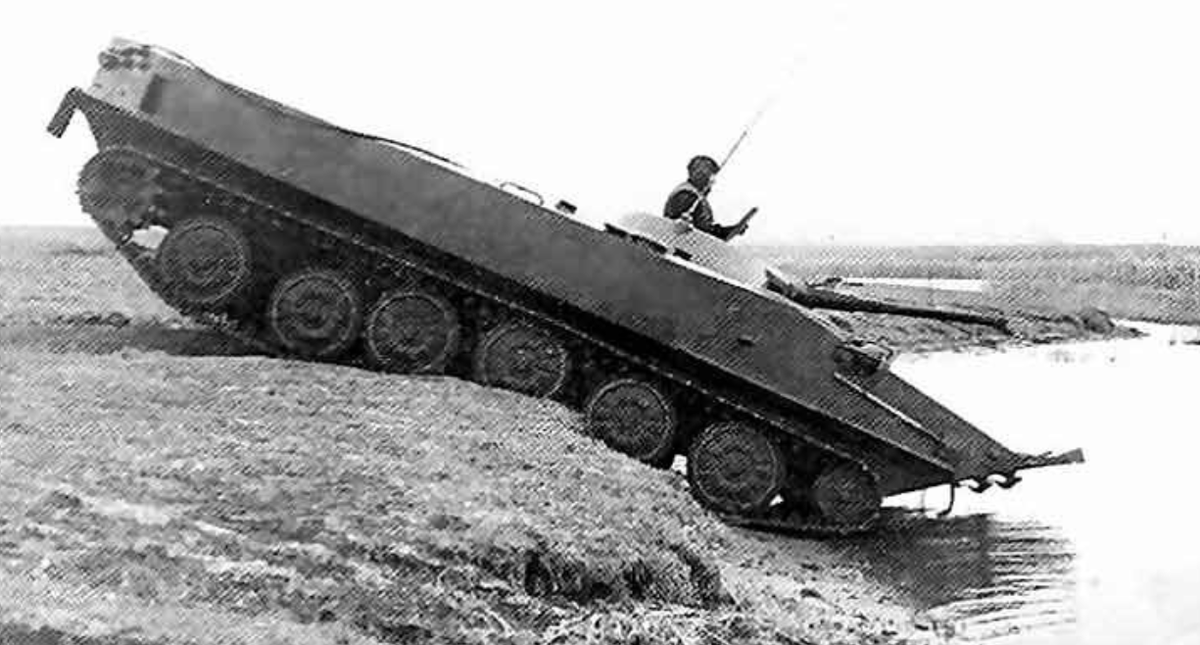
Object 914 would be a more conventional proposal, and was the first prototype to be air transportable, though could not be dropped from altitude. The vehicle would have a crew of 10 factoring in dismounts, and would operate a nearly identical layout to that of BMD in regards to the position of machine gunners relative to the driver, though unlike the BMD the armor would be high hardness steel. The V-6M diesel engine was employed, which was located to the rear of the hull, similarly a two disc main friction clutch and a gearbox with two clutches would see integration. A conventional torsion bar suspension was employed as well as hydraulic shock absorbers, the second prototype would see the integration of hydraulic track tensioning. Object 914 would employ the same water jets as Object 911.Image
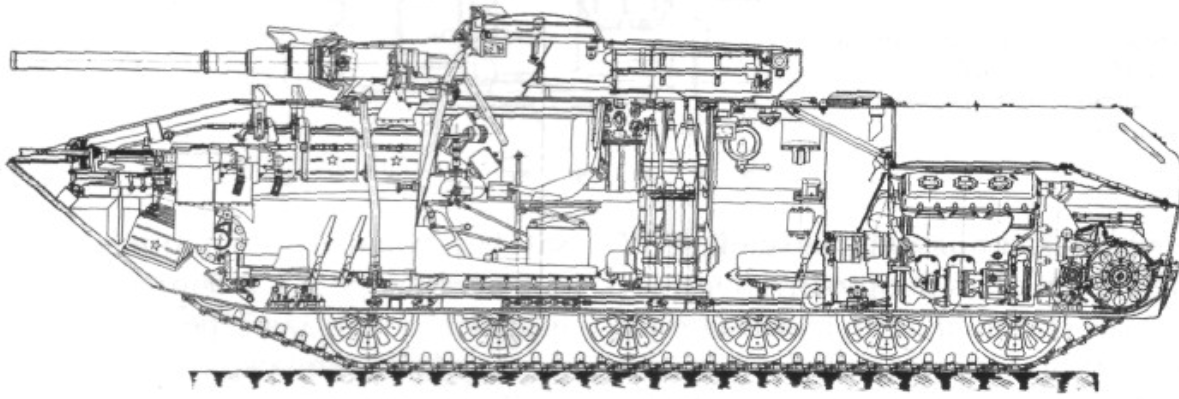
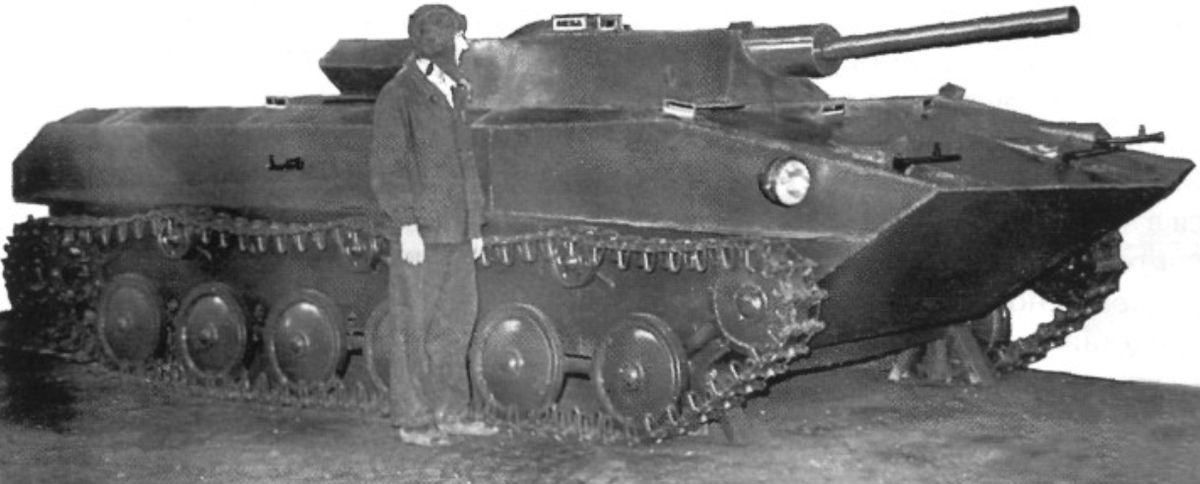
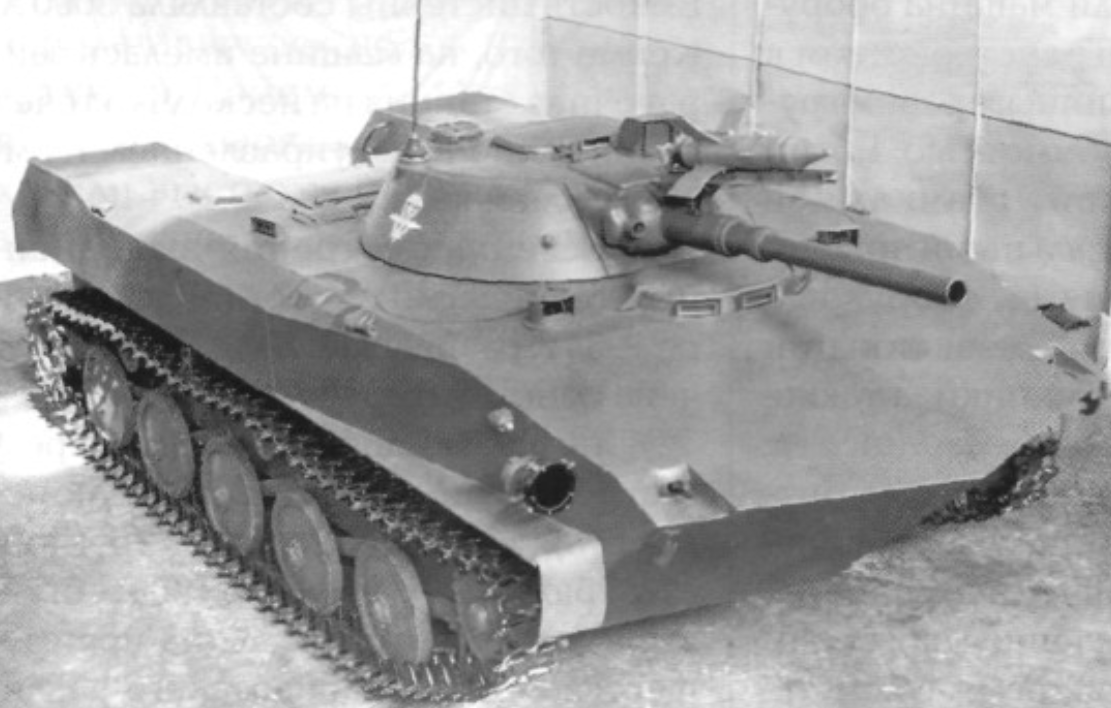
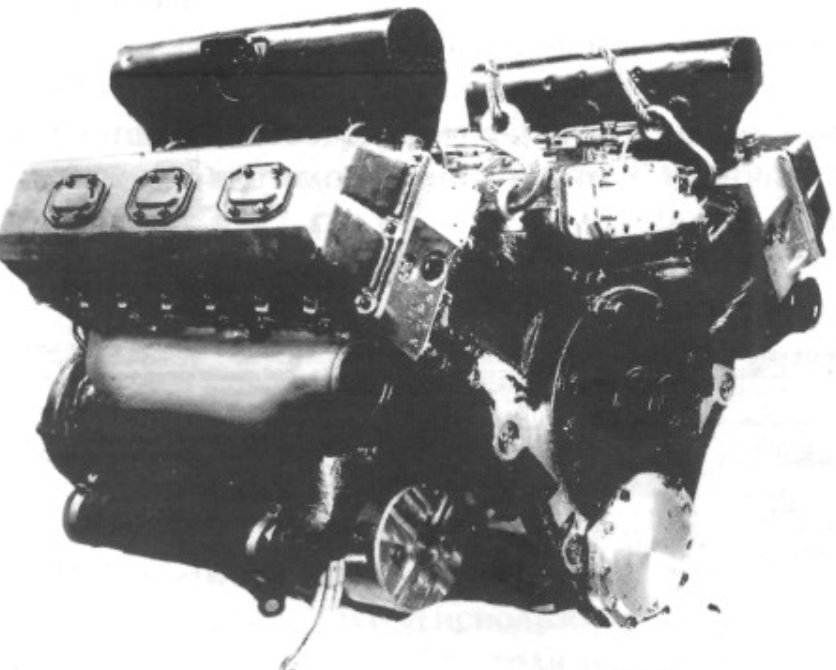
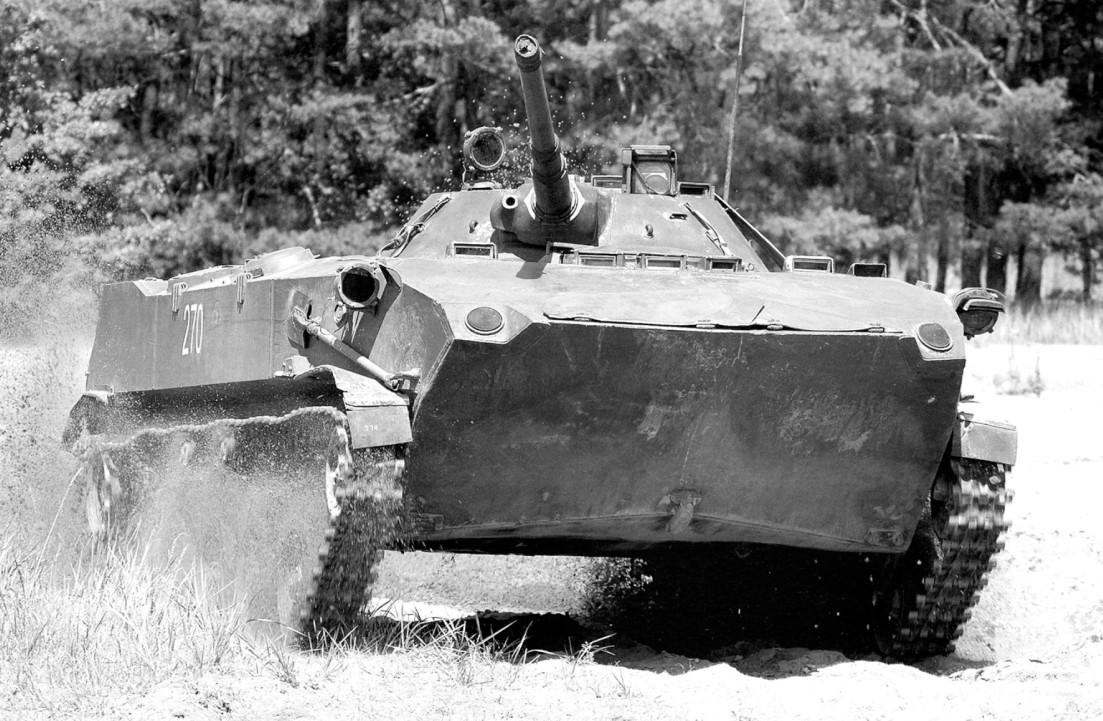
Finally Object 915 came along, which actualized each requirement. The vehicle was made of an aluminum alloy (ABT-101), this material was easier to repair in the field compared to alternatives that required heat treating following argon welding, it was also more durable compared to D-20. Object 915 protected the crew from 12.7mm armor piercing munitions along the frontal arc, some sources claim the turret was rated for 14.5mm and along the sides the vehicle was rated 7.62mm. To ensure proper amphibious capabilities the hull is quite narrow and has a bow-shaped front. There were three TPNO-170 optical devices installed in the drivers compartment, which feature electric heating to prevent fogging, this is engaged through a conductive layer of glass glued to the front planes of the prisms; thermal resistors are soldered into the prisms, acting as temperature sensors. The commanders optics are reinforced to prevent penetration from shrapnel, in front of the commanders seat is a machine gun with TNPP-220A sighting device, which is similarly electrically heated, and has 30 degrees of observation, and TNPO-170 observation device. There is a second machine gunner located on the other side of the driver, who has access to TNPP-220A. Dismounts have access to two TNPO-170 devices and a MK-4S periscope device near the rear hatch, which provided an unmagnified picture, though could be adjusted along the vertical axis, this periscope could be elevated by 18 degrees and depressed by 12 degrees. The hull is equipped with headlights, side lights, a wave deflecting shield, front and rear mudguards, and water jet propeller flaps, as well as a radio antenna, landing gear mounting equipment, towing hooks, and a device for transport on a trailer alongside two boxes for spare parts, a crowbar, shovel, and emergency buoy. The engine transmission compartment is located to the rear of the hull, and is isolated from the middle compartment with a sealed partition, the engine is a V-shaped 6-cylinder, four stroke diesel 5D-20, which is liquid cooled, this system is almost identical to BMP-1s engine, but 5D-20 employs a different cooling and ventilation system.Image
Image
Image
Image
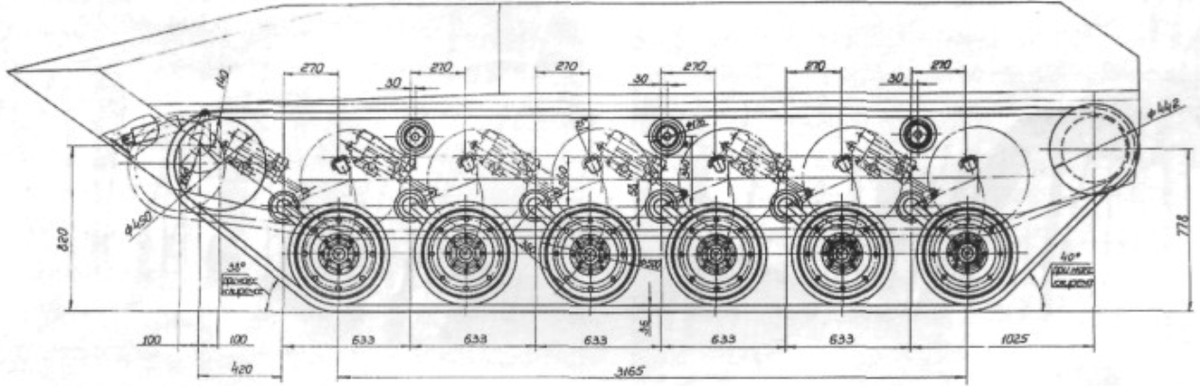
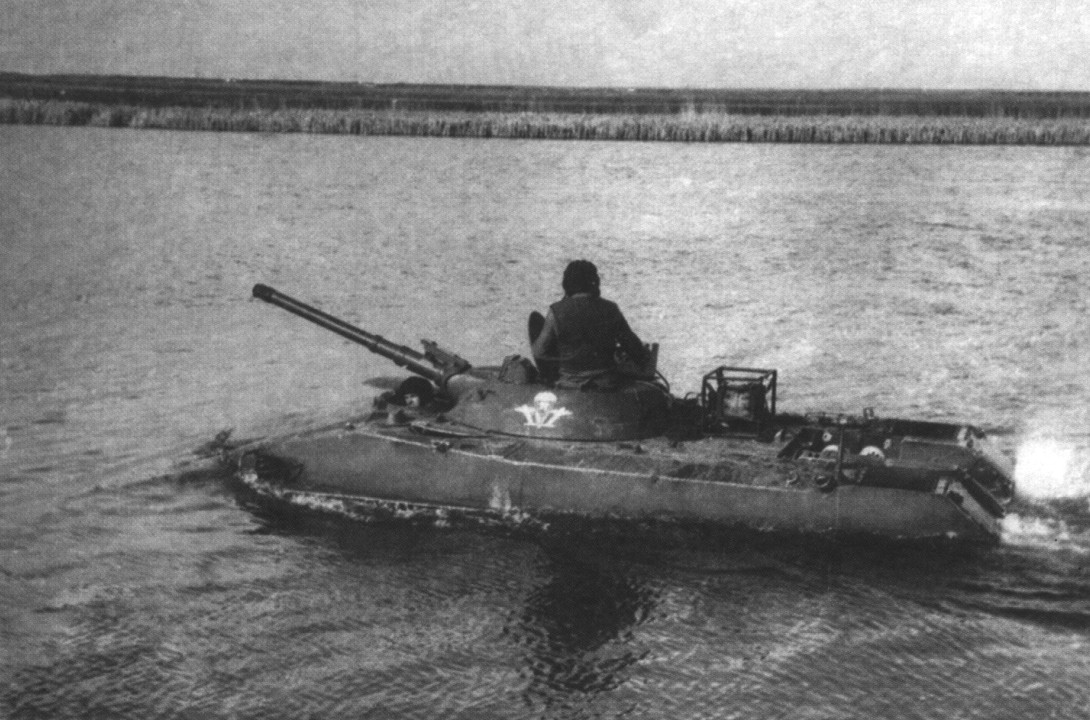
The engine has only 240 horsepower, which is 60 less than the BMP-1s, though this does not limit the system considering its weight. The engine uses an electric starter or a backup air intake system; with the introduction of a compressor driven by the engine, the air intake system became the main option in 1973. To facilitate starting at low temperatures, the engine is equipped with an electric nozzle heater included in the cooling system. The fuel system includes three tanks located in the engine-transmission compartment. The air purification system is two-stage, with a cyclone block in the first stage, filter cartridges in the second and automatic ejection dust removal. To increase the safety of tackling water obstacles, two connected valves are included in the engine air intake system, providing air intake when submerged through the center compartment. The engine has an ejector-type cooling system, which also provides ventilation for the engine compartment and dust extraction from the air cleaning system. The transmission is mechanical, consisting of a two-disc main friction clutch, there are 4 forward and 1 reverse gears, the 3rd and 4th gears are synchronized, the system also features two coaxial single stage planetary gearboxes and two clutches. Track tensioning is done with a hydraulic drive, the suspension system is pneumatic with hydraulic shock absorbers, the suspension consists of a pneumatic spring, lever, balancer, and travel limiter, made in the form of a stop with a rubber cushion. The return rollers also have a pneumatic spring, which works as both an elastic element and as a hydraulic shock absorber, as well as an actuator when changing the vehicles ground clearance, this mechanism also holds the return rollers in the appropriate position (when preparing the BMD for jumps and when afloat). This system involves two cylinders, the first cylinder is divided into two chambers by a piston, one which contains nitrogen gas, the second is filled with a mixture of transformer and turbine oils (50x50%). The volume of the oils can be adjusted, as a result the clearance is changed. The chamber in front of the piston is filled with oil and is connected to the chamber in the pneumatic cylinder, as a result of which the piston moves and the gas is compressed. During its return stroke, because of the compressed gasses having expanded, the oil returns and pushes the piston to its original position. Valves allow the return stroke to operate higher fluid resistance than during the forward stroke. The clearance can be controlled from 100 to 450 millimeters. The change in clearance was originally to be used only when preparing the vehicle to be loaded onto an aircraft, but the BMDs ability to change its height gave it significant advantages in the exploitation of cover and concealment in ambushes and defensive positions. Amphibious capabilities are provided by water jet propulsion, consisting of two water jets, there are two pumps with electric motors that serve to pump out water and displace the system.Image
Image
Image
The vehicle is armed with 2A28 smoothbore low-pressure cannon, this was engaged to allow ammunition compatibility with airborne forces who employed SPG-9 (though this would not see actualization). The 2A28 has a barrel life of around 1250 rounds. The weapon is fired electrically, though a backup mechanical striker also exists. The fire control system of BMD-1 like BMP-1 offers the shooter a reliable chance of first round impact against armored targets at up to 800 meters. The probability of destroying an APC with the 2A28 from 500 meters is roughly 80% in the first two rounds. Against a stationary tank at 500 meters the percentile is 70%, though at 800 meters the chances degrade to 50%. At 200 meters the PG-7V is capable of hitting a tank with a roughly 90% chance of impact, cementing the vehicles role as an ambush weapon.The primary ammunition supplied to BMD-1 is PG-7V (later VM) and OG-15V. PG-7V combines the PG-9 fin-stabilized assembly with the PG-15P propellant charge. This munition had superior ballistic performance as well as penetration compared to 76mm HEAT fired from the PT-76s D-56T, and is capable of reliably destroying barriers with equal effectiveness to its contemporary. The maximum penetration PG-7V is capable of achieving is 346mm, which is more than enough to defeat M60A1, Leopard 1, AMX-30 and Chieftain frontally, though it was less capable against M60A1 and Chieftain when compared to Leopard 1 and AMX-30. Once the heavier OG-15V entered service, it was issued to BMD-1. The OG-15V is subsonic, and operates smaller stabilizing fins, and is significantly more capable than the 76mm employed on PT-76 against light armored targets and barriers. OG-15V had superior fragmentation effects compared to its contemporaries. This round's downside is its inferior range compared to PG-7V. Later OG-15VM would enter service which would improve its incendiary capability and explosive effect.
To reduce weight, the autoloader found in BMP-1 had to be scrapped. The turret maintains the coaxial PKT. 9M14 Malyutka (anti-tank guided missile) is affixed via a launch rail above the gun, and can be accessed through a special hatch on the roof for reloading. The missile is controlled by 9S428 guidance system via a joystick. The gunner manually guides the missile through the 9V332 control box. When on the march the missile is stored internally. The gun and turret is aimed via 1eTs10M electric drive, there is a combined day and night sight in the form of 1PN22M1, the day Channel operates a 6x magnification and a field of view of 15 degrees, the night channel is 6.7 degrees. The gunner also has access to 4 TPNO-170 periscopes. Inside the crew compartment five AK series rifles and one RPK can be stowed, there are also 20 F-1 grenades, and a storage compartment for RPG-7D or RPG-16 and two pouches for the storage of rounds. The vehicle includes NBC protection, and operates a GD-1M Gamma radiation sensor, and an overpressure system alongside six masks. The vehicle is also equipped with an automatic fire suppression system, furthermore, there are fire extinguishers supplied to the crew. The vehicle was equipped with R-123 and R-124 radios, later R-123M would be installed. The electrical components within the system were supplied power through a 26 volt network. This network housed two 12ST-70 rechargeable batteries. The system also featured a 9 kilowatt VG-7500 generator.Image
Object 915 would successfully pass tests in 1967, and was praised for its high degree of cross country mobility. The accuracy of firing the main gun on the move was significantly increased compared to BMP-1 due to the hydropneumatic suspension system. The vehicle was also superior in its amphibious capabilities when compared to BMP-1, in regards to effectively and safely exiting and entering water it held further advantages. After its adoption the BMD-1K would enter service which supplied the vehicle with a second R-123M, there is an antenna filter which allows both radios to operate on a single antenna, alongside R-124, an AB-0.5P/30 gasoline electric charging unit, a GPK-59 gyroscopic course indicator, a heater and fan for the fighting compartment, and GO-27 chemical reconnaissance device were installed. BMD-1K would be produced by VTZ.
BMD-1P would begin development soon after and integrated 1PN22M2, which included markings for firing OG-15V, stamped road wheels which were hollow, this served to improve buoyancy , and 9K111 Fagot. All previous systems were upgraded to BMP-1P standard, later 9M113 Konkurs would be adopted and employed, oftentimes 9K111 and 9M113 would be carried in tandem, one 9M113 and two 9K111. The missiles may be removed and employed separated from the vehicle on tripods stored within the system, BMD-1P was later affixed with 90V2 Tucha smoke system according to some sources, R-173P and R-174 radios would later be installed on BMD-1PK.Image
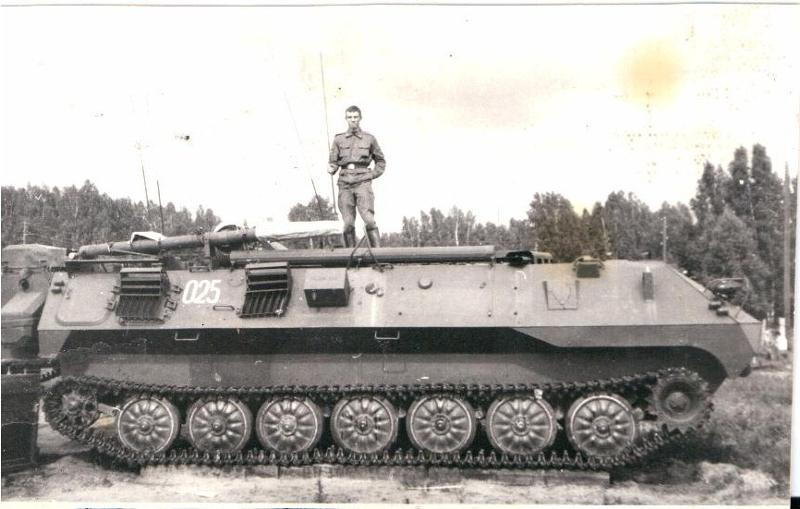
By the mid 80s, Increasing the lethality of the BMD-1 was seen as an important step in keeping the system relevant, as a result work on BMD-2 began. The 2A28 did in some regards struggle to engage smaller targets, especially those on the move, and there was also the ever present threat of rotary wing aircraft, which would cause problems for airborne forces who operated diminished anti aircraft measures compared to their conventional contemporaries. Initially, there were proposals for a lengthened 73mm gun, this was tested on the BMP-2 competitor Object 681, though the success demonstrated by 2A42 (open-bolt, gas operated autocannon with a short-stroke recoiling barrel mechanism) resulted in the adoption of this cannon instead. As a result accuracy against weapon teams and mobile targets was drastically improved, and the system could still threaten second generation MBTs from the sides and rear. The new turret restricted the use of 9M14, though by this point 9K111 and 9M113 had been fully integrated, and 9M14 had already been largely retired after the introduction of BMD-1P. The ability for the 30mm cannon to engage air targets with its high degree of elevation was exceptional, this was only bolstered by its fire rate, which could be shifted from 200 to 550 RPM. BMD-2 finally ushered in an electrohydraulic stabilizer, in the form of 2E36-1 (dual axis), which has both semi automatic (for anti-aircraft engagement) and automatic modes. The accuracy of the weapon allows it to engage ATGM teams with a 100% chance of destruction within 15 rounds. BMD-2 operates BPK-1-42 sights found on BMP-2. This optic has a fixed magnification of 5.6x in regards to the day channel, and is stabilized. The system includes a stadiametric rangefinder and passive + active night vision, which has a detection range of roughly 900 meters for tank sized targets. The BMD would later inspire an entire family of vehicles based off of its chassis, those being the BTR-D APC, the 1V119 Artillery control vehicle, the BREM-D armored recovery vehicle, and 2S9 Nona.Image
Image
Image
BMDs may be transported in pairs of two in both Mi-26 and Mi-6. The BMD falls at a rate of 5 to 6 meters per second, and crews are often dropped directly behind them, the systems included a locator so the crew could find them without complication. In 1971 General Margelov decided that Airborne forces would benefit from BMDs landing with a limited crew inside the vehicle. Testing of the Centaur landing system was to be engaged in 1973. Alexander Margelov, the commander's youngest son, was to partake in the jump; he was offered his father's vest from WW2 as a good luck charm, and wore it with him as the test was performed. On January 5th the jump occurred, and the crew miraculously survived, later tests would be conducted again, and similarly the crew survived, though ultimately Centaur would be quickly replaced with Reaktavr, which was more effective, the parachutes did not have the chance to cover the vehicle following the landing, the descent speed is 4 times higher, and is significantly safer, and while the retrorockets were quite loud and startled the crew, it was indeed superior. From 1973 to 1991, the Centaur and Reaktavr systems were used over 100 times.
Airborne forces equipped with the BMD were provided with extreme degrees of cross country mobility as well as massive fire power advantages over threats they expected to encounter. This capacity for rapid shock attacks and incredible anti-armor capabilities was unrivaled throughout the 70s and 80s, which drastically increased the Strategic Airborne Forces capability to seize key terrain and complete objectives, while offering a unique scope for raids at considerable distance and momentum.
Anyways the thread concludes here, thank you for reading! I decided a breakdown of the BMD would be important if I was to post a Strategic Airborne Forces thread, I hope you enjoy this pseudo-part 1. Expect the doctrinal continuation to be posted later this week. Image
I must note, this thread is adapted from Soviet and Russian sources (primarily official documents with difficult language), and may have some unfortunate translation errors as a result, technical and operational manuals are a mess to adapt contextually, so bear with me if there is a glaring inaccuracy due to this.

• • •

Missing some Tweet in this thread? You can try to force a refresh

 

Keep Current with Combination K

Combination K Profile picture

Stay in touch and get notified when new unrolls are available from this author!

Read all threads

This Thread may be Removed Anytime!

PDF

Twitter may remove this content at anytime! Save it as PDF for later use!

Try unrolling a thread yourself!

how to unroll video
  1. Follow @ThreadReaderApp to mention us!

  2. From a Twitter thread mention us with a keyword "unroll"
@threadreaderapp unroll

Practice here first or read more on our help page!

More from @Combination_K

Jun 11, 2025
🧵A thread discussing the troubled development history of the PMT-100 and PMT-150 series of field pipelines: Image
The Soviet Union's initial large-scale operational experience in supplying military units with fuel under combat conditions was acquired during the engagements near Lake Khasan (July–August 1938) and along the Khalkhin Gol River (May–September 1939). During these campaigns, logistical support for the 1st Army Group extended across a supply route of approximately 515 kilometers. Of this total distance, 260 kilometers were serviced by rail transport, 95 kilometers by motor vehicles, and 86.7 kilometers by horse-drawn carts. The final leg of the supply chain required fuel to be transported in specialized containers via pack animals and manual labor.

As military activity in the region intensified, the throughput capacity of the supply system grew to between 500 and 750 tons of fuel per day, delivered using a combination of transport modalities. The rising demand for fuel, particularly by armored units, emerged as a critical logistical concern. The concentration of tanks in the theater of operations increased markedly, resulting in fuel requirements measured in tons and millions of liters. This placed substantial strain on logistical capabilities and exposed significant operational vulnerabilities. These experiences were not only retained in institutional memory but were also subjected to detailed analysis by the Soviet military leadership.

The lessons derived from these campaigns played a decisive role in shaping the USSR’s approach to logistical support and directly influenced the conceptualization of field pipeline systems.

In December 1940, a meeting of the senior leadership of the Workers’ and Peasants’ Red Army (RKKA) was held. It was devoted to ways of further developing the military and conducting operations, taking into account the exercises and experiences of the war between Germany and France. Participating in the meeting was the head of the Red Army Fuel Supply Directorate, Major General of Tank Forces P.V. Kotov. By that time, information had already been obtained that the logistical services of the German armed forces, especially their tank and motorized units in the campaign in France, had used field pipelines to deliver fuel.

After the war began, engineers D.Ya. Shinberg and T.E. Khromov sent a letter to the People’s Commissar of the Oil Industry, I.K. Sedin, proposing the creation of a front-line collapsible gasoline pipeline 100 km in length, and longer if needed. For use in a fuel supply system, it was assumed that mobile pump stations mounted on truck chassis would be used.

Commissar I.K. Sedin approved the idea and, with the support of the leadership, allocated funding and authorized the design and development of the field pipeline. The proposal was adopted and approved in record time. The pipeline was planned to deliver fuel to the troops conducting defensive operations west of Moscow, in the area of the town of Khokhloma.
However, the front line in these areas in the fall of 1941 was quite unstable; the German forces, although suffering heavy losses, continued to advance. Plans to create and use a collapsible pipeline were not realized.

Over time, renewed attempts to supply fuel to troops using collapsible pipelines became more successful. For example, in April 1943, field fuel pipeline operations were launched. However, their broader use remained limited due to the lack of necessary equipment (pipes and pumping units) and, most importantly, due to a lack of practical experience.
During the war, significant experience was accumulated in building and using both permanent and field pipelines. One example studied by the USSR was the American fuel pipeline system laid along the Ploiești–Rhine route.

Modern (for the time) tanks, motorized vehicles, and field electrical generators, powered by gasoline or diesel, entering service in the Red Army, significantly increased the demand for fuel. To support an uninterrupted fuel supply, new approaches had to be found.
In early 1946, based on the Central Research Laboratory of the Fuel Supply Department of the Red Army, the Scientific Research Institute for Petroleum Lubricants (NII GSM) was established.

In October 1946, a new staff for the institute was approved. Eleven departments were created, including departments for logistics, containers, and transfer methods. One key area of focus was the development of field pipelines.

The institute carefully studied both internal and foreign experiences with collapsible pipelines during the war, substantiating the technical and operational requirements for such systems. This soon yielded concrete results. Under the leadership of A.A. Kazansky, in 1948, design standards were developed to deploy modular fuel depots.

Institute staff developed and tested several types of field pipeline systems, including the KMZ-4 aluminum pipeline and a 4-km-long soft pipeline created by the Special Design Bureau of the USSR Ministry of the Oil Industry (OKB-MNP).

The KMZ-4 pipeline became the foundation for further development of fuel transport systems. It included not only pipes and connectors but also mobile fuel pumping stations with electric motors.Image
Read 13 tweets
Jun 3, 2025
A short history of the Il-76 concerning its role in the delivery of paratroopers: Image
The early Cold War proved to be a favorable period for the VTA (Military Transport Aviation). After just a decade of existence, they had seen the complete integration of equipment designed with the express purpose of meeting their needs and operated an impressive 650 aircraft. By the 1960s, 80% of VTA regiments were equipped with the An-12, which arrived in batches of 100 each year. Despite this, even with the introduction of the An-22, the VTAs' lift requirements had not been met. For all of the advantages offered by turboprop designs, the limitations experienced in speed were becoming a problem, especially when delivering paratroopers (an endeavor that favored expediency).

This was recognized internationally, and with the introduction of the C-141 Starlifter, the USSR were properly motivated to respond with their own jet-powered airlift. Furthermore, Ilyushin, after the failure of their Il-60 proposal, needed to get a new aircraft into military service, which led to unique importance being placed on innovative design solutions.Image
Ilyushin would first experiment with turbojet engines for use on a military aircraft via the Il-66. This aircraft would have a takeoff weight of 140 tons and employ the NK-8 engines, identical to those found on the Be-18 proposed in 1962. This aircraft would be met with little interest, as it was still believed that the An-22 fulfilled each requirement present within the VTA at this time. Unfortunately, the An-22's impressive size would be its undoing, as they were not only impossible to manufacture at scale but suffered from such extreme wing fatigue that flights had to be authorized by the Ministry of Defense, as the associated costs were so great.

Due to the increased need to conduct frequent air freight operations across the USSR and the desire to produce a more reliable aircraft that could deliver paratroopers at greater speeds, preliminary research that would lead to the development of the Il-76 would begin in 1966. A joint research resolution was reached in 1967, which was opposed by Antonov, who offered a deep modernization of the An-12 in return. This concept was almost immediately shot down due to its lackluster carrying capacity of only 25 tons.Image
Read 14 tweets
May 9, 2025
A short thread discussing the individual parachute technology of the Soviet airborne forces: Image
The D-1 family of parachutes, initially developed in 1955, was an important step in the modernization of the airborne forces. Before the introduction of this system, significant skepticism surrounded the concept of a parachute with a round canopy. This configuration was believed to be unstable when compared to the traditional square canopy design employed by earlier models. Of course, after tests were conducted involving the D-1, it was found that this was indeed the superior layout, which led to its adoption shortly thereafter.
D-1 was originally designed to provide a simple parachute system that was accessible to those undergoing basic training. Including the paratrooper and all of his associated equipment, the D-1 had a combined weight of 120 kg. The system permitted jumps at a maximum speed of 350 k/h, from a minimum altitude of 150 meters, meaning the parachute could be employed from rotary wing aircraft. On its own, D-1, when stored, weighs 17kg and has dimensions of 595x385x240mm. The canopy has an area of 82.5 m2 when deployed and is connected to the individual by 28 SHKHB-125 cotton cords, which can each withstand up to 25 kgf.
Read 7 tweets
Apr 8, 2025
A thread comparing the BMD-1 to the M551 Sheridan: Image
Image
In regards to armament the M551 and BMD-1 are difficult to effectively compare, and present challenges unique to their respective designs.

BMD-1 has a clear disadvantage when speaking to the volume of missiles offered to each vehicle. Prior to receiving the more advanced 9M111 and 9M113 (of which 3 were carried), BMD-1 carried four 9M14 missiles, two of which were placed on a ready rack within the turret. The other two missiles were located in the troop compartment. Loading these missiles was rather easy and did not force the gunner to expose himself to enemy fire. To do this, the gun is placed at a 30-degree angle, which allows the gunner to access the launch rail. Here the 9M14 is mounted, the fins are deployed, and the missile is ready to fire. The location of the ready racks is convenient and allows the gunner to engage these actions from his seat. To prepare the 9M14 for firing, a 50 to 55-second period is expected, which includes preparing associated elements like the guidance equipment. It is possible for an exceptionally competent gunner to engage this process in 40 seconds. This is a rather long period, which could prove problematic in combat conditions, but is offset by the ability for BMD-1 to exploit reverse slopes via the use of its hydropneumatic suspension and exceedingly small size. An additional advantage presented by this configuration is found in the event of an ambush, where the BMD-1 can quickly re-engage the enemy with its main gun after a missile has been expended. In the first two minutes of an engagement, a gunner is expected to be capable of achieving two successful loading, launching, and guiding cycles before replenishing the ready rack. If the BMD-1 is employed in a prepared defensive position, three missiles within the first two minutes is possible if the turret is turned to the left to allow the gunner to access his reserve ammunition. The speed at which one can load the 9M111 and 9M113, later supplied to BMD-1 and BMD-2, is similar when compared to the prior figures. The issue presented with this upgrade was that the gunner had to expose himself when loading the missile.Image
The M551 carries 8 missiles (some sources state 10 missiles were carried), significantly more than the BMD-1. Due to the gun launched nature of these missiles, exposing oneself to enemy fire was not a possibility. This came with its own disadvantages though, due to the extremely cramped turret, and the frequent failures experienced with the electronic breech (caused by the ten removable separate circuit boards present within the turret being shook from their beds by the violent recoil of the gun) the loader frequently found himself operating a manual crank before loading the 27kg missiles. This left him exhausted and diminished his ability to perform his role in high-stress situations. Despite this, the M551 still maintained an advantage in loading speed over the BMD-1, with a reduced re-engagement capability. This is because the HE and HEAT rounds, upon being fired, resulted in a particularly violent recoil that had the unfortunate consequence of generating a great deal of dust and smoke, which could interfere with the MGM-51's guidance system, rendering it momentarily inoperable. This compounded on a reported MTBF of fifty shots for earlier models.Image
Read 12 tweets
Mar 1, 2025
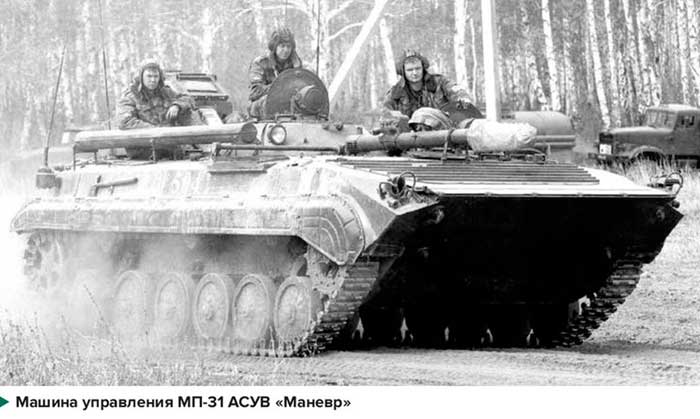
🧵A thread discussing the history of Maneuver (automated command and control system): Image
Image
Overview:

In May of 1964, by decree of the Central Committee of the CPSU, and the Council of Ministers of the USSR, development began on the possibility of automating troop control systems within the Soviet military. Immediately, as a result of this request, a research group led by Colonel Fedotov at the Frunze Military Academy was established, aimed at determining if such systems would be functional from an operational + tactical standpoint. These studies concluded that if such an endeavor was to be seriously considered, automated systems and communication complexes could not exist separately. If Maneuver was to achieve complete superiority over enemy command and control, it had to be integrated alongside serious revisions to the entire C&C matrix of the Soviet Military. Work on a system that would harmonize Communications between strategic, operational, and tactical formations began at OKB-864 in Minsk. Due to the importance of Minsk Electromechanical Plant Number 864, the OKB soon became a part of the Research and Development Institute of Automatic Equipment in 1969, and in 1972, all of its efforts would shift towards R&D related to Maneuver. Yuri Dmitrievich Podrezov was appointed director of the Design Bureau and later Chief Designer of Maneuver.Image
Of course, at this time, autonomous command and control was nothing new within the Soviet military; each branch of the Armed Forces developed its own automated control systems independent of one another, and as a result, they soon found themselves struggling to organize and effectively interact. A herculean complication that the Maneuver system was to solve included unifying/harmonizing these systems into an all-arms network, which would allow for effective data transmission between ground forces, frontal aviation, and rear services. On top of this, Maneuver was to surpass foreign analogs, use entirely domestic technology, surpass domestic semi-automatic communication systems, and maintain the ability to operate in extreme temperatures between -50 degrees celsius and +50 degrees celsius. Throughout the course of fulfilling these requirements technology which was in many regards new to the Soviet Union had to be developed to facilitate the success of Maneuver, these included modern (for the time) computer graphics, digital coordinate acquisition devices, keyboards, display systems, modern data transmission equipment, codogram dialing consoles, and software for complex database management. These various sub-systems would then be unified in Maneuver and installed in divisions as well as regiments, offering 26 vehicles to commanders and their staff. At the front and army level, 100 such vehicles were present. Within regiments, Maneuver was mounted on MT-LBu, while at the operational level, Ural-375 saw use as the chassis of choice for the complex.
Read 17 tweets
Feb 13, 2025
🧵A thread discussing the theoretical foundation of Soviet small-unit tactics: Image
The Soviet platoon is organized around the senior lieutenant, who commands the unit, and is relegated to an integrated control element, where he is assisted by a deputy platoon commander who serves to relieve certain duties. Each platoon has a sniper/marksman, who provides precision and limited reconnaissance to the unit, he is not attached directly to the control element. A medic is present within each platoon, he operates as apart of the control element. Three motorized rifle squads totaling 24 in strength round out the formation. In the late 1980s/early 1990s the platoon would be expanded to 30 with the introduction of a machine gun which was attached to the control element. Each BMP or BTR has a crew consisting of a commander, who serves as the squad leader, a gunner (deputy commander), and a driver, who is the vehicles mechanic. These individuals will remain mounted throughout the course of an engagement. Those who dismount to fight on foot include a senior rifleman, a machine gunner, a marksman, a rifleman, a grenadier (RPG), and the assistant grenadier (RPG).Image
Image
Platoons are instructed to dismount and prepare for an engagement roughly 2-3km before reaching the line of contact. This is due to the fact that the enemies anti-tank systems will struggle to reliably engage BMPs or BTRs at this distance. Following this, the platoon will break a cautious march at 600 meters and assume an offensive formation, this distance is variable and based on the conditions of the terrain/nature of the engagement. 600 meters is chosen as the ideal distance as a result of the fact tactical nuclear weapons as well as chemical munitions are just as destructive to the defending party as the attackers, limiting the likelihood of their application. APCs and IFVs are to deliver fire in support of the offensive from positions that limit their exposure to anti-armor weapons (reverse slopes being favored). If the platoon is ambushed, or crossing a minefield/artificial choke point, transportation vectors will serve as mobile cover until the immediate threat has been eliminated, after which they will resume a position behind the infantry.Image
Read 23 tweets

Did Thread Reader help you today?

Support us! We are indie developers!


This site is made by just two indie developers on a laptop doing marketing, support and development! Read more about the story.

Become a Premium Member ($3/month or $30/year) and get exclusive features!

Become Premium

Don't want to be a Premium member but still want to support us?

Make a small donation by buying us coffee ($5) or help with server cost ($10)

Donate via Paypal

Or Donate anonymously using crypto!

Ethereum

0xfe58350B80634f60Fa6Dc149a72b4DFbc17D341E copy

Bitcoin

3ATGMxNzCUFzxpMCHL5sWSt4DVtS8UqXpi copy

Thank you for your support!

Follow Us!

:(