A thread discussing the history and technical characteristics of the BMD-1/2 airborne fighting vehicles: 

The BMD-1 was first conceptualized due to the lack of an amphibious vehicle which could be supplied to airborne troops. Volgograd Tractor Plant was chosen to design and produce the system, this is due to their experience in the production of light armored vehicles. Astrov Design Bureau wished to usurp the contract, seeing as they had spearheaded the previous generation of ASU-57 and ASU-85. At this time Volgograd was in the process of updating the aging PT-76, and found that the strict requirements which were demanded by both programs shared many facets, and therefore, BMDs distant ancestry is tied closer to PT-76 than BMP-1. The BMDs unique requirements were that it had to be light enough for AN-12 to carry two of them, be capable of employing the P-7 + MKS-760 multiple parachute system, and to share its armament with BMP-1, (which was a contract Volgograd competed for years prior).

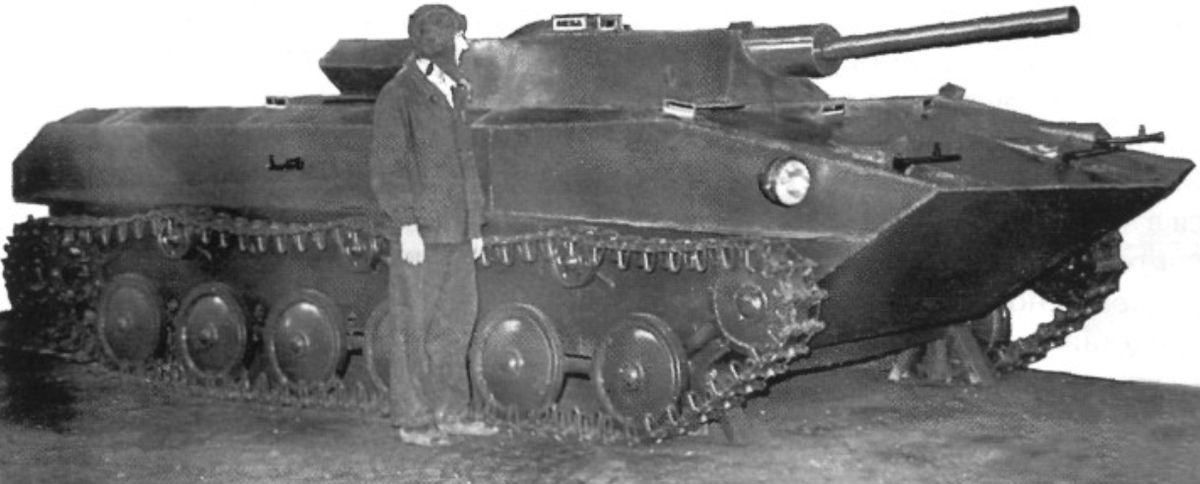
The BMD was to have a crew of 2, and transport 5 paratroopers internally, there were also to be firing ports along the hull to allow for defense from any direction the system may be engaged from. It was to share similarities to the BMP-1s power plant, and operate a water jet propulsion system. The first prototype to see similarities to the BMD was Object 911, which saw propositions for a rear engine and transmission configuration, and the ability to carry six dismounts. The vehicle was to feature a two man turret, alongside a bow-shaped front which would improve its amphibious capabilities. Similarly to the BMD, Object 911 would concentrate the dismount compartment towards the front of the vehicle, six sitting behind the turret, alongside firing ports along the sides and rear. The system would feature a unique hatch design, forcing the crew to dismount over the engine, being wide enough for two to exit simultaneously. Object 911 would operate a mechanical transmission with a two disc main friction clutch and a gearbox containing two clutches and two coaxial planetary gears, alongside two hydrojets, being almost identical to those found on PT-76. The vehicle would also employ a tracked suspension with a rear drive sprocket and front idler, and 5 road wheels, which were identical to those found on PT-76. Like the BMD, pneumatic suspension was used which allowed the vehicle to raise and lower its height from 426 millimeters to just 96. The armament would be identical to that of BMP-1 as per program requirements, the vehicle would functionally depart in its more niche characteristics.
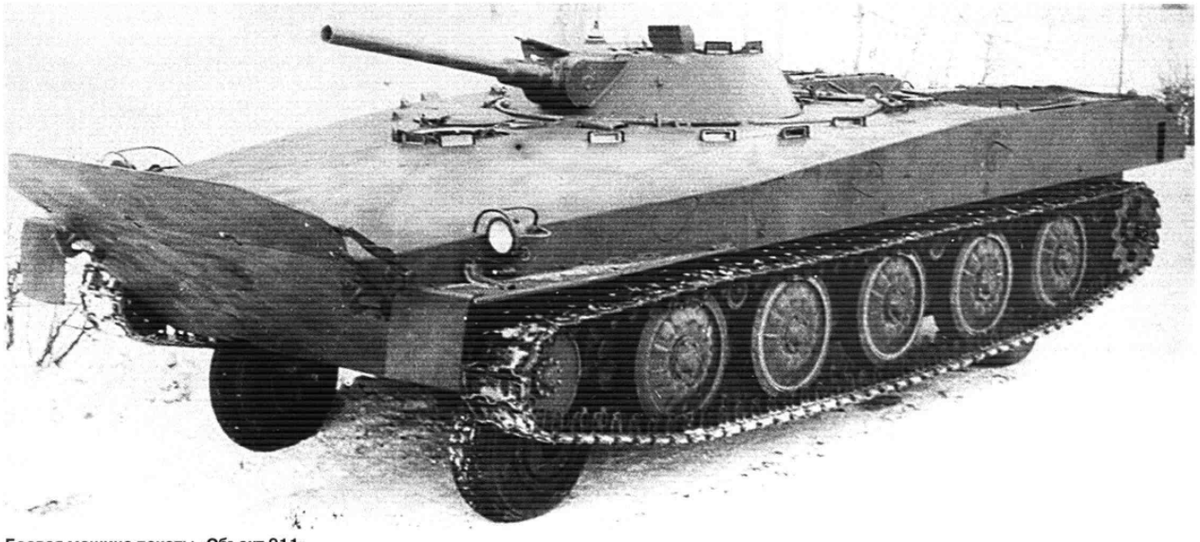
Object 914 would be a more conventional proposal, and was the first prototype to be air transportable, though could not be dropped from altitude. The vehicle would have a crew of 10 factoring in dismounts, and would operate a nearly identical layout to that of BMD in regards to the position of machine gunners relative to the driver, though unlike the BMD the armor would be high hardness steel. The V-6M diesel engine was employed, which was located to the rear of the hull, similarly a two disc main friction clutch and a gearbox with two clutches would see integration. A conventional torsion bar suspension was employed as well as hydraulic shock absorbers, the second prototype would see the integration of hydraulic track tensioning. Object 914 would employ the same water jets as Object 911.
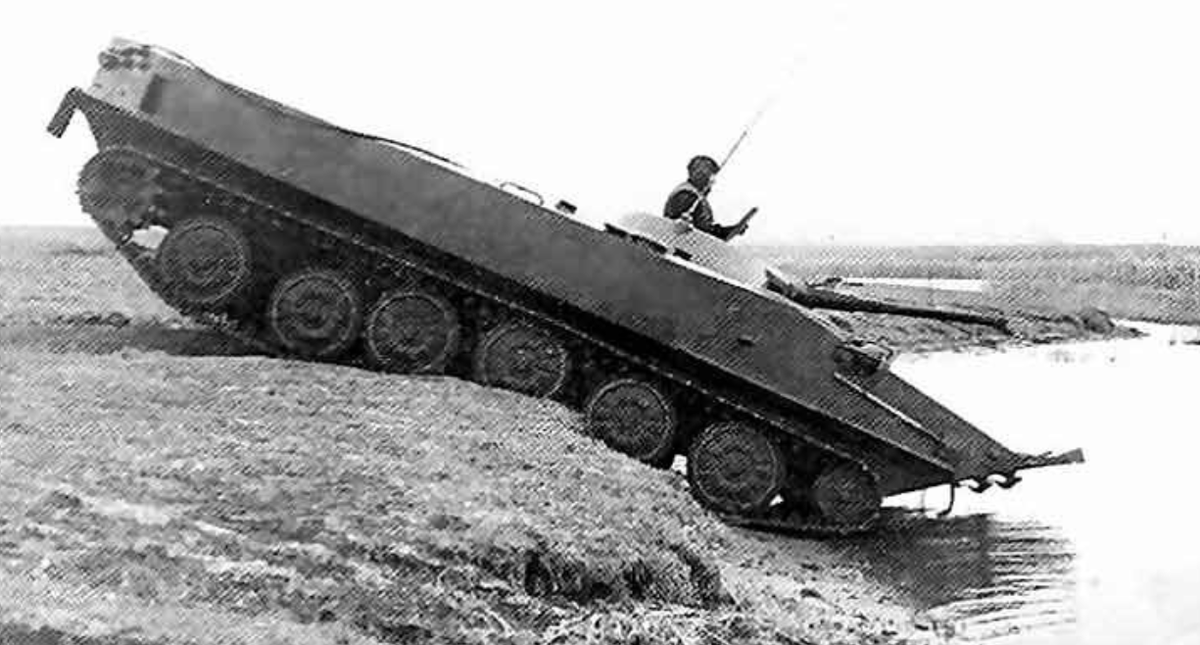
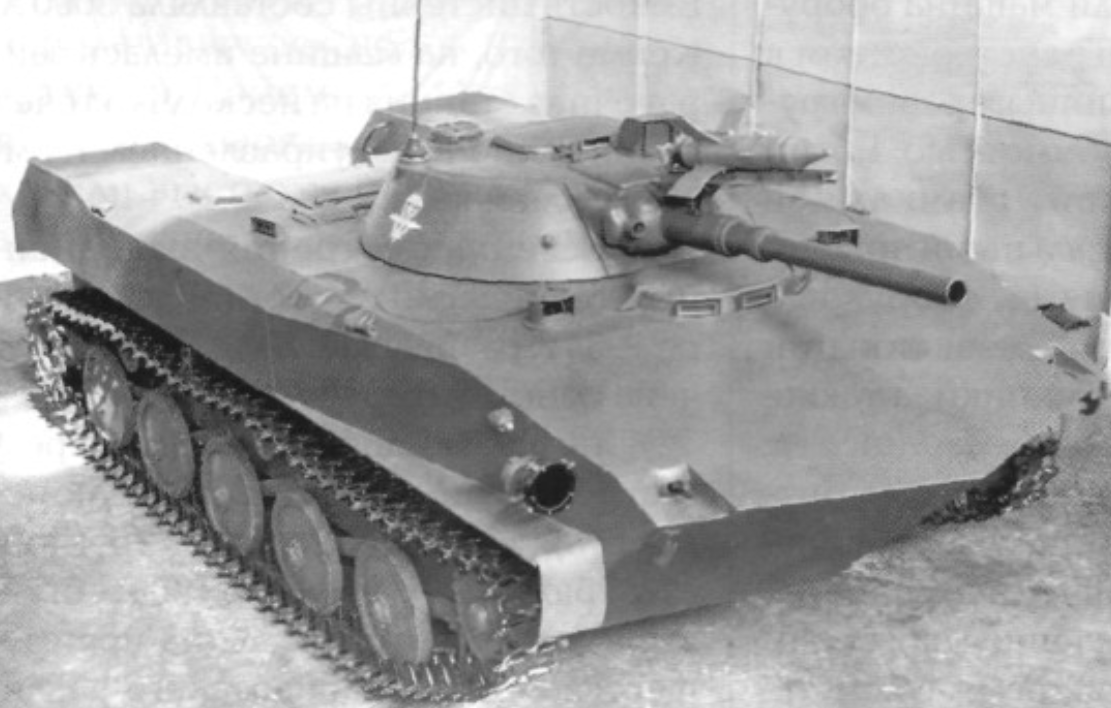
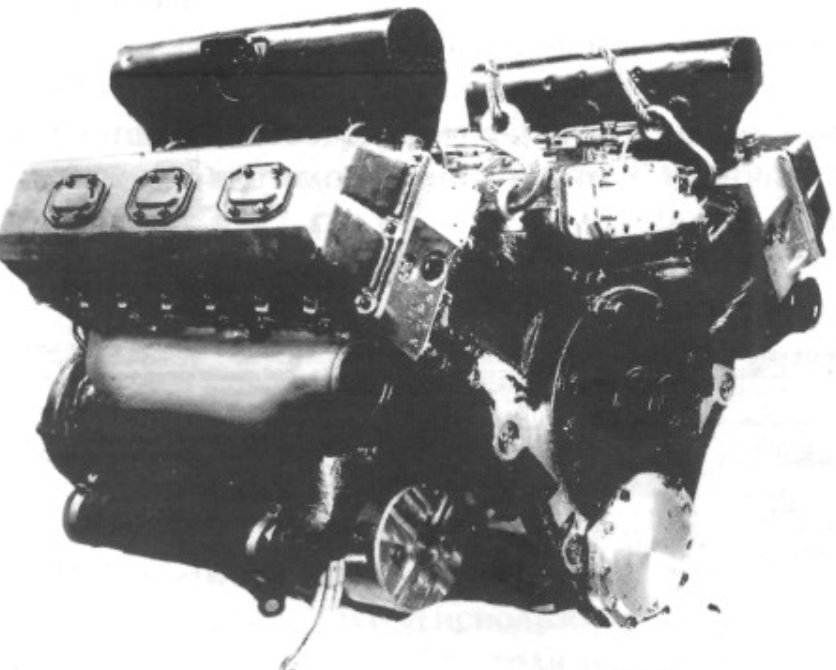
Finally Object 915 came along, which actualized each requirement. The vehicle was made of an aluminum alloy (ABT-101), this material was easier to repair in the field compared to alternatives that required heat treating following argon welding, it was also more durable compared to D-20. Object 915 protected the crew from 12.7mm armor piercing munitions along the frontal arc, some sources claim the turret was rated for 14.5mm and along the sides the vehicle was rated 7.62mm. To ensure proper amphibious capabilities the hull is quite narrow and has a bow-shaped front. There were three TPNO-170 optical devices installed in the drivers compartment, which feature electric heating to prevent fogging, this is engaged through a conductive layer of glass glued to the front planes of the prisms; thermal resistors are soldered into the prisms, acting as temperature sensors. The commanders optics are reinforced to prevent penetration from shrapnel, in front of the commanders seat is a machine gun with TNPP-220A sighting device, which is similarly electrically heated, and has 30 degrees of observation, and TNPO-170 observation device. There is a second machine gunner located on the other side of the driver, who has access to TNPP-220A. Dismounts have access to two TNPO-170 devices and a MK-4S periscope device near the rear hatch, which provided an unmagnified picture, though could be adjusted along the vertical axis, this periscope could be elevated by 18 degrees and depressed by 12 degrees. The hull is equipped with headlights, side lights, a wave deflecting shield, front and rear mudguards, and water jet propeller flaps, as well as a radio antenna, landing gear mounting equipment, towing hooks, and a device for transport on a trailer alongside two boxes for spare parts, a crowbar, shovel, and emergency buoy. The engine transmission compartment is located to the rear of the hull, and is isolated from the middle compartment with a sealed partition, the engine is a V-shaped 6-cylinder, four stroke diesel 5D-20, which is liquid cooled, this system is almost identical to BMP-1s engine, but 5D-20 employs a different cooling and ventilation system.
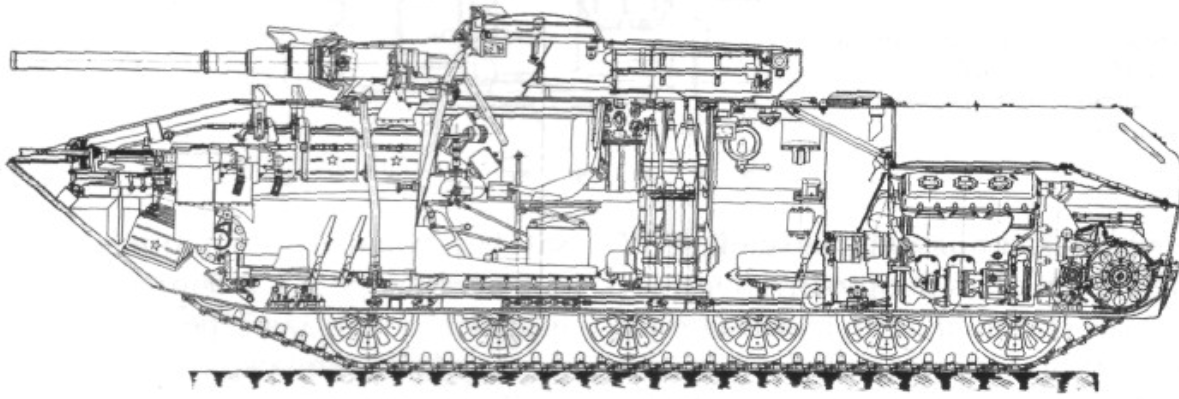

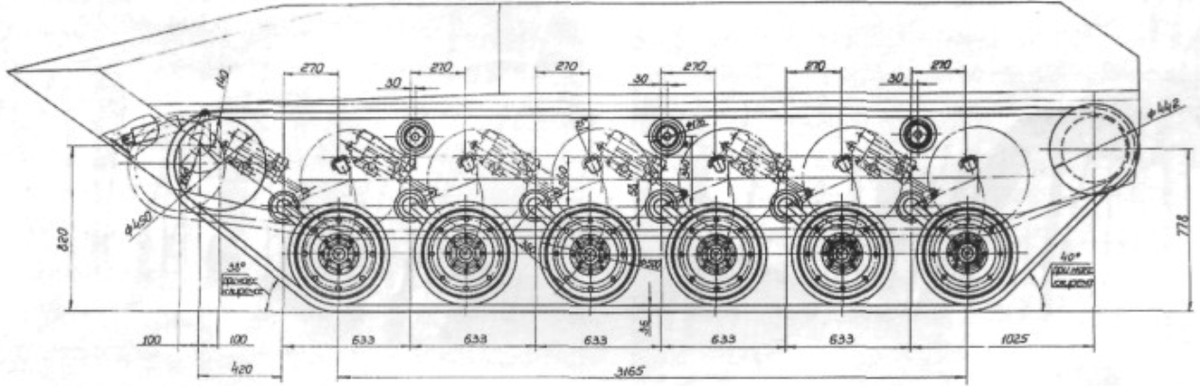
The engine has only 240 horsepower, which is 60 less than the BMP-1s, though this does not limit the system considering its weight. The engine uses an electric starter or a backup air intake system; with the introduction of a compressor driven by the engine, the air intake system became the main option in 1973. To facilitate starting at low temperatures, the engine is equipped with an electric nozzle heater included in the cooling system. The fuel system includes three tanks located in the engine-transmission compartment. The air purification system is two-stage, with a cyclone block in the first stage, filter cartridges in the second and automatic ejection dust removal. To increase the safety of tackling water obstacles, two connected valves are included in the engine air intake system, providing air intake when submerged through the center compartment. The engine has an ejector-type cooling system, which also provides ventilation for the engine compartment and dust extraction from the air cleaning system. The transmission is mechanical, consisting of a two-disc main friction clutch, there are 4 forward and 1 reverse gears, the 3rd and 4th gears are synchronized, the system also features two coaxial single stage planetary gearboxes and two clutches. Track tensioning is done with a hydraulic drive, the suspension system is pneumatic with hydraulic shock absorbers, the suspension consists of a pneumatic spring, lever, balancer, and travel limiter, made in the form of a stop with a rubber cushion. The return rollers also have a pneumatic spring, which works as both an elastic element and as a hydraulic shock absorber, as well as an actuator when changing the vehicles ground clearance, this mechanism also holds the return rollers in the appropriate position (when preparing the BMD for jumps and when afloat). This system involves two cylinders, the first cylinder is divided into two chambers by a piston, one which contains nitrogen gas, the second is filled with a mixture of transformer and turbine oils (50x50%). The volume of the oils can be adjusted, as a result the clearance is changed. The chamber in front of the piston is filled with oil and is connected to the chamber in the pneumatic cylinder, as a result of which the piston moves and the gas is compressed. During its return stroke, because of the compressed gasses having expanded, the oil returns and pushes the piston to its original position. Valves allow the return stroke to operate higher fluid resistance than during the forward stroke. The clearance can be controlled from 100 to 450 millimeters. The change in clearance was originally to be used only when preparing the vehicle to be loaded onto an aircraft, but the BMDs ability to change its height gave it significant advantages in the exploitation of cover and concealment in ambushes and defensive positions. Amphibious capabilities are provided by water jet propulsion, consisting of two water jets, there are two pumps with electric motors that serve to pump out water and displace the system.
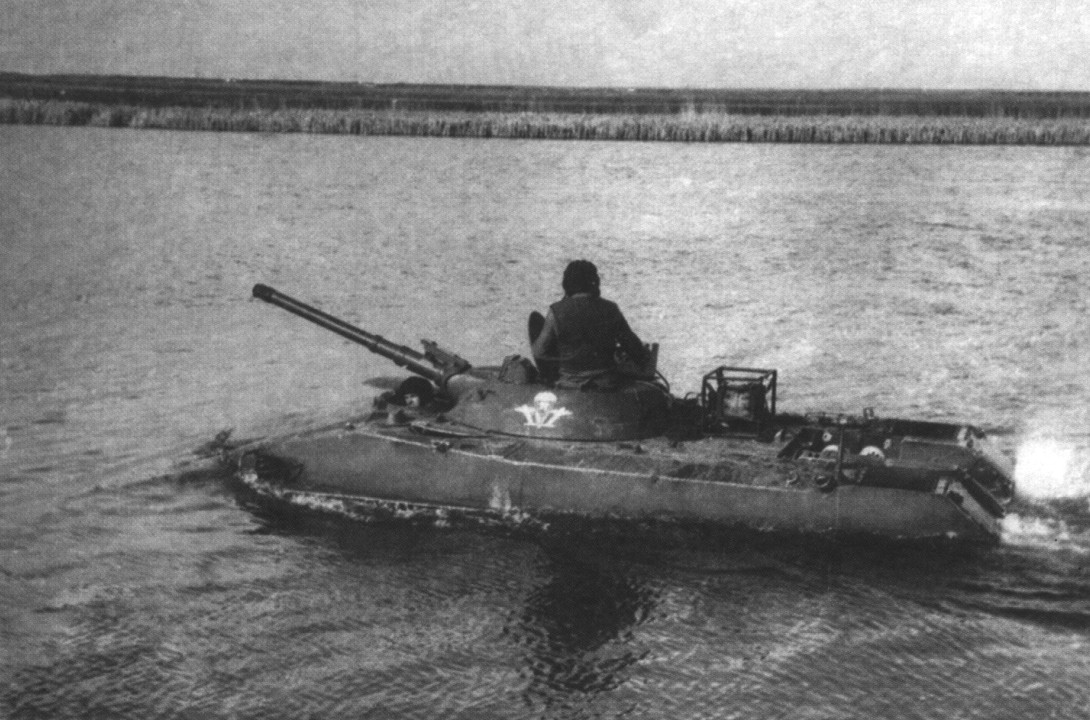
The vehicle is armed with 2A28 smoothbore low-pressure cannon, this was engaged to allow ammunition compatibility with airborne forces who employed SPG-9 (though this would not see actualization). The 2A28 has a barrel life of around 1250 rounds. The weapon is fired electrically, though a backup mechanical striker also exists. The fire control system of BMD-1 like BMP-1 offers the shooter a reliable chance of first round impact against armored targets at up to 800 meters. The probability of destroying an APC with the 2A28 from 500 meters is roughly 80% in the first two rounds. Against a stationary tank at 500 meters the percentile is 70%, though at 800 meters the chances degrade to 50%. At 200 meters the PG-7V is capable of hitting a tank with a roughly 90% chance of impact, cementing the vehicles role as an ambush weapon.The primary ammunition supplied to BMD-1 is PG-7V (later VM) and OG-15V. PG-7V combines the PG-9 fin-stabilized assembly with the PG-15P propellant charge. This munition had superior ballistic performance as well as penetration compared to 76mm HEAT fired from the PT-76s D-56T, and is capable of reliably destroying barriers with equal effectiveness to its contemporary. The maximum penetration PG-7V is capable of achieving is 346mm, which is more than enough to defeat M60A1, Leopard 1, AMX-30 and Chieftain frontally, though it was less capable against M60A1 and Chieftain when compared to Leopard 1 and AMX-30. Once the heavier OG-15V entered service, it was issued to BMD-1. The OG-15V is subsonic, and operates smaller stabilizing fins, and is significantly more capable than the 76mm employed on PT-76 against light armored targets and barriers. OG-15V had superior fragmentation effects compared to its contemporaries. This round's downside is its inferior range compared to PG-7V. Later OG-15VM would enter service which would improve its incendiary capability and explosive effect.
To reduce weight, the autoloader found in BMP-1 had to be scrapped. The turret maintains the coaxial PKT. 9M14 Malyutka (anti-tank guided missile) is affixed via a launch rail above the gun, and can be accessed through a special hatch on the roof for reloading. The missile is controlled by 9S428 guidance system via a joystick. The gunner manually guides the missile through the 9V332 control box. When on the march the missile is stored internally. The gun and turret is aimed via 1eTs10M electric drive, there is a combined day and night sight in the form of 1PN22M1, the day Channel operates a 6x magnification and a field of view of 15 degrees, the night channel is 6.7 degrees. The gunner also has access to 4 TPNO-170 periscopes. Inside the crew compartment five AK series rifles and one RPK can be stowed, there are also 20 F-1 grenades, and a storage compartment for RPG-7D or RPG-16 and two pouches for the storage of rounds. The vehicle includes NBC protection, and operates a GD-1M Gamma radiation sensor, and an overpressure system alongside six masks. The vehicle is also equipped with an automatic fire suppression system, furthermore, there are fire extinguishers supplied to the crew. The vehicle was equipped with R-123 and R-124 radios, later R-123M would be installed. The electrical components within the system were supplied power through a 26 volt network. This network housed two 12ST-70 rechargeable batteries. The system also featured a 9 kilowatt VG-7500 generator.
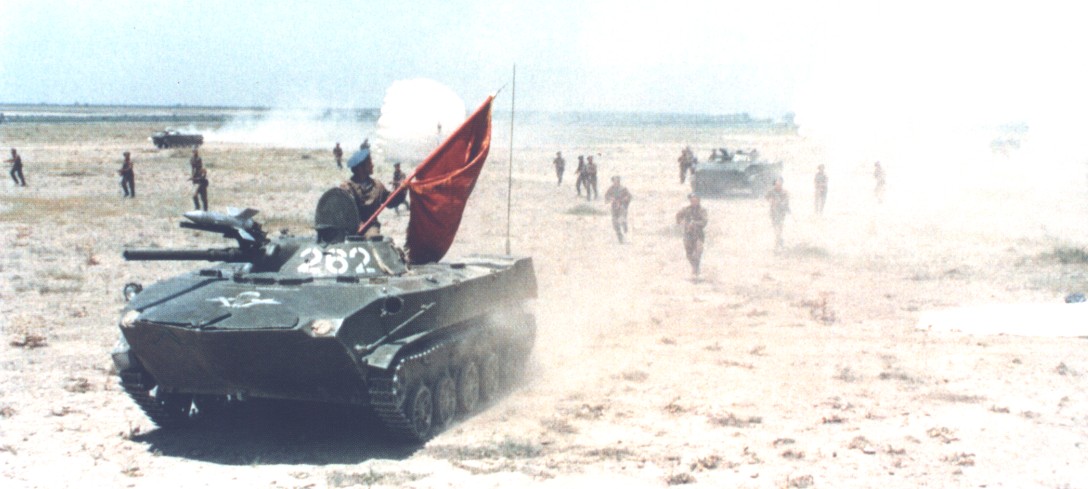
Object 915 would successfully pass tests in 1967, and was praised for its high degree of cross country mobility. The accuracy of firing the main gun on the move was significantly increased compared to BMP-1 due to the hydropneumatic suspension system. The vehicle was also superior in its amphibious capabilities when compared to BMP-1, in regards to effectively and safely exiting and entering water it held further advantages. After its adoption the BMD-1K would enter service which supplied the vehicle with a second R-123M, there is an antenna filter which allows both radios to operate on a single antenna, alongside R-124, an AB-0.5P/30 gasoline electric charging unit, a GPK-59 gyroscopic course indicator, a heater and fan for the fighting compartment, and GO-27 chemical reconnaissance device were installed. BMD-1K would be produced by VTZ.
BMD-1P would begin development soon after and integrated 1PN22M2, which included markings for firing OG-15V, stamped road wheels which were hollow, this served to improve buoyancy , and 9K111 Fagot. All previous systems were upgraded to BMP-1P standard, later 9M113 Konkurs would be adopted and employed, oftentimes 9K111 and 9M113 would be carried in tandem, one 9M113 and two 9K111. The missiles may be removed and employed separated from the vehicle on tripods stored within the system, BMD-1P was later affixed with 90V2 Tucha smoke system according to some sources, R-173P and R-174 radios would later be installed on BMD-1PK.

By the mid 80s, Increasing the lethality of the BMD-1 was seen as an important step in keeping the system relevant, as a result work on BMD-2 began. The 2A28 did in some regards struggle to engage smaller targets, especially those on the move, and there was also the ever present threat of rotary wing aircraft, which would cause problems for airborne forces who operated diminished anti aircraft measures compared to their conventional contemporaries. Initially, there were proposals for a lengthened 73mm gun, this was tested on the BMP-2 competitor Object 681, though the success demonstrated by 2A42 (open-bolt, gas operated autocannon with a short-stroke recoiling barrel mechanism) resulted in the adoption of this cannon instead. As a result accuracy against weapon teams and mobile targets was drastically improved, and the system could still threaten second generation MBTs from the sides and rear. The new turret restricted the use of 9M14, though by this point 9K111 and 9M113 had been fully integrated, and 9M14 had already been largely retired after the introduction of BMD-1P. The ability for the 30mm cannon to engage air targets with its high degree of elevation was exceptional, this was only bolstered by its fire rate, which could be shifted from 200 to 550 RPM. BMD-2 finally ushered in an electrohydraulic stabilizer, in the form of 2E36-1 (dual axis), which has both semi automatic (for anti-aircraft engagement) and automatic modes. The accuracy of the weapon allows it to engage ATGM teams with a 100% chance of destruction within 15 rounds. BMD-2 operates BPK-1-42 sights found on BMP-2. This optic has a fixed magnification of 5.6x in regards to the day channel, and is stabilized. The system includes a stadiametric rangefinder and passive + active night vision, which has a detection range of roughly 900 meters for tank sized targets. The BMD would later inspire an entire family of vehicles based off of its chassis, those being the BTR-D APC, the 1V119 Artillery control vehicle, the BREM-D armored recovery vehicle, and 2S9 Nona.
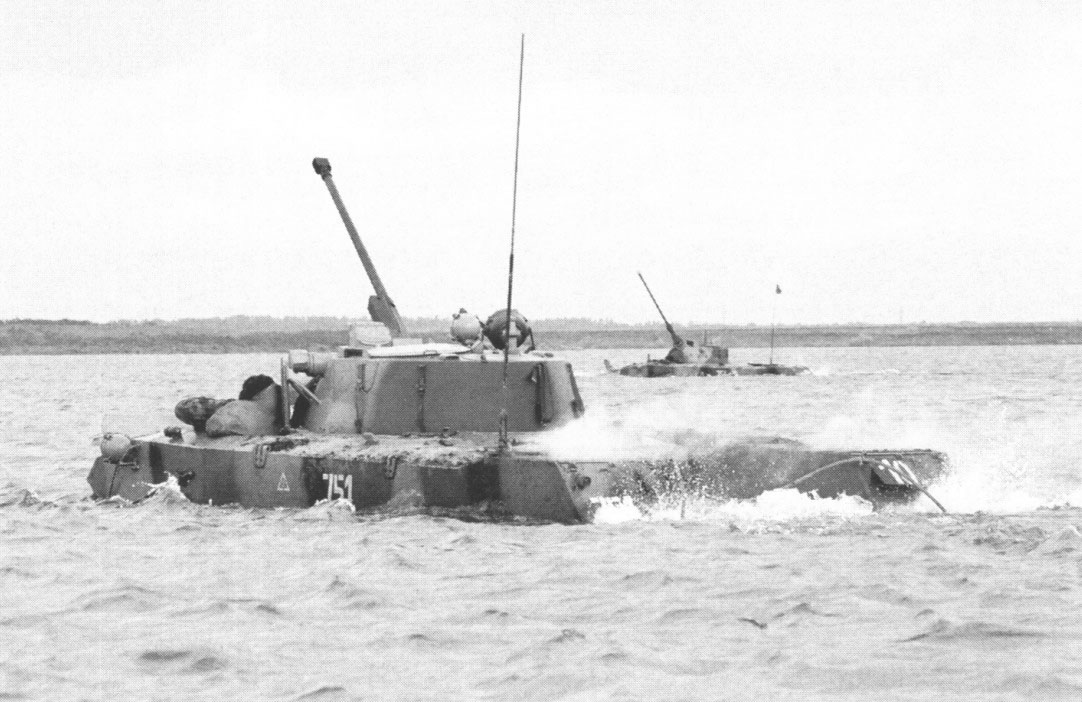


BMDs may be transported in pairs of two in both Mi-26 and Mi-6. The BMD falls at a rate of 5 to 6 meters per second, and crews are often dropped directly behind them, the systems included a locator so the crew could find them without complication. In 1971 General Margelov decided that Airborne forces would benefit from BMDs landing with a limited crew inside the vehicle. Testing of the Centaur landing system was to be engaged in 1973. Alexander Margelov, the commander's youngest son, was to partake in the jump; he was offered his father's vest from WW2 as a good luck charm, and wore it with him as the test was performed. On January 5th the jump occurred, and the crew miraculously survived, later tests would be conducted again, and similarly the crew survived, though ultimately Centaur would be quickly replaced with Reaktavr, which was more effective, the parachutes did not have the chance to cover the vehicle following the landing, the descent speed is 4 times higher, and is significantly safer, and while the retrorockets were quite loud and startled the crew, it was indeed superior. From 1973 to 1991, the Centaur and Reaktavr systems were used over 100 times.
Airborne forces equipped with the BMD were provided with extreme degrees of cross country mobility as well as massive fire power advantages over threats they expected to encounter. This capacity for rapid shock attacks and incredible anti-armor capabilities was unrivaled throughout the 70s and 80s, which drastically increased the Strategic Airborne Forces capability to seize key terrain and complete objectives, while offering a unique scope for raids at considerable distance and momentum.
Anyways the thread concludes here, thank you for reading! I decided a breakdown of the BMD would be important if I was to post a Strategic Airborne Forces thread, I hope you enjoy this pseudo-part 1. Expect the doctrinal continuation to be posted later this week.

I must note, this thread is adapted from Soviet and Russian sources (primarily official documents with difficult language), and may have some unfortunate translation errors as a result, technical and operational manuals are a mess to adapt contextually, so bear with me if there is a glaring inaccuracy due to this.
• • •
Missing some Tweet in this thread? You can try to
force a refresh