“The rote incantations of a state religion.”
This is an incredible exposé of academic DEI.
It confirms so many things critics of DEI have been saying for years.
Better late than never, NYT!
Some highlights:
🧵
This is an incredible exposé of academic DEI.
It confirms so many things critics of DEI have been saying for years.
Better late than never, NYT!
Some highlights:
🧵

The most common attitude toward DEI at UMich, even among those committed to diversity and social justice, is “wary disdain.”
People are sick of it.
People are sick of it.

Students find DEI to be “shallow” and/or “stifling.”
They “rolled their eyes” at the “profusion of course offerings” about identity politics and oppression.
They don’t read the emails (of course they don’t).
They “rolled their eyes” at the “profusion of course offerings” about identity politics and oppression.
They don’t read the emails (of course they don’t).

Michigan’s own survey data suggests the school has become less inclusive:
“Students were less likely to interact with people of a different race or religion or with different politics - the exact kind of engagement D.E.I. programs, in theory, are meant to foster.”
“Students were less likely to interact with people of a different race or religion or with different politics - the exact kind of engagement D.E.I. programs, in theory, are meant to foster.”
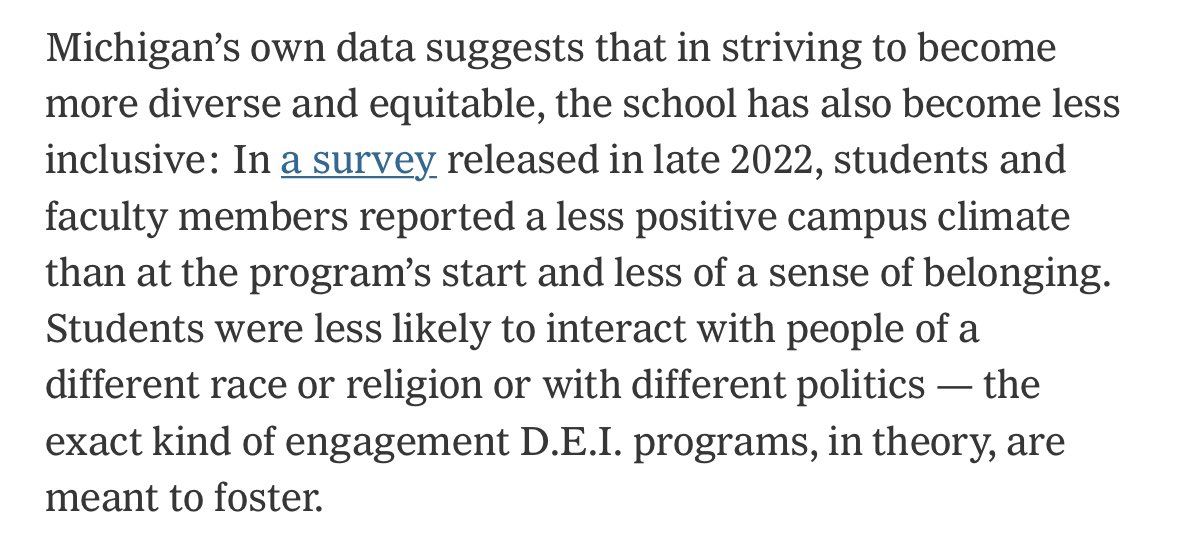
At the same time, the school has created a culture of grievance and an extensive bureaucratic apparatus that can be used to advance those grievances.
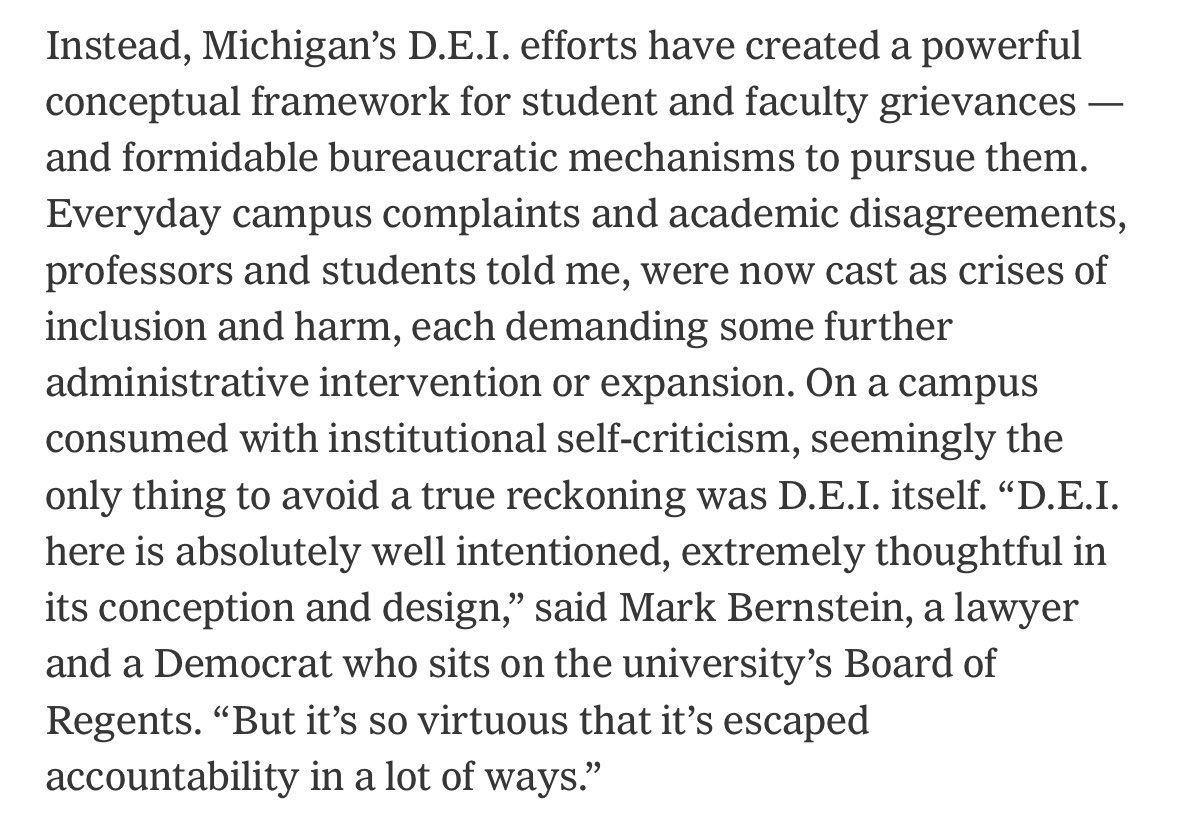
“Some administrators discovered that student activists could be a potent campus constituency.”
DEI is part of the growth of a massive bureaucratic class that is more leftwing than the faculty and uses students to advance its political goals.
It must be rooted out.
DEI is part of the growth of a massive bureaucratic class that is more leftwing than the faculty and uses students to advance its political goals.
It must be rooted out.
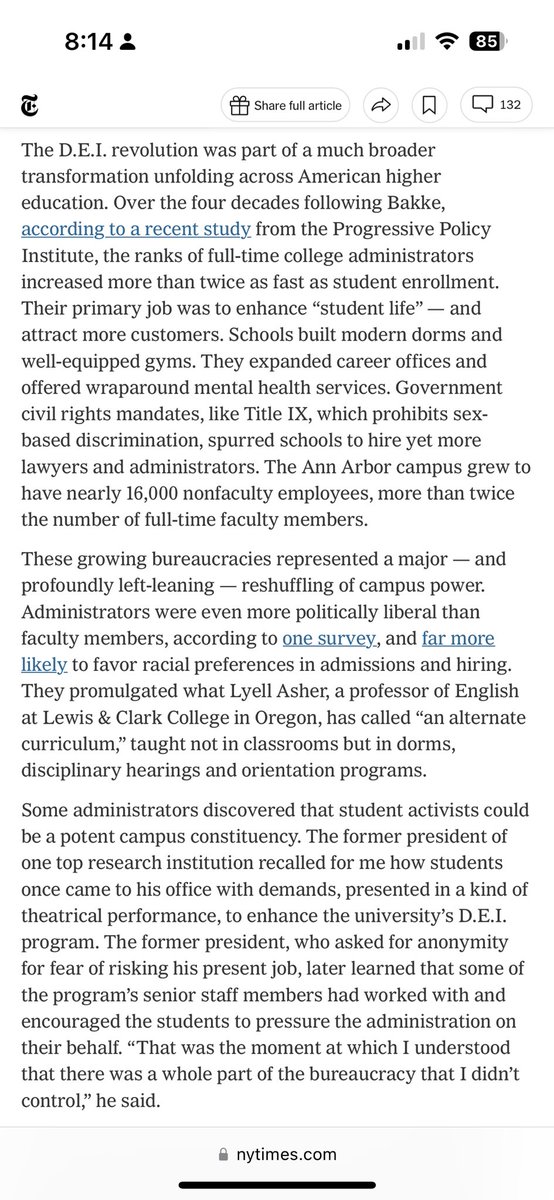
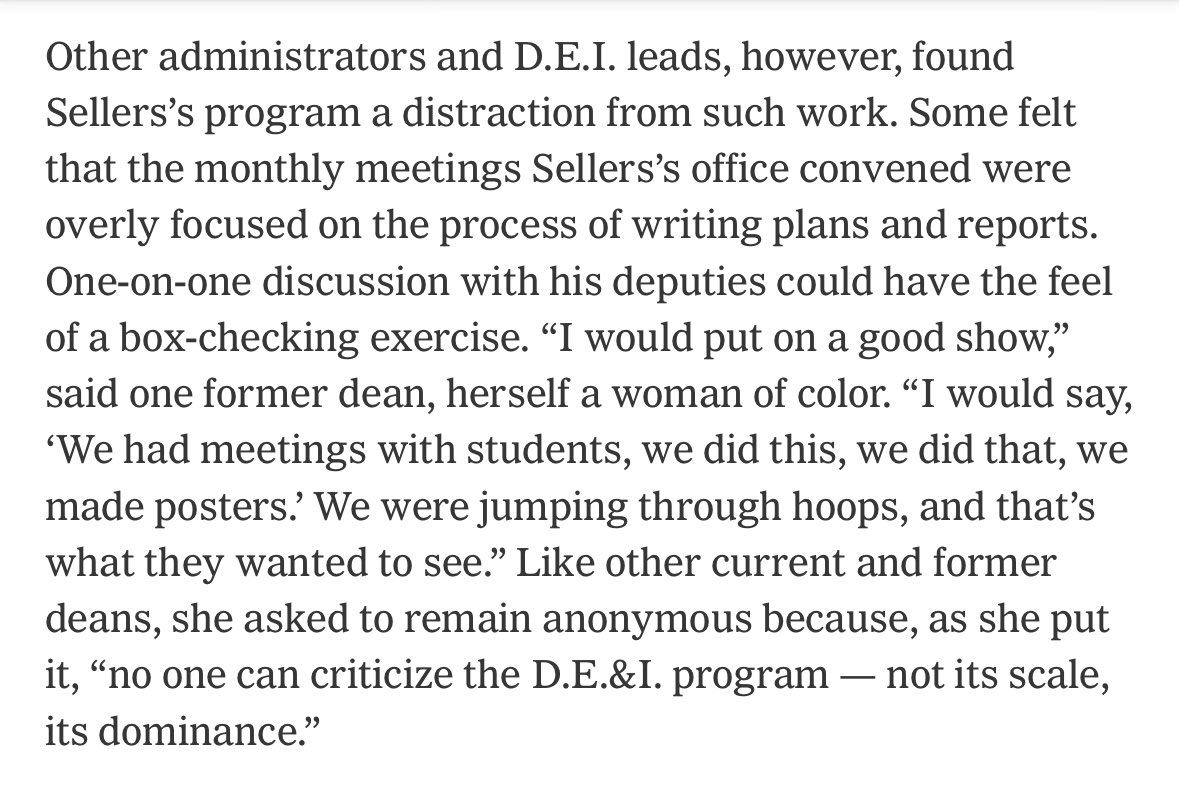
“No one can criticize the D.E.&I. program—not its scale, its dominance.”
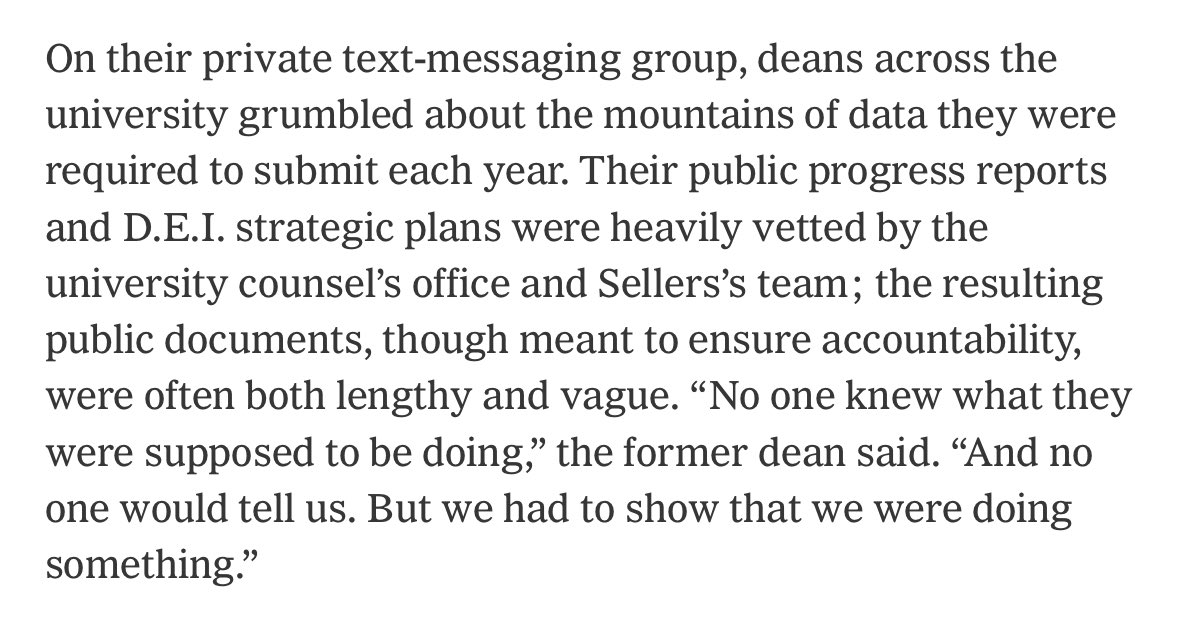
Even other DEI employees complained about the central DEI office’s demands for plans, reports, meetings, etc., and its stifling control.
Even other DEI employees complained about the central DEI office’s demands for plans, reports, meetings, etc., and its stifling control.
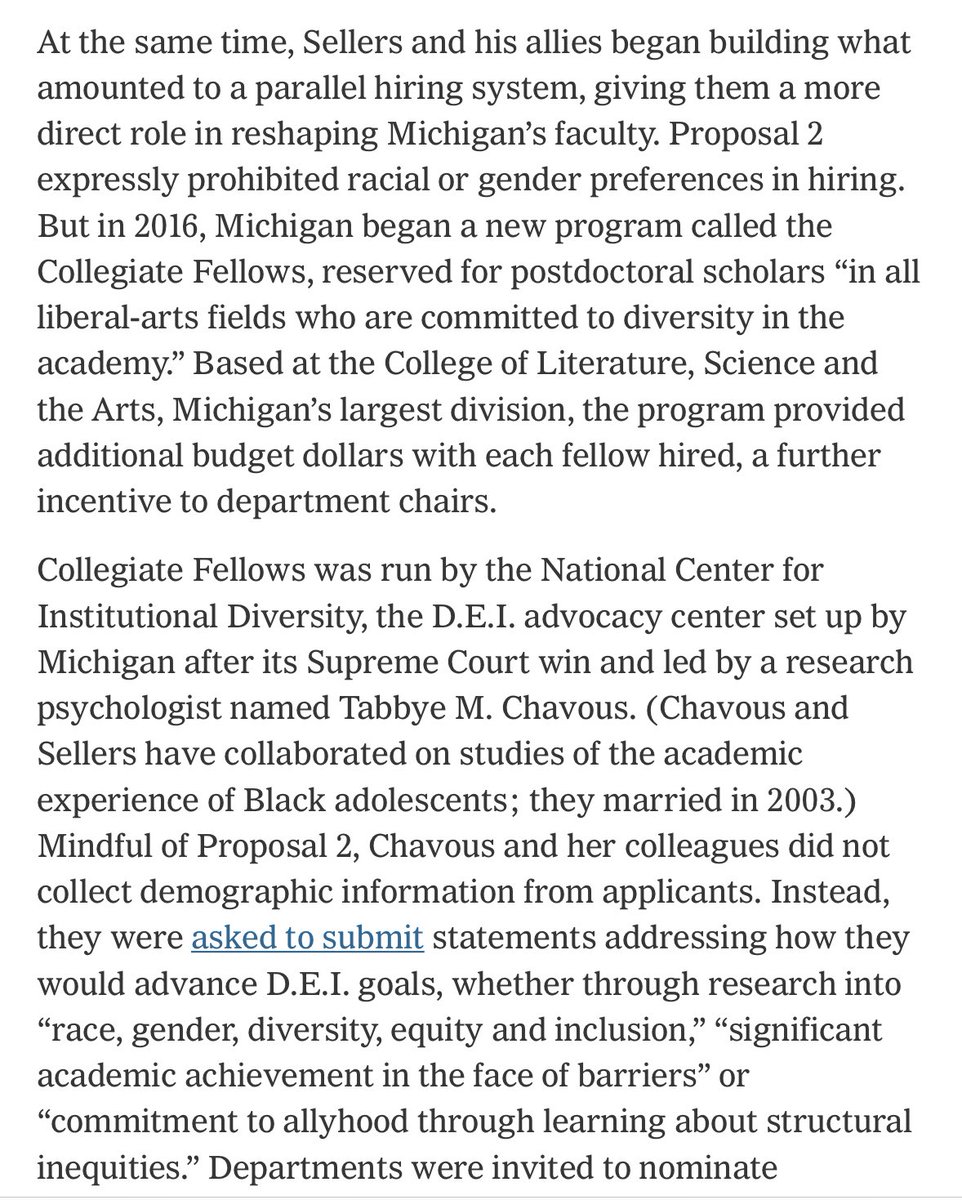
DEI hiring programs and the use of DEI statements were set up, officially to find people who would advance diversity (which is bad enough from a free expression standpoint), but…
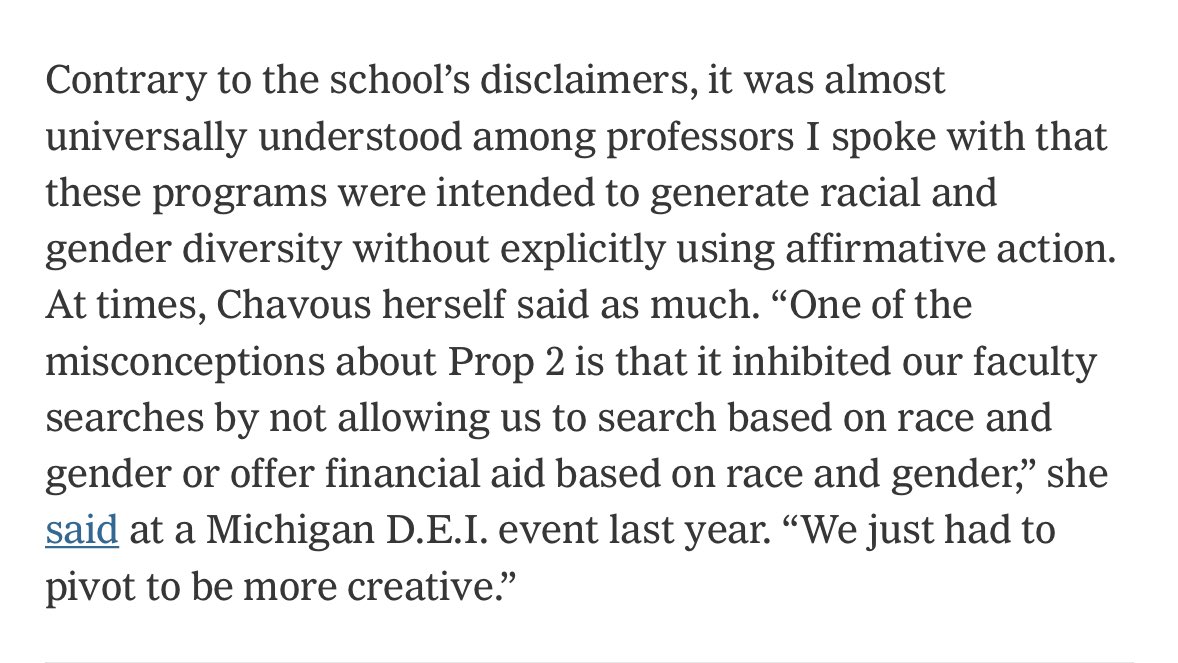
…everyone on campus said “it was almost universally understood among professors I spoke with that these programs were intended to generate racial and gender diversity without explicitly using affirmative action.”
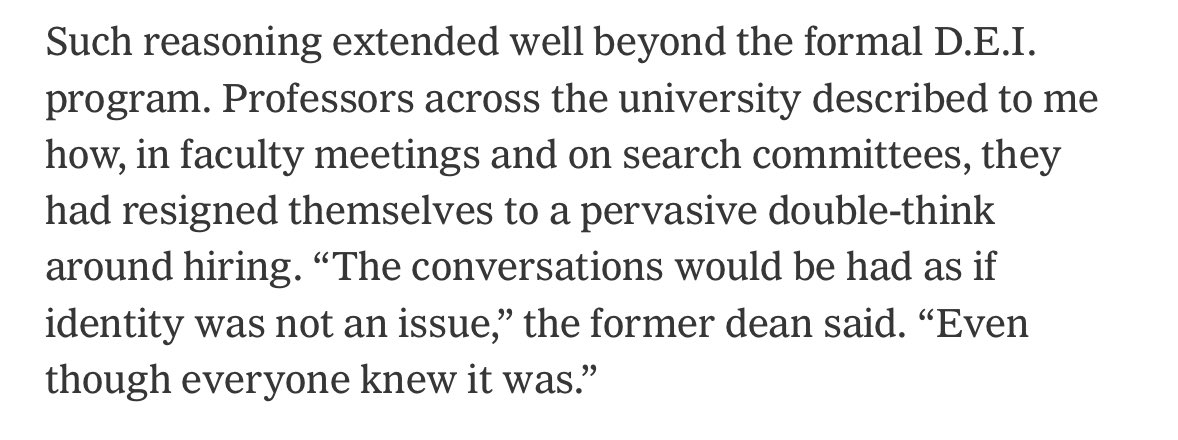
It has created a culture of dishonesty at the university.
“Professors across the university described to me how, in faculty meetings and on search committees, they had resigned themselves to a pervasive double-think around hiring.”
“Professors across the university described to me how, in faculty meetings and on search committees, they had resigned themselves to a pervasive double-think around hiring.”
The piece discusses at length the woke insanity of 2020.
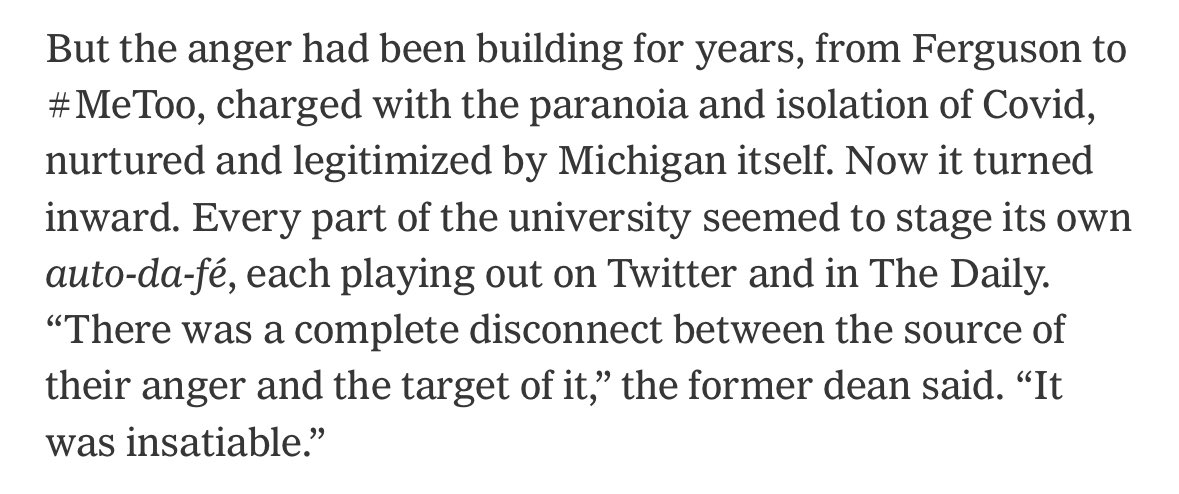
“Every part of the university seemed to stage its own auto-da-fe... ‘There was a complete disconnect between the source of their anger and the target of it,’ the former dean said. ‘It was insatiable.’”
🎯
“Every part of the university seemed to stage its own auto-da-fe... ‘There was a complete disconnect between the source of their anger and the target of it,’ the former dean said. ‘It was insatiable.’”
🎯
The piece details several cancellations, legions of complaints, etc.
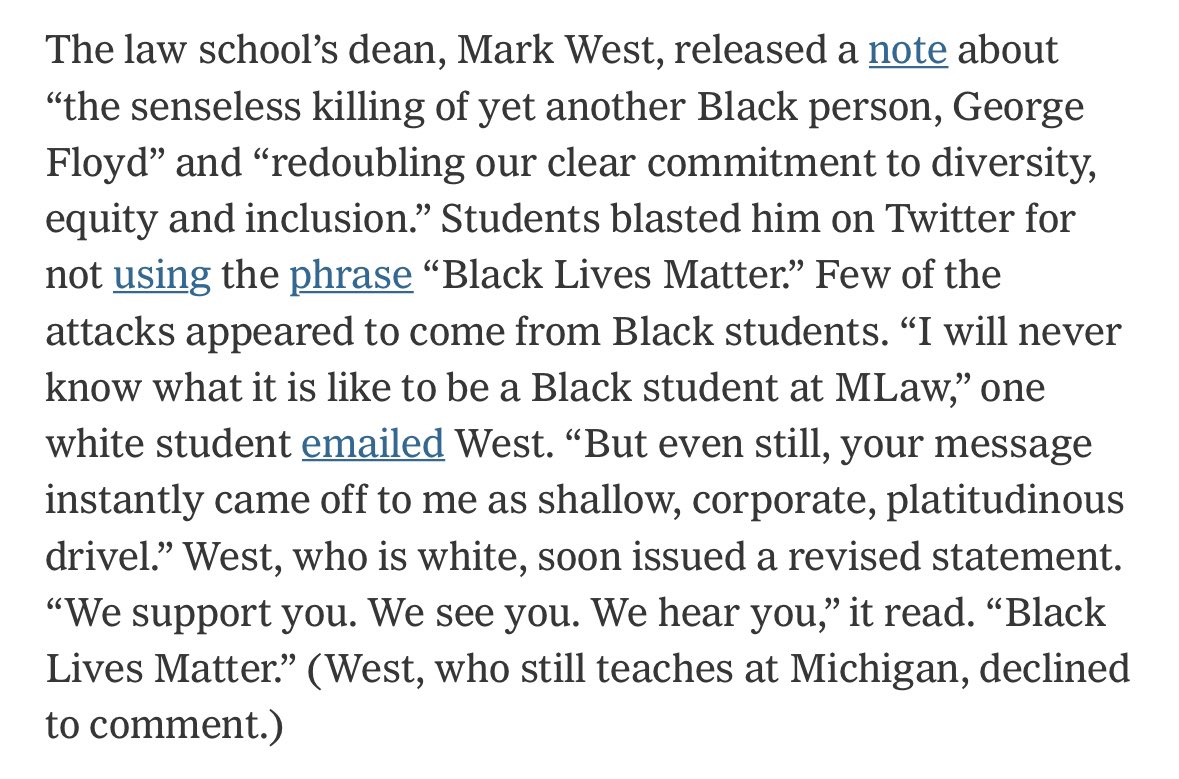
The law school dean was pressured to release a statement.
He was criticized for not explicitly saying Black Lives Matter in it.
“Few of the attacks appeared to come from Black students.”
The law school dean was pressured to release a statement.
He was criticized for not explicitly saying Black Lives Matter in it.
“Few of the attacks appeared to come from Black students.”
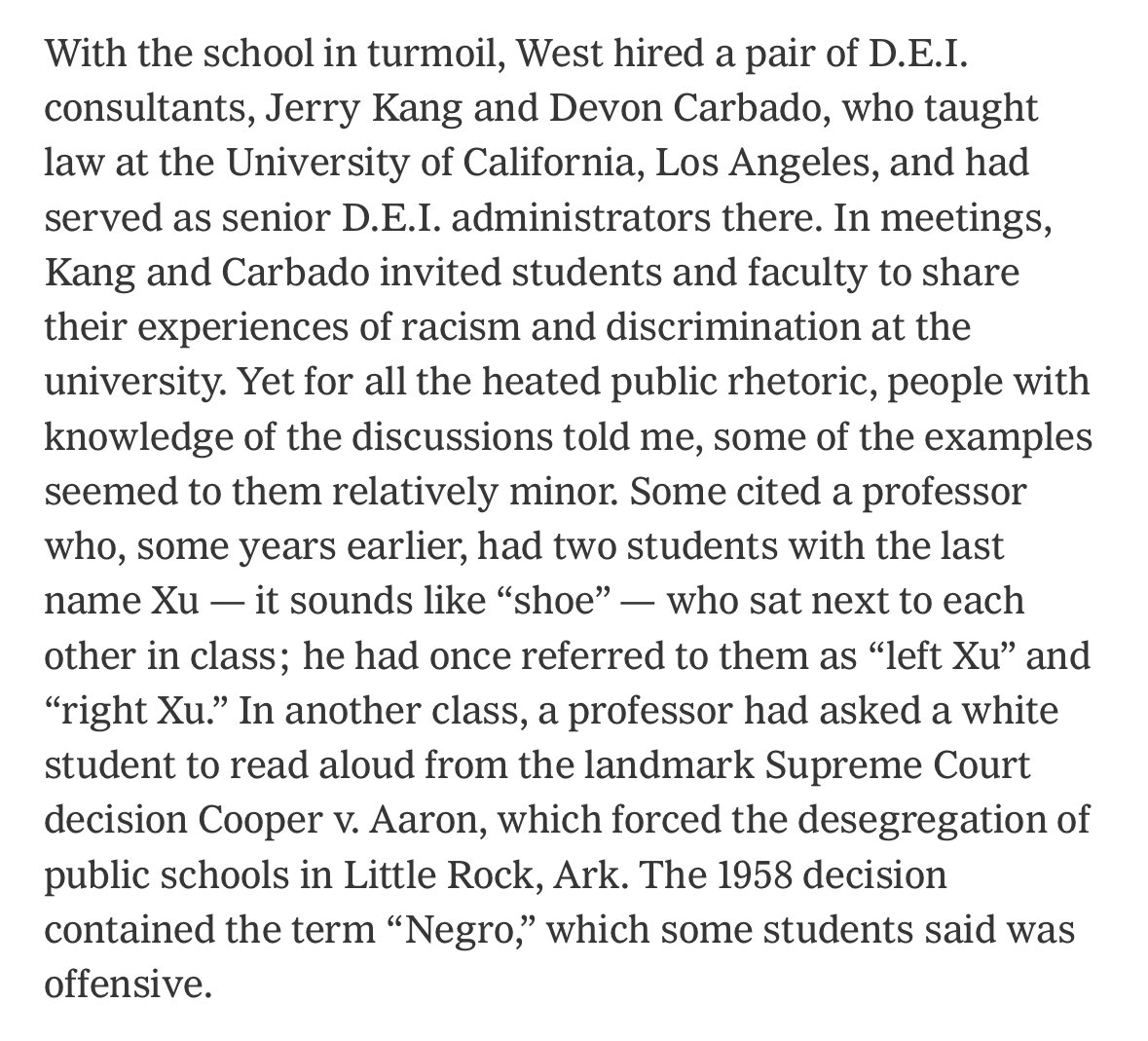
It also details the university’s response: hire more DEI bureaucrats and consultants, hold more trainings, etc.
This happened across academia.
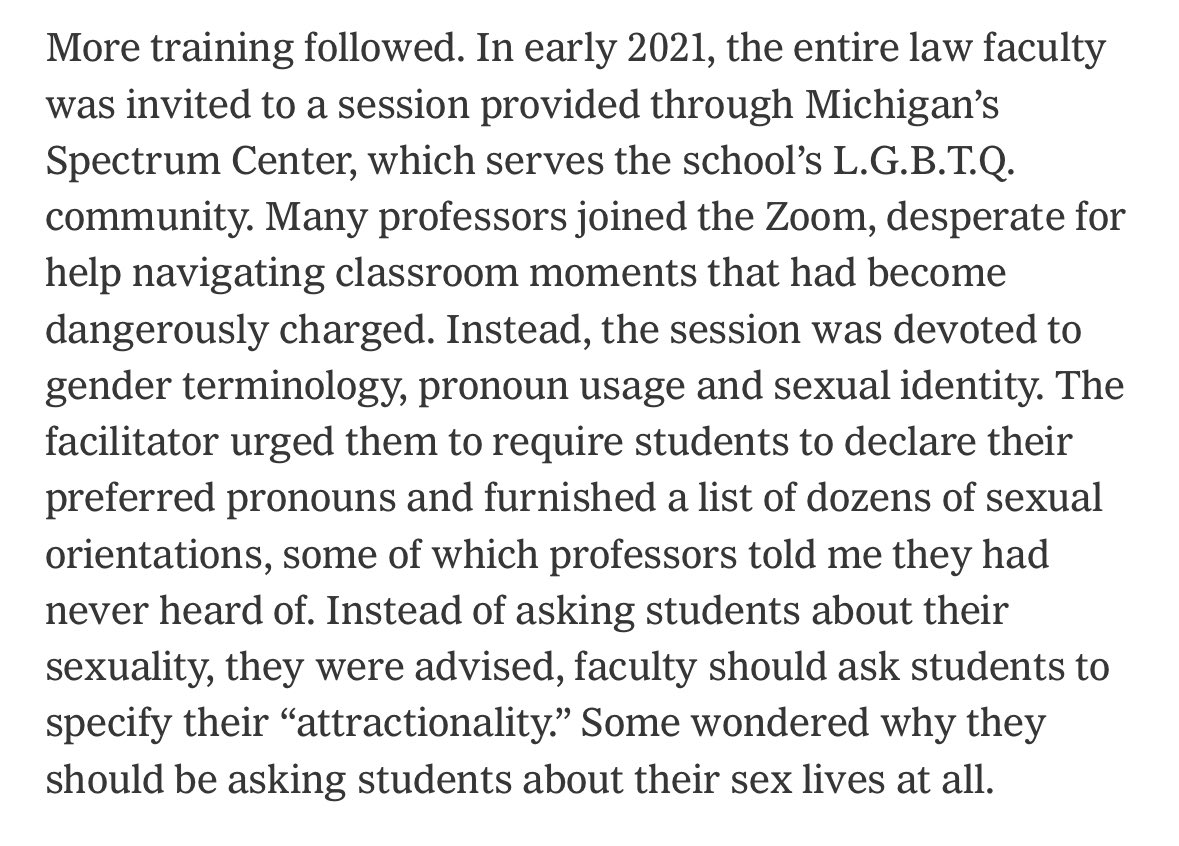
These trainings subjected people to the hyper vigilance of wokeness and turned toward other causes such as pronouns.
This happened across academia.
These trainings subjected people to the hyper vigilance of wokeness and turned toward other causes such as pronouns.
One professor who was cancelled noted a common experience:
“Many colleagues expressed sympathy…but only in private.”
She also noted that “some of her accusers were white women.”
This was also common: “The most strident critics were sometimes not the most marginalized students, but peers who claimed to be fighting on their behalf.”
“Many colleagues expressed sympathy…but only in private.”
She also noted that “some of her accusers were white women.”
This was also common: “The most strident critics were sometimes not the most marginalized students, but peers who claimed to be fighting on their behalf.”
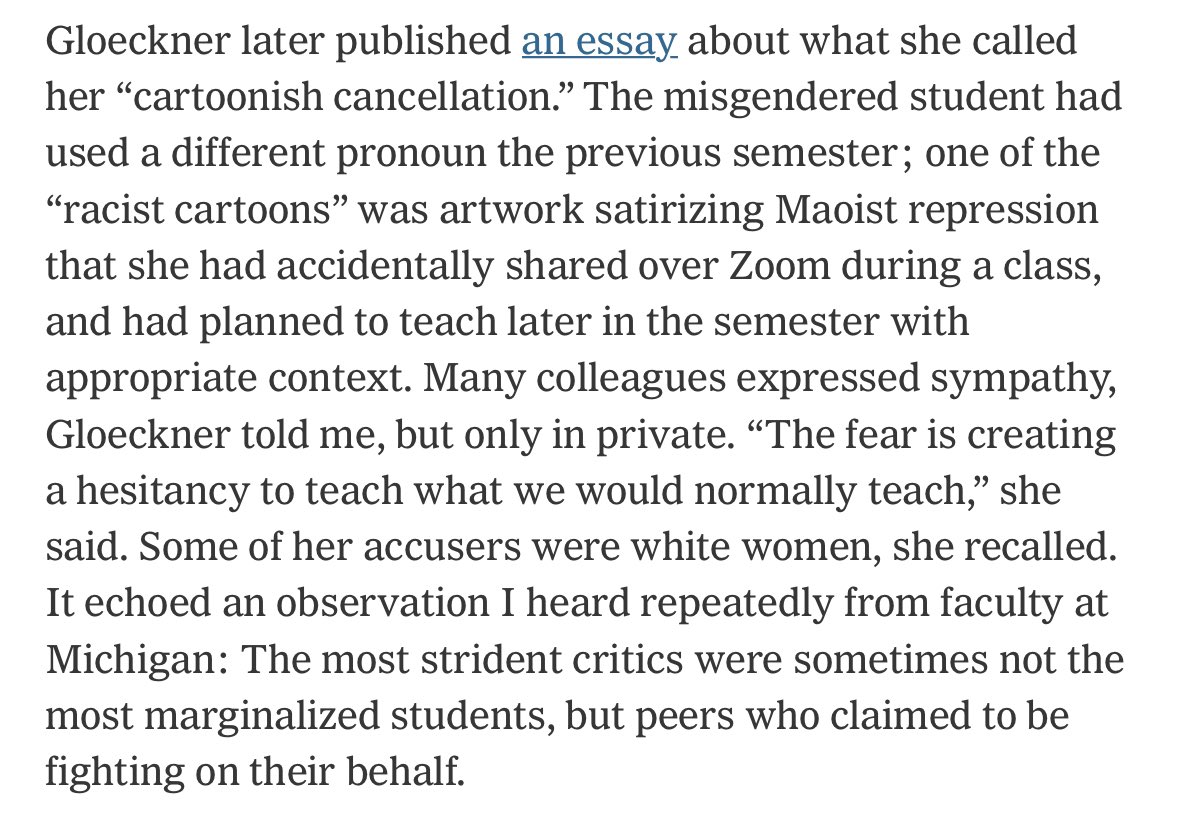
The piece totally exposes the reality that DEI is a political agenda that excludes dissenters:
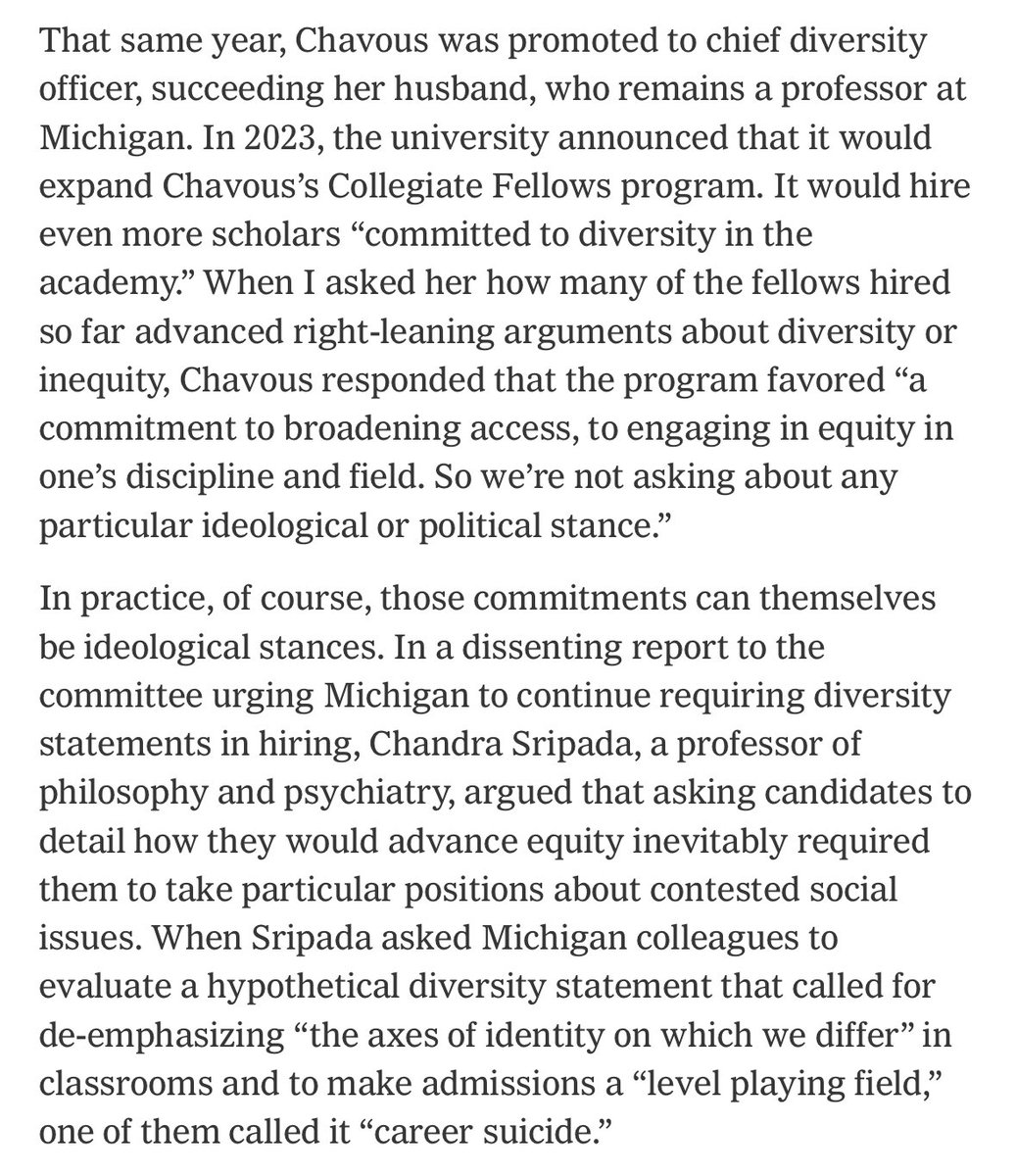
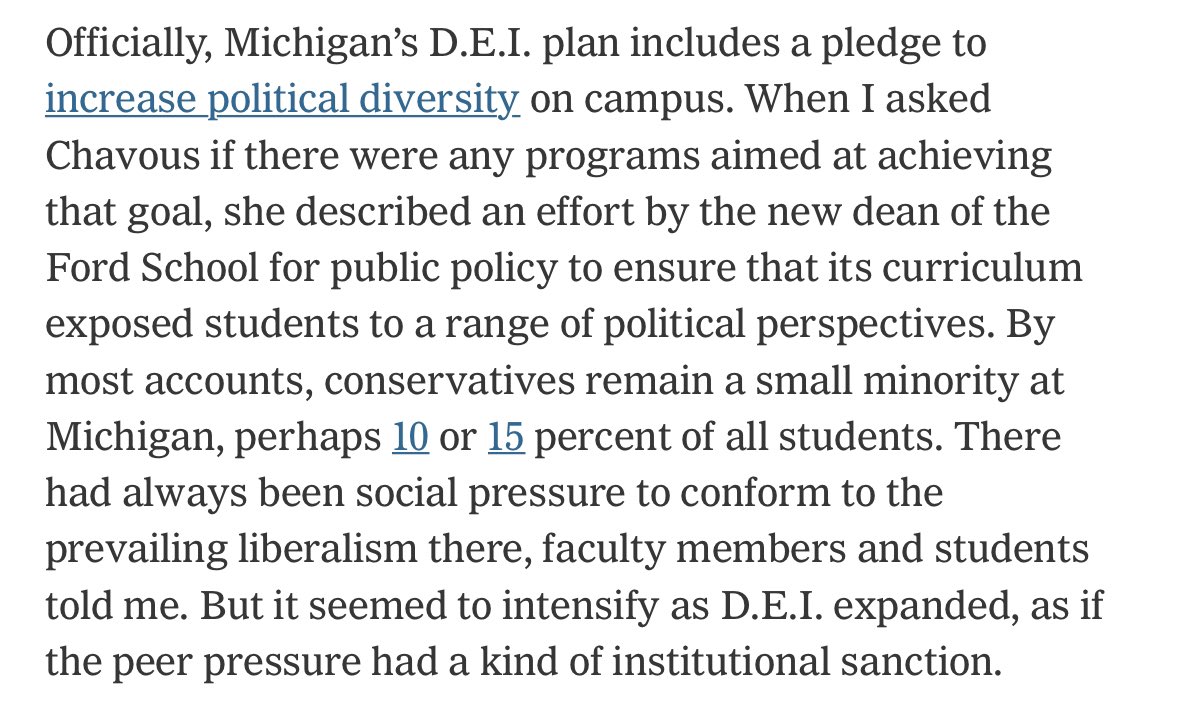
When a regent tried to do something about the lack of political diversity, the DEI office stood in the way:
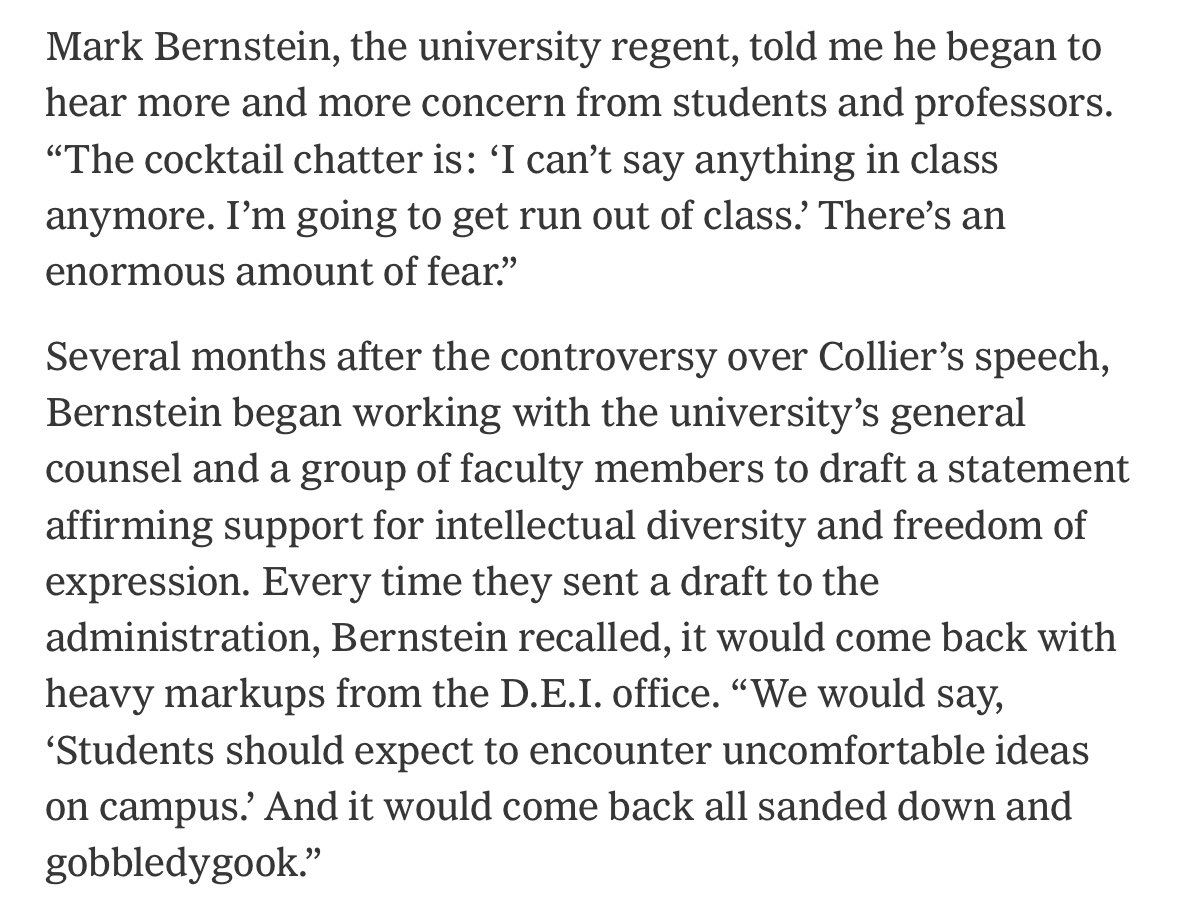
For students, DEI is “simply background noise, the rote incantations of a state religion.”
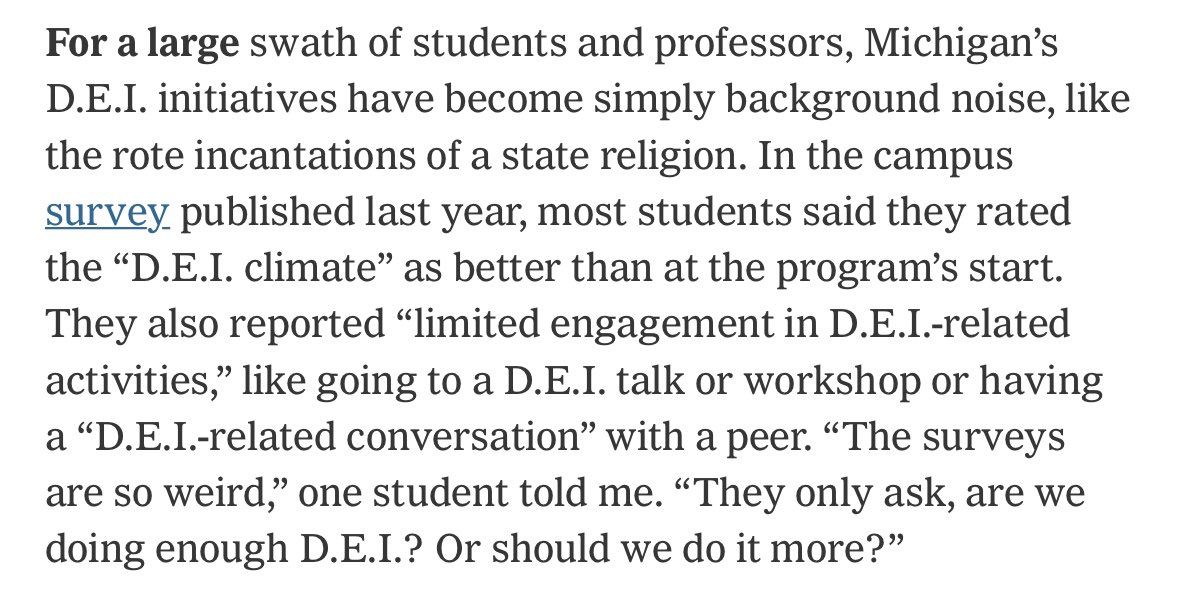
Black students have turned on it as well:
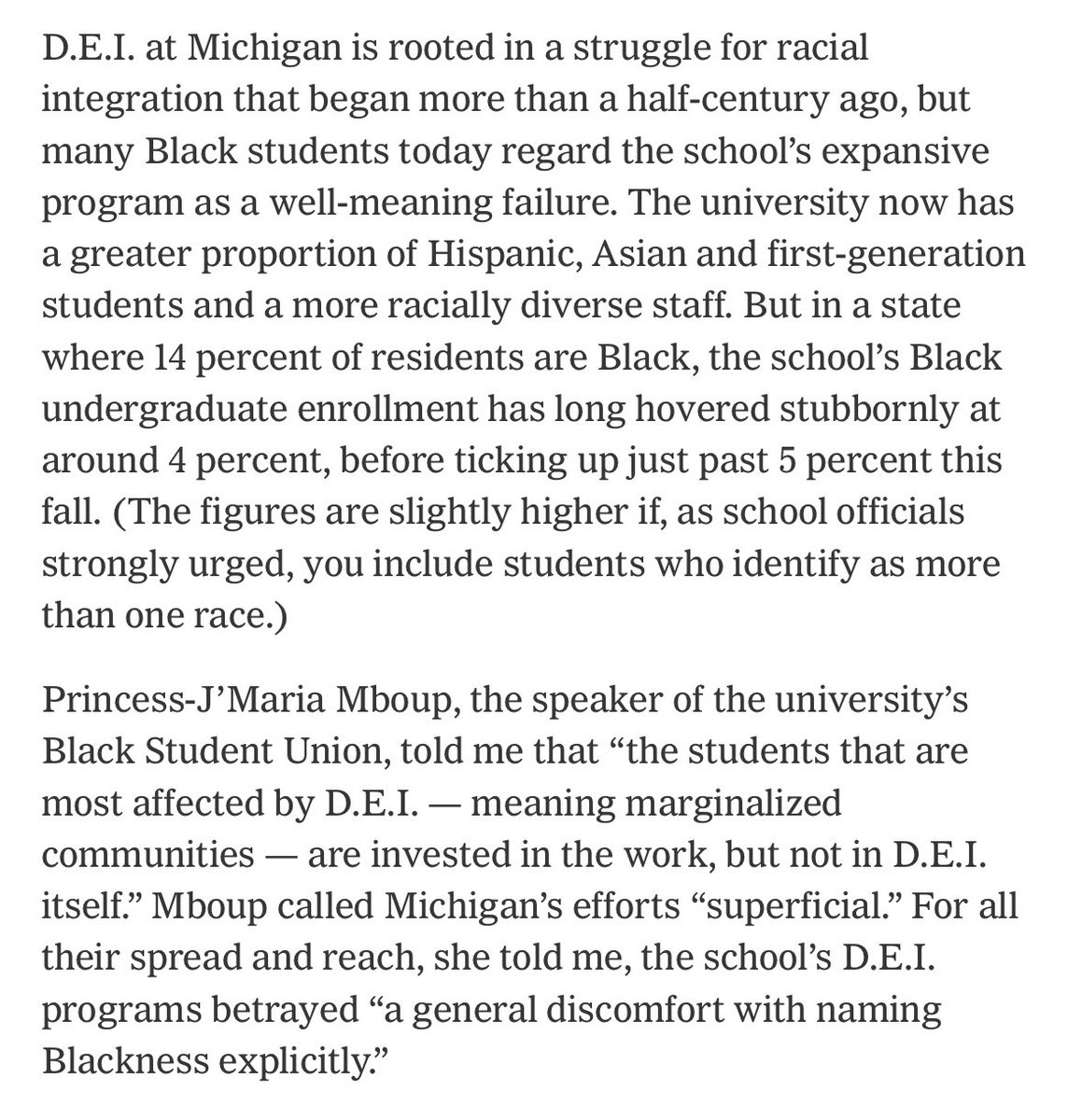
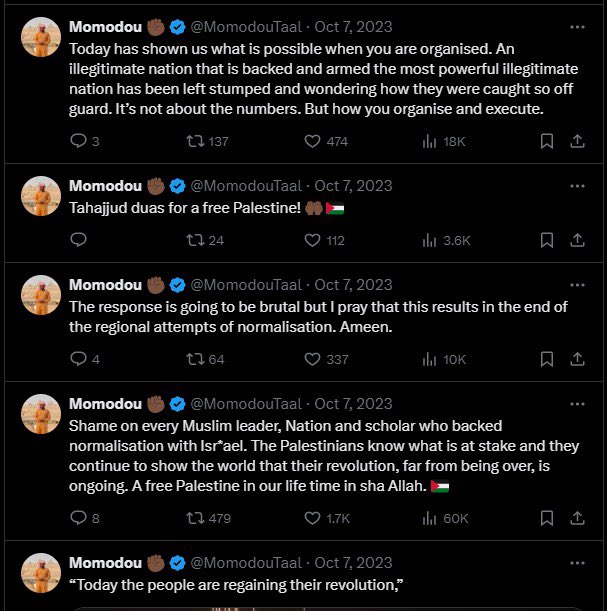
And of course, DEI utterly failed after October 7:
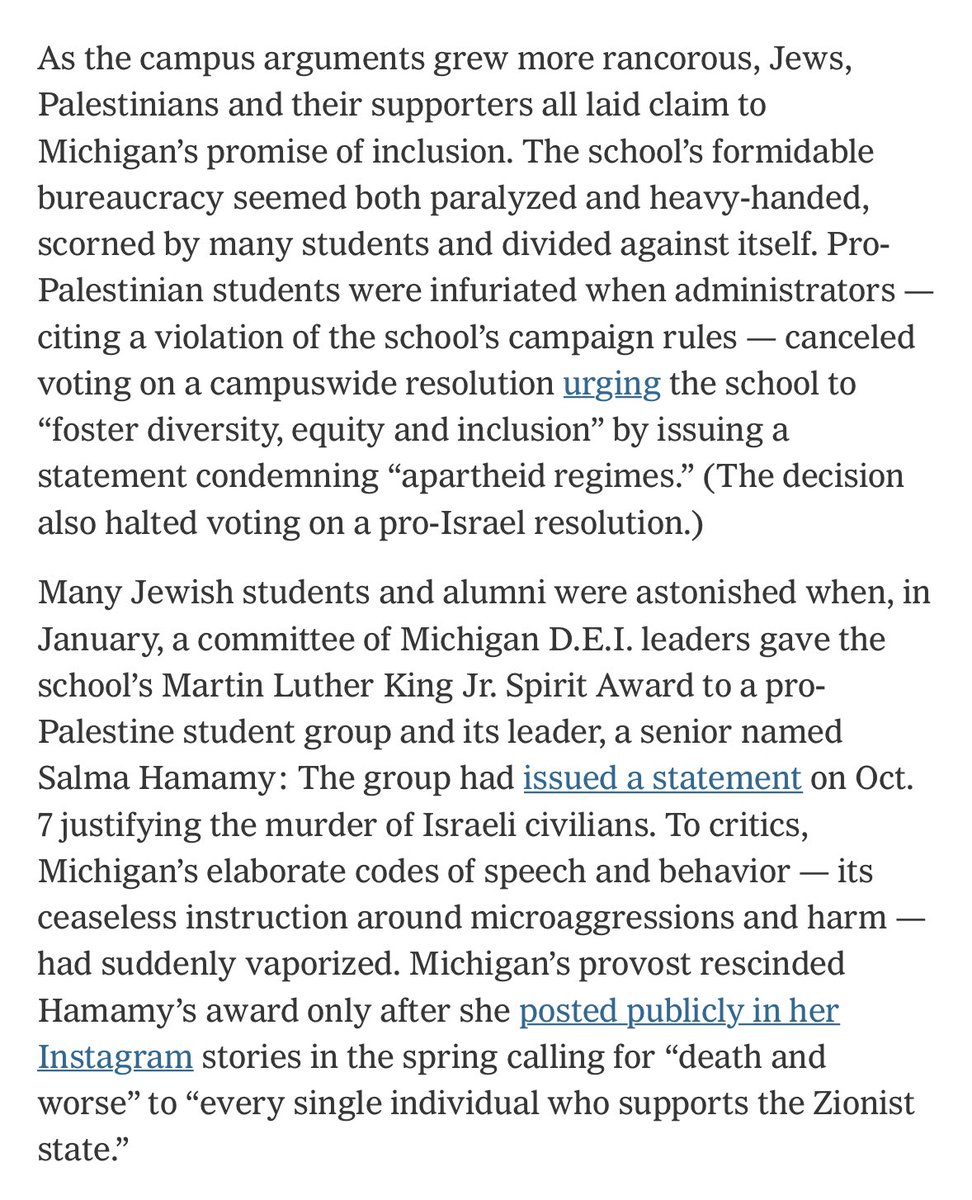
This piece should be the death knell for bureaucratic DEI in academia.
There is much, much more than what I’ve summarized here.
Read the whole thing:
nytimes.com/2024/10/16/mag…
There is much, much more than what I’ve summarized here.
Read the whole thing:
nytimes.com/2024/10/16/mag…
• • •
Missing some Tweet in this thread? You can try to
force a refresh