
Massachusetts residents who go to vote this November are going to see a curious ballot initiative:
Repeal Competence Assessment Requirement for High School Graduation.
The initiative is being championed by Progressives opposed to standardized tests.
Let's discuss🧵
Repeal Competence Assessment Requirement for High School Graduation.
The initiative is being championed by Progressives opposed to standardized tests.
Let's discuss🧵

Firstly, who's sponsoring this initiative?
The officials are @SenWarren @RepMcGovern @AyannaPressley @RepLoriTrahan and @JimHawkins4Rep.
The unions are the MA AFL-CIO and the Teachers Association.
The organizations are MassVote and Progressive Massachusetts.
The officials are @SenWarren @RepMcGovern @AyannaPressley @RepLoriTrahan and @JimHawkins4Rep.
The unions are the MA AFL-CIO and the Teachers Association.
The organizations are MassVote and Progressive Massachusetts.
And what are their reasons?
The official website says having a high-stakes test as a graduation requirement is "ineffective" and "discriminatory". Discriminatory against whom?
(1) Non-Whites, (2) people who don't know English, and (3) people with learning disabilities.
The official website says having a high-stakes test as a graduation requirement is "ineffective" and "discriminatory". Discriminatory against whom?
(1) Non-Whites, (2) people who don't know English, and (3) people with learning disabilities.

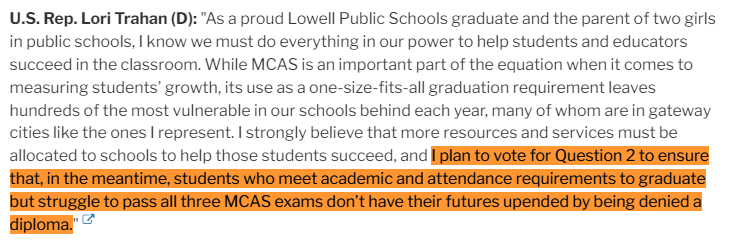
The issue, as written by Lori Trahan, is that some students have fine grades and attendance, but they can't pass a test.
In frank terms, the proponents of getting rid of this initiative want shakier, more subjective graduation standards because objective ones feel bad.
In frank terms, the proponents of getting rid of this initiative want shakier, more subjective graduation standards because objective ones feel bad.
But the vast majority of students pass this examination, if not on their first try, then on subsequent attempts
On a first go, 88% of the class of 2023, 81% of the class of 2024, and 82% of the class of 2025 passed.
And it's no wonder, because the test is easy.
On a first go, 88% of the class of 2023, 81% of the class of 2024, and 82% of the class of 2025 passed.
And it's no wonder, because the test is easy.
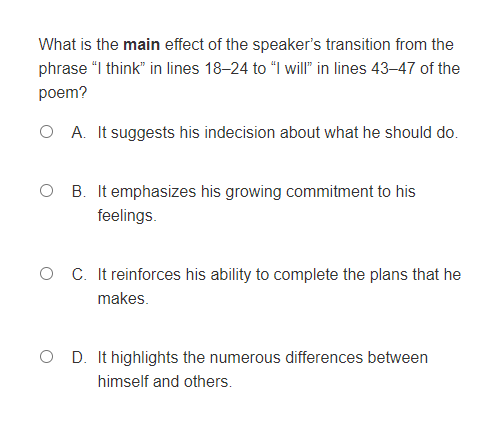
On the English Language Arts section, you have to read paragraphs and then answer questions about them.
You are literally given the answer and told to mark it down. In 2024, this meant reading a portion of Song of the Open Read and then answering questions like:
You are literally given the answer and told to mark it down. In 2024, this meant reading a portion of Song of the Open Read and then answering questions like:
An example essay question from this section is to write a few paragraphs about some essays on listening skills, in which you argue that listening skills are important.
You should really be able to do this after reading two whole essays on the topic.
You should really be able to do this after reading two whole essays on the topic.
The mathematics section is even easier. For example, you can just plug-and-play with arithmetic sequences:
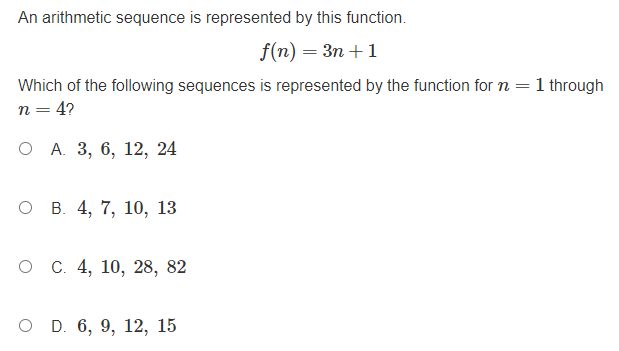
The mathematics section hits students with questions like 'Here's a list of ten magazine prices. What's the range of prices?' or 'What's the median price?' or 'If you remove two magazines and the median is unchanged but the average goes up by $1, what might their prices be?'
In other words, the test is not hard.
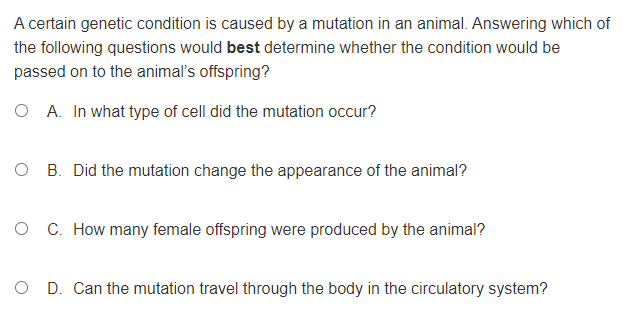
In recent years, they've added a science and technology/engineering section that asks you about biology and physics.
The biology section asks if you paid attention in class.
In recent years, they've added a science and technology/engineering section that asks you about biology and physics.
The biology section asks if you paid attention in class.
You may not believe this, but the physics section asks the same thing: Did you pay attention to the basics in class?
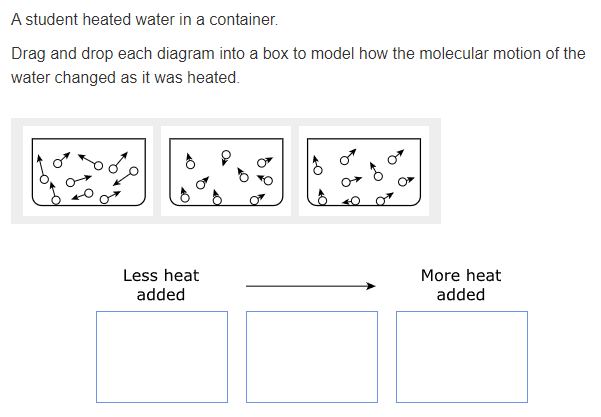
Since more than 80% of kids pass this test, and the state IQ of Massachusetts averages 104, the mean IQ for people who fail the test will be about 91 if the standard deviation is 15.
But some groups, like English Language Learners, will make this calculation erroneous.
But some groups, like English Language Learners, will make this calculation erroneous.
The real IQ threshold for passing, as a result, is a bit higher than 91. No big deal though, because that's still quite low.
The idea that this is a major barrier to kids' graduation should be regarded as pretty insulting to them.
The idea that this is a major barrier to kids' graduation should be regarded as pretty insulting to them.
Does this disadvantage "students of color"?
If that means Black people, then not really. They do about 0.7-0.8 d (0.76 in 2023, 0.78 in 2024) worse than Whites.
If Asians, then they do better than Whites, by (0.20 and 0.11 d in those years).
If that means Black people, then not really. They do about 0.7-0.8 d (0.76 in 2023, 0.78 in 2024) worse than Whites.
If Asians, then they do better than Whites, by (0.20 and 0.11 d in those years).
It might be the case that Hispanics are disadvantaged unfairly by not knowing English, because they perform a bit worse than Blacks, and that is generally only observed with really selective samples or a language issue.
But the solution to students not knowing English is not to get rid of the test entirely, it is to provide them with a translated test or a nonverbal test!
Incidentally, the state has produced translated questions in recent years, so this really isn't an issue.
Incidentally, the state has produced translated questions in recent years, so this really isn't an issue.
Who opposes the initiative?
The governor, @MassGovernor, the Secretary of Education, @PatrickTutwiler, the former Secretary of Education, @JimPeyser, the Greater Boston Chamber of Commerce, Mass. Assoc. of School Superintendents, the Business Alliance for Education, and more.
The governor, @MassGovernor, the Secretary of Education, @PatrickTutwiler, the former Secretary of Education, @JimPeyser, the Greater Boston Chamber of Commerce, Mass. Assoc. of School Superintendents, the Business Alliance for Education, and more.
The opposition cites as its reasoning that, empirically, the scores on the test predict long-term success and they adequately measure students' academic skills rather than their socioeconomic backgrounds or school characteristics, unlike measures like GPAs and attendance.
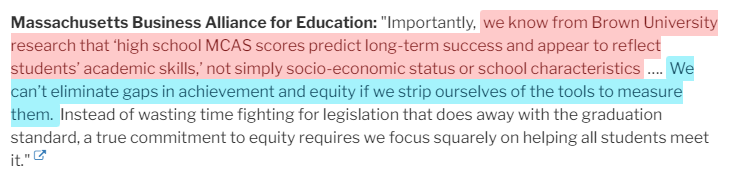
Other opponents argue, cogently, that getting rid of standards for the whole state means acquiring subjective standards that vary substantially across it, and do not actually work for ensuring student success.

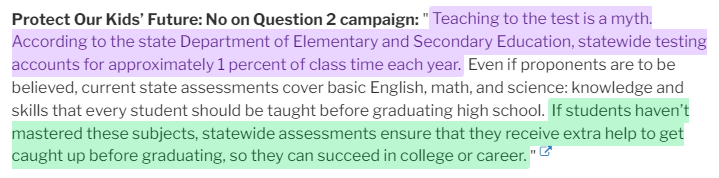
They also argue that teaching to the test is a myth and students should not earn diplomas if they aren't actually prepared.
Frankly, opposition to testing means opposition to gifted kids who might not come from a good background, who might not be able to attend school regularly, and who might be able to show they're ready for the wider world, but not through teachers' subjective measurements.
This initiative to strip Massachusetts schools of rigorous graduation standards and appropriate standards for using the only tool they currently have to identify the underserved is going to hurt a lot of kids if it's passed, just as it does everywhere this happens.
The only real benefit of getting rid of test-based graduation requirements is going to accrue to those who think everyone should graduate regardless of whether they deserve to.
They value equality for its own sake, and that's easily achieved, at a high price.
They value equality for its own sake, and that's easily achieved, at a high price.
• • •
Missing some Tweet in this thread? You can try to
force a refresh






