Recently discovered inscription of Chhatrapati Shivaji Maharaj in Tamil Nadu.
Short Thread 🧵➔
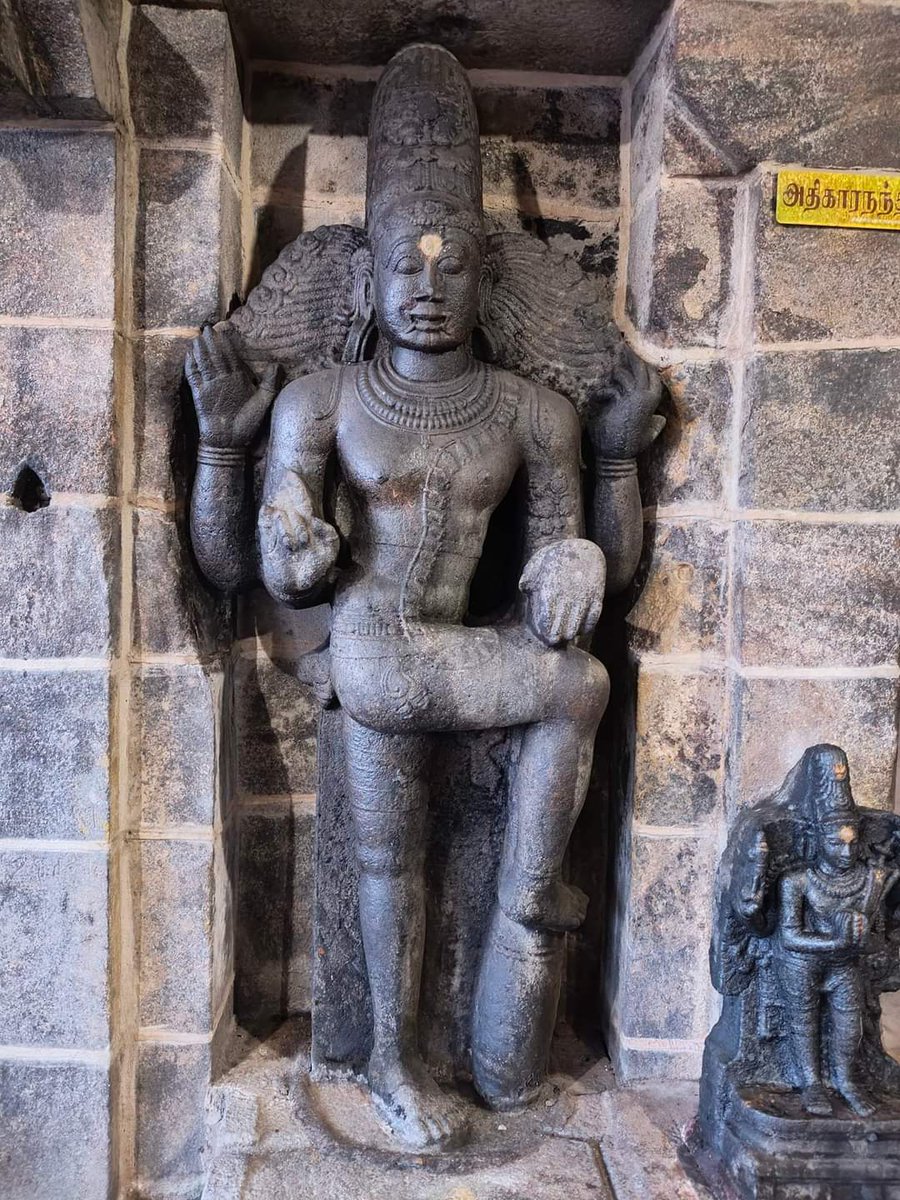
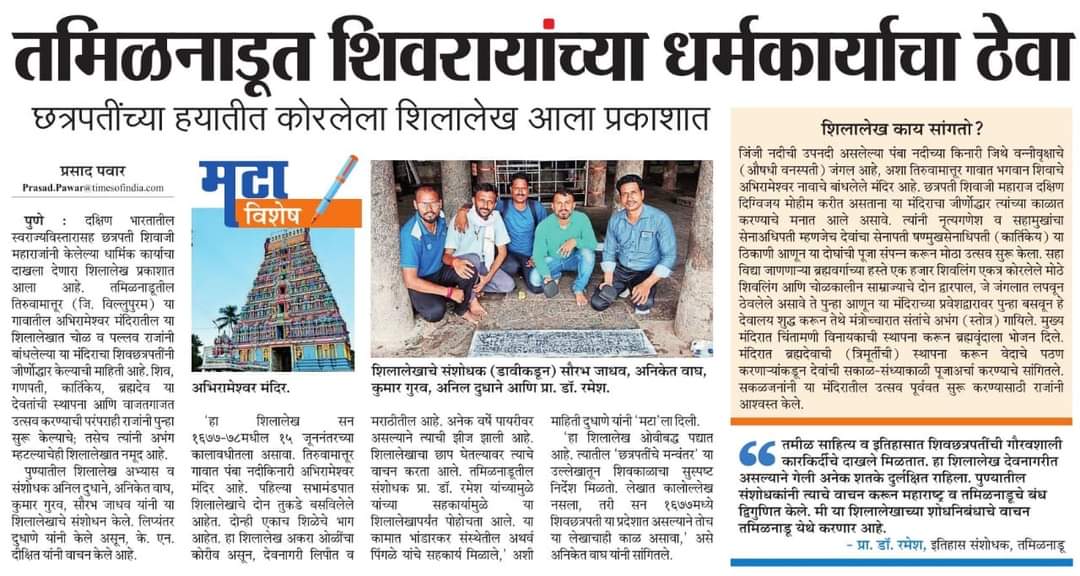
This inscription is located in the first hall outside the main sanctum of the famous Abhirameshwara temple in Thiruvamattur village on the banks of the Pamba river in the Villupuram Tamil Nadu state in South India. Essentially, these two pieces are parts of the same stone.
Tiruvamattur village, located on the banks of the Pamba River, a tributary of the Jinji River, where there is a forest of Vanni trees (Medicinal Ayurvedic plants) in South India, houses a Chola and Pallava temple dedicated to Lord Shiva named Abhirameshwar.
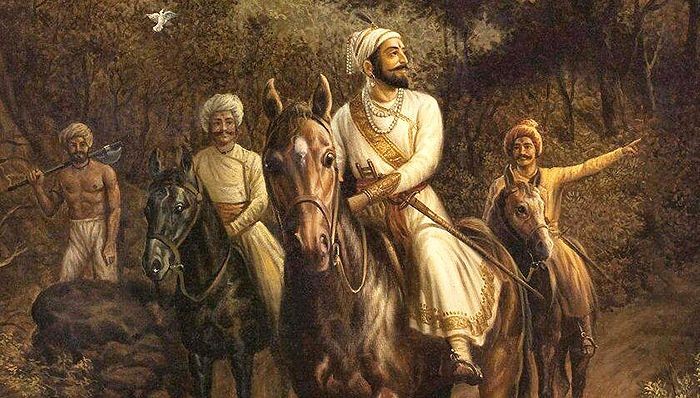
Chhatrapati Shivaji Maharaj restored this temple during his Manvantari period while campaigning in Dakshina Digvijaya. He brought Nritya Ganesha and the six-faced army commander Shanmukh Senadhipati (Kartikeya) to this spot, worshipping them on the banks of the Pamba River and...
Initiating a grand festival by introducing Harusatagam. (Although the exact meaning of Harusatagam is uncertain, if we interpret Haruv as Brahmin and consider Satgam as a corruption of Shatkarma, the full phrase's meaning can be deciphered).
Hastee Sattar Linga represents one thousand Shiva lingas intricately carved alongside a larger central Shiva linga. Additionally, the two gatekeepers of the Chola Empire, who were believed to have been concealed in the forest, were reinstated at the temple entrance.
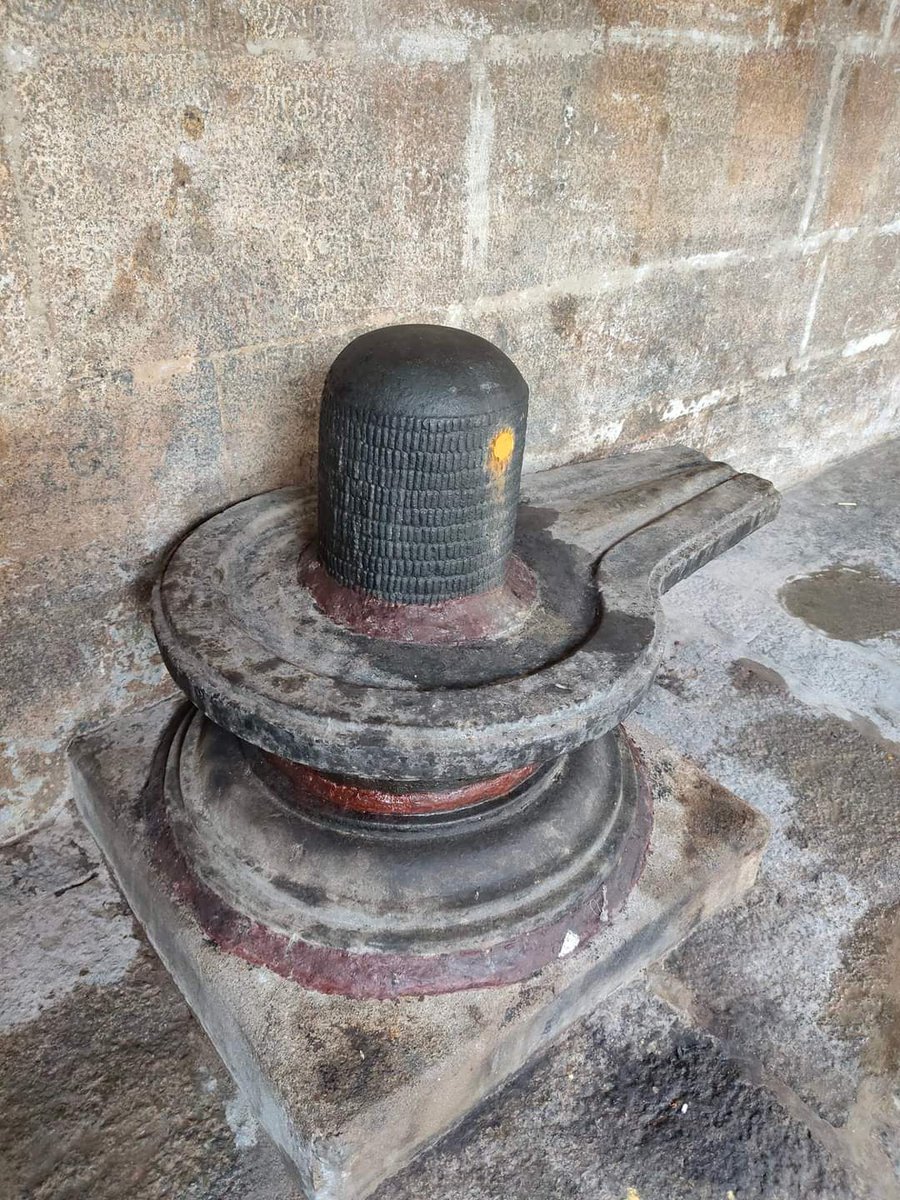
Following the daily rituals and purification ceremonies, the temple was further sanctified with the chanting of saints' abhangs and sacred mantras, resonating bells, conch shells, and musical instruments, culminating in the installation of the Sahastra Shivlinga in the temple.
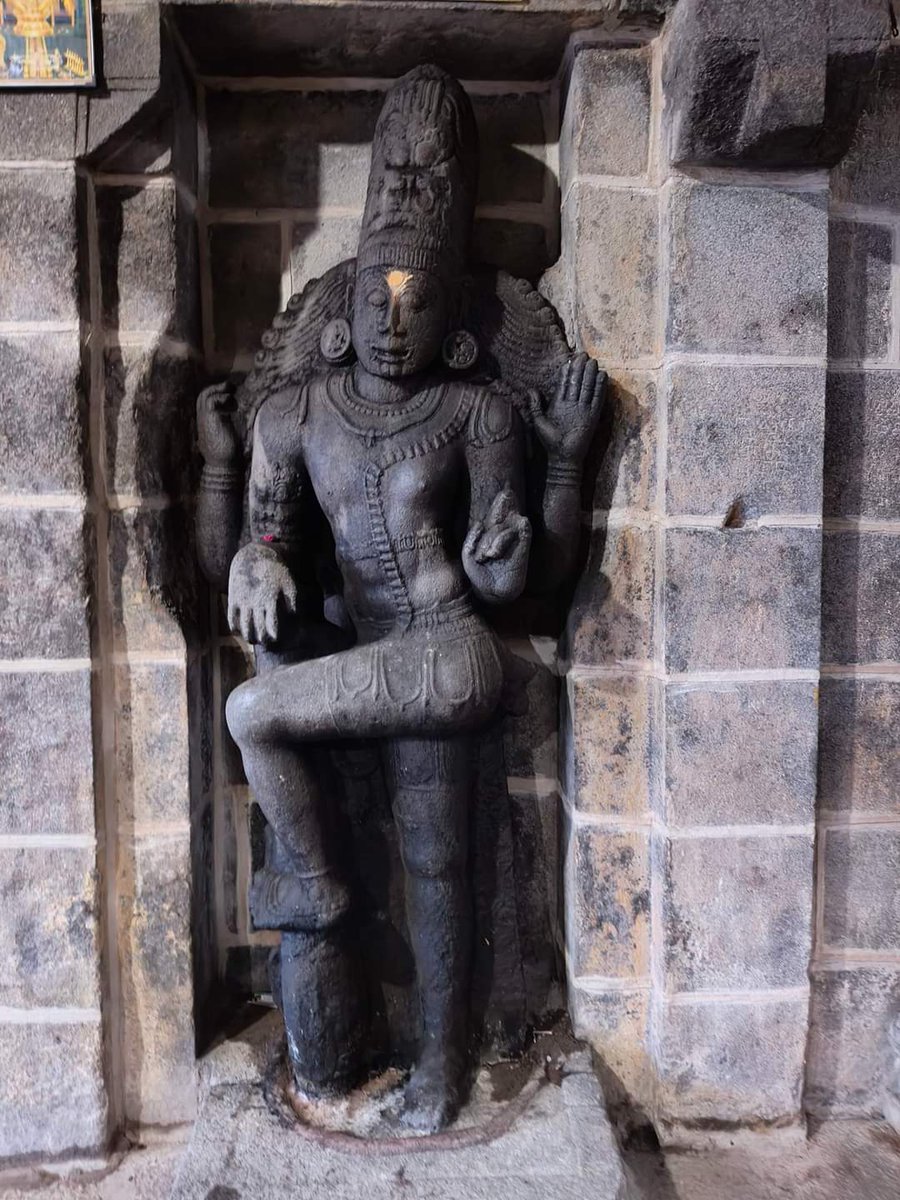
Additionally, the two gatekeepers of the Chola Empire, who were believed to have been concealed in the forest, were reinstated at the temple entrance.
By establishing Brahma (Trimurty) and emphasizing the Brahmin order, indicating that those who recite the Vedas should regularly worship the deity both in the morning and evening.
The inscription concludes with a request that Sarva Sakaljana, meaning all people, should witness the festival in its entirety, where dancers and musicians are now performing in the temple as a service.
This inscription is a testament to the fact that Chhatrapati Shivaji Maharaja played a significant role in reviving Hinduism in South India.
All credit goes to the researchers Saurabh Jadhav, Aniket Wagh, Kumar Gurav, Anil Dudhane, and Prof. Dr. Ramesh.
• • •
Missing some Tweet in this thread? You can try to
force a refresh

The Maratha Ascendancy Explained Through Contemporary Evidence: How Mughal Power Was Absorbed, Redirected, and Exercised by a New Ruling Elite.
Examined Strictly Through Contemporary Primary Sources.
Thread 🧵—
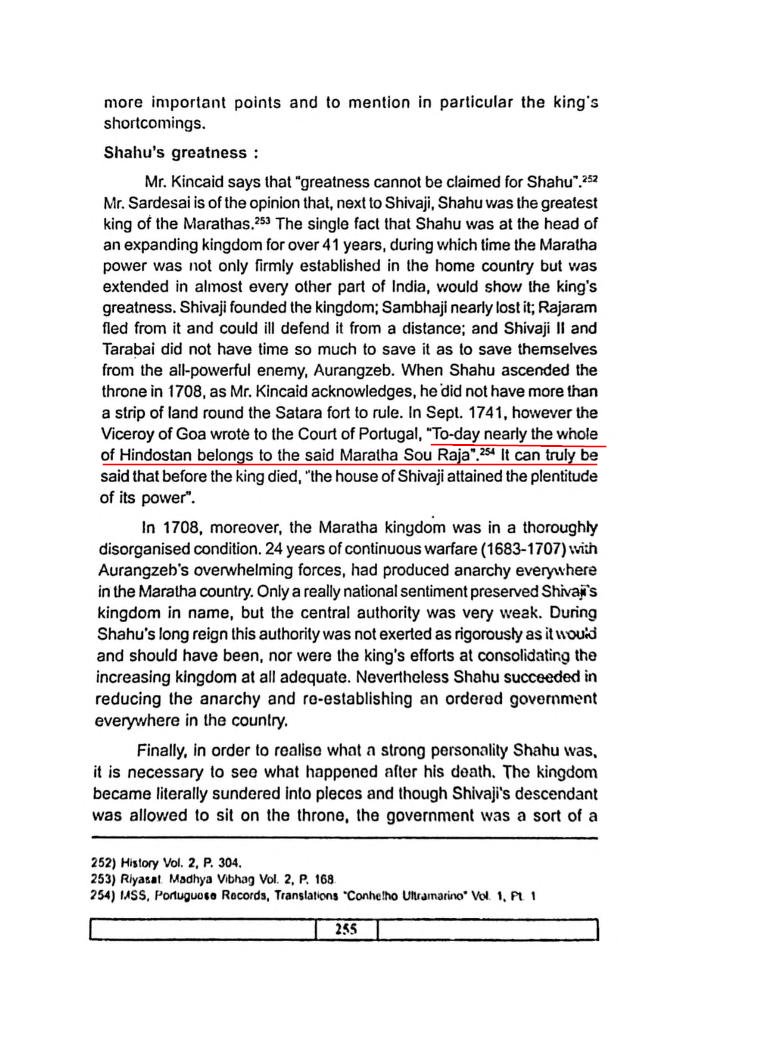
From the reign of Chhatrapati Shahu, the son of Dharmaveer Chhatrapati Shambhuji Maharaja, the Marāṭhās secured a firm hold in the Deccan and initiated systematic expansion into North and East India. The northern advance was conducted chiefly under the leadership of the Dabhade, Pawar, and Gaikwad houses. This movement took decisive shape during the Peshwaship of Balaji Vishwanath, the father of Bajirao Ballal. Upon Bajirao’s elevation to the office of Peshwa, he, together with the Shinde and Holkar chiefs, wrested Malwa from Mughal control and incorporated it into the Swarajya. Contemporary Portuguese records refer to Chhatrapati Shahu as the lord of the whole of Hindostan, that is, North India.
After the death of Bajirao in 1740, Balaji Bajirao, known as Nanasaheb, succeeded him as Peshwa. Following the death of Chhatrapati Shahu in 1749, Shahu’s adopted son Ramraja ascended the throne as Chhatrapati in 1750.
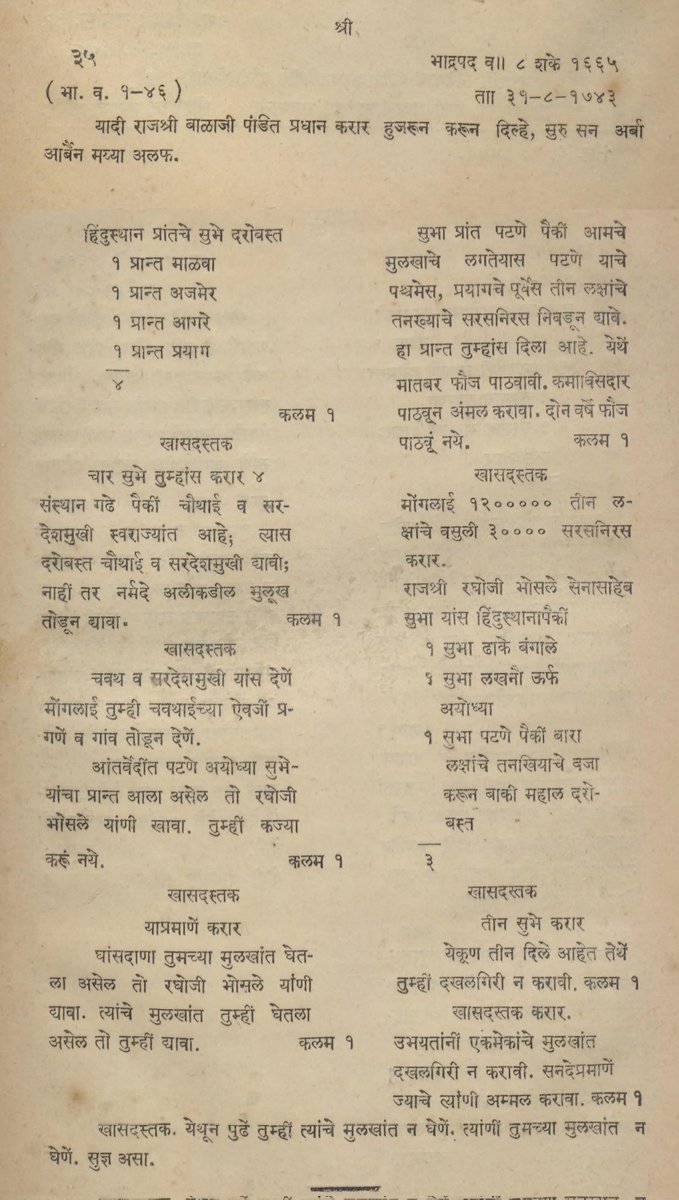
According to a document dated 31 August 1743, the subhas of Malwa, Ajmer, Agra, and Prayagraj were paying revenue to the Marāṭhās. What remained necessary, however, was formal recognition from the Mughal government, since in theory the Mughal emperor was still regarded as the sovereign of North India.
When the Afghans came to sack Mathura, it was the Marathas and Jats who fiercely resisted the tenfold Afghan army while the Rajputs were sitting at home, doing nothing but watching. Where were the Rajputs when the Afghans invaded Mathura?
The Afghan forces sacked Mathura, and who took revenge for this blasphemy against a sacred Hindu place? It was the Marathas.
Meanwhile, what were the Rajputs doing? They were busy smoking opium in their palaces, built from serving the Mughals. Pathetic!
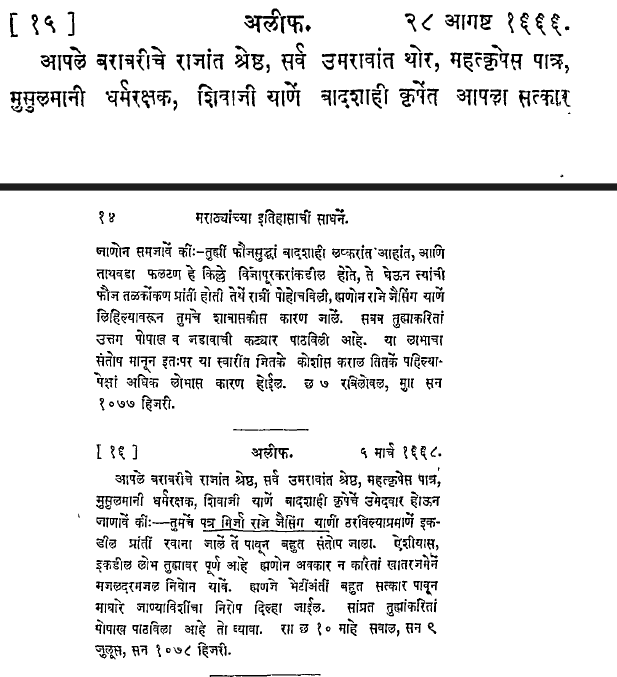
These are the documents cited by the author; these documents indeed mention that Shivaji the Great was a protector of Islam, but unfortunately, it's Mughal-drafted formalities. Shivaji the Great was known for humiliating Muslims in his kingdom.
The Jesuit priest who was an eyewitness to the humiliation of Muslims at the hands of the Marathas under Chhatrapati Shivaji Maharaja clearly states that Muslims were banished from the kingdom of Shivaji the Great.
Even before that, the Maratha source Shivbharat, commissioned by Chhatrapati Shivaji Maharaja himself, wrote about how the mosques of Kalyan and Bhiwandi were completely demolished by Chhatrapati Shivaji Maharaja.
📌 Did you know? Chatrasal Bundela took inspiration from Chhatrapati Shivaji Maharaja to revolt against the Mughals.
✍🏻 Let us explore how a Bundela, a product of Mughal servitude, drew inspiration from the Marathas.
Thread 🧵—
Who are the Bundelas? If we ignore their fabricated genealogies, they were generations of loyal servants to the Mughals, starting from the time of Jahangir.
Chatrasal Bundela was a Mughal Mansabdar who, in 1665, came with Mirza Jai Singh to destroy the Hindu empire of Chhatrapati Shivaji Maharaja. However, he deserted the Mughals in 1670 and met Chhatrapati Shivaji Maharaja in the Deccan.
"When the emperor himself goes to the mosque for prayers, he first establishes checkpoints due to Shivaji's fear, and then proceeds."
- Parkaldas Letter to Kalyandas on 7th June, 1666.
"Shivaji could jump 14-15 feet from the ground and walk 40-50 kos in one breath. Shivaji is a great warrior. If the Badshah fails to kill him, I will leave my mansab and become a fakir."
- Jaswant Singh Rathore
Here is the full contemporary and original letter from Parkaldas dated 7th June, 1666.
👑 Reign of Fire - Key Facts of Dharamveer Chhatrapati Sambhaji Maharaja and his Holy War against Mughals.
🔸All narrated from primary sources hostile to him.
Maratha Inferno Shambhurajavarman waged a Holy War against the Mughals to fulfill his Father's vision. 🌞
Thread 🧵—
Mughals had destroyed 172 temples in Udaipur alone, 63 in Chittor fort alone, 66 in Amber area alone.
Immediately after this in January to February Maratha Chattrapati Sambhaji Maharaja ravaged Mughal Jaziya base Burhanpur's suburbs Bahadurpura & 17 other suburbs like Hasanpura!
Aurangzeb's son Akbar understood Maratha power by this manly display, wrote a letter to the Dharamveer telling him of anarchy in North India.
Akbar offered whole Mughal government to Maratha Emperor, if he just had him seated.
"The Throne will be mine, the State will be Yours."