Few novels were quite as controversial as Dostoevsky’s The Demons
Publishers censored the story — they said it was vile and graphic
Dostoevsky said it was brutal, but necessary
Here’s what he wrote, and why it was deemed too dangerous for print…
Publishers censored the story — they said it was vile and graphic
Dostoevsky said it was brutal, but necessary
Here’s what he wrote, and why it was deemed too dangerous for print…

Demons is Dostoevsky’s famous warning against nihilism
He equates nihilism to a “demon,” that drives humanity to destruction…
The story takes place in a quaint Russian village
All is peaceful to start, but after two nihilists show up, strange things begin to occur
He equates nihilism to a “demon,” that drives humanity to destruction…
The story takes place in a quaint Russian village
All is peaceful to start, but after two nihilists show up, strange things begin to occur
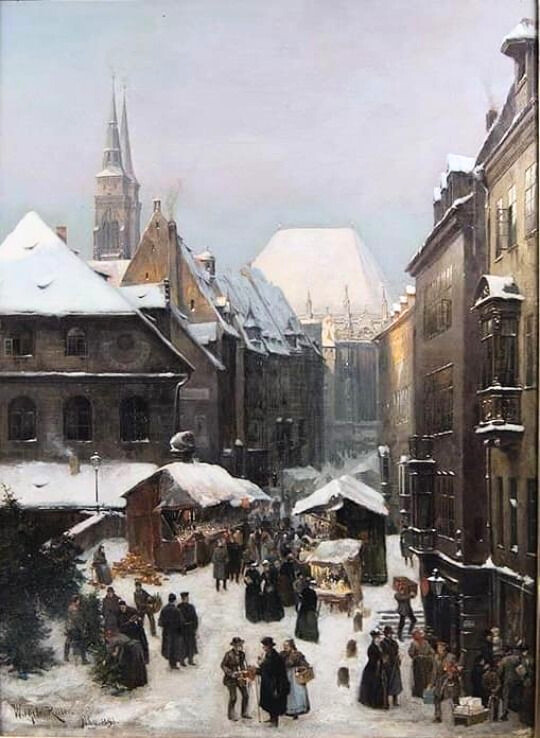
The nihilists — Pyotr and Stavrogin — have one goal:
Create a utopian revolution
To do this, however, they believe they must destroy the “oppressive,” chains of society
This means sow chaos and disorder by any means…
Create a utopian revolution
To do this, however, they believe they must destroy the “oppressive,” chains of society
This means sow chaos and disorder by any means…
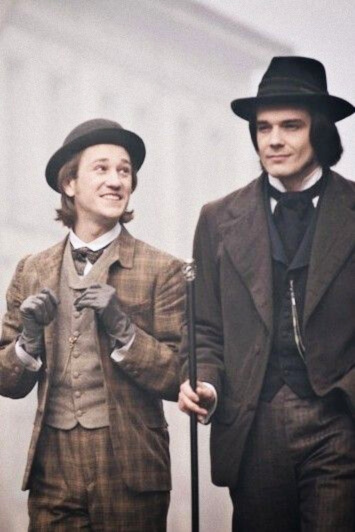
Pyotr organizes a revolutionary group and tells members to commit crime:
The village gets overrun with theft and vandalism
They destroy the social order too — disrupting public events and openly mocking public officials
Distrust arises, but things are just getting started…
The village gets overrun with theft and vandalism
They destroy the social order too — disrupting public events and openly mocking public officials
Distrust arises, but things are just getting started…
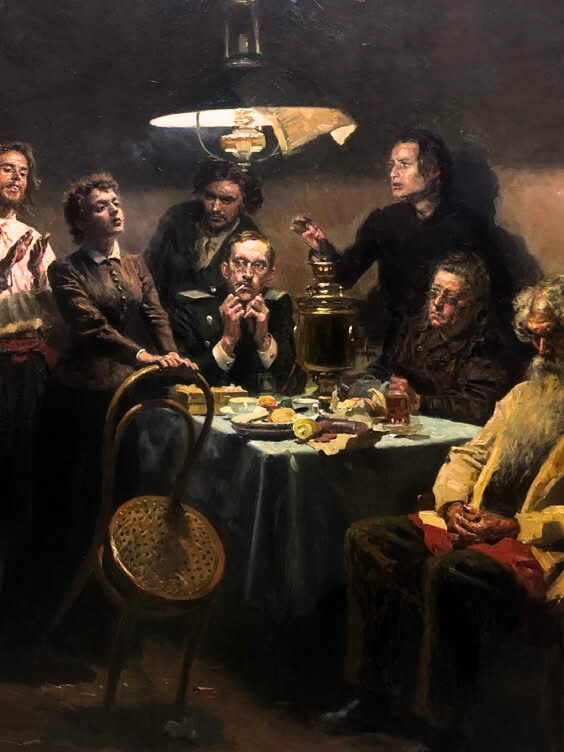
Their crimes ramp up in intensity:
Pyotr spreads gossip, lies, and rumors via anonymous letters in town
His group encourages public vice like drunkenness and lust
They desecrate religious icons, blackmail village members, and even plot arson
Pyotr spreads gossip, lies, and rumors via anonymous letters in town
His group encourages public vice like drunkenness and lust
They desecrate religious icons, blackmail village members, and even plot arson
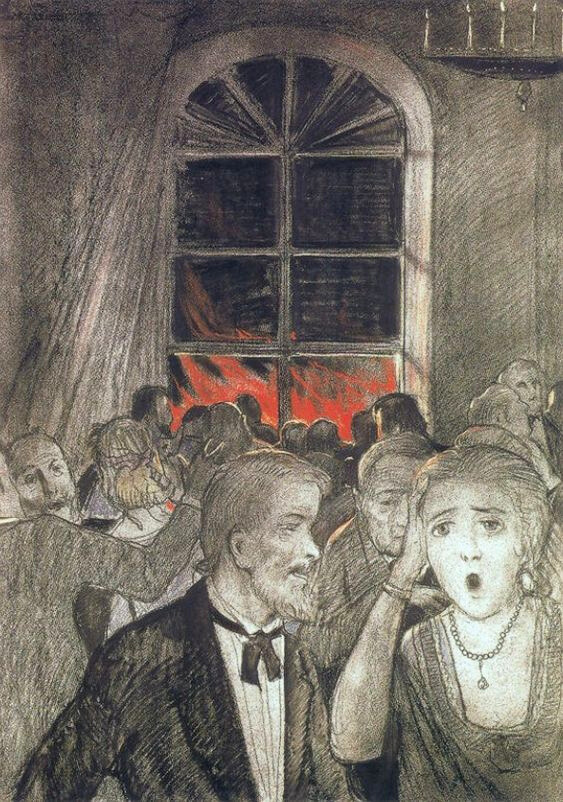
By the end of the novel, large scale atrocities take place including:
- Murder
- Multiple suicides
- Plots to attempt a mass killing
The bleak novel ends in tragedy, but sharp readers notice something missing…
- Murder
- Multiple suicides
- Plots to attempt a mass killing
The bleak novel ends in tragedy, but sharp readers notice something missing…
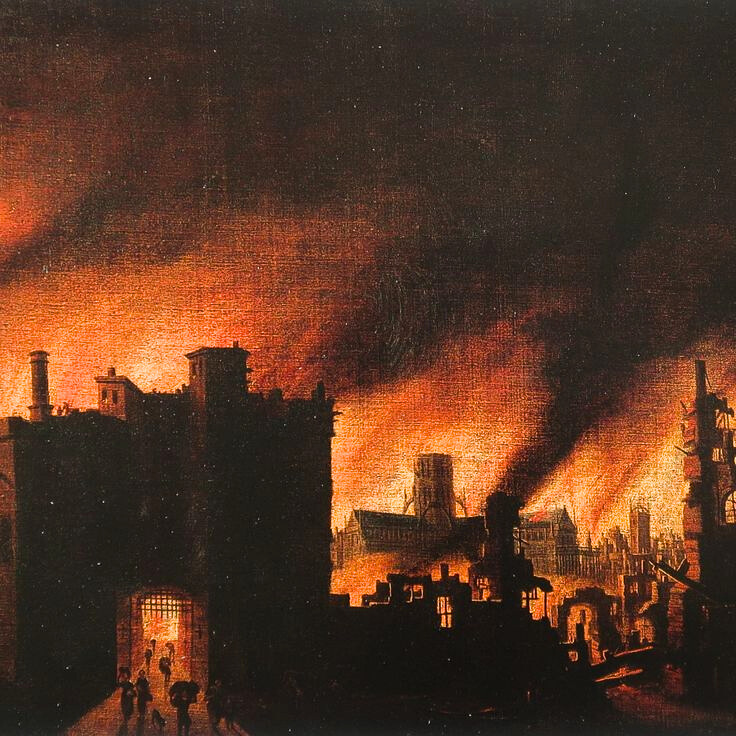
The missing piece has to deal with Stavrogin
While Pyotr was a devout revolutionary, Stavrogin was not
He supported nihilism, yet didn’t fully buy into the revolution
It was as if he knew something that he wasn’t telling us. Like something was omitted...
While Pyotr was a devout revolutionary, Stavrogin was not
He supported nihilism, yet didn’t fully buy into the revolution
It was as if he knew something that he wasn’t telling us. Like something was omitted...
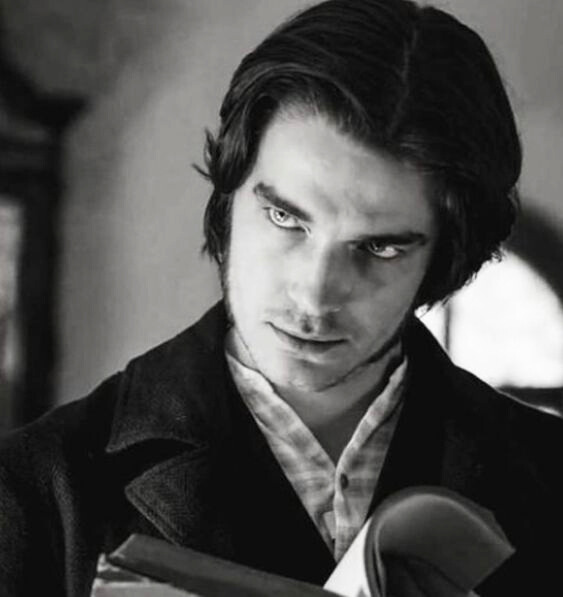
Whereas Pyotr enjoys the chaos of nihilism, Stavrogin seems tormented by it
He clings to evil, yet is disgusted by evil, as if he has a guilty conscience
Surprisingly, though, readers never learned why Stavrogin was so tormented…
He clings to evil, yet is disgusted by evil, as if he has a guilty conscience
Surprisingly, though, readers never learned why Stavrogin was so tormented…
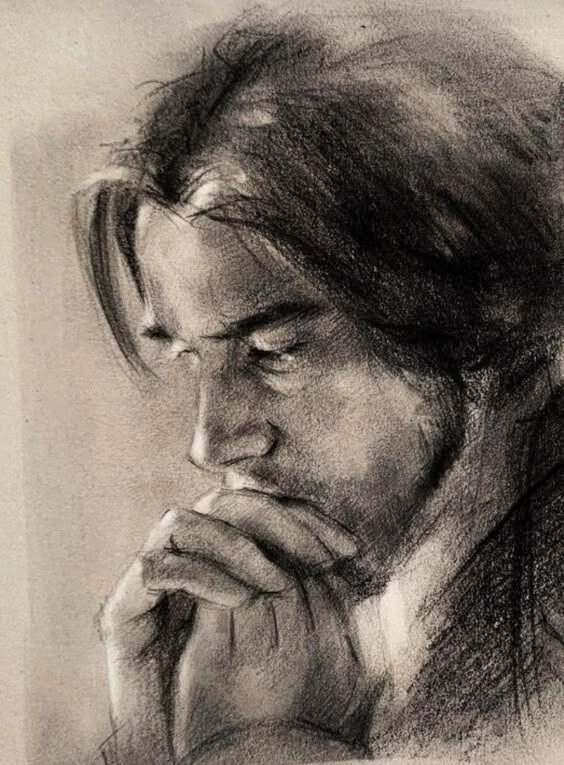
Turns out, publishers omitted an entire chapter on Stavrogin
The chapter was crucial to not just understanding him, but also the true horrors of nihilism
The chapter, however, is vile
Publishers considered it an “affront to the Russian people”
The chapter was crucial to not just understanding him, but also the true horrors of nihilism
The chapter, however, is vile
Publishers considered it an “affront to the Russian people”
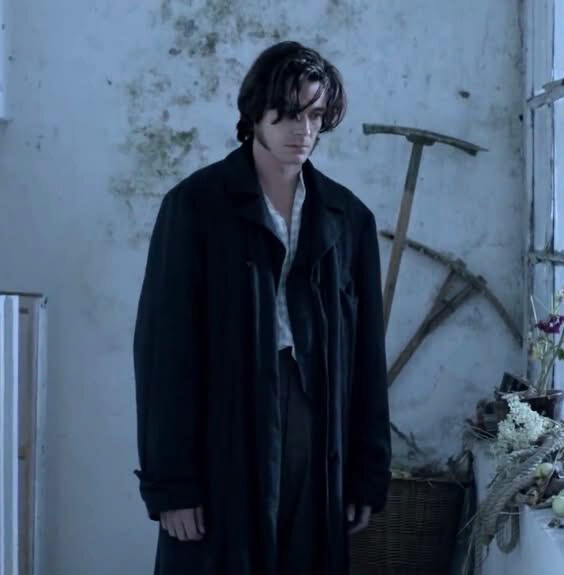
In this censored chapter, Stavrogin visits a priest and makes a confession
First, he expresses his nihilism:
“I neither know nor feel good and evil. I have not only lost any sense of it, but know that neither exist”
Nihilism has destroyed his humanity...
First, he expresses his nihilism:
“I neither know nor feel good and evil. I have not only lost any sense of it, but know that neither exist”
Nihilism has destroyed his humanity...
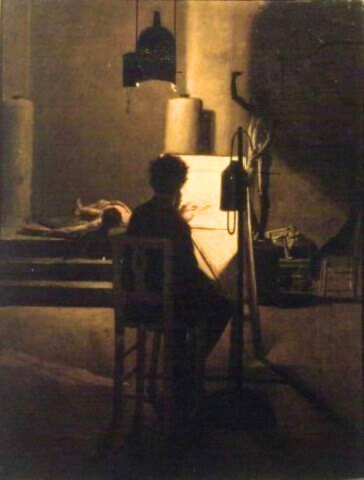
Stavrogin then annunciates his list of crimes
The list is long, but one crime stands out as pure abomination, even to the most staunch of nihilists…
(warning, graphic)
The list is long, but one crime stands out as pure abomination, even to the most staunch of nihilists…
(warning, graphic)
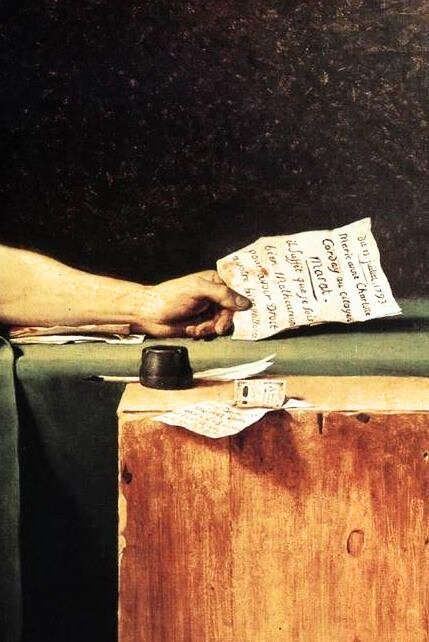
Stavrogin confesses to raping a child, driving her to suicide, and happily listening to her die
He says, “I liked the intoxication from the tormenting awareness of my own baseness”
It’s the ultimate act of evil, but Dostoevsky wrote this chapter for a specific reason…
He says, “I liked the intoxication from the tormenting awareness of my own baseness”
It’s the ultimate act of evil, but Dostoevsky wrote this chapter for a specific reason…
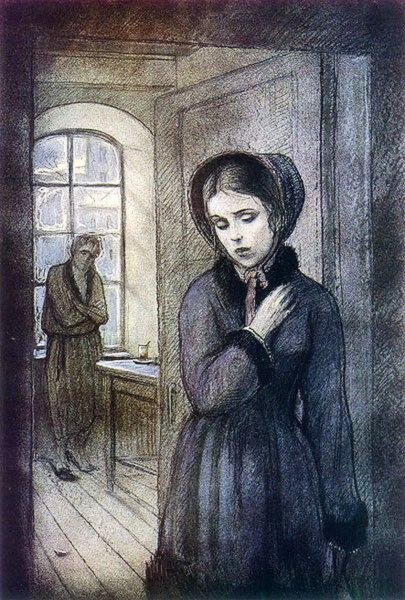
Dostoevsky’s point — if you’re a nihilist, EVERYTHING is permitted…
He wants you to feel sickened, to truly stomach what a world without good and evil looks like
But Stavrogin’s confession is meant to do more than horrify us
It also reveals what nihilism does to your soul
He wants you to feel sickened, to truly stomach what a world without good and evil looks like
But Stavrogin’s confession is meant to do more than horrify us
It also reveals what nihilism does to your soul

Stavrogin's confession reveals that his crimes have destroyed his capacity to feel:
He’s numb, insomnia-driven, and hallucinates demons
The only feeling he knows is pleasure at debasing himself through evil
His nihilism is like a drug addiction…
He’s numb, insomnia-driven, and hallucinates demons
The only feeling he knows is pleasure at debasing himself through evil
His nihilism is like a drug addiction…
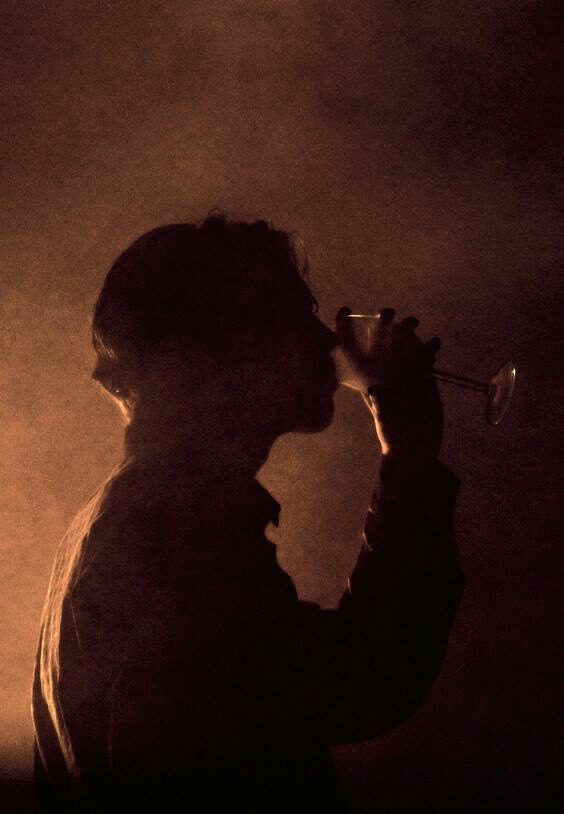
Evil gives him pleasure, but numbs him
Growing numb, he chases greater evil for greater pleasure
He spirals and spirals until he “destroys and betrays himself for nothing”
What becomes of Stavrogin in the end? (spoilers)
Growing numb, he chases greater evil for greater pleasure
He spirals and spirals until he “destroys and betrays himself for nothing”
What becomes of Stavrogin in the end? (spoilers)
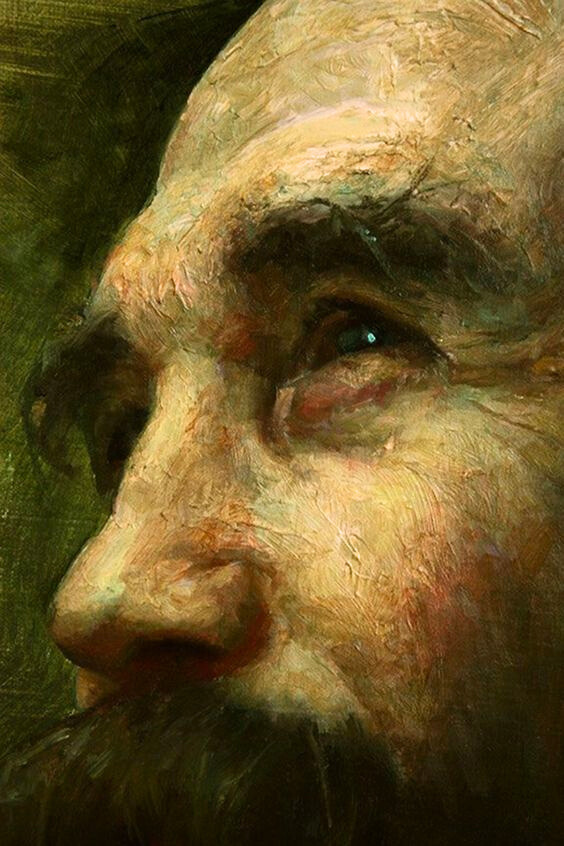
In the end, Stavrogin confesses but refuses to repent
He clings to his ways, his conscience ruins him, and he commits suicide…
Now, as bleak as this story is, Dostoevsky was not a nihilist
He did not want us to abandon hope… but where is the hope in this story?
He clings to his ways, his conscience ruins him, and he commits suicide…
Now, as bleak as this story is, Dostoevsky was not a nihilist
He did not want us to abandon hope… but where is the hope in this story?
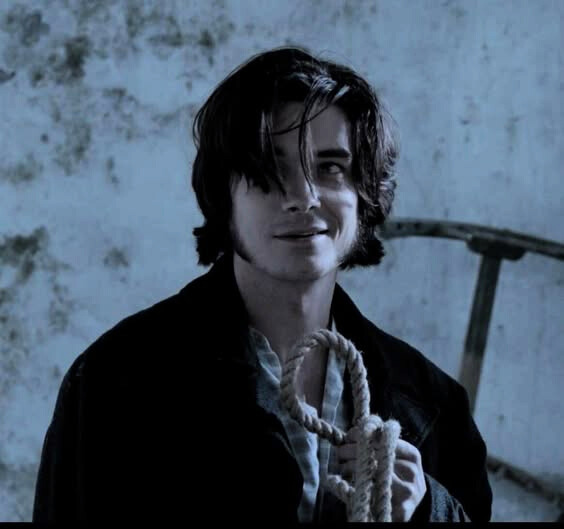
As a Christian, Dostoevsky believes anyone can find redemption
His story implies even Stavrogin, had he repented, could have redeemed himself...
Dostoevsky wants us to understand how to find redemption in a fallen world:
It begins by first recognizing good and evil
His story implies even Stavrogin, had he repented, could have redeemed himself...
Dostoevsky wants us to understand how to find redemption in a fallen world:
It begins by first recognizing good and evil
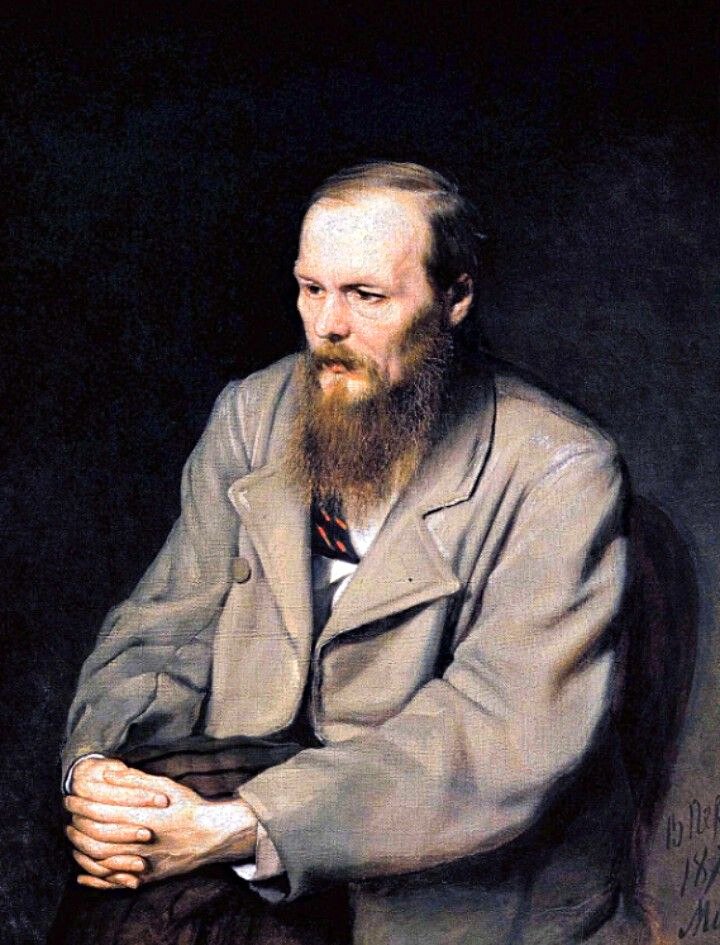
Good and evil runs through everyone — including yourself
The key, however, is not just recognizing evil, but repenting (unlike Stavrogin)
Repentance doesn’t just help you forgive yourself, but also others
It precedes patience, love, and personal redemption
The key, however, is not just recognizing evil, but repenting (unlike Stavrogin)
Repentance doesn’t just help you forgive yourself, but also others
It precedes patience, love, and personal redemption

The answer to the evils of nihilism, then, is humility:
To humbly recognize the good and evil inside everyone, repent, and surrender to goodness
This fear of evil, or “fear of God,” is the beginning of all wisdom:
It’s what births true hope and redemption in a fallen world…
To humbly recognize the good and evil inside everyone, repent, and surrender to goodness
This fear of evil, or “fear of God,” is the beginning of all wisdom:
It’s what births true hope and redemption in a fallen world…
If you enjoyed this thread:
1. repost the original tweet below
2. follow to get more threads on life's Truth, Beauty, and Goodness!
1. repost the original tweet below
2. follow to get more threads on life's Truth, Beauty, and Goodness!
https://x.com/SeanBerube4/status/1849123507143070149
• • •
Missing some Tweet in this thread? You can try to
force a refresh