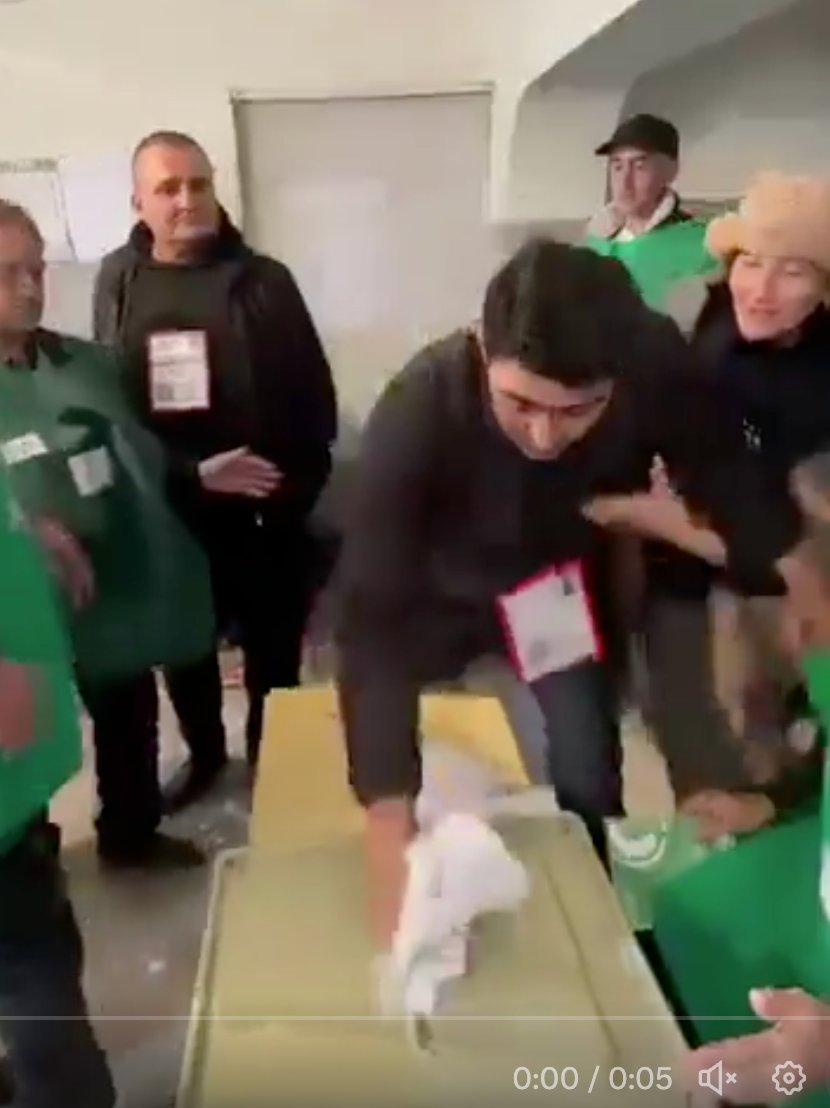
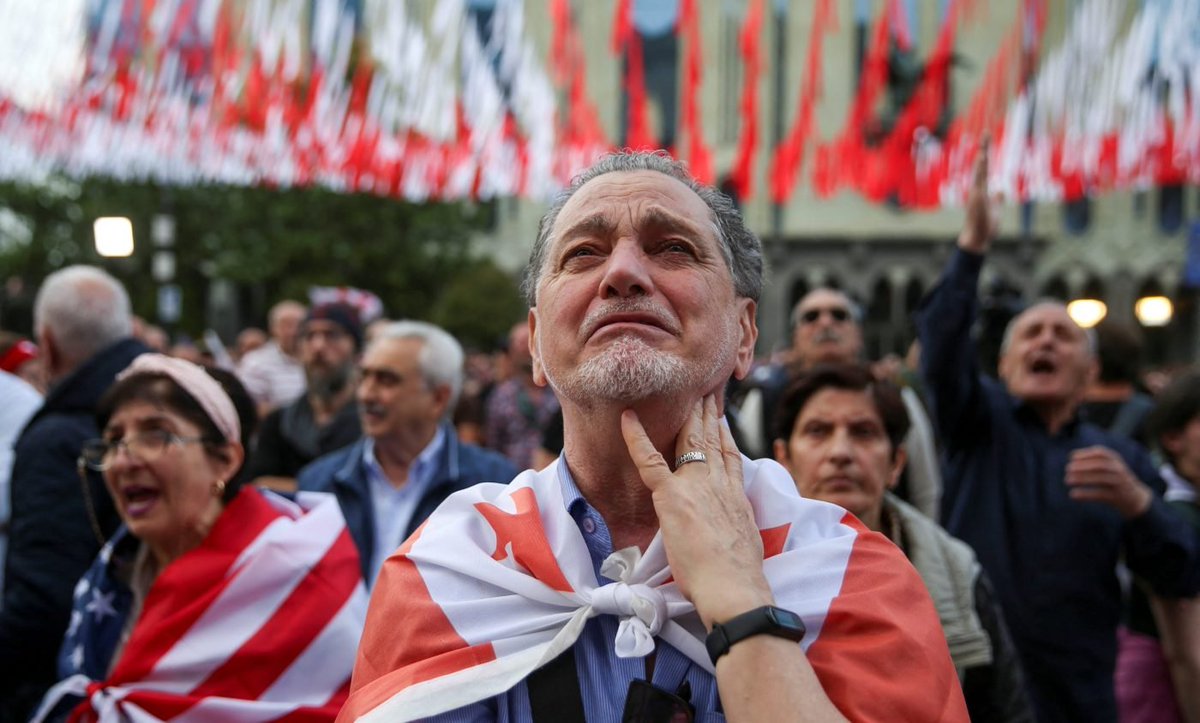
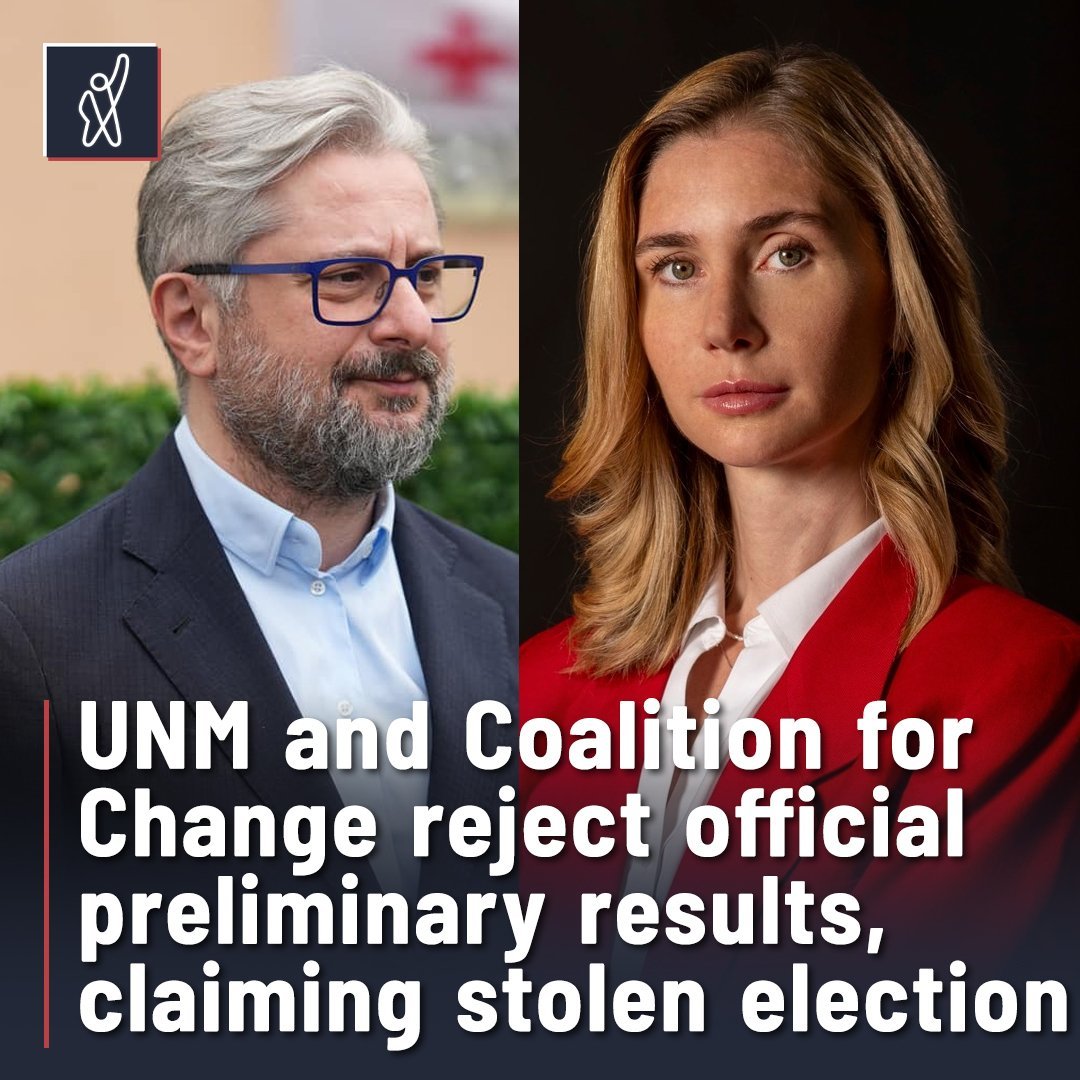
🇬🇪The October 26 elections in Georgia were marred by extensive fraud. Observers, both local and international, have raised serious concerns, making it clear the results aren’t legitimate.
🧵Here’s why the West must swiftly reject the results.
1/14
🧵Here’s why the West must swiftly reject the results.
1/14

The Central Election Commission (CEC) reported Georgian Dream winning 54% of the vote—a notable increase from 48% in 2020. However, Edison exit polls, known for their accuracy in previous elections, showed GD receiving significantly less support, raising serious suspicions.
2/14
2/14

Reports of vote tampering are substantial. According to independent observers, up to 300,000–400,000 votes (nearly 20% of the total) may have been manipulated through multiple voting, ballot-stuffing, and “carousel voting” using single ID cards.
3/14
3/14
https://x.com/terjehelland/status/1850336786339479641
President Salome Zourabichvili has rejected the results, calling them “outright fraud” and a "Russian special operation." She described the elections as part of a broader hybrid aggression against Georgia’s democracy, urging the West to stand firm in rejecting these results.
4/14
4/14

Voting was especially suspect in ethnic minority areas, where GD scored implausibly high percentages—80% in Marneuli, 81% in Bolnisi, and 90% in Ninotsminda. Historically, these regions have faced intense pressure tactics, including voter intimidation and coercion.
5/14
5/14
Observers reported systematic voter intimidation, particularly targeting public sector employees and vulnerable populations.
ID card confiscation was done, affecting seniors, the disabled, and those in retirement homes - we now know why they did it.
6/14
osce.org/odihr/election…
ID card confiscation was done, affecting seniors, the disabled, and those in retirement homes - we now know why they did it.
6/14
osce.org/odihr/election…
The CEC's handling of the vote count has been criticized for its opacity. Observers noted procedural inconsistencies and restricted access to auditing processes, undermining transparency.
Vote secrecy was provenly compromised in 24% of observed polling stations.
7/14
Vote secrecy was provenly compromised in 24% of observed polling stations.
7/14
Key international observer missions, including OSCE, the EU, have criticized the elections for failing to meet international democratic standards.
OSCE’s Eoghan Murphy stated, "The elections were not in line with international democratic principles.”
8/14 rfi.fr/en/internation…
OSCE’s Eoghan Murphy stated, "The elections were not in line with international democratic principles.”
8/14 rfi.fr/en/internation…
The pre-election environment was equally problematic. Georgian Dream leveraged state resources, dominated media narratives, and altered legislation to solidify its control. These factors collectively created an uneven playing field and distorted voter choice.
9/14
9/14
The Georgian Dream’s use of financial and administrative resources, combined with an extensive misinformation campaign, contributed to a skewed election outcome.
The systematic multi-pronged manipulation reveals a clear intention to maintain power at all costs.
10/14
The systematic multi-pronged manipulation reveals a clear intention to maintain power at all costs.
10/14
Statements from credible organizations, including Transparency International Georgia @Transparency_GE and the NDI, emphasize the lack of impartial oversight, voter intimidation, and misuse of state resources—hallmarks of a manipulated election.
11/14 transparency.ge/en/post/evalua…
11/14 transparency.ge/en/post/evalua…

Western governments must act swiftly and decisively. By refusing to recognize these results, they can reinforce Georgia’s democratic aspirations and counter the erosion of trust among Georgians who seek a genuine European path.
12/14
12/14
U.S. Helsinki Commission has already called for an investigation into this election fraud, urging the State Dep to review the findings. The MEGOBARI Act, currently in Congress, aims to hold those undermining 🇬🇪democracy accountable
The time to act is now!
civil.ge/archives/631534
The time to act is now!
civil.ge/archives/631534
☕️ If you found this analysis helpful, please consider supporting my work at
Your support enables me to keep informing and engaging.
Thank you! 🙏
14/14buymeacoffee.com/terjehelland
Your support enables me to keep informing and engaging.
Thank you! 🙏
14/14buymeacoffee.com/terjehelland
• • •
Missing some Tweet in this thread? You can try to
force a refresh