This man was Nikola Tesla's "mentor" and called the Da Vinci of his time.
His ideas influenced Einstein, Hawking, Terrence Howard, and the New Age Movements.
Sadly, his forgotten legacy is a heartbreaking tragedy. Here's his story... 🧵
His ideas influenced Einstein, Hawking, Terrence Howard, and the New Age Movements.
Sadly, his forgotten legacy is a heartbreaking tragedy. Here's his story... 🧵
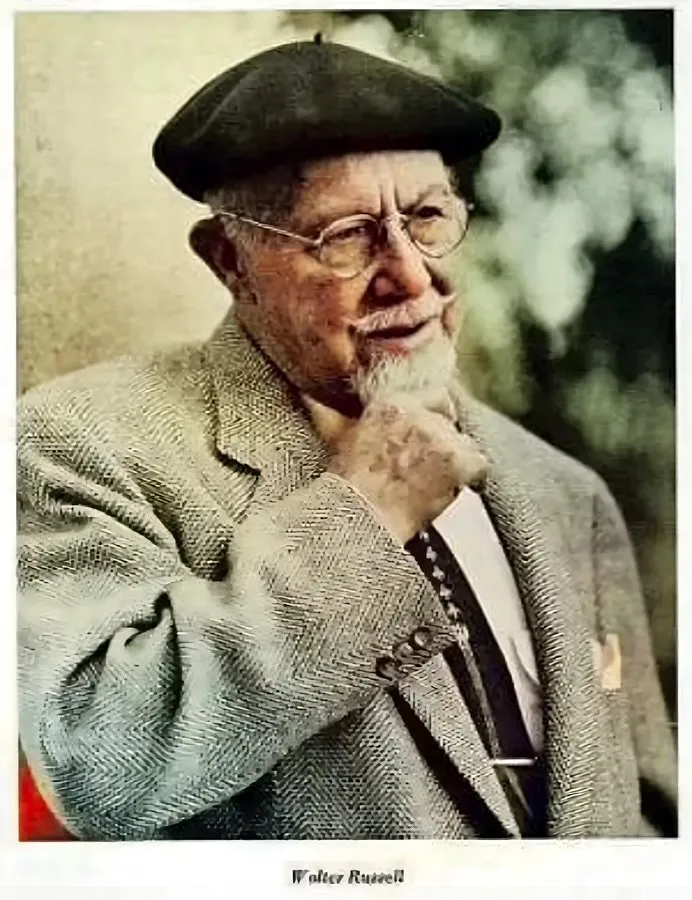
Meet Walter Russel.
At 7, Russell had his first illumination experience.
At 14, he survived diphtheria & claimed to have an out-of-body journey.
These experiences were nothing compared to what happened next...
At 7, Russell had his first illumination experience.
At 14, he survived diphtheria & claimed to have an out-of-body journey.
These experiences were nothing compared to what happened next...
The turning point came in 1921.
For 39 days, the 50-year-old Russell was immersed in a cosmic trance.
He emerged with profound insights into the nature of matter, energy, and light, ideas that would guide his life's work.
For 39 days, the 50-year-old Russell was immersed in a cosmic trance.
He emerged with profound insights into the nature of matter, energy, and light, ideas that would guide his life's work.
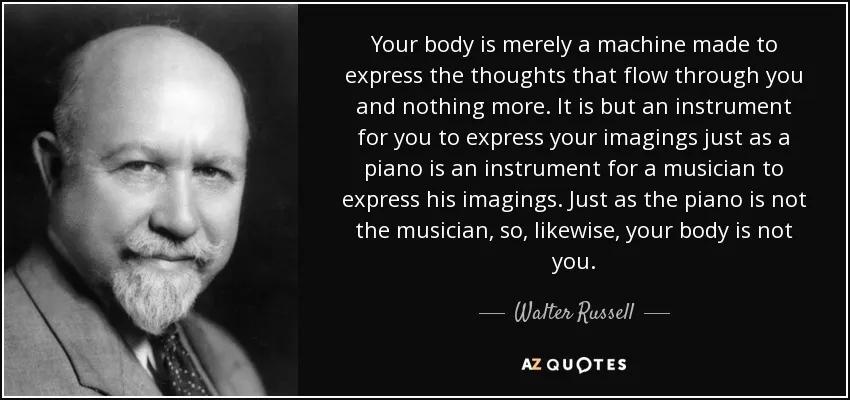
Walter Russell's ideas were so ahead of his time that Nikola Tesla told him to hide them for 1,000 years.
Why?
Because humanity wasn't prepared for them...
Why?
Because humanity wasn't prepared for them...
Russell's key revelation?
• All matter springs from a zero-point field of energy
• We are "electric creatures" in an "electric universe"
• Nature is a symphony of 9 octaves or pressure states
• All matter springs from a zero-point field of energy
• We are "electric creatures" in an "electric universe"
• Nature is a symphony of 9 octaves or pressure states
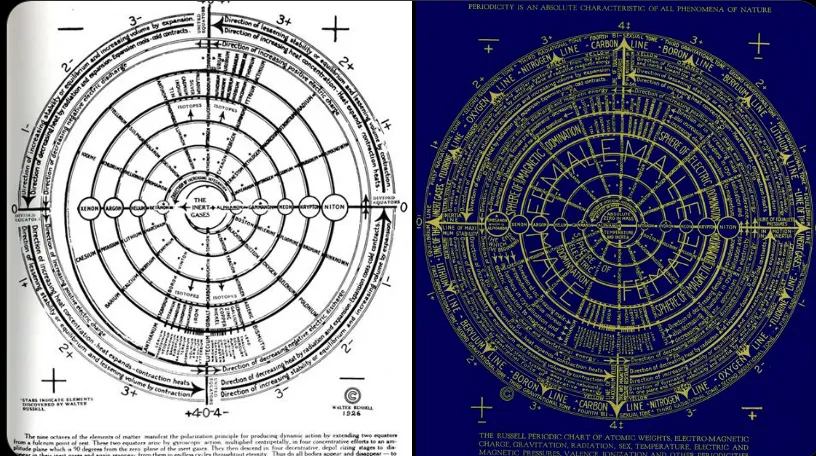
Putting theory into practice, Russell's 1926 periodic table was a masterpiece of art & science.
He arranged the elements like a cosmic dance, revealing their relationships through music & mathematics.
Here's how it works:
He arranged the elements like a cosmic dance, revealing their relationships through music & mathematics.
Here's how it works:
Surprisingly, the periodic table he crafted predicted Plutonium - 13 years before its official discovery!
At the time, radioactivity was still an unknown field.
At the time, radioactivity was still an unknown field.
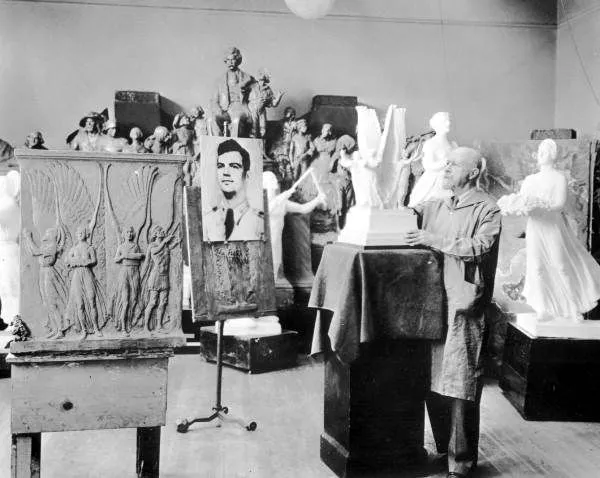
At 56, with zero formal training, he became a master sculptor overnight.
His works, such as the Mark Twain Memorial and Edison busts, earned him the title of official sculptor for the White House.
A true Renaissance man!
His works, such as the Mark Twain Memorial and Edison busts, earned him the title of official sculptor for the White House.
A true Renaissance man!
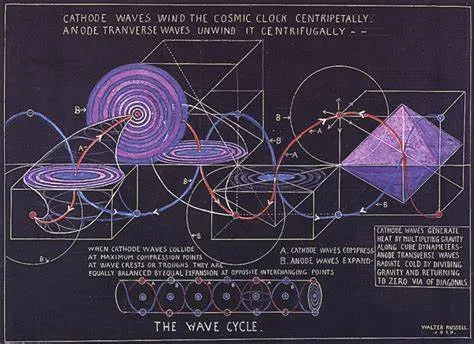
Russell's diagrams of the invisible universe are mesmerizing.
His vision was so unique that it's hard to believe he wasn't formally trained in art or science.
His vision was so unique that it's hard to believe he wasn't formally trained in art or science.
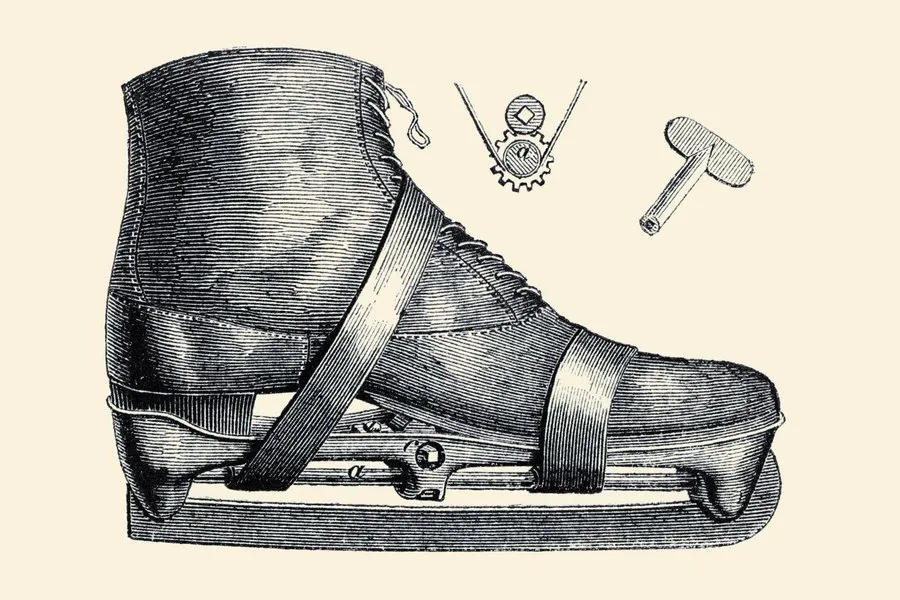
Russell was busy popularizing figure skating in America when he wasn't unraveling cosmic mysteries.
He founded the first skating club in NYC and organized events at Madison Square Garden...
and won national titles into his late 60s!
He founded the first skating club in NYC and organized events at Madison Square Garden...
and won national titles into his late 60s!
Russell faced pushback from the scientific establishment for daring to question Newton's laws.
He was dismissed by some as a pseudoscientist.
Yet his ideas about the unity of science & spirituality still resonate today.
He was dismissed by some as a pseudoscientist.
Yet his ideas about the unity of science & spirituality still resonate today.
What did I learn from Walter Russel?
"Mediocrity is self-inflicted," he wrote. "Genius is self-bestowed."
We all have genius waiting to be unleashed.
Like I always like to say: "We are ONE genius away from saving the world."
"Mediocrity is self-inflicted," he wrote. "Genius is self-bestowed."
We all have genius waiting to be unleashed.
Like I always like to say: "We are ONE genius away from saving the world."
Though controversial, Walter Russell's life is a testament to the power of curiosity, creativity & conviction.
As he proved, genius can emerge from the most unexpected places.
What do you think about Walter Russel?
As he proved, genius can emerge from the most unexpected places.
What do you think about Walter Russel?
That's a wrap!
If you enjoyed this thread, follow @GeniusGTX for more content on genius thinkers in business, science, and philosophy.
What was your ONE big takeaway from this thread?
If you enjoyed this thread, follow @GeniusGTX for more content on genius thinkers in business, science, and philosophy.
What was your ONE big takeaway from this thread?
Before you leave, I have literally spent the last 6 months mastering the art of thread writing.
From popular demand, I created a community that teaches you exactly how I write.
Join 51 other top 1% thread writers inside: skool.com/viral-xcelerat…
From popular demand, I created a community that teaches you exactly how I write.
Join 51 other top 1% thread writers inside: skool.com/viral-xcelerat…
• • •
Missing some Tweet in this thread? You can try to
force a refresh