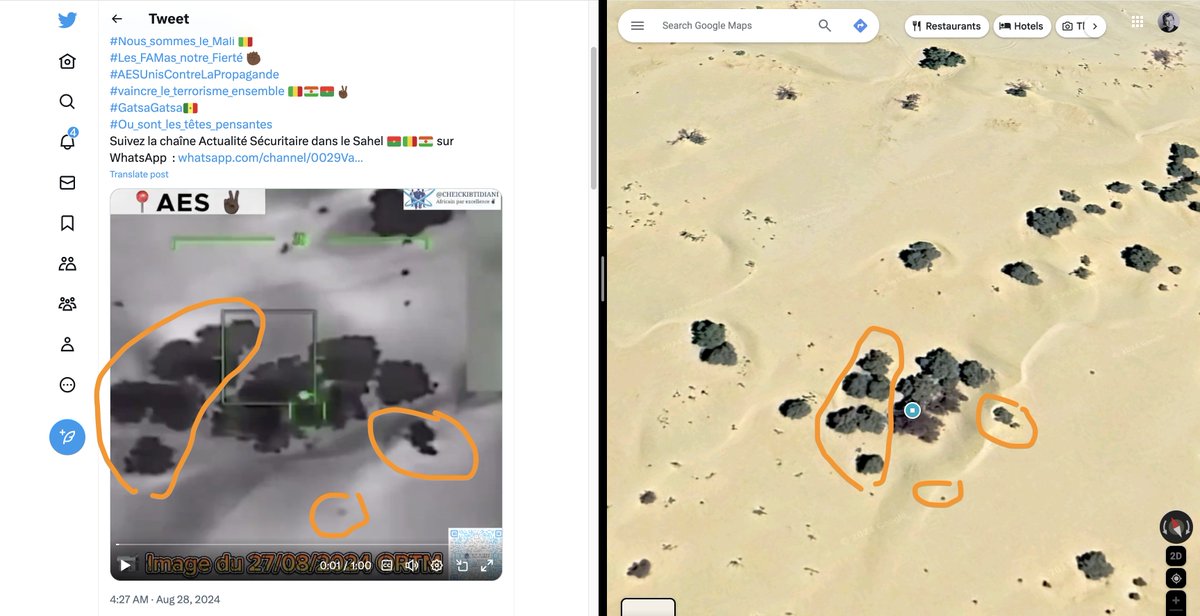
Since it didn't make it into this story, threading some geolocations of airstrikes near Tinzaouaten by Turkish-made drones. These strikes could be conducted by Mali and/or Burkina Faso.
Overview map. Pink line is Wagner's route toward Tinzouaten, pink pins are location of first battle, green line is earth berms around the gold mines, and yellow pins are the drone strikes.
On July 30, three days after Wagner's defeat, multiple drone strikes hit in the middle of the gold mine known as Inatiyara, as well as a refugee camp known as Ekhariban. Location of damage filmed is at: 19.924667, 2.980035 (@GeoConfirmed).
On Aug. 25, a likely double-tap strike happened. The first strike hit some vehicles outside of a pharmacy, and half an hour later another strike hit first responders. Location: 19.951159, 2.972886. x.com/apmazawad/stat…x.com/DirpaFa/status…
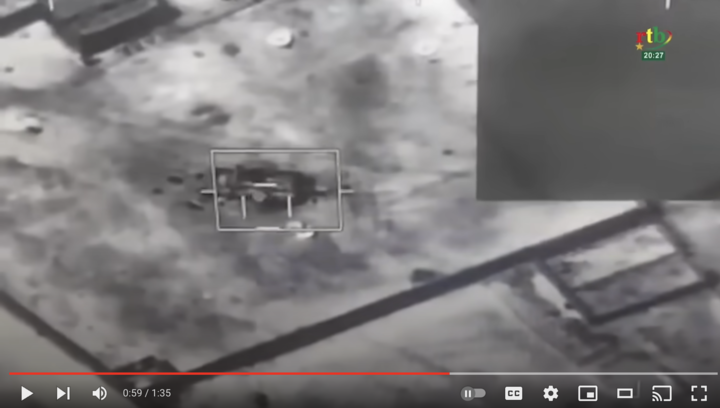
@GeoConfirmed On Aug. 8, a drone strike hit the MRAP captured by CSP fighters, parked inside a compound in Tinzaouaten. Coordinates: 19.945661, 2.970240 (@GeoConfirmed). Satellite image is outdated.
• • •
Missing some Tweet in this thread? You can try to
force a refresh

In July, Wagner suffered its biggest defeat in Africa. Our visual investigation, using satellite imagery, battlefield footage and firsthand accounts, shows a moment-by-moment breakdown of what happened — and the fallout with families in Russia. nyti.ms/3Yx2Orx
Please read the full article for our main findings. In this thread, I’ll share extra details that didn’t make the story — focusing on geolocations, messages from family members and some insight on what’s going on with Wagner after the mutiny and Prigozhin’s death.
Some abbreviations used: CSP for the (mostly) Tuareg separatists, JNIM for the Al Qaeda-affiliated Islamist militants, FAMa for the Malian military.
Worth checking out: @SkyTruth has released renewed three oil and gas monitoring tools: Cerulean (AI-powered ocean oil pollution detection), Monitor (environmental change tracking), and the Natural Gas Flaring Map. Links in thread.
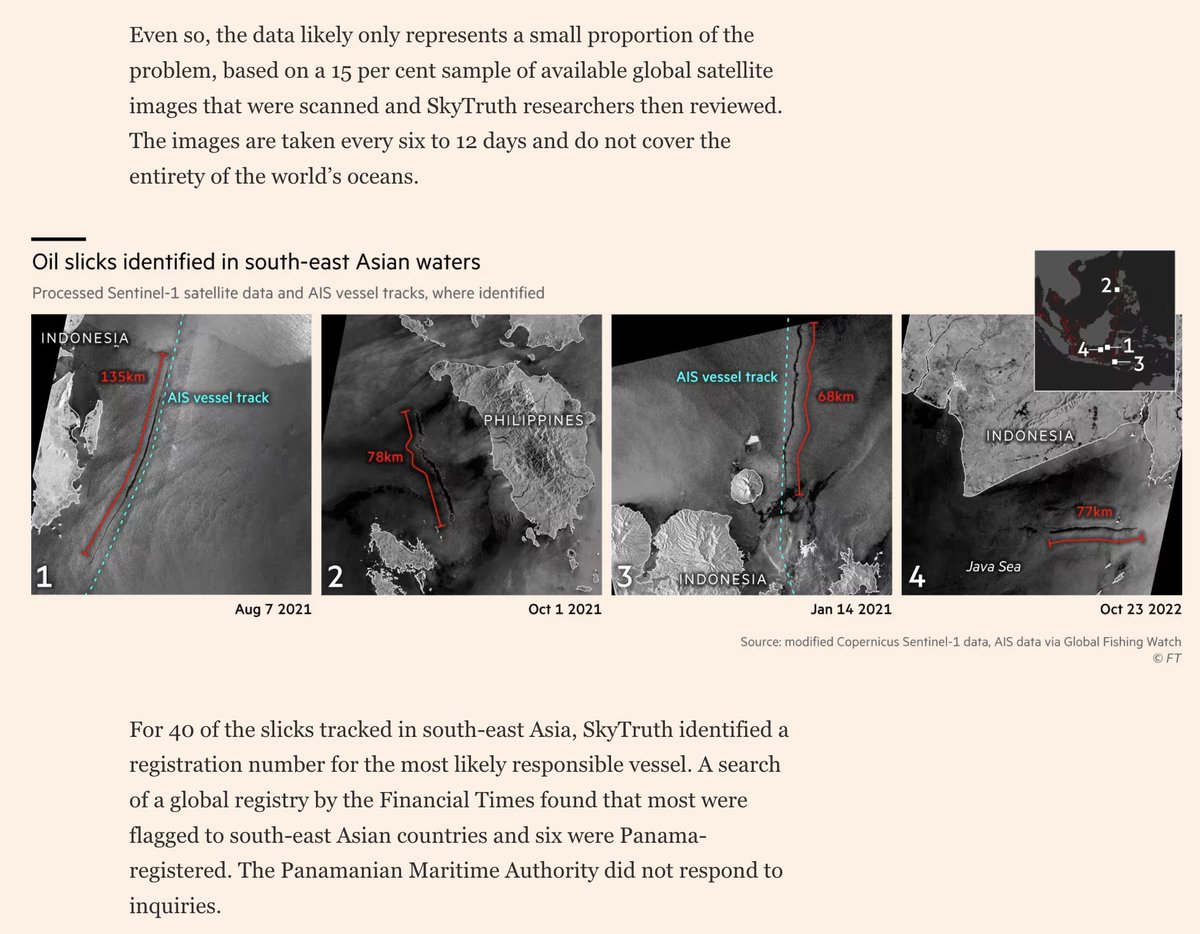
Cerulean uses satellite imagery to track ocean oil pollution and identify potential sources. An initial analysis revealed more than 1K oil slicks from vessels, suggesting that ships may be dumping more than 80 million gallons of oily sludge annually. cerulean.skytruth.org
The Financial Times has already used @SkyTruth's Cerulean to identify chronic oil pollution hotspots in Southeast Asian waters, naming Indonesia as the worst-affected region. ft.com/content/24a7c5…x.com/trbrtc/status/…
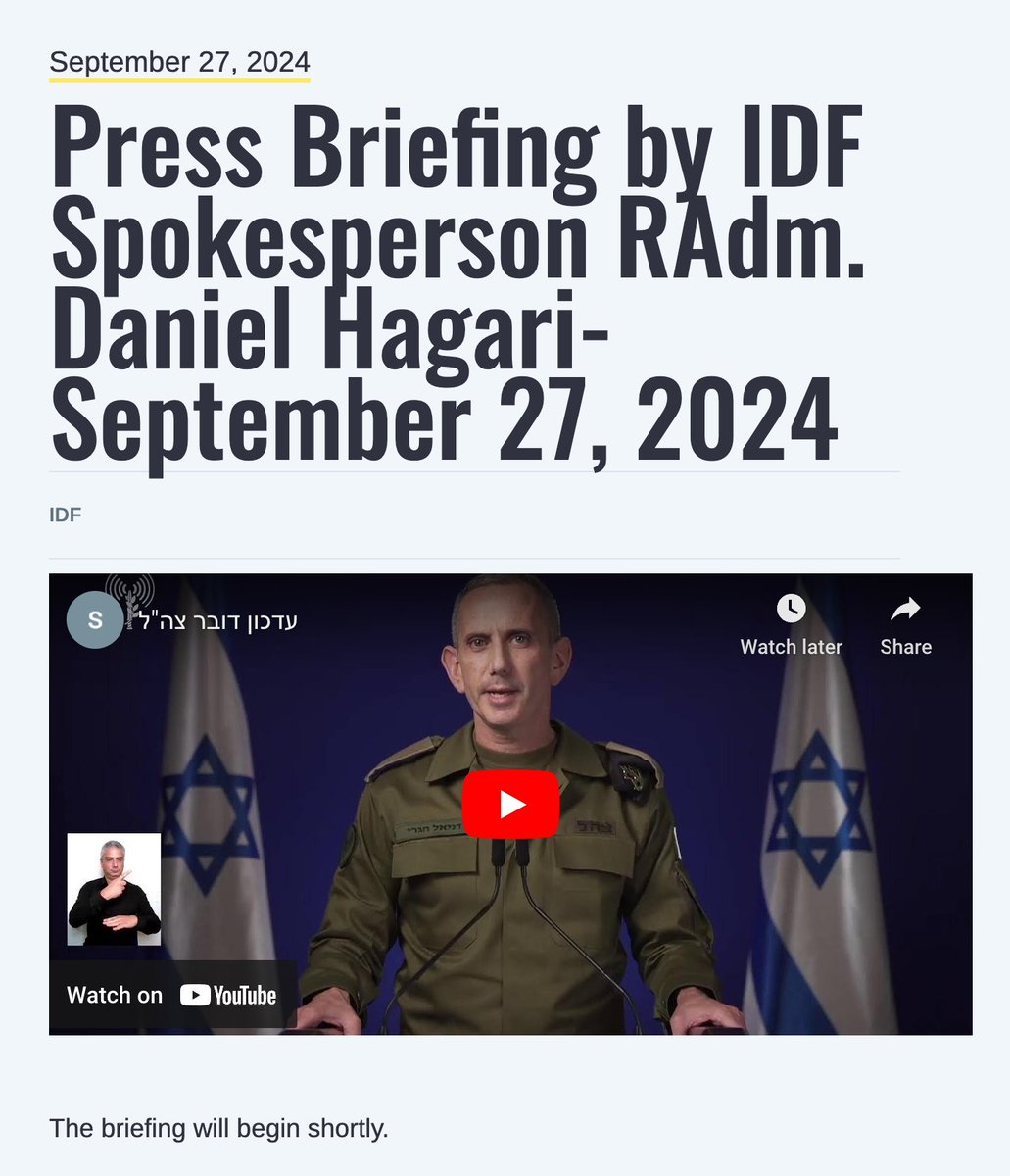
For what it's worth, the IDF live-streamed its press conference on today's strikes in Beirut to YouTube. Instead of using their official account, they uploaded it as an unlisted video to the channel ”siteolympus9593”.
At least two large apartment buildings in the densely populated southern Beirut suburbs, known as Dahiya, were flattened. Lebanon's health minister said two to four additional buildings had been “completely decimated.” nytimes.com/live/2024/09/2…
Another series of explosions has been reported across Beirut and other parts of Lebanon, this time involving ICOM communication devices that appear to be exploding.
Based on its appearance and the visible markings, this device seems to be the ICOM IC-V82 model. rigpix.com/icom/icv82.htm
The IC-V82 is a handheld VHF transceiver commonly used for amateur (ham) radio communication. It operates primarily in the 2-meter band (144-148 MHz). The marking on the photo above says MADE IN JAPAN.
Geolocation of the building in northern Tehran where Ismail Haniyeh was reportedly assassinated: 35.81931, 51.41559. An Iranian official shared the image with @farnazfassihi, and it is circulating on Telegram. Green cloth and rubble is visible on the east side of the building.
A satellite image captured by @Maxar on July 25 does not show the green cloth or the rubble on the first-floor roof, suggesting that the image above that's circulating is recent indeed. The building is adjacent to the Saadabad Palace, and near the president's official residence.
In recent months, one of Haiti's most powerful gangs — 5 Segonn — promoted itself with brash rap videos. Recently, however, the gang has obtained better weapons and is presenting itself as a paramilitary force. Our visual investigation takes a deep dive: nyti.ms/4bPiJXx
The rise of Haitian gangs started a few decades ago, when they were used by politicians to suppress voter turnout or anti-government protests, and by oligarchs for land grabs and attacks on rivals. Now, they've found independent financial lifelines, changing the dynamic.
But since the 2021 assassination of President Jovenel Moïse, the security situation in Haiti has deteriorated and these gangs have stepped in to fill the void. They now control or exert their influence across most of the capital, Port-au-Prince.