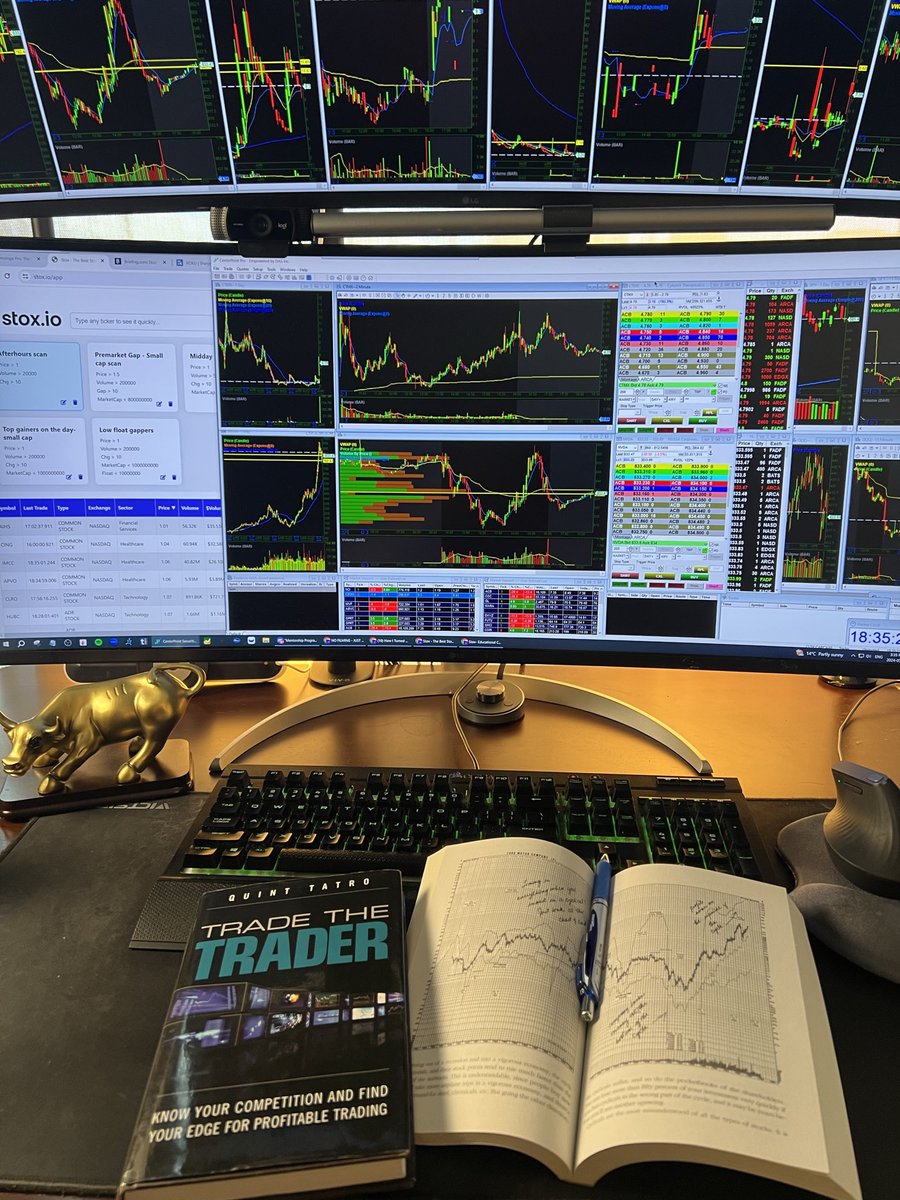
A lot of people think traders can make millions of dollars, 24/7, anywhere in the world.
I've travelled the world, and not all destinations are as trader-friendly as you think.
So I'm going to reveal the best and worst cities for traders based on how trader-friendly they are.
I've travelled the world, and not all destinations are as trader-friendly as you think.
So I'm going to reveal the best and worst cities for traders based on how trader-friendly they are.
1/ Dubai, UAE 🇦🇪
A no-brainer for traders who want to keep every dollar of profit, Dubai’s opulence, 0% income tax, and fast internet make it a serious contender.
Pros: Zero tax, fast internet, strong expat network
Cons: High living costs and brutal summer heat (think 105°F+ or 40°C)
A no-brainer for traders who want to keep every dollar of profit, Dubai’s opulence, 0% income tax, and fast internet make it a serious contender.
Pros: Zero tax, fast internet, strong expat network
Cons: High living costs and brutal summer heat (think 105°F+ or 40°C)
2/ Puerto Rico 🇵🇷
Many of my U.S. trader friends tell me that Puerto Rico’s Act 60 is a huge benefit. It’s got the tropical feel with major tax breaks for American traders
Pros: 0% tax on capital gains, dividends, and interest income if you meet residency requirements
Cons: Residency rules are strict, and hurricanes are a real risk
Many of my U.S. trader friends tell me that Puerto Rico’s Act 60 is a huge benefit. It’s got the tropical feel with major tax breaks for American traders
Pros: 0% tax on capital gains, dividends, and interest income if you meet residency requirements
Cons: Residency rules are strict, and hurricanes are a real risk
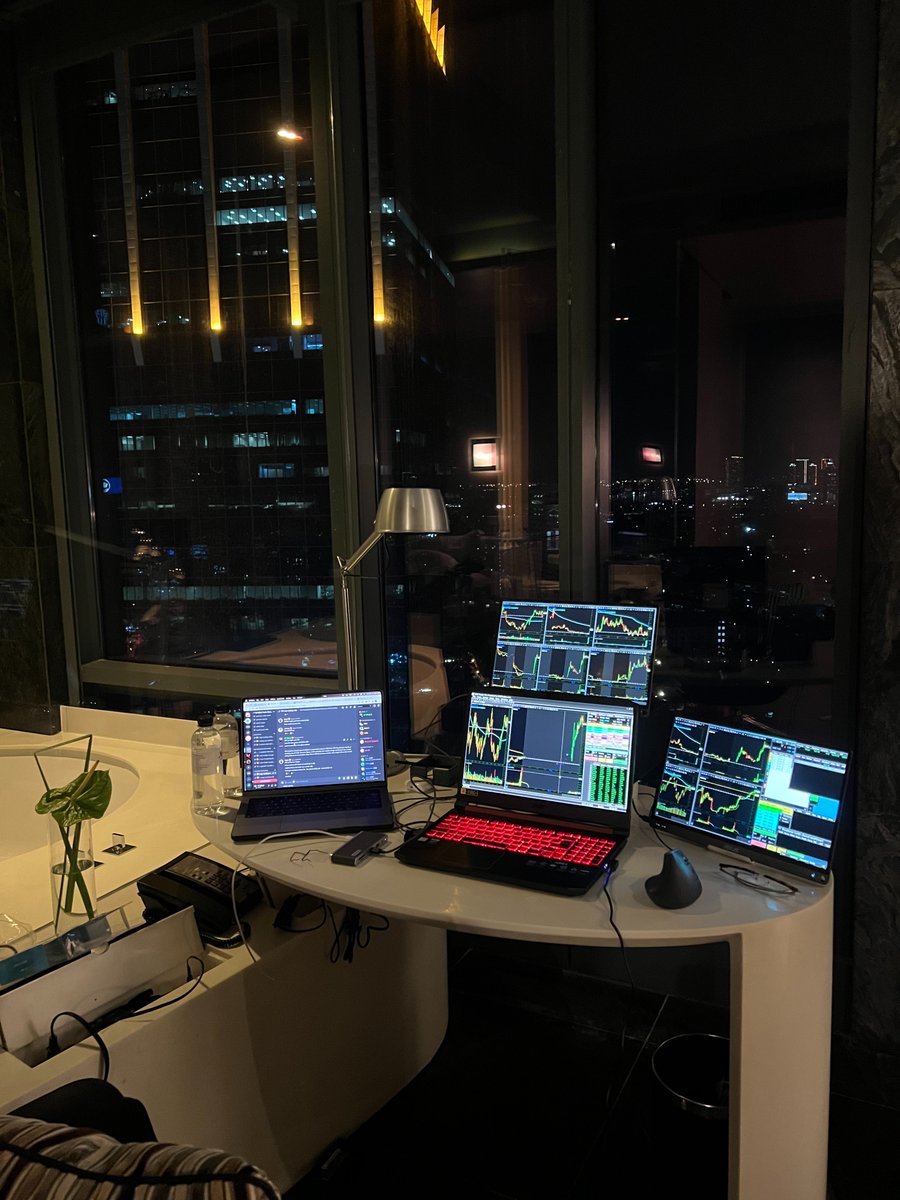
3/ Singapore 🇸🇬
Efficient, modern, and tax-friendly. Singapore has earned its spot as Asia’s financial hub for a reason, plus it’s a travel gateway if you want explore other Asian countries (like I did)
Pros: 0% capital gains tax, reliable internet, strong expat network (same as Dubai)
Cons: High living costs, if you trade the NYSE markets open at 11pm or midnight, and high humidity year-round
Efficient, modern, and tax-friendly. Singapore has earned its spot as Asia’s financial hub for a reason, plus it’s a travel gateway if you want explore other Asian countries (like I did)
Pros: 0% capital gains tax, reliable internet, strong expat network (same as Dubai)
Cons: High living costs, if you trade the NYSE markets open at 11pm or midnight, and high humidity year-round
4/ Taipei, Taiwan 🇹🇼
Being my motherland, I’m (a bit) biased, but I've had extremely fast internet in Taipei, affordable costs, and the culture makes it a trader-friendly spot.
Pros: Fast internet, affordable living, good for night owls because the market opens at 9:30 PM
Cons: Complicated tax structures and the late hours may not suit everyone.
Being my motherland, I’m (a bit) biased, but I've had extremely fast internet in Taipei, affordable costs, and the culture makes it a trader-friendly spot.
Pros: Fast internet, affordable living, good for night owls because the market opens at 9:30 PM
Cons: Complicated tax structures and the late hours may not suit everyone.
5/ Bangkok, Thailand 🇹🇭
Known for its low costs and huge digital nomad scene, Bangkok is an obvious pick for traders wanting a budget-friendly setup. I spent a month there last year and I loved it.
Pros: Fast internet, low cost of living, big expat community.
Cons: It’s hot year-round, and city life can be chaotic, and market opens at 8:30 PM, so it's a con if you're a morning person.
Known for its low costs and huge digital nomad scene, Bangkok is an obvious pick for traders wanting a budget-friendly setup. I spent a month there last year and I loved it.
Pros: Fast internet, low cost of living, big expat community.
Cons: It’s hot year-round, and city life can be chaotic, and market opens at 8:30 PM, so it's a con if you're a morning person.
6/ Barcelona, Spain 🇪🇸
I’ve found Barcelona to be one of the best for a work-life balance. Market opens at 3:30 PM, so I spent the mornings exploring. Great food and relaxed vibe.
Pros: Good work-life balance with later market open, affordable wine and food, lots of culture.
Cons: High capital gains tax (up to 26%) and some language barriers.
I’ve found Barcelona to be one of the best for a work-life balance. Market opens at 3:30 PM, so I spent the mornings exploring. Great food and relaxed vibe.
Pros: Good work-life balance with later market open, affordable wine and food, lots of culture.
Cons: High capital gains tax (up to 26%) and some language barriers.
7/ Lisbon, Portugal 🇵🇹
Quickly becoming a go-to for expats, Lisbon has tax perks AND European charm. Market opens at 2:30 PM—perfect timing for a late start.
Pros: Flat 20% income tax for non-residents, foreign income exemptions.
Cons: Rising housing costs, spotty public transit, and language barriers.
Quickly becoming a go-to for expats, Lisbon has tax perks AND European charm. Market opens at 2:30 PM—perfect timing for a late start.
Pros: Flat 20% income tax for non-residents, foreign income exemptions.
Cons: Rising housing costs, spotty public transit, and language barriers.
8/ Tokyo, Japan 🇯🇵
Unique trading energy and vibrant culture. Tokyo has a distinct vibe that’s hard to find anywhere else.
Pros: Strong trading culture, fast internet, organized and efficient city.
Cons: Slower internet, high tax rates (up to 55%), late market hours, I'm a morning bird so the late market hours in Asia were hard.
Unique trading energy and vibrant culture. Tokyo has a distinct vibe that’s hard to find anywhere else.
Pros: Strong trading culture, fast internet, organized and efficient city.
Cons: Slower internet, high tax rates (up to 55%), late market hours, I'm a morning bird so the late market hours in Asia were hard.
Honorable Mention: Montreal 🇨🇦
Montreal’s a solid choice for balance, with affordable living and a strong tech scene. Brutal winters, though.
Pros: Affordable living, great work-life balance, market hours align with NYSE.
Cons: Cold winters and Quebec taxes (capital gains taxed at 50%).
Montreal’s a solid choice for balance, with affordable living and a strong tech scene. Brutal winters, though.
Pros: Affordable living, great work-life balance, market hours align with NYSE.
Cons: Cold winters and Quebec taxes (capital gains taxed at 50%).
And that's my trader-friendly city round-up! What’s your top city for trading? Drop it below.
Also, if you're looking for a community of like-minded people and mentors, please check out my trading community 👉humbledtrader.com/our-community?…
Also, if you're looking for a community of like-minded people and mentors, please check out my trading community 👉humbledtrader.com/our-community?…


• • •
Missing some Tweet in this thread? You can try to
force a refresh