The ports of New York and New Jersey, which are controlled by the International Longshoreman's Association, have become relatively less productive than the Pacific Ports, which had less restrictive work rules after ~1960.
Largely because the ILA is so much worse than the ILWU in terms of the rules it sets up, real port labor costs per ton have been consistently higher at the ports they control.
The ILA has also been more successful at warding off containerization.
The plot depicts the container share of general cargo with the start and end of the Census/Tariff Commission study (1965-73) marked.
These unions have helped to keep freight rates relatively flat despite increasing labor productivity, because the workers have successfully captured the value from containerization.
John Smith, founder of Jamestown, got his start fighting the Ottomans for Habsburgs. He killed so many Turks they knighted him and gave him a coat-of-arms with three Turk heads on it.
He was captured, sold as a slave, escaped, and founded Jamestown.
The Turks are for the three who challenged him to duels, all of whom he beheaded.
He also killed his slavemaster who was trying to convert him to Islam, then he escaped from Istanbul to Russia, passed through the Polish-Lithuanian Commonwealth, and made it England.
Hello, HBO?
"Pocahontas, did I ever tell you about the time the Prince of Transylvania made me a noble in the Austro-Hungarian Empire because I cut off three Turkish guys' heads? Good times."
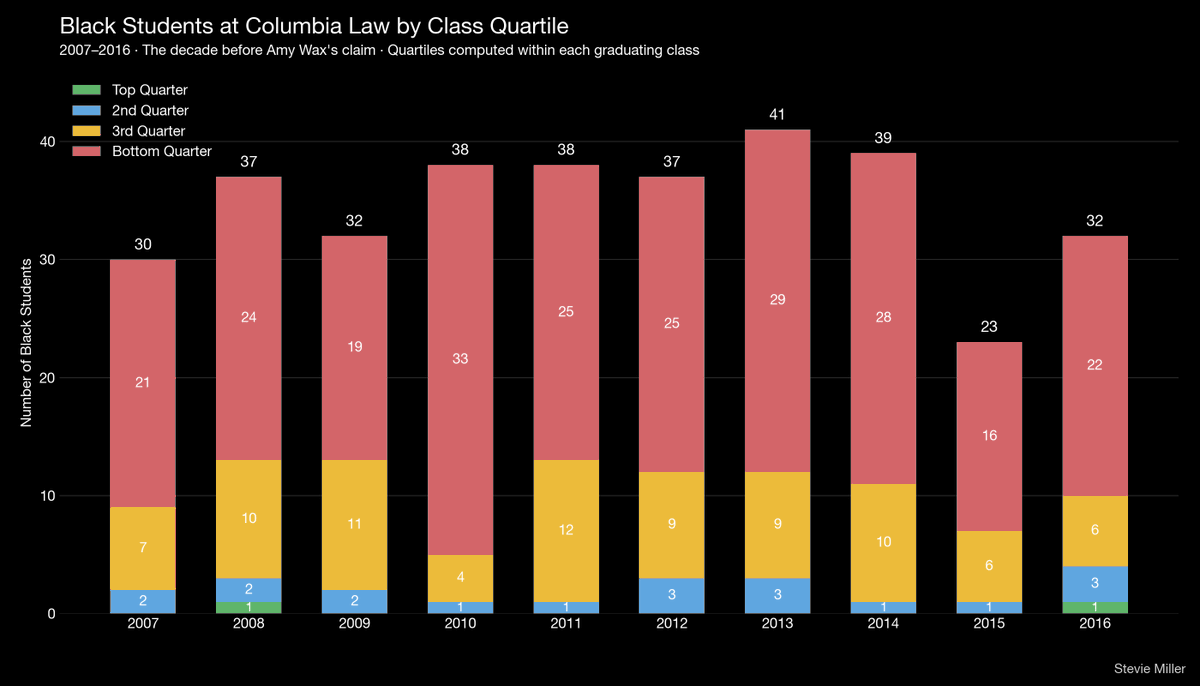
Amy Wax got in trouble for remarking that she'd not seen a Black student in the top quarter of a Penn Law class.
Thanks to hacked Columbia data, we can see that she was...
Probably right!
In the decade before her statement, there were just two top-25% Black students.
It is *totally* plausible that she never met these students. And it's also plausible that she rarely saw Black students in the top *half*, because each year, the number of them was just 1-4.
But, despite being 8% of the class, they were ~40% of the bottom 10%-ranked students:
Note: Penn is on-par/slightly less elite than Columbia, so it's likely that the Black students there were somewhat *worse*, as the article notes, making her claims more likely.
This all comes from @zagrebbi's latest article. It's well worth a read!
Big day if you think Roe v. Wade was correctly decided.
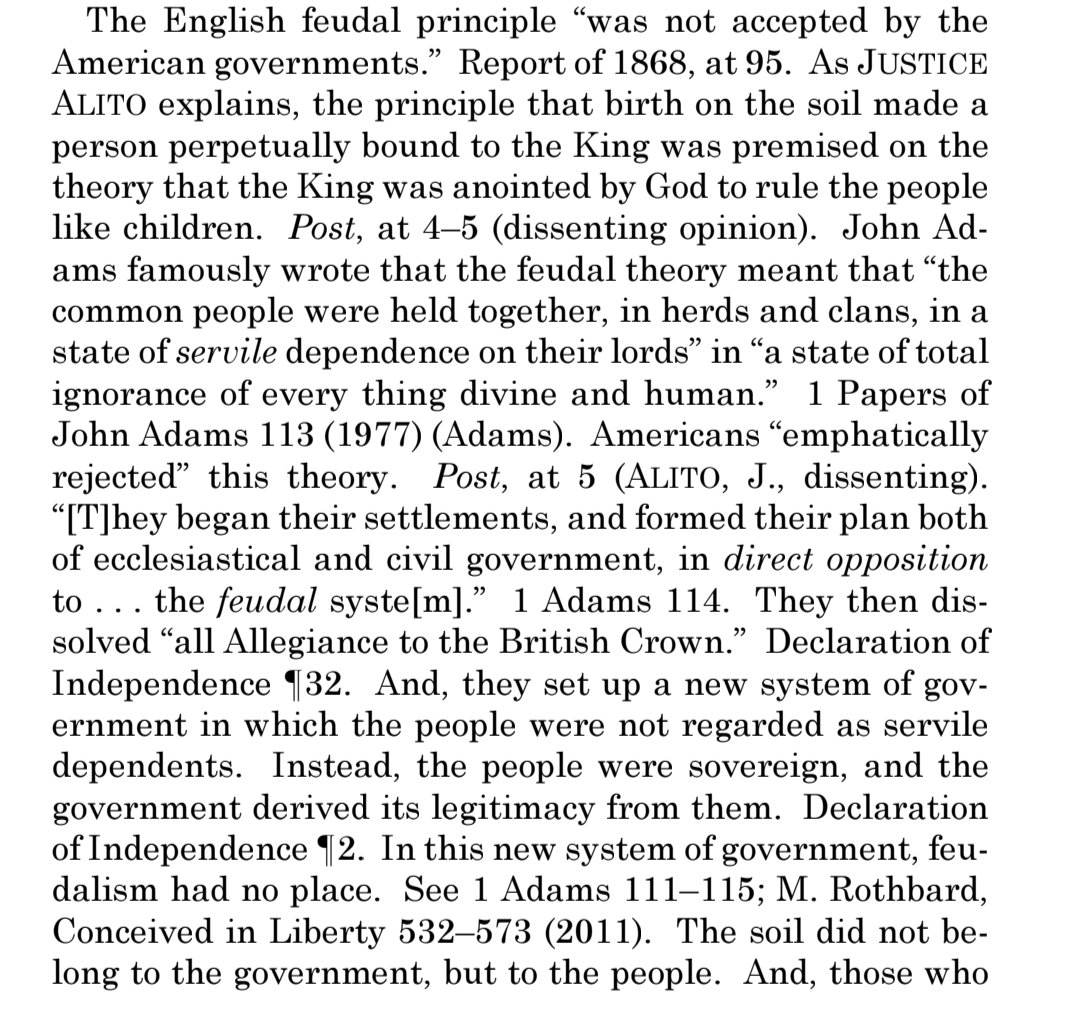
My favorite part (note that I've only read 150 pages so far) was Thomas explaining that, no, the Founding g Fathers did not adopt the English feudal system.
This fact was clearly lost on the other side.
The Court's reliance on a random remark from a case that ultimately didn't even produce lasting changes raises the question of whether that sort of thing even matters.
Why shouldn't I cite the Dred Scott case as the law of the land?