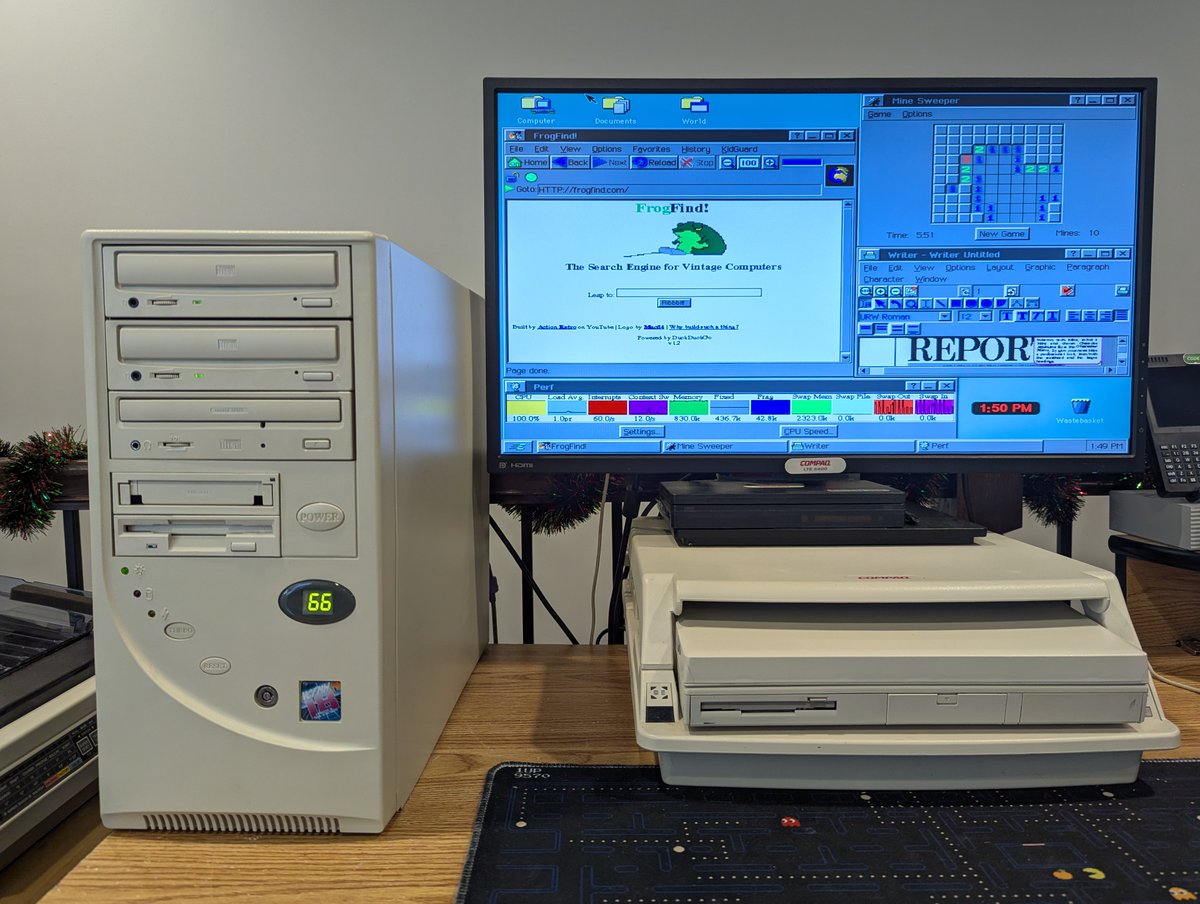
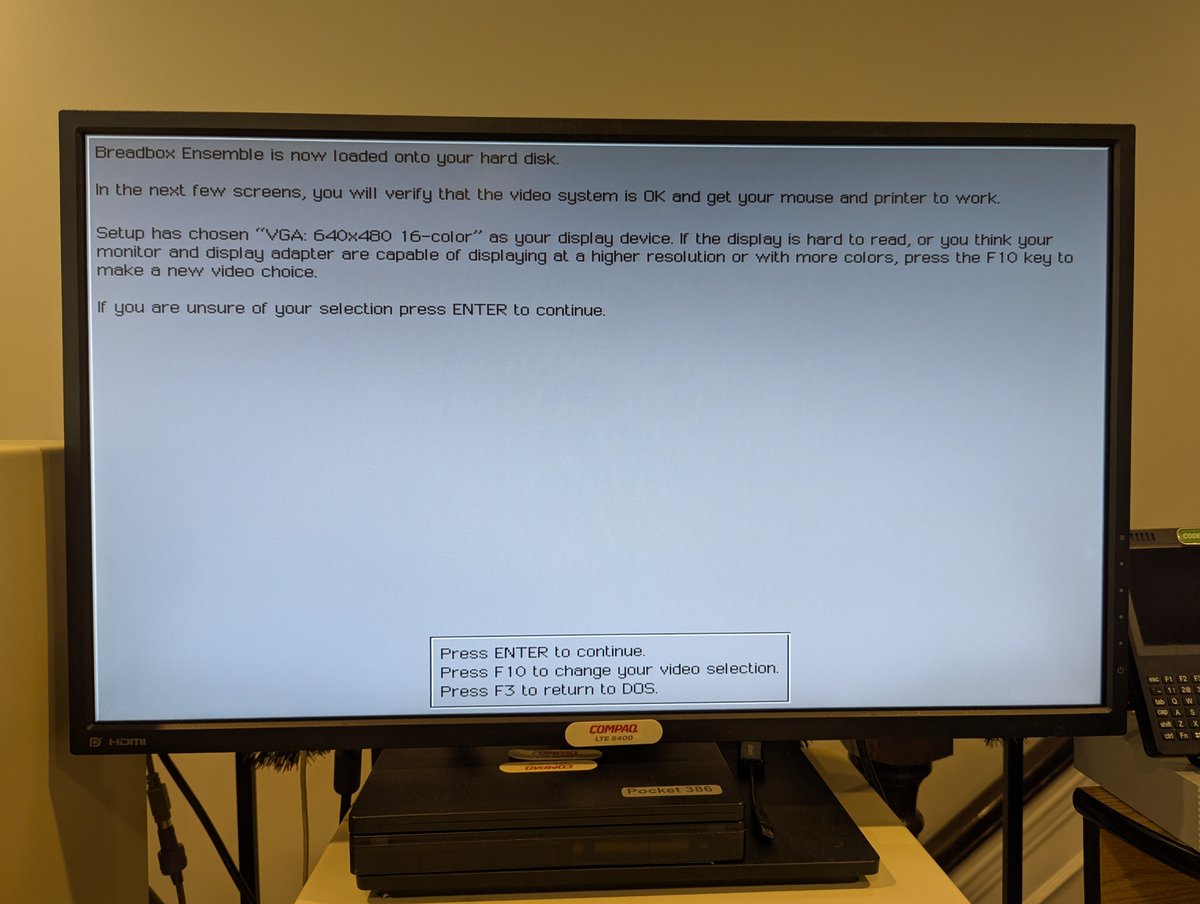
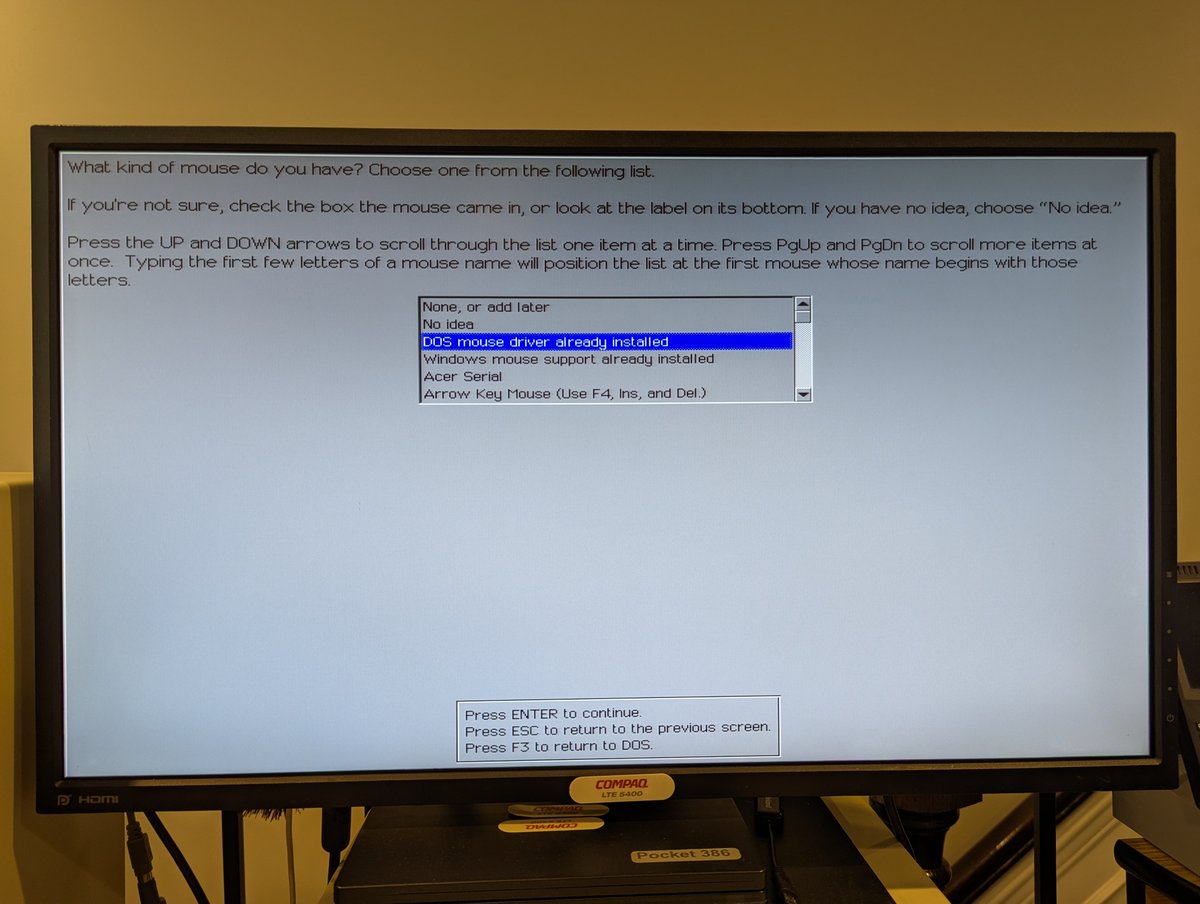
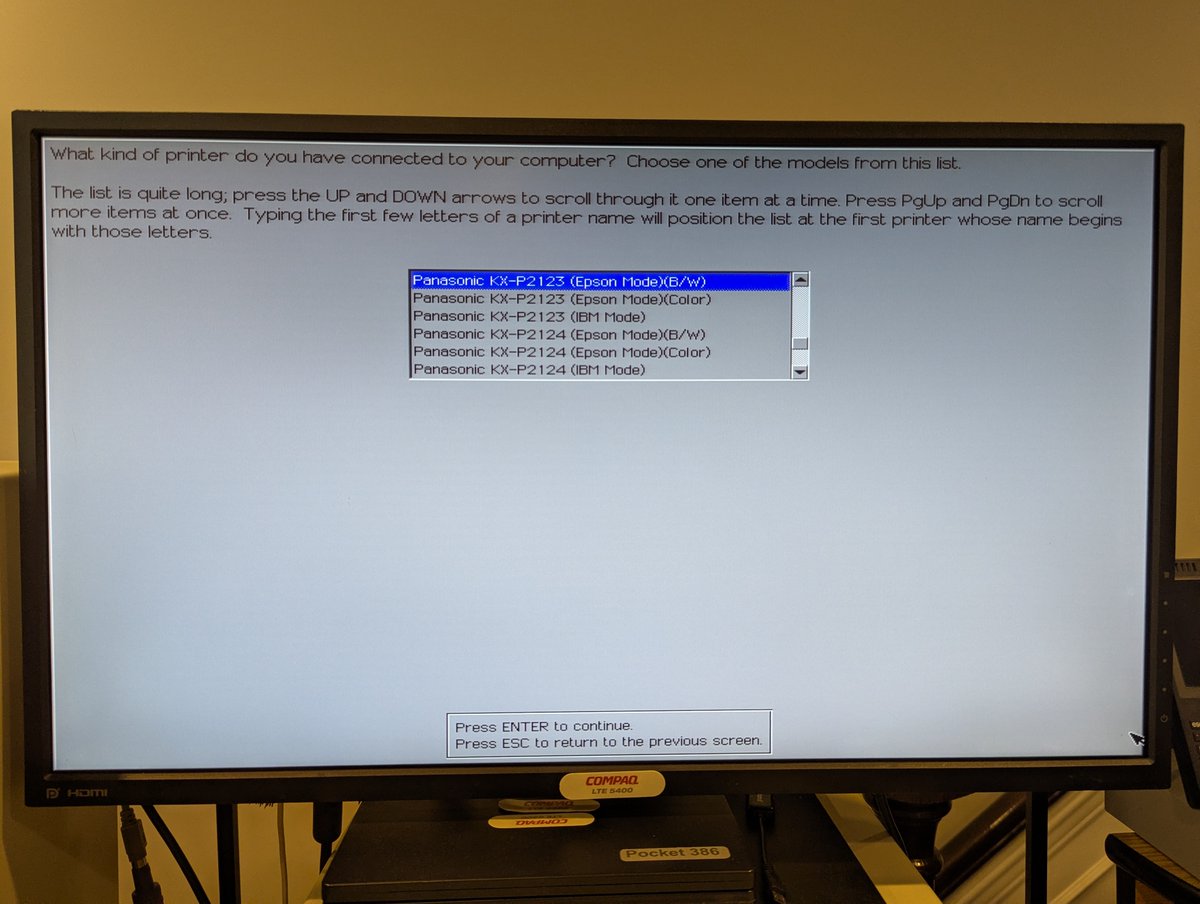
It's time for another OS install on the eMachines T2341 Athlon XP 2400+ machine, and this time, it's IBM OS/2 Warp 4.52. The end result for this is VERY impressive. Get ready for a long 🧵 with details. Buckle up, here we go! 

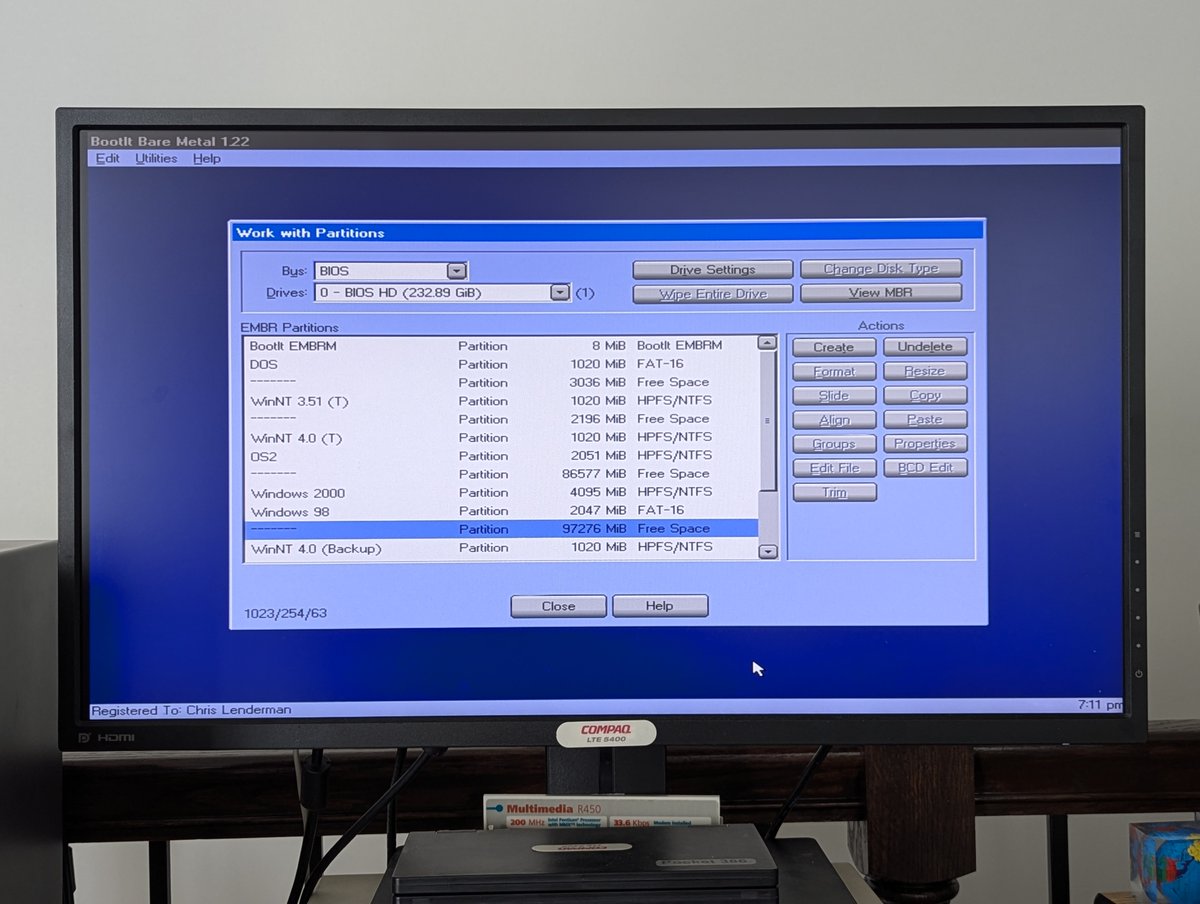
So, for those who have been following along, I've been on a bit of a crusade to install OSes on this system. Here's the list so far. My favorite boot and partition manager, BootIt Bare Metal, is great. Some OSes have cylinder limits, which I have had to juggle a bit.
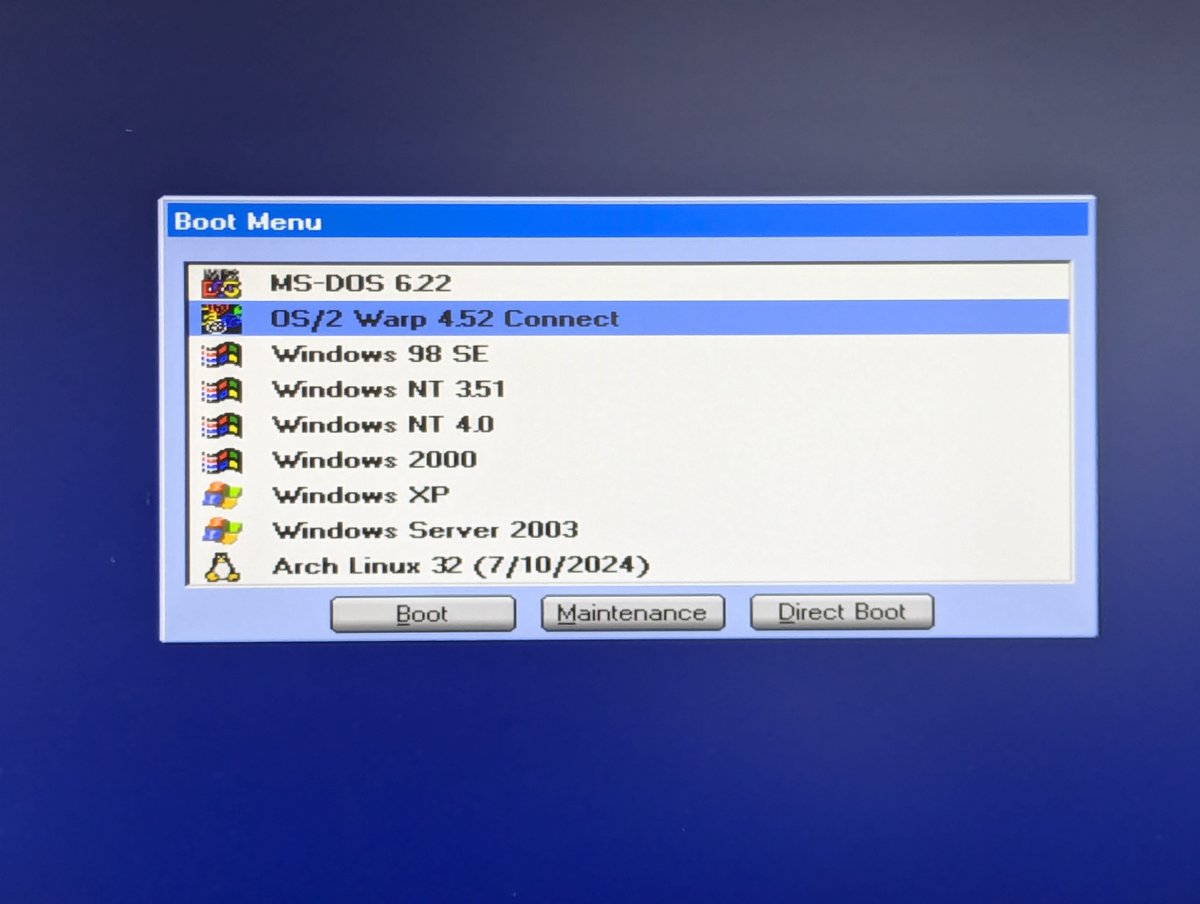

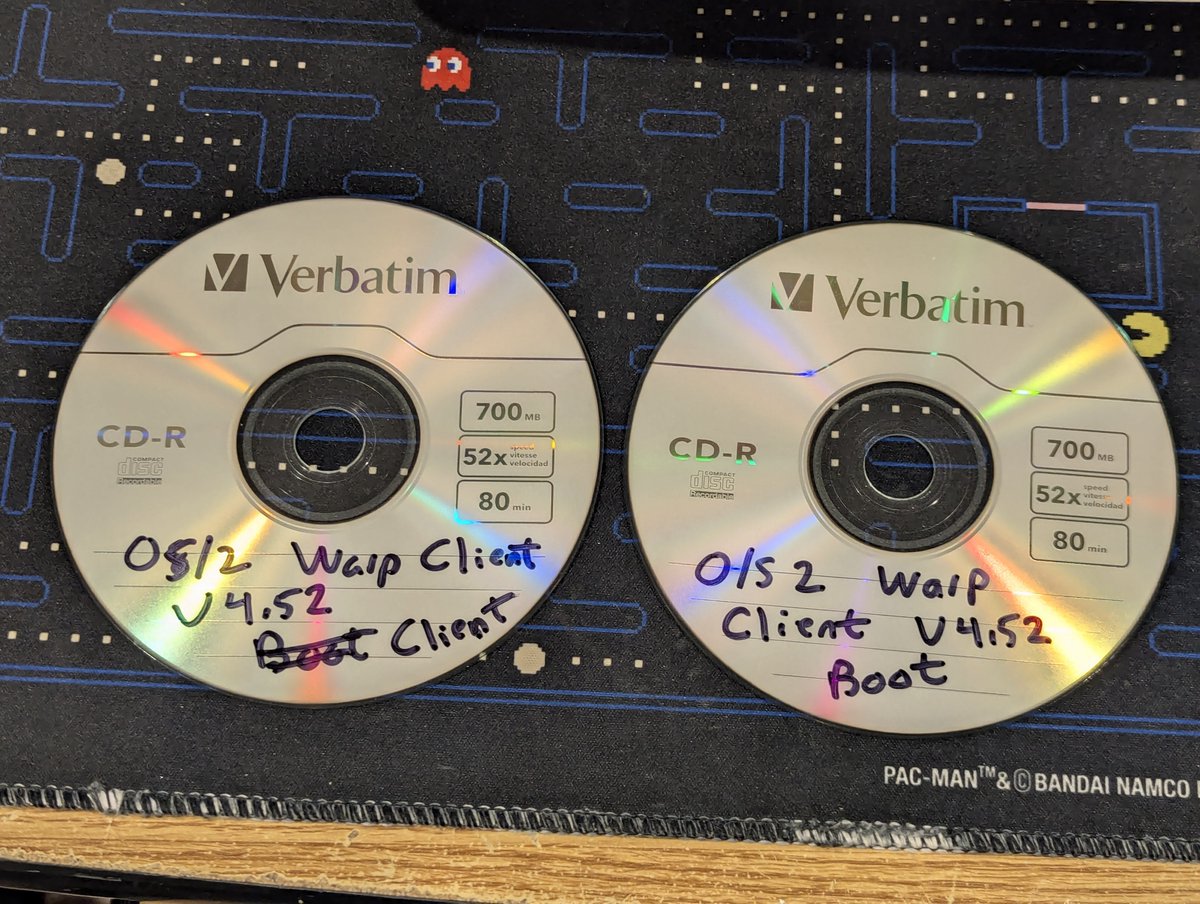
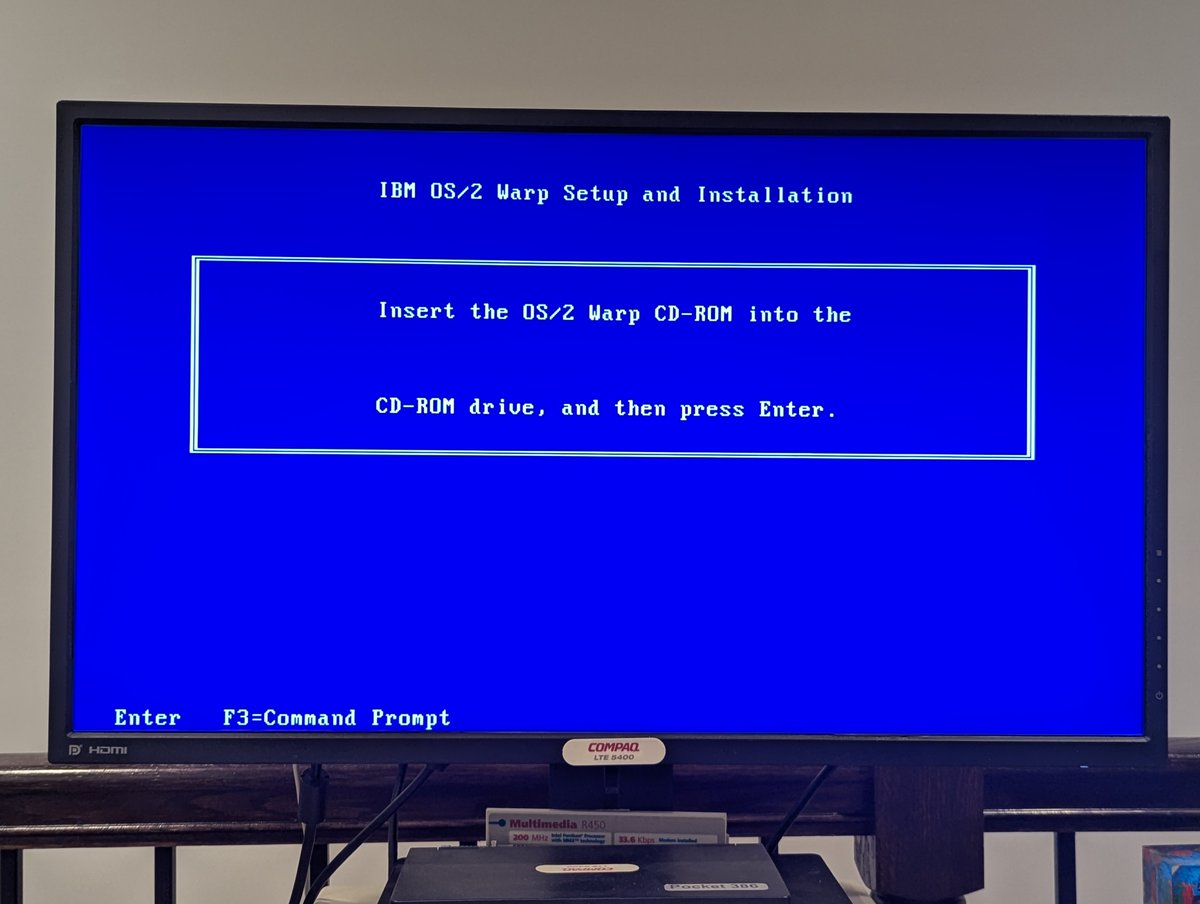
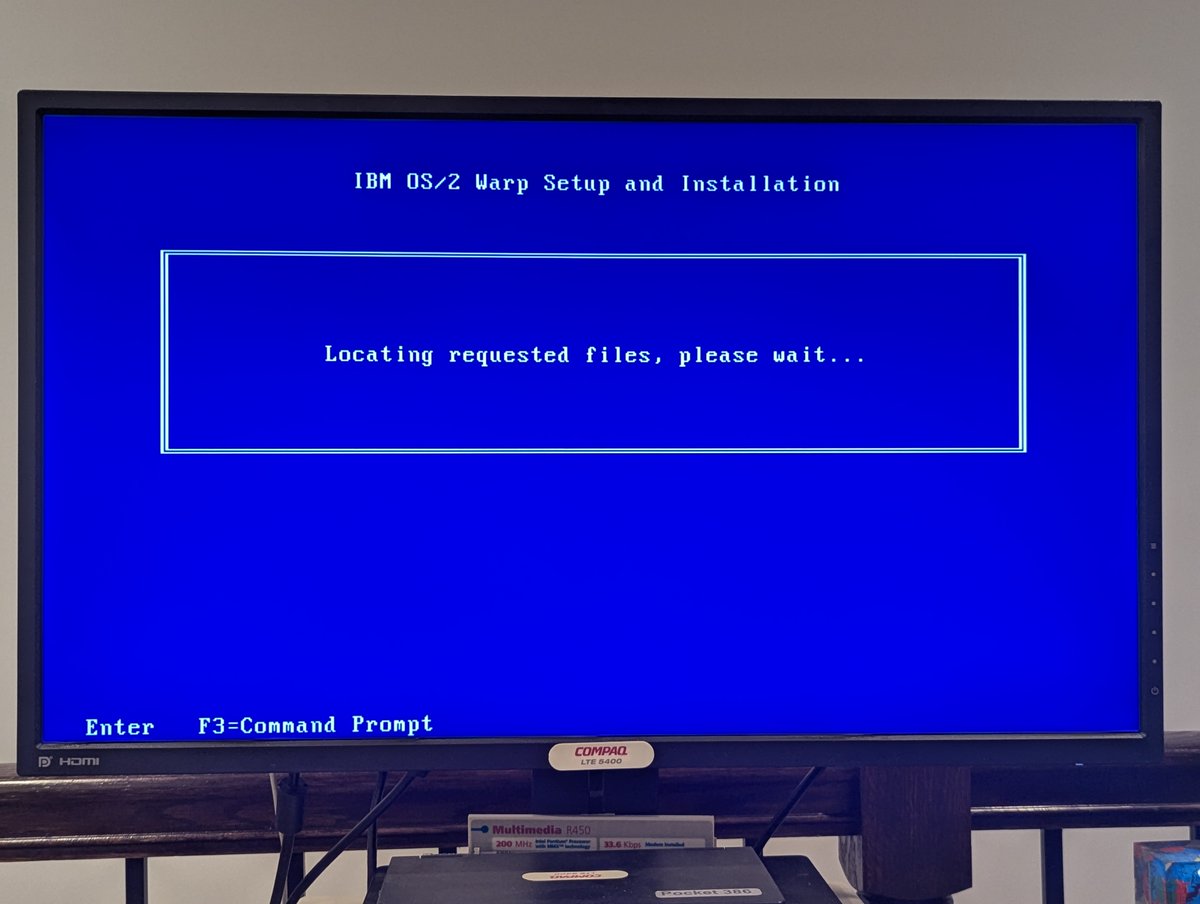
I burned two disks, one is the "boot" CD and one is the "client" CD. Naturally, you start with the "boot" CD, then when asked, you put the "client" CD. And then the installer gets rolling!
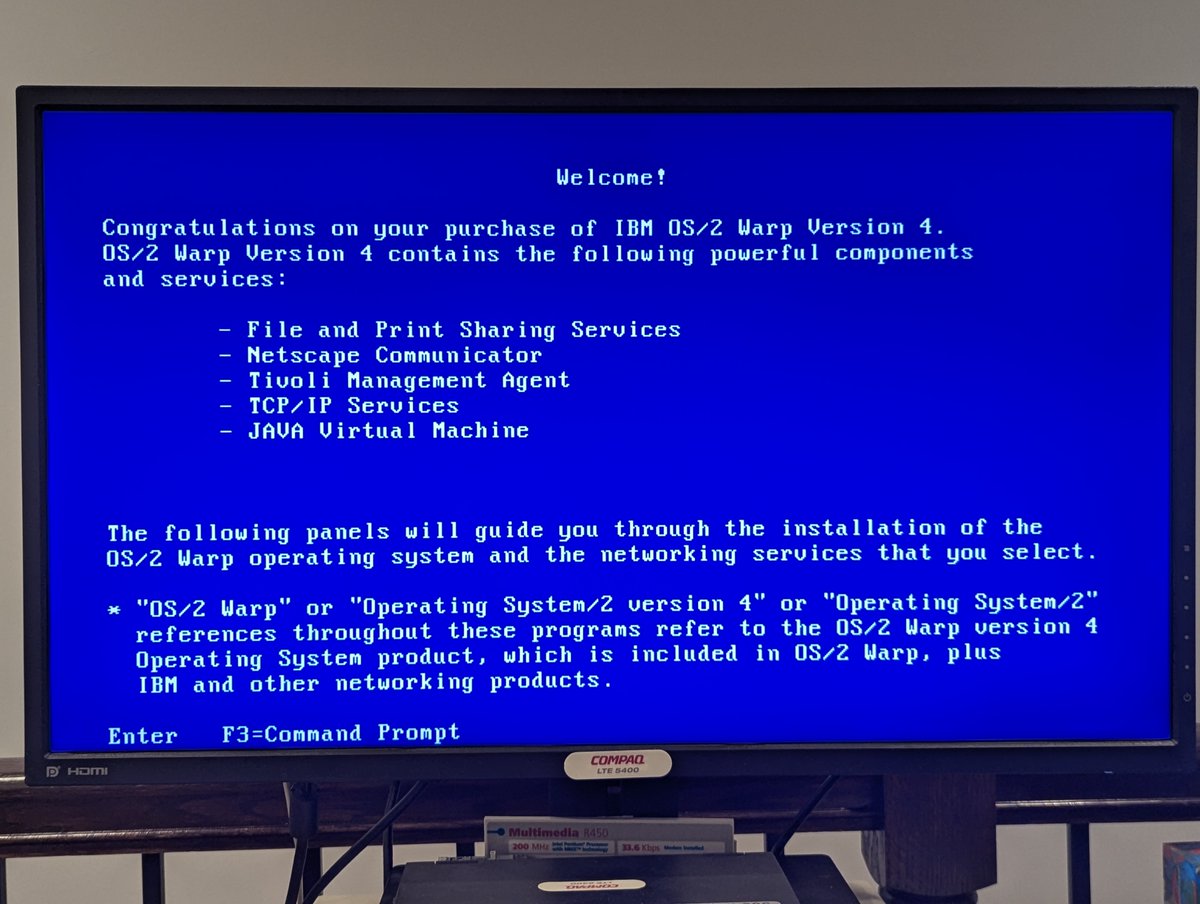
I had to set up a partition. You also have to make the partition bootable and installable. My first time through (night time), I went with a 1GB partition. For my latest time through (day time), we went with 2GB.

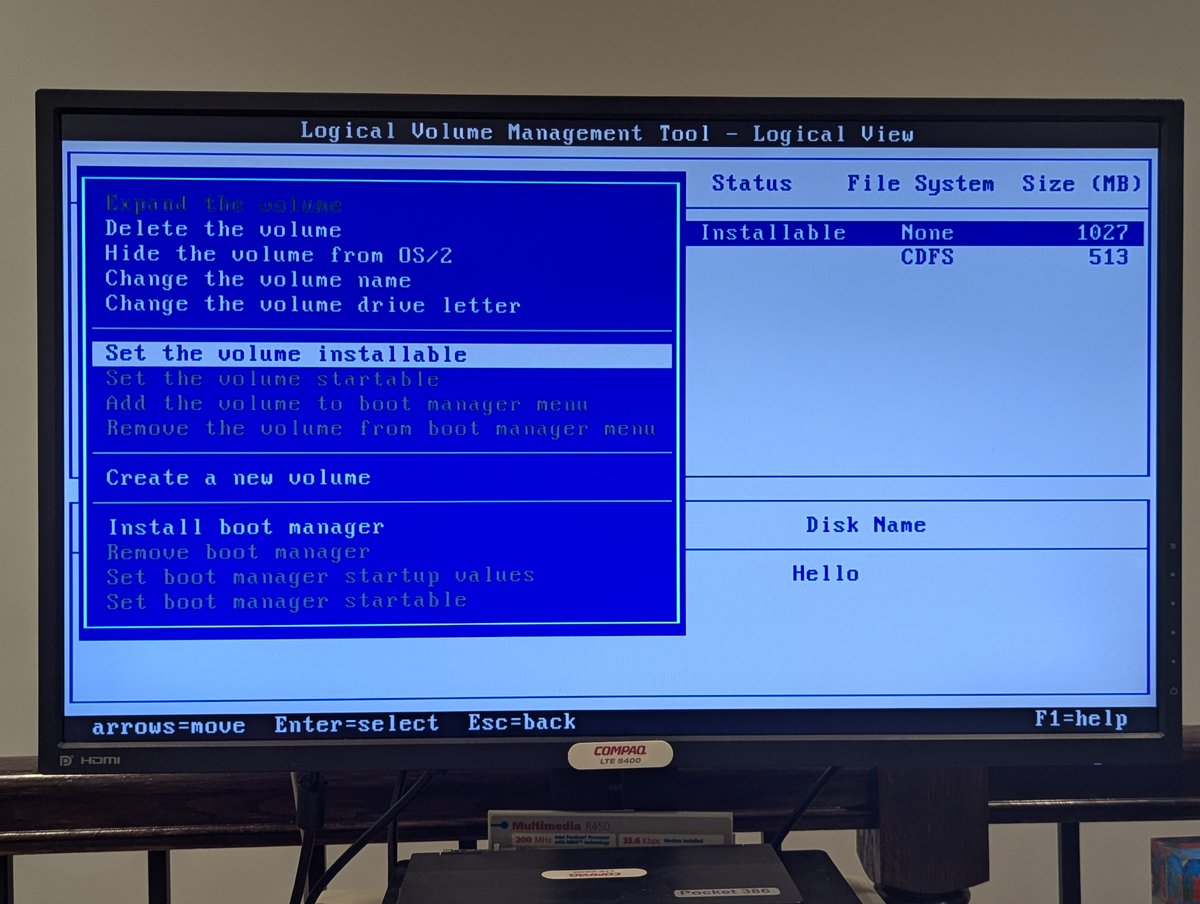


After making the partitions, we reboot again with the "boot" CD, and proceed to "accept" an install volume. I chose High Performance File System as well. And from there, the installer started to work its magic.


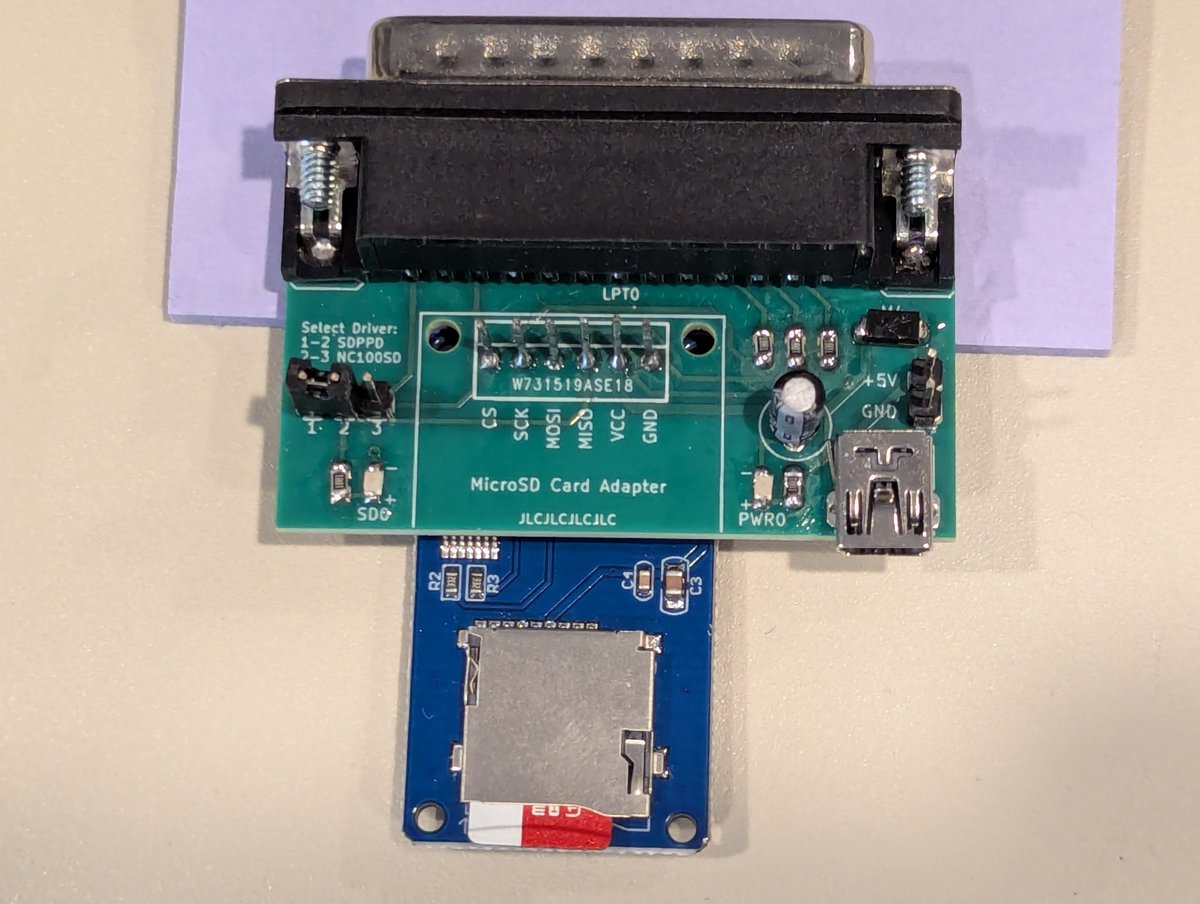
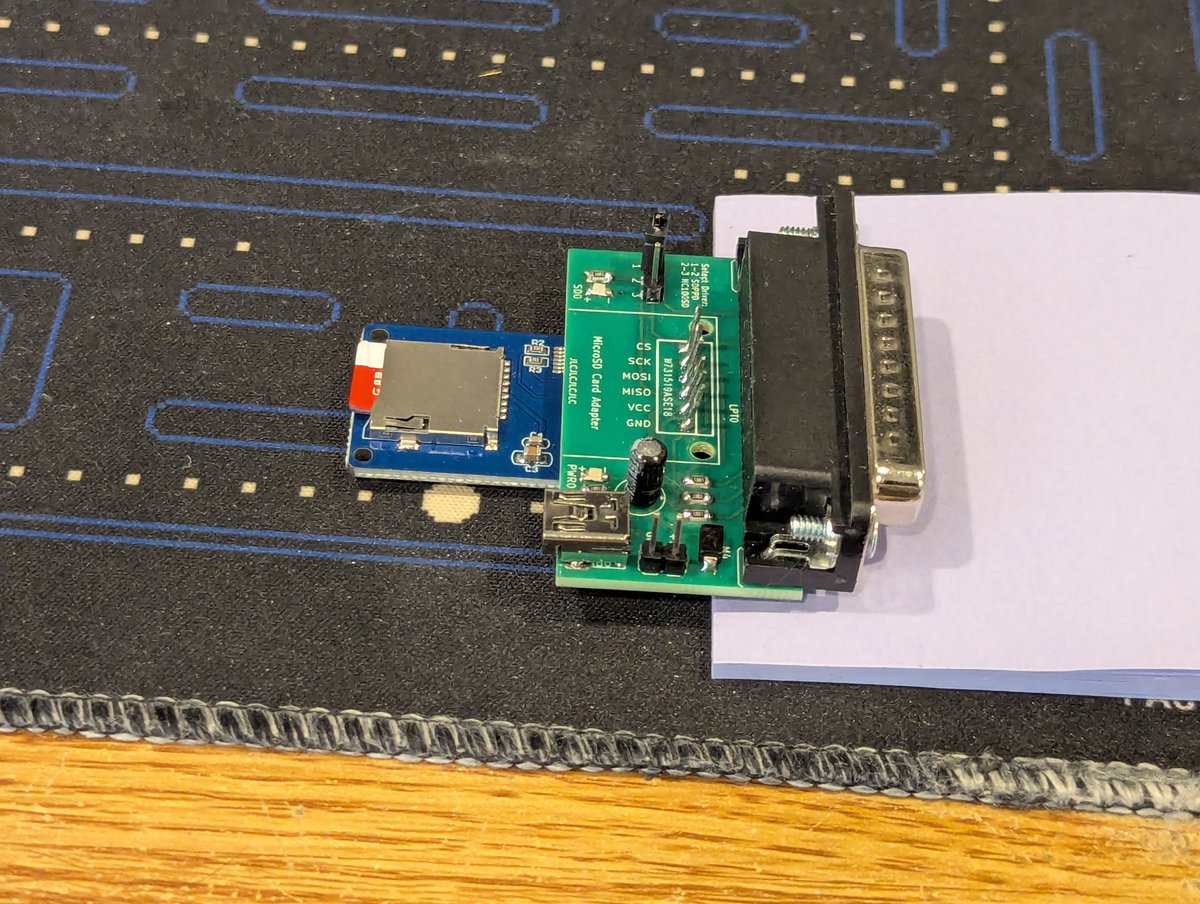
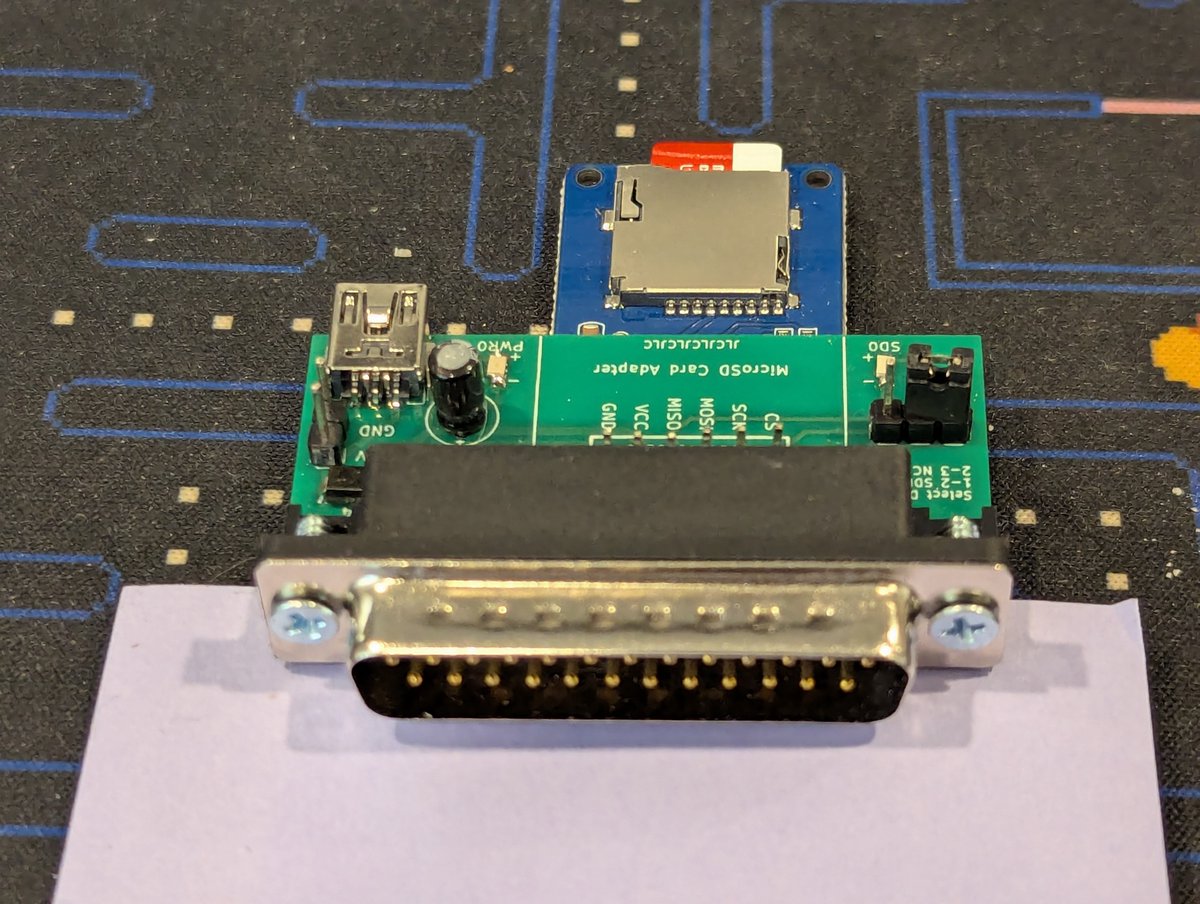
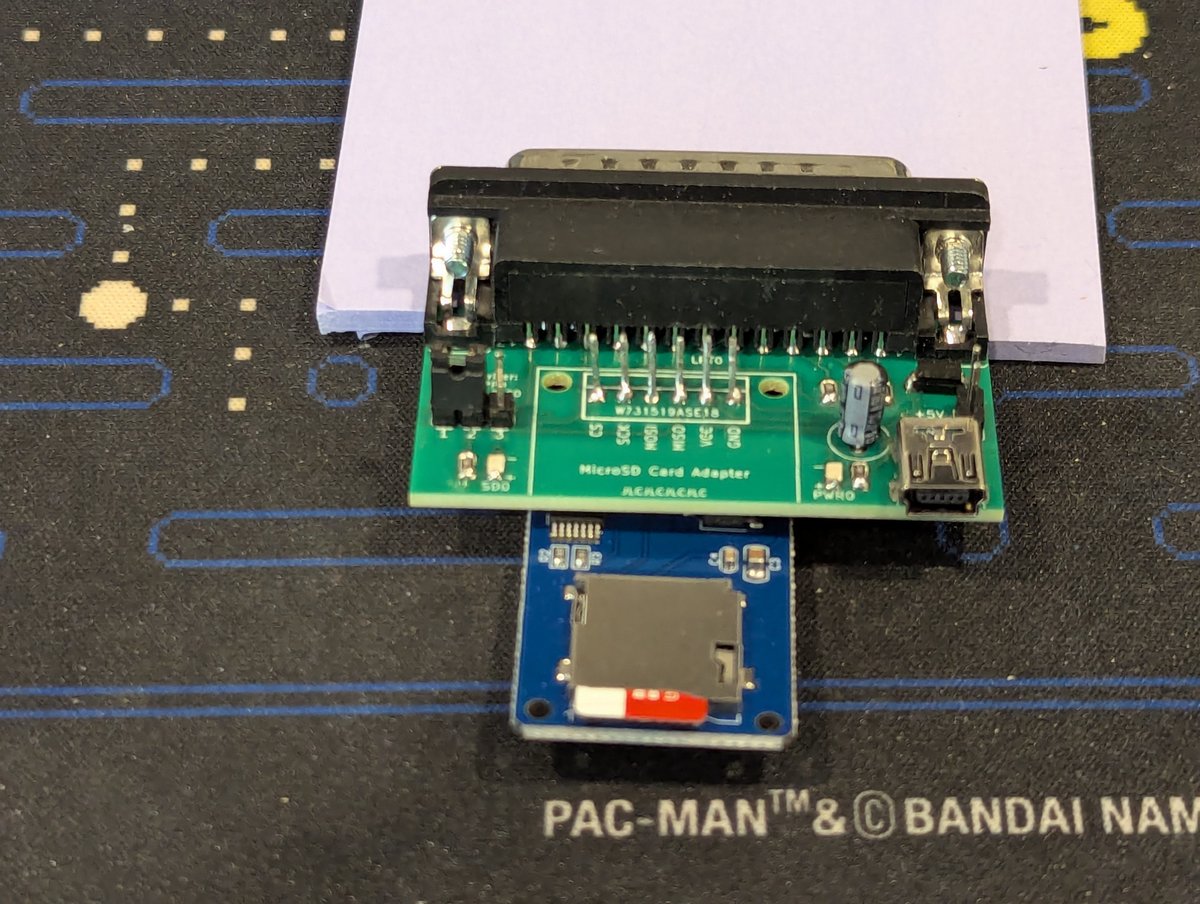
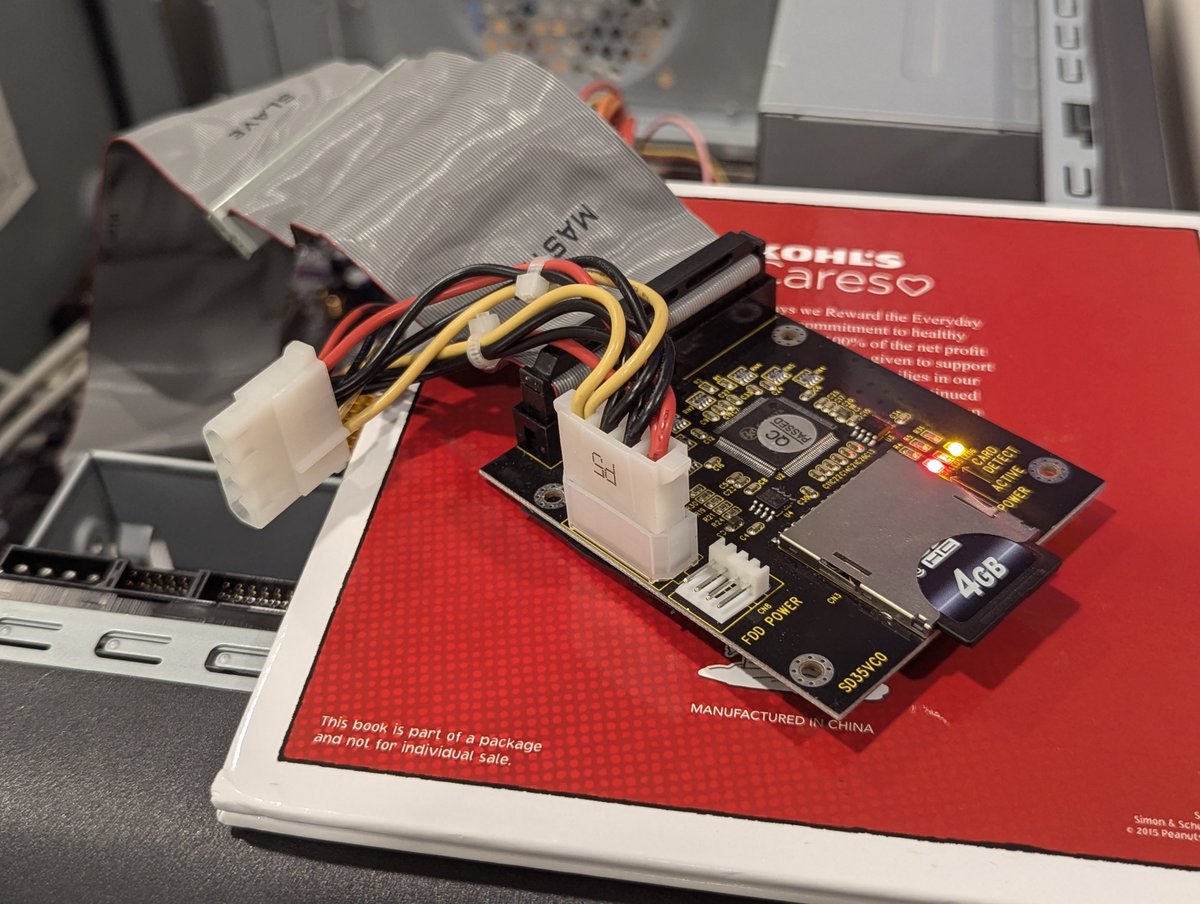
Now, before we proceed, one quick note: since I didn't trust OS/2 to make a partition and not trash my disk, I actually put this contraption in the system. When we got to this point in the installation, it "rebooted" and I then copied the partition over to the main disk!

Okay, let's continue the install. OOPS, well, that didn't work! HOWEVER, if you put the "Boot" CD back in the drive, it'll fix things up for you! My experience is that OS/2 doesn't like to have its partition moved. But you can always put the "Boot" CD in the drive and fix it.


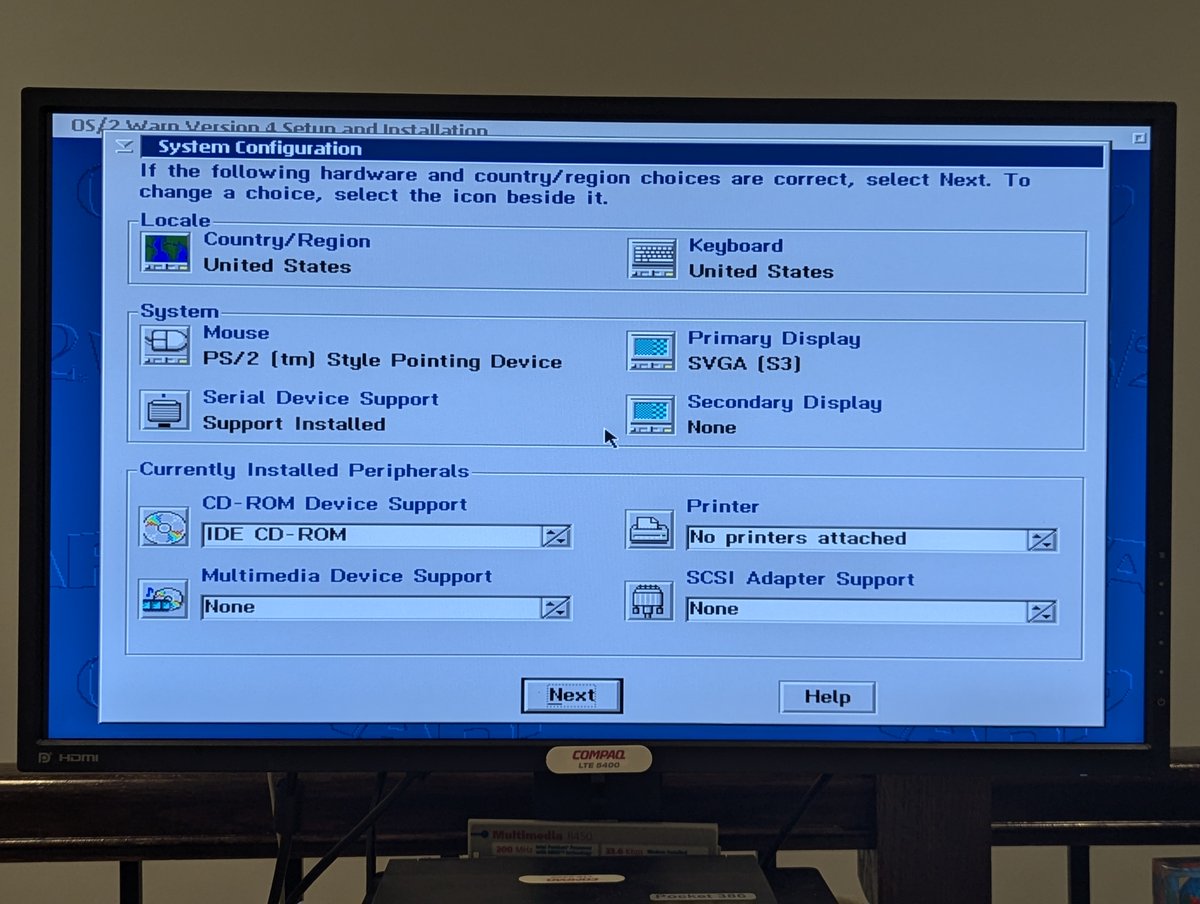
Let's proceed through the install. One thing I did change from the first "night time" install (and forgot to show) was that I changed the Primary Display to be Generic VESA. The S3 drivers are not going to work with our S3 ProSavage DDR video card.
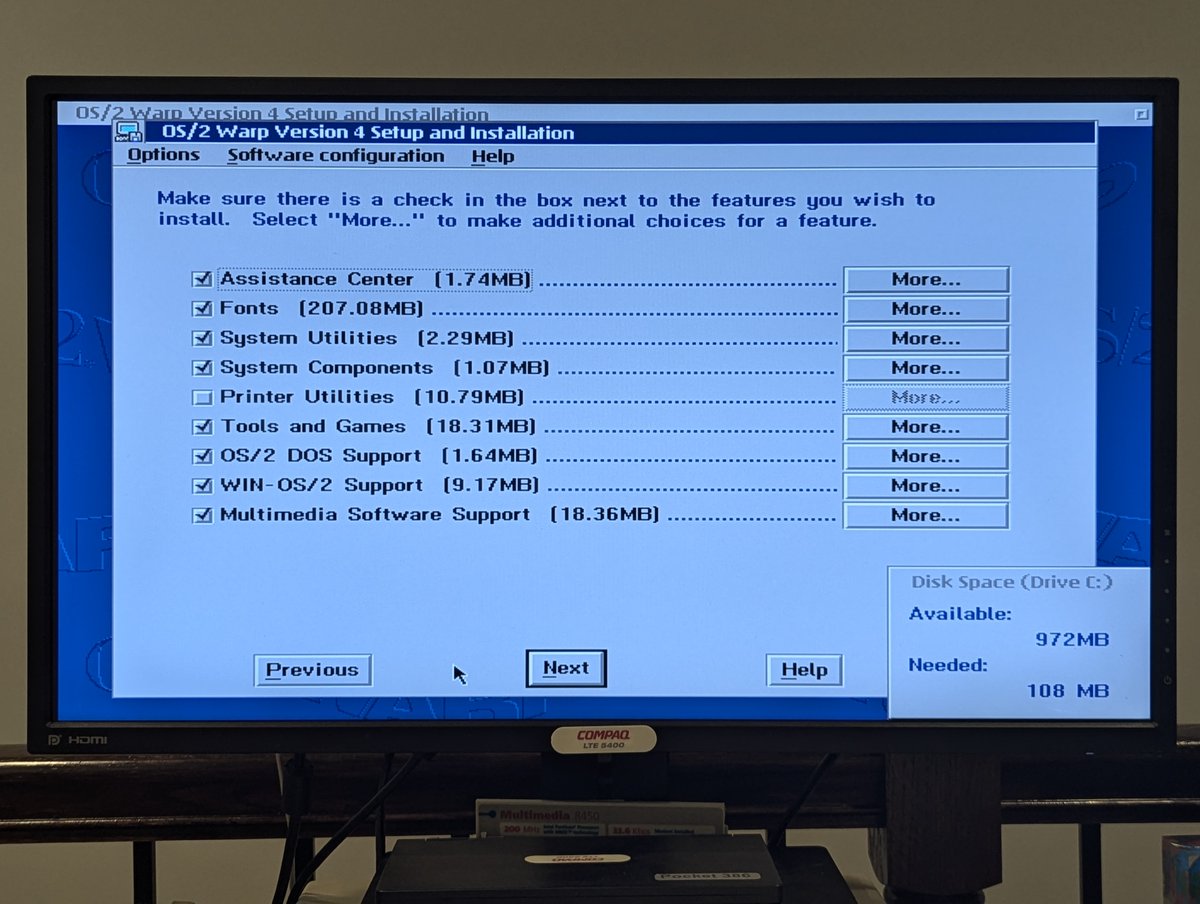
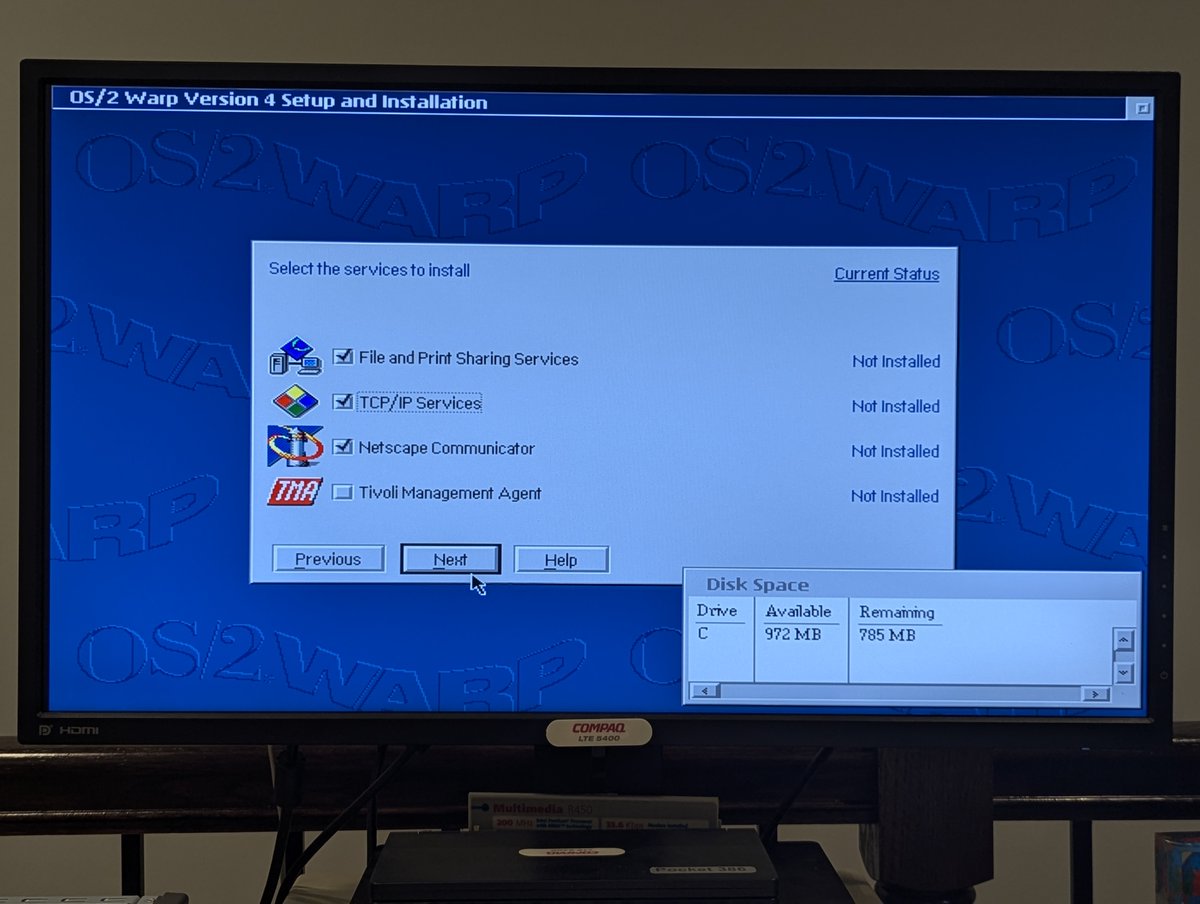

I needed to inject drivers for my Realtek RTL 8139 network card. Also, since I plan to file share with my Raspberry Pi using Samba, I removed the IBM OS/2 NETBIOS driver and added IBM OS/2 NETBIOS OVER TCPIP. Drivers: os2site.com/sw/drivers/net…


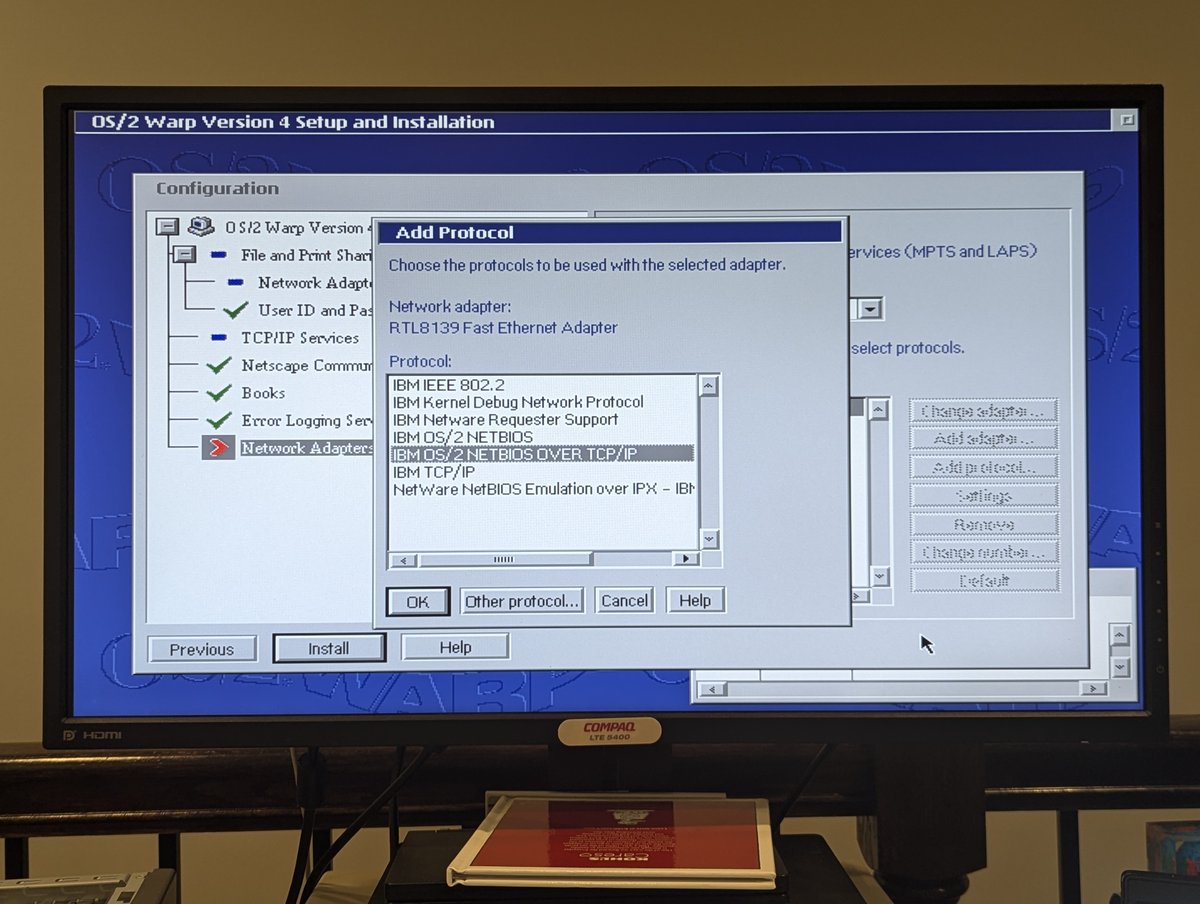

This little article on NetBIOS over TCP/IP was very helpful by the way! Link is here: os2voice.org/vnl/past_issue…

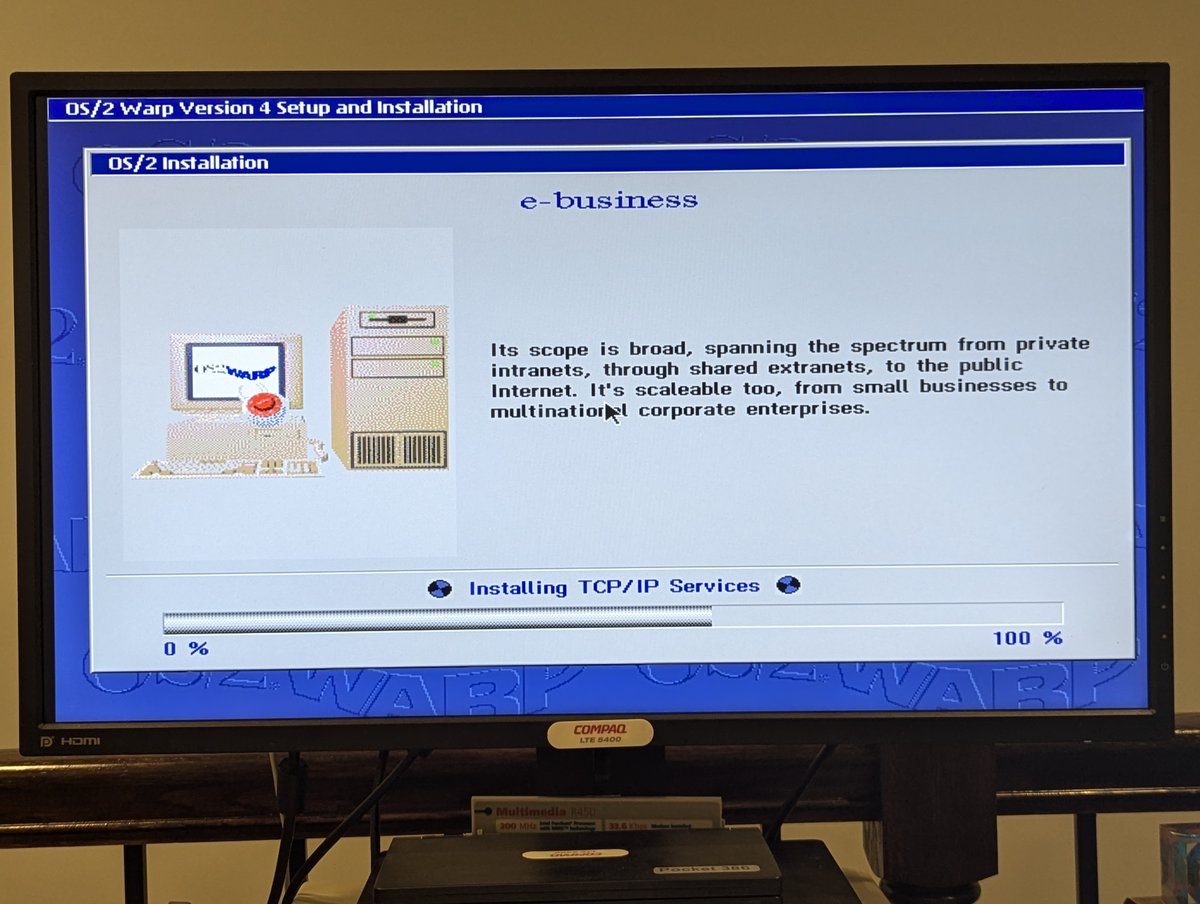
After configuring network stuff, graphical install marches on, look at all of that marketing 😆


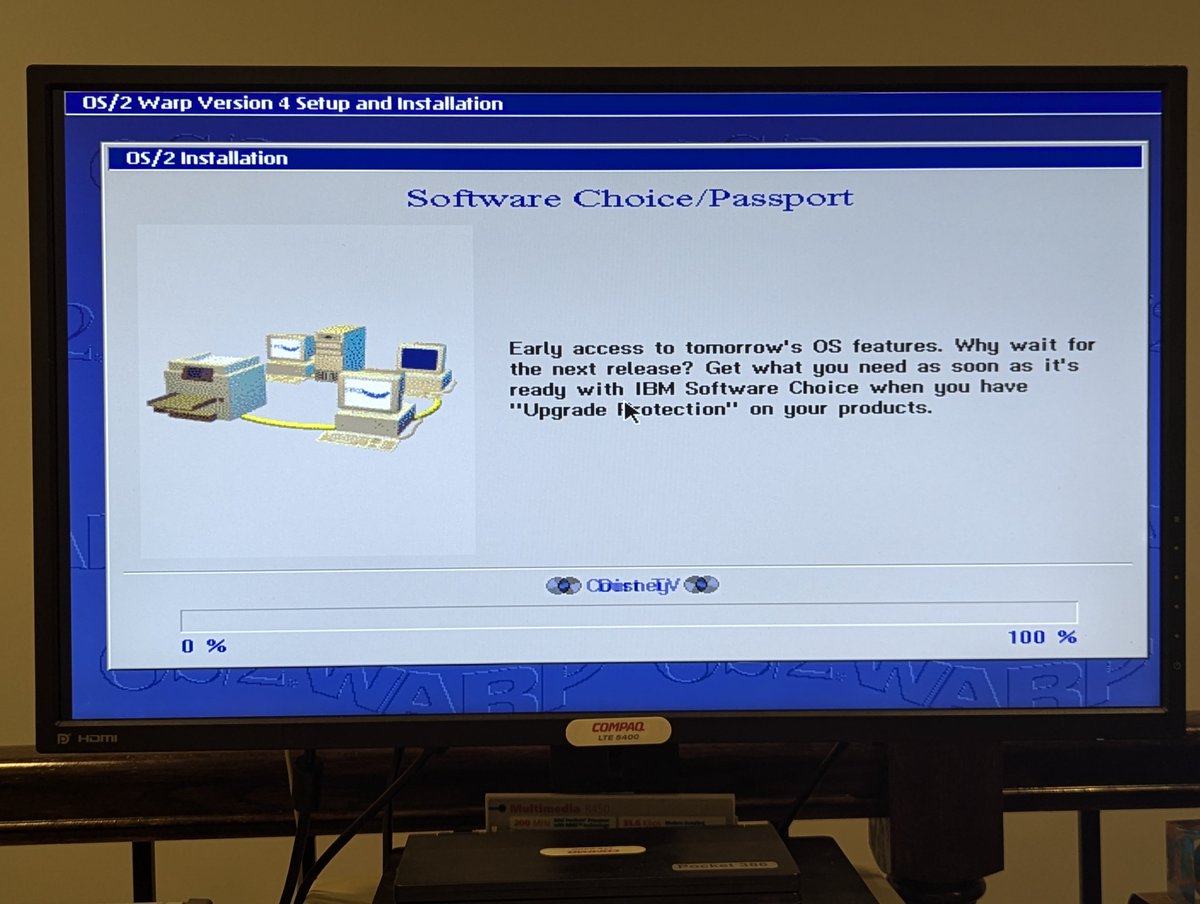
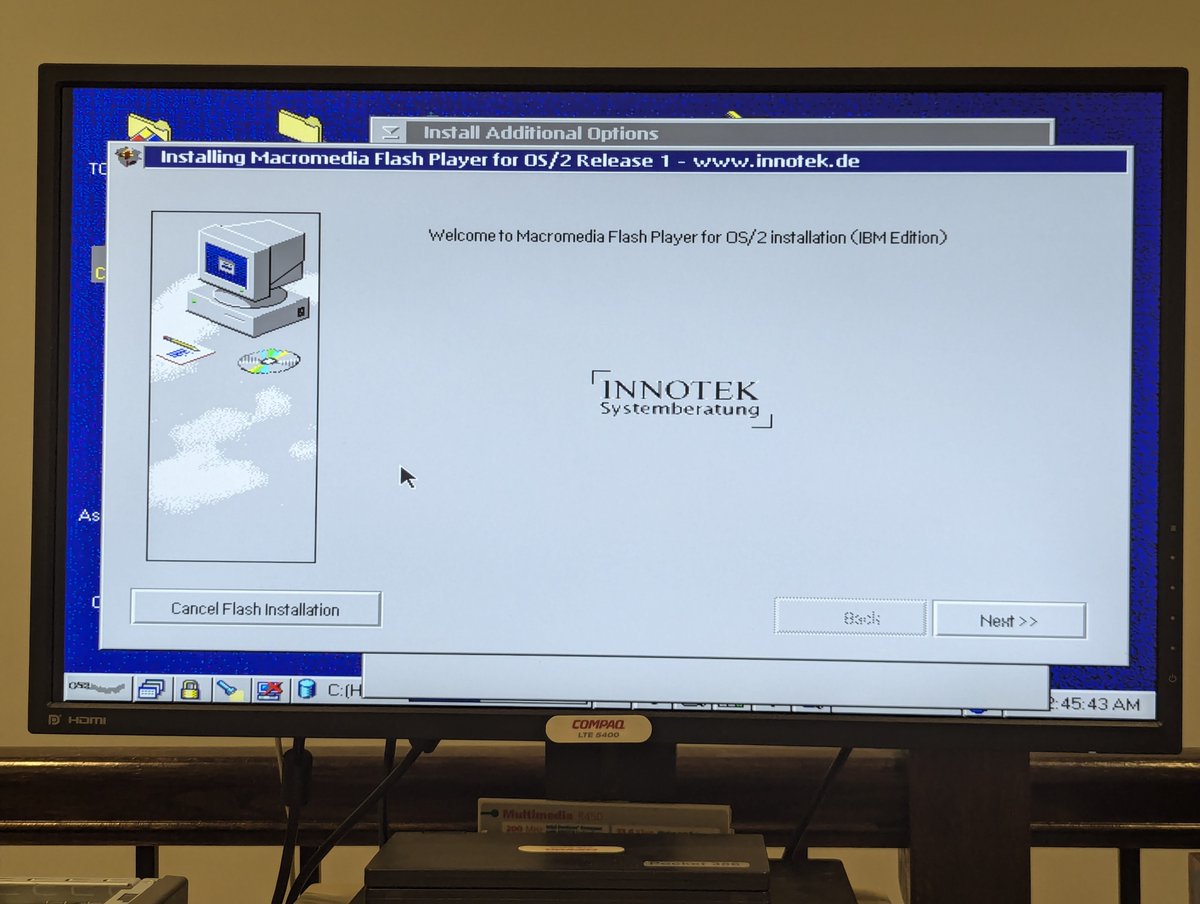
After install finishes, the system reboots, and we get to choose to install a few additional options. For the "night install", I added these, but ultimately for my clean "daytime install", I didn't. But let's look at some of the screenshots from the installation of these.

Look at that amazing branding for the IBM Web Browser 😂. And the donut and cup of "Java"? Haha, fantastic 🍩☕️


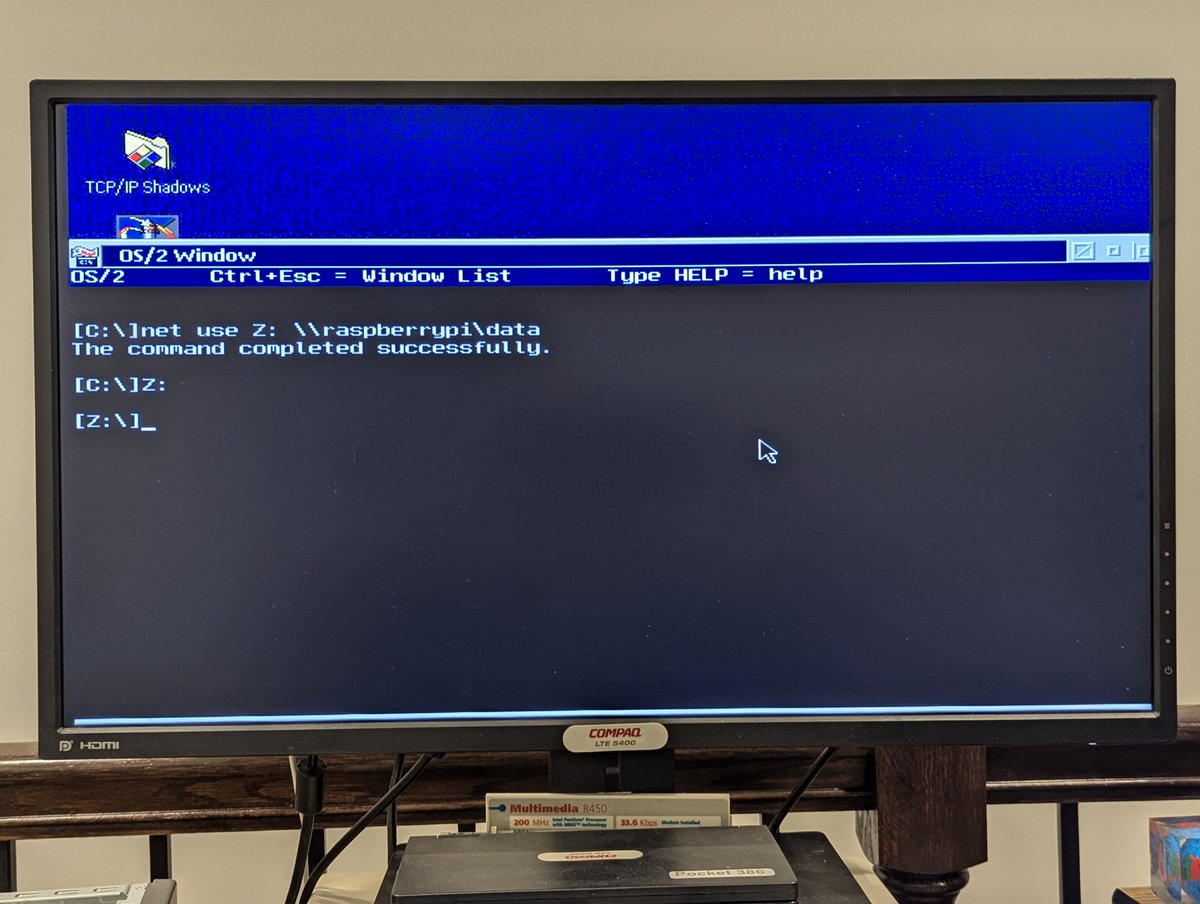
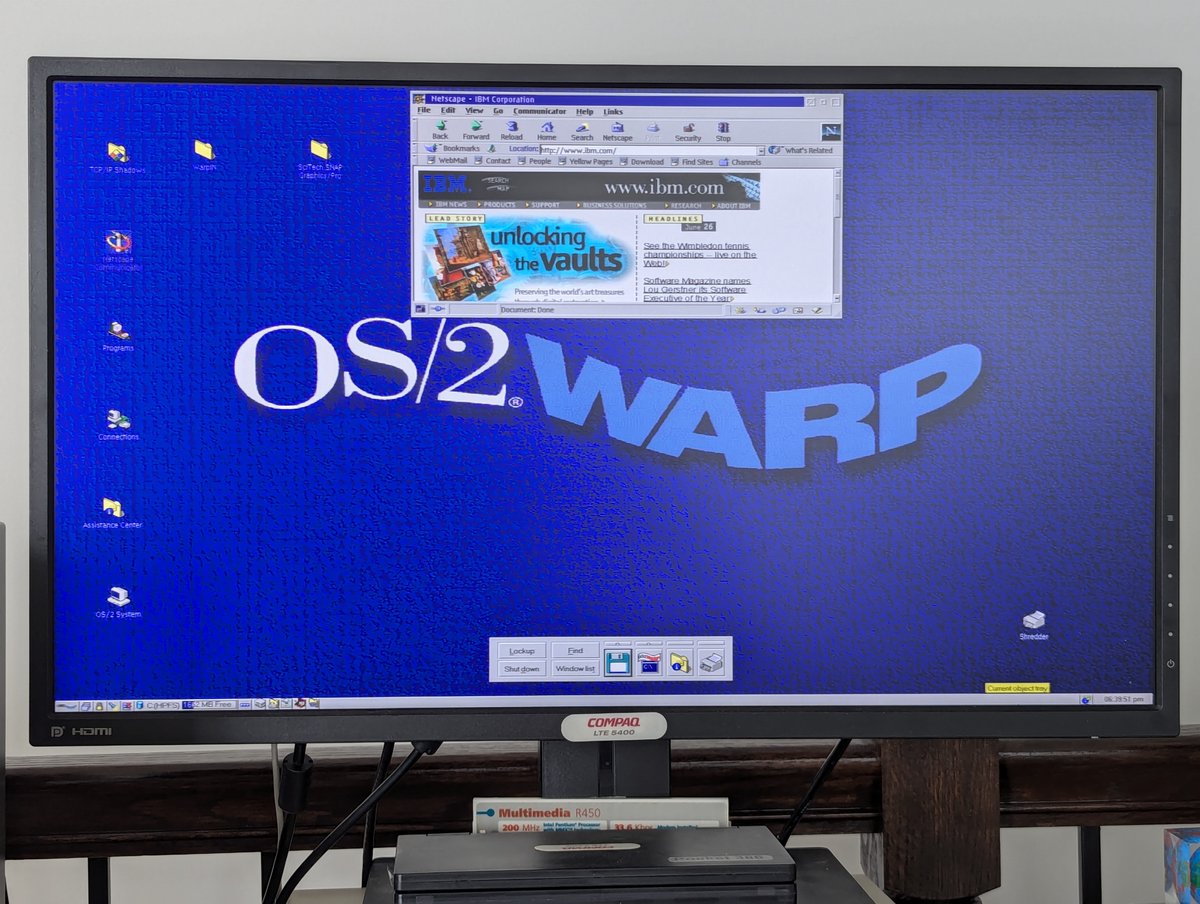
Okay, let's launch a web browser and see if have connectivity. Indeed! Also, I connected up to a share on my Raspberry Pi. Piece of cake!


Next up, we need video support. And... oh my goodness, it is ever AMAZING. We'll install SciTech SNAP Graphics to support our S3 ProSavageDDR card.
More details on which cards it supports here: os2world.com/wiki/index.php…
And installer is here: os2site.com/sw/drivers/vid…
More details on which cards it supports here: os2world.com/wiki/index.php…
And installer is here: os2site.com/sw/drivers/vid…


After reboot, I realized I can choose some PRETTY IMPRESSIVE video modes! We will go with 1920x1200 with 64K colors. Not bad for an old Athlon XP 2400+ system.

Next up, it's time for sound, and we are going to use Uniaud drivers but we need to install WarpIN first. WarpIN was a little hard to find since the website is busted. But we can download it via FTP (). WinSCP to the rescue! ftp.netlabs.org/pub/warpin-1.0…

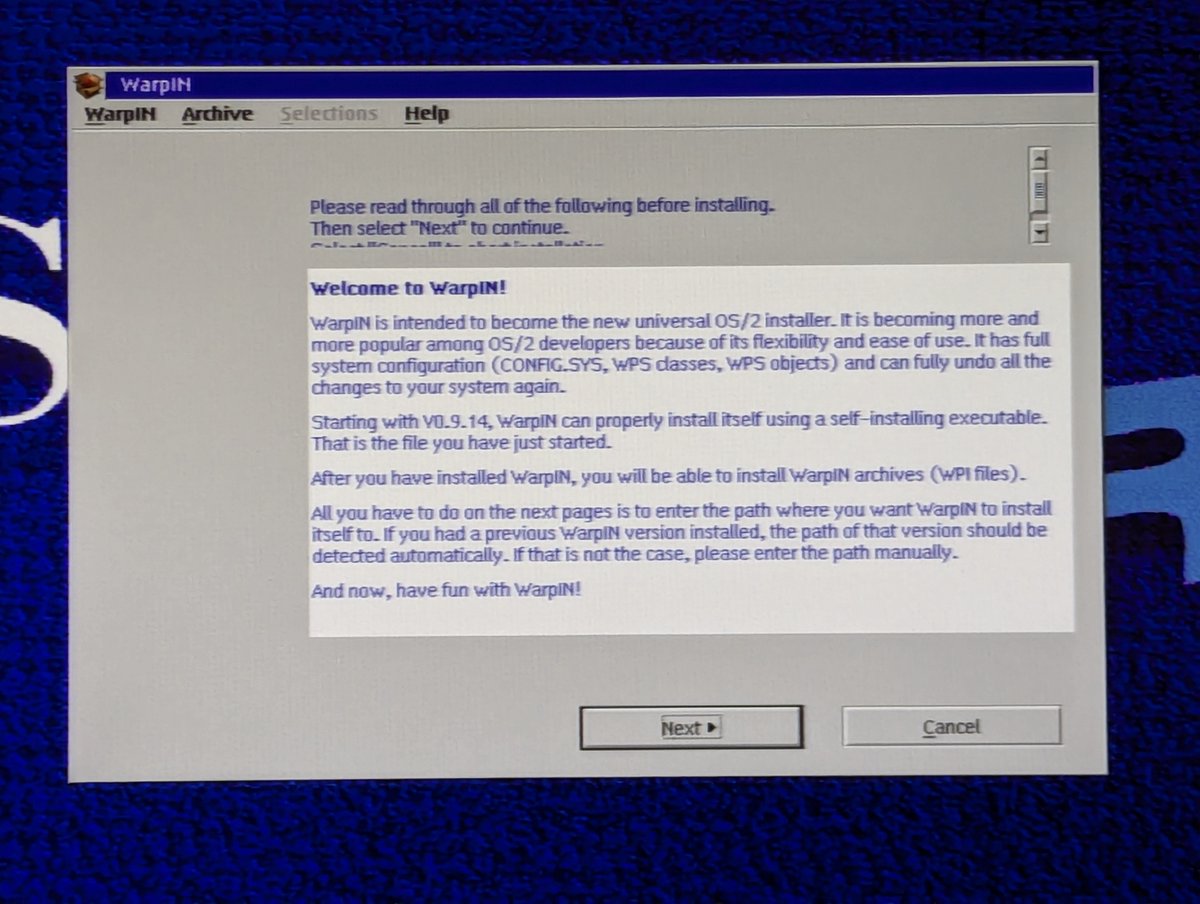


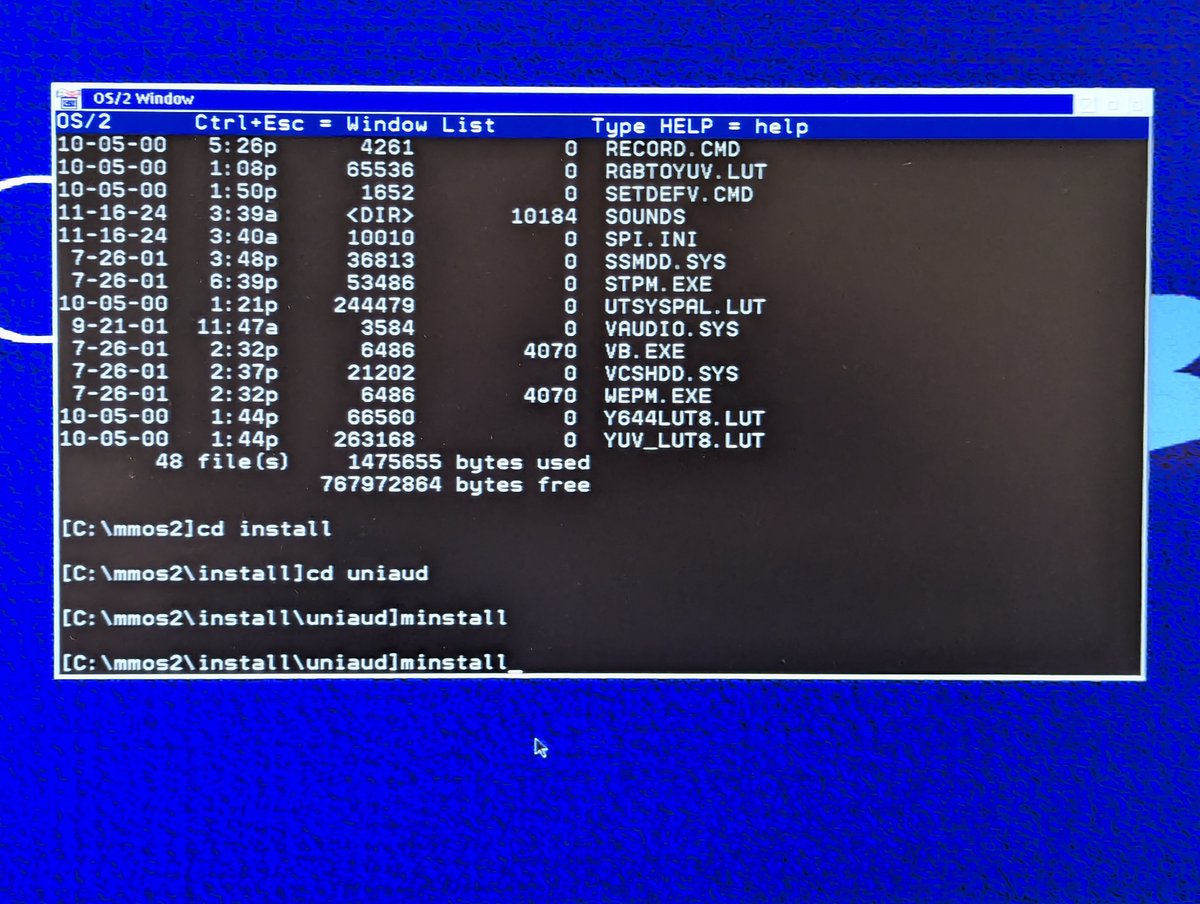
Now we can install the Uniaud drivers. First you run the executable, then you navigate to C:\mmos2\install\uniaud and run "minstall". Select the two "features" to install, and off you go!
Uniaud details: os2world.com/wiki/index.php…
Download details: trac.netlabs.org/uniaud#Downloa…
Uniaud details: os2world.com/wiki/index.php…
Download details: trac.netlabs.org/uniaud#Downloa…


Next up, I wanted the Raspberry Pi share to mount on boot. So, I added a login command (for the user I created during install) and added a "net use" command to C:\startup.cmd.

The next thing I wanted to do? Add audio support to WIN-OS/2. This particular driver only gives us WAV support, but that is fine for me. The driver is winos2_audio_19980501.zip, and you just follow the README on what to do.
Driver here: os2site.com/sw/drivers/aud…
Driver here: os2site.com/sw/drivers/aud…

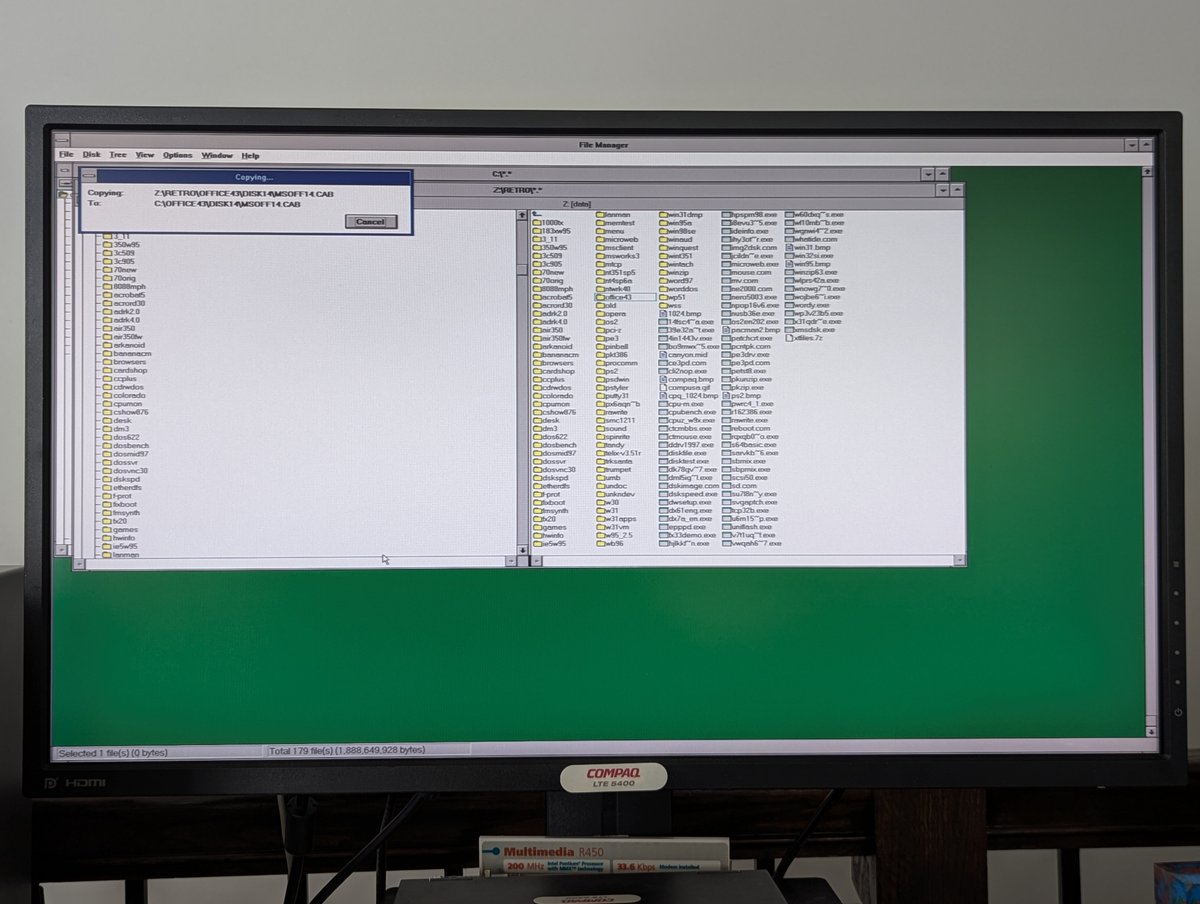
Speaking of Win-OS/2, let's play with it! But, first I made a backup copy of it. From there, I loaded up Win-OS/2 and File Manager, and installed Microsoft Office 4.3 Professional!


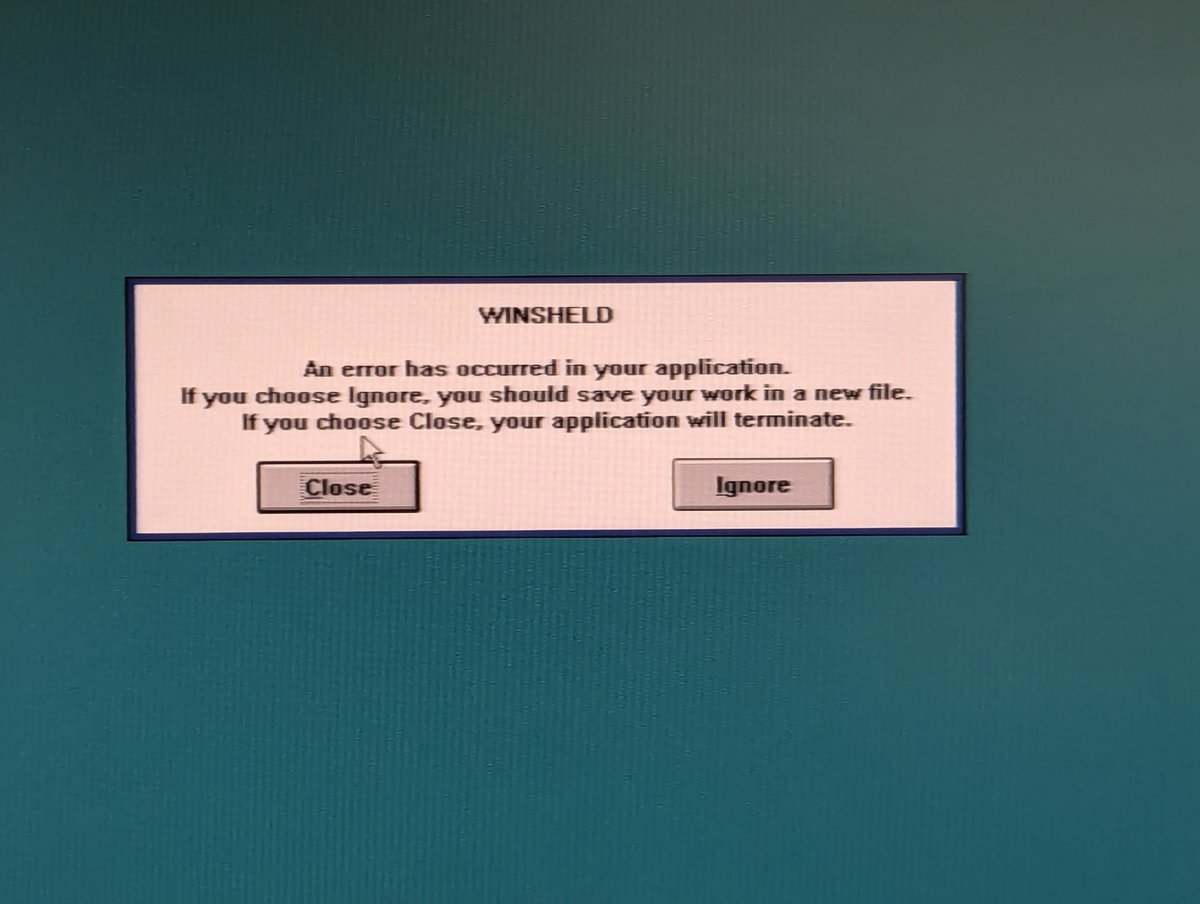
After the MS Office install, I restarted Win-OS/2. And we got this error message. If we hit "close" (which I didn't screenshot, ugh), you'll get an error about msacm.drv that Office installed. So, I opened system.ini and commented it out!

Next, I thought I would install Windows Entertainment Pack. But I got a bizarre error message. What could this be all about??? And why is File Manager showing no space available?


Well, as it ends up, there is a bug for DOS and Win-OS/2 sessions with partitions greater than 2GB. But there is a fix! Applying the "2GB Fix" took care of things. You can find it here: hobbesarchive.com/?detail=/pub/d…


Are you still here? Congrats, you made it to the end 😂. This was a BLAST. And, I think we can thank eComStation for helping to keep OS/2 alive and incentivizing excellent driver support, which benefitted us here.
Thanks for following along!
@threadreaderapp unroll
Thanks for following along!
@threadreaderapp unroll


• • •
Missing some Tweet in this thread? You can try to
force a refresh