tern Profile picture
Nov 24, 2024 25 tweets 13 min read Read on X
A few of the people who were involved in administering the government response to the pandemic really didn't like having to do it.
And they especially didn't like how so many officials would say one thing privately and one thing publicly.

So they kept notes.
I've been sent quite a few of those notes in the last year, and the sad truth is that I just don't have time and energy to work through them all, but having seen those six videos from the UK Covid Inquiry, I feel the need to dig out one transcript that I've had for a while.
It's from a meeting between a load of representatives of healthcare professionals, and policymakers working for various government departments who were making choices about the pandemic response.
As I understand it, the meeting happened somewhere at the start of June 2021.
It starts with an appeal by healthcare workers for better practice and guidance on protective equipment based on the airborne nature of Covid.
And then it ends with them getting fobbed off, ignored, belittled, gaslighted, undermined, and dismissed by the people leading the government response.
It's really something.
I don't have time to go into this in depth, I'm in a really busy week, but I'll try to make a few notes as I go.
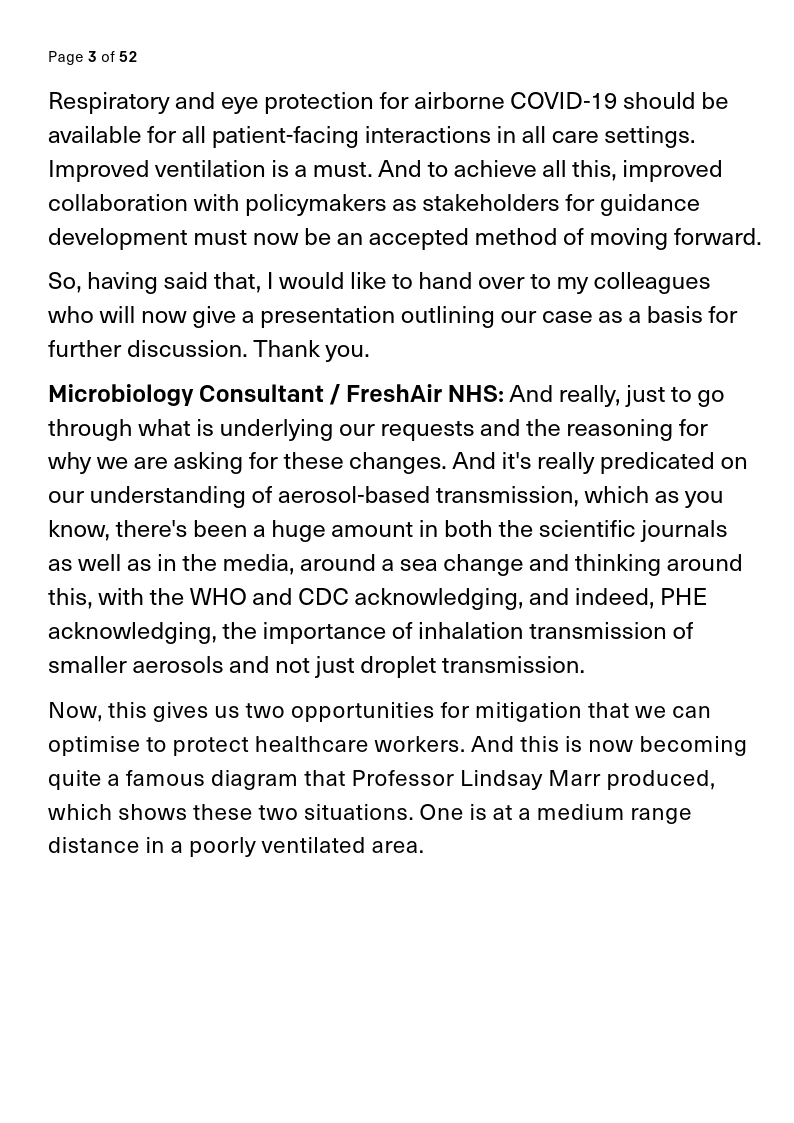
It starts off with the leads of several groups of healthcare professionals laying out the problem, airborne transmission, how it works, and how it is affecting NHS staff. Image
Image
Respiratory and eye protection for airborne COVID-19 should be available for all patient-facing interactions in all care settings. Improved ventilation is a must. And to achieve all this, improved collaboration with policymakers as stakeholders for guidance development must now be an accepted method of moving forward. So, having said that, I would like to hand over to my colleagues who will now give a presentation outlining our case as a basis for further discussion. Thank you. Microbiology Consultant / FreshAir NHS: And really, just to go through what is underlying our requests and the rea...
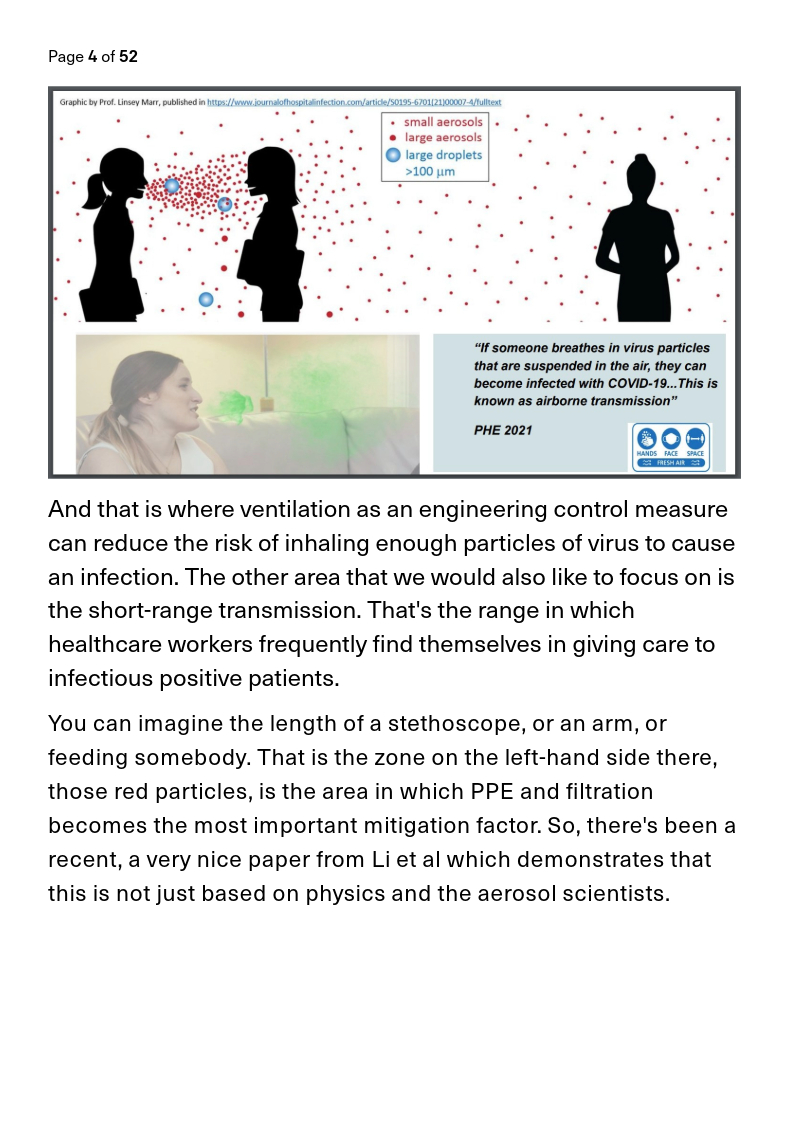
smaller aerosols and not just droplet transmission. Now, this gives us two opportunities for mitigation that we can optimise to protect healthcare workers. And this is now becoming quite a famous diagram that Professor Lindsay Marr produced, which shows these two situations. And that is where ventilation as an engineering control measure can reduce the risk of inhaling enough particles of virus to cause an infection. The other area that we would also like to focus on is the short-range transmission. That's the range in which healthcare workers frequently find themselves in giving care to in...
They go into a lot of brilliant detail.  It's actually a hypothesis that fits the basic observations based on an Einsteinian theory of hypothesis generation and validity of hypotheses, which basically says you can never be 100% sure, but the more information that fits with your hypothesis, the more real it is. And so we can see these things that we're all very, very familiar with, close range dominates, most infection indoors, outdoor occurs, but very much less often, long range occurs very occasionally. All these factors fit with the short-range airborne transmission. And in fact, Sage in April 2021, do also state that when you ...
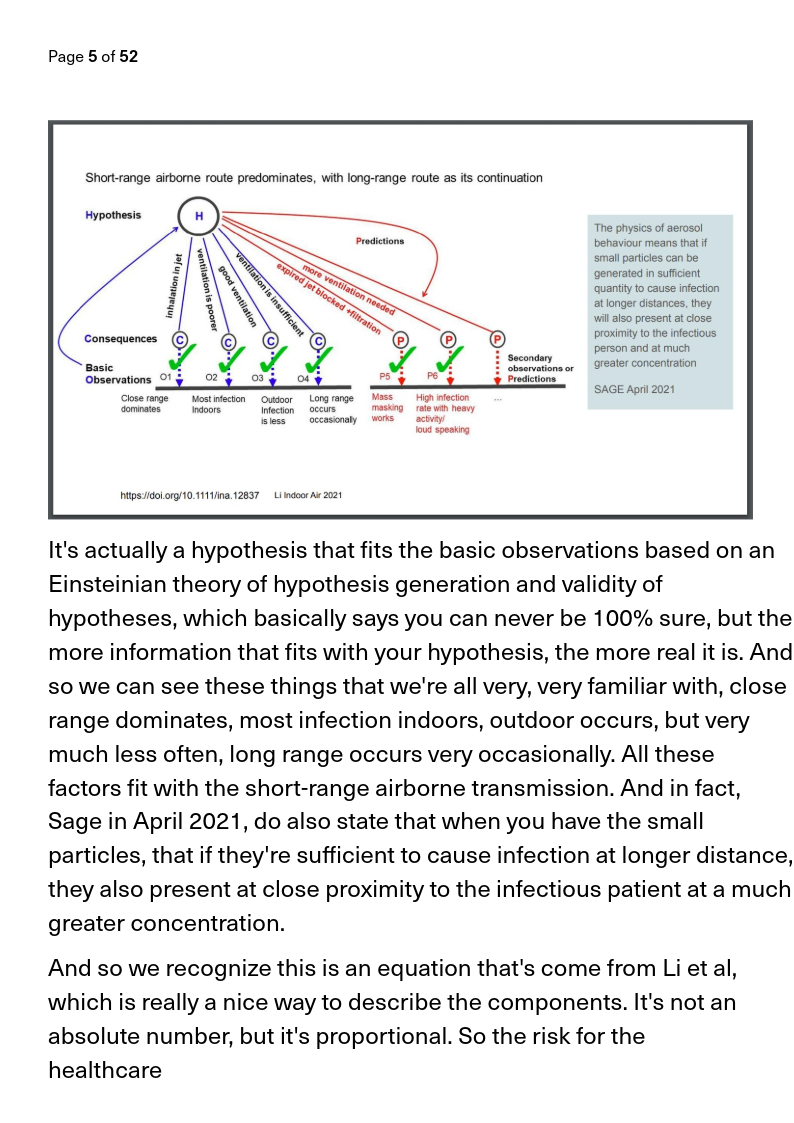
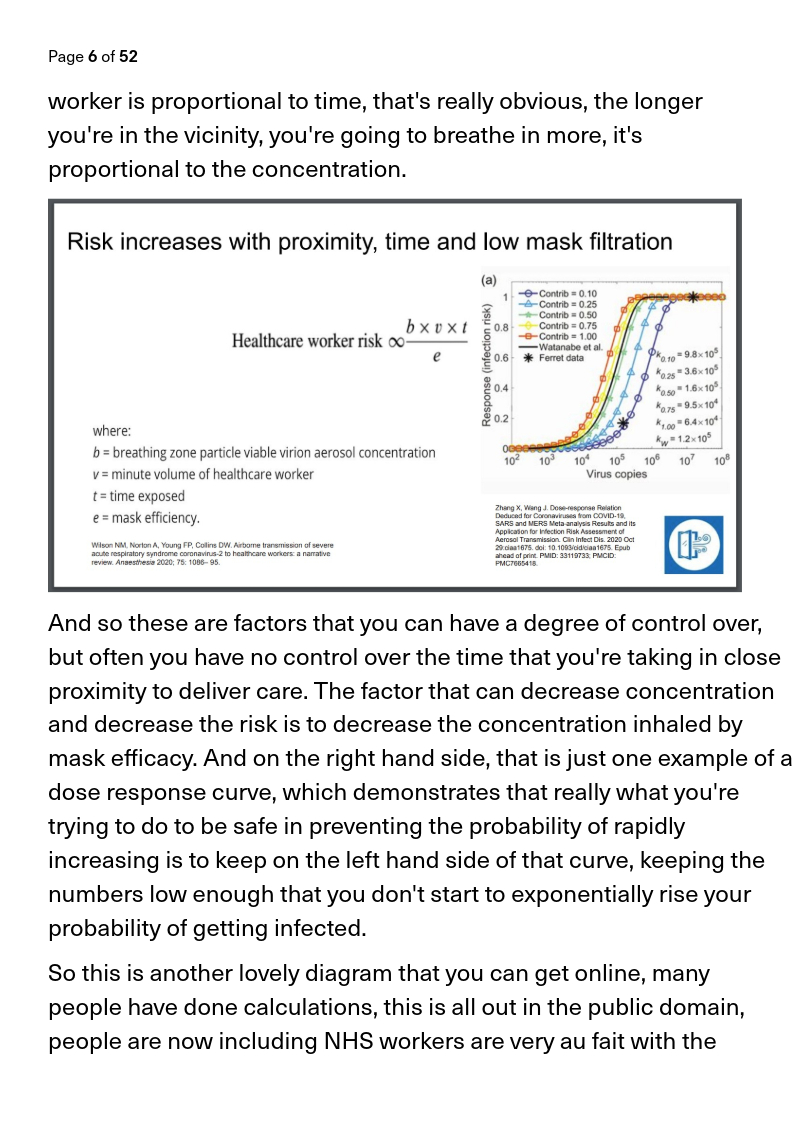
So the risk for the healthcare worker is proportional to time, that's really obvious, the longer you're in the vicinity, you're going to breathe in more, it's proportional to the concentration.    And so these are factors that you can have a degree of control over, but often you have no control over the time that you're taking in close proximity to deliver care. The factor that can decrease concentration and decrease the risk is to decrease the concentration inhaled by mask efficacy. And on the right hand side, that is just one example of a dose response curve, which demonstrates that reall...
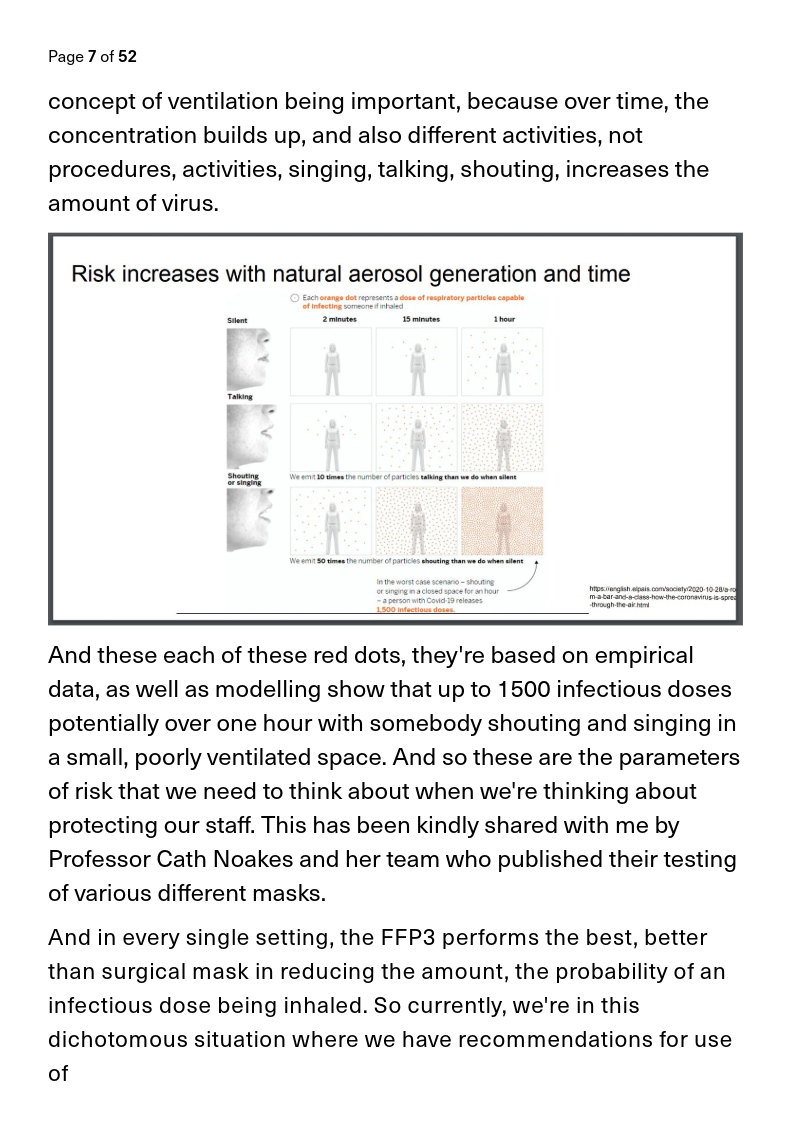
people are now including NHS workers are very au fait with the concept of ventilation being important, because over time, the concentration builds up, and also different activities, not procedures, activities, singing, talking, shouting, increases the amount of virus.    And these each of these red dots, they're based on empirical data, as well as modelling show that up to 1500 infectious doses potentially over one hour with somebody shouting and singing in a small, poorly ventilated space. And so these are the parameters of risk that we need to think about when we're thinking about protect...
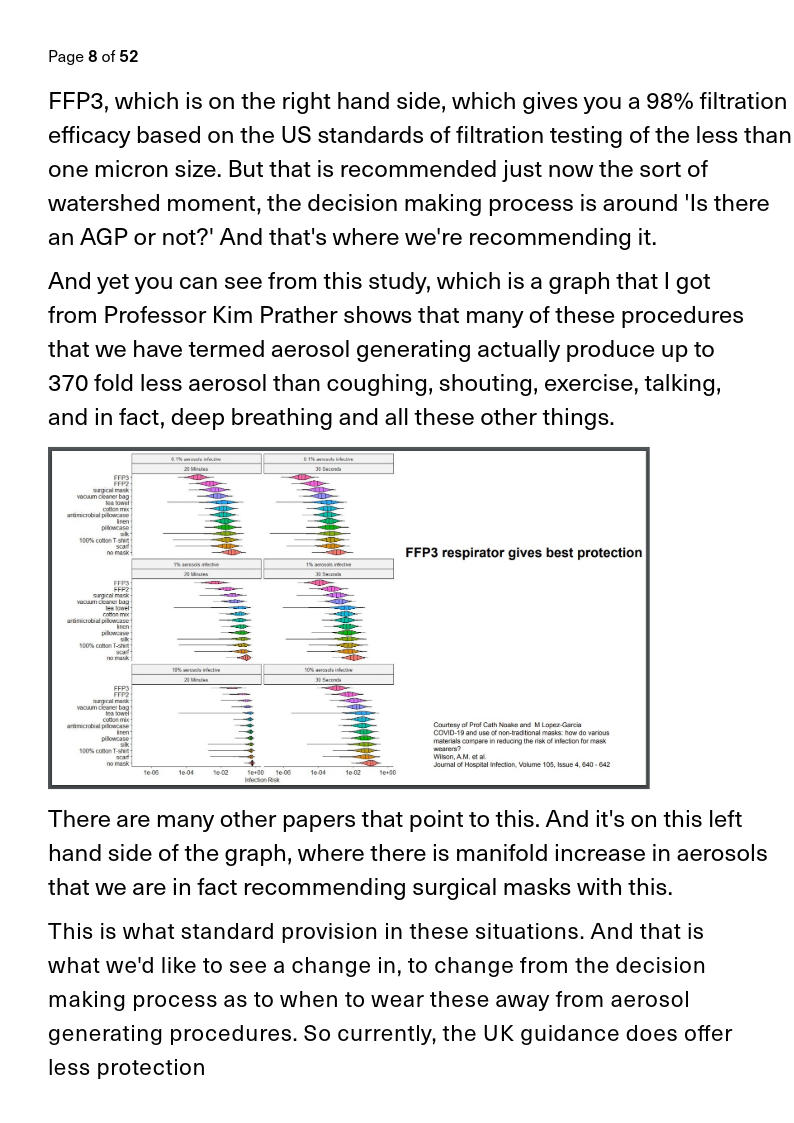
which is on the right hand side, which gives you a 98% filtration efficacy based on the US standards of filtration testing of the less than one micron size. But that is recommended just now the sort of watershed moment, the decision making process is around 'Is there an AGP or not?' And that's where we're recommending it. And yet you can see from this study, which is a graph that I got from Professor Kim Prather shows that many of these procedures that we have termed aerosol generating actually produce up to 370 fold less aerosol than coughing, shouting, exercise, talking, and in fact, deep...
And they explain how it's relevant to people in different situations. Like paramedics going to scary situations. And that is what we'd like to see a change in, to change from the decision making process as to when to wear these away from aerosol generating procedures. So currently, the UK guidance does offer less protection than other nations in the situation that our healthcare workers find themselves in.    CDC clearly says that on entry to a room of a patient with suspected or confirmed SARS-CoV-2, they should use N95s. Now, N95s are more equivalent to FFP2, and we would be using FFP3. But they are using far more respiratory protection than a surgical mask. And they even have a chart demonstrating ...
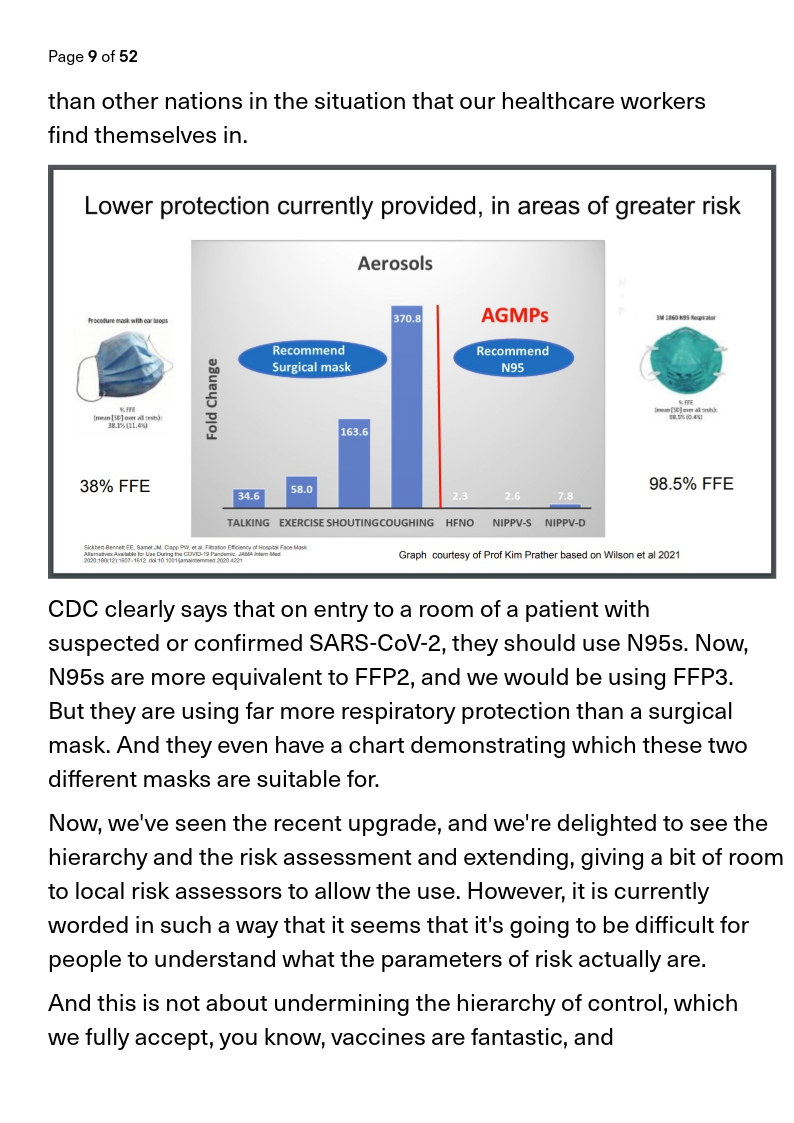
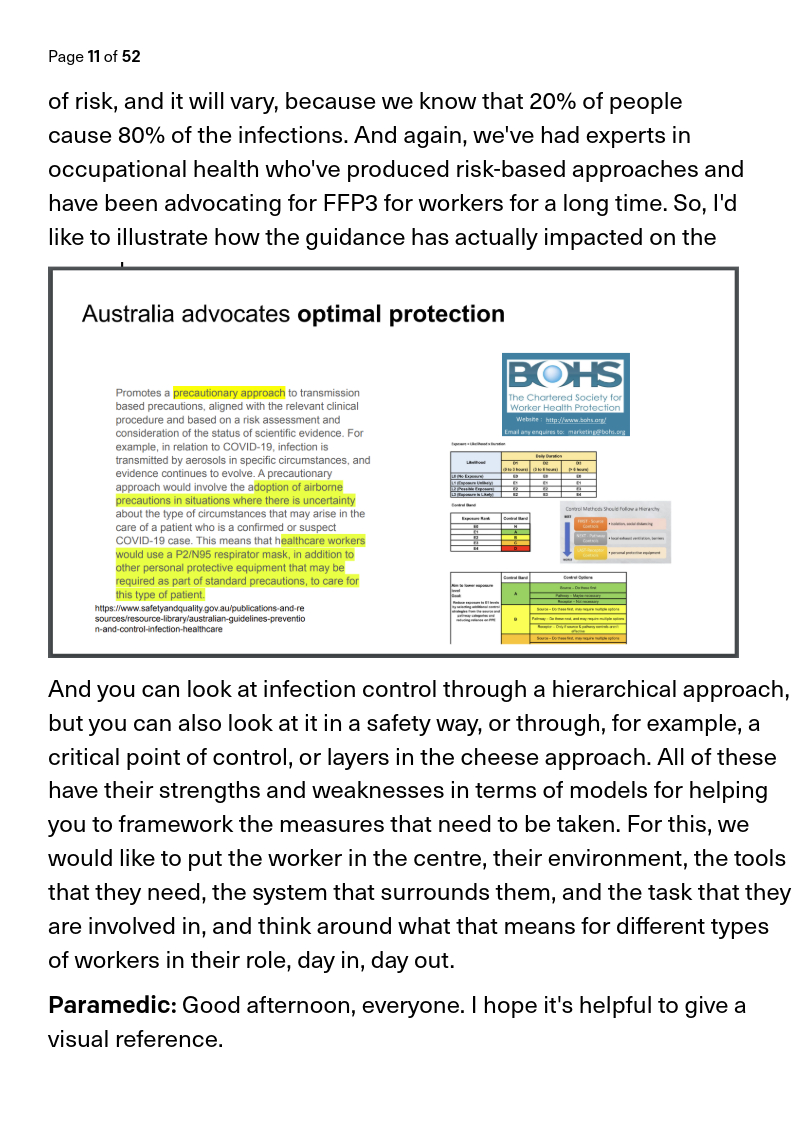
not about undermining the hierarchy of control, which we fully accept, you know, vaccines are fantastic, and ventilation is an engineering control, if you could eliminate the risk, fantastic, all of these matter. This is about the point at which care is being delivered, day in, day out, in millions of interactions for our healthcare workers. It is at that point that PPE, that mask you're wearing, becomes the last barrier between an infectious lung and a non-infected lung. And that is where we would like to see a change. So, we've also seen Australia, the Safety and Quality Guidance equivale...
from a positive patient, and you don't know how much aerosol they're producing, because we don't have the tools available to us to accurately describe the exact level of risk, and it will vary, because we know that 20% of people cause 80% of the infections. And again, we've had experts in occupational health who've produced risk-based approaches and have been advocating for FFP3 for workers for a long time. So, I'd like to illustrate how the guidance has actually impacted on the ground.    And you can look at infection control through a hierarchical approach, but you can also look at it in ...
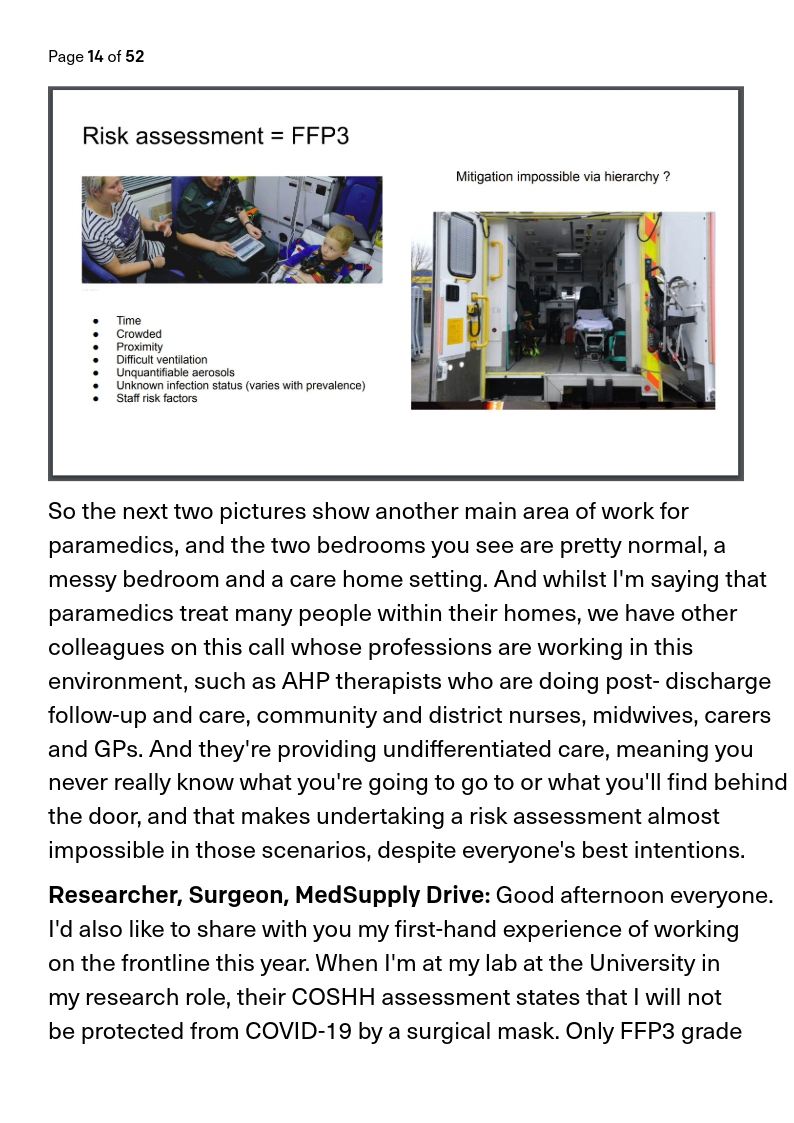
in, and think around what that means for different types of workers in their role, day in, day out. Paramedic: Good afternoon, everyone. I hope it's helpful to give a visual reference.    I'm a very visual person, and I think sometimes the pictures help. But this is one of the main work environments for paramedics and ambulance clinicians, and that first picture on the left shows a fairly standard scene of conveyance and treatment of a child with a parent in attendance. Although, I would have to say, through COVID, patients were mainly transported alone, and many of our clinicians had to ta...
And the level of professionalism and understanding and experience is so clear: And I would suggest few of you will forget the scenes in January 2021, when all the news channels were showing rows of ambulances queuing outside the emergency departments for between four and 17 hours, was the outlier that we found reported from the employers. And whilst that variant of concern that emanated from Kent spread through the Midlands and South East, and London in particular, the College had engaged with the ambulance employers very much at the beginning of COVID, and they all without fail told us they were sticking absolutely to PHE guidance and were consistent in their respons...
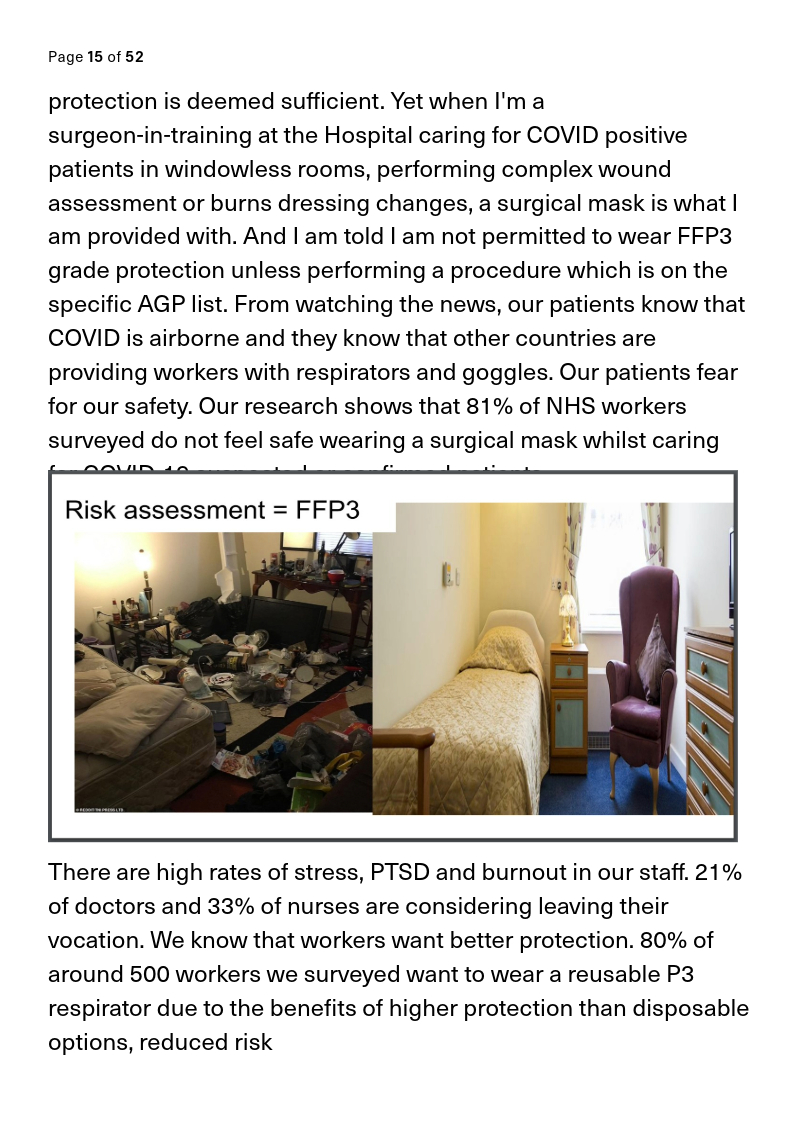
And whatever the intent, it felt to our members like a bit of a lottery between employers, and that's why we urge for the precautionary principle to be applied. And I just ask you to consider whether you would want either yourself or your relative to sit in that space for those lengths of time, because we are seeing the dernand rise again, for reasons other than COVID I have to say, but the risk is still there with the new variants. Next slide please.    So the next two pictures show another main area of work for paramedics, and the two bedrooms you see are pretty normal, a messy bedroom an...
you're going to go to or what you'll find behind the door, and that makes undertaking a risk assessment almost impossible in those scenarios, despite everyone's best intentions. Researcher, Surgeon, MedSupply Drive: Good afternoon everyone. I'd also like to share with you my first-hand experience of working on the frontline this year. When I'm at my lab at the University in my research role, their COSHH assessment states that I will not be protected from COVID-19 by a surgical mask. Only FFP3 grade protection is deemed sufficient. Yet when I'm a surgeon-in-training at the Hospital caring fo...
with respirators and goggles. Our patients fear for our safety. Our research shows that 81% of NHS workers surveyed do not feel safe wearing a surgical mask whilst caring for COVID-19 suspected or confirmed patients.   There are high rates of stress, PTSD and burnout in our staff. 21% of doctors and 33% of nurses are considering leaving their vocation. We know that workers want better protection. 80% of around 500 workers we surveyed want to wear a reusable P3 respirator due to the benefits of higher protection than disposable options, reduced risk of PPE shortages and for their environment...
And you get discipline after discipline represented by eloquent, informed, intelligent advocates. Workers who are from Black or Asian ethnicity have the highest death rates from COVID. One study suggested that young females working in the NHS have 50% greater risk of death from COVID than age-matched controls in the general population. Deaths from COVID-19 are not occurring in workers who are working in areas deemed high risk by the guidelines. The highest rates are occurring in so-called low risk or non AGP zones. These are the areas where ventilation is not prioritised and FFP3 respiratory and eye protection is not currently provided. Seroprevalence studies from multiple UK centres in...
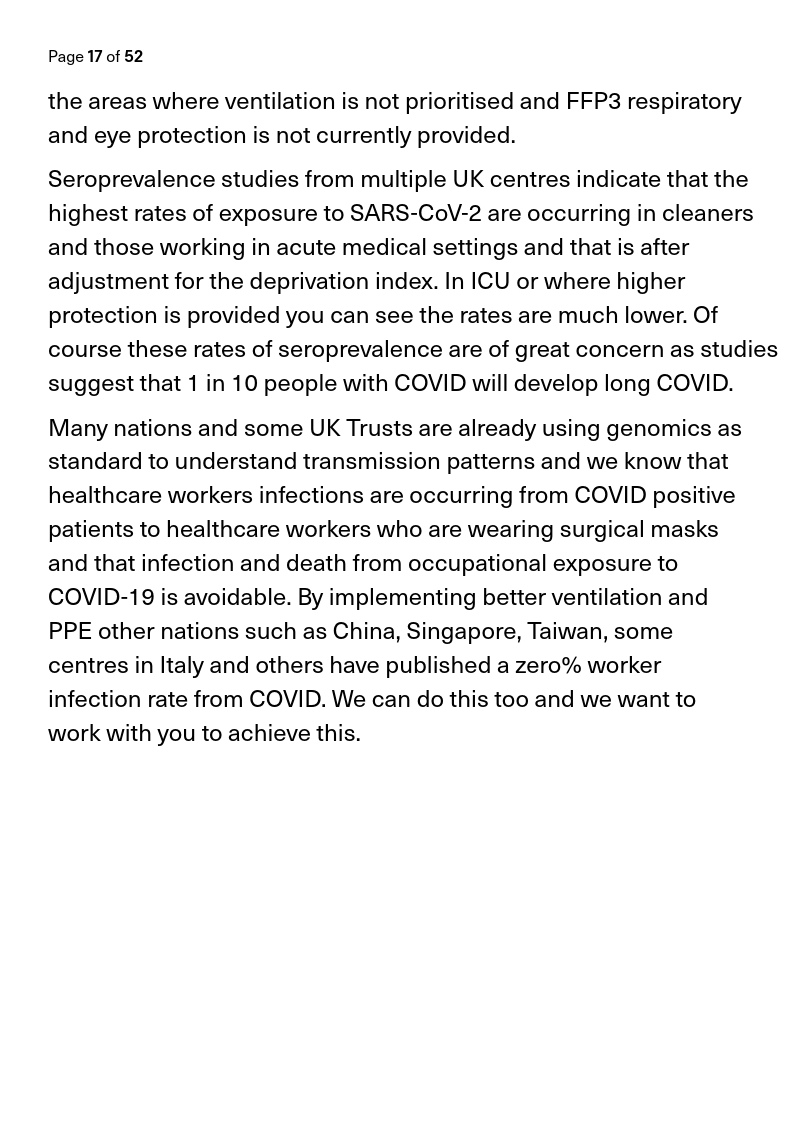
Many nations and some UK Trusts are already using genomics as standard to understand transmission patterns and we know that healthcare workers infections are occurring from COVID positive patients to healthcare workers who are wearing surgical masks and that infection and death from occupational exposure to COVID-19 is avoidable. By implementing better ventilation and PPE other nations such as China, Singapore, Taiwan, some centres in Italy and others have published a zero% worker infection rate from COVID. We can do this too and we want to work with you to achieve this.    In Addenbrooke H...
The UK has the exciting opportunity to be a world leader in innovative PPE by providing our workforce with reusable respiratory protection and goggles. They have higher protection than disposable options and are much better for the environment. We know the government has spent over 18 million pounds on PPE. From my experience on the frontline the majority of this is single-use and will now have been incinerated. We know that disposable FFP3 masks cost around three to five pounds and they last for a maximum of around eight hours whereas reusable P3 respirators cost around 15 pounds and last ...
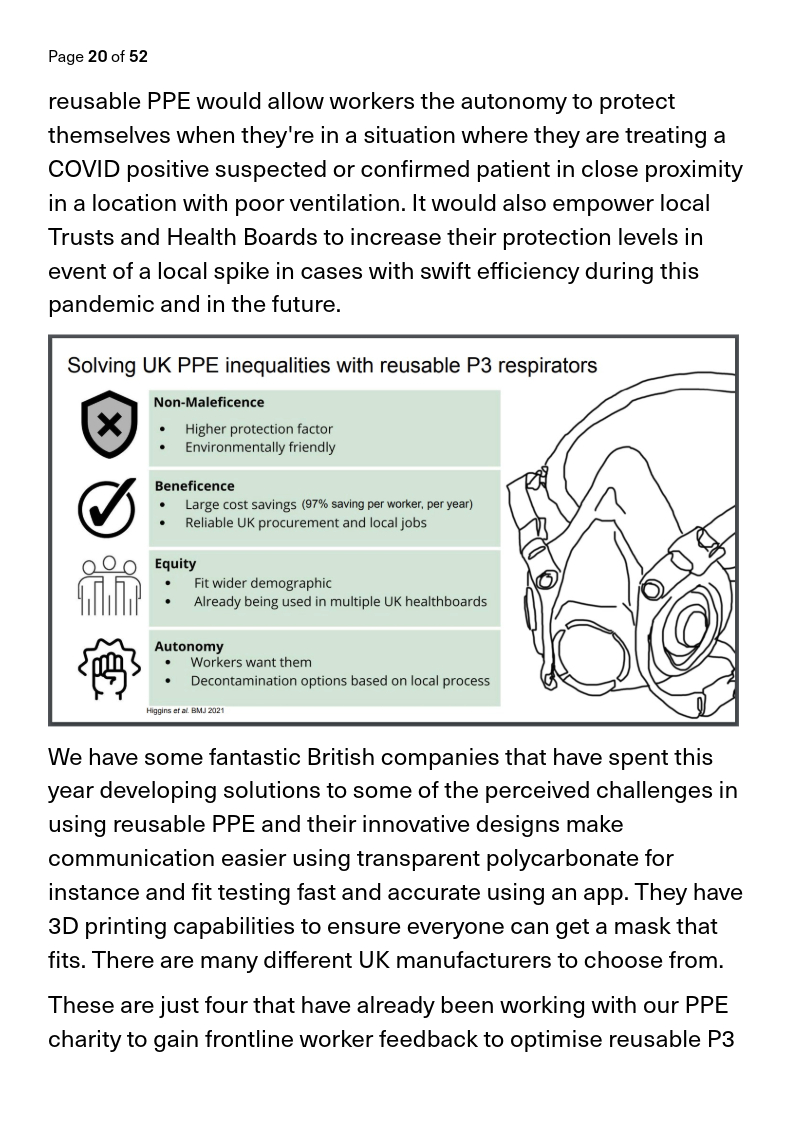
Wigan for instance provided every member of their 5,000 strong workforce with a respirator in the first wave. Nottingham also supplied 3,000 of their workers with a reusable respirator. These programmes have been successful. A national programme would resolve the postcode lottery and PPE equity that currently exists. A national programme of high quality reusable PPE would allow workers the autonomy to protect themselves when they're in a situation where they are treating a COVID positive suspected or confirmed patient in close proximity in a location with poor ventilation. It would also emp...
Practical suggestions.
Solutions provided. They have 3D printing capabilities to ensure everyone can get a mask that fits. There are many different UK manufacturers to choose from. These are just four that have already been working with our PPE charity to gain frontline worker feedback to optimise reusable P3 respirators for care settings. All of these companies want to invest further in the UK. This would mean frontline workers are provided with the PPE they want, need and deserve and we want to collaborate with you to support you in achieving these aims. Gastroenterology Consultant: Thanks very much. I'm a physician in Southampton...
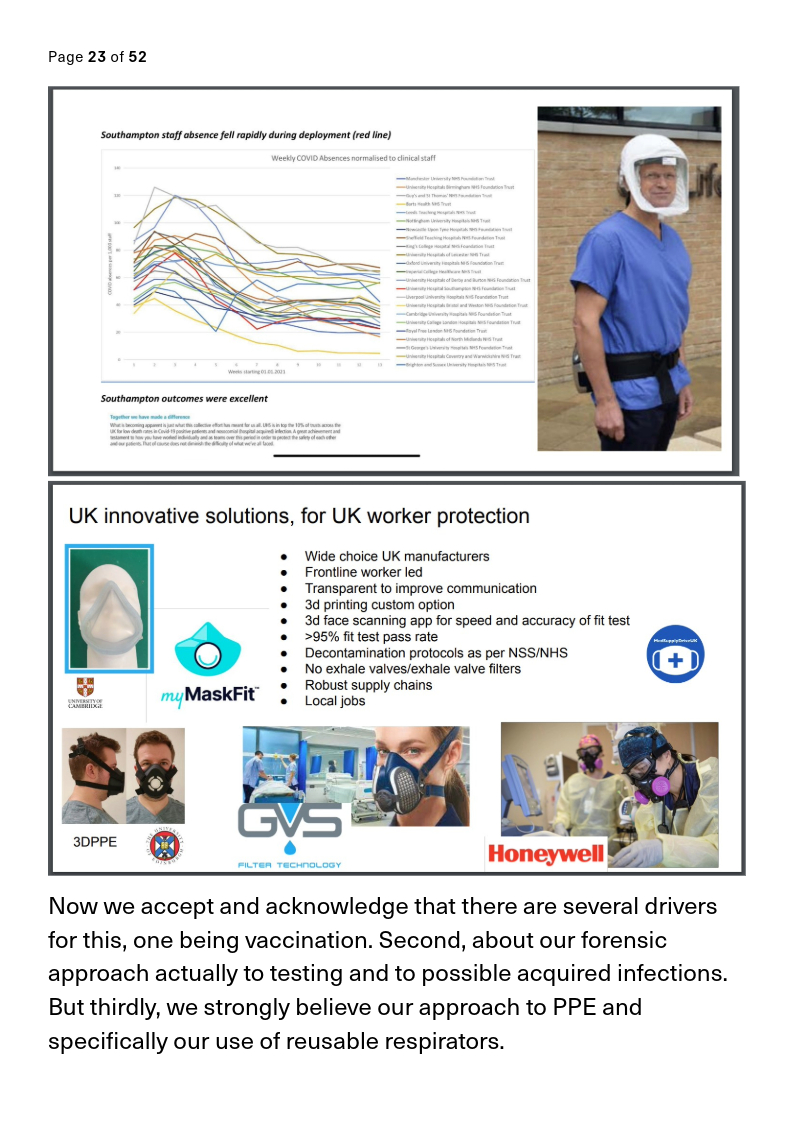
He works in the TB lab and had understood very early on that some of the protection they use in the TB lab could be scaled up with production units for personal respirators. So he and colleagues have developed the Perso hood which is a personal reusable respirator. It's gone through safety standards and inspections with BSI, HSE and CE marks and we have managed to scale this up for our organisation such that all frontline healthcare workers have access to a Perso hood and that includes porters for example who have a roving role around the organisation, cleaners and all our healthcare staff....
We are the red line and we see over the weeks since January this year, rapid fall in staff sickness rates.    Now we accept and acknowledge that there are several drivers for this, one being vaccination. Second, about our forensic approach actually to testing and to possible acquired infections. But thirdly, we strongly believe our approach to PPE and specifically our use of reusable respirators.  So we believe we've found a solution that's worked well for our staff and worked well for our patients. RCN (IPC): Thank you. So coming towards the end of the presentation now, we just wanted to s...
into this pandemic. At a time when cases and hospital admissions are once again sadly rising, we do need guidance that reflects dynamic epidemiological and care situations, given the projected longevity of this pandemic. We are all very clear that we have a long, long way to go with this. The risks and concerns our members express are very real, despite the positivity of the vaccination programme. And people are genuinely and remain genuinely frightened of infection, including serious illness, or actually increasingly now the development of long COVID. The prevention of infection is a key p...
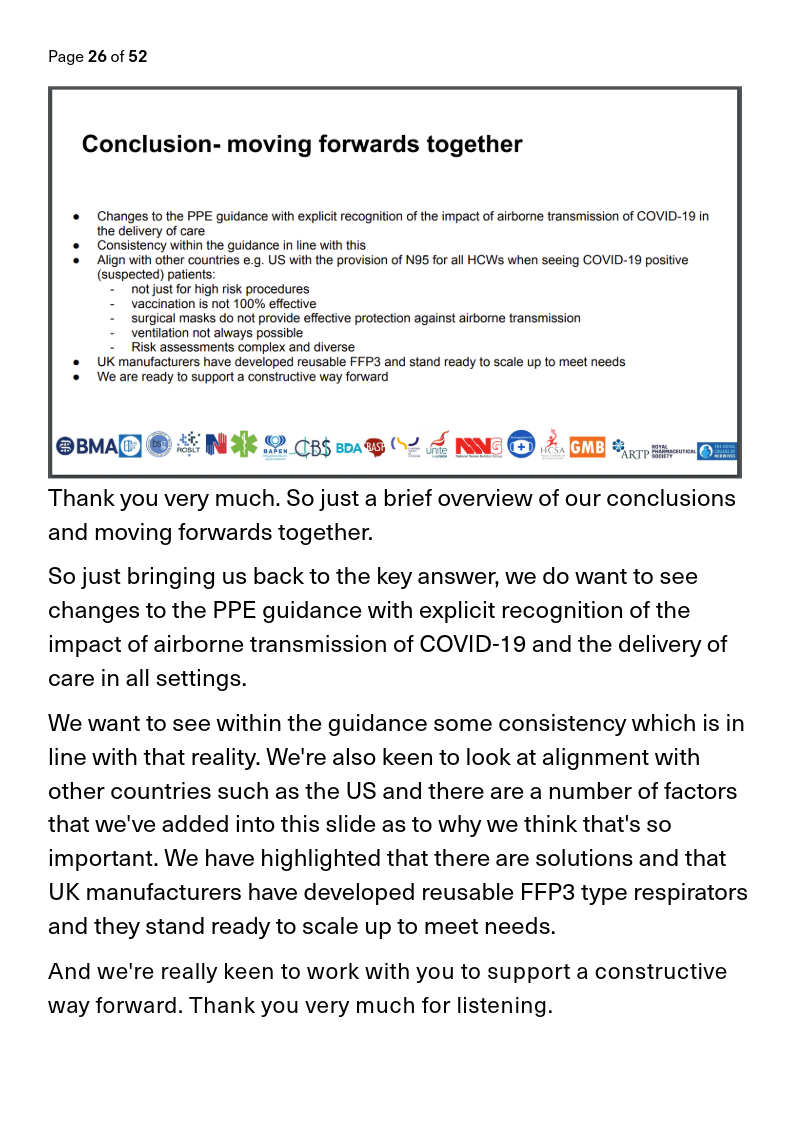
And then comes the government response... AGP-A/RCSLT: Next slide please.   Thank you very much. So just a brief overview of our conclusions and moving forwards together. So just bringing us back to the key answer, we do want to see changes to the PPE guidance with explicit recognition of the impact of airborne transmission of COVID-19 and the delivery of care in all settings. We want to see within the guidance some consistency which is in line with that reality. We're also keen to look at alignment with other countries such as the US and there are a number of factors that we've added into this slide as to why we think that's so im...
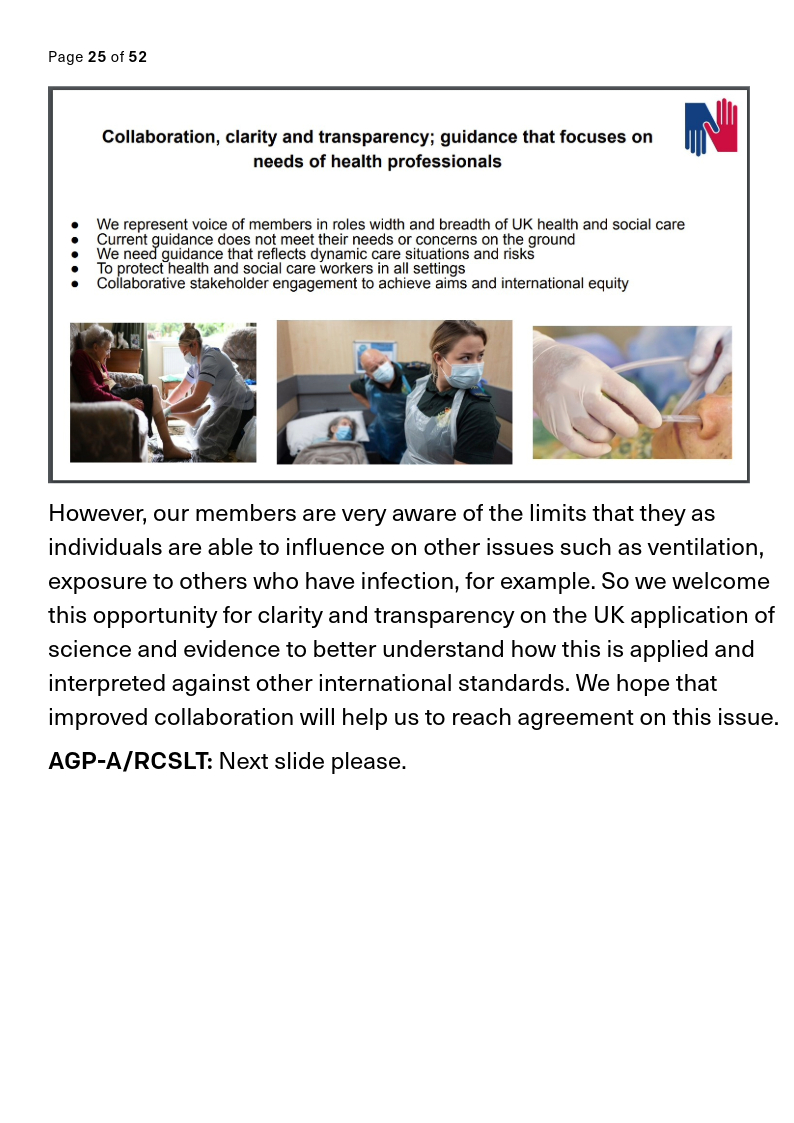
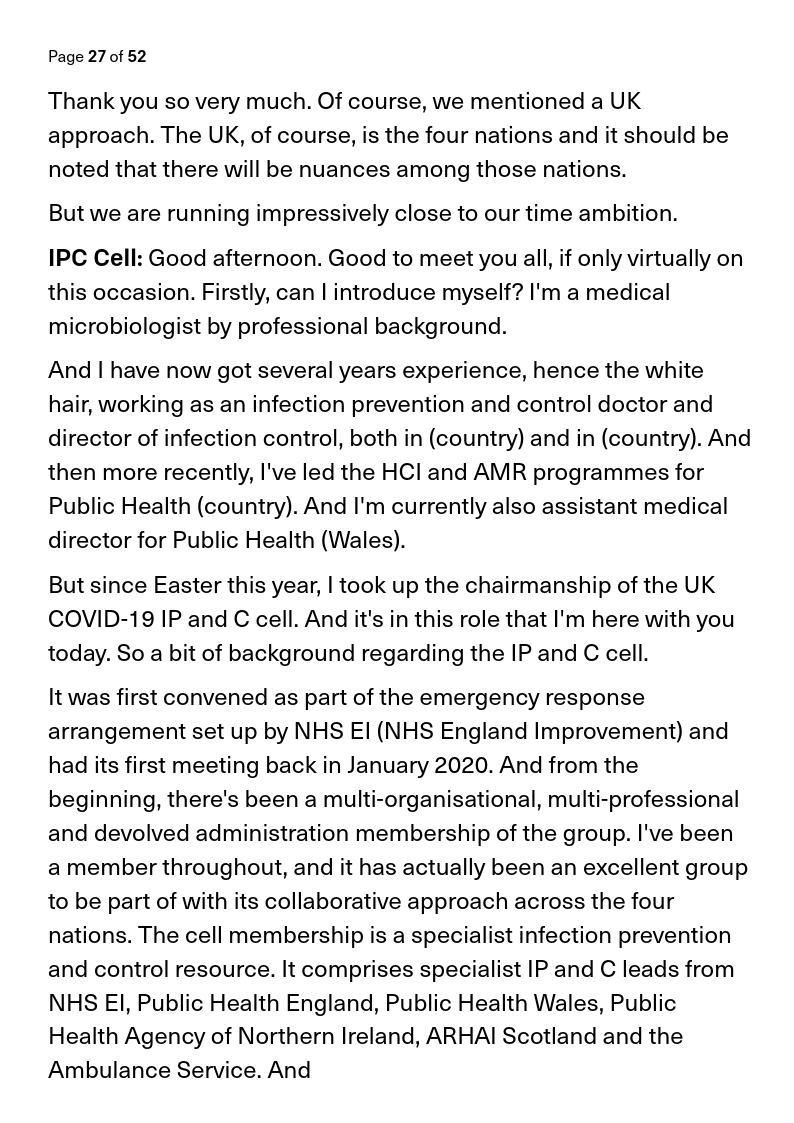
be noted that there will be nuances among those nations. But we are running impressively close to our time ambition. IPC Cell: Good afternoon. Good to meet you all, if only virtually on this occasion. Firstly, can I introduce myself? I'm a medical microbiologist by professional background. And I have now got several years experience, hence the white hair, working as an infection prevention and control doctor and director of infection control, both in (country) and in (country). And then more recently, I've led the HCI and AMR programmes for Public Health (country). And I'm currently also as...
And from the beginning, there's been a multi-organisational, multi-professional and devolved administration membership of the group. I've been a member throughout, and it has actually been an excellent group to be part of with its collaborative approach across the four nations. The cell membership is a specialist infection prevention and control resource. It comprises specialist IP and C leads from NHS EI, Public Health England, Public Health Wales, Public Health Agency of Northern Ireland, ARHAI Scotland and the Ambulance Service. And our role throughout has been to provide that specialist...
guidance and literature reviews undertaken by organisations and bodies such as our ARHAI Scotland, SAGE, NERVTAG and more recently, the independent AGP panel, which has been set up during the response. So the IP and C cell both reviews the guidance of others and the literature, but also responds to queries and inputs, updating the guidance as necessary. So we've been meeting very, very regularly. The meetings have stepped down to 5 days a week from May 2020. And then in more recent times, we've been holding the collaborative meeting on a weekly basis with the secretariat of the IP and C gui...
... which just feels like a load of gaslighting, misdirection, avoidance of the question, and you can read the frustration from the people involved in the meeting... . Certainly, I've been pleased to be part of it. And it does produce guidance that's issued on a UK wide basis with a consistent approach. But of course, as has been mentioned earlier, healthcare is a devolved responsibility. So the implementation and use of the guidance then sits with the healthcare services as run by each of the four nations. As you know, and we've alluded to earlier in this meeting, the most recent update to the guidance was published a couple of days ago on the 1st of June. And the latest iteration Includes amendments to strengthen the existing messaging that was within...
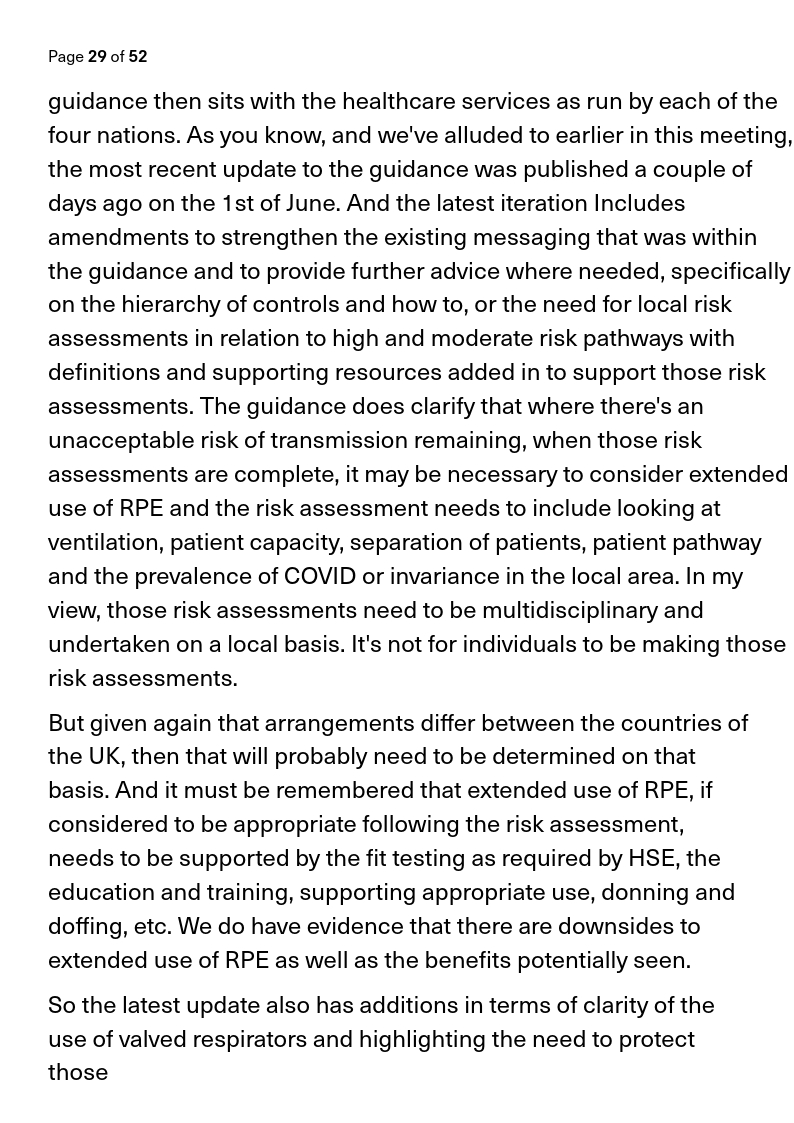
are complete, it may be necessary to consider extended use of RPE and the risk assessment needs to include looking at ventilation, patient capacity, separation of patients, patient pathway and the prevalence of COVID or invariance in the local area. In my view, those risk assessments need to be multidisciplinary and undertaken on a local basis. It's not for individuals to be making those risk assessments. But given again that arrangements differ between the countries of the UK, then that will probably need to be determined on that basis. And it must be remembered that extended use of RPE, i...
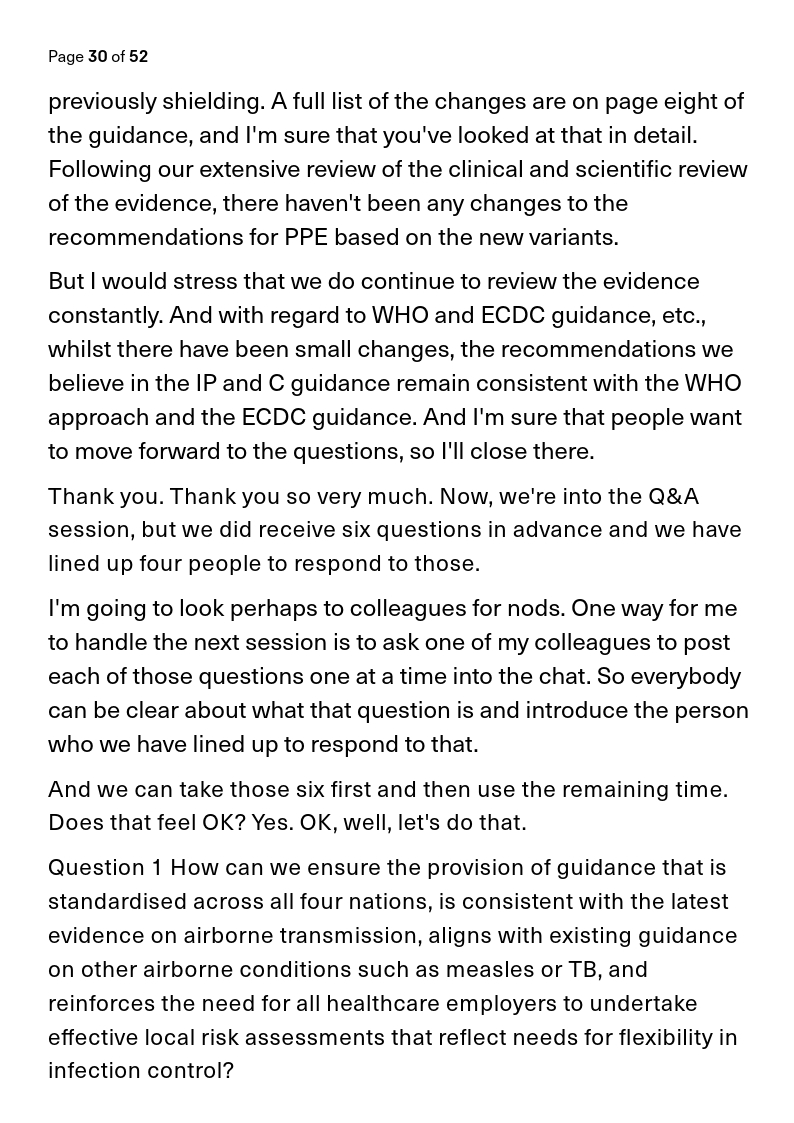
respirators and highlighting the need to protect those previously shielding. A full list of the changes are on page eight of the guidance, and I'm sure that you've looked at that in detail. Following our extensive review of the clinical and scientific review of the evidence, there haven't been any changes to the recommendations for PPE based on the new variants. But I would stress that we do continue to review the evidence constantly. And with regard to WHO and ECDC guidance, etc., whilst there have been small changes, the recommendations we believe in the IP and C guidance remain consisten...
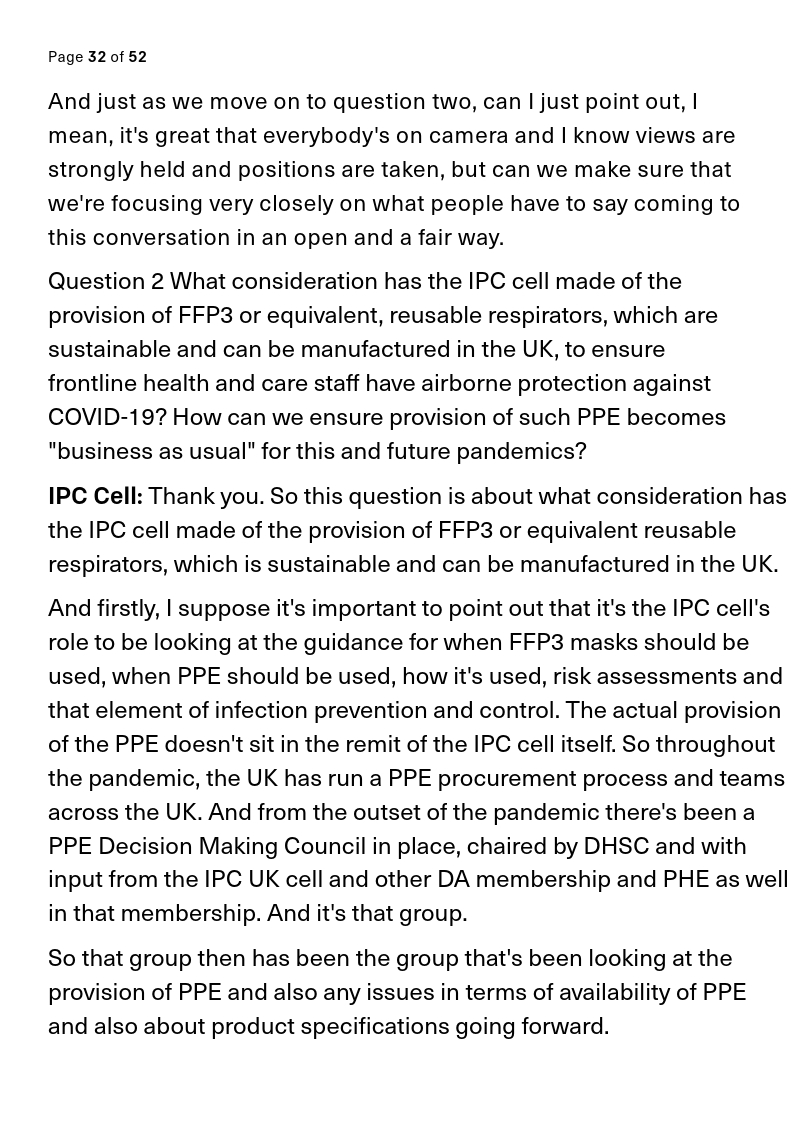
of my colleagues to post each of those questions one at a time into the chat. So everybody can be clear about what that question is and introduce the person who we have lined up to respond to that. And we can take those six first and then use the remaining time. Does that feel OK? Yes. OK, well, let's do that. Question 1 How can we ensure the provision of guidance that is standardised across all four nations, is consistent with the latest evidence on airborne transmission, aligns with existing guidance on other airborne conditions such as measles or TB, and reinforces the need for all healt...
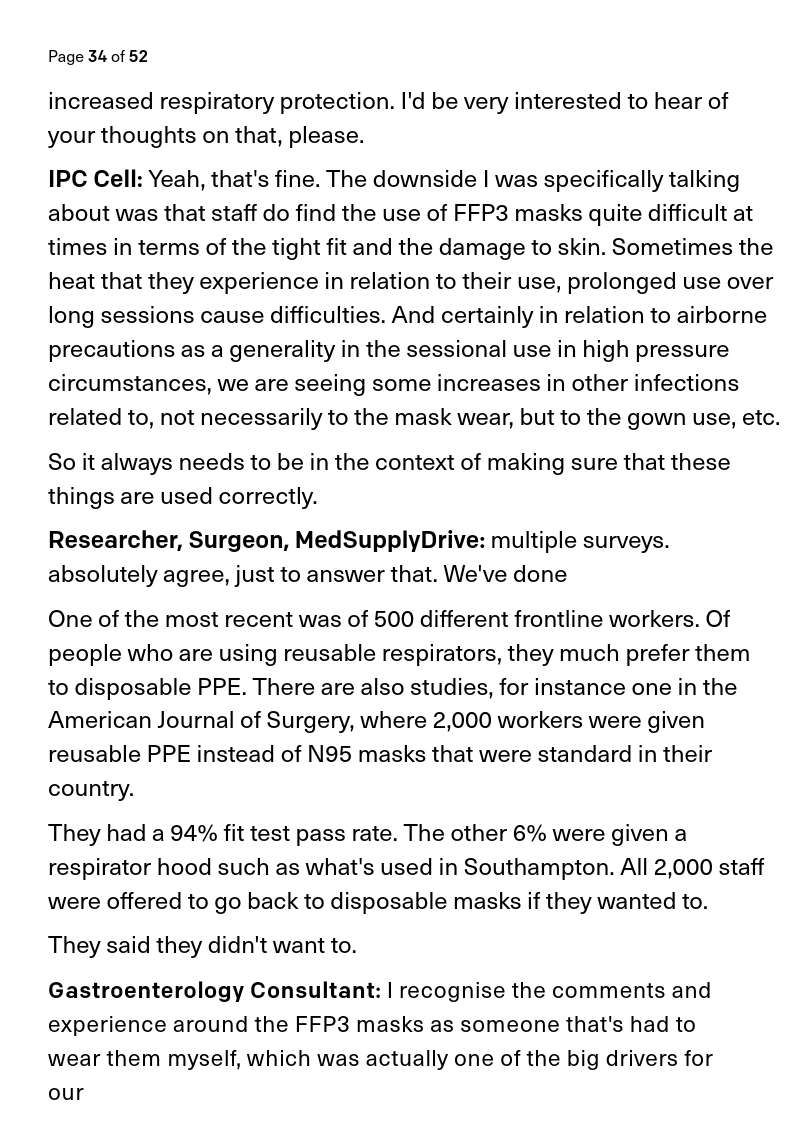
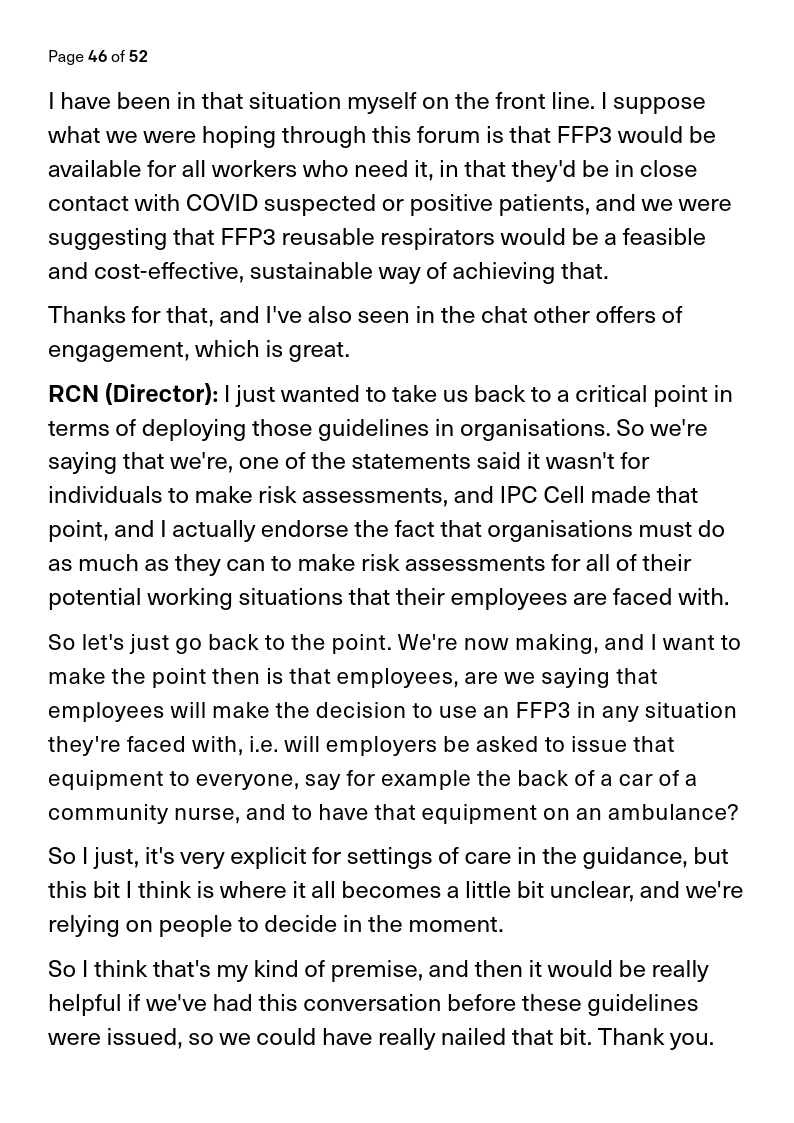
... you ever been in a zoom meeting where you can read the disbelief, anger, and frustration just from the people on camera... Image
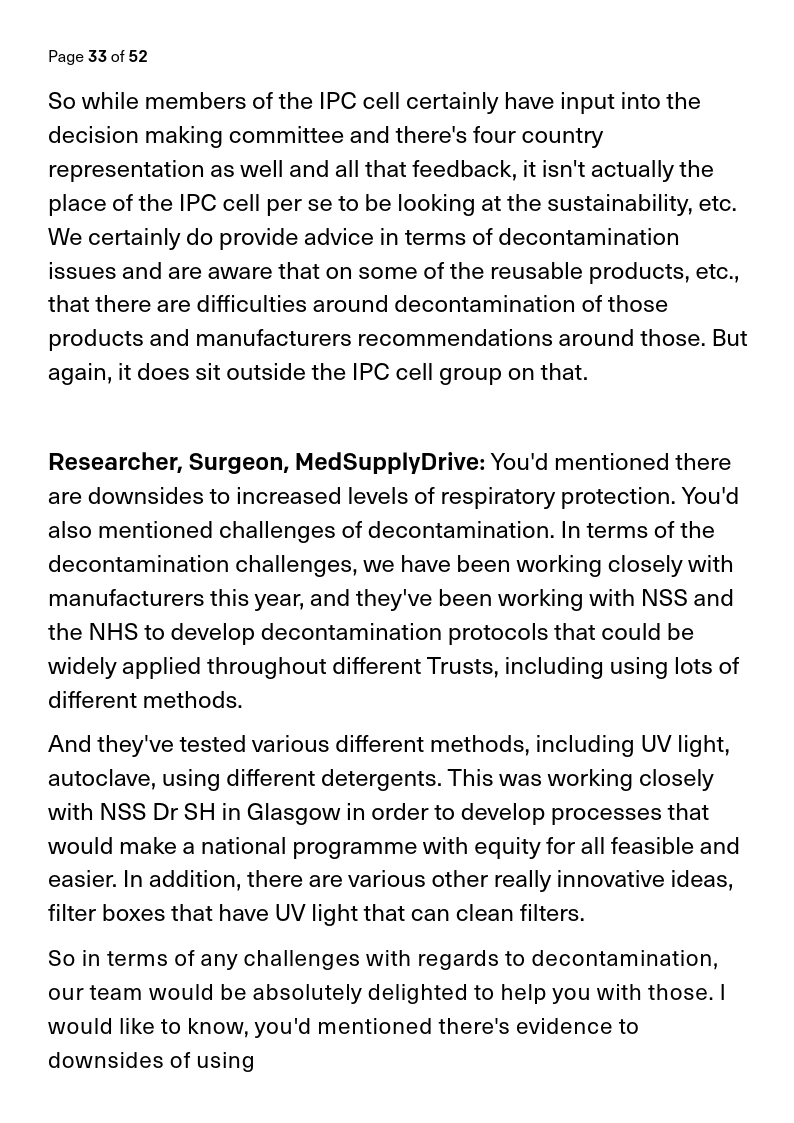
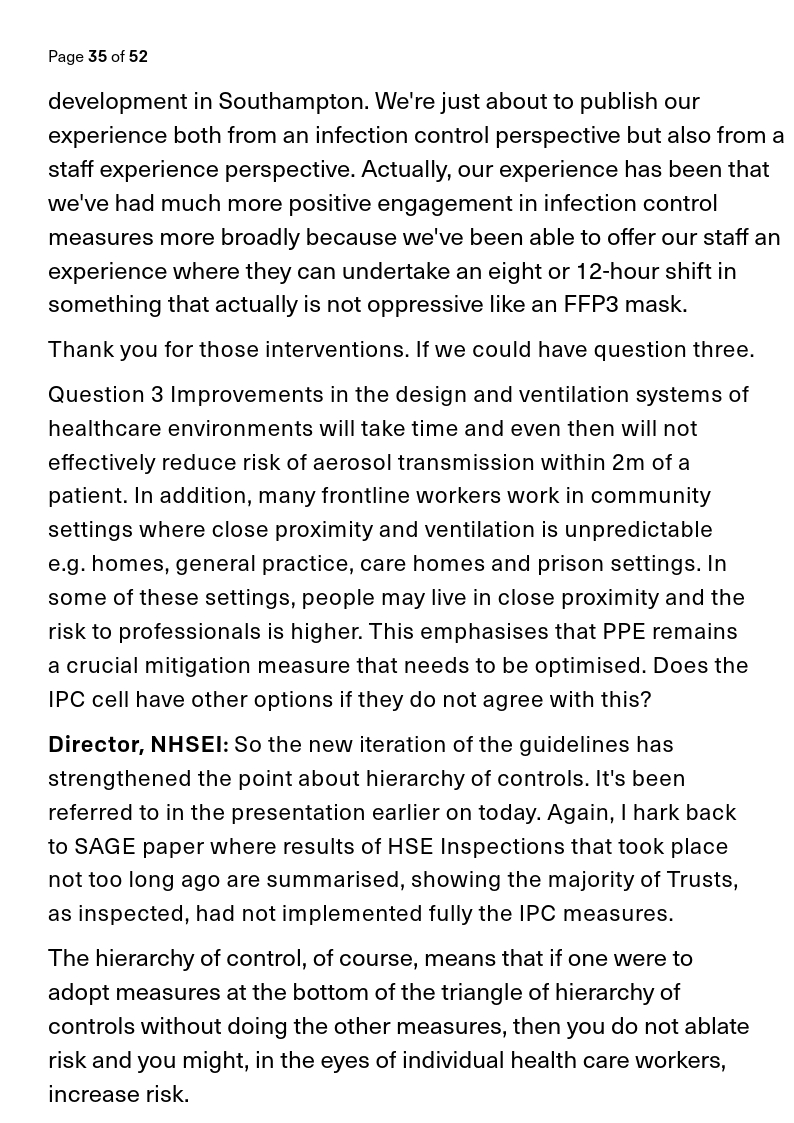
Image
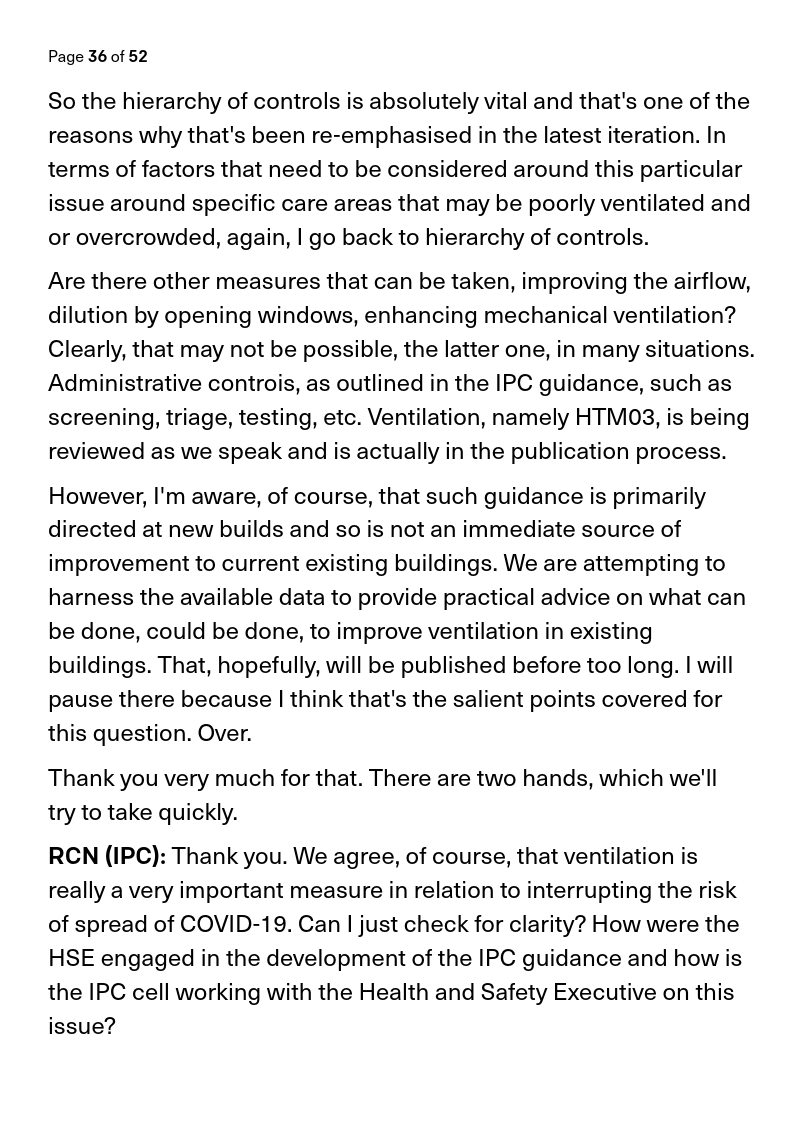
Image
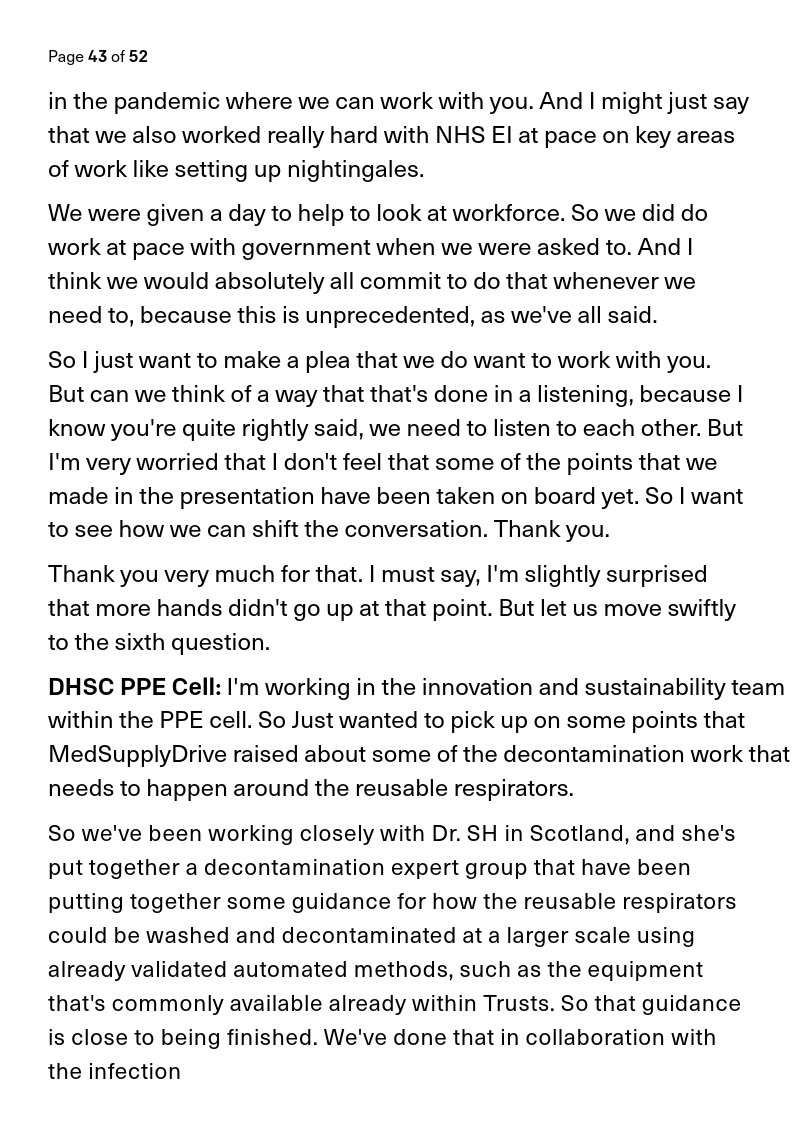
Image
I can't fit all the alt text on the images - I'm going to share it in a single tweet at the end of the image part of the thread...
And you don't need to read the frustration from the faces on camera... because then they start to say it out loud... Image
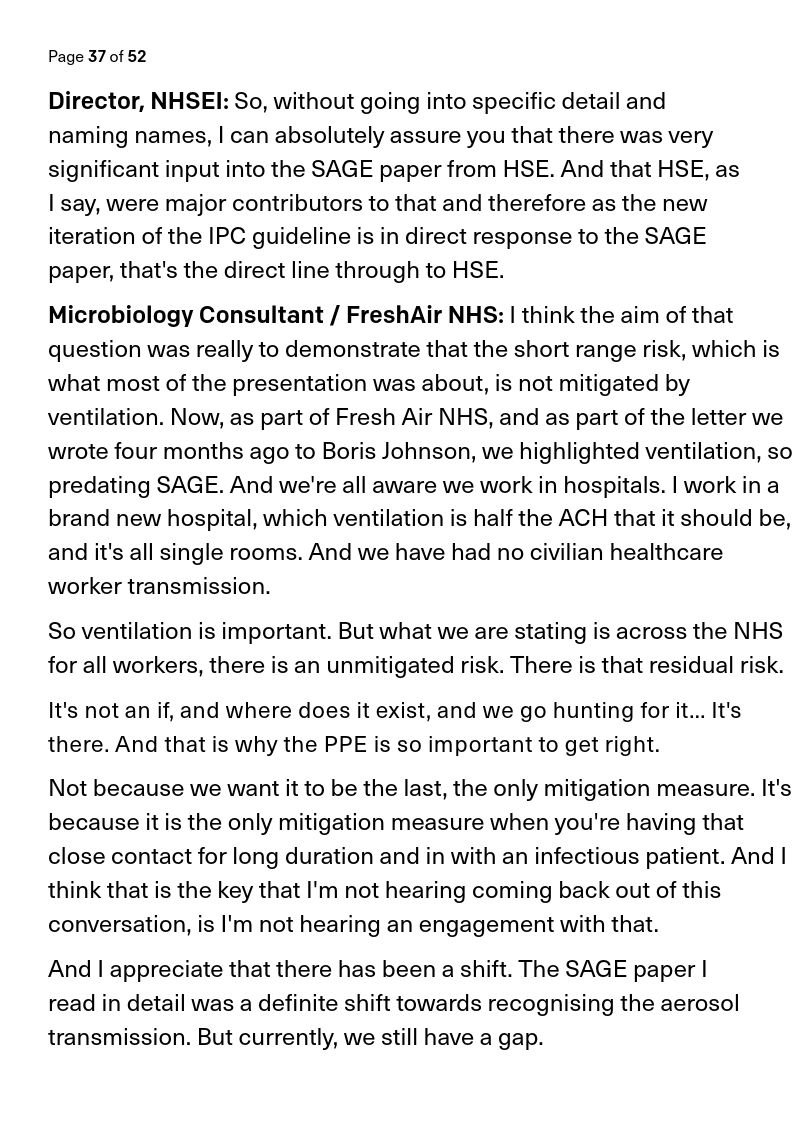
Image
Image
Image
And those evasive answers come back round again. Image
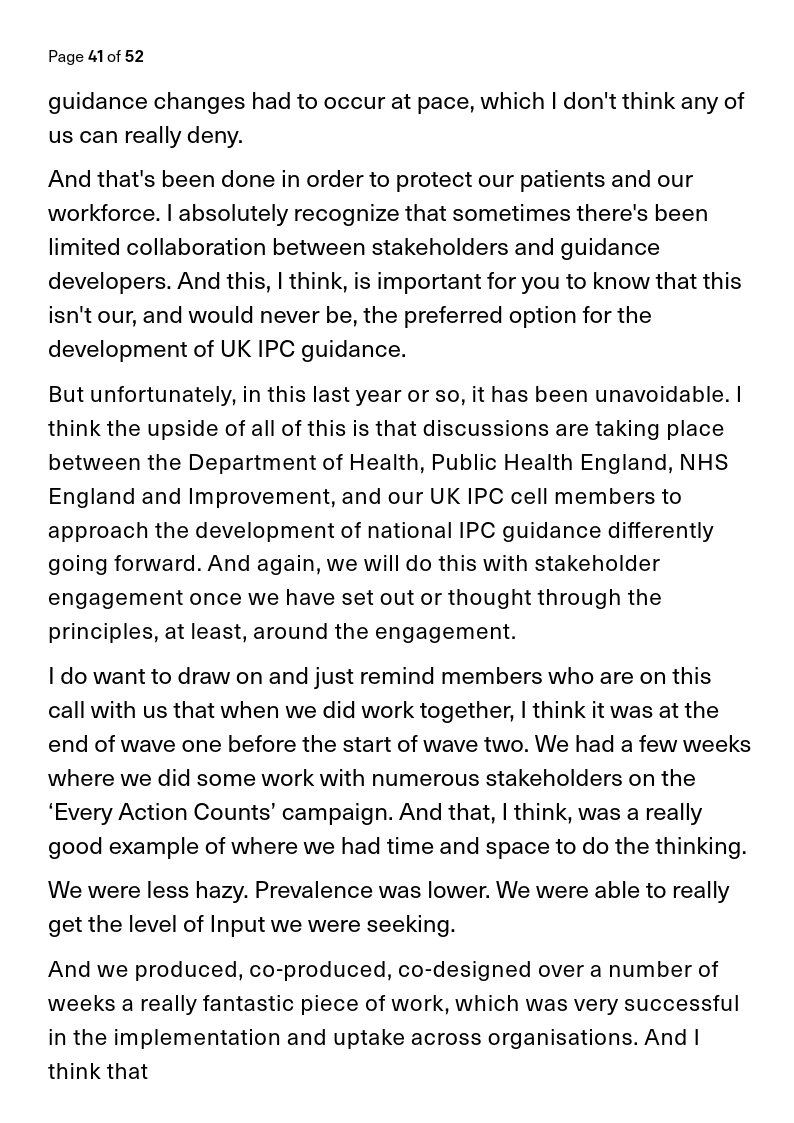
Image
Image
Image
Promises to take action... but none is going to come... Image
Image
Image
Image
And the meeting ends in government shambles. Image
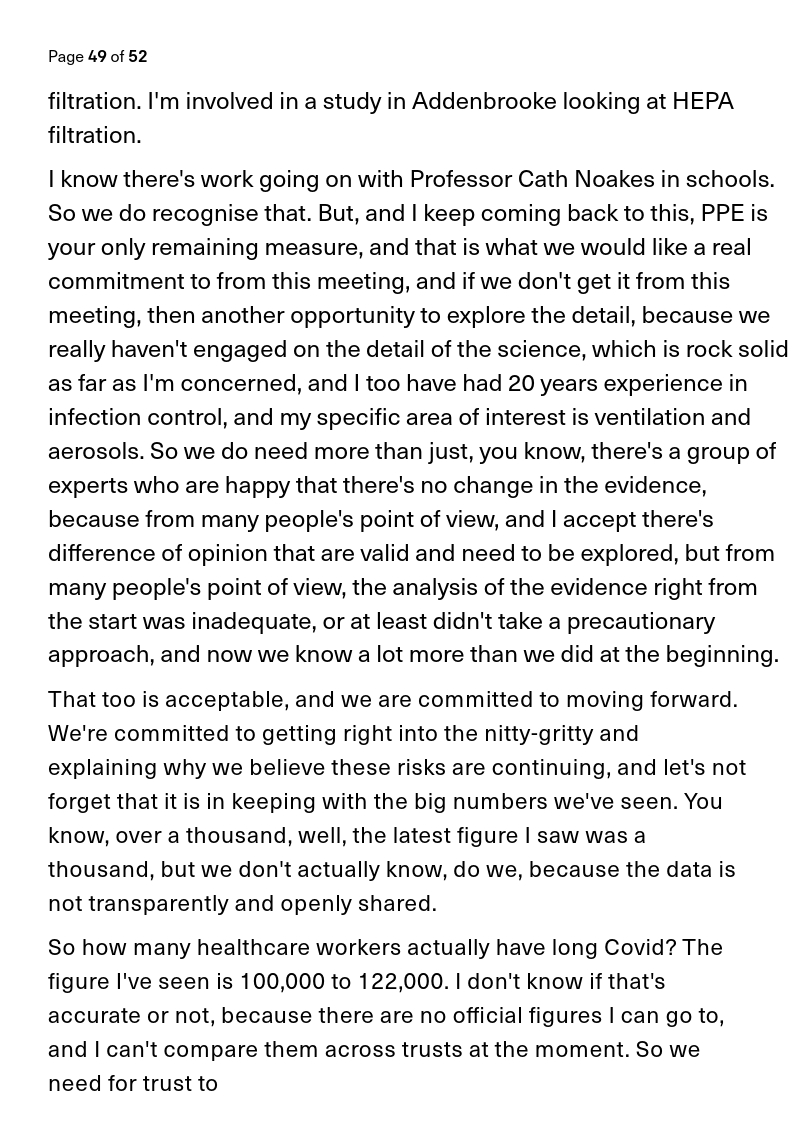
Image
Image
Image
So it comes back round to Cat's thread.

I have no idea why the @covidinquiryuk don't have those minutes and didn't confront those IPC leads when they gave their contradictory testimony.
I didn't get to see much of the inquiry last week, but those videos in that thread contain such an egregious collection of evasions and fabrications to cover their backs for the appalling guidance they provided.

• • •

Missing some Tweet in this thread? You can try to force a refresh

 

Keep Current with tern

tern Profile picture

Stay in touch and get notified when new unrolls are available from this author!

Read all threads

This Thread may be Removed Anytime!

PDF

Twitter may remove this content at anytime! Save it as PDF for later use!

Try unrolling a thread yourself!

how to unroll video
  1. Follow @ThreadReaderApp to mention us!

  2. From a Twitter thread mention us with a keyword "unroll"
@threadreaderapp unroll

Practice here first or read more on our help page!

More from @1goodtern

Mar 3
This one should be labelled 'Public Health Failure'.
Yep, I've taken funerals for two of these. Image
COVID IS A VASCULAR DISEASE. Image
Read 15 tweets
Mar 3
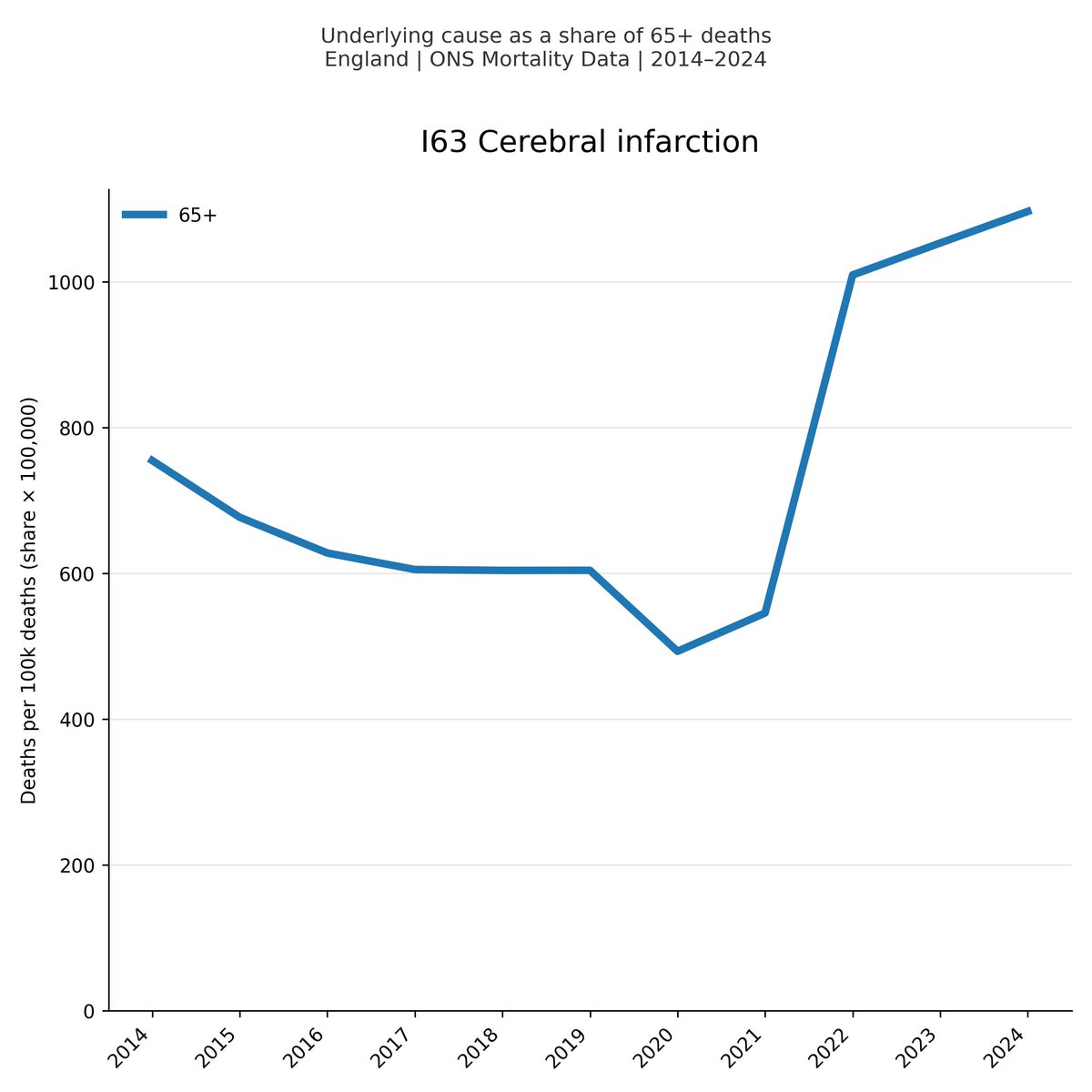
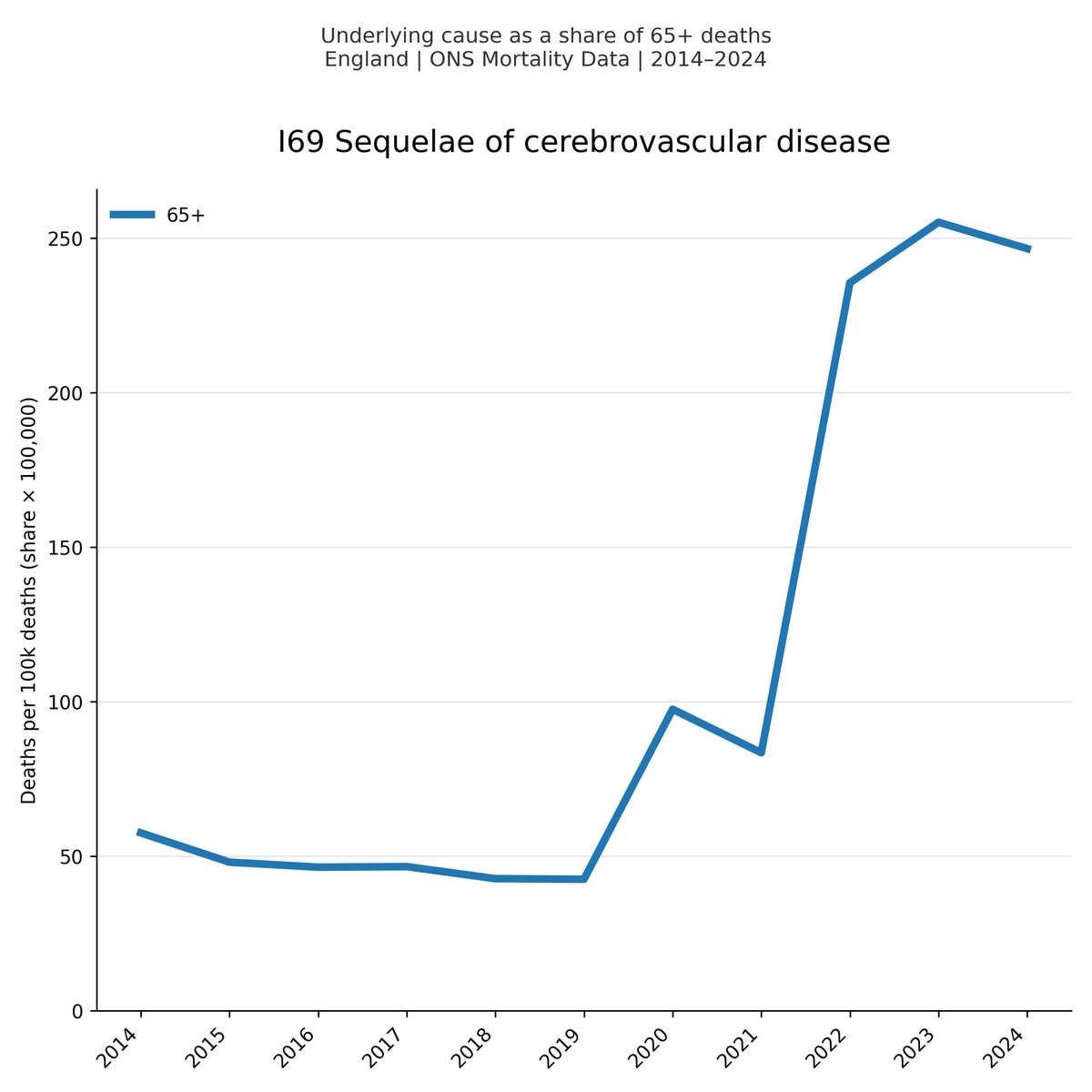
What are people dying from?
How do those causes of death change from year to year?
We have a big database here in England that helps catalogue causes of death. The most recent version is for the year 2024.
This dataset contains official ONS annual mortality data for England, based on registered death certificates and coded using 'ICD-10' codes.
Read 90 tweets
Feb 7
People don't understand that there are several real models of cumulative harm that apply to covid infections.

People don't like complex ideas, so they avoid them.

This is going to be a long thread, with several simple ideas that combine to make a big complex one.
First off, we *know* beyond all doubt that covid infections cause short term harm.
The amount of short term harm varies from person to person and infection to infection, but it's there.
Read 46 tweets
Feb 5
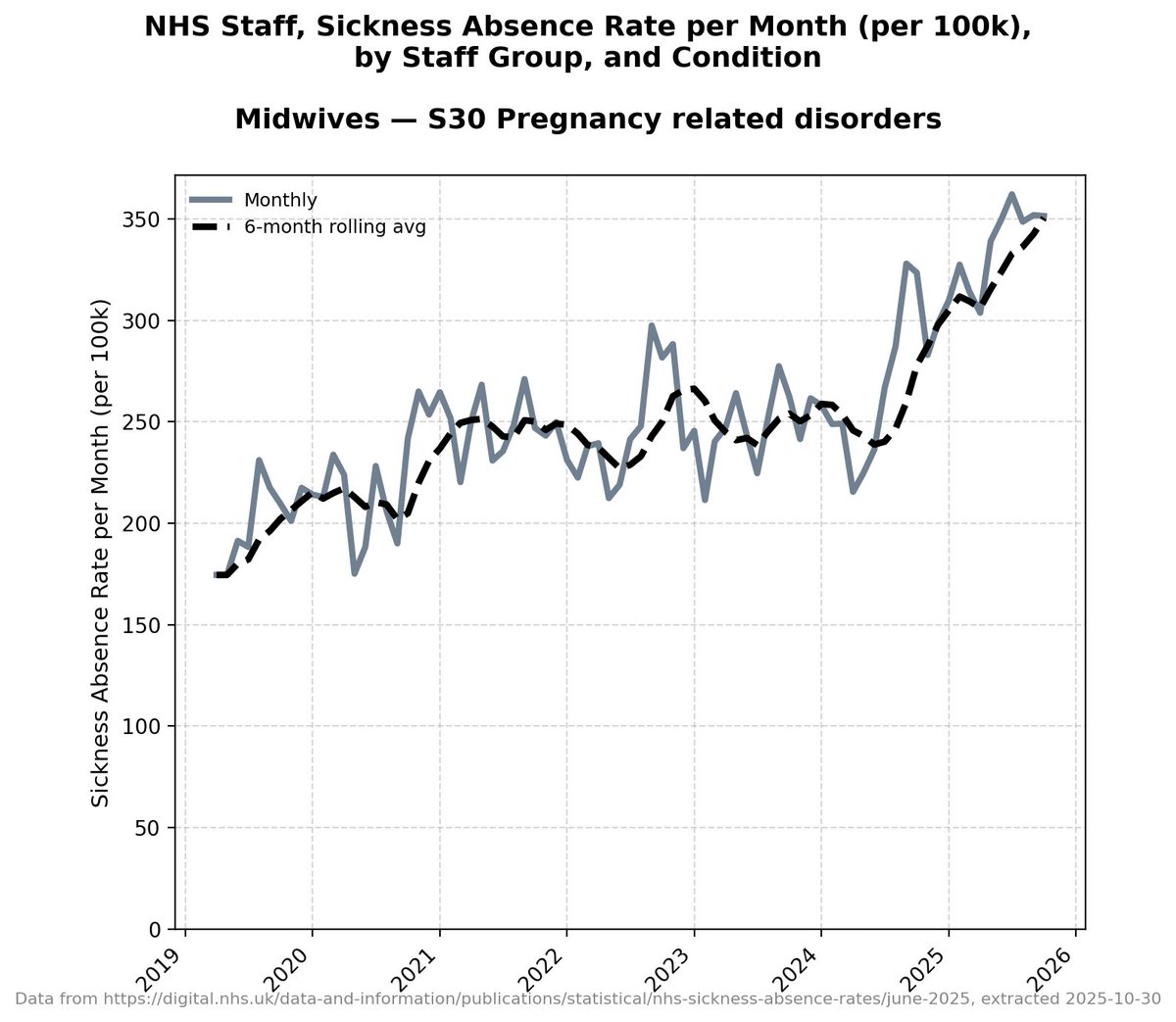
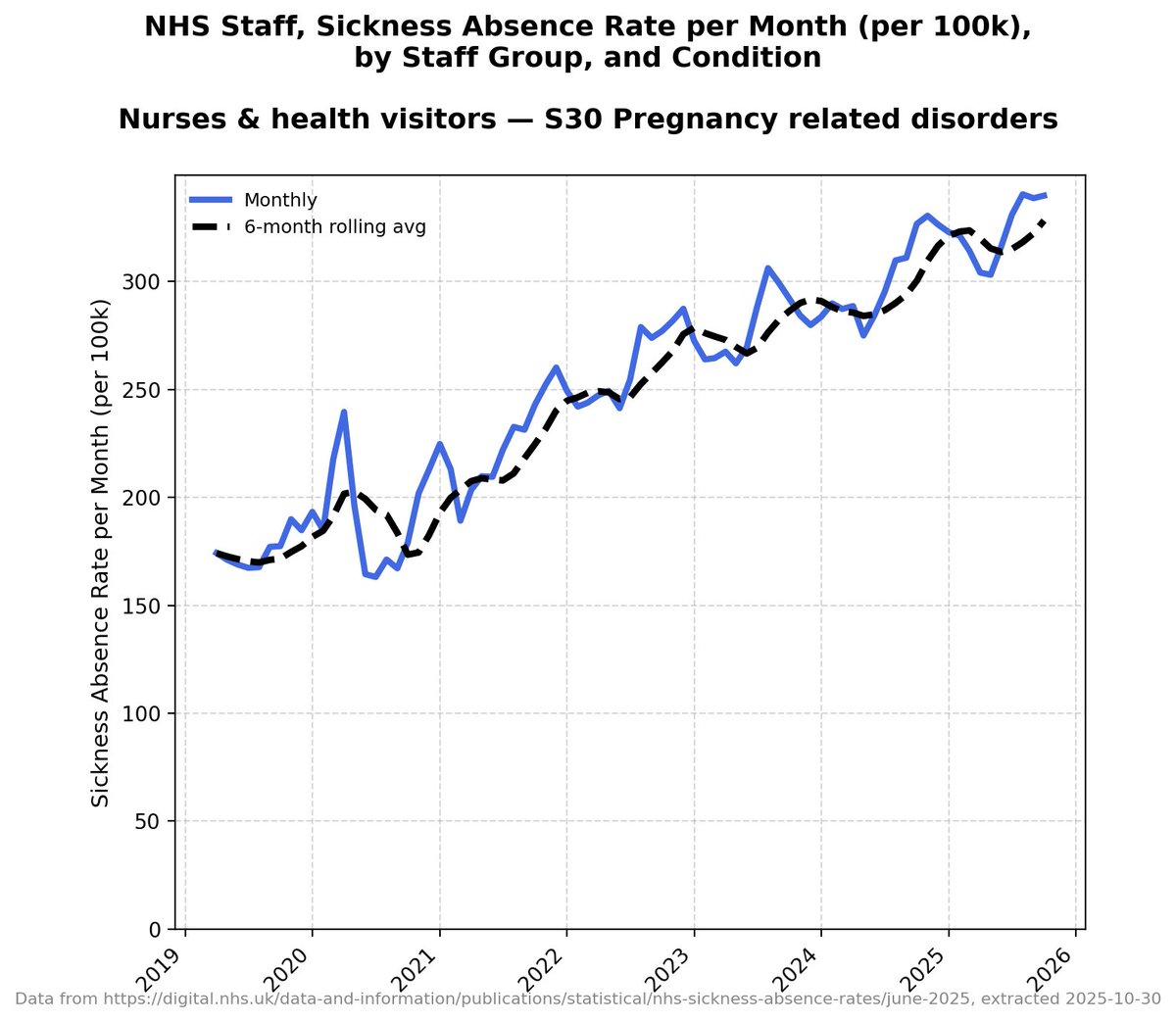
Do midwives know that they're now twice as likely to be off sick with a pregnancy related disorder than before the Covid pandemic started? Image
Do nurses?
And health visitors? Image
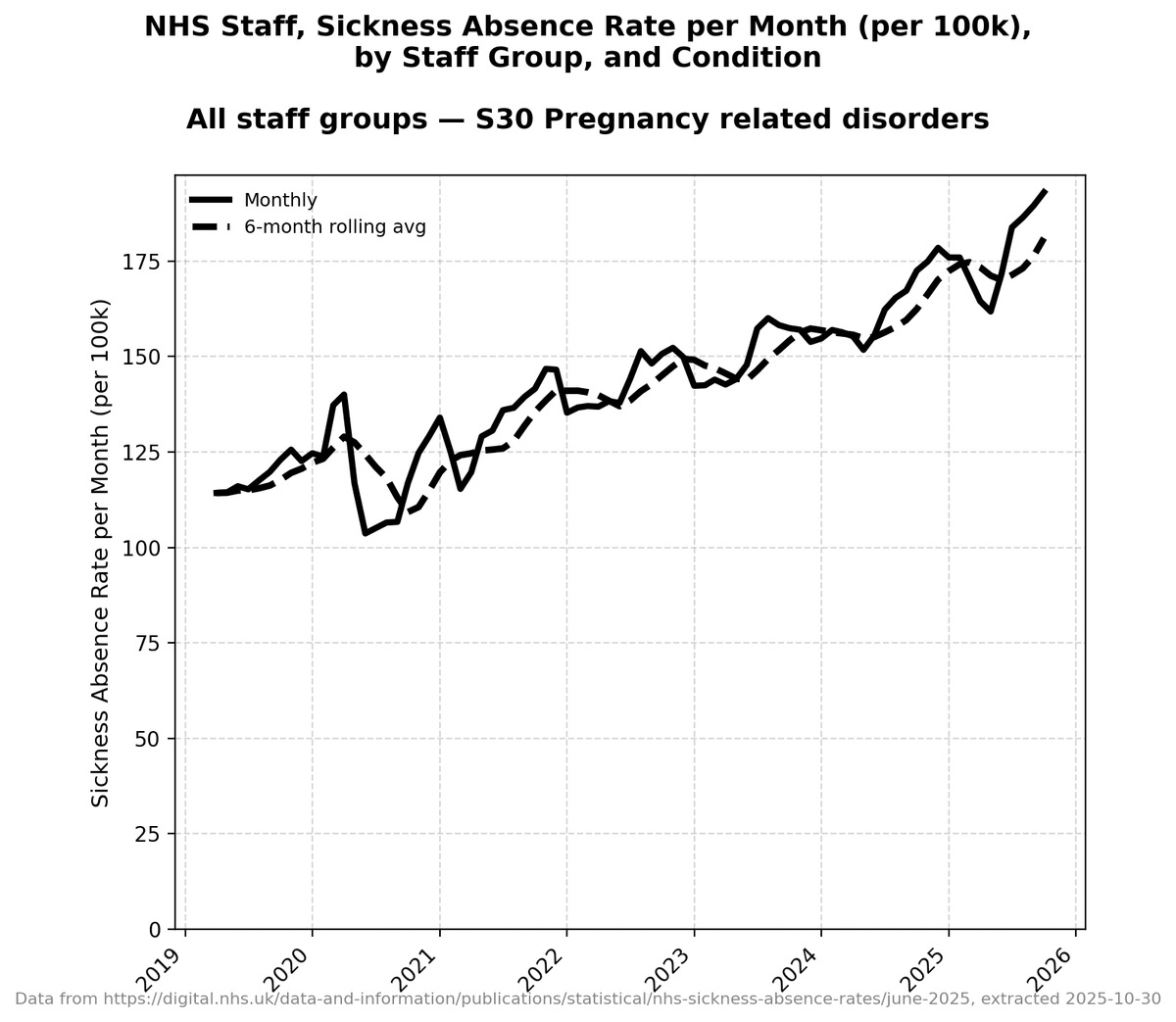
Similar trend across all staff groups, with an apparent accelerating increase more recently. Image
Read 32 tweets
Jan 22
I think one of the most important conclusions people are missing from the data in the recent big studies is that covid infections cause radically diverse long term effects in different age groups.
So much so that it could appear as if they've been infected with different viruses.
But it's not the virus that's different, it's the immune system, the metabolism, and the way the body repairs the damage done by the infection.
Read 9 tweets
Jan 20
Okay folks, I'm calling it, and it's bad news:

The word mucinous is going to become much more common.

Yes, bookmark this tweet, it looks bland, but it's important.
oh, okay. I won't leave you hanging.

I've written a lot recently about how we're missing the big picture of how covid infection is doing cumulative damage to interfaces in the body - linings, membranes, barriers, walls, filters.
I don't want to rewrite that all here, but I don't want to bust the flow of this thread, so at the end of it, I'll post the thread I wrote on linings.
Read 51 tweets

Did Thread Reader help you today?

Support us! We are indie developers!


This site is made by just two indie developers on a laptop doing marketing, support and development! Read more about the story.

Become a Premium Member ($3/month or $30/year) and get exclusive features!

Become Premium

Don't want to be a Premium member but still want to support us?

Make a small donation by buying us coffee ($5) or help with server cost ($10)

Donate via Paypal

Or Donate anonymously using crypto!

Ethereum

0xfe58350B80634f60Fa6Dc149a72b4DFbc17D341E copy

Bitcoin

3ATGMxNzCUFzxpMCHL5sWSt4DVtS8UqXpi copy

Thank you for your support!

Follow Us!

:(