historiakayasthas Profile picture
Nov 26, 2024 12 tweets 6 min read Read on X
🧵 Kayasthas in the Gahadavala realm: An epigraphical survey

Roughly 100 epigraphical records are known from the times of the Gahadavalas, from 11th to 12th centuries CE. Most of these are copper plate land grants to Brahmins. Unfortunately, there is a paucity of large stone inscriptions the likes of which were issued by other dynasties of the times, viz Chandelas, Kalachuris, Paramaras etc. Thus, it is hard to deduce the exact social conditions and the administrative setup of this dynasty. However, the majority of the grants were written by Kayasthas who seem to have monopolised the record keeping in this kingdom. In this thread we will analyse what these records tell us about the contemporary Kayasthas.

1/12Image
x.com/historiakayast…
All in all, 29 writers of Gahadavalas are known by name who authored about 100 extant records. Of these, 12 have been mentioned as Karanika and Kayastha. The fact that Kayastha has been used synonymously with Karanika is attested from two records authored by a certain Thakkura Jalhana during the reign of Govindachandra.
In the first record from Bhadaini of Samvat 1171 (1114 CE), Thakkura Jalhana is mentioned as:
करणिकोद्गतो विद्वांशचित्रगुप्तोपमो गुणैः
"Born in the Karanika lineage, like Chitragupta in qualities"
We posted about this earlier in the thread below:
2/12
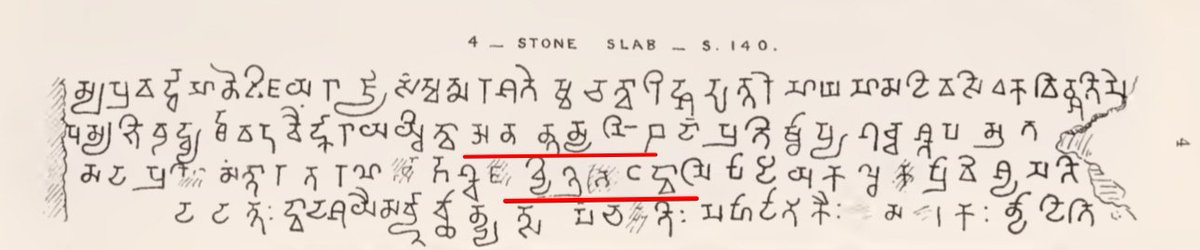
While in the Dhusa village record of Samvat 1172 (1115 CE) Thakkura Jalhana is mentioned as
"श्रीवास्तव्य कुलोद्भूत कायस्थ ठक्कुर श्री जल्हण"
"Thakkura Sri Jalhana, born in the Srivastava Kayastha linegae"
3/12 Image
Although, the remaining writers of the grant are not mentioned by caste, but it is possible that most of also might have been Kayasthas. This is supported by the fact that some wirters were only mentioned by name in some records while their caste affiliations were made clear in other records.
For instance, Thakkura Gaguka, who authored 3 copperplates during the reign of Govindachandra, is mentioned as Karanika in only the latter 2 of records, while in the first he is only mentioned as a Thakkura.
4/12
x.com/historiakayast…

The majority of the writers of Gahadavala records bore the title of Thakkura. Although, no land grants to Kayasthas are known from the times of the Gahadavalas, but the title of Thakkura suggests that contemporary Kayasthas were a significant part of the landed gentry. Several Kayasthas are know as religious donors from this period. For instance, a certain Srivastava Thakkura founded a large Shiva temple in Kaushambi during the reign of Jayachandradeva aka Jaichand. The record by the founder mentions 5 royal titles of the king suggesting that the he had a close association with the latter.
5/12
Many Kayastha writers from this period also had the title of Pandita and were known as Shastrins. For instance, Jagadhara who wrote two grants of Jayachandradeva is mentioned as a Pandita and so is his father Pandita Sridhara Kayastha.
6/12 Image
Kayastha Suraditya, who authored the Sahet-Mahet redord of Govindachandra in Samvat 1186 (1129CE) is described as "sarvvasastravit" or the knower of all Shastras. Seemingly, the contemporary Kayasthas not only monopolised the profession of writing but also rivalled Brahmins in religious learning.
7/12Image
However this monopoly and affluence of Kayasthas did not sit well with some contemporary non-Kayasthas. A Brahmin scholar named Bhatta Lakshmidhara who a minister of Govindachandra and the author of Krityakalpataru, a digest of Dharmashastras, quotes from Yajnavalkya Smriti and warns the king against the machinations of Kayasthas. However, it must be noted this sentiment was not entirely rooted in professional jealousy and rivalry. Oftentimes, the ill repute of Kayasthas as corrupt officers was rooted in reality. We have some evidence to suggest that Kayasthas often suffered from the same shortcomings as the bureaucrats from our times. We shall discuss this topic in more detail in an another thread.
8/12Image
Owing to the paucity of records from the Gahadavala period, no Kayastha ministers are known by name from inscriptions unlike from other contemporary dynasties. However, a large stone inscription of Nana, a Srivastava Kayastha minister of Bhojavarman Chandela from the late 13th century does ring a bell.
9/12Image
The family of Nana was originally from Kausamyapura, which has been identified as Kaushambi where his ancestors served as ministers to kings of an unnamed dynasty. Nana's forefather 6 generations ago was a certain Jalhana Srivastava who was an able minister and helped kings in administration. He would have existed sometime in the middle of the 12th century. During this time, Kaushambi, was ruled by Govindachandra of the Gahadavala dynasty. We have seen above that a certain Thakkura Jalhana of the Srivastava lineage is known from 2 records of this ruler. One can't help but wonder if this Jalhana was the same as the ancestor of Nana.

If our identification is correct, it is likely that the family of Nana migrated to the Chandela realm after the collapse of the Gahadavala kingdom some time in the early 13th century.
10/12Image

Kayasthas are also known as ministers of the feudatories of Gahadavalas from inscriptions. For instance, a certain Vidyadhara of Srivastava lineage and a Buddhist by faith, was a minister of a monarch named Madana who ruled around Sravasti. Vidyadhara also was in charge of the elephant cavalry.

11/12


Thakkura Ranapala Srivastava, who founded a Vishnu temple in Allahabad and established a new village as an offshoot of the Brahmin village of Bhattagrama in the 12th century is believed to have been a minister of the local Baghel king Sankara Deva who was a feudatory of the Gahadavalas.

12/12

• • •

Missing some Tweet in this thread? You can try to force a refresh

 

Keep Current with historiakayasthas

historiakayasthas Profile picture

Stay in touch and get notified when new unrolls are available from this author!

Read all threads

This Thread may be Removed Anytime!

PDF

Twitter may remove this content at anytime! Save it as PDF for later use!

Try unrolling a thread yourself!

how to unroll video
  1. Follow @ThreadReaderApp to mention us!

  2. From a Twitter thread mention us with a keyword "unroll"
@threadreaderapp unroll

Practice here first or read more on our help page!

More from @historiakayasth

Sep 19
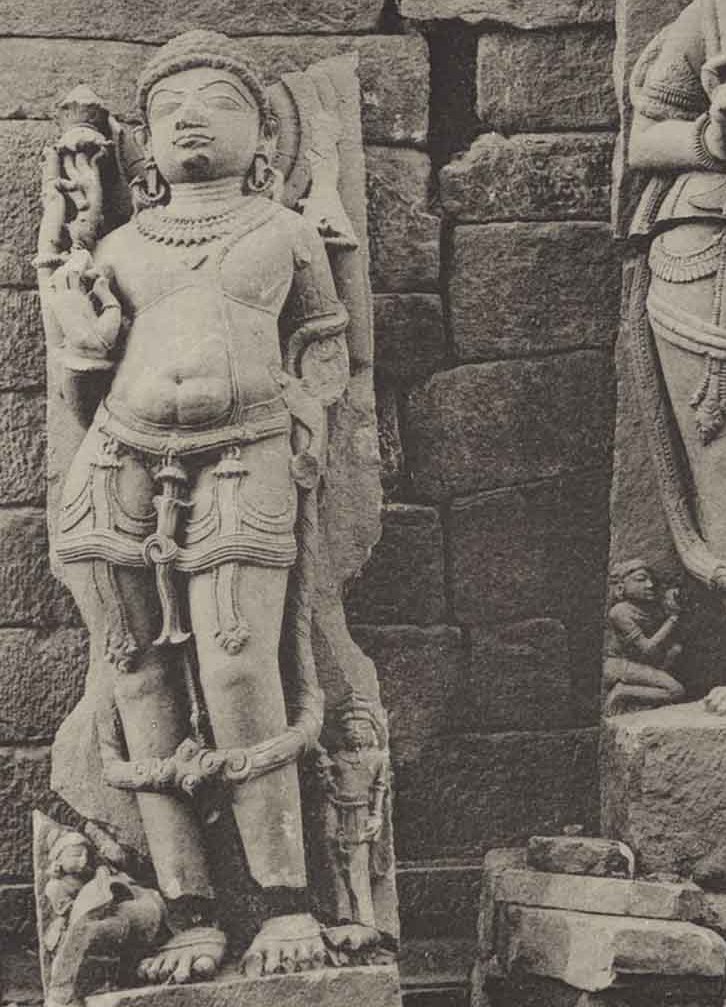
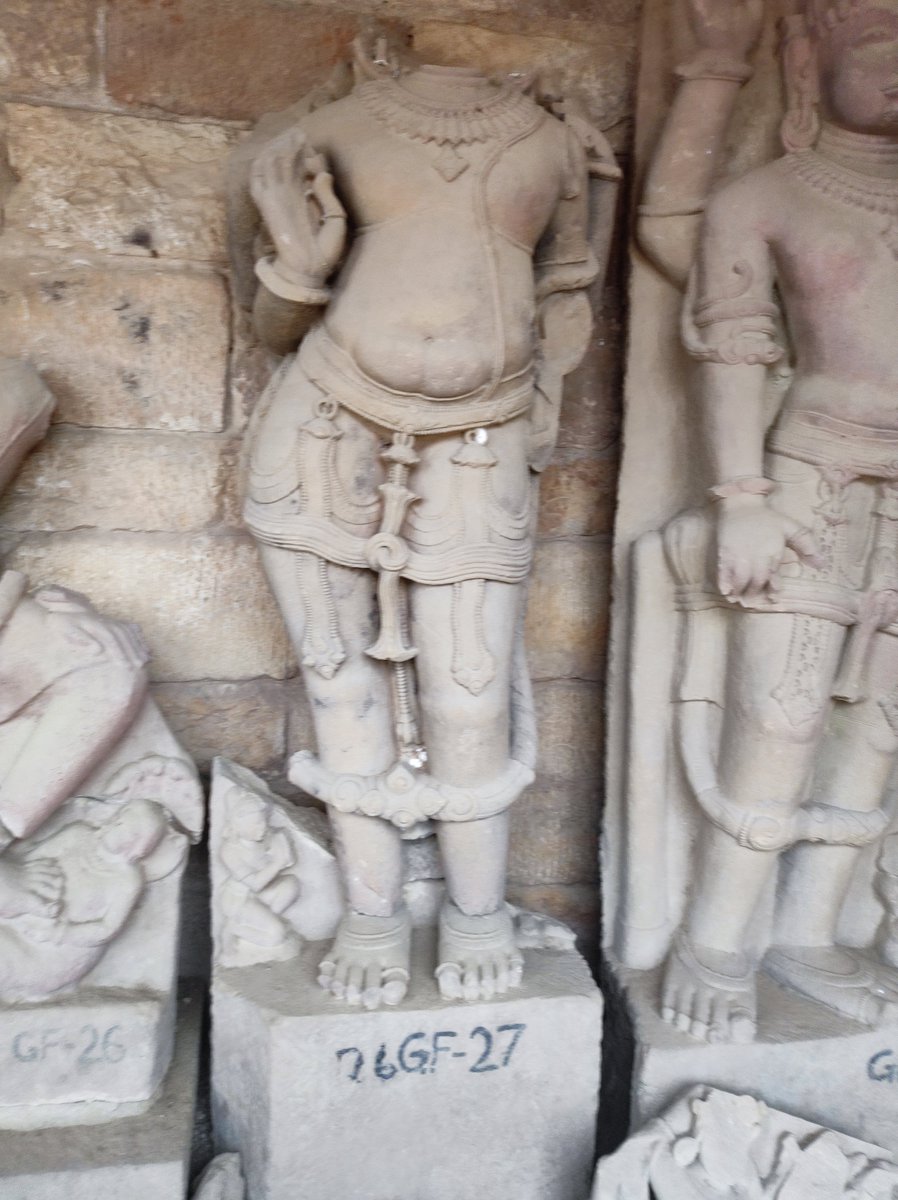
Given the recent publicity of the headless idol of Vishnu at Khajuraho, I would like to bring attention to the vandalised idols at Garhwa in Prayagraj. Unlike the Javari idol, those at Garhwa weren't vandalised in remote past. Photographs show that most idols here were intact until a few decades ago. As an archaeologist, I have been studying this site since 2022.

For instance, take a look at this massive seated idol of Shiva. The inscription on it's pedestal suggests it was built sometime in the late 9th to early 10th century CE. The black and white photograph on the right was taken in 1961 which shows that the head was intact which is missing now.

1/nImage
Garhwa was an important Vaishnav site. Although, it only has one existing shrine of Vishnu today, but it was likely a large temple complex since the Gupta times. I have recently discovered the oldest Ram temple Prashasti from this site.

The site has a beautiful set of massive sculptures of Dashavataras from circa 11th century CE. Nearly all of these idols have been damaged in recent times. For instance, all the four Veda Purushas in the matsya sculpture have been defaced. 2/nImage
Vaman Avatar too stands without his head today. 3/n Image
Image
Read 8 tweets
Aug 3
Misleading, the divinity of Rāma was established long ago, likely in the centuries before Christ. While, one may still argue that certain portions in rhe Ramayana, particularly pertaining to his divinity as an Avatāra of Viṣṇu are later additions to the Valmiki Ramayana, but this happened in the ancient times, and certainly has nothing to do with the Asiatic Society.

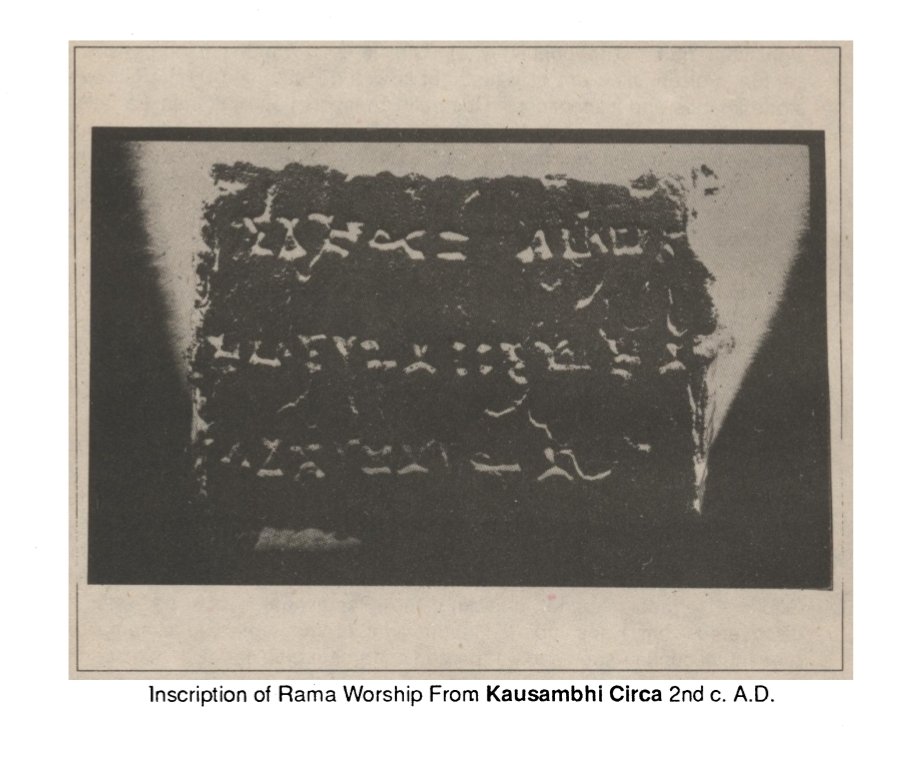
A Kushana inscription from Kaushambi, UP, circa 2nd century CE, records the expression "bhagavato-Rāma-Nārāyaṇa." This is perhaps the earliest archaeological evidence of Rāma's divinity as an avatāra of Viṣṇu.

1/nImage
Next we have the grant of Mahārāja Bhuluṇḍa of Valkha from Madhya Pradesh dated Gupta era 47, or 366-67 CE. In the line 3 of this grant, not Rāma but Viṣṇu is mentioned as having slain Daśavadana or Rāvaṇa. By the 4th century CE, the idea of Rama's indistinctness with Viṣṇu had already been established. 2/nImage
Then a fragmentary stone inscription from Garhwa, Prayagraj, dated 148 Gupta era, or 467 CE, mentions the worship of the footprints of Ananta-svāmin in the or Viṣṇu (in the second line) as Citrakuṭa-svāmin or Rāma (in the third line). This may in fact be the oldest surviving shrine for Rāma which was renovated later by the Chandelas in the 11th century CE as we shall see further in the thread. 3/nImage
Read 6 tweets
Jun 14
Announcement:

Discovery of the first copper plate of the Rashtrakuta dynasty of Kannauj

Last week, another unpublished copper plate was brought to my attention. It is signed in the name of king Amṛtapāladeva in characters of circa 12th century CE. The plate consists of 27 lines of writing in Sanskrit. Our preliminary reading suggests it is a Brahmadeya landgrant.

So far, only one stone inscription of this dynasty is known from Badaun of the king Lakhaṇapāla who was the brother of the king mentioned in this inscription. However that inscription is undated.

1/nImage
The line 16 of the record mentions the date of Amāvasyā of Āśvina of Vikrama Samvat 1202, Monday. The record was issued after the king took a bath on the banks of Gaṅgā at Vodāmayūta, or the ancient name of Badaun.

2/n Image
x.com/historiakayast…

Much of the history of the Raṣtrakūṭas of Kannauj is shrouded in mystery. As mentioned above so far only one inscription of this dynasty was known from Badaun. However, another inscription of the rulers of Gādhipura is known from Śrāvastī, issued by a Śrīvāstava Kāyastha minister of the king Madanapāla, who was the son of Gopāla. These names also occur in the Badaun inscription of the Rāṣṭrakūṭa dynasty. Some scholars have suggested that the two dynasties might be identical.

Furthermore, the Rāṣṭrakūṭas of Kannauj may be ancestral to the Rathores of Marwar.

The new copper plate is thus a valuable source for the history of this dynasty.

We will edit and publish this new record soon.
3/3
Read 4 tweets
Apr 6
On the occasion of Rāma-Navamī, here is a thread on my presentation on Raghava Yatra in the symposium on Jatras by @IndicaOrg :

The newly discovered Garhwa Inscription of Kirttivarmman from Prayagraj mentions the celebration of Rāghava-Yātrā or a festival in honour of Rama for the first time.
The date of the inscription, 11th of the bright half of Chaitra, is of great significance. It is recorded in the last line which reads:
"संवत् ११५२ चैत्र सुदि ११ शुक्रे राघवयात्रायां प्रतिष्ठापितेयं प्रशस्तिरिति"

"In the year (Vikrama) 1152, on the 11th of the bright half of Chaitra, this Prashasti was erected during Raghav Yatra"

The Yatra procession likely began on Rama Navami, ie 2 days before the Yatra festival culminated. So far, no epigraphical attestations of the festivities surrounding Rāma-Navamī are known. The earliest textual evidence comes from a 13th century text known as Agastya Samhita.

Pictured: A life-sized idol of Rama from Garhwa, Prayagraj

1/nImage
The historical context of the site is also of great significance. About 6 Gupta inscriptions from the 5th century CE have been reported from Garhwa so far. All of them are fragmentary, but 4 could be translated. Out of these, 3 inscriptions record the existence of a charitable alms-house that fed mendicants and Brahmins for free.

The 4th and perhaps the most significant inscription, which is dated to the time of Skandagupta, mentions the existence of a Shrine of Ananta-svamin, ie Lord Vishnu, who was worshipped as Chitrakoot-svamin, ie Lord Rama who spent the vast majority of his exile in the forests of Chitrakoot. This points towards the existence of an ancient cult of Rama-worshippers at Garhwa in Prayagraj.

2/nImage
x.com/historiakayast…

Now the question is, why was Garhwa chosen for the site of Rama worship in the Gupta period and why did the tradition continue till the Chandela times?

The answer lies in the 11th century Inscription itself. This record states that Garhwa was a campsite of Lord Rama. Correlating epigraphical evidence with Valmiki Ramayana, @KushagraAniket who translated this inscription made some fascinating observations. Perhaps Garhwa was the last place where Rama, Lakshman and Sita camped before their final departure to Chitrakoot. We covered this issue in the thread quoted below:

3/n
Read 6 tweets
Jan 7
Thread 🧵 Tentative identification of the earliest known Rama shrine mentioned in the Garhwa Inscription of Kirttivarman Chandela of Vikrama Samvat 1152:

During my second visit to the Garhwa fort, I encountered the ruins of large temple underneath a wild fig tree in the north-western corner of the Garhwa fort in Prayagraj. (red circle)

The only extant temple was established in the year 1199 Vikrama samvat. (Green circle)

1/nImage
The ruins consists of several pillars and portions of the walls, made of red sand stone; as opposed to the current temple which is made of yellow sandstone.

2/n Image
The new inscription is also engraved on a large red sandstone slab much like these unexcavated ruins. This ruin, quite possibly the site of the Rama temple mentioned in the inscription.

Shri Kushagra Aniket ji, who translated this Inscription with Dr Shankar Rajaraman ji, has, for the first time, made some fascinating observations in light of this discovery:

"The inscription states that the temple was constructed over an earlier ashrama of Shri Rama.

According to the Valmiki Ramayana, Shri Rama spent a night at Shringaverapura before proceeding to the hermitage of Bharadvaja. Then he crossed the Yamuna to proceed towards Chitrakuta. We have identified the Garhwa Fort complex as the site near the banks of Yamuna, where Shri Rama, Lakshmana and Sita spent a night on their way to Chitrakuta:

विहृत्य ते बर्हिणपूगनादिते शुभे वने वानरवारणायुते।
समं नदीवप्रमुपेत्य सम्मतं निवासमाजग्मुरदीनदर्शनाः॥
(Valmiki Ramayana IIT-K 2.55.34)"

3/nImage
Read 7 tweets
Dec 22, 2024
🧵 A 10th century inscribed Buddha image donated by a Kayastha chief in Mithila

This large image of black basalt is located in the Bhagavati Mandir, Korthu village, Darbhanga district Bihar; published by Dr. Jalaj Kumar Tiwari in Mithila Bharati, 2019.

It consists of Lord Buddha standing in the middle under a Chhatra, in Samapadsthanaka pose on a lotus. To his right and left are is Padmapani Avalokitesvara and Maitreya respectively, both in Tribhanga posture on lotus pedestals. The sculpture is beautifully carved with several attendants.

The inscription consists of a single line incised on the pedestal of this sculpture. But it is of great historical value and reveals several important details about the contemporary socio-political conditions.

1/4Image
The inscription on the Buddha pedestal is undated, but based on the characters it belongs to the 10th century. It reads:

"चेदी वं(शी)य कायस्थ-नादा श्री देहदलस्य"

"(This image is a gift) by Sri Dehadala, the leader of the Kayasthas, hailing from the Chedi region."

The inscription attests the expansion of the Chedis, ie, Kalachuris into Mithila around this time. Moreover, epigraphical evidences show that Kayasthas of Gauda and Srivastava lineages served as hereditary ministers to various branches of the Kalachuri dynasty, especially those of Tripuri. There is evidence of Kalachuri kings giving hereditary grants to families if Kayasthas. Presumably, Dehadala could have been the head of a Kayastha guild that accompanied the Kalachuris into Mithila.

2/4Image


Moreover, the association of Kayasthas with Buddhism is well known. Both in Mithila, as well as the Chedi region have records of Buddhist Kayasthas. We previously discussed an 11-12th century Buddhist donation by a Kayastha from the Chedi region. This is perhaps one of the last Buddhist records from central India.

3/4
Read 4 tweets

Did Thread Reader help you today?

Support us! We are indie developers!


This site is made by just two indie developers on a laptop doing marketing, support and development! Read more about the story.

Become a Premium Member ($3/month or $30/year) and get exclusive features!

Become Premium

Don't want to be a Premium member but still want to support us?

Make a small donation by buying us coffee ($5) or help with server cost ($10)

Donate via Paypal

Or Donate anonymously using crypto!

Ethereum

0xfe58350B80634f60Fa6Dc149a72b4DFbc17D341E copy

Bitcoin

3ATGMxNzCUFzxpMCHL5sWSt4DVtS8UqXpi copy

Thank you for your support!

Follow Us!

:(