
People think we must shrink the world's population to be happy, but they're wrong
A world with shrinking population would be decaying, poor, brutal, violent, hopeless
A world with 100 billion people would be dynamic, rich, innovative, peaceful, hopeful
🧵
A world with shrinking population would be decaying, poor, brutal, violent, hopeless
A world with 100 billion people would be dynamic, rich, innovative, peaceful, hopeful
🧵

1. In the last 2 centuries, the world got better as the population exploded:
• Richer
• Live older
• Lower child mortality
• Richer
• Live older
• Lower child mortality


• Fewer homicides
• Fewer war deaths
• Fewer hours worked
• Lower share of poor people
And much more: fewer infections, diseases, accidents. More racial equality, sexual equality. Instant access to all the knowledge in the world. We can go anywhere, whenever we want...
• Fewer war deaths
• Fewer hours worked
• Lower share of poor people
And much more: fewer infections, diseases, accidents. More racial equality, sexual equality. Instant access to all the knowledge in the world. We can go anywhere, whenever we want...


And it's not a coincidence. These improvements would have been impossible without population growth:
2. Specialization: More ppl means a higher share can specialize. The more we specialize, the more we can focus on improving productivity that add up to a lot of efficiency
2. Specialization: More ppl means a higher share can specialize. The more we specialize, the more we can focus on improving productivity that add up to a lot of efficiency
3. Innovation
The more we are, the more of us can become specialized experts, and we innovate. There are now scientists focused on small aspects of the world and who bring value to all of us.
The more we are, the more of us can become specialized experts, and we innovate. There are now scientists focused on small aspects of the world and who bring value to all of us.
4. Economies of scale
The more we are, the bigger our supply, and the more we can count on volume to increase our efficiency, which makes everything cheaper and better
The more we are, the bigger our supply, and the more we can count on volume to increase our efficiency, which makes everything cheaper and better
5. Learning curve and experience
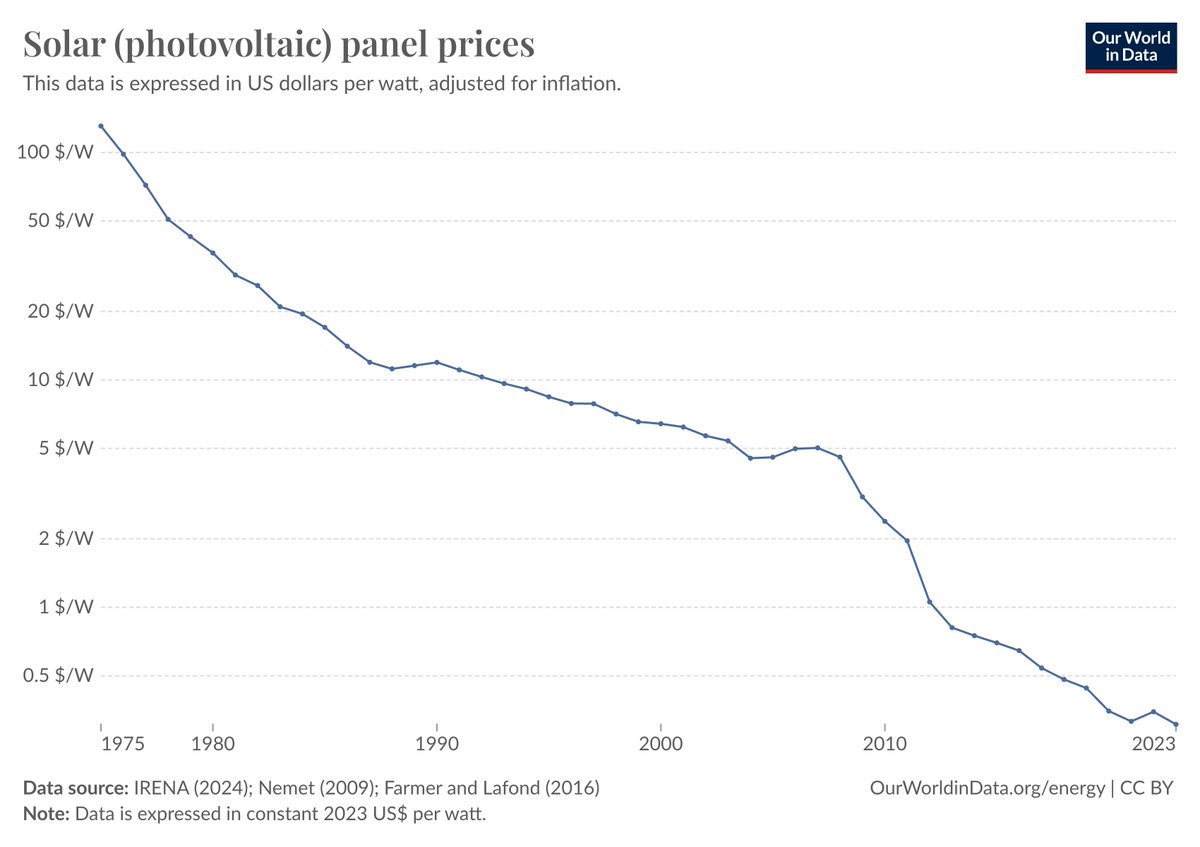
As we build, we learn. This is how solar panel and battery prices have been shrinking at >12%/year for decades
As we build, we learn. This is how solar panel and battery prices have been shrinking at >12%/year for decades

6. Size-Induced Investment
We only invest when business grows. A shrinking population would see shrinking business, which would not justify investment. We would rely on old-decaying infrastructure and never improve on what exists
We only invest when business grows. A shrinking population would see shrinking business, which would not justify investment. We would rely on old-decaying infrastructure and never improve on what exists
7. Network Effects
The more we are, the more value we bring to the rest of the human network. This is why phone monopolies were so strong last century, or why everybody clusters in cities. More people means more network effects
The more we are, the more value we bring to the rest of the human network. This is why phone monopolies were so strong last century, or why everybody clusters in cities. More people means more network effects
Are there downsides to a growing world? Yes, of course:
congestion costs. The most commonly feared:
a. More physical crowding
b. More competition for land (housing, business & tourism)
c. Failing transportation infrastructure
d. Diseases
e. Damage to the environment
Let's see:
congestion costs. The most commonly feared:
a. More physical crowding
b. More competition for land (housing, business & tourism)
c. Failing transportation infrastructure
d. Diseases
e. Damage to the environment
Let's see:
a. We would be more crowded, but not by much. Even if we got from the current 8B to 100B, we could achieve that by simply doubling the radius of current cities and tripling their average building height. That's it!
b. Land would get more expensive, which means more expensive housing and tourism
But all other prices would shrink, bringing net savings to everybody
But all other prices would shrink, bringing net savings to everybody
c. Transportation benefits from more population, as it has a big fixed cost component that can be amortized across many more clients. Isn't Tokyo's one of the best transportation networks in the world?
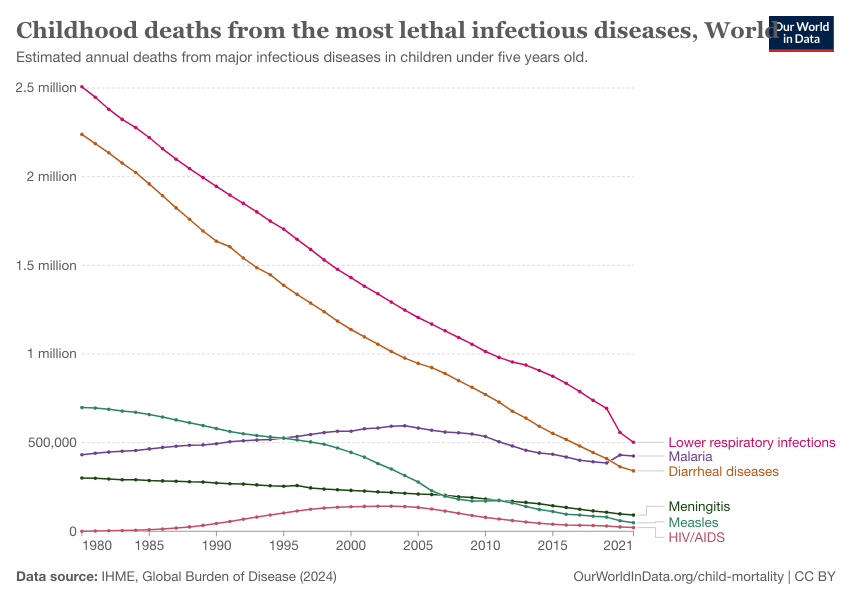
d. Diseases: Although we might have more diseases, the specialization and innovation I mentioned above would more than compensate. We would just continue the existing trend:
e. Damage to the environment
A more productive world is one where we produce food in vertical farms and labs. This would spare the 45% of habitable land currently dedicated to agriculture! We would reclaim a share for wilderness, making the environment better off like in Europe:
A more productive world is one where we produce food in vertical farms and labs. This would spare the 45% of habitable land currently dedicated to agriculture! We would reclaim a share for wilderness, making the environment better off like in Europe:
And as I shared last week, we could even get to 100B people without hitting limits of water, space, energy or environment
https://x.com/tomaspueyo/status/1858956758296793280
In summary:
• Growing population➡️prosperous world➡️ppl want to maintain prosperity➡️more peace
• Shrinking population➡️poorer➡️shrinking pie➡️Ppl compete for what exists➡️more corruption & violence
More details, facts, and sources here: unchartedterritories.tomaspueyo.com/p/the-earth-is…
• Growing population➡️prosperous world➡️ppl want to maintain prosperity➡️more peace
• Shrinking population➡️poorer➡️shrinking pie➡️Ppl compete for what exists➡️more corruption & violence
More details, facts, and sources here: unchartedterritories.tomaspueyo.com/p/the-earth-is…
• • •
Missing some Tweet in this thread? You can try to
force a refresh






