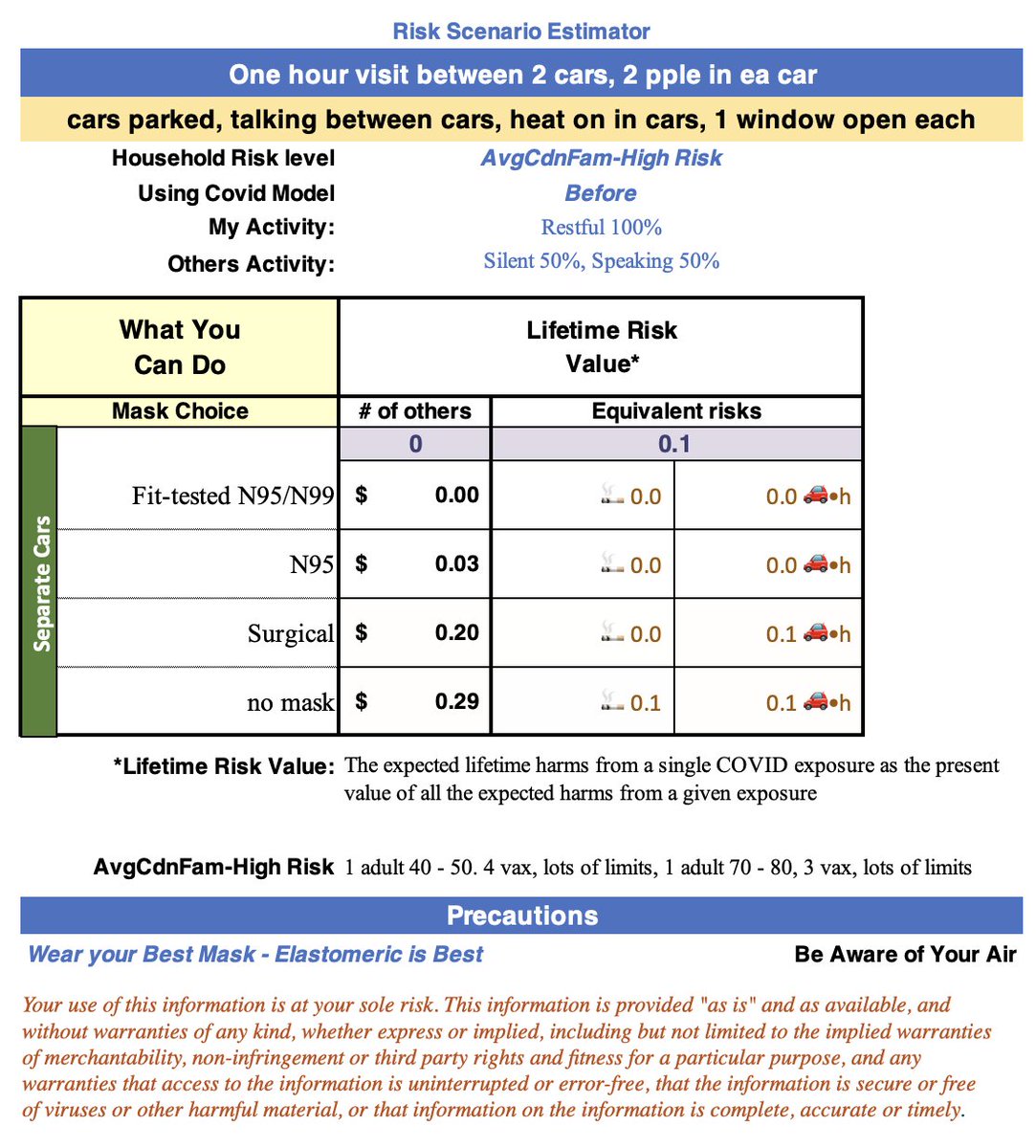
The Data Card, “Family Holiday Dinner - Before”, shows how wise it is for everyone to mask while visiting inside.
We looked at a group of 10 people, you’re one of them, gathering for a 3 hour visit. People are chatting, but it’s mostly a quiet group enjoying each other’s company.
The scenario uses an average size dining room, 16 x 32. The airflow is well mixed among this and the other rooms and the outside doors are closed.
What can you do?
We looked at a group of 10 people, you’re one of them, gathering for a 3 hour visit. People are chatting, but it’s mostly a quiet group enjoying each other’s company.
The scenario uses an average size dining room, 16 x 32. The airflow is well mixed among this and the other rooms and the outside doors are closed.
What can you do?

What can you do? Open the windows.
What can you do?
You can make your event even more safe by providing rapid tests beforehand and N95 masks as people arrive. This lets everyone know that you care about their health.
What else can you do?
Set up an Outside Food Zone. ™
If the weather is, ahem, wintery, and you have the resources, get a fire pit going.
Explore other ways to warm the space, maybe candles, those amazing patio heaters, or a tether ball to kick to warm everyone up. Don’t forget to provide gloves and blankets too.
Create an inviting space for people to bring their food out, unmask, safely eat at a distance from the crowd. When they’re ready they can join the folks inside again knowing that they are helping to keep everyone safe.
The “Family Holiday Dinner - Before” Card shows the maximum risk people that take on. We’re using the safest estimate for one-off events that often have visitors from away, may include a super spreader, and carry higher potential risks.
What can you do?
You can make your event even more safe by providing rapid tests beforehand and N95 masks as people arrive. This lets everyone know that you care about their health.
What else can you do?
Set up an Outside Food Zone. ™
If the weather is, ahem, wintery, and you have the resources, get a fire pit going.
Explore other ways to warm the space, maybe candles, those amazing patio heaters, or a tether ball to kick to warm everyone up. Don’t forget to provide gloves and blankets too.
Create an inviting space for people to bring their food out, unmask, safely eat at a distance from the crowd. When they’re ready they can join the folks inside again knowing that they are helping to keep everyone safe.
The “Family Holiday Dinner - Before” Card shows the maximum risk people that take on. We’re using the safest estimate for one-off events that often have visitors from away, may include a super spreader, and carry higher potential risks.
Your most vulnerable people will want to use these estimates since, for us, it’s best to assess risk by assuming the worst.
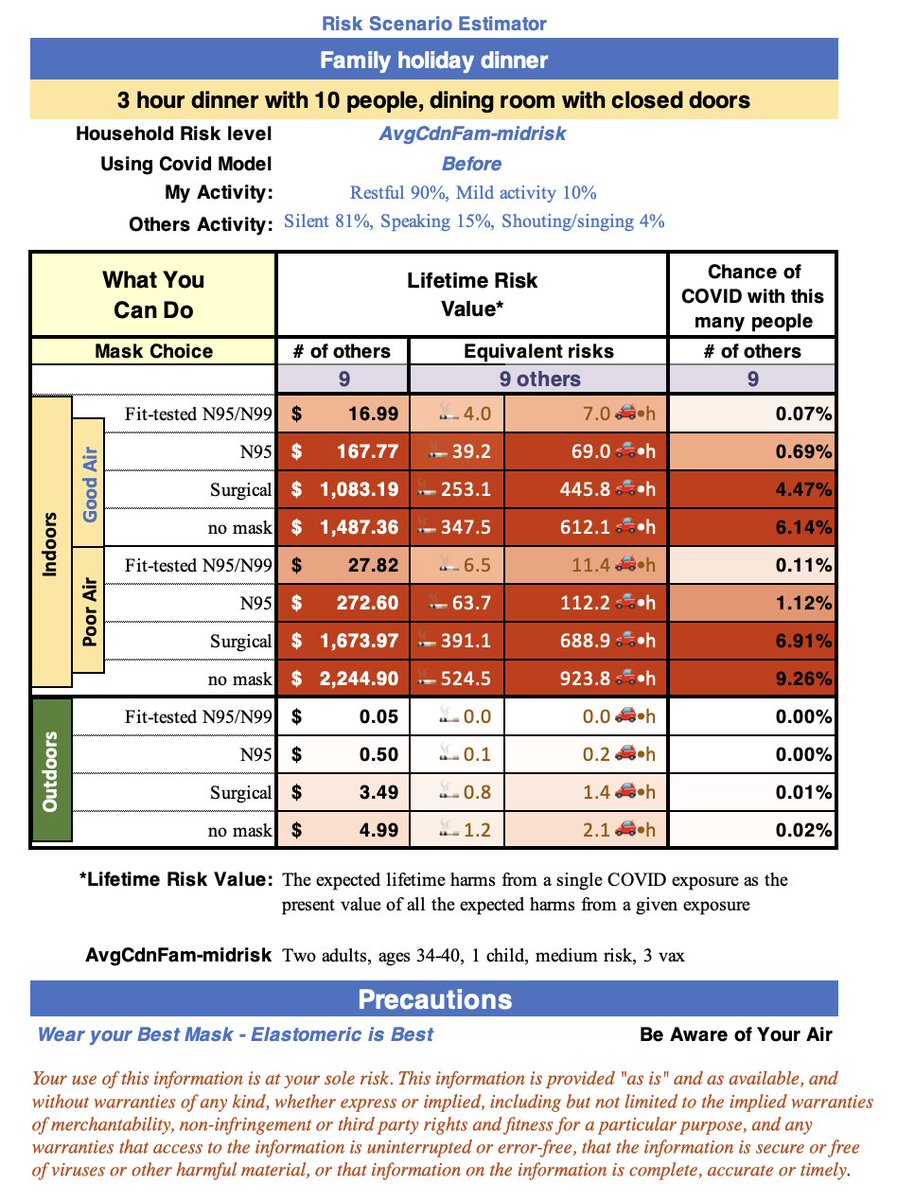
The “Family Holiday Dinner - After” Card makes an adjustment to the risk model. It’s saying, ok, let’s decide we are lucky and there’s no super spreader among us. Then we use the prevailing infection rate in Canada. This uses the Covid After model.
Look! The numbers are quite a bit lower. But also, even at this adjusted level, hanging out together unmasked for several hours carries quite a bit of risk.
Finally, notice how low the risk is when you’re outside. That’s why giving some thought to ways to use both outside and inside spaces, giving guests the option to eat in an inviting, friendly, safe, outdoor space while sharing and visiting safely inside is hospitality at its best.
This kind of setup will make your most vulnerable people feel so seen and cared for, trust me!
Look! The numbers are quite a bit lower. But also, even at this adjusted level, hanging out together unmasked for several hours carries quite a bit of risk.
Finally, notice how low the risk is when you’re outside. That’s why giving some thought to ways to use both outside and inside spaces, giving guests the option to eat in an inviting, friendly, safe, outdoor space while sharing and visiting safely inside is hospitality at its best.
This kind of setup will make your most vulnerable people feel so seen and cared for, trust me!

Outdoor activities are the safest ways to connect with each other.
In Canada, as they say, there’s no bad weather, only bad equipment. Right? Well, almost, anyway!
Most of the time it’s quite possible to get out in the winter air, sun, sky, and earth.
What about going carolling with a group of friends? You’re sometimes close together and singing, and other times chatting and walking along to the next place.
How risky is that?
So glad you asked!
The “Carolling Outdoors” cards lay that out for us.
Before shows the highest risk and After shows risk at the current level of community infection.
In Canada, as they say, there’s no bad weather, only bad equipment. Right? Well, almost, anyway!
Most of the time it’s quite possible to get out in the winter air, sun, sky, and earth.
What about going carolling with a group of friends? You’re sometimes close together and singing, and other times chatting and walking along to the next place.
How risky is that?
So glad you asked!
The “Carolling Outdoors” cards lay that out for us.
Before shows the highest risk and After shows risk at the current level of community infection.


Caroling with 15 of your friends, outside, for an hour and a half of singing, visiting, and general wintery enjoyment is a wonderful way to spend time together. These risk levels apply to any similar kind of outside activity.
You can see that even our most vulnerable are safe with their good N95 or better masks.
You can see that even our most vulnerable are safe with their good N95 or better masks.
Credits:
Pam @netgaines, @netgaines.bsky.social,
Stef @Wikisteff, @wikisteff.bsky.social
[concept, visualization, and data sources]
Liz @CircaLiz, @circaliz.bsky.social [editing, posting]
This information is to help with decisions of how to avoid further infections, which is THE ONLY WAY to avoid Long Covid, reducing your risk of becoming disabled.
For further explorations of navigating risk levels, supported by science, come to COVID-19 Resources Canada Data Discussions on Tuesday evenings.
covid19resources.ca/discussions/
Pam @netgaines, @netgaines.bsky.social,
Stef @Wikisteff, @wikisteff.bsky.social
[concept, visualization, and data sources]
Liz @CircaLiz, @circaliz.bsky.social [editing, posting]
This information is to help with decisions of how to avoid further infections, which is THE ONLY WAY to avoid Long Covid, reducing your risk of becoming disabled.
For further explorations of navigating risk levels, supported by science, come to COVID-19 Resources Canada Data Discussions on Tuesday evenings.
covid19resources.ca/discussions/
Data and recommendations are based on the COVID-19 Risk Scenario Estimator tool by Steffen Christensen, Ph.D
#CovidIsAirborne #CovidIsntOver #MaskUp #YallMasking #CleanTheAir
* % Chance of Catching COVID- The estimated likelihood that the person will contract COVID in the indicated scenario.
*Lifetime Risk Value - The expected lifetime harms from a single COVID exposure as the present value of all the expected harms from a given exposure, for one’s lifetime.
#CovidIsAirborne #CovidIsntOver #MaskUp #YallMasking #CleanTheAir
* % Chance of Catching COVID- The estimated likelihood that the person will contract COVID in the indicated scenario.
*Lifetime Risk Value - The expected lifetime harms from a single COVID exposure as the present value of all the expected harms from a given exposure, for one’s lifetime.
• • •
Missing some Tweet in this thread? You can try to
force a refresh