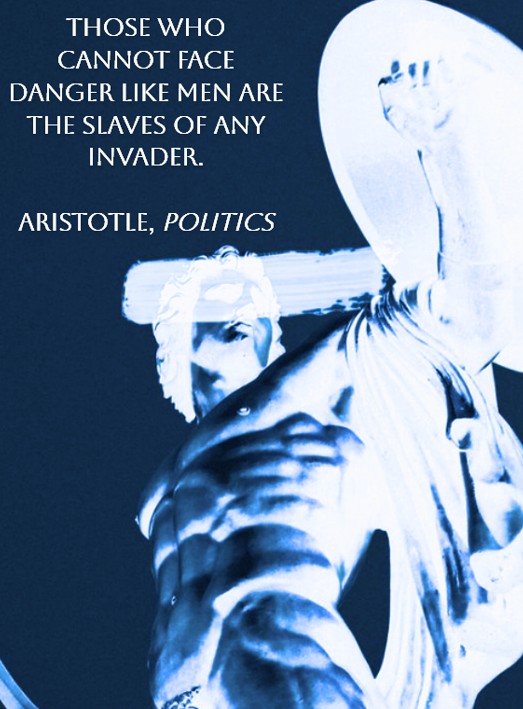
1/ Jean Raspail's "The Camp of the Saints" is no ordinary novel—it’s prophecy. Written in 1973, it foretells a West paralyzed by guilt and overrun by mass migration. Once banned, now buried, its warnings ring louder with every headline. Let's discuss 🧵👇 
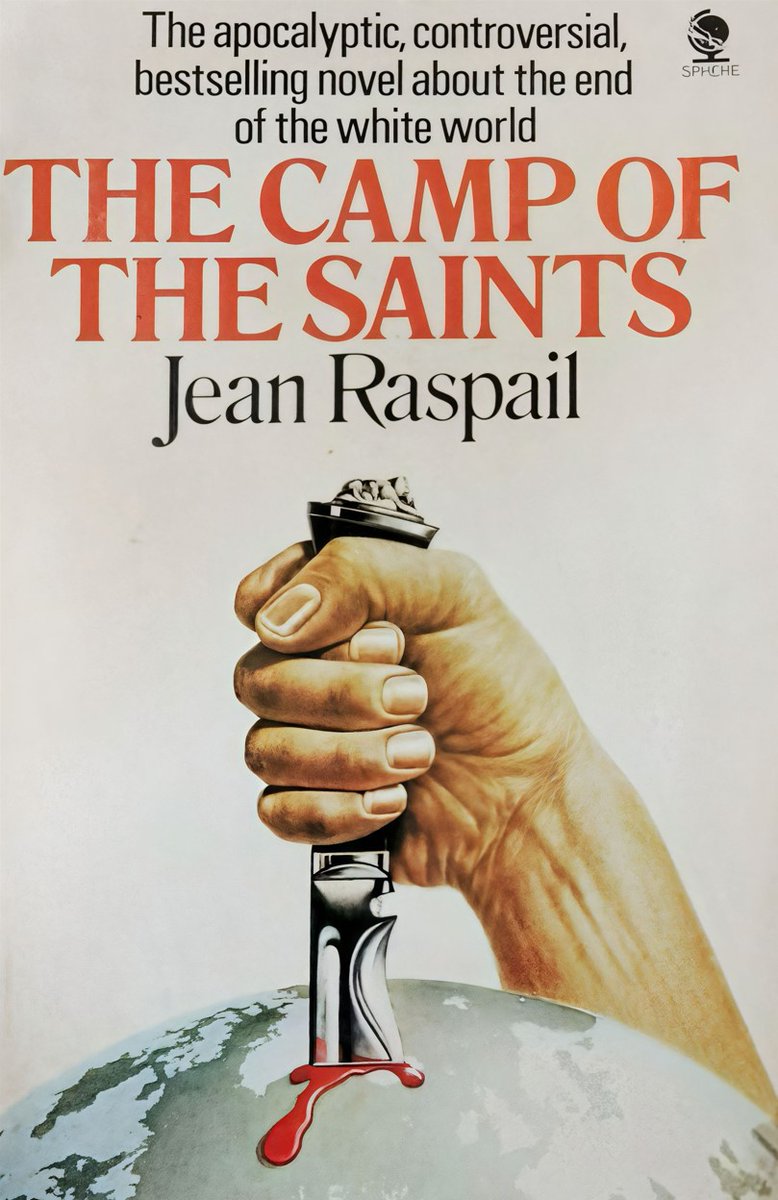
2/ Jean Raspail’s "The Camp of the Saints" is more than a novel; it’s a work of prophetic truth. Like all really great novels, it captures timeless realities—in this case, a harrowing indictment of the moral and cultural rot infecting the West. Its dystopian narrative critiques unchecked immigration, self-destructive altruism, and the paralysis of Western civilization.
The story begins with a famine in India. In desperation, a million refugees, led by a grotesque figure known as the "turd eater," commandeer a fleet of decaying ships and set sail for Europe. They bring with them not only hunger and disease but also an existential threat to the cultural and ethnic identity of the West.
Europe’s elites—politicians, church leaders, and the media—respond with blind enthusiasm. Cloaked in the insidious language of "human rights" and "universal brotherhood," they champion the invaders, dismissing any opposition as bigotry or selfishness. Centuries of liberal humanism, manipulated postmodern Christianity, and recent decades of Marxist ideology have left the West ideologically disarmed, incapable of defending itself against its enemies.
As the fleet nears Europe, the contradictions of this moral collapse become painfully clear. Leaders hesitate to act, fearing accusations of cruelty or racism. Sound familiar? It should because it's what’s happening today.
The refugees are not stopped at sea, nor are they quarantined upon arrival. Instead, the elites gamble the future of their nations on the untenable belief that such an influx can be absorbed without catastrophic consequences.
The consequences are devastating. France is the first to fall, its government overthrown by a radical leftist junta that turns the military against native resistance. Chaos reigns as rape, robbery, and destruction are sanctioned. Millions of Europeans flee their homes, while others cling to the hope that someone else will act to preserve their civilization.
The invaders, meanwhile, consolidate their power. Any pretense of diversity within their ranks is eliminated as they focus their collective strength on dismantling the remnants of Western society. The spectacle is watched with excitement by non-Europeans around the world, emboldened by the collapse of a once-dominant civilization.
Other European nations follow in France’s footsteps, collapsing under the weight of mass migration and elite betrayal. Switzerland, the last holdout, eventually succumbs to international pressure, marking the complete obliteration of the West.
Raspail’s narrative forces readers to confront the uncomfortable truths of Western decline. It is not merely an external threat but an internal sickness—a combination of cowardice, guilt, and ideological manipulation. The novel’s grim portrayal of the future is not just a warning but a call to recognize and confront the forces that seek to dismantle Western civilization and destroy its people.
The story begins with a famine in India. In desperation, a million refugees, led by a grotesque figure known as the "turd eater," commandeer a fleet of decaying ships and set sail for Europe. They bring with them not only hunger and disease but also an existential threat to the cultural and ethnic identity of the West.
Europe’s elites—politicians, church leaders, and the media—respond with blind enthusiasm. Cloaked in the insidious language of "human rights" and "universal brotherhood," they champion the invaders, dismissing any opposition as bigotry or selfishness. Centuries of liberal humanism, manipulated postmodern Christianity, and recent decades of Marxist ideology have left the West ideologically disarmed, incapable of defending itself against its enemies.
As the fleet nears Europe, the contradictions of this moral collapse become painfully clear. Leaders hesitate to act, fearing accusations of cruelty or racism. Sound familiar? It should because it's what’s happening today.
The refugees are not stopped at sea, nor are they quarantined upon arrival. Instead, the elites gamble the future of their nations on the untenable belief that such an influx can be absorbed without catastrophic consequences.
The consequences are devastating. France is the first to fall, its government overthrown by a radical leftist junta that turns the military against native resistance. Chaos reigns as rape, robbery, and destruction are sanctioned. Millions of Europeans flee their homes, while others cling to the hope that someone else will act to preserve their civilization.
The invaders, meanwhile, consolidate their power. Any pretense of diversity within their ranks is eliminated as they focus their collective strength on dismantling the remnants of Western society. The spectacle is watched with excitement by non-Europeans around the world, emboldened by the collapse of a once-dominant civilization.
Other European nations follow in France’s footsteps, collapsing under the weight of mass migration and elite betrayal. Switzerland, the last holdout, eventually succumbs to international pressure, marking the complete obliteration of the West.
Raspail’s narrative forces readers to confront the uncomfortable truths of Western decline. It is not merely an external threat but an internal sickness—a combination of cowardice, guilt, and ideological manipulation. The novel’s grim portrayal of the future is not just a warning but a call to recognize and confront the forces that seek to dismantle Western civilization and destroy its people.

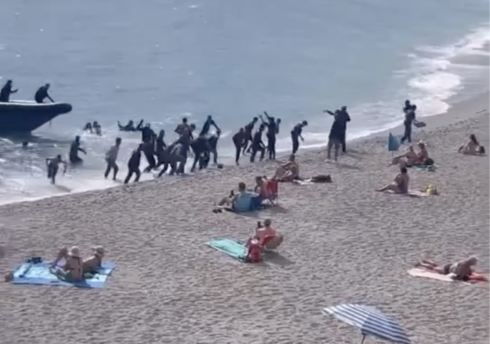
3/ The suppression of "The Camp of the Saints" isn’t the outright burning of books but something more insidious. Though technically available, its price and stigma ensure its lessons remain buried. The West’s elites don’t fear its exaggerations—they fear its truths.
Raspail’s vision was never meant as a precise prediction but as a warning about unchecked immigration and the collapse of the cultural and moral backbone needed to resist it. And yet, much of what he described in 1973 reads less like fiction and more like today’s headlines.
Consider the West’s current trajectory: plummeting birthrates among European populations, unchecked migration from the Global South, and an elite class eager to celebrate this transformation as progress. Even the rhetoric of the novel—pleas for human rights, accusations of racism against dissenters, and appeals to guilt—mirrors our present day.
Across the entire West, demographic replacement is not a conspiracy theory; it’s openly acknowledged by its proponents, who dress it up in euphemisms like "diversity" and "multiculturalism." Meanwhile, native populations are silenced by a cocktail of media propaganda, academic indoctrination, and legal persecution for speaking out.
The truth is what makes Raspail’s work dangerous to those in power. He forces us to confront the long-term consequences of the West’s self-inflicted wounds: the loss of ethnocultural identity, the breakdown of social cohesion, and the eventual erasure of the very people who built Western civilization.
But Raspail’s relevance doesn’t stop at diagnosis—it extends to the emotional and spiritual toll of witnessing decline. His descriptions of Europeans paralyzed by guilt and fear, unwilling to act even as disaster unfolds, strike at the heart of our current malaise.
If there is any lesson to be drawn from "The Camp of the Saints," it’s that guilt and passivity are luxuries we can no longer afford. The demographic and cultural transformation of the West is not an inevitable process but a choice—one that can and must be rejected if Western civilization is to survive.
Raspail’s vision was never meant as a precise prediction but as a warning about unchecked immigration and the collapse of the cultural and moral backbone needed to resist it. And yet, much of what he described in 1973 reads less like fiction and more like today’s headlines.
Consider the West’s current trajectory: plummeting birthrates among European populations, unchecked migration from the Global South, and an elite class eager to celebrate this transformation as progress. Even the rhetoric of the novel—pleas for human rights, accusations of racism against dissenters, and appeals to guilt—mirrors our present day.
Across the entire West, demographic replacement is not a conspiracy theory; it’s openly acknowledged by its proponents, who dress it up in euphemisms like "diversity" and "multiculturalism." Meanwhile, native populations are silenced by a cocktail of media propaganda, academic indoctrination, and legal persecution for speaking out.
The truth is what makes Raspail’s work dangerous to those in power. He forces us to confront the long-term consequences of the West’s self-inflicted wounds: the loss of ethnocultural identity, the breakdown of social cohesion, and the eventual erasure of the very people who built Western civilization.
But Raspail’s relevance doesn’t stop at diagnosis—it extends to the emotional and spiritual toll of witnessing decline. His descriptions of Europeans paralyzed by guilt and fear, unwilling to act even as disaster unfolds, strike at the heart of our current malaise.
If there is any lesson to be drawn from "The Camp of the Saints," it’s that guilt and passivity are luxuries we can no longer afford. The demographic and cultural transformation of the West is not an inevitable process but a choice—one that can and must be rejected if Western civilization is to survive.
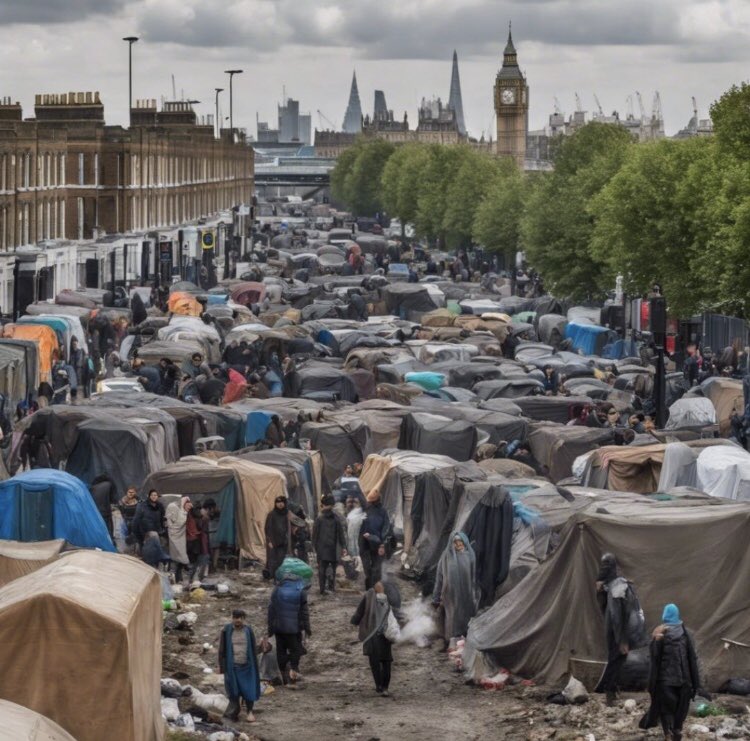
4/ At the core of Raspail's "The Camp of the Saints" lies a searing critique of the moral framework that has paralyzed the West. It is not the famine in India nor the arrival of the refugees that spells disaster—it is the West’s spiritual decay, its pathological altruism, and its suicidal refusal to affirm its own identity. The novel interrogates the idea of universalism, suggesting that, stripped of a robust cultural backbone, it becomes a weapon against the very civilization that birthed it.
Universalism, in its idealized form, promises equality and unity, but Raspail lays bare its darker consequences. Applied without discretion, it demands self-sacrifice from one group to benefit another, with no consideration for reciprocity or limits. The Western elites, intoxicated by their own moral posturing, embrace this ideology not as a means of elevating others but as a vehicle for their own absolution. They offer up their nations, their traditions, and their people on the altar of a dogma that deifies guilt and condemns self-preservation.
The refugees in "The Camp of the Saints" are not villains in the traditional sense. They are portrayed as desperate, even pitiable. But their plight becomes weaponized by the West’s internal betrayers: its media, its clergy, and its politicians. These actors do not merely fail to defend their civilization—they actively dismantle it, wielding the language of compassion and justice as a cudgel against dissenters. Raspail forces readers to grapple with an unsettling question: can a society that prioritizes the needs of others above its own survival endure?
The novel also exposes the hollowness of the West’s secular replacement for traditional faith. Having abandoned Christianity’s spiritual framework but retained its emphasis on guilt and redemption, the elites concoct a bastardized moral code that demands endless atonement for colonialism, racism, and other historical sins. But this new creed offers no salvation, only perpetual self-flagellation. In their zeal to appease the world, they leave their nations defenseless, their cultures unmoored, and their people demoralized.
Universalism, in its idealized form, promises equality and unity, but Raspail lays bare its darker consequences. Applied without discretion, it demands self-sacrifice from one group to benefit another, with no consideration for reciprocity or limits. The Western elites, intoxicated by their own moral posturing, embrace this ideology not as a means of elevating others but as a vehicle for their own absolution. They offer up their nations, their traditions, and their people on the altar of a dogma that deifies guilt and condemns self-preservation.
The refugees in "The Camp of the Saints" are not villains in the traditional sense. They are portrayed as desperate, even pitiable. But their plight becomes weaponized by the West’s internal betrayers: its media, its clergy, and its politicians. These actors do not merely fail to defend their civilization—they actively dismantle it, wielding the language of compassion and justice as a cudgel against dissenters. Raspail forces readers to grapple with an unsettling question: can a society that prioritizes the needs of others above its own survival endure?
The novel also exposes the hollowness of the West’s secular replacement for traditional faith. Having abandoned Christianity’s spiritual framework but retained its emphasis on guilt and redemption, the elites concoct a bastardized moral code that demands endless atonement for colonialism, racism, and other historical sins. But this new creed offers no salvation, only perpetual self-flagellation. In their zeal to appease the world, they leave their nations defenseless, their cultures unmoored, and their people demoralized.
5/ In depicting this collapse, Raspail does not shy away from the emotional toll. The despair of the average European, caught between the tidal wave of migration and the betrayal of their leaders, is palpable. Many turn inward, retreating into apathy or hedonism, while others succumb to despair, recognizing the futility of resistance in a system rigged against them. Yet, even in this bleak landscape, there are glimmers of defiance—characters who refuse to surrender, who cling to their heritage, even in the face of overwhelming odds.
The novel’s enduring power lies in its duality: it is both a damning indictment of the West’s weaknesses and a call to arms. Raspail does not offer a roadmap to salvation, but he does issue a challenge—to reject the narratives of guilt and passivity, to reclaim a sense of pride and purpose, and to act while action is still possible.
Raspail’s work remains a vital, if controversial, touchstone for understanding the crises of our age. It is not a comfortable read, nor is it meant to be. Its purpose is to provoke, to unsettle, and ultimately, to awaken. The enemies of Western civilization, and of all European peoples, do not fear "The Camp of the Saints" because it is fiction—they fear it because, beneath the veneer of hyperbole, it is truth.
The question "The Camp of the Saints" leaves us with is not whether the West can be saved, but whether it has the will to save itself.
The novel’s enduring power lies in its duality: it is both a damning indictment of the West’s weaknesses and a call to arms. Raspail does not offer a roadmap to salvation, but he does issue a challenge—to reject the narratives of guilt and passivity, to reclaim a sense of pride and purpose, and to act while action is still possible.
Raspail’s work remains a vital, if controversial, touchstone for understanding the crises of our age. It is not a comfortable read, nor is it meant to be. Its purpose is to provoke, to unsettle, and ultimately, to awaken. The enemies of Western civilization, and of all European peoples, do not fear "The Camp of the Saints" because it is fiction—they fear it because, beneath the veneer of hyperbole, it is truth.
The question "The Camp of the Saints" leaves us with is not whether the West can be saved, but whether it has the will to save itself.
For those interested in obtaining a cost-effective physical print edition of "The Camp of the Saints," please visit and follow @CarThulePub.
At the end of the day, securing physical copies of actual banned books is imperative.
At the end of the day, securing physical copies of actual banned books is imperative.
https://x.com/CarThulePub/status/1867372497894560175?t=EiyJeiunajnoJ4vZxu2yhQ&s=19
If you enjoyed this thread, consider following me on X. I write 4–7 essays per week on topics ranging from history and literature to philosophy and more.
I also run a Substack dedicated to my writing. Recently, I've been sharing new translations of Friedrich Nietzsche and Julius Evola.
chadcrowley.substack.com
I also run a Substack dedicated to my writing. Recently, I've been sharing new translations of Friedrich Nietzsche and Julius Evola.
chadcrowley.substack.com
• • •
Missing some Tweet in this thread? You can try to
force a refresh